

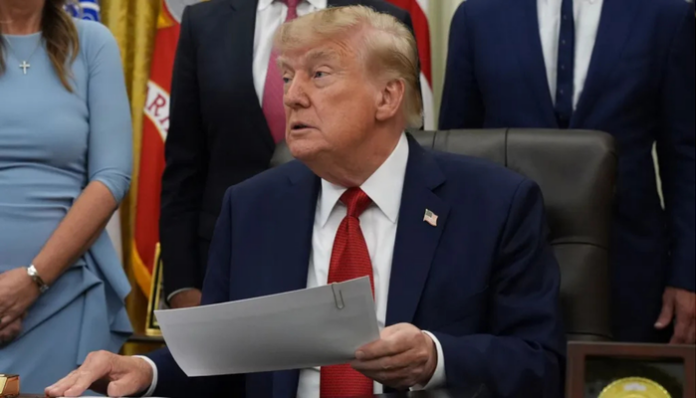
US President Donald Trump has rejected Iran’s proposal for a seven-day ceasefire and has told aides that he expects US bombing of Iran to resume after the November midterm elections, according to a Wall Street Journal report citing US officials.
Iran had offered a seven-day plan under which it would reopen the Strait of Hormuz and restart talks with Washington over its nuclear programme. In return, Tehran wanted the US to lift its naval blockade of Iranian ports, ease sanctions on Iranian oil exports and agree to a ceasefire that would also include Lebanon.
Exclusive: Trump has rejected Iran's proposal for a seven-day ceasefire and has told aides he expects to resume bombing Iran after the midterms, officials said https://t.co/WIVmDVmBtX
— The Wall Street Journal (@WSJ) September 26, 2026
What has Iran offered in its 7-day plan?
Iranian Foreign Minister Abbas Araghchi said Tehran had sent the proposal to the US through Qatar and other mediators. Under the plan, Iran would gradually reopen the Strait of Hormuz within seven days if Washington accepted the conditions.
“If the necessary conditions are met, the strait can be reopened, and a normal maritime passage restored within seven days. The choice now rests with the United States,” Araghchi said.
“The seven-day timeline will start as soon as the United States accepts this plan,” he added.
Araghchi said the first steps would take around four to five days. The Strait of Hormuz would then be reopened on the sixth day, followed by the restart of talks with the US on the seventh day. The talks would focus on reaching a broader agreement on issues including Iran’s nuclear programme. “And on day seven, the talks with the U.S. will be started for the final deal on mutually agreed subjects,” Araghchi said.
According to the Iranian foreign minister, the conditions Tehran is asking Washington to meet are not new. He said they were already part of a memorandum of understanding reached between the two countries in June.
“The actions that the United States should take are not new. They are all already in the MOU,” he said.
Washington not ready to lift blockade
According to US officials cited by the Wall Street Journal, the Trump administration has told Iran and regional mediators that Trump does not currently intend to lift the maritime blockade.
Washington believes continued economic pressure could force Tehran to accept an agreement on terms more favourable to the US and Arab countries in the Persian Gulf. At the same time, US and Iranian officials are continuing discussions through mediators, including on the nuclear issue.
The US has also been trying to keep oil tankers moving through the Strait of Hormuz. American officials believe this has reduced some of the immediate pressure to reach a ceasefire agreement.
Trump has publicly said that Iran is looking for a deal after the midterm elections that would dismantle its nuclear programme. Privately, however, the officials told the Journal that he remains doubtful that Tehran would accept his demands.
Trump says elections will not decide Iran policy
Trump has also rejected the suggestion that domestic politics will determine his approach to the Iran conflict.
Speaking at the United Nations General Assembly this week, Trump said, “The Republican Party is running, and I’ll be helping them, but I am not running. I gave absolutely no credence and will not give credence through the election when it comes to Iran.” He added, “The only thing that does is that Iran will never have a nuclear weapon.”
At the same time, Trump has encouraged Republicans to campaign for the November midterm elections as if he himself were on the ballot.
Renewed US strikes remain unclear
The reported expectation of renewed bombing does not necessarily mean that another major US military campaign will definitely begin after the elections. The officials also cautioned that Trump’s position could change as the conflict develops and the elections approach.
Trump has moved between military action, diplomacy and economic pressure during the conflict. He has previously threatened wider military action to put pressure on Tehran, while later stepping back from some of his broader threats.
