

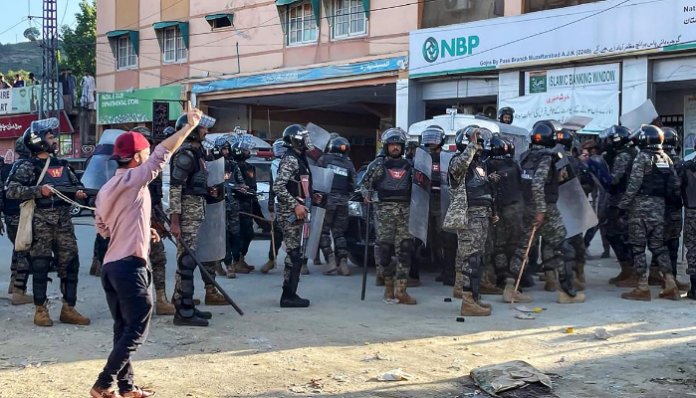
Pakistani security forces have opened fire on demonstrators in Pakistan-occupied Kashmir (PoK) which is experiencing one of its worst upheavals in recent memory, killing at least 12 civilians. More than 200 individuals sustained injuries with a significant number in critical condition as majority suffered gunshot wounds amid the fourth day of the lethal civilian revolt which commenced on 29th September.
Furthermore, three police officers lost their lives while 170 others have been injured. 10 cops who were in serious condition were transported from Muzaffarabad to Islamabad. Additionally, thousands of troops have been hurried from Islamabad and Punjab to quell the uprisings.
Midnight scenes in Pakistan Occupied Jammu & Kashmir (PoJK) civilian uprising.
— Aditya Raj Kaul (@AdityaRajKaul) October 1, 2025
12 civilians killed, More than 200 civilians injured.
3 Policemen Killed, 170 Policemen Injured.
Out of these 10 policemen are critical and have been airlifted from Muzaffarabad to Islamabad.
Today… pic.twitter.com/9zFzIdjmfJ
Why are poeple protesting
Pakistani security personnel used tear gas and sprayed bullets to scatter protesters. Two demonstrators were reportedly shot dead in Dadyal, five in Dheerkot and five in Muzaffarabad. A wider agitation against the military’s excesses in the area has grown out of the protests which began as the administration failed to meet 38 important demands.
The demand to eliminate the 12 assembly seats in PoK that are set aside for Kashmiri refugees residing in Pakistan is at the centre of the movement. Tax breaks, bread and electricity subsidies and the completion of development projects are also at the centre of the agitation.
The volatile area has come to a complete halt as a result of the gatherings which are being led by the Jammu Kashmir Joint Awami Action Committee (JAAC). Local businesses, stores and markets have been closed since the protests started. Likewise, landline, internet and mobile services have all been discontinued.
The shooting of unarmed citizens in Muzaffarabad has been directly attributed by the JAAC to Pakistani Rangers. It asserted that the Pakistan Army’s unnecessary gunfire and artillery shelling of protest groups were responsible for additional fatalities. However, the protracted march continued in spite of the violence.
Protesters have defied Islamabad’s crackdown by overcoming military blockades and assembling in the capital. Social media footage depict thousands of protesters in Muzaffarabad hurling stones and destroying big shipping containers that were positioned on bridges to obstruct their march.
The strike is only “Plan A,” according to JAAC’s warning which threatened to escalate to a massive “Plan D” already draughted by the leadership if Islamabad persisted to disregard the movement.
Concerns raised in United Nations
The United Kashmir People’s National Party (UKPNP) spokesperson, Nasir Aziz Khan, has called for immediate action from the United Nations and the international community. He reminded member states of their responsibilities under international treaties and warned of a humanitarian crisis in PoK during his speech at the 60th session of the UN Human Rights Council in Geneva.
The most recent strike coincides with growing dissatisfaction throughout PoK. On 27th September, thousands of people marched in Kotli, calling for justice and freedom. Security personnel used tear gas and bullets, hurting multiple people which only served to inflame popular indignation.
The murder of six-year-old Tasmia Suhail who was discovered dead after going missing for three days had set off the demonstration. Her murder served as a focal point, fuelling long-standing resentment over unemployment, inflation and Islamabad’s resource exploitation of the region.
The recent development transpired soon after Pakistan Air Force claimed the lives of 30 people by dropping bombs in Khyber Pakhtunkhwa last week.
