

HomeNews ReportsBSP chief Mayawati has to pay back the public money spent on statues: Supreme...

BSP chief Mayawati has to pay back the public money spent on statues: Supreme Court

The Court was hearing a petition filed by an advocate who had contended that public money cannot be used for creating own statues and for propagating political ideologies.

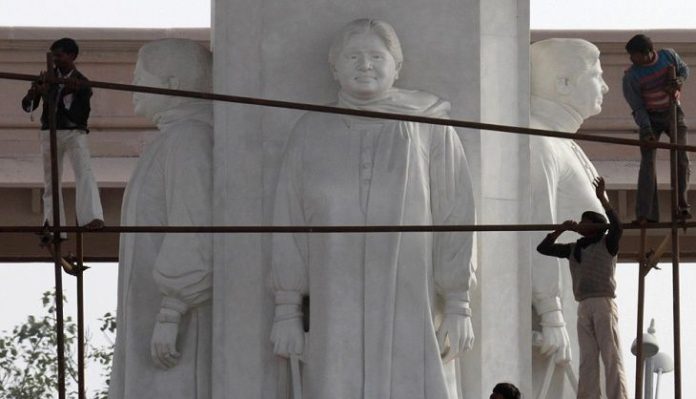
The Supreme Court on Friday observed that prima facie the BSP chief has to pay back all the public money she used to erect status of herself and the BSP symbol, the elephant, in Noida and Lucknow when she was the Chief Minister.


Chief Justice of India Ranjan Gogoi has said that the court would hear the plea on 2nd April.

The Court was hearing a petition filed by an advocate who had contended that public money cannot be used for creating own statues and for propagating political ideologies. Mayawati, during her tenure as Uttar Pradesh Chief Minister, built the statues, parks and memorials at a cost of over Rs 2,600 crore in Noida, Lucknow and a few other places.

Join OpIndia's official WhatsApp channel

  Support Us  

For likes of 'The Wire' who consider 'nationalism' a bad word, there is never paucity of funds. They have a well-oiled international ecosystem that keeps their business running. We need your support to fight them. Please contribute whatever you can afford

OpIndia Staff
OpIndia Staffhttps://www.opindia.com
Staff reporter at OpIndia

Related Articles

Trending now

When youthful delulu meets hard power

Whatever political advantage the CJP protestors and the so-called students are hoping for, it will inevitably be reaped by the Congress, AAP, Samajwadi Party, or even Chandrashekhar Ravan, to be used as capital for their next elections.

Protests demanding Dharmendra Pradhan’s resignation in the UK not organic: Before you fall for The Wire’s propaganda, read how SFI is mobilising crowds

The Wire portrayed the London gathering as spontaneous despite weeks of SFI campaigning and committee-led protests across Britain. BBC and Al Jazeera joined Amnesty International and Human Rights Watch in amplifying the wider crackdown narrative.
- Advertisement -
