

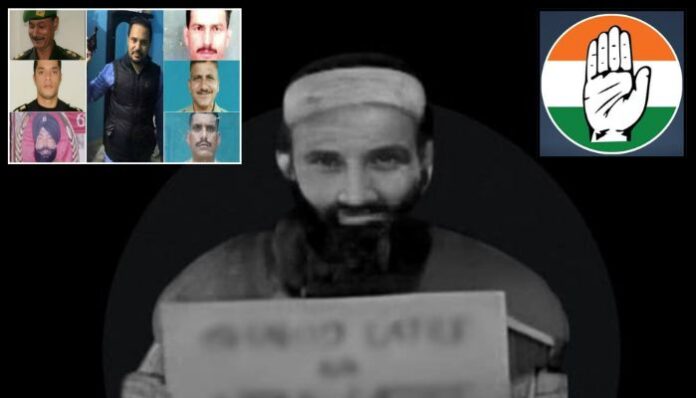
In another shocking example of the extent of its appeasement politics, the UPA government, led by then Prime Minister Manmohan Singh, released 25 Pakistani terrorists from Indian jails in 2010 as part of what was described as a “goodwill gesture” towards Pakistan. The group included terrorists linked to terror organisations such as Lashkar-e-Taiba (LeT), Hizbul Mujahideen (HM) and Jaish-e-Mohammed (JeM). The detainees were released on the advice of the Union Home Ministry and were later deported to Pakistan through the Wagah border.
God help our country! Shame! Pak terrorists freed in goodwill gesture – http://tinyurl.com/327q4qk
— Aditya Raj Kaul (@AdityaRajKaul) May 29, 2010
The decision came shortly before Manmohan Singh’s planned visit to Jammu and Kashmir in June 2010.
The terrorists had been detained under Section 19(1) of the Jammu and Kashmir Public Safety Act. Some had been shifted to prisons outside Jammu and Kashmir because of security concerns. Reports at the time said the detainees had also been given consular access before their release. The 25 Pakistani prisoners were eventually handed over to Pakistani authorities.
Among those released from different prisons were Noor Mohammad, Abdul Rashid, Nazir Mohammad, Mohammad Shafi, Rahim Din, Mohammad Sharief Malik, Karamat Hussain and Suhail Ahmad Kataria. Others were lodged in prisons including Agra, Naini, Varanasi, Tihar, Jodhpur and Sangrur.
Shahid Latif: The ‘goodwill gesture’ that came back to haunt India
One of the most controversial names in that list was Shahid Latif, a Jaish-e-Mohammed terrorist who had spent 11 years in an Indian prison. Latif had been arrested in Jammu and Kashmir in 1994 after infiltrating the Valley a year earlier. He was later deported to Pakistan following his release in 2010.
Latif was among the 25 militants released on 28th May, 2010. The release was part of the UPA government’s effort to their version of improving relations with Pakistan, a nation that carried out multiple terror attacks on India before 2010. After returning to Pakistan, Latif rejoined Jaish-e-Mohammed and eventually became an important figure in the organisation’s Sialkot network.
UPA had freed Pathankot handler as ‘goodwill gesture’https://t.co/3JDbFN412r pic.twitter.com/JmfYrD2fRn
— The Times Of India (@timesofindia) May 16, 2016
The consequences became particularly significant after the Pathankot terror attack in January 2016. Intelligence and investigation agencies identified Latif as the chief handler of the JeM terrorists who carried out the attack. The National Investigation Agency’s case records describe the Pathankot assault as an attack by heavily armed terrorists suspected to be from Pakistan and linked to the Pakistan-based JeM.
Pathankot attack: Seven security personnel killed
On 2nd January, 2016, heavily armed terrorists attacked the Indian Air Force station in Pathankot, Punjab. The attackers had infiltrated from Pakistan and targeted a strategically important military installation.
The security forces launched a major operation to contain the terrorists and protect the sensitive areas of the airbase. The Indian Air Force, Army, National Security Guard and other security agencies took part in the operation. The terrorists identified as Nasir Hussain, Hafiz Abu Bakar, Umar Farooq, and Abdul Qayum were neutralised after a prolonged counter-terror operation. The Ministry of Defence said the security forces prevented the attackers from reaching the technical area where aircraft, weapons and fuel storage facilities were located.
According to the Union Home Ministry, seven security personnel and one civilian were killed in the attack, while 37 security personnel and another civilian were injured. All the terrorists involved were eventually neutralised.
Investigators later linked Shahid Latif to the attack and identified him as the mastermind who helped coordinate the fidayeen squad. He arranged logistics including weapons, clothes, medicines and other supplies for the attackers. He was also described as being close to JeM chief Masood Azhar.
Shahid Latif killed in Pakistan in 2023
Nearly seven years after the Pathankot attack, Shahid Latif was himself killed in Pakistan. On 11th October, 2023, unidentified gunmen shot Latif and his brother near the Noor Madina mosque in Daska, in Pakistan’s Sialkot district.
According to officials, three motorcycle-borne attackers opened fire after Latif came out of the mosque following pre-dawn prayers. Latif was killed along with his brother. No group immediately claimed responsibility for the attack. Pakistani authorities described the incident as a targeted killing.
Latif had been designated a terrorist under India’s Unlawful Activities (Prevention) Act and was considered one of India’s most wanted terrorists. Indian officials said he had become a key JeM commander after being deported to Pakistan in 2010.
Vajpayee government had refused to release Latif during the IC-814 hijacking.
Shahid Latif’s release had previously been sought by Jaish-e-Mohammed terrorists during the 1999 hijacking of Indian Airlines flight IC-814.
The hijackers had demanded the release of several terrorists, including JeM founder Masood Azhar. The then Atal Bihari Vajpayee government released Azhar, Mushtaq Ahmed Zargar and Omar Sheikh in exchange for 154 passengers held hostage in Kandahar. However, Latif and several other names on the terrorists’ demand list were not released at that time.
Latif was instead kept in Indian custody and was later moved to Varanasi jail following the IC-814 hijacking and the 2001 Parliament attack, with concerns that his associates could try to free him from J&K. Yet, years later, the UPA government released him along with 24 other Pakistani militants as part of its outreach to Pakistan.
The decision by the UPA government to release these 25 detainees in 2010 without securing the release of a single Indian prisoner from Pakistani custody clearly reflects a strategy centred on appeasement politics in the name of a “goodwill gesture”.


