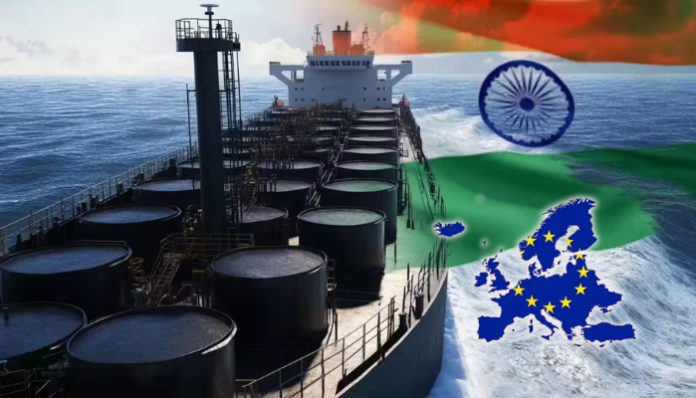
Amid the West Asia conflict and the prolonged Russia-Ukraine war, India has once again emerged as a major energy supplier to Europe. In the month of August 2026, Indian refineries supplied over 60 per cent of the diesel or gasoil that passed through the Bab-el-Mandeb Strait towards Europe. India is keeping diesel flowing to Europe as Russian exports declined to significant lows.
Three-fifths of diesel supplies to Europe came from India
Reports say that more than 2,00,000 barrels per day (bpd) of diesel and gasoil were moved on the route across the Red Sea chokepoint on vessels bound for Europe in the month of August this year. Of this volume, around three-fifths comprised Indian supplies. This signifies a major role India has grown to play in Europe’s refined fuel market.
The Indian diesel supplies to Europe surged amidst a sharp fall in Russia’s exports. Russia’s seaborne diesel exports averaged merely 150,000 bpd in the first 25 days of August 2026, going down from 610,000 bpd year-on-year and 81% below the five-year seasonal average.
Meanwhile, US seaborne diesel exports to Europe from outside the region were recorded at 520,000 bpd in August, which is around half of those imports, up from a quarter last year; however, they slumped sharply from a first-half peak of 540,000 bpd to 350,000 bpd in the second half.
Notably, India is the world’s fourth-largest refiner, with 258.1 million tonnes per annum capacity, and exported around 61.5 million tonnes of petroleum products in FY 2025-26. However, a Vortexa analysis indicates that India’s crude and condensate imports have dropped to 3.8 million bpd in August from about 4.8 million bpd a year earlier.
How Russia’s loss became India’s gain in European fuel market
While Europe’s eastern diesel supply route through Bab-el-Mandeb, the southern entrance to the Red Sea, linking the Suez Canal and Mediterranean, has recovered after earlier disruptions, it continues to face difficulties.
Russia, which once was a major diesel supplier to Europe, has witnessed exports decline sharply due to Ukrainian drone strikes on refineries and export infrastructure. Reports say that the Perm Oil Refinery has halted operations after a Ukrainian drone attack caused significant damage to technological units 21st August.
Ukraine has been targeting Russia’s energy infrastructure to cripple its economy and undermine war efforts by cutting financial income. Perm is now operating at 28 per cent capacity, with no diesel cargoes from Tuapse since a strike in May this year.
India’s complex and export-oriented refineries, particularly the Jamnagar refinery of Reliance, have spare capacity and can refine a wide range of crudes, then supply products to the highest-paying markets.
Indian-processed diesel flowing through Bab-el-Mandeb is significant because the West Asia crisis has rerouted or constrained traditional Gulf supplies, making the Red Sea corridor more crucial for some east-to-west product movements, although this remains a risky affair.