

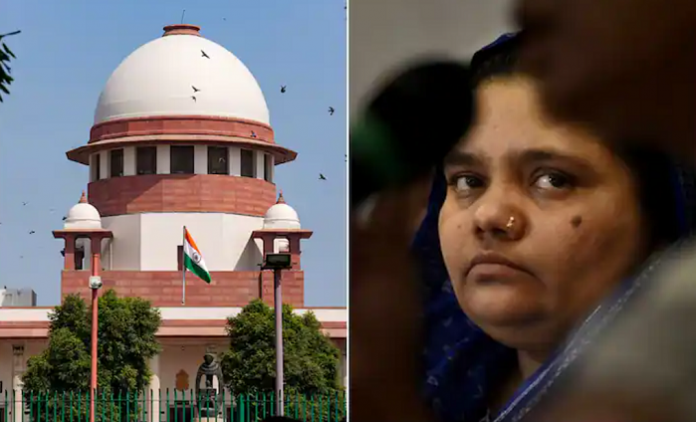
The Supreme Court dismissed a review plea filed by Bilkis Bano against its May 2022 decision giving the go-ahead for the remission of convicts who had raped her. She had pleaded with the apex court to review its verdict where it had held that remission of the convicts who raped her should be considered as per the policy existing at the time of the crime in Gujarat, where the crime took place.
On December 13, a bench of Justices Ajay Rastogi and Vikram Nath dismissed the review plea filed by Bilkis Bano.
The Gujarat government released all 11 people convicted to life in prison in the 2002 case of Bilkis Bano’s gang rape and murder of her seven family members after the Supreme Court bench led by Justice Ajay Rastogi and Vikram Nath directed it to review their appeal for relief under the state’s 1992 remission policy.
“I am directed to inform you that the review petition above mentioned filed in Supreme Court was dismissed by the court on December 13, 2022,” a ruling sent to Bano’s lawyer by Supreme Court assistant registrar said.
BIG BREAKING: Review plea filed by Bilkis Bano against the remission order granted in favour of the 11 convicts in the 2002 gang rape case has been DISMISSED BY SUPREME COURT #SupremeCourt #BilkisBano pic.twitter.com/63cQO62CdD
— Bar & Bench (@barandbench) December 17, 2022
According to reports, Bilkis filed a review of the ruling through Advocate Shobha Gupta, arguing that it was counter to the explicit text of Section 432(7)(b) of the CrPC, which provides that the competent authority to decide remission is the government of the State where the trial was held. She had argued that even being the victim of the crime, she had no clue about any such process of remission or premature release of the convicts.
The Supreme Court issued its decision in response to a writ petition brought by one of the prisoners. Bilkis also contended that arrested persons had clearly hid the information that the case was connected to the Gujarat riots.
On January 21, 2008, a special CBI court in Mumbai had convicted 11 persons in the case to life imprisonment for the alleged murder of seven family members of Bilkis Bano and her gang rape. The Bombay High Court later affirmed their conviction.
After serving more than 15 years in jail, one of the inmates petitioned the Supreme Court for an early release. The Supreme Court had instructed the Gujarat government to investigate the possibility of remission of his sentence under its 1992 policy based on the date of his conviction. Following that, the government organized a committee that decided to free all of the 11 imprisoned.


