

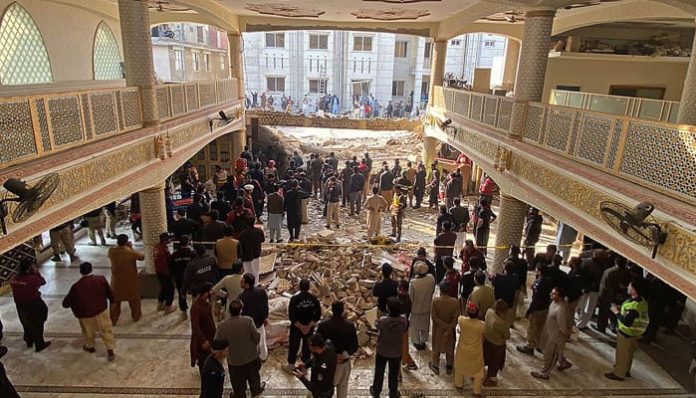
On January 30 (local time), a blast took place inside the Peshawar Police Lines mosque resulting in the death of at least 28 people. Around 150 were reportedly injured in the blast. Shortly after the attack, the Islamist terror outfit Tehreek-e-Taliban Pakistan (TTP) claimed responsibility for the bombing.
On Twitter, Sarbakaf Mohmand, a leader of the radical Islamist organisation took responsibility for the attack.
According to sources, Sarbakaf Mohmand is the brother of deceased TTP commander Umar Khalid Khurasani. He tweeted that the suicide attack was part of a revenge attack for his brother, who was killed in Afghanistan in August 2022.
پشاور میں پولیس لائن پر ہونے والا مبارک استشھادی حملہ، شھید عمر خالد خراسانی رحمہ اللہ کے انقامی سلسلے کا حصہ ہے ، جس میں دشمن کو بھاری جانی نقصان اٹھانا پڑھا، الحمدللہ pic.twitter.com/X24FwpWcVC
— Sarbakaf Mohmand (@SarbakafM) January 30, 2023
The terrorist organization’s spokesperson was not immediately available for comment.
Suicide bomber blows himself up inside Peshawar Police Lines mosque in Pakistan
OpIndia had reported earlier in the day, that a suicide bomber was present in the front row during the prayers. He detonated the device and as a result, the roof of the mosque collapsed. An eyewitness had said that it was a powerful blast and smoke was everywhere after the blast. The eyewitness lost consciousness due to the blast and when he gained back consciousness, he saw that the roof had collapsed.
Following the blast, Islamabad is on high alert. The entry and exit points of the capital city have been secured and security agencies are continuously monitoring the situation.
Tehreek-e-Taliban Pakistan declares parallel government with new cabinet
It may be recalled that last year in December, the Islamist terror outfit Tehreek-e-Taliban Pakistan (TTP) challenged the sovereignty of the Pakistani State and declared the formation of its new parallel government for the country.
TTP has now announced its own Cabinet of Ministers, ranging from Defence to Education. Reportedly, the terror organisation has ministries for political affairs, fatwas, Intelligence, and even construction.
Moreover, TTP has divided areas in its loose control into two zones – North (includes Peshawar, Malakand, Mardan, and Gilgit-Baltistan) and South (includes Dera Ismail Khan, Bannu, and Kohat)
Reportedly, the Ministry of Defence of the TTP is now led by a US-designated terrorist, Mufti Muzahim. The terror outfit also has a squadron of suicide bombers called the ‘Special Istishadi Force.’
The Tehreek-e-Taliban Pakistan (TTP), with its supporters, has attacked defense establishments in Pakistan 148 times within a year. And the success of the Taliban in Afghanistan has given these terror attacks by TTP a boost. But the central government seems reluctant to take action against them


