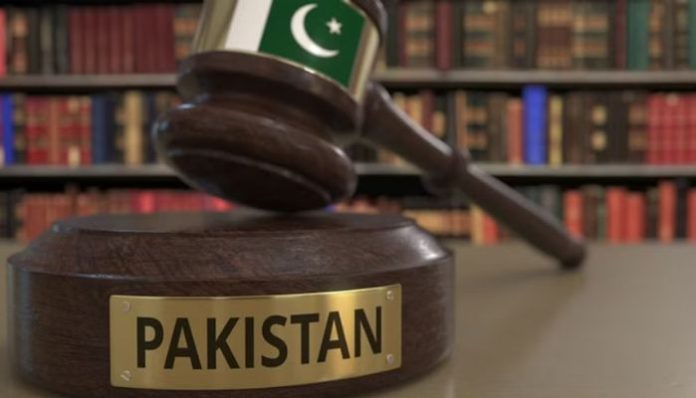
An anti-terrorism court in Pakistan has issued a death sentence to a Christian youth, accusing him of sharing a social media post that allegedly sparked riots in Jaranwala (a city in Punjab’s Pakistan) in August last year, Dawn reported.
Dozens of Christian homes and around 20 churches were vandalised and ransacked by mobs in Jaranwala following allegations that a copy of the Holy Quran had been desecrated.
Judge Ziaullah Khan announced the verdict, also sentencing the young man to 22 years in prison and imposing a fine of (Pakistani currency) PKR 1 million, as per Dawn.
Punjab police had claimed last year that around 135 miscreants had been booked for the attacks on the minority community in Jaranwala.
But according to advocate Akmal Bhatti, chairman of the Minorities Alliance, most of the accused had either been discharged or freed on bail. Hardly 12 people are currently facing trials, he said.
The issue of blasphemy allegations in Pakistan is highly contentious and sensitive, often resulting in serious consequences such as violence and fatalities. False accusations of blasphemy are frequently employed to settle personal scores, target religious minorities, or incite communal unrest.
These allegations frequently trigger immediate public outrage and mob violence, placing the lives of the accused and their communities in jeopardy.
According to the Human Rights Commission of Pakistan (HRCP), there have been numerous instances of false blasphemy accusations over the years, disproportionately affecting minority communities like Christians and Ahmadi Muslims.
Several incidents have resulted in lethal violence against individuals accused of blasphemy or their communities. For instance, in 2014, a Christian couple in Kot Radha Kishan was lynched and burned alive following allegations of blasphemy. Similarly, in 2021, a Sri Lankan national faced a similar fate in Sialkot due to accusations of blasphemy.
Blasphemy cases in Pakistan often unfold in an environment of fear and intimidation, with insufficient legal safeguards for the accused.
International human rights organizations have repeatedly highlighted concerns about the misuse of blasphemy laws and the absence of due process in Pakistan.
Despite both international pressure and domestic advocacy, the Pakistani government has faced criticism for its failure to amend or repeal blasphemy laws.