

What began as a political controversy over alleged intimidation of AAP workers in Gujarat has now taken an unexpected turn, with the investigation leading directly back to the party itself. AAP leaders, including Arvind Kejriwal, Gopal Italia, and Durgesh Pathak, had publicly alleged that party workers were receiving threatening phone calls from individuals claiming to be officers of the Intelligence Bureau (IB). The issue was amplified on social media, with questions raised about the alleged misuse of government agencies against political workers.
However, as the police investigation progressed, the narrative changed dramatically. The very case that AAP leaders had used to target the government and administrative machinery has now resulted in the Vadodara city president of the party, Ashok Ozha, being named as an accused.
Notably, Ashok Ozha is not an obscure figure within the Aam Aadmi Party. He has been associated with the party in Gujarat for several years and played an active role in its organisational expansion across the state. Throughout the period when AAP was attempting to establish itself as a major political force in Gujarat, Ozha was frequently seen alongside the party’s top leadership and enjoyed direct access to senior leaders.
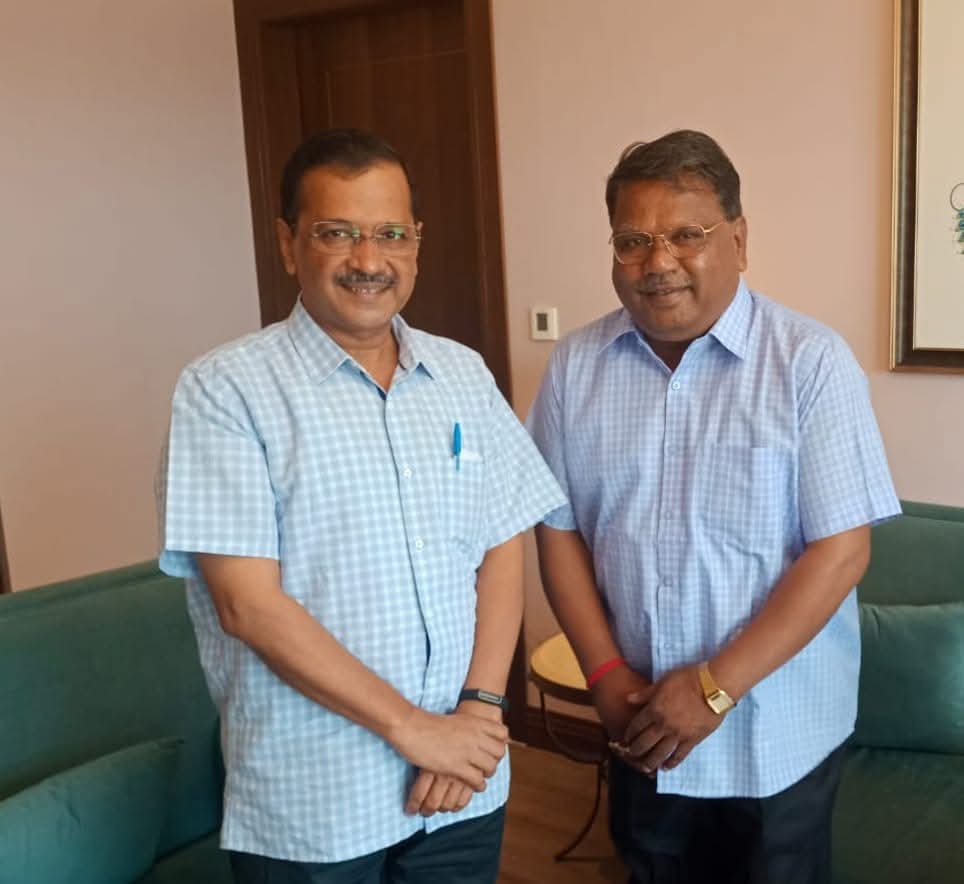
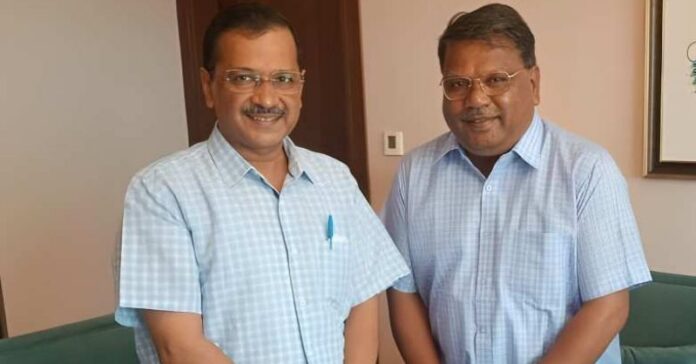
Photographs and records from various party events show Ozha in the company of AAP national convenor Arvind Kejriwal, Gujarat leaders Isudan Gadhvi and Gopal Italia, Punjab Chief Minister Bhagwant Mann, senior leader Manish Sisodia, and several other prominent faces of the party. He was also actively involved in organisational work and reportedly travelled to Delhi on multiple occasions to coordinate party activities.
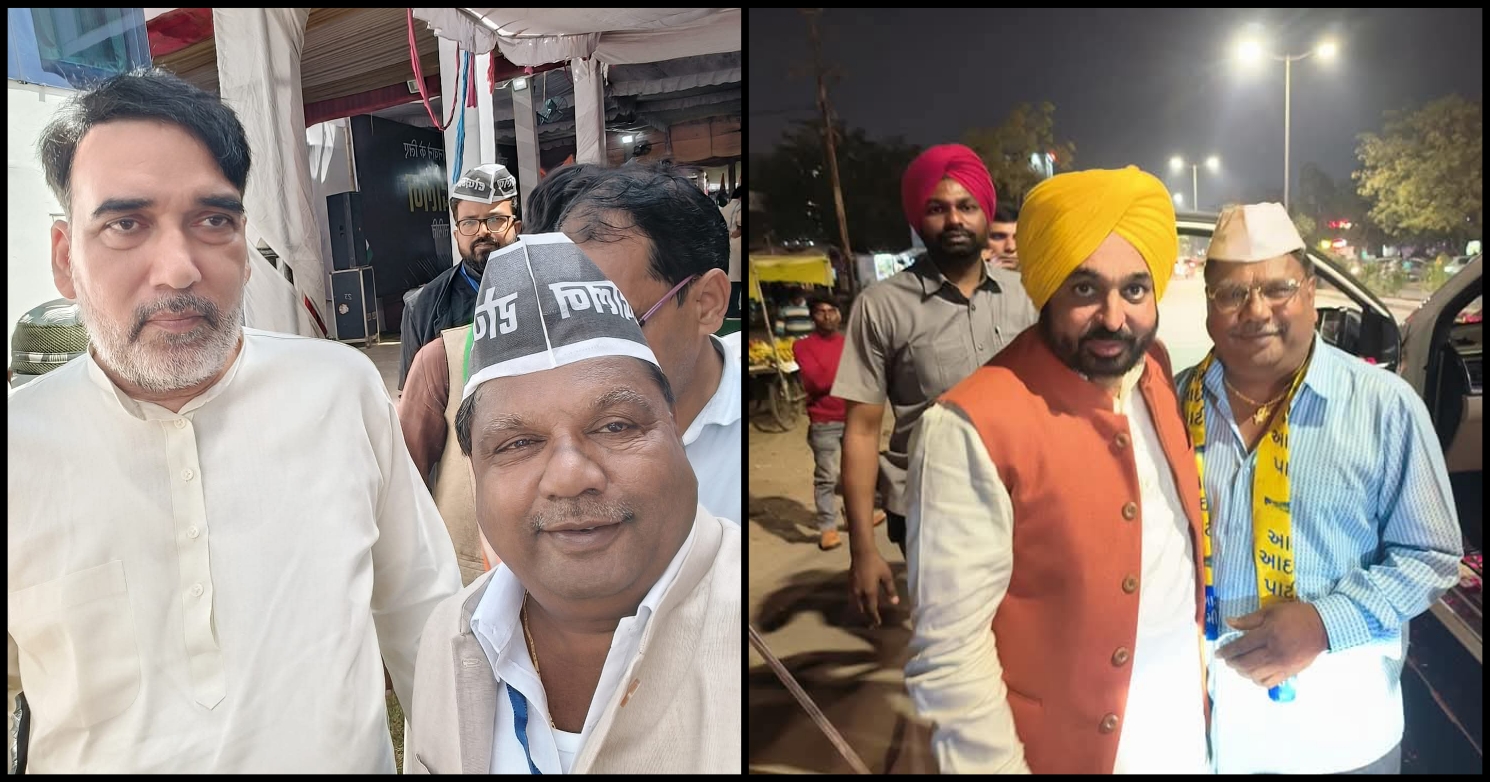
Ozha’s proximity to the party’s top leadership was not limited to occasional appearances. He was regularly present at key organisational events and maintained close working relationships with senior leaders. He was often seen with Gopal Rai, who previously served as AAP’s Gujarat in-charge, and was considered an influential organisational figure within the state unit.
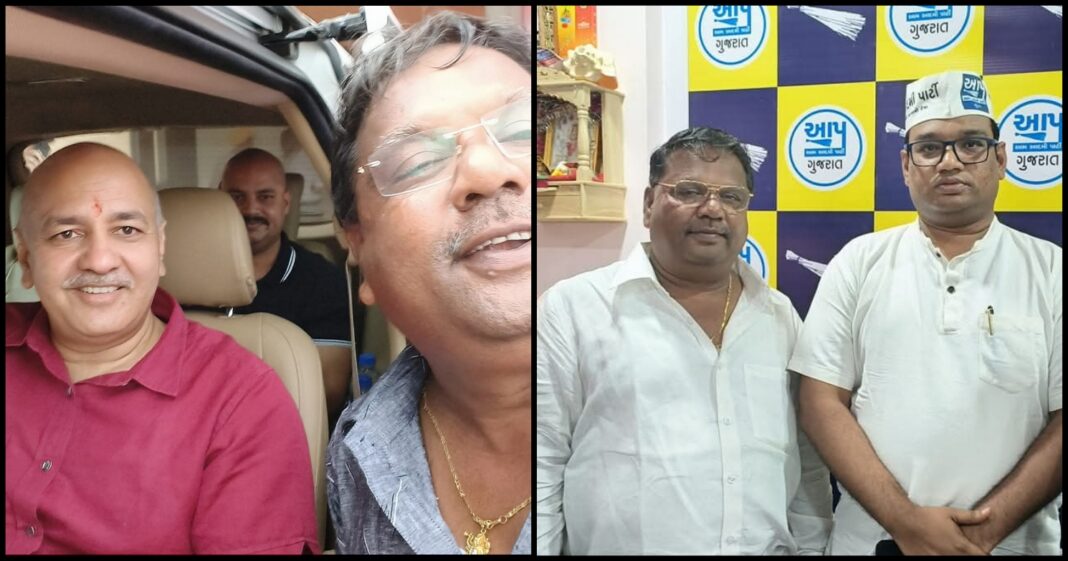
He also shared close ties with several Gujarat AAP leaders, including state president Isudan Gadhvi, Gopal Italia, and Manoj Sorathiya. Numerous photographs and public appearances over the years reflect his deep integration within the party structure.
What is the controversy?
The controversy began when several AAP leaders claimed that party workers and office-bearers in Gujarat were receiving suspicious phone calls from individuals introducing themselves as officers of the Intelligence Bureau (IB).
The issue gained significant attention after former Delhi MLA and AAP leader Durgesh Pathak publicly alleged that party workers in Gujarat were being contacted from a particular mobile number by a person claiming to be an IB officer.
Soon afterwards, Arvind Kejriwal himself raised the matter on social media. He claimed that one of the party’s workers had received such a call and further stated that he personally dialled the number in question. According to Kejriwal, when he asked whether the caller was from the IB, he received an affirmative response. However, after identifying himself as Arvind Kejriwal, the caller allegedly disconnected the call.
Kejriwal subsequently questioned under what law the Intelligence Bureau could conduct verification of citizens travelling from one state to another for political activities. Other AAP leaders echoed similar concerns, portraying the episode as evidence of political surveillance and harassment. The issue quickly evolved into a broader political controversy, with allegations that a government agency was targeting opposition workers.
The matter eventually reached the police after Anand-based AAP worker Keshav Chauhan reported receiving a similar call. A complaint was registered with the Anand Cyber Crime Police Station, which initiated an investigation using call records, mobile data, and technical evidence.
The first breakthrough came when investigators traced the controversial phone number to Nitin Dobariya, a resident of Anand. During questioning, Dobariya allegedly admitted that he had made the calls at the instruction of Vadodara AAP president Ashok Ozha and had, on some occasions, falsely identified himself as an Intelligence Bureau officer.
Following this revelation, police expanded the investigation and questioned Ozha. According to findings that subsequently emerged, the episode was not linked to any government agency or political rival but instead stemmed from internal factionalism and organisational rivalries within the Aam Aadmi Party.
Reports suggest that discontent had surfaced within sections of the Gujarat unit after senior Delhi leader Durgesh Pathak was assigned a more active role in the state. Investigators reportedly believe that Ozha feared growing intervention from the central leadership could weaken his influence within the local organisation.
According to the investigation, the alleged fake IB-call operation was orchestrated to create pressure on certain leaders and shape internal power dynamics within the party.
The development has turned the controversy on its head. What was initially projected by AAP’s top leadership as an example of alleged state intimidation has now led to the arrest of one of the party’s own city presidents and his associate. The same case that was used to raise questions about government agencies has ultimately exposed what investigators describe as an internal political tussle within the party itself.


