

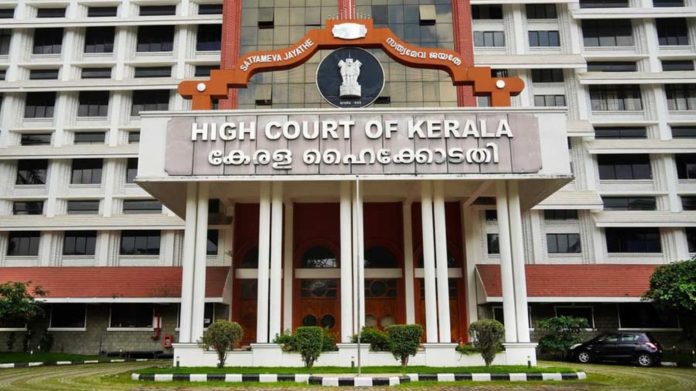
In a case of an attempt to commit unnatural sex with a minor victim, a single bench of the Kerala High Court reduced the sentence of the convict to one day. The court made the decision using its powers under section 4 of the Probation of Offenders (PO) Act, 1958, which allows the court to release certain offenders on probation of good conduct.
As per reports, the accused challenged his conviction in the case on the ground that he was just 19 when the incident took place in 2008 and therefore he is entitled to relief under section 360 of the Code of Criminal Procedure (Cr.P.C.) which allows a court to release an offender under the age of 21 years in certain cases.
High Court reduces sentence considering the age of the convict
Hearing the appeal, a single bench of Justice C.S. Sudha considered the offender’s age at the time of the offence while also expressing concern over the growing numbers of such cases. “Of late offences of this nature, that is, sexual offences against children and women are on the increase. Hence invoking the provisions of the PO Act may send a wrong message to society at large. However, considering the age of the accused at the time of the commission of the offence and the nature of the offence made out from the materials on record, a lenient view can be taken,” the Judge noted.
The incident happened in 2008 when the offender allegedly took the minor victim to a vacant building and attempted to commit unnatural sexual intercourse with him. He threatened the victim to harm his sister if he disclosed the incident to anyone. However, the victim’s aunt and others rushed to the spot after hearing his cries. The accused ran away on seeing them coming. He was charged under sections 377 (unnatural offences) and 506 (criminal intimidation) of the Indian Penal Code. He was convicted by the trial court which sentenced him to 4 years of rigorous imprisonment and a ₹10,000 fine (or three months imprisonment on default).
High Court ruled out the offence, saying only an attempt made out
The High Court ruled out the offence of unnatural sexual intercourse and observed that based on the evidence available an attempt to commit unnatural sexual intercourse was made. “There is no case of inserting/thrusting of the penis of the accused between the thighs of PM1 (victim) or rubbing it. The medical evidence on record shows that PW1 had complained of pain, and he had contusion on his scrotum. In the box, PW1 made a case that the accused had rubbed his genitals on his thighs. The materials on record do not make out an offence under section 377 IPC. At best the overt acts of the accused can only be termed as an attempt to commit the offence punishable under section 377, that is, section 511 of 377, and not an offence under section 377 IPC, “the High Court noted.
Clarifying section 511 IPC, the High Court said that when no specific punishment is provided for an attempt, the maximum sentence for the offence can be halved. Thus, the maximum sentence for an attempt to commit unnatural sexual intercourse will be half of the maximum sentence provided for the offence of unnatural sexual intercourse. The maximum sentence for the offence of unnatural sexual intercourse is 20 years hence the maximum sentence for its attempt will be 10 years.
The High Court also noted that section 19 of the PO Act overrides section 360 of the Cr.P.C. in Kerala making the latter ineffective. The offender was 21 years old at the time of conviction which made him ineligible for relief under section 6 of the PO Act which provides restrictions on imprisonment of offenders under 21 years of age. “It is true that one reason given by the trial court os that the accused is liable for imprisonment for more than 10 years and hence the benevolent provisions cannot be invoked, is not correct because the materials on record make out only an offence under section 511 of section 377. But in the light of the nature of the offences committed, I do not think that the benevolent provisions required to be invoked because not only was there an attempt to commit an offence under section 377 IPC but also threatening the victim with a dire consequence,” the court said observing that the trial court wrongly denied probation to the convict based on the incorrect legal provision.
The court also observed that Section 19 of the PO Act overrides Section 360 Cr.P.C. in Kerala, making the latter inapplicable. The appellant, 19 years old at the time of the offence but above 21 at conviction, was not eligible for relief under Section 6 (Restrictions on imprisonment of offenders under twenty-one years of age) of the PO Act. However, the court considered whether the provisions of Section 4 of the PO Act should be applied to release the accused on probation.


