

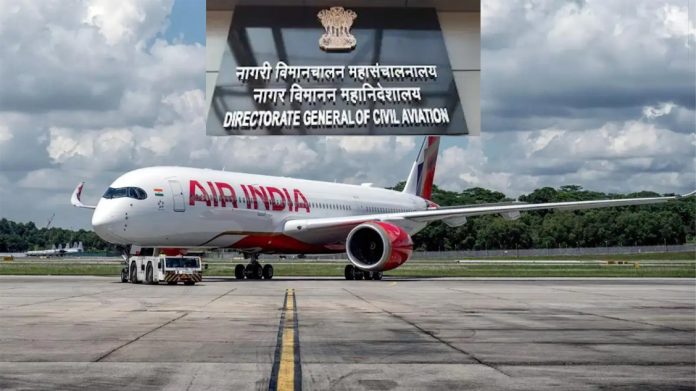
Air India is again in the dock over questions regarding its safety standards. India’s aviation regulator, the Directorate General of Civil Aviation (DGCA), has raised nearly 100 lapses of safety concern while conducting a recent audit of the airline. Of those, seven were Level 1 violations, which indicated serious threats and required immediate action.
The audit by the DGCA, which was conducted between 1st and 4th July at the main airport of Air India in Gurugram, examined the manner in which the airline manages operations such as crew training, duty and rest time, flight schedule, and overall safety procedures. The most troubling results had to do with overwork by the crew, bad training procedures, and having insufficient qualified personnel on flights.
Air India, in response, accepted that it had received the report and that it would reply within the timeframe. The airline further added that part of the process of enhancing operations is having regular audits. “We were completely open with the auditors and are already on the job regarding corrective measures,” it asserted.
These safety concerns have become more prominent following the devastating 12th June crash of Air India flight AI171. The Boeing 787 Dreamliner, which was en route to London from Ahmedabad, lost both its engines shortly after takeoff and crashed into a medical college building, killing 241 passengers and crew members and 19 on the ground.
A preliminary report by the Aircraft Accident Investigation Bureau (AAIB) last month disclosed some startling facts. The engines instantly ceased receiving fuel within seconds of one another. Inside the cockpit, the pilots were heard confused and panicking, with one asking, “Why did you cut off?” and the other replying that he didn’t. The report suggested that both fuel switches were somehow moved from ‘RUN’ to ‘CUTOFF’ right after takeoff.
On 23rd July, the DGCA served four show-cause notices to Air India for breaches related to crew rest, training, and flight operations. These were issued despite the fact that the airline had itself reported these incidents. The regulator had previously acted in this regard on 21st June by removing three high-ranking officials who dealt with crew scheduling.
In one instance, Air India’s pilots received no special training before a flight to a high-altitude airport, which could be risky if mishandled.
“Despite repeated warning and enforcement action of non-compliance in the past, systemic issues related to compliance monitoring, crew planning, and training governance remain unresolved,” said one of the notices.
The increasing number of safety incidents, particularly in the wake of a deadly crash, has fueled new concerns about whether Air India is taking adequate measures to protect both its passengers and crews.


