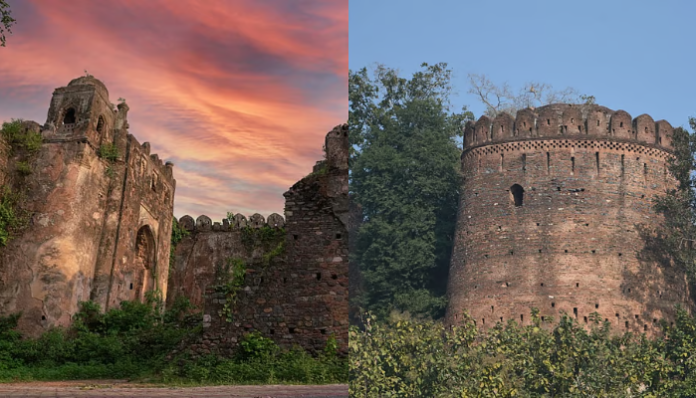
In a significant decision, the long-awaited restoration and conservation efforts at the iconic twin forts in Palamau Tiger Reserve of Jharkhand are poised to commence soon. The renovation of the 400-year-old Mughal-era structures, which were constructed by the tribal Chero monarchs of Palamu, has already been the subject of a thorough project report.
Currently, the forts are in terrible shape with the enormous buildings slowly disintegrating into rubble. The interiors are filthy with parts of the walls in dangerous conditions. The landmark development put an end to a wait of more than two decades that was characterised by problems with forest clearance, bureaucratic hold-ups and Maoist terror.
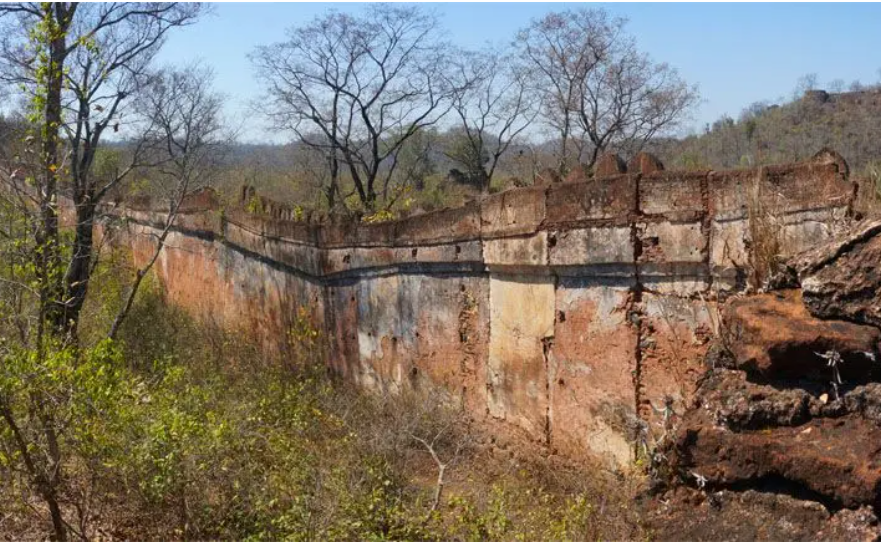
Palamau Tiger Reserve (PTR) Deputy Director, Prajesh Kant Jena informed that a Detailed Project Report (DPR) for the preservation of the forts has been produced. It is pending a final examination by Archaeological Survey of India (ASI) agencies.
The agencies under the ASI will start the process of requesting tenders for the repair and restoration of the forts after the Building Construction Department has verified the report prepared by the Indian Trust for Rural Heritage and Development. State ITRHD head Shree Deo Singh reported that the new fort occupies 11.5 acres while the old fort spans 18 acres.
It was decided to start the tendering process and hand over the contract to a company with previous experience in developing archaeological sites, at a recent high-level meeting.
The meeting was chaired by state Tourism Minister Sudivya Kumar and attended by Finance Minister Radha Krishna Kishore and secretaries of the tourism and forest departments, according to an official release. According to the statement, the project is expected to cost between ₹40 and ₹50 crore.
Jena stated, “It’s a dilapidated building of medieval architecture, built in 1628 and it needs technical intervention. In 2005 and 2011, proposals had come and ASI had visited the place, but somehow, it could not take off.” He affirmed that the project’s foundation has been laid.
“All hurdles have been cleared and all stakeholders have given their go-ahead to the restoration project. Once the tender is finalised, the restoration work will begin,” he pointed out and added, “Now, they have to find out a proper party or agency which can do justice to this cultural heritage.”
Jena and his team started a comics-based campaign to raise awareness of the architectural beauty and historic value of the buldings, in 2024. The project was reportedly approved by the state government in 2005, but it never started because of multiple obstacles, including forest clearance because the sites are under PTR’s purview in the Latehar district.
The Chero rulers
According to the Archaeological Survey of India’s book “The Chero of Palamau,” the Chero governed Palamu, starting in 1613 CE (Common Era). Their original home was the Rohtasgarh fort in Bihar but over the course of several centuries, they moved to Palamu and relocated in the areas of Shahabad, Saran, Champaran, Muzaffarpur and Palamu in Bihar and Jharkhand.
The area was ruled by the Mughals until the early 17th century. However, Chero chief Anant Rai expelled the Mughal imperial troops stationed there and proclaimed independence. He then founded the kingdom that would govern the territory until 1818 CE.
Man Singh, a Raksel Rajput leader and governor of Bihar during the Mughal era clashed with the early Chero kings. The Mughal-Chero conflict persisted for many years under Akbar, Jehangir and Shahjahan. Medini Rai, regarded as the most powerful king to have ever ruled Jharkhand, succeeded Anant Rai who died in 1619. The twin forts were constructed during the reign of these two monarchs.
The historic twin forts of Palamu
The ruins of the forgotten kingdom of Cheros can be found deep within the jungles of Jharkhand’s Palamu Tiger Reserve. The twin forts of Palamu were once inaccessible because of the Naxal threat. They narrate the story of a formidable kingdom that is largely unknown to those beyond Jharkhand, harboring secrets hidden within their ruins that will emerge once they are restored to their former glory.
The forts lie approximately 20 miles southeast of the tourist destination Daltonganj (currently known as Medininagar). It was the stronghold of the Chero tribe which governed the area for two centuries. During the early Mughal era, in 1628, the two forts Purana Quila and Naya Quila were erected on the banks of the Auranga River, deep within the forest.
Cheros defended the forts against the Mughals for several years, however, Daud Khan, the Governor of Bihar, eventually took control of the structures and the conquest is reflected in the Islamic-style architecture.
The old fort
Anant Rai is credited with building the fort on the lower plain, which is commonly referred to as the Old Fort. Later, Raja Medini Rai expanded and strengthened it employing the ruins of Navratangarh at Doisa, the capital of the Nagvanshi kings of Chotanagpur. Some historians, however, contend that the Raksel dynasty constructed the ancient fort and the Chero royals subsequently restored it.
The layout of the Old Fort is rectangular. Its walls are around 25 feet high, 7 feet thick and their dimensions are roughly 250 yards east to west and 150 yards north to south. The upper story of the fort forms a long verandah with small covered enclosures.
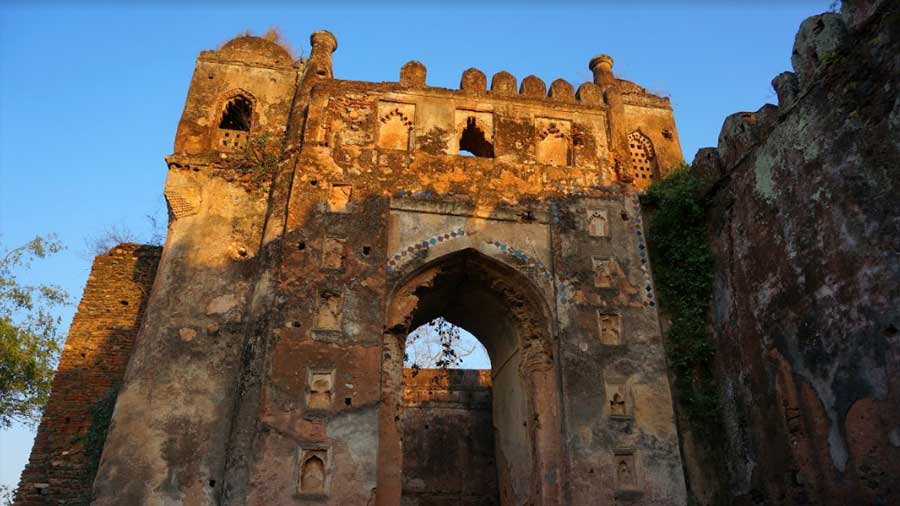
The western half of the fort towards Betla has an entrance with remnants of stones with Meenakari. There is a broad passageway with tiny, covered alcoves (could have used as sentry posts) on the upper story. It might have served as a Naubat Khana, where musicians played “Naubat” or large war drums, whenever the Chero rulers passed through. The fort had three gates and defences on three sides.
An open courtyard is seen from the upper corridor upon entering through the gate. It has ventilator-equipped staircases on both sides and has multiple high-walled entrances to the fort.
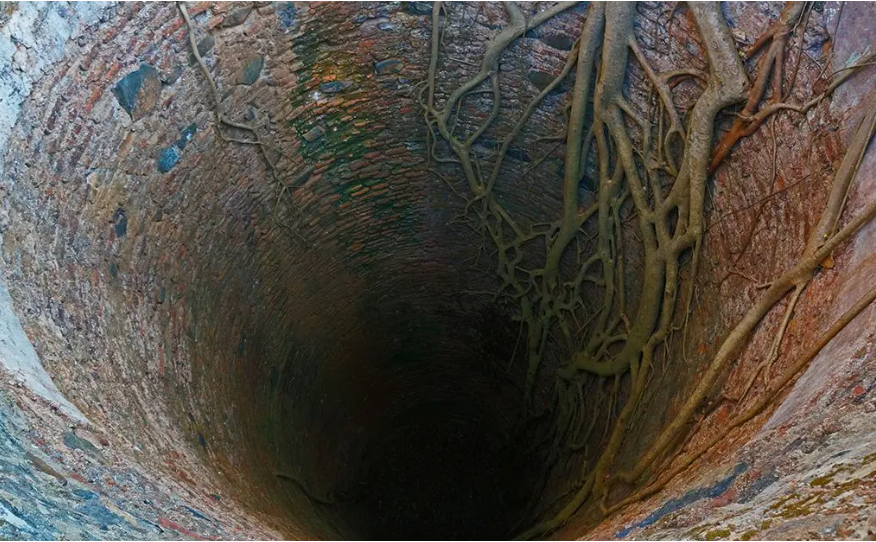
There is a deep well in the centre of the pathway via the western entrance and a decaying brick mosque with three domes and octagonal towers at the back wall’s corners. The Tarikh-i-Dandia by 16th-century poet Abdullah mentioned that in 1660 AD, Daud Khan installed the mosque in memory of his victory of Palamu. A short distance from the fort’s western entrance lay the remains of another mosque.
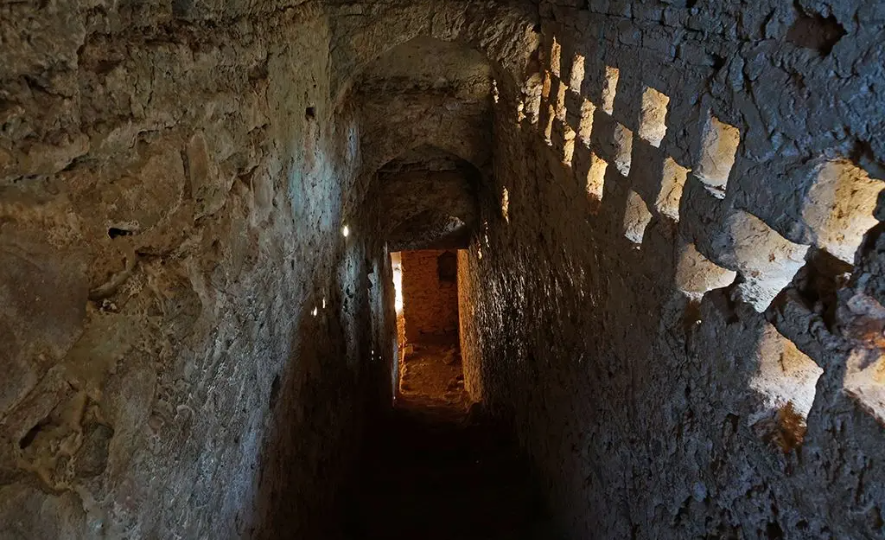
The fort still houses some living quarters, including an impaired palace of a king. Just beside the fort’s entryway, there is a secret tunnel located on the lower side of the wall which might have been employed as an escape route in times of crisis. Moreover, several small staircases are available for visitors to ascend the wall’s ramparts.
The new fort
The new fort appears impressive even from a distance as it stands atop a conical hill. It was constructed by Medini Rai, according to some historians, but Pratap Rai, his son and successor is credited by others. The rectangular building is slightly over 90 meters from north to south and 230 meters from east to west. A motorable road has now been built all the way up to the main gate of the fort which made the ascent simpler.
A continuous sequence of domed (vaulted) chambers housed within the structure’s walls which are 17 feet thick and hold garrison. The rampart consists of a 12-foot-wide passage and the standard battlements. On the southern wall, two enormous circular bastions are encased in domes that let in light through four windows. There are large circular bastions with dry pits for ammunition storage.
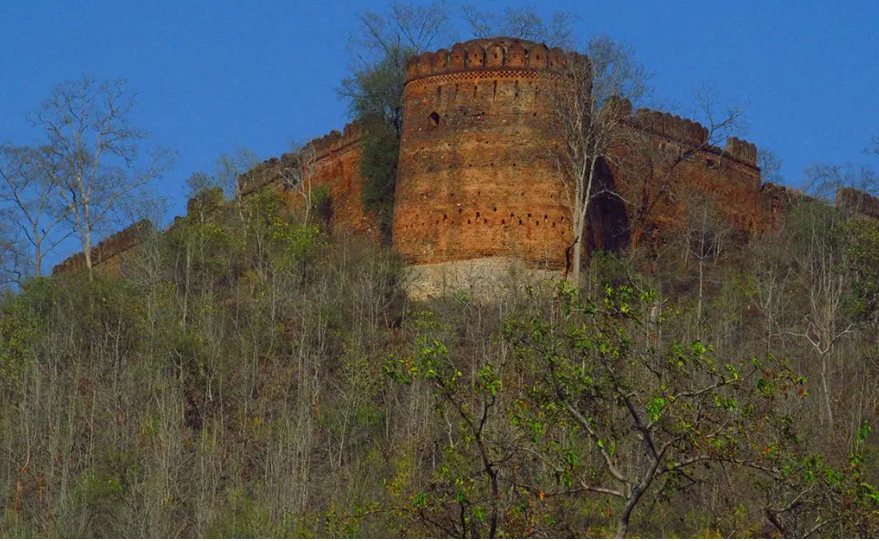
The staggering Nagpuri Gate is the main entrance to the fort which is located around 80 feet past the fort wall. Despite being in terrible condition, the remnants of its fine exterior continue to exist and the inscribed names of the Chero kings are visible in Devangari on one side of the gate. However, the Persian inscriptions have vanished.
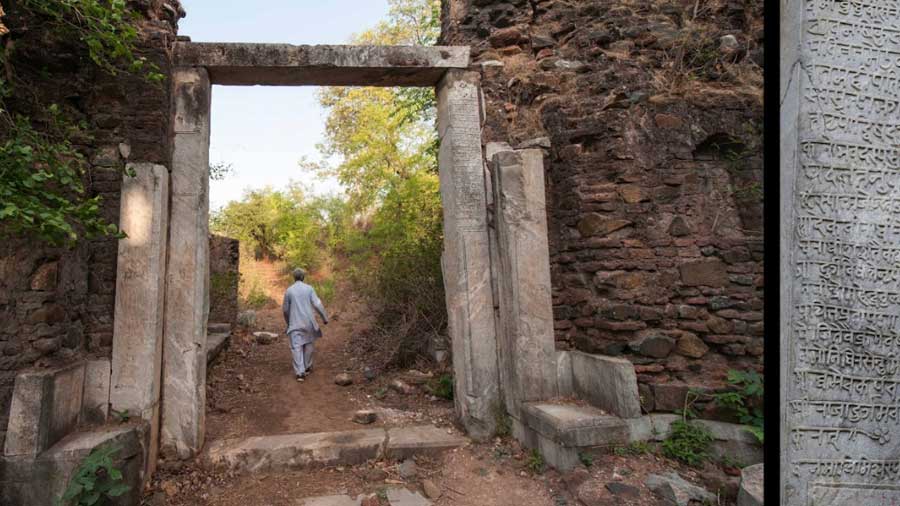
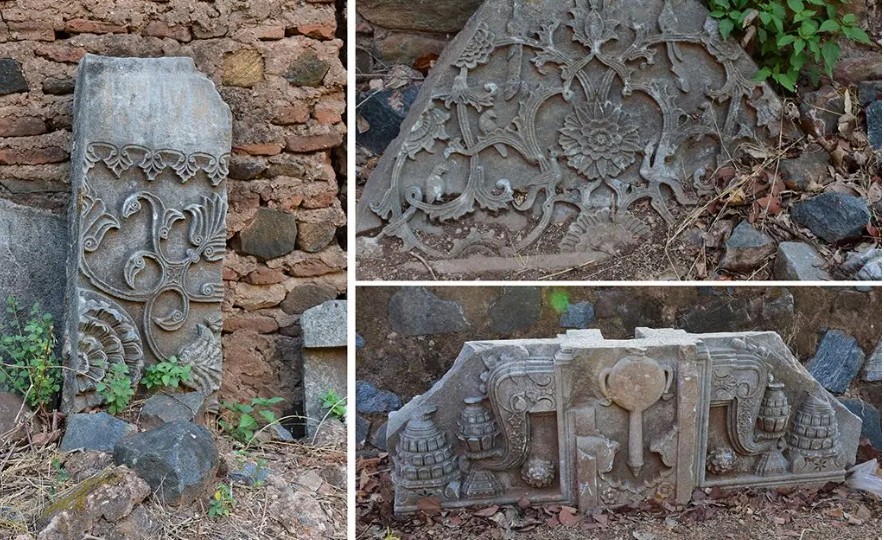
The entryway is littered with several stone artefacts and what are likely fragments of the fort’s architecture. Visitors can see the Auranga River, the surrounding area and the landscape from the bastion which is reached by a pathway.
Unfortunately, very little of these two forts are left, save from the walls, wells and a few temples. Usually, this would be attributed to the whims of time, but in the middle of the 19th century, the British made the conscious decision to destroy them.
Britishers demolished the forts
Internal strife caused the Chero kingdom to start disintegrating after more than 150 years of peace and stability. The reigning King Ranjit Rai was assassinated amid a rebellion in 1722. He was replaced by Jai Kishan Rai but met the same fate, during his rule. Thus, the Chero kingdom was to plunge into a perpetual civil war.
The British, who had seized power in the nearby Bengal province during the Battle of Plassey in 1757 became interested due the struggle in the kingdom. The British East India Company invaded and seized control of the Chero Kingdom of Palamu under the guise of “restoring peace.”
The kingdom was eventually disbanded and placed under direct British rule in 1817-1818 after which another rebellion erupted in Palamu during the 1857 uprising. The British recaptured the forts in January 1858 after the rebels used them as their headquarters. Furthermore, the Commissioner of Patna ordered the demolition of the majority of the structures and their fortifications to put an end to the movement and make sure that the people could not oppose the colonizers.
Red-terror and other challenges
According to HP Sinha, a former deputy director at the state archaeology department, restoration work had been started in 2007–2008 but was unable to proceed for two reasons: Maoists and the lack of authorisation from the forest department.
He outlined, “The entire area was affected by Maoist activities at that time. This was a major hurdle.” The major success of the Modi government in its commitment to eradicate leftwing extremism from the nation may have facilitated the progress of this crucial project.
He further disclosed, “Besides, a certain number of trees needed to be felled for the restoration work. But, we did not get the permission of the forest department for a long time.”
A team of ASI specialists and Latehar administrative representatives toured the twin forts in February 2021 to create a conservation plan. According to a former director of tourism, the ASI expressed interest in rehabilitating the forts but the forest department objected because they are located within the only tiger reserve in the state.
Jena highlighted, “When ASI undertakes any work, it requires the transfer of land into its name. Since the forts are in a tiger reserve area, land cannot be transferred.” He conveyed that further research revealed that while there is no legal requirement to carry out renovations, land in the Tiger Reserve area cannot be sold to any party.
“If a DPR for renovation is approved by ASI through its technical specification, the work can be done. So, a DPR has been prepared and it needs vetting,” he added.
Deo Singh informed, “Stone and Lakhori bricks were used in the original structure. Lime and ‘surkhi’, finely powdered burnt clay, were used as mortar. The same materials will be used in the restoration of the structure. The essence of the original architectural style will be maintained.
He explained that the presence of huge trees on campus, with their roots extending over the memorial walls, is a major obstacle and warned, “The structure is about 40-feet high and around three to four metres wide. If the trees and roots were not removed carefully, they may damage the structure after restoration.”
These forts are characterized by their distinctive architectural features. They represent a critical aspect of Jharkhand’s heritage and are among the final remnants of the Chero kings in Palamu. These historic buildings required maintenance and preservation.
Now, efforts are being made to restore this previously lost architectural jewel and to bring to light the valorous dynasty that not only fought against the Mughal invaders but also founded a powerful kingdom for its people. Cheros might have faded into the depths of time and history but their accomplishments should not remain the dark and Palamu’s twin forts are a pivotal part of their legacy and a gateway to their incredible past.