

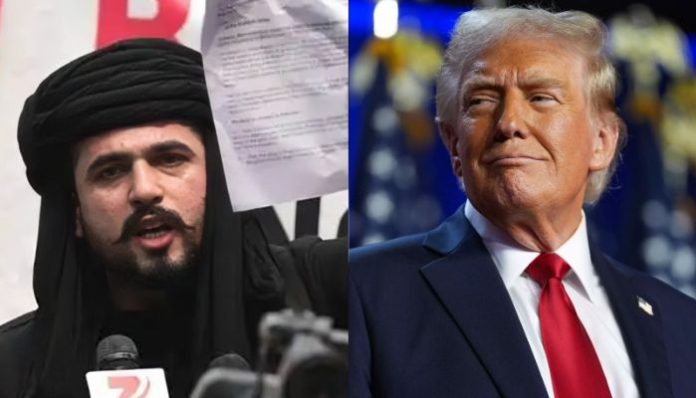
On 11th August (local time), the United States once again placed the Balochistan Liberation Army (BLA) on its list of Specially Designated Global Terrorists (SDGTs). With this move, the US blocked any assets the group may hold under the jurisdiction of the United States and prohibited US citizens from engaging with it. The decision came in the wake of Pakistan Army chief Gen Asim Munir’s visit to the US, a visit that saw the general, dubbed by his critics as ‘Maulana’ Asim Munir, make chilling nuclear threats during a private event on American soil.
The nuclear sabre did not rattle the US as it should have. Instead, it was followed by renewed strategic warmth and even reports of a potential US–Pakistan oil deal involving Balochistan’s resources. According to Baloch activists, such deals are nothing short of legitimising theft.
As a matter of fact, OpIndia spoke to Mir Yar Baloch, a prominent Baloch activist, who minced no words in condemning both the BLA designation and Washington’s courting of Pakistan’s military establishment. Speaking to OpIndia, he said, “If you wish to purchase something from a marketplace, you do not negotiate with the thief clutching stolen goods; you speak to the rightful owner,” and stressed that Balochistan is “a nation in its own right” with sovereign authority over its oil, gas, and rare earth minerals.
‘The US is negotiating with a thief, not the owner’
Mir Yar Baloch said the US decision to entertain a resource deal with Pakistan over Balochistan’s oil was nothing short of a diplomatic disgrace. He emphasised, “Balochistan is not a province to be claimed, it is a nation in its own right,” and added that Pakistan’s presence in the region was “nothing less than an illegal occupation” with “no legitimate documentation, no lawful right, and no moral standing” to control its land and resources.
Drawing a sharp analogy, he said, “If you wish to purchase something from a marketplace, you do not negotiate with the thief clutching stolen goods; you speak to the rightful owner. Pakistan is not a stakeholder; it is a trespasser, a looter, a dacoit whose only claim is force and fraud.”
For him, Washington’s conduct was not only about bad judgement but also about moral failure. He accused the US of allowing ISI-linked, pro-Pakistan networks to grow “alarmingly strong” in its capital, blinding policymakers to what he called “the undeniable truth: Pakistan’s military and ISI are steeped in the blood of American citizens, their record drenched in decades of terrorism.”
He warned that deals struck with Islamabad over Balochistan’s oil and gas only serve to entrench the military establishment’s power while dispossessing the rightful custodians of their land. He said that the issue was not merely about resource exploitation but about the US legitimising a regime whose chief stands on American soil threatening the world with nuclear annihilation. He said, “Our call is simple: distinguish between those who fight for freedom and those who leverage weapons of mass destruction to maintain power.”
‘A betrayal of truth’ – Washington brands freedom fighters as terrorists
Speaking on the US decision to once again designate the Balochistan Liberation Army (BLA) as a terrorist group, Mir Yar Baloch called it a “betrayal of justice and truth.” He argued that the BLA’s fighters “do not target innocents, they do not wage war on civilians, and they do not sow chaos for extremist ideology or greed.” Instead, he described them as men and women fighting “for survival, dignity, and liberation from an oppressive occupier.”
He contrasted this with what he called the “real architects of terror”, that is, Pakistan’s military and the ISI, who for decades have unleashed violence far beyond Balochistan’s borders through a network of extremist proxies. He said, “This is state-manufactured terror at its ugliest, a machinery of blood and deceit.”
He further cited Ukrainian President Volodymyr Zelenskyy’s statement that Pakistani nationals had been found fighting for Russia in Ukraine and said the revelation was “proof that Pakistan’s terrorism is not a regional menace, it is a global threat.”
Citing Ukrainian President Volodymyr Zelenskyy’s statement that Pakistani nationals had been found fighting for Russia in Ukraine, Mir Yar Baloch said the revelation was “proof that Pakistan’s terrorism is not a regional menace, it is a global threat.”
“If America truly seeks justice and security, it must have the moral courage to name the real threat — Pakistan’s military apparatus, a global terrorist army masquerading as a sovereign state,” he said. “Anything less is a betrayal not only to the victims of their crimes, but to the very principles the United States claims to defend,” Mir Yar Baloch added.
‘Theft dressed as statecraft’ – A warning to the US and the world
Mir Yar Baloch urged that the United States and other global powers must recognise Balochistan’s legitimate representatives rather than dealing through Islamabad. He said the fighters in the independence movement are “the future national army, defenders of borders, guardians of the skies, and protectors of the seas”. He argued that these fighters stand as the shield between Balochistan and those who seek to plunder it.
He further accused Pakistan’s military of surviving on “deception, manipulation, and bloodshed,” and added that its history “reeks of atrocities and broken promises” while its present policies are “woven from lies” and its future doctrine is “a blueprint for instability and global insecurity.”
While highlighting Islamabad’s duplicity, he said, “Pakistan calls China its ‘iron brother,’ yet in the same breath, it courts Washington with deals over Balochistan’s stolen oil. This duplicity is not diplomacy, it is theft dressed as statecraft.”
He warned that without Balochistan’s stolen resources, Pakistan would be “nothing more than an irrelevant, artificial buffer zone” which is alive only to serve the shifting interests of global powers. He argued that the solution was clear, that is, “Engage directly with the rightful custodians of this land if you truly seek peace, stability, and cooperation in South and Central Asia.”
‘A historic opportunity’ – Urged India to recognise Balochistan’s sovereignty
Turning to India, Mir Yar Baloch said New Delhi now has a “unique and historic opportunity” to safeguard its own strategic interests while aligning with the truth of Balochistan’s sovereignty. He reminded that the Baloch people declared independence on 11th August 1947, before the creation of Pakistan, and have “never relinquished” their sovereign rights.
He described the events of 27th March 1948, when Mohammad Ali Jinnah unilaterally annexed Balochistan, as a “blatant violation” of treaties, principles of territorial integrity, and international law. “This act of aggression was never legitimised by the Baloch people. We remain a free nation under occupation,” he said.
He urged India to incorporate Balochistan into its foreign policy not as interference but as “an acknowledgment of historical truth and international law.” He proposed a 50 to 100-year strategic plan between India and a future independent Balochistan to create a stable, democratic, and strategically vital state in the region.
Mir Yar Baloch argued that a secular, democratic Balochistan could act as a “bridge for peace” and enable maritime and overland trade corridors benefiting a wider region. However, he warned that “continuing to empower Pakistan will only deepen instability” and allow the ISI’s entrenched extremist networks to keep posing a threat to neighbours and global security alike.
“Engaging with Balochistan is not merely solidarity; it is a strategic investment in a stable, cooperative, and peaceful South and Central Asia,” he concluded.
Washington’s moral failure and the cost of legitimising occupation
Mir Yar Baloch’s words reflect a scathing indictment of Washington’s willingness to court Pakistan’s military establishment, which is led by a man who issues nuclear threats on American soil while branding those resisting illegal occupation as terrorists. For him, this is not merely hypocrisy, it is the legitimisation of theft and the endorsement of a regime whose record is, in his words, “drenched in decades of terrorism.”
From his standpoint, Balochistan’s cause is anchored in history, law, and the right to self-determination. Yet, by cutting oil deals with Islamabad and ignoring Pakistan’s nuclear sabre rattling, the US is signalling that strategic convenience trumps moral clarity.
In his telling, the choice is clear. The world can either engage directly with the rightful custodians of Balochistan, a nation in its own right, or keep empowering what he calls “a global terrorist army masquerading as a sovereign state,” with all the instability that follows.


