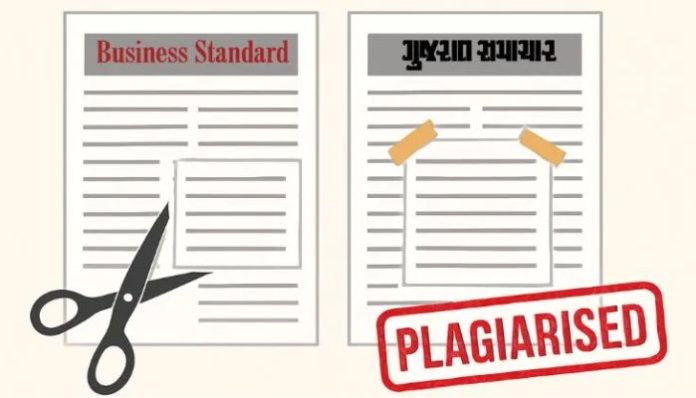
Editorials are often described as the “soul” of a newspaper. For decades, they have been the space where editors set the tone for public debate, shape opinions, and comment on the issues of the day. But gradually, their significance has waned.
Readers nowadays skim them, and even authors do not seem to give their heart to them anymore like before. Nevertheless, all serious papers still have editorials, because there is tradition involved.
In this context, a recent editorial published in the Gujarati daily ‘Gujarat Samachar’ has sparked a debate in the state. Known for its fiery journalism in the past, sometimes rattling even leaders like Narendra Modi or Donald Trump, the paper published an editorial on 18th August titled “Challenges Before the Nation.”
At first glance, the headline promised a scathing criticism of the administration. Since the paper is known for its journalistic integrity, people expected an article with a lot of nuance but alas.
What the readers got was an average write-up presented in the dry and impersonal style of editorials everywhere.
What’s in the editorial
The editorial started by mentioning the Independence Day celebrations last month. It had noted that there was no dearth of reasons to celebrate. In spite of its several differences and internal conflicts, India had continued to become a stronger nation, the editorial said.
The article cited Operation Sindoor, discussed national integration, and indicated that the nation’s achievement as one of the world’s fastest-growing economies was a fact. It even pointed out that poverty has reduced.
In the second half, the article addressed the issues of the future. It mentioned global politics, such as the United States and the issue of trade tariffs, very briefly, and emphasized the value of strong institutions and a rules-based order.
The final paragraph, though, brought in a political twist. It contended that at times a parliamentary majority acts like a flock of sheep. Referring to BJP-governed states, it said lawmakers were handed a list of pre-approved questions to be asked in assemblies, rendering them incapable of raising the actual issues of their constituencies.
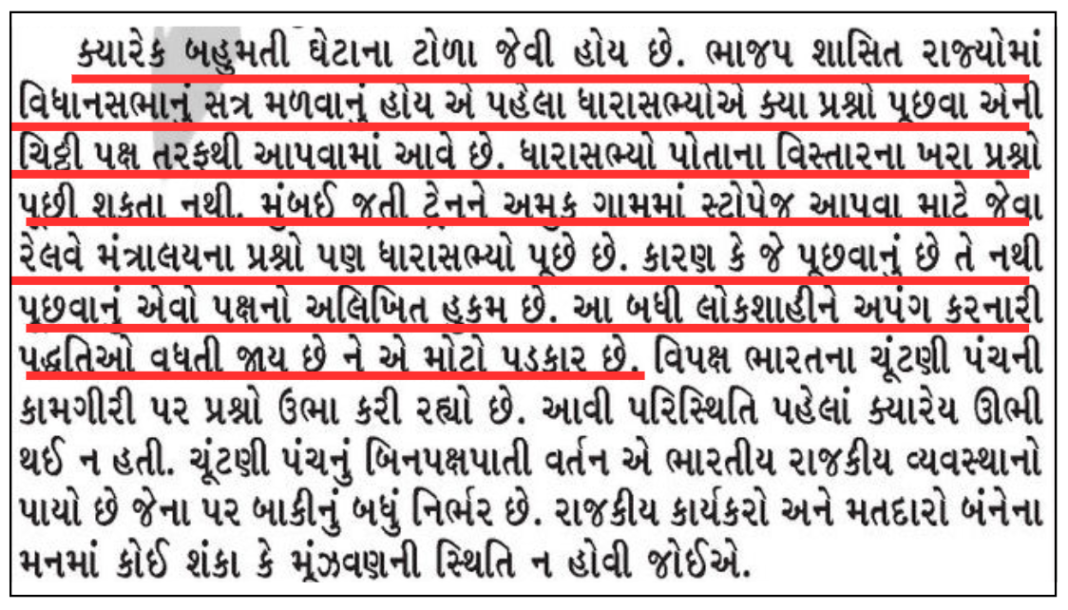
This, the editorial noted, undermined democracy. The article also questioned the Election Commission, pointing out that opposition parties had questioned its impartiality in the open, something, it asserted, was never previously done. An impartial and equitable Election Commission, the article contended, formed the cornerstone of Indian democracy.
Similar editorial published in Business Standard’s Hindi edition earlier
It appeared to be just another ordinary editorial at first glance. On closer inspection, however, a strange thing became evident. Pratically the same article had been published four days earlier, on 14th August, in the Hindi edition of Business Standard.
That one had been published with the title, “On the 79th Independence Day: India’s Achievements and Challenges, the Need for Strong Institutions.”
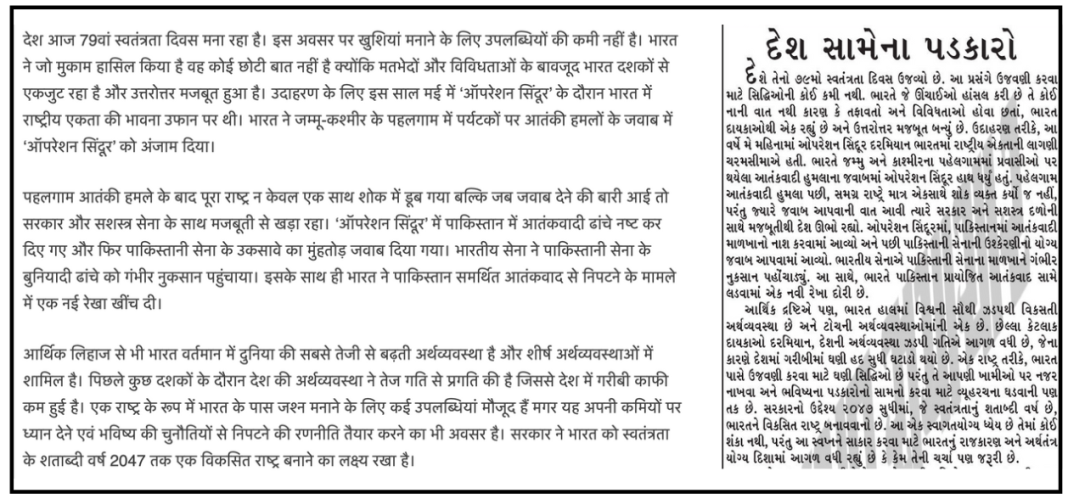
The parallels were remarkable. Right from the introductory paragraph to the composition of the arguments, almost everything was the same. The only variation was that the Business Standard news item was in Hindi and Gujarat Samachar editorial was in Gujarati.
With the exception of the concluding anti-BJP observations, which were not included in the Business Standard version, the two editorials were more or less the same. Paragraphs, words, phrasing: everything was word-for-word.
In the world of journalism, it is not uncommon for the content of one newspaper to be carried by another. Lots of Indian papers have no qualms about reproducing reports or opinion pieces from foreign newspapers, particularly The New York Times or The Washington Post. But this is done on formal terms and always with acknowledgement. The reader is informed that the piece originally appeared elsewhere.
Editorials are distinct. They are the voice of a newspaper. It is rare to the point of impossibility for them to be duplicated, or “borrowed”—from another newspaper. When such a situation does occur, the source will normally be credited.
Gujarat Samachar did not provide any such explanation in this instance. The editorial was presented in the form of the paper’s voice, with no reference to Business Standard.
No collaboration between the two newspapers
When OpIndia contacted Business Standard to seek clarification, the response was clear: There is no understanding whatsoever between the two newspapers. Neither the English newspaper nor its Hindi counterpart has licensed Gujarat Samachar to reprint its content.
This makes the issue all the more strange. In the absence of a syndication arrangement or a mention, reprinting another newspaper’s editorial, practically word-for-word raises grave doubts.
According to sources, the matter is being examined by Business Standard. The management is considering the issue and will take a decision regarding further action after ascertaining facts.