

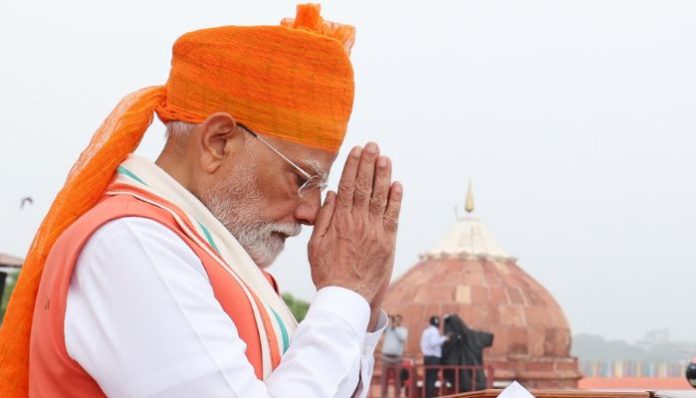
On Friday (15th August), Prime Minister Narendra Modi highlighted the reforms undertaken by his government to usher India into self-reliance (Atmanirbhar Bharat) and make it developed (viskit) by 2047.
While speaking from the ramparts of the Red Fort on the occasion of 79th Independence Day, PM Modi stated that his government is committed to creating a modern, efficient, and citizen-friendly ecosystem with simplified laws, regulations, and processes.
He pointed out that reforms are crucial to transform India and contribute to nation building. During his speech, Prime Minister Narendra Modi said that his government abolished more than 40000 unncessary compliances.
At the same time, over 1500 obsolete laws were repealed. The Modi government simplified more than a dozen other laws through the Parliament.
In the recently concluded Monsoon Session of the Parliament, it removed more than 280 provisions from the law and made governance simpler and accessible to the public.
The underlying objective has been to transform the daily lives of Indian citizens. Key reforms include
- Zero tax up to ₹12 lakhs annual income
- Faceless assessment under the Income Tax Act
- Replacement of outdated criminal laws with the Indian Justice Code
- GST reforms on Diwali will reduce taxes on essential items
Reforms for the future
To ensure the comprehensive implementation of next-generation reforms, Prime Minister Narendra Modi on Friday (15th August) announced the formation of a task force.
It will evaluate current laws, rules and processes about economic activities. It will work within a strict deadline to ensure ease of doing business, reduce compliance costs for startups, MSMEs and provide freedom against arbitrary legal hassles.
The reforms will create a conducive environment for innovation, economic growth and entrepreneurship.
While addressing the nation, Prime Minister Narendra Modi reiterated that we should extend our line of progress instead of focusing on others’ limitations.
He had outlined plans to improve India’s indigenous capabilities across varied sectors, find new opportunities and empower citizens.
PM Modi had underlined that his government is committed to structural, regulatory, policy, process, and procedural reforms.


