

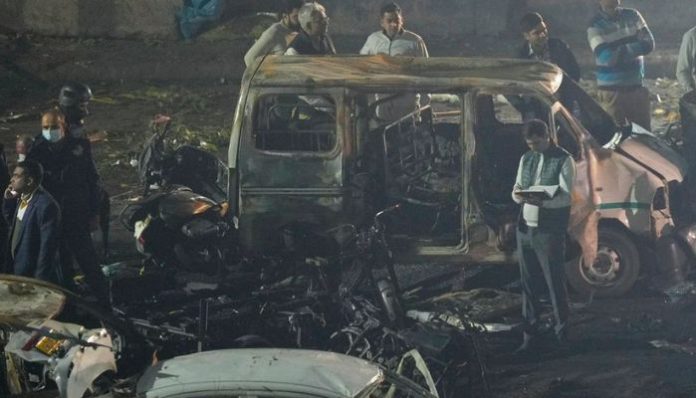
On 10th November, a massive explosion occurred in a moving car, leading to the deaths of 13 people and over two dozen were injured. The Government of India has declared the incident a terrorist act. The explosion took place near Delhi’s Red Fort, and it has once again highlighted an important but often-ignored issue, that is, not transferring the ownership of a vehicle after selling it immediately. Some people sell their cars and invariably think that the buyer will get the paperwork done, but if the transfer is not completed officially, the car still rightfully belongs to the seller. And that can lead to serious trouble later if the vehicle is used for any crime or accident.
In the ongoing investigation into the Red Fort blast, several people who had owned the white Hyundai i20 in the past were questioned by the police because their names were still on record. Officials say that this happens more often than people realise. When a car changes hands several times without proper documentation, it becomes difficult to trace its real owner.
An officer investigating the case explained, “The car had changed ownership multiple times. The last person linked to it was from a sensitive area. Because of incomplete paperwork, tracing the real chain of possession has become complicated, and sometimes, this delay is exactly what criminals count on.”
Why transfer of ownership so important
According to transport officials, until the car’s Registration Certificate (RC) is officially transferred to the RTO’s records, the seller remains the legal owner. That means if the car is caught violating traffic laws, involved in a crash, or used in a crime, all legal responsibility falls on the seller.
A retired RTO officer speaking to the media explained, “People think selling a car is just about money. But it’s a legal transaction that needs proper documentation. The law requires the seller to inform the RTO within 14 days using Form 29, stating that the vehicle has been sold. Only after this, and the buyer’s application on Form 30, can ownership be updated.”
He also advised sellers to get an acknowledged and stamped copy of the submission as proof, which can save them in case of any future disputes.
Documents required before selling a car
- Registration Certificate (RC): The seller must have the original and valid RC of the vehicle.
- Pollution Under Control (PUC) Certificate: An updated copy of the PUC certificate should be available.
- No Objection Certificate (NOC): If the car is under a loan, the seller needs to obtain an NOC from the financer or the RTO.
- Insurance Certificate: The vehicle’s insurance policy must be valid at the time of sale.
- Address Proof: Any valid ID proof, such as Aadhaar Card, Passport, Voter ID, or Electricity Bill can be used.
- Vehicle Chassis Imprint: A physical rubbing of the chassis number is required for verification.
- Forms 29 and 30:
- Form 29: Notice of Transfer of Ownership (two copies signed by both seller and buyer).
- Form 30: Application for intimation and transfer of ownership.
- Form 29: Notice of Transfer of Ownership (two copies signed by both seller and buyer).
What really happens in practice
While the process sounds straightforward, in reality, it’s often full of gaps. Many buyers or used-car dealers don’t complete the transfer immediately. Some wait until they find another buyer, while others just neglect it altogether. As a result, the original seller keeps getting SMS alerts or challan notices for a vehicle they no longer own.
Sometimes, informal agreements or handwritten sale papers are used instead of proper forms, which have no legal value. In other cases, the vehicle is resold multiple times through intermediaries, and the chain of ownership becomes unclear.
A senior traffic officer advised, “If the buyer delays the transfer or becomes unresponsive, file a written complaint with your local police. Provide all details, when you sold it, who bought it, and proof of your communication. It’s better to be proactive than end up in legal trouble later.”
Used-car dealers in Delhi admit that while they usually complete their paperwork, some buyers refuse to cooperate. “Many customers buy cars only to sell them again quickly, so they don’t bother transferring ownership to their name. When that happens, the original seller remains stuck,” said Lokesh Munjal, president of the Delhi Car Dealers Association.
Process of selling a car and transferring the ownership
First of all, all outstanding dues, including challans, fines and loans, must be cleared before initiating the ownership transfer. Both parties need to fill out Forms 29 and 30, as required. These forms can be downloaded from the Parivahan website. The buyer, within 14 days of purchasing the vehicle, needs to submit Form 29 at the RTO, intimating the authorities about the sale. Once the deal is initiated, it is the duty of the buyer to bring the vehicle for chassis verification at the RTO. The buyer needs to submit all necessary documents, including Form 30, to the RTO where the vehicle is registered. Once the verification is complete, the RTO will issue a new Registration Certificate for the vehicle in the buyer’s name. The seller must keep the stamped acknowledgment of the sale of the vehicle and submission of required documents to ensure he or she stays on the right side of the law.
A similar issue faced by Sadhvi Pragya in the Malegaon blast case
The dangers of incomplete vehicle transfers are not new. While there are several social media posts that speak volumes of the problems faced by the general public, there are cases where a delay in the transfer of the vehicle led to serious legal troubles. For example, a similar issue had surfaced in the infamous Malegaon blast case involving Sadhvi Pragya Singh Thakur.
The case revolved around a motorcycle used in the 2008 explosion that killed 6 and injured around 100 people. That bike, an LML Freedom, was registered in Sadhvi Pragya’s name. The prosecution argued that since the motorcycle belonged to her, she was linked to the blast. However, Pragya maintained that she had sold the bike years before the explosion and had completed all the required paperwork.
Despite her claim, the police continued to hold her responsible because the ownership transfer hadn’t been reflected in the official records. The registration details still showed her as the legal owner when the blast took place.
Later, investigators also found that the motorcycle’s engine and chassis numbers had been tampered with, and forensic tests couldn’t confirm whether it was indeed her bike. Several witnesses supported her claim that she had sold the bike earlier, but because her name remained on the registration, she became a key accused in the case.
Her defence also pointed out that she had renounced worldly possessions after becoming a sanyasi, including that bike. After a long legal battle lasting nearly 17 years, a special court acquitted her in July this year, saying the prosecution had failed to prove any solid link between her and the motorcycle used in the blast.
BREAKING NEWS ? All accused of Malegaon Blast Case acquitted.
— News Algebra (@NewsAlgebraIND) July 31, 2025
DIGVIJAY SINGH : "I have never accused RSS of involvement in any terror attack in Mumbai"
Court stated that there was no evidence to prove that RDX was recovered from Col Purohit’s residence.
It also found no proof… pic.twitter.com/ICVcXjlOcH
This case remains a strong reminder of how a simple delay or gap in ownership transfer can lead to years of legal and emotional struggle for someone who might have no real connection to a crime.
Social media users share their troubling experiences
Following the Red Fort blast, several people took to social media to share their own experiences with incomplete car ownership transfers. Many described how difficult it was to track the new owner or ensure that the car was officially transferred. Famous stand-up comedian Manish Tyagi, who goes by the stage name Knotty Commander, shared his ordeal on social media. He had sold his car to Car And Bike in November 2024, and the NOC was issued in February 2025 by the Ghaziabad RTO. However, he still received a challan in April 2025 in Uttarakhand, indicating that the car had been sold via a Saharanpur agent. He tried filing an FIR, but the police refused. After months of chasing and a legal notice, the car was finally transferred in October 2025.
System is flawed. Sold my car to @carandbike in Nov 24. NOC issued in Feb 25 by Ghaziabad RTO.
— Knotty Commander (@knottycommander) November 13, 2025
A challan issued in UK in Apr 25 indicated that car was sold via Saharanpur agent. Cops refused to file FIR.
After a legal notice & chasing up, car transferred in Oct 25. pic.twitter.com/7DJEfuKGhe
In another case, among several, is that of Sumedha Sharma, who narrated her ordeal in a post on social media. She says that after selling off her 10-year-old diesel car in 2023, when the agency provided the blank transfer forms, she trusted them to handle the transfer and signed. But within days, she started getting strange calls from multiple men claiming to be from Gujarat, asking her to appear at the Gurugram RTO to give a No Objection Certificate.
The way car used in #RedFort blast changed hands gives goosebumps on the way old cars are sold in this country. Not just local agencies but even reputed ones like @cars24india leave you scared. As my diesel car clocked in 10 years I sold it off in 2023. The agency made me sign… pic.twitter.com/tiQ9qhoSCs
— Sumedha Sharma (@sumedhasharma86) November 11, 2025
“They had copies of my Aadhaar and PAN card that I had given to the agency. Then came threats, arguments, and suddenly, one day, the calls stopped. I still don’t know who owns that car or what it’s being used for,” she wrote, adding that there should be a clear verification system for buying and selling used cars.
Her experience mirrors what many others have gone through: the fear and helplessness that come from not knowing where your old car has gone or who is using it.
The Red Fort blast has once again shown that a simple delay in transferring a vehicle can lead to years of unnecessary stress and legal complications for innocent sellers. Whether it is a routine challan, a criminal case or a terror investigation, outdated records can pull the wrong person into serious trouble. The law is clear, and the process is straightforward. Completing the transfer on time is the only way to stay protected.


