

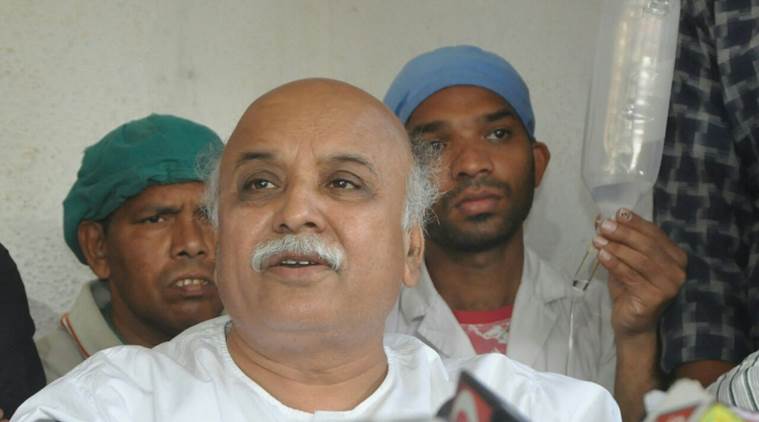
In a major setback to Pravin Togadia, former Himachal Pradesh Governor Vishnu Sadashiv Kokje defeated incumbent Raghava Reddy who is believed to be a close aide of VHP leader Pravin Togadia to become new international president of the Vishwa Hindu Parishad.
VHP announced new team. Retd. Justice & former Himachal Governor Shri V.S. Kokje elected new International President. pic.twitter.com/FZS9NlvHQY
— Friends of RSS (@RSS_Org) April 14, 2018
As a consequence of Kokje’s resounding victory, Togadia has quit the VHP and has threatened to go on indefinite strike. The fast is apparently aimed at rights of Hindus, rehabilitation of Kashmiri Pandits and nation’s farmers.
Pravin Togadia loses VHP election, Vishnu Sadashiv Kokje elected as the new president. Togadia has now said, “I am not a part of VHP, I will go on indefinite fast now.” pic.twitter.com/1gt0Og4TDN
— News18 (@CNNnews18) April 14, 2018
As per reports, senior leadership of the Bharatiya Janata Party and the Rashtriya Swayamsevak Sangh were upset with Pravin Togadia for his uncharitable criticism of Prime MInister Modi. As a consequence, elections for the post of international president were organized for the first time in 52 years to curb the influence of Togadia.
The VHP leader had gone missing recently and had claimed that the Gujarat Police was planning to kill him in a ‘fake encounter’. A senior policeman had rubbished his claims asserting that it was impossible to kill someone with a Z-plus security.


