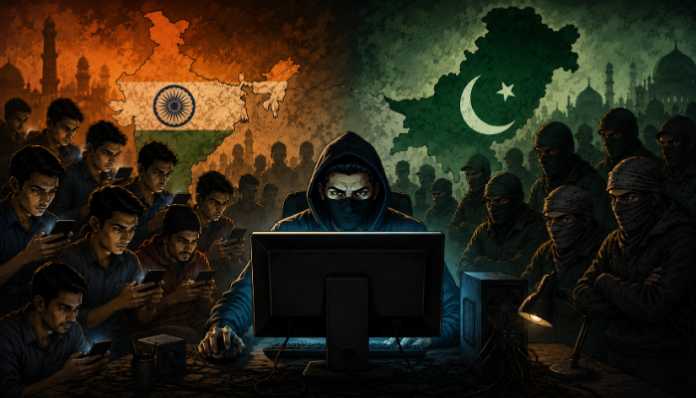
On 13th July (Monday), 22-year-old Mohammad Ahad was apprehended on charges of having ties to a terror network based in Pakistan. He lives in Musapur village under the Koda police station area in the Katihar district of Bihar. According to Katihar Superintendent of Police Parichay Kumar, the action was initiated in response to specific information about his involvement in anti-national and terrorist-related activities. A special team was created to nab him.
Katihar, Bihar: In a joint operation, Indian security agencies and Bihar Police arrested a suspected individual from Musapur under the Korha police station area of Katihar district. According to officials, a joint team of central agencies, state intelligence units, and Katihar… pic.twitter.com/ZWRqy34ypa
— IANS (@ians_india) July 13, 2026
According to police, Ahad was captured and questioned before being officially arrested. He was remanded to judicial custody by the Katihar Civil Court. His mobile device, social media accounts, electronic gadgets and other links had been confiscated and scrutinised to expose the larger network.
कटिहार पुलिस की कार्रवाईः पाकिस्तान आधारित आतंकी नेटवर्क से जुड़े संदिग्ध युवक को किया गिरफ्तार।@bihar_police #BiharPolice#KatiharPolice #HainTaiyaarHum
— Katihar Police (@SpKatihar) July 13, 2026
#अलफोल्लोवेर्स @BiharHomeDept #DM_कटिहार pic.twitter.com/IDPYhgF6S2
Kumar revealed that an inquiry and technical analysis of Ahad’s cell phone and social media accounts showed that he was in regular contact with Pakistani gangster Rana Hunain, also known as Rana Hussain, via Instagram and WhatsApp. The latter is affiliated with the terror network of Shahzad Bhatti. He is also a gangster who operates out of the neighbouring country.
According to the senior official, the findings showed that Ahad had provided information about sensitive locations, made audio conversations, exchanged chats, shared social media uploads regarding anti-national actions and traded material about terrorist activities.
Katihar Sub-Divisional Police Officer (SDPO) Sunil Kumar Sharma highlighted, “During the probe, it was found that Ahad was in contact with Pakistan-based handlers and was planning to execute a major incident in the country. Based on these allegations, he was formally arrested. Teams from the Intelligence Bureau (IB), Anti-Terrorism Squad (ATS) and Special Branch also assisted in the operation. A case has been registered by Koda police.”
He conveyed, “The investigation is underway on several fronts, and the entire network is being examined. If the involvement of any other individuals comes to light during the investigation, action will be taken against them as per the law.”
Ahad also posted links of Pakistani WhatsApp channels and encouraged others to join the same along with disseminating anti-India and communal propaganda online. “Police also examined the mobile phones of other individuals linked to the suspect. However, no suspicious activity was detected on their devices. They have seized the mobile phone of the accused. He is being examined by other security agencies as well,” an officer mentioned.
The unmasking of terror conspiracies
Notably, the latest development transpired only a few days after 22-year-old Mohammad Saddam was arrested due to similar cross-border associations from the Milki Khanpur village, which falls under the jurisdiction of Tarapur police station in the Munger district of the state, on 6th July. He tried to escape but was caught. It was a multi-agency operation comprising the IB and ATS. He was being interrogated by security agencies.
The move took place after intelligence details were received, as his engagement with overseas handlers and acts considered a threat to national security are under inquiry. Saddam was in communication with a person named “Rana Bhai,” a cross-border handler. According to Tarapur SDPO Kumar Devendra, preliminary evidence suggested that he had been tied to an international network and was plotting with two other people to carry out terrorist acts in the nation. A country-made pistol hidden in a cactus bush was also uncovered during the raid.
Saddam stayed in Mumbai before he returned to his hometown in Munger. Devendra mentioned that police are examining his call detail records and other digital data while his cell phone has been sent for forensic analysis to track his contacts and determine the scope of the network. Sections 113(3) and 3(5) of the Bharatiya Nyaya Sanhita (BNS) and sections 25(1-B)(a) and 26 of the Arms Act have been invoked against him. Moreover, a search operation was launched to arrest his two other accomplices.
Last month, Maulana Izhar-Ul-Haq was taken into custody from Madhubani in a joint operation by the ATS units of Madhya Pradesh and Bihar. He lived in the Nautol Sarisabpali hamlet inside the boundaries of the Pandaul police station and was employed as a teacher by a nearby madrasa.
According to ATS sources, he served as the “Amir” of a group that was locating, radicalising and mentoring people in several states with the intention of transforming them into future “lone wolf” terrorists. Officials outlined that Izhar was assigned to reassemble sleeper cells, manage finances and broaden the network’s reach while maintaining regular correspondence with handlers abroad and executing his plan discreetly. Several provocative videos were found in his possession, promoting the enforcement of Sharia law in India.
The initial inspections of cell phones collected during the operation found evidence of interaction with numbers based in Afghanistan and Pakistan. Security agencies have been trying to figure out the scale of their network, who is in charge and how many people might have been related to it.
The hunt began after 35-year-old Mohd Faraz, who worked at a doctor’s clinic, was nabbed close to Nanhe Bee’s Mosque in the Qazi Camp area in Old Bhopal. Afterwards, 38-year-old Naeem Abdullah Qureshi was caught from Nanauta in Saharanpur district of Uttar Pradesh and 34-year-old Mohammad Shakir Mev was picked up from Rajasthan’s Alwar district.
The investigators made several alarming discoveries, including Jihadi literature, PDF documents, links to Pakistan, a code name derived from a deceased Lashkar-e-Taiba commander, plans to travel to Afghanistan for training and use of encrypted communication platforms by the interstate terror module.
More Pakistani assets uncovered
25-year-old guy Khurshid Alam was arrested for engaging in dubious QR code-linked financial transactions and speaking with phone numbers located in Pakistan in the West Champaran region of Bihar in March. He is a resident of Chaube Tola in Jaukatia village inside the boundaries of the Majhaulia police station. The action unfolded in a night raid adjacent to a sugar mill after a tip-off.
According to Bettiah Sadar SDPO Vivek Deep, an initial review of Alam’s smartphones showed conversations with numbers that included Pakistan’s country code (+92). Police also spotted shady QR codes recorded on the devices which could have been applied to facilitate money transfers tied to an expanded network. Three ATM cards and two mobiles were taken from him.
A case had been launched under various sections of the BNS and the IT (Information Technology) Act. “Further investigation is underway to ascertain whether the activities were part of a broader cross-border network. Our priority is to determine if Alam was a lone actor or a small cog in a broader anti-national network,” conveyed Vivek Deep.
The same month marked the arrest of 12 people linked to al-Qaeda in the Indian Subcontinent (AQIS) and the Islamic State of Iraq and Syria (ISIS). They were captured during an inter-state operation that took place in different parts of the country, including Bihar, as a result of a joint initiative by Andhra Pradesh and Delhi police. They had links with a group called “Benex Com” which is associated with ISIS.
The terrorists were planning to travel to Pakistan and asked others to do the same for “Ghazwa-e-Hind.” They declared themselves as mujahideen, set fire to the Indian flag, disrespected the national anthem, lauded the ISIS flag and called for the establishment of an Islamic State in India.
Mohammad Abul Inam, also known as Lade,n was taken into custody by the Basopatti police and Sashastra Seema Bal (SSB) after a joint effort, a month earlier. He is from Kotwali Chowk in Madhubani town and had been accused of having connections to a network of counterfeit Indian currency located in Pakistan that operated using the Nepal border.
Inam was reportedly affiliated with those who sent these notes that were produced in Pakistan and smuggled into India around a year ago. He also faces accusations of assisting a Pakistani handler, Mohammad Ans,ari in escaping across the Nepal border route in a false currency smuggling case. The racket revolved around smuggling high-quality fake Indian money that is produced in Pakistan and pushed into Bihar through Nepal, particularly in Madhubani district.
Individuals who threatened to kill Hindu leaders Upadesh Rana, Telangana MLA Raja Singh and former Bharatiya Janata Party (BJP) spokesperson Nupur Sharma over her alleged remarks against Prophet Muhammad were also found to be Pakistani assets in 2024. Many arrests were conducted across various parts of India concerning the matter, including Shehnaz alias Mohammad Ali/Sabir from Muzaffarpur.
“He is a native of Bihar but works at Lahan city in Nepal. Besides an Aadhaar card, he also had a certificate declaring him a Nepalese citizen,” stated Surat Police Commissioner Anupam Singh Gehlot. Mohammed Sohel or Maulvi Abubakar Timol was apprehended from Surat, and Raza alias Shakil Sattar Shaikh was captured from Nanded along with others.
The three men used 42 email addresses and 17 virtual numbers to threaten Hindu leaders while remaining in touch with their Pakistani handler Dogar. “Dogar and his team used to keep a watch on social media and identify people in India who commented against any Hindu leader. They went on to induct them in their module. Dogar’s Gujarat module included Maulvi, Shehnaz and Raza,” underscored Gehlot.
PFI’s Phulwari Sharif terror module and “India Vision 2047”
The revelations concerning these terror plots in Bihar are not a recent occurrence. The state has previously been shaken by a shocking disclosure aimed at overthrowing the Modi government by the banned Popular Front of India (PFI) after its Phulwari Sharif terror module was dismantled in Patna. It intended to create an armed militia and create an “Islamic Caliphate” within the next few years, as outlined in its document, “India Vision 2047.”
In 2023, the National Investigation Agency (NIA) raided 5 locations in 3 states, including Bihar and found documents and digital devices, such as memory cards, SIM cards and cell phones, related to the Pakistan-sponsored Ghazwa-e-Hind mission of PFI.
The group aimed to subjugate Hindus with support from just 10% of the Muslim population and impose Sharia Law with the “help of external forces” after their agenda was accomplished. Izhar-Ul-Haq told the ATS that people were being groomed as “mujahideen” in the country to overthrow the government when given the order. They received assurances from Pakistani handlers that a sizable network was being formed for this reason.
Additionally, the recruits were made to swear that they would carry out target assassinations simultaneously and wreak havoc, instigating fear among people when the time came. Pakistani handlers played a significant role in this nefarious mission as they consistently asked these members to sacrifice their lives as true jihadis and achieve martyrdom for Islam. They communicated through Telegram and WhatsApp groups. The emphasis was placed on specifically recruiting impoverished and unmarried youths for their anti-India project.
There were four phases to the plan. The initial step concentrated on bringing Muslims of various sects together under the PFI flag, increasing membership and forging an Islamic identity that took precedence over Indian identity. The second stage recommended employing violence selectively to intimidate adversaries and demonstrate its strength.
Cadres who proved their potential were to be trained in explosives and weaponry,y while national symbols and icons such as Dr BR Ambedkar, the Constitution and the National Flag were to be utilised as a front to disguise the final objective of instituting Islamic control. The document also unveiled the goal to infiltrate both the executive and judiciary.
The PFI’s strategy then involved forming alliances with Scheduled Castes, Scheduled Tribes and Other Backward Classes while also attempting to create divisions between these groups and the Rashtriya Swayamsevak Sangh (RSS). It sought to provoke discord among the Hindu community and exploit underlying faultlines. The outfit also wanted to discredit secular parties and position itself as the primary alternative for the Muslim community. Weapons and explosives were to be stockpiled to eliminate those opposed to its interests.
The fourth stage envisioned PFI transforming into the unchallenged leader of Muslims and gaining sufficient political backing to seize control of the country. Loyal cadres were to be appointed to posts in the armed forces, police, judiciary and executive as the current system would be replaced by an Islamic Constitution.
The extremist group had been actively attempting to target India and Hindus, which was the reason for the central government’s decision to ban it in 2022.
Conclusion
Terrorists and sleeper cells in Bihar and other states, including those supported by Pakistan, have been regularly exposed even under previous governments. However, over time and with the advent of the latest technology, their network has expanded further, allowing them to veil their operations through sophisticated means like secure messaging applications, including WhatsApp, Telegram and Signal.
To make sure that no digital trace is left for law enforcement or intelligence services to retrieve, they employ technologies like self-destructing and automatically expiring messages. The increasing digitisation has also provided an additional layer of concealment for their operations. Terrorist groups even exploit gaming applications as hunting grounds to find possible sleeper cells and members.
Hence, these recent findings are only a continuation of the sinister plots formulated by the nation’s foes. Their sleeper cells act and masquerade as normal citizens, seamlessly integrating into the communities while holding regular jobs and social lives to avoid drawing attention. These can remain completely dormant for years, only biding their time until a prearranged signal or specific order prompts them to activate and unleash bloodshed and havoc in the country.
Nevertheless, Indian authorities and security agencies are diligently identifying these elements and thwarting their agendas, as evidenced by the regular destruction of these modules and the capture of such accused.