

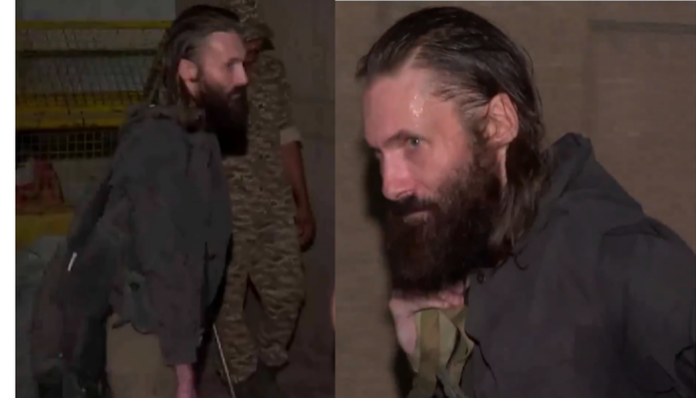
American national Matthew Aaron VanDyke, who describes himself as a mercenary, has walked out of Delhi’s Tihar Jail after nearly six months behind bars. A special National Investigation Agency (NIA) court has now allowed him to fly back to the United States for a month to meet his family. Six Ukrainian nationals who were arrested along with him have been given the same relief.
The recent development has brought attention to several older Indian cases in which foreign nationals facing serious legal proceedings were allowed to leave the country and subsequently did not return.
Unlike the older cases, the court has currently permitted the seven accused to leave only for a limited period, and the NIA investigation remains open.
What is the case against Matthew VanDyke?
VanDyke and the six Ukrainians were arrested as part of a major counter-terrorism probe. The NIA had first booked all seven under the tough Unlawful Activities (Prevention) Act, or UAPA. According to the agency, the group had entered India on valid travel papers but travelled to the northeast without the special permits needed to visit those areas, and then crossed over into Myanmar through Mizoram. Investigators had claimed the group was running training sessions for armed ethnic groups in Myanmar, teaching them things like drone warfare, drone building and drone jamming. VanDyke was picked up at Kolkata airport, while the others were caught at different airports around the country.
But things changed once the NIA actually filed its chargesheet. The agency dropped the serious terror charges under UAPA, saying it simply didn’t have solid proof that the group’s activities had hurt India’s security or its people in any direct way. Instead, the chargesheet only carried charges under Sections 21 and 23 of the Immigration and Foreigners Act, basically charges about entering the country illegally and overstaying visas. So a case that started out looking like a major terror investigation ended up being about visa violations.
Because the NIA couldn’t finish its probe into the original charges within the 180-day limit set by law, VanDyke and the others got what’s called default bail, a right that kicks in automatically when investigators miss their deadline. Once the immigration matter was cleared up through the Foreigners Regional Registration Office (FRRO), VanDyke’s lawyers asked the court for permission to let him travel home. Special NIA Judge Prashant Sharma agreed, allowing him to leave India for a month and getting his passport unblocked for the trip. The same order applies to the six Ukrainians.
This isn’t the first time India has let foreign nationals accused in big, high-profile cases walk out of the country on the promise or the hope that they’d come back. Here are three cases where foreigners were let go and never returned to face the Indian justice system.
The Bhopal Gas Tragedy: How Warren Anderson got away
On the night of December 2-3, 1984, a gas leak at the Union Carbide India Limited pesticide plant in Bhopal turned into one of the worst industrial disasters the world has ever seen. Over five lakh people were exposed to a highly toxic gas called methyl isocyanate that night. Official figures put the death toll at around 3,700, though many believe the real number is closer to 16,000. The gas didn’t just kill people immediately; it altered how survivors’ bodies functioned at a basic level, including in pregnant women, causing birth defects and disabilities that families are still dealing with generations later.
Just four days after the leak, Warren Anderson, who headed Union Carbide at the time, landed in Bhopal and was arrested. But he was in custody only briefly before getting bail and leaving the country almost right away, and he never returned to face trial. Anderson died years later, still officially wanted in the case, having never once stepped into an Indian courtroom.
Several news reports over the years have pointed to the Congress government of the day, led by Rajiv Gandhi, for making this quiet escape possible. One widely reported version is that Gandhi agreed to let Anderson go in exchange for the release of his childhood friend Adil Shahryar, who was in an American prison at the time. Shahryar was the son of Muhammad Yunus, a former Indian ambassador to Spain, Indonesia and Turkey, and someone very close to the Gandhi family. Shahryar had been arrested in August 1981 and was serving a 35-year sentence in the US for setting fire to his room at a Sheraton hotel, along with fraud charges in Florida. Rajiv Gandhi had taken over as Prime Minister just a month before the tragedy, following his mother Indira Gandhi’s assassination, which makes the way this case was handled and Anderson’s swift exit, all the more striking.
The Italian Marines case: Two fishermen shot dead off Kerala
In February 2012, two fishermen, Jelestin, 45, and Ajeesh Pinku, 22, both from Kanniyakumari in Tamil Nadu, were shot dead in the sea off Ambalapuzha, Kerala. They had gone out on a boat called St Antony from the Neendakara Fishing Harbour. The shots came from an Italian oil tanker called the Enrica Lexie, whose security team said they mistook the fishermen for pirates.
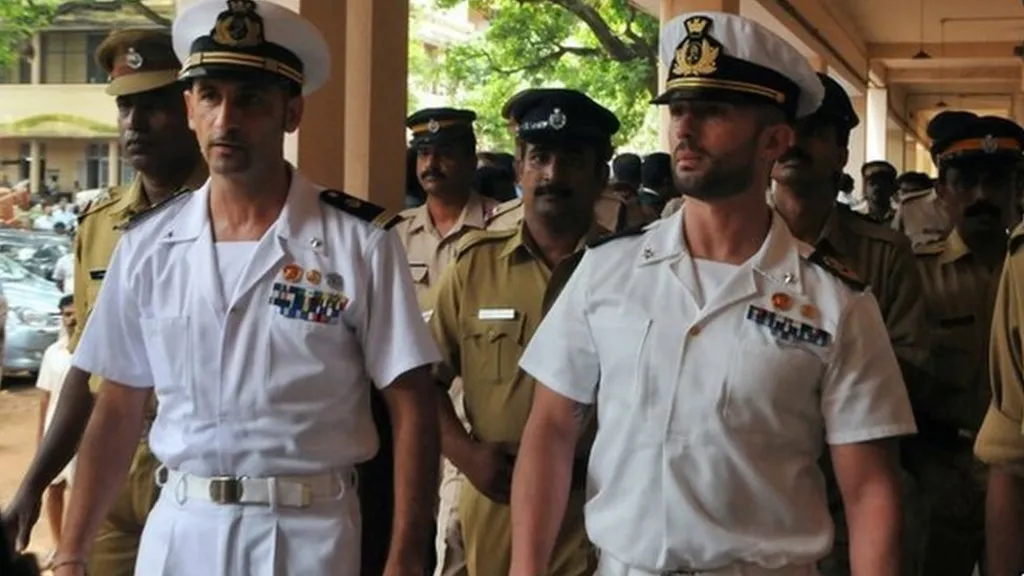
Kerala Police arrested two Italian marines, Massimiliano Latorre and Salvatore Girone, on February 19, 2012, just days after the shooting. They were kept in judicial custody, and their case quickly turned into a full-blown diplomatic standoff between India and Italy. Italy kept insisting the marines had immunity because the shooting happened in international waters on an Italian-flagged ship. India disagreed, saying it had every right to try the case.
Along the way, the families of the two fishermen settled with Italy; each family was paid Rs 1 crore in compensation, and the boat owner separately accepted Rs 17 lakh. The marines got bail in May 2012 after spending about 105 days in custody, and were later allowed to travel home to Italy multiple times, first for Christmas in 2012, then again to vote in elections, and later on medical grounds. Latorre went home for good in 2014 due to health issues and never returned, while Girone stayed on, holed up for a while at the Italian embassy in Delhi, before he too was allowed to leave in 2016.
The case eventually went to international arbitration at The Hague. In 2020, the tribunal ruled that the marines had immunity from prosecution in India but should instead be tried in Italy and that Italy owed India compensation for the loss of life and damages. India accepted this, and Italy agreed to pay Rs 10 crore in compensation. In 2021, India’s Supreme Court finally closed the long-running case once the compensation came through, with Rs 4 crore going to each fisherman’s family and the rest to the boat owner. Italy’s government was told to start its own criminal proceedings against the marines back home, but neither marine ever faced trial in India.
Ottavio Quattrocchi and the Bofors scam
Back in 1986, India signed a massive Rs 1,437 crore deal with the Swedish company Bofors to buy 400 Howitzer guns for the Army. A year later, Swedish radio broke the news that the company had paid off top Indian politicians and defence officials to win the contract. The scandal shook Rajiv Gandhi’s government and became one of the biggest political controversies in Indian history it’s even said to have cost his party the 1989 general election.
Italian businessman Ottavio Quattrocchi, who was close to the Gandhi family, was accused of acting as the middleman who pocketed around $7 million in kickbacks from the deal. The CBI named him in its first chargesheet in 1999, along with Bofors’ Indian representative Win Chadda, former defence secretary S K Bhatnagar, and the company itself. But Quattrocchi had already left India in 1993 to dodge arrest, and he never came back to face any court in the country.
India tried for years to get him extradited but lost the fight first in Malaysia in 2002, and then in Argentina in 2007. A Malaysian court eventually set him free, and the CBI called the verdict disappointing but couldn’t do much more. Back home, courts gradually let the case fade away a Delhi court cleared Rajiv Gandhi’s name in 2004, another quashed the CBI’s case in 2005, and finally, in March 2011, a special CBI court dropped the case against Quattrocchi altogether, saying India had already spent around Rs 250 crore trying to extradite him and it just wasn’t worth spending more. Quattrocchi died in Milan in 2013 of a heart attack, having never set foot in an Indian courtroom.
The pattern repeats
By looking at these cases side by side, a clear pattern shows up. Warren Anderson, the two Italian marines, and Ottavio Quattrocchi were all, at some point, allowed to leave Indian soil during ongoing legal proceedings against them and not one of them ever returned to face a full trial. Some died abroad still officially wanted; others simply outlasted India’s patience and legal resources.
Matthew VanDyke and six Ukrainian nationals have been granted the very same kind of exit permission to fly home while questions about their activities near the Myanmar border remain nowhere close to fully answered.
History is proof enough that once foreign nationals accused in serious cases are allowed to step outside India, bringing them back becomes an uphill task, if not impossible. That raises a fair question: can the NIA court really guarantee that VanDyke and the six Ukrainians will return after their month abroad? And if there’s no real way to enforce that promise, what exactly was the reasoning behind letting them go in the first place?


