A controversy erupted earlier today after the TVK-led Tamil Nadu government defied the Supreme Court-mandated order to light the Karthigai Deepam at Thiruparankundram hill in Madurai and instead lighted the traditional lamp at its usual spot, triggering outrage among the Hindu population. The Hindu outfits slammed the Vijay government, criticizing it for what they called a brazen display of Muslim appeasement.
The issue has, nevertheless, brought renewed attention to a century-old legal dispute between the Subramaniya Swamy Temple and the Sikkandar Badusha Dargah. Historical court records reveal that a civil court declared the temple the owner of Thiruparankundram hill in 1923, while recognising the Dargah’s ownership and possession of certain specific areas and structures. The original decree was subsequently restored by the Privy Council in 1931.
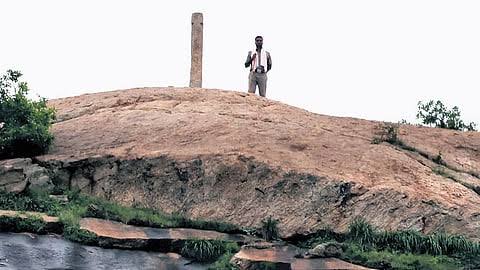
The legal history has assumed significance amid the latest dispute over the traditional lighting of the Karthigai Deepam at the Deepathoon, a stone pillar situated on the upper reaches of the hill.
A detailed account of the century-old litigation was reproduced in the Madurai Bench of the Madras High Court’s June 24, 2025 judgment in a batch of petitions concerning Thiruparankundram hill.
How the dispute between the temple and Dargah began
The dispute dates back to 1917, when the Sikkandar Badusha Dargah proposed constructing a mandapam on Thiruparankundram hill. The Subramaniya Swamy Temple objected to the construction, asserting that the entire hill belonged to the temple.
The temple subsequently instituted a civil suit, initially numbered O.S. No. 101 of 1917, which was later renumbered as O.S. No. 4 of 1920 before the First Additional Subordinate Judge, Madurai.
The temple sought a declaration of ownership over the entire hill, an injunction restraining the defendants from interfering with its possession and recovery of possession of certain portions of the property. The Dargah and the government were among the defendants in the proceedings.
After examining the rival claims, the civil court delivered its decree on August 25, 1923, recognising the temple’s ownership and possession of the hill, subject to specific exceptions.
What the 1923 civil court decree said about ownership
The decree made an important distinction between the temple’s ownership of the hill and the rights of the Muslim defendants over particular portions.
The court declared the Subramaniya Swamy Temple the owner and possessor of the whole of Thiruparankundram hill and the Giri Veedhi, except certain assessed and occupied lands, Nellithope, the new mandapam, the flight of steps leading from Nellithope to the mosque and the top rock on which the mosque and the Muslim flagstaff stood.
The court separately recognised the Muslim defendants as owners and in possession of Nellithope, everything situated within it, the flight of steps, the new mandapam and the entire top of the hillock on which the mosque and flagstaff stood.
The decree also recognised the Kasi Viswanathaswamy Temple and its sacred water body as belonging to the Hindu temple.
Thus, the civil court recognised the temple’s ownership over the hill while protecting the Dargah’s rights over specifically identified properties and structures. It did not declare the Dargah the owner of the entire hill.
How the Privy Council restored the temple’s ownership decree in 1931
The Dargah challenged the civil court’s decision by filing First Appeal No. 34 of 1924 before the Madras High Court. On May 4, 1926, the High Court dismissed the Dargah’s appeal while allowing a cross-appeal filed by the government.
The Subramaniya Swamy Temple subsequently approached the Privy Council in Appeal No. 5 of 1930.
On May 12, 1931, the Privy Council allowed the temple’s appeal and restored the original decree passed by the Subordinate Judge on August 25, 1923.
The Privy Council observed that the temple had established its possession over the unoccupied portions of the hill from time immemorial and that its authorities had consistently treated the property as belonging to the temple.
It concluded that the original Subordinate Judge had arrived at the correct decision and that there was no sufficient ground to disturb the decree.
The Privy Council consequently set aside the Madras High Court’s decree and restored the original civil court judgment.
Subsequent disputes over the hill
The litigation did not end with the Privy Council’s decision.
In 1958, the temple instituted another civil suit, O.S. No. 111 of 1958, seeking an injunction against the removal of stones from portions of the hill outside Nellithope and the assessed and occupied areas.
The trial court passed a permanent injunction restraining the defendants from cutting stones from the specified portions. It also directed that the exact location and extent of Nellithope and the assessed and occupied areas be determined through further proceedings.
The decree was modified by the District Court in 1961, which directed that the boundaries be identified through a survey commission.
Further proceedings followed in subsequent years, reflecting continuing disagreements over the precise extent of the properties and the respective rights of the parties.
What is the present dispute over Thiruparankundram Deepathoon?
The historical ownership dispute has acquired renewed significance because of the controversy over the lighting of the Karthigai Deepam at the Deepathoon.
The Subramaniya Swamy Temple, situated at the foothills of Thiruparankundram, is one of the six sacred abodes of Lord Murugan. The Sikkandar Badusha Dargah is situated on the hilltop, while a Shiva temple and Jain religious remains are also found on the hill.
The present controversy centres on the demand by Hindu organisations and devotees to light the traditional Karthigai Deepam at the Deepathoon, a stone pillar situated near the Dargah.
Hindu organisations maintain that the pillar is situated on temple-owned land and that lighting the ceremonial lamp there is part of the religious tradition associated with the hill. They cite historical civil court decrees and the Privy Council’s decision to support their position.
The Dargah and Muslim organisations have opposed the proposed lighting at the location, citing its proximity to their place of worship. The dispute has consequently involved questions concerning property boundaries, access, religious practices and the respective rights of the temple and the Dargah.
The controversy reached the courts again in 2025. In its June 24 judgment, the Madras High Court’s Madurai Bench examined several petitions concerning religious practices at the Dargah, including animal sacrifice, prayers and gatherings.
The two-judge bench delivered separate opinions on the issues, resulting in a split verdict and a reference to the Chief Justice for further proceedings. The judgment also discussed the historical civil court decrees recognising the rights of both parties over specified portions of the hill.
December 2025 Madras High Court order: Deepathoon does not fall within Dargah property
Then in December 2025, Justice G.R. Swaminathan of the Madurai Bench of the Madras High Court allowed a batch of petitions seeking permission to light the ceremonial lamp at the ancient Deepathoon on Thiruparankundram hill.
The judge extensively examined the 1923 civil court decree and the Privy Council’s subsequent decision. He held that the Muslim community’s ownership rights extended to only three specific portions of the hill: Nellithope, the flight of steps leading to the mosque and the actual site on which the mosque stands.
The rest of the hill, including its unoccupied portions, belonged to the temple’s Devasthanam.
Rejecting the argument that the petitioners should approach a civil court again for fresh demarcation of the property, Justice Swaminathan observed that the boundaries of Nellithope had already been determined through earlier proceedings. Since the Deepathoon was not situated within Nellithope, there was no requirement to reopen the ownership dispute.
The judge also made an important observation about the geographical location of the Deepathoon.
Thiruparankundram hill has two peaks. The Sikkandar Badusha Dargah and mosque are situated on the higher peak, while the Deepathoon is located on the lower peak, at a distance of at least 50 metres from the mosque.
Justice Swaminathan noted that the Dargah had a compound wall and that the Deepathoon was situated outside it, on an unoccupied portion of the hill. He concluded that the pillar belonged exclusively to the temple.
The judge observed that the entire upper portion of the hill did not belong to the Dargah and that the earlier judgments had already settled the ownership question.
He further noted that the Devasthanam could reach the Deepathoon by climbing steps from the Nellithope area, with the temple having the benefit of an earlier injunction protecting its access.
Court says lighting the Deepam is necessary to protect temple property
Justice Swaminathan went beyond examining the historical ownership dispute and addressed the temple administration’s responsibility to protect its property.
He observed that refusing to light the ceremonial lamp at the Deepathoon could undermine the temple’s ability to assert its ownership over the unoccupied portions of the hill.
The judge noted that despite the 1923 decree and the subsequent Privy Council ruling clarifying the ownership rights, there had been attempts by the mosque trustees to disturb the existing status quo. He said the temple administration had a responsibility to remain vigilant against any attempts to encroach upon its property.
The court also rejected the argument that lighting the lamp at the Deepathoon would interfere with the religious rights of the Dargah or the Muslim community. It observed that the ceremonial lighting would not affect the Dargah’s structure, which was situated at a safe distance.
Justice Swaminathan held that the temple had a legal duty to light the Karthigai Deepam at the Deepathoon in addition to the customary location near the Uchipillaiyar Temple.
The court quashed the decision taken by the temple’s Executive Officer to conduct the ritual only at the usual Deepa Mandapam, observing that a decision of such importance should have been taken by the temple’s Trust Board rather than the Executive Officer.
It directed the temple administration to conduct the ritual at the Deepathoon from 2025 onwards and ordered police protection to ensure that it could be performed peacefully.