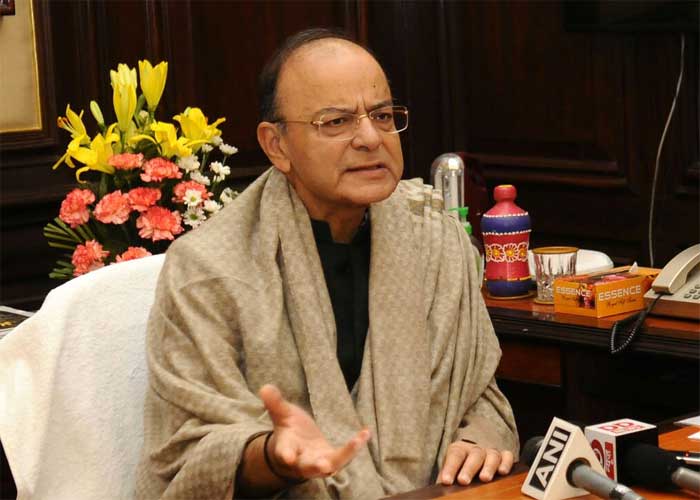
Finance Minister Arun Jaitley, while speaking at the Times Networks India Economic Conclave today, stated that though there are ‘two or three areas of differences’ between the RBI and the Government, how a mere discussion on its functioning could be considered “destruction” of an institution.
Amidst allegations by the opposition that his government has created a situation wherein the Reserve Bank Governor, Urjit Patel was forced to resign, Jaitley went on to list several of actions initiated by past governments including those of Congress PMs Jawaharlal Nehru and Indira Gandhi, asking RBI Governors to resign.
Speaking at the conclave Jaitley mentioned that issues revolving around the credit flow in the economy and liquidity support were areas where the Government had differences with the RBI and clarified that the government had initiated a ‘discussion’ to convey its concern over these issues.
“A discussion with an important institution, which is independent and autonomous, to tell it that its a part of your (RBIs) functions and therefore this is an important area of an economy which you must look at, how is it the destruction of the institution?” he questioned.
According to reports, the RBI had voiced its concern as it felt that RBI’s autonomy was being compromised when the Government was trying to get involved in its functioning, under the never-used Section 7 of the RBI Act which provides for the central government forcing down decisions in public interest.
Clarifying the Governments stand, Jaitley said, “We are the sovereign government, we are the most important stakeholders as far as the management of an economy is concerned,” Jaitley said, in reference to the discussions with RBI.
He reiterated that the credit flow of the economy and liquidity were the sole responsibility of the RBI. Jaitley furthered that the Government did not intend to “take over the function,” rather it only intended to initiate discussions using instruments which force a discussion.
“In some situations, the autonomous institutions also have to be informed that there is some difficulty arising in the system that requires to be corrected,” he added.
Stressing that it is mandatory for the RBI’s policies to be in sync with the economic policies, Jaitley furthered that if the government is not able to convey the difficulties in the system, it would be failing its duty, he said.
Urjit Patel, who succeeded Raghuram Rajan as the head of India’s central bank in September 2016, resigned from the post earlier this week citing personal reasons. The government has appointed Shaktikanta Das as the new RBI governor.