Home Blog Page 1333

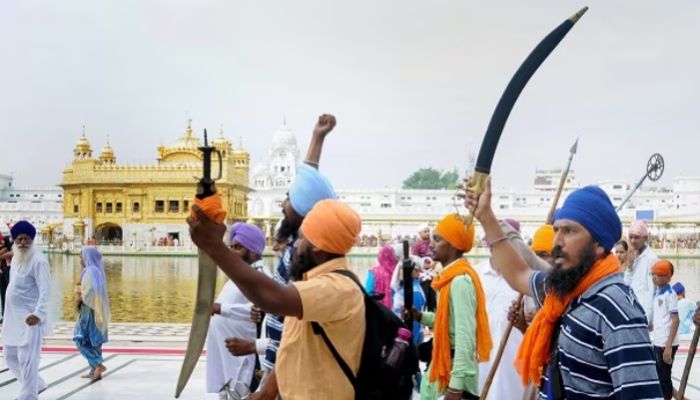
How Khalistanis spread a corrupted version of partition to separate Punjab from its Hindu identity and further their agenda of geographical separation

It is a widely known fact that Sikhism has its roots in Hinduism. Many such Punjabi Hindu families exist even today where the elder son in the family is a Sardar. Not only Punjabi Hindus, but crores of Hindus across India visit the Gurudwara. Their devotion to Sikhi (roughly translates to ‘seeker of truth’) is rooted in their ancestral connection to the Gurus.

The 9th Sikh Guru, Guru Tegh Bahadur Ji’s three chosen companions Bhai Mati Das, Bhai Sati Das and Bhai Dayal Das were Mohyal Brahmins. They were publicly murdered in Chandni Chowk with the most unspeakable torture under the orders of Aurangzeb.

This is just one of the many stories of the strong dharmic bond between the Gurus and Hindus like the Mohyal Brahmin couple that donated their son Chaupat Rai to the 7th Guru, Guru Har Rai Sahib Ji. He came to be known as Bhai Chaupa Singh Ji and served under four Gurus including raising the 10th Guru, Guru Gobind Singh Ji.

Moreover, after Guru Tegh Bahadur’s martyrdom, Pandit Kirpa Ram, a Mohyal Brahmin, entered the fold of Khalsa and came to be known as Bhai Kirpa Singh and also played a role in tutoring Guru Gobind Singh Ji. He had approached Guru Tegh Bahadur Ji leading a delegation of Kashmiri Pandits to seek refuge against Aurangzeb’s tyranny following which the Guru made the ultimate sacrifice.

Centuries have passed, and the India of today is not the same, particularly for migrant Hindus from Pakistan whose identity has taken the biggest hit than any other community as a result of the dark day of partition of India on 14th August 1947.

The creation of the Islamic state of Pakistan carved out of the Indian states of Punjab and West Bengal (which was East Pakistan which is now Bangladesh) became a precedent for our neighbour, infested with jihadi terrorism, to attempt to incite separatist sentiments not only in Jammu and Kashmir but in Punjab too, ever since.

Thanks to Congress’s policies, Bhindranwale was born and now the words Khalistan and Khalistani are coined so much that for the uninitiated, the destructive imagination might sound like an actual country with actual citizens.

More dangerously, these words are a real world in the minds of several pro-Khalistanis. I say this because I have known some of them myself; simple, peaceful, Gurudwara-going who were enraged to no end when I called Khalistanis as terrorists. An average Khalistan separatist stakes ownership of Punjab as if the state has belonged to Sikhs exclusively; that very ownership is used for the argument that Punjab should be separated for Sikhs to form Khalistan.

But, this problematic belief that Punjab is equals to Sikhs prevails not only among pro-Khalistanis. In my nearly 30 years in Mumbai, every time that I introduced myself as a Punjabi to any non-Punjabi, on most times it was presumed that I was a Sikh who must be wearing the five symbols of Sikhism.

It put me in a conundrum as a child because I am not a Sikh, but a Hindu, whose great-grandfather migrated from Rawalpindi – a city which is now in Pakistan Punjab where Punjabi Hindus flourished along with Sikhs until they were butchered and raped in thousands by Muslim mobs in 1947. I am as Punjabi as it gets albeit without an ancestral hometown to establish a regional identity; so my answer to the question where I am from is India. Unfortunately, this wasn’t a natural understanding for many that I met.

While the lack of knowledge about the nuances of the damage done by India’s geographical, demographic and cultural partition has put Punjabi Hindus on the back foot, on the other hand, Khalistanis continue to inject the idea that Punjab is the personal property of Sikhs. Those Sikhs aware of their true history know better than to fall for it and share close ties with Hindus, moreso with Punjabi Hindus. But those blinded by a lack of context in their lives succumb to this vicious narrative. Like I said, I have known some of these people.

It is shameful and outright poisonous how pro-Khalistanis use partition as a justification for their separatist demands. And this is being done in the name of farmers protests too.

A video of a so-called farmer donning a Sikh turban was recently shared on social media from the farmers’ protest wherein he says that ‘90% sacrifice has been made by Punjab’, a common belief among pro-Khalistanis about the partition.

There are two problems with such optics, which mind you are very common. One, it implies that Punjab is equals to Sikhs alone, conveniently negating the historical association of Punjabi Hindus with the state. Two, it suggests that Punjab alone, as if as a separate nation-state in itself, and not India bore the brunt of partition.

They don’t think it was India’s loss, they don’t think it was a loss for Hindus; they peddle the narrative that Punjab sacrificed land and life so naturally, for them, Sikhs sacrificed land and life and hence Sikhs, as per Khalistanis, have a divine right to a separate state carved out of India of Hindus.

But in reality, INDIANS sacrificed their land and life…for INDIAN is the only identity that Hindus from Pakistan associate with because their part of Punjab wasn’t theirs anymore having lost their regional identity to Pakistan in 1947. Khalistanis don’t want Punjab to believe this as it counters their separatist foundation.

The message here is crystal clear. These Pakistan-backed Khalistani terrorists in Punjab are attempting to remove Hinduism from Sikhi, wherein the name Ram is mentioned at least 2,500 times in Guru Granth Sahib; Hari is mentioned over 1000 times and Gurmukhi script itself is a confluence of several Indian languages including Sindhi, Kashmiri Sharada, Landah, rooted in the Brahmi script.

This religious separation too I had experienced as a child once when I took Punjabi language lessons at a Gurudwara during summer holidays. I was too young to know this extensive history then but old enough to be hurt by how my Sikh teacher, an elderly woman, had mockingly told a story about how a Hindu Pandit was offering jal (water) to Surya Devta (Sun God) and was quizzed by Guru Nanak Dev Ji. She went on to make fun of Hindus for quite some time while other Sikh children laughed; I was silenced.

This didn’t happen in Punjab though. This happened in Mumbai. So I cannot imagine what must happen in Punjab if such a discrimination can be experienced in an Indian city far from Punjab. Of course, as a Hindu, my reverence towards the Gurus has been unbreakable irrespective of such experiences. That’s how strong the bond of Hindus is with their Gurus.

But this is to say just how sinister the attempts to separate Hinduism from Sikhi are. Similarly, on 12th January 2023, the members of the Sindhi community in Indore were forced to submit over 80 Shri Guru Granth Sahib at Gurudwara Imli Sahib after Nihang Sikhs demanded to remove idols from the temples where the Guru Granth Sahib is kept.

The Nihang group expressed displeasure over the fact that their holy book was kept at a place where idols are worshipped and called it sacrilege of the holy book. This happened despite the fact that the Sindhi community is one of the biggest devotees of Shri Guru Granth Sahib and are religiously very close to Sikhism what with their ancestral roots in Sindh neighbouring Pakistan Punjab.

In removing Hinduism from Sikhi, Islamist Khalistanis are denying the identity as well as existence of Punjabi Hindus and in a way, Hindus altogether, as they daydream about separating the idea of Punjab from India. They are desperate to strip Punjabi Hindus of their identity while they continue to demand exclusivity and privileges one after another. Their poison is as fatal as that of radical jihadis if not more.
PM Modi to unveil two new reactors at Kakrapar NPP, Gujarat: Read how leftists have been trying to stall India’s nuclear ambitions for decades

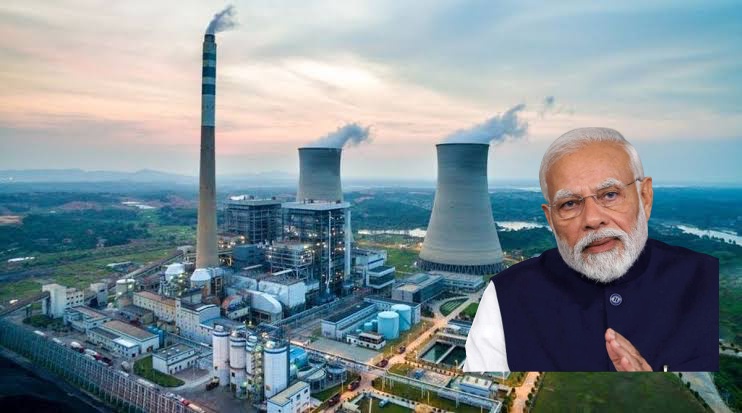
On 22nd February, Prime Minister Narendra Modi will dedicate to the nation two new indigenously developed reactors at the Kakrapar Nuclear Power Plant in the Tapi district of Gujarat. Kakrapar Nuclear Power Plant’s two new reactors, unit 3 and unit 4, each have a capacity of 700 megawatts (MW). One of the two new plants is now functioning, and the other will be in the coming days.

The two new reactors, unit 3 and unit 4, are the initial two in a series of sixteen indigenous Pressurised Heavy Water Reactors (PHWR) of 700 MW each being developed in the country. A pressurised heavy water reactor utilises natural uranium as fuel and heavy water as a coolant and moderator. The Kakrapar Atomic Power Station (KAPS) has been operational since 1993, with two units producing 220 MW each. The new units 3 and 4 have been built next to the existing units.

Kakrapar Nuclear Power Plant’s two new reactors, unit 3 and unit 4, each have a capacity of 700 megawatts (MW). Two new plants have one up and running, while the second is expected to start up in the days to come.

Modi government aims to triple India’s nuclear-installed capacity in the next decade

Notably, Prime Minister Narendra Modi has determined to triple the nuclear-installed capacity in India within the next decade. Addressing the Indian Nuclear Society’s conference on “Clean Energy Transition” in December last year, Rafael Mariano Grossi, director-general of the International Atomic Energy Agency (IAEA) said that He [PM Modi] made clear his government’s determination to increase non-fossil fuel energy capacity and to triple nuclear installed capacity within a decade.”

“India has 19 nuclear reactors producing about 3% of its electricity. With an additional eight reactors under construction and more planned, India is currently the world’s second-largest domestic builder of nuclear power plants after China”, the IAEA stated.

Prime Minister Modi has on occasion reiterated the government’s commitment to secure the use of atomic energy for the country’s development. Union Minister Jitendra Prasad informed the Lok Sabha in a written reply in December last year that the central government has taken initiatives to boost nuclear power capacity from 7480 MW to 22480 MW by 2031-32. Nuclear power stations’ annual electricity generation has increased from 35334 million units (including infirm) in 2013-14 to 46982 million units in 2022-23. The installed nuclear power capacity in 2013-14 expanded from 4780 MW to 7480 MW at present.

He further stated that the development and commissioning of ten reactors totaling 8000 MW is currently underway in Gujarat, Rajasthan, Tamil Nadu, Haryana, Karnataka, and Madhya Pradesh.

While the Modi-led government is working relentlessly to achieve its nuclear power ambitions, India’s nuclear power plans have for years suffered due to the politics of leftist-communist parties as well as anti-nuclear activism, with active support from foreign-funded NGOs. Such players have on multiple occasions resorted to fearmongering and stalling nuclear power projects despite the multiple assurances by all government bodies regarding their safety.

How Kudankulam Nuclear Project was stalled for years due to constant fearmongering and politics

Kudankulam Nuclear Power Plant (KKNPP), located in the Tirunelveli district in Tamil Nadu, was envisaged to be India’s largest nuclear power station, with a total capacity of 6000 megawatts. The construction of the facility began in 2002, but it was hampered by continuing demonstrations and political resistance.

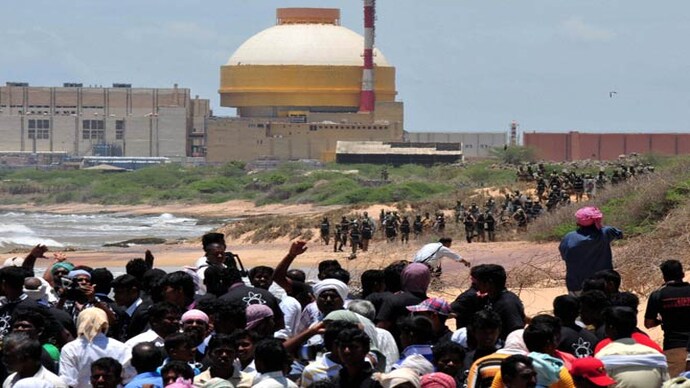
This protest reached its peak of intensity in 2011 when people feared a Fukushima-style disaster would strike the nuclear plant. SP Udayakumar, leader of the People’s Movement Against Nuclear Energy (PMANE), was a significant figure in the anti-Kudankulam movement.

In addition to Church-backed protests, leftist political parties also played a significant role in ensuring the stalling of the project. The All India Anna Dravida Munnetra Kazhagham (AIADMK) was in power back in 2011. The then Tamil Nadu Chief Minister Jayalalitha had extended support to the protestors initially. However, in 2012, she constituted a fresh panel of experts to allay the fears of the protestors and included M R Sreenivasan, former chairman of the Atomic Energy Commission.

The anti-nuclear power plant protests unsurprisingly reached the Supreme Court in September 2012. The petition was filed by social activist G Sundarajan against the Madras High Court’s 31st August decision refusing to impose any restraint on the Kudankulam nuclear power plant. The petitioner was represented by advocates Prashant Bhushan and Pranav Sachdeva. They argued that the Madras HC gave green signal to the KNPP without making sure that the 17 safety features recommended by the Central govt’s task force have been implemented.

Notably, the petitions, protests and continued fearmongering came despite the former President and noted scientist APJ Abdul Kalam assuring that there was no need to panic as the KNPP had state-of-the-art safety features. “I am completely satisfied and happy with the sophisticated safety features of the reactors and hence there is no need for panic since it’s only a boon to the future generation. The scientists have taken into account all these natural calamities before designing and fabricating it,” Dr Kalam had said after inspecting the reactors at the plant in 2011.

In 2012, the Russian government expressed deep displeasure with the lack of decision-making and progress with regards to the Kundankulam NPP. Speaking to the media, the then-Russian ambassador Alexander M Kadakin had asserted that their patience was running out.

“Our scientists are sitting idle since October 2011. They are scientists of the highest caliber and their services are needed back home and in countries like Slovakia,” he pointed out. The anti-nuclear lobby in India was so strong and politically connected that they managed to stall the Kundankulam project for several years despite Russia’s multiple assurances that the facility was the ‘safest Nuclear power project in the world’, built with state-of-the-art Russian technology, unlike the ‘ancient’ Fukushima design.

Supreme Court rules in favour of setting up Kudankulam Nuclear Power Plant

In 2013, the Supreme Court rejected dubious petitions filed by anti-nuclear activists challenging the KNPP project on grounds of expert body-recommended safety measures not being implemented. The apex court allowed the national policy to establish KKNPP. The court noted that all the safety standards were complied with. The bench of Justices K S Radhakrishnan and Dipak Misra said that the plant will be operational only after all the concerned authorities grant final clearance before its commissioning. In two separate but concurring judgements, the Supreme Court bench had noted that “nuclear energy had become necessary for the welfare of the people and could minimise the power problem in the country.”

A year later, G Sundarajan accused the central government of failing to carry out court-mandated security measures in the Kudankulam nuclear plant to clear the commissioning. The activists’ counsel Prashant Bhushan had sought the formation of a team headed by the former chairman of the Atomic Energy Regulatory Board (AERB) to check whether the safety measures are being implemented or not. The Supreme Court, however, rejected the plea deeming it “unnecessary”.

Protestors at Kudankulam Nuclear Power Plant (Image source: IndiaToday)

Interestingly, most of the anti-nuclear activists including PMANE’s convenor S P Udayakumar and activist G Sundarajan joined the Aam Aadmi Party (AAP). Sundarajan was also AAP’s Lok Sabha candidate in 2014 elections.

In July 2018, the Supreme Court thwarted yet another attempt to delay the KNPP project as it rejected a plea seeking to stop operations until the Away From Reactor facility is built. The court granted the Nuclear Power Corporation of India Ltd (NPCIL) an extension till April 30, 2022, to build the AFR facility.

PM Modi hailed Kudankulam Nuclear Power Project as key to India’s nuclear ambitions

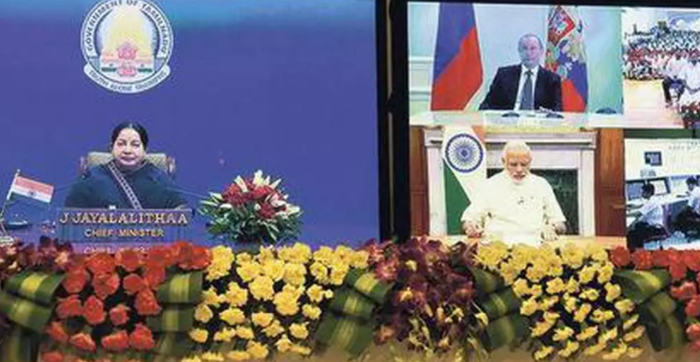
In January 2018, Prime Minister Narendra Modi dedicated the Kudankulam Nuclear Power Project’s (KKNPP) first unit to the nation alongside Russian President Vladimir Putin. 

“In years ahead, we are determined to pursue an ambitious agenda of nuclear power generation. At Kudankulum alone, five more units of 1,000 megawatts each are planned. In our journey of cooperation, we plan to build a series of bigger nuclear power units,” PM Modi said.

PM Modi, Russian President Putin and former TN CM Jayalalitha dedicating Kundankulam NPP to the nation in 2018, image via Hindu Businessline

How the Fukushima Disaster was used by DMK for fearmongering against KKNPP even after SC said it was safe

There have been three major nuclear accidents in the world that are often cited by anti-nuclear activists, Chernobyl, Fukushima, and Three Mile Island. The Chernobyl accident was the most disastrous which resulted in 30 immediate deaths and 30 more in the after-effects. It is interesting to note that the 2011 Fukushima nuclear accident has widely been cited by the anti-nuclear protestors, and politicians opposed to KNPP to spread fear of a similar disaster.

In the year 2021, the Dravida Munnetra Kazhagham (DMK) minister T.R. Balu had written a letter to PM Modi to seek his intervention regarding the Spent Nuclear Fuel (SNF) of the KNPP. The minister cited the above-discussed Fukushima nuclear disaster and said that SNF accumulation caused the accident. He sought PM Modi to direct AERB to ask Russia to take back SNF of the plant’s nuclear reactors 1 and 2. This came after AERB gave ‘sitting clearance’ to NPCIL to build an AFR facility spent fuel storage facility for Kudankulam Nuclear Power Plant (KKNPP) units 3 and 4.

It is pertinent to note that the Fukushima disaster unfolded due to a 9.0 magnitude earthquake and the ensuing Tsunami. There were around 19,700 deaths. However, not a single person died of radiation sickness. There have been 2313 disaster-related deaths among evacuees in Fukushima. Disaster-related deaths added to the 19,000+ deaths caused by the earthquake or tsunami.

In India, the politicisation and protests over the Kundankulam project came despite the NPCIL and ROSATOM its Russian partner ensuring that the plant is safe and all post-safety measures after the Fukushima nuclear accident were also taken into account at KKNPP.

Notably, DMK has also been opposed to the Vedanta Group-owned Sterlite Copper Plant. The party had backed the protestors opposing the operation of the plant leading to its shut down in May 2018. However, it was reported in 2021 that the people of Thoothukudi who actively participated in the protests felt cheated and even wanted the re-opening of the plant.

Last year, Tamil Nadu governor RN Ravi had said that the 2018 anti-Sterlite protests in Thoothukudi were “foreign-funded”. Sterlite protest, it was purely foreign-funded, and the entire activities that led to the protest and the unfortunate police firing that cost innocent lives. That is a sad part of it. But they (foreign funders) wanted Sterlite to be closed. Sterlite was providing 40% of India’s copper needs. Copper is very important for the electronic industry, and even now, the factory is closed. And all those people behind (the protests) were getting foreign contributions,” the governor said.

The above discussion warrants recalling the vehement opposition by the leftist-communist parties to a US-India civil nuclear deal. Eventually, the left parties including the Communist Party of India (Marxist) withdrew support to the UPA government in 2009. The communist party has a history of opposing India’s nuclear ambitions, and largely, any major infra or development project. Back in 1998, India conducted five successful nuclear tests in Pokharan and declared itself a full-fledged nuclear state. However, the CPI(M) had registered strong opposition.

In a 1999 press release, the party advocated for stopping the country’s attempts to develop nuclear weapons, ignoring the critical need for it. Harkishan Singh Surjeet of the CPI(M) had even said that the nuclear tests were conducted to invoke jingoistic’ feelings to gain political mileage.

However, the current Narendra Modi-led government has adopted a pro-development approach since it came to power in 2014. Earlier this month, the Union Minister of Atomic Energy informed the Lok Sabha on the government’s efforts to enhance the percentage of nuclear power in total electricity generation in the country. He said that the government accorded administrative approval and financial sanction for setting up ten indigenous 700 MW Pressurised Heavy Water Reactors (PHWRs) in fleet mode. The Modi government has also ensured the creation of the Indian Nuclear Insurance Pool (INIP) for implementation of the Civil Liability for Nuclear Damage (CLND) Act, and amended the Atomic Energy Act to enable Joint Ventures of Public Sector Companies to set up nuclear power projects, alongside entering into agreements with foreign countries for fuel supply.

In January this year, the chairman and managing director of the Nuclear Power Corporation of India Limited (NPCIL) BC Pathak said in an interview that India is on a mission to commission one nuclear power reactor on average every year. He also gave detailed information about the progress and plans of the country’s nuclear power sector.

‘MNCs will be required to display the number of Kannadiga employees on notice boards on campuses’: Karnataka Minister Shivaraj S Tangadagi

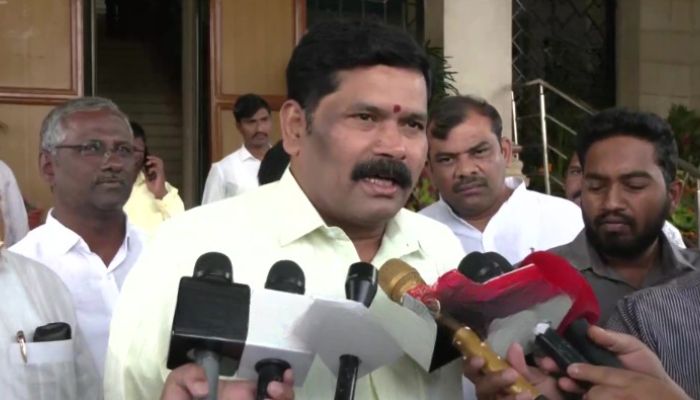
On Wednesday (21st February), Karnataka’s minister Shivaraj S Tangadagi said that multinational companies in Karnataka should display the number of Kannadiga employees on notice boards on their campuses. The minister has also threatened that the licenses of the companies will be cancelled if they fail to display the numbers of employees. This statement by the minister has stirred controversy as it follows the policy of Karnataka’s ruling Congress leaders in the name of linguistic pride. The state government recently passed a new rule on Thursday (15th February) according to which business licenses would be cancelled if the signboards do not have 60 per cent Kannada.

Shivaraj S Tangadagi is the minister of Kannada and cultural affairs in the state government. He said on Wednesday, “Multinational companies will be required to display the number of Kannadigas employed on notice boards at their campuses. Failure to comply with the language requirement may result in the cancellation of licenses, as stated by the Siddaramaiah-led Congress government.”

On Wednesday (14th February), the Kannada Language Comprehensive Development (Amendment) Bill, 2024, which seeks to amend the 2022 Act, was tabled in the Karnataka state assembly house during the budget session. It was passed on Thursday. While moving this bill, Minister Shivaraj S Tangadagi said, “In the rules, we will provide for cancellation of licences. Only when licences are cancelled will businesses and establishments feel the pinch. At the time of issuing fresh licences or renewing existing licences, we will first ensure that they have complied with the rules on using Kannada in (name) boards.”

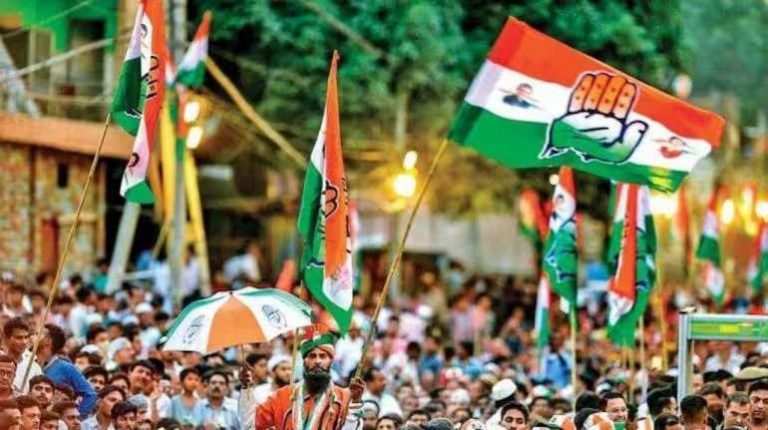
The Karnataka state government and the Congress party have been relying on invoking linguistic pride issues since the Congress party came to power in the state in 2023. It has targeted Hindu organisations like Bajrang Dal right from the state assembly election manifesto. The various freebies schemes of government have proved a burdening load on the state exchequer. However, the state Congress leaders were seen criticising the union government for allocating less funds in comparison to the taxes collected from the Kannada state.

Now, the state government asking companies to display the number of employees from various linguistic backgrounds is seen as a step that may further disrupt the state. There are many multinational companies in Karnataka. Bangalore is considered a start-up hub. Thousands of non-Kannadiga employees in these companies live in Karnataka. Displaying these numbers may incite hostile situations for these businesses and their employees.

West Bengal: CM Mamata Banerjee announces ‘alternative Aadhaar cards’ for minorities alleging mass deactivation of Aadhaar cards

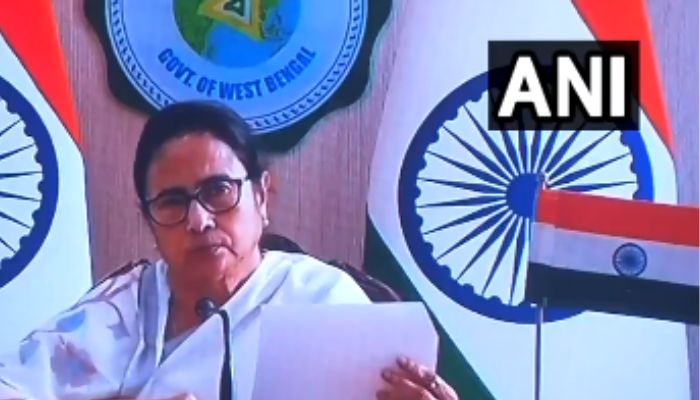
On Monday (19th February), West Bengal Chief Minister Mamata Banerjee announced that the TMC-led state government will start giving “alternate Aadhaar cards” to minorities in their state. It came a day after she alleged that Aadhaar cards of Scheduled Castes, Scheduled Tribes, and minority communities of the state are getting deactivated ahead of the Lok Sabha elections. She further alleged that it is a precursor to implementing the National Register of Citizens (NRC).

For this, she also stated that an Aadhaar Grievances Portal of the West Bengal government would start functioning from Tuesday (20th February).

Addressing a press conference at the secretariat on Monday (19th February), she said, “We will give a separate card to those whose names are being struck off… We will not let any poor person go wrong. We have prepared a portal named ‘Aadhaar Grievance Portal of West Bengal Government’. Those whose Aadhaar card has been deactivated should inform us as soon as possible so that they continue to enjoy their democratic, social, and economic rights.”

Later, she also wrote a letter to Prime Minister Narendra Modi about the alleged “deactivation” of Aadhaar cards in West Bengal. 

She also stated that Trinamool Congress would send a team to the Election Commission of India (ECI). She said, “I am sending a team to the ECI as they should be made aware of it. This cannot go on just before the elections. CPI(M) and the Congress leaders here support them (read BJP). AITC is a transparent party as we take action as soon as something is reported. We do not even spare our own people.”

A day earlier, on Sunday (18th February), CM Banerjee accused the Modi government of secretly cancelling people’s Aadhasr numbers without any prior imitation. She made the contentious remarks during a public rally in Birbhum district of West Bengal.

She alleged, “Many of you are not aware of this. Stay alert! I have several news stories. They (the Modi government) are cancelling the Aadhasr card of a lot of people. 50 people in Jamlpur in Bardhaman district have had their Aadhsar cards suspended. It is also happening in Birbhum, North 24 Paraganas, South 24 Parganas and even North Bengal.”

She then vowed to transfer funds to beneficiaries by bypassing the Aadhsar card and using other identity cards. “I want to reassure the people of Bengal that no scheme in the State will be linked to your Aadhsar cards,” the West Bengal Chief Minister claimed.

Pertinent to note that UIDAI clarified the matter and dismissed the allegations made by the West Bengal CM. 

The development was confirmed by BJP leader Suvendu Adhikari on Monday (19th February). In a tweet, he shared the screenshot of the ‘feedback’ page of UIDAI and remarked, ” UIDAI has issued clarification that no Aadhaar Card has been cancelled.”

“I urge everyone not to believe any gossip or misinformation. The Chief Minister is unnecessarily trying to create panic. No one should be worried,” he had emphasised.

UIADI pointed out, “Aadhaar, as the most commonly used digital identity, is used to avail of numerous subsidies, benefits and services. In view of the same, for maintaining the accuracy of the Aadhaar database, UIDAI had initiated an exercise for update of documents and Aadhaar information. In the course of activities undertaken to keep the Aadhaar database updated, intimations are issued from time to time to Aadhaar number holders. In this connection, it is clarified that no Aadhaar number has been cancelled.” 

Kerala: CPI(M) workers put up hoarding covering saffron flags at Attukal Temple during Pongala festival, Hindu activists tear it down leading to clashes with police

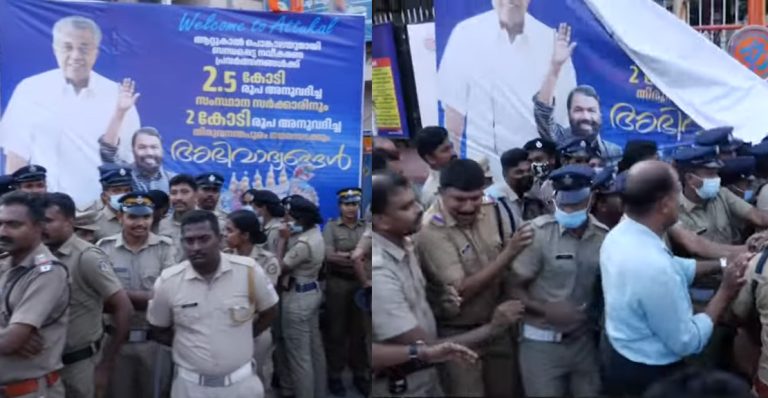
Strong resistance is building against the Communist Party of India-Marxist (CPI-M) for its actions targeting Hindu temples. Now, the latest attack has been unleashed at Thiruvananthapuram’s Attukal Bhagavathy temple. The communist workers removed saffron flags and other decorations put up at the temple for the Attukal Pongala festival and then erected a hoarding glorifying the Kerala CM, covering some of the saffron flags. This resulted in protests by Hindu groups, who removed the hoarding amid a clash with the police.

The 10-day-long Attukal Pongala started at the Attukal Bhagavathy Temple in Thiruvananthapuram on February 17. The temple was decorated with various items for the festival, including saffron flags, by the Hindu Aikya Vedi. However, the CPI(M) was not happy with this, and they removed some saffron flags and other decorations. Moreover, at the the entrance, they put up a hoarding, covering saffron flags put up there.

Reportedly, the hoarding featuring the local MLA and the Chief Minister Pinarayi Vijayan was set up by Ward Councilor Unnikrishnan. The hoarding read, “Greetings to the Kerala State Government for granting Rs 2.5 crore for renovation works in connection with Attukal Pongala.”

Hindu devotees including Bharatiya Janata Party (BJP) members were incensed by this and requested that the sign be taken down. There was tension over the hoarding in the area for the last couple of days. The hoarding was removed on Monday, but it reappeared in the next day, on 20th February. This infuriated the Hindu devotees, and they tore down the hoarding in the evening, leading to an altercation with the police.

The incident took place at around 5 PM on Tuesday, after the hoarding was again placed in front of the temple by the CPI(M) workers. When the Hindus including BJP workers attempted to remove the hoarding, the police tried to stop them. This led to an argument and then a clash between the Hindu activists and the police. During the altercation, some BJP workers ripped down the hoarding.

After the clash, several activists were taken into custody by the police. BJP workers then demonstrated outside the Fort Police Station protesting against the detentions.

The CPI(M) has come under fire for politicizing the temple’s religious festivities. Moreover, there are accusations that these operations are the result of political retaliation against the charitable endeavours carried out by Hindu groups, particularly in light of the impending Attukal Pongala day. Devotees have become indignant because such acts are perceived as a direct affront to temple rites. They are preparing to intensify their demonstrations against the CPI(M) for their ongoing provocative acts on the grounds of the temple.

Attukal Bhagavathy Temple

The Attukal Bhagavathy Temple is a Hindu religious shrine at Attukal in Kerala, India. Goddess Bhadrakali (Kannaki), mounted over ‘vethala’ is the main deity in this temple. Bhadrakali, a form of Mahakali, who killed the demon king Daruka is believed to be born from the third eye of lord Shiva. ‘Bhadra’ means good and ‘Kali’ means goddess of time. Therefore, Bhadrakali is considered as the goddess of prosperity and salvation. Goddess ‘Attukal devi’ itself is the supreme mother ‘Bhaadrkali devi’ (in soumya aspect) the goddess of power and courage. She is often referred to as Kannaki, the heroine of Ilanko Adikal’s ‘Silapathikaaram’.

The temple is renowned for the annual Attukal Pongal festival, in which over three million women participate. Attukal Pongala is a religious celebration that has been attracting millions of women every year. It is recognized in the Guinness Book of World Records as the largest gathering of women for a single event.

Attukal Pongala is a 10-day religious festival celebrated at the Attukal Bhagavathy Temple in Thiruvananthapuram in the Indian state of Kerala. On the ninth day, there is a huge gathering of millions of women in the temple surroundings. These women prepare a divine food made of rice in earthen pots and offer it to the Attukal Amma (Goddess of the Temple). The pongala preparation starts with the ritual called ‘Aduppuvettu’. This is the lighting of the pongala hearth (called Pandarayaduppu) placed inside the temple by the chief priest. This is the earliest Pongala festival in Kerala.

The festival is marked as the largest annual gathering of women by the Guinness World Records. The ceremony was set up in the Guinness Book of World Records on February 23, 1997, when 1.5 million women participated in Pongala. Notably, men are not allowed to participate in the festival. In 2009, a new Guinness World Record celebrated 2.5 million attendance. This temple is also known as the Sabarimala for Women.

Attukal Temple is located in the city’s centre, two kilometres from Sree Padmanabhaswamy Temple and the East Fort in Thiruvananthapuram. Devotees believe that all of their wishes will be fulfilled by the goddess, provide prosperity and can attain salvation. Attukal devi is often worshipped in 3 forms such as Maha Saraswati (goddess of knowledge, arts, and language), Maha Lakshmi (goddess of wealth, auspiciousness, and power) and Mahakali/ Parvathy (goddess of marriage, time and death).

Haryana farmers say protesters from Punjab fooled their children during Farmer Protest 1.0, made them heroin addicts, vow to stop them from entering Delhi

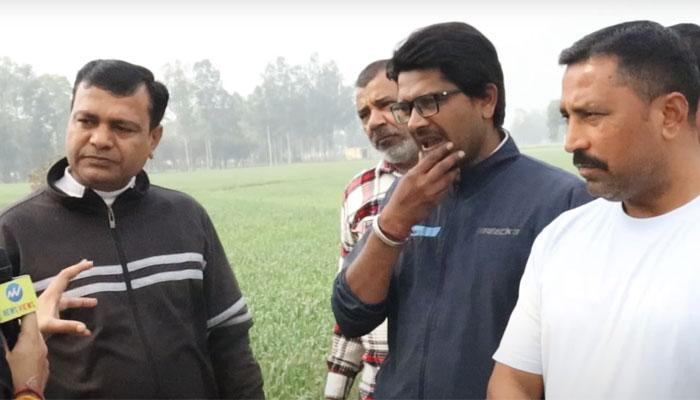
On 20th February, News Views, a YouTube-based news channel published a report where Haryana-based farmers expressed their anguish against the farmer protests 2.0. While talking to the channel, one of the farmers accused protesters from Farmer Protests 1.0 of making Haryanvi youth addicts. He said, “Before the previous protests, no one was addicted to ‘Chitta’. We did not even know what it was. Our children fell prey to addiction during those protests. Who is responsible?” For those who are unaware, ‘Chitta’ refers to heroin, an opioid drug that has become a menace in Punjab.

‘They fooled us’

While speaking to the media, the farmers from Haryana contended that the protests have been happening due to the upcoming elections. One of them said, “They are getting foreign funding. Anti-national activities are happening. But we will not allow [what happened during the previous protests] to happen again. They made us fools. This time, we are not going to support them.” He added, “We put our Prime Minister in danger in Punjab. Not again.”

The farmer from Haryana said the protesters kept repeating that they wanted to go to Delhi. “They are not accepting [what the government is proposing]. All they do is ‘Delhi, Delhi, Delhi’,” He said. Citing the protests in Delhi that Anna Hazare led, he said, “At that time, everything was scanned before letting in at the protest site. Everything went smoothly. I am telling you, stop the supply of alcohol and drugs and see how they [the protesters] vanish in four days.”

When the reporter asked about their views on the statements targeting the government about the barricading and using nails to stop the protesters, he said, “When someone tries to spread unrest in the country, the government has to adopt some measures. If roads are opened for them, they will jam the roads and halt the economy. Thousands of companies left the region [during farmer protests 1.0]. Thousands lost their jobs. They [protesting farmers] created a black spot in the region. The companies did not come back. Whatever happened in the past, the people of Haryana are not ready for it [to be repeated].”

Everyone plays a role in the economy, contended farmers from Haryana

When the reporter said the protesting farmers are “annadata”, the farmer from Haryana contended everyone plays a role in the economy. He said that those who run trains, do businesses, and indulge in different jobs, such as doctors, are also ‘data’ (giver). He gave an example of Congress and other opposition parties, “They adopted I.N.D.I.A as the name of their alliance. That does not mean they will win the election.” He added, “Imagine what will happen if Jharkhand stops giving coal. The ‘annadata’ [of Punjab] will not be able to work.”

He added that the government proposed a plan, but the farmers refused. “They aim to spread unrest in the country for the next 15 days. They want to create an atmosphere against PM Modi. It is all being done to cut votes,” he said. Recalling that there are forced labourers in Punjab, he added, “For which labourer who works in their farms have they demanded pension? It is not about the benefit of farmers.”

When asked about the farmers who died during the protests, as claimed by the protesters, he said, “Around four died in my village, too. You cannot call them martyrs if they died of heart attack or by drinking access alcohol. Do one thing. Gather two lakh people. At least four will die daily of natural causes. That does not mean you will call them martyrs.”

The government has to consider the needs of all sections of society

When asked about MSP, he said, “The government has provided MSP on the crops where required. The government has to think about the whole country. They have to consider the needs of all sections of the society. Everyone wants benefits for farmers, but it does not mean other sections of the society can be ignored.”

‘PM Modi is not authoritarian’

The reporter then asked about the allegations levelled by the Congress Party that PM Modi is authoritarian. He said, “If such authoritarianism existed, they would not have sat for a year. Remember the authoritarianism that was in the Chautala rule? 50 bullets and 100 policemen with batons are enough to end any agitation.” He added, “If PM Modi was authoritarian, they would not have been able to stop him in Punjab on a flyover. Do you think he [PM Modi] is powerless?” He contended that the protests are happening to give power to “one family” who believes in corruption and supporting those who are corrupt.

Furthermore, he pointed out that under BJP’s rule, everyone eligible got the jobs irrespective of their political affiliation. He said, “If someone is worthy, he got the job. It was not the same under other governments where only those who bribed them got the job.”

Anti-India activities cannot be allowed

He added, “We are not against farmers but will take action against those who raise anti-India slogans. We will beat up those who raise Khalistan slogans or disrespect our Prime Minister. The National Flag and Red Fort are our pride. We cannot allow anyone to go there and hoist the flag of their choice.”

One of the farmers said, “The farmers from Haryana have understood that the Punjab government is suppressing us. They are using us. They conspired to put us in front. Do you know why? Because we are emotional.

Youth of Haryana fell prey to addiction during farmer protests 1.0

He said, “I listened to an interview of a local leader. He said our children fell prey to addiction. Before the previous protests, no one was addicted to ‘Chitta’. We did not even know what it was. Our children fell prey to addiction during those protests. Who is responsible? We are not supporting them to save our children [from addiction and untimely death during protests].”

He contended if a young member of a farmer’s family from Haryana died during the protests, who would be responsible? “They will call him a martyr. But declaring him a martyr will not bring him back or make any difference [in the lives of the family who lost their son],” he added.

He added, “They want a pension. They want a loan waiver. Okay, we understand. But who will ensure that the burden of 14-20 lakh crore will not fall on ordinary citizens? Give in writing that the taxpayer’s money will not be used for a loan waiver. Take MSP, then.”

One of the farmers said, “Last time, they [farmers from Punjab] promised they would discuss the SYL issue with us. They did not. They have restarted the protests. First, discuss the water issue, then we will talk about the protests.”

Why are farmers protesting

The farmers are protesting to get their demands fulfilled by the Union Government, including a legal guarantee of MSP, implementation of Swaminathan Commission’s recommendations, pension for farmers and labourers, debt waiver, no hike in electricity traffic, withdrawal of police cases, reinstatement of Land Acquisition Act, 2012, compensation for the families of farmers who allegedly died during 2020-21 farmer protests and more.

Rajasthan: Joint team of Kerala and Ajmer police attacked by criminals Danish and Shahjad in Dargah area, IPS injured

0

A joint team of Kerala Police and Rajasthan Police came under firing by criminals in Ajmer Sharif Dargah in Ajmer, Rajasthan. The incident occurred on Tuesday, 21 February. As per reports, a police team from Kerala had reached Ajmer looking for 2 criminals in the city. With the help from Rajasthan police they were trying to nab the criminals when the team came under firing from the criminals.

Multiple rounds of bullets were fired by the criminals after which the police team started retaliatory firing. Trainee IPS officer Sharan Kamble Gopinath got injured in the firing by the criminals. The incident occurred at the Kamani Gate locality under the jurisdiction of the Dargah police station.

As per reports, two criminals named Danish and Shahjad were wanted by the Kerala police for cases of robbery of Rs 45 lakhs and gold in Ernakulam district. The police team has recovered bullets, illegal guns, spare cartridges and other tools from the criminals. A team of Kerala police led by IPS Sharan Kamble Gopinath had reached Ajmer to nab those criminals. Officials from the Dargah police station provided support to the Kerala police team in the operation. During the operation, Danish and Shahjad opened fire on the police team, and even tried to stab police officials with a screw driver.

In some media reports, one of the criminals has been named as Sajid.

As per reports, Dargah police had prior intel that the criminals are armed and may turn violent. They were well prepared to overpower the criminals and eventually both Danish and Shahjad were arrested by the joint police team. IPS Kamble Gopinath got injured during the operation.

Dargarh police station official Gauri Shankar has told media that both the criminals are originally from Uttarakhand’s Roorki. Both are repeat offenders and are wanted for multiple criminal cases in Uttarakhand too. While the police team was trying to arrest them, they had tried to create a stampede in the crowded area to escape. However prompt action by the police team resulted in the arrest of both criminals.

Security agencies flag to central govt list of Indian influencers peddling pro-China propaganda, say they do so after taking money from CCP

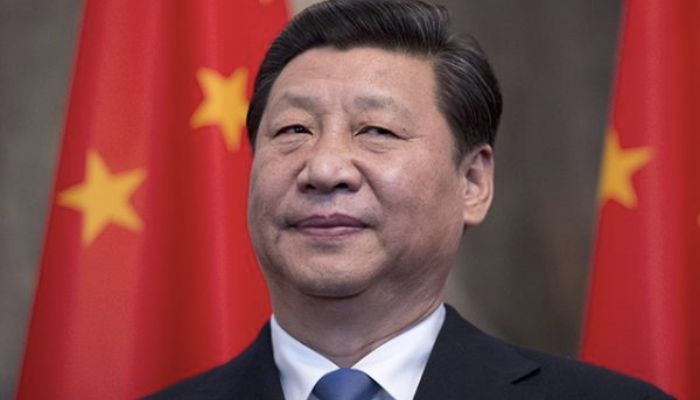
Indian security agencies have identified more than a dozen Indian social media influencers and vloggers who are allegedly pushing Chinese government narratives, posing a threat to India’s national security.

According to an IndiaToday report, a detailed list based on information obtained through intelligence inputs and continuous surveillance is being shared with the Central Government.

The security agencies are concerned that these influencers, who are purportedly driven by monetary gains, might pose a significant risk by contributing to a manipulative ecosystem managed by Chinese state agencies. They have a large following among the Indian youth, some even have, millions of followers. This makes their posts play a crucial role in shaping public opinion. Thus, it requires immediate attention and action.

The officials in the security establishment opine that it is all part of the Chinese Communist Party’s (CCP) policy of shaping and disseminating ‘favoured’ narratives both internally and internationally through foreign social media influencers in adversarial countries such as India. It also aims to disprove media reporting and academic research, as well as to refute foreign official statements.

The report citing security establishment sources states that Chinese propaganda on Indian social media influencers, including YouTubers, is on the rise and poses a threat to the way certain sections of Indian populations view China and its policies.

The security agencies say that some vloggers genuinely want to promote intercultural understanding, while others ‘play into the hands’ of China’s propaganda machinery. Stereotypes sustain a highly superficial and simplistic depiction of Indian life, reinforcing the Chinese public’s presumptions about Indians.

“Given their substantial following across multiple social media platforms, these influencers have the ability to shape narratives that could have implications for national security, particularly if they propagate misinformation or biased perspectives,” an official from the South Block told IndiaToday.

Notably, the Indian security officials have determined that the complication stems from the sponsorship arrangement, in which China covers the suspect vloggers’ expenditures while also granting them access to restricted areas such as Xinjiang and Tibet.

The YouTubers’ video mostly focuses on pro-China themes, including denying charges of genocide in Uyghur (Xinjiang), as well as projecting a positive perspective of the Chinese government in Xinjiang and Tibet. In positively highlighting these regions Indian vloggers help China counter Western notions. Moreover, similar pro-China activities were seen among international influencers active on Western social media networks.

The suspected Indian vloggers visit Xinjiang, Beijing, Shanghai, and Hotan and explore the life of Uyghurs there, visit their mosques, and interact with the local Uyghur Muslims and Tibetans. These videos aim to present a positive picture of the CCP and its governance in these regions, particularly in Xinjiang.

In December last year, it was reported that Meta had removed a network of 4789 China-based fake and misleading accounts as two major democracies India and the United States are set to hold elections. Meta’s “Adversarial Threat” report had stated that these fake accounts, posing as Americans and Indians, were actively involved in propagating misleading information about sensitive issues pertaining to US politics, US-China relations, and Indian politics.

A report published by the Australian Strategic Policy Institute titled: Singing From The CCP’s Songsheet states that since 2020, 156 Chinese state-controlled accounts have published approximately 556 Facebook posts and articles on the China Global Television Network (CGTN), Global Times, Xinhua News Agency, and China Daily websites, amplifying Xinjiang-related content from 14 influencer accounts.

Back in 2021, it was reported that hat China may have employed several foreign video bloggers to denounce negative coverage by the Western press on highly controversial subjects such as human rights abuses in Xinjiang, Tibet and the COVID pandemic. Names of British expatriates Barrie Jones, Jason Lightfoot and father-and-son duo Lee and Oli Barrett had come in peddling pro-China propaganda to counter the Western media criticism of China. Notably, the CCP has also been accused of expanding its influence over the Indian media.


Healthy Children, Healthy Future: Assam CM Himanta Biswa Sarma says the govt is providing eggs thrice a week in mid-day meals for tea garden schools

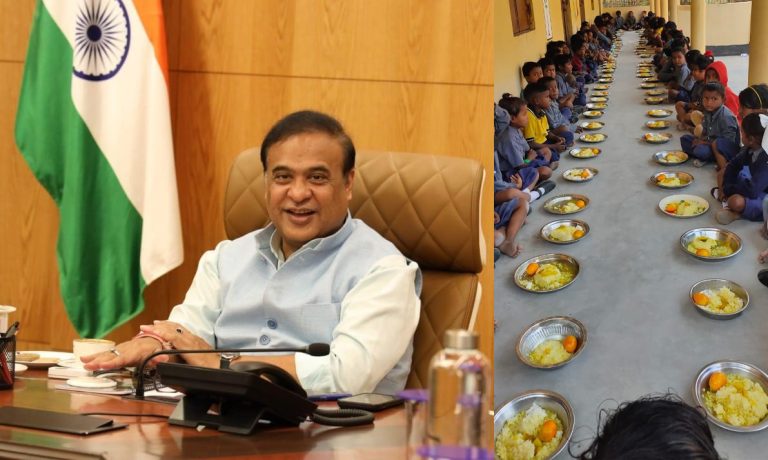
Assam Chief Himanta Biswa Sarma on 20th February posted about the success of the Pradhan Mantri Poshan Shakti Nirman programme under which his government is providing three eggs per week to every eligible child during school lunches in the tea gardens. He wrote, “Healthy Children, Healthy Future! We are now providing eggs thrice a week in mid-day meals for tea garden schools. Immensely satisfying to see these young children enjoying nutritious food.”

In a critical measure directed at bolstering student nutrition, the Assam Cabinet approved the weekly distribution of three eggs per child as part of the Mid-Day Meal program, in July of last year. The initiative which is part of the Prime Minister’s Poshan scheme has been tailored to help eligible pupils who attend schools in tea garden regions.

Education Minister Ranoj Pegu stated at the press conference following the Cabinet meeting that eggs, being a good source of high-quality protein will stimulate physical growth while offsetting the negative consequences of malnutrition. He remarked, “This will have a positive impact on increasing the attendance and retention of children in schools and decreasing the dropout rate.”

Himanta Biswa Sarma, the chief minister of Assam, stressed the benefits of this move and predicted higher student attendance and retention statistics as well as a decline in dropout rates. He noted, “Eggs being a good source of high-quality protein will boost physical growth while countering other adverse effects of malnutrition related to cognitive development. This will have a positive impact on increasing the attendance and retention of the children in schools and decreasing the dropout rate,” while discussing the importance of the decision in September.

As a result of this step, tea garden schoolchildren receive twice as much nutritional support as other children (those who attend schools outside of tea garden areas). Furthermore, millet was included in the menu for the free meal served to all students at the state’s government-run schools. The government, headed by Himanta Biswa Sarma, also paid particular attention to constructing school facilities in the tea garden districts.

State education minister Ranoj Pegu informed, “Assam has started 3 eggs a week (Monday, Wednesday and Friday) under PM Poshan in 2,429 schools of tea garden areas covering 249,042 students from today. I joined the students of Amchong Tea Estate Model School near Guwahati for a midday meal,” to which the state’s chief minister responded, “Along with nutritious meals, we are undertaking a rapid augmentation of educational infrastructure in the tea garden areas. 100 schools are being constructed in the most remote corners of the State.”

“Be it providing nutritious meals or ramping up educational infrastructure in tea garden areas, my gratitude to Hon’ble PM Shri @narendramodi Ji & HCM Dr. @himantabiswa for ushering a new era of holistic education in Assam’s tea gardens,” in another post while reacting to Himanta Biswa Sarma.

According to sources, millets (subject to supply availability) were soon to be added to the weekly noon meals offered to all students in the state’s schools, including those in tea gardens. The previous menu has been in place for many years following the launch of the midday meal program in 2004–2005.

The source pointed out, “A team was constituted for scheduling this menu, in convergence with the health department, women and child welfare and National Health Mission (NHM) Assam has approved the new menu recently. Once Mission Director (MD) Samagra Shiksha Assam (SSA), who is also the state nodal officer for PM Poshan, gives the go ahead, the new meal schedule will be implemented,” and stressed that the new additions would be supplied from September 2023.

As per the recently introduced menu, millet was recommended once a week, and vegetables and pulses were to be offered daily. However, the most important consideration while serving millet was going to be the stock availability with the Food Corporation of India (FCI). Students from classes ‘Ka’ (nursery) to VIII were scheduled to be fed the things, which have been prepared in accordance with new criteria released by the Center.