Home Blog Page 1699

India to account for 18% of global growth by 2028, says IMF; Here’s how India has economically grown stronger after 2014

The International Monetary Fund (IMF) forecasts India to further boost its contribution to global growth over the course of the next five years as the Indian economy continues to grow fast. According to the study, Krishna Srinivasan, director of the IMF’s Asia and Pacific Department, believes India will contribute 18% of global growth by 2028, up from 16%.

According to the latest IMF estimates, India’s stronger growth in comparison to China’s economic slump will result in India contributing more to the global growth.

China, however, continues to lead in terms of the size of their economies. According to the IMF’s most recent projections, China’s nominal GDP would rise to $23.61 trillion by 2028, while India’s will rise to $5.94 trillion. According to IMF estimates, China and India will provide over half of global growth in both 2023 and 2024.

The International Monetary Fund said in its latest World Economic Outlook report, released in the first week of October, that India’s GDP is expected to increase by 6.3% in the current fiscal year, up 20 basis points from its previous projection in July. Notably, the IMF increased its India GDP growth prediction for 2023-24, the second increase in three months. This forecast pushed India’s GDP growth rate closer to the 6.5% figure anticipated by the Indian government.

However, the IMF made no adjustments to its forecast for the subsequent year, maintaining India’s GDP growth rate of 6.3% for fiscal year 2024-25. “Growth in India is projected to remain strong, at 6.3% in both 2023 and 2024, with an upward revision of 0.2 percentage point for 2023, reflecting stronger-than-expected consumption during April-June,” the body noted.

It is important to note that the economic growth of India has been on the rise since the BJP government took over the governance in the year 2014. The Indian economy has grown significantly in the 9 years since then. India has risen from the tenth-largest economy in 2014 to the fifth-largest economy in terms of GDP. It has outperformed countries such as the United Kingdom, France, Italy, Canada, and Brazil in the last nine years. In just 9 years, the government has turbocharged nation’s economy, turning it into a global powerhouse.

IMF forecasts for India before 2014

The International Monetary Fund, in the years 2010 and 2011, had expected the Indian economy’s growth to rise by 9.7% and 8.4% respectively. However, the body had noted the elevated levels of inflation. “With robust growth spurring elevated levels of inflation, India should speed up its return to pre-crisis monetary and fiscal policies to keep the economy in check,” the IMF suggested in the year 2011 in its annual assessment report.

Further, in the years 2013 and 2014, the IMF projected India’s economy to grow by 4.6% and 5.4% respectively. The IMF also noted that though India had restored macroeconomic and financial stability, there was a major scope to work on the structural impediments to growth and the persistently rising inflation.

Change in economic outlook after PM Modi came to power in the year 2014

A year after PM Modi came to power in India, India’s economy saw stability and an increase in the growth rate projections. The IMF, in its yearly assessment report that year, stated that the growth rate estimate was 4.6% in 2013 but in 2014 it rose to 5.4% helped by slightly stronger global growth and improved export competitiveness.

The GDP growth forecasts then increased to 7.5% in 2015-16, 7.6% in 2016-17, and 7.2% in 2017-18 driven by stronger investment following improvements to the business climate. Meanwhile, China’s economy was expected to steadily slow down to 6.6% in 2017 and 6.2% in 2018.

Recently, the International Monetary Fund (IMF) stated that India’s GDP growth rate would fall from 6.8% in 2022 to 6.1% in 2023. The IMF also forecasted that growth would accelerate to 6.8% in 2024.

PM Modi and his efforts to make India fastest-growing economy

The Indian economy’s expansion has attracted a lot of attention around the world. India has surpassed China as the fastest-growing significant economy. Notably, this has not been an easy task. Prime Minister Modi’s government has implemented several policy reforms along with public investments in hundreds of projects during the last nine years. These reforms and investments have had an unprecedented influence on important industries like agriculture, manufacturing, and services. The variety of programs, many of which have longer gestation periods, will continue to provide results over time.

Prime Minister Modi has incorporated best practices in economic management that are pragmatic and more importantly, well-suited for the country. This is indeed refreshing since for many decades India was hamstrung by ill-advised ideological paradigms that only resulted in poor growth rates and endemic poverty.

The country in the past few years witnessed unparalleled excellence in executing these economic reforms and policies. It began the direct transfer of benefits and implementation of GST, Insolvency and Bankruptcy Code (IBC), recapitalisation of public sector banks, unprecedented investments in national highways and railways, and 100% electrification. The government also ensured that, at least at the political level, there was no corruption, pilferage, or fraud. These have been some of the core secrets of the swift economic transformation we see today.

Reportedly, PM Modi’s most notable accomplishment appears to be the establishment of a favourable policy environment, infrastructure development, and large public investments that have since unleashed growth in the economy.

PM Modi’s strong determination and expertise in execution are unparalleled in India today across the political spectrum. He has given India’s political and economic class a new mantra: perform or perish. He has raised the bar for performance to a level that many in today’s political scene may not be able to live up to.
‘Activist’ who contested on AAP ticket laments about rise of Hindu temples in US, tries to bring anti-Hindu bill to stop mythical ‘caste discrimination’

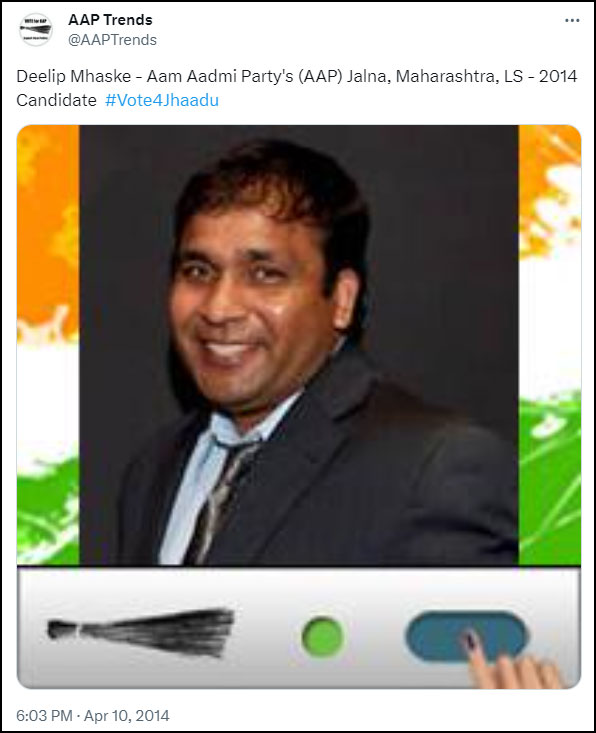
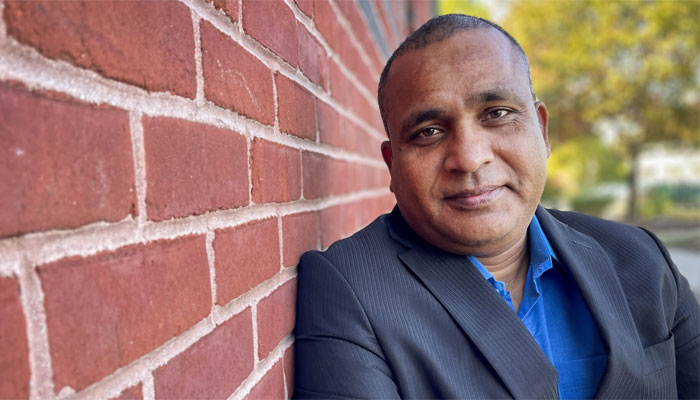
On 24th October, the New Jersey Monitor published a report authored by journalist Dana Difilippo that revolved around so-called caste discrimination among Hindu Americans. The report focused on the life and activism of Dalit activist Deelip Mhaske, who presents himself as a passionate advocate against caste discrimination. However, his past and statements given for the report, especially about the construction of Hindu temples in the US, should be scrutinised.

The report asserted that Indian-Americans, especially Hindu-Americans, have imported caste discrimination to the United States. The statement is overly sweeping and generalising. Despite the fact that caste exists in several religions, including Sikhism, Buddhism, Christianity and Islam, in countries including Pakistan, Bangladesh, Nepal, Sri Lanka and others, Hindus were sidelined in the report. Above all, there is a serious lack of data on caste discrimination in the United States.

Mhaske’s objectionable comments on Hindu temples

Another problematic statement that Mhaske made while speaking to the New Jersey Monitor was about Bochasanwasi Akshar Purushottam (BAPS) Shri Swaminarayan Mandir, which is the second largest temple in the world. Mhaske said, “The rise of temples throughout the country is really, really alarming for us because that’s the centre point of starting the caste system, untouchability and discrimination.”

Temples do not discriminate against people based on caste. Some temples do not allow people from other faiths to enter the Sanctum Sanctorum; in some cases, only priests who perform Puja at those temples are allowed. Otherwise, there is virtually no discrimination based on caste in any public temple. The problem with so-called activists and “intellectuals” like Mhaske is that they do not understand traditions and equate them with discrimination.

He also pointed out the alleged case of discrimination and human trafficking filed against the temple administration. However, the matter is sub judice, and there were reports that the case was filed by luring the workers into believing that if they spoke against the temple, they would get a green card. BAPS has publicly stated that they oppose caste-based discrimination and welcome people from all castes and religions.

Mhaske pushed the anti-caste discrimination bill in California and New Jersey

Mhaske is actively pushing an anti-caste discrimination bill similar to the one that was passed in California but vetoed by the governor in New Jersey. Assemblywoman Sadaf Jaffer was the only politician supporting him, but she will leave office in January with no chance of contesting again. Interestingly, speaking to NJM, Jaffer said, “Caste hierarchies can be found in Christian, Sikh, Buddhist, and other faiths and in countries including Pakistan, Bangladesh, Nepal, Sri Lanka, the Maldives, and Bhutan.”

Mhaske also lobbied for the California anti-caste discrimination bill SB403. However, Governor Gavin Newsom vetoed it, stating it was unnecessary and there were already provisions in the existing law to fight any kind of inherited discrimination. Mhaske, after the bill was vetoed, blamed “wealthy businessmen” for lobbying against the bill.

He is pushing the anti-caste discrimination bill in New Jersey and lobbying other states to introduce similar bills.

The former Permanent Representative of India called out Mhaske to the UN

In 2018, then-Permanent Representative of India to the United Nations Syed Akabaruddin called out Mhaske and others for spreading disinformation about celebrations of Baba Saheb Ambedkar at the UN. An X (formerly Twitter) user, Lubdhak Vedh, had asked Akbarudding about the reports suggesting India voted against the proposal of celebrating BR Ambedkar’s birthday at the UN. The user pointed out that Mhaske and Dr Munagekar created a “storm” over the issue. Quoting the tweet, Akbaruddin said the birthday would be celebrated at the UN and urged the user not to “go by those who don’t speak for our great country” while calling out Mhaske.

Interestingly, another X user, Kailash Vishnu, had replied to Vedh’s tweet and pointed out dubious posts by Mhaske on his now-deleted Facebook account. He pointed out that on 2nd April, he had tried to incite violence in a now-deleted social media post. In that post, he had written, “9 brothers who were martyred in the fight for self-respect. Hundreds of salutes to him. The entire society promises that these warriors. The sacrifice will not go in vain. I will support all the families personally.”

For those who are unaware, on 2nd April 2018, people from the SC/ST community protested against a Supreme Court order that no arrest could be made without prior permission in the SC/ST Act and allowed a court to grant an anticipatory bail in case the complaint appeared to be an abuse of the law. However, the Government of India amended the law, nullifying the judgment.

Kailash also asserted that Mhaske often posted, deleted and recycled his old photos with senior government officials to gain access and traction on social media.

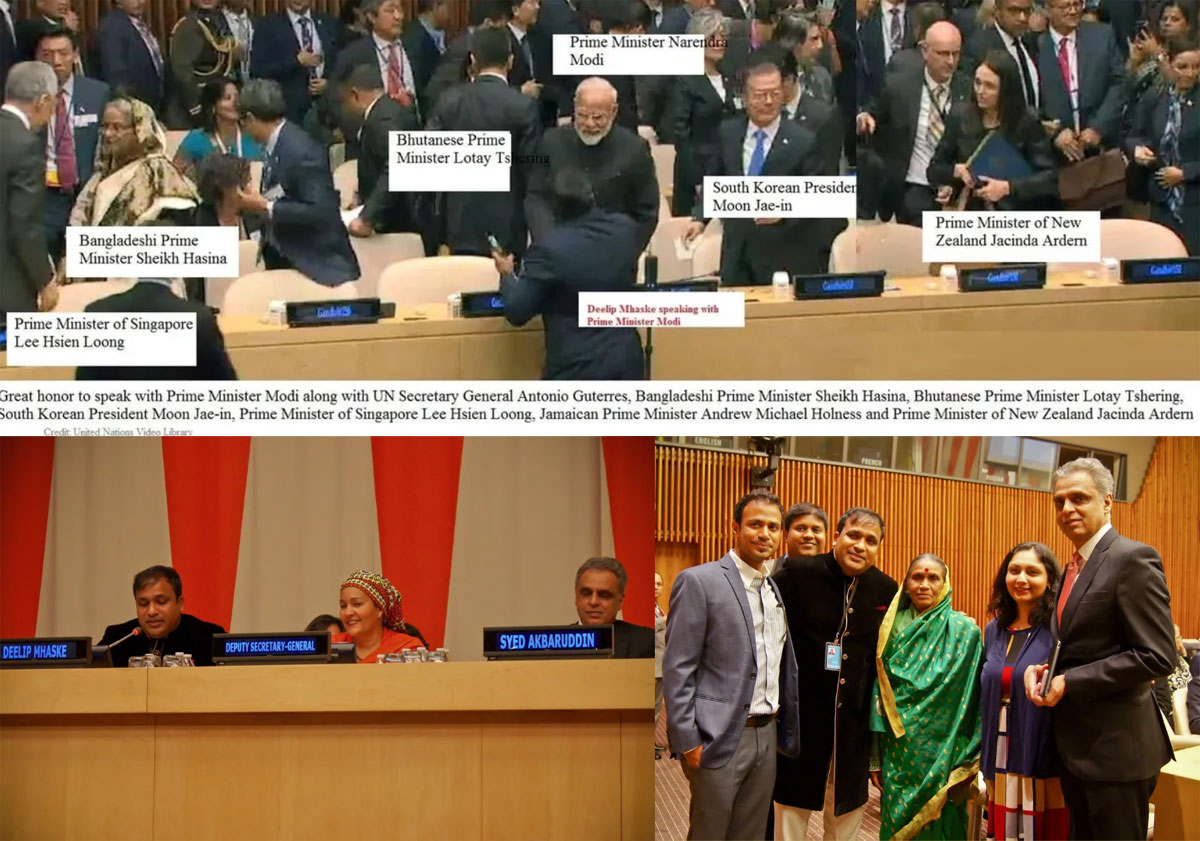
Interestingly, Mhaske uses photos with leaders and even with Prime Minister Narendra Modi on his website, which gives the idea that he works for the government.

Mhaske used old photos on his websites without mention of the date possibly to show he is close to the government authorities. Source: humanhorizon.org

Deelip Mhaske contested the Lok Sabha elections on AAP’s ticket

Interestingly, Mhaske contested the Lok Sabha elections on AAP’s ticket in 2014 from the Jalna constituency in Maharashtra. Of 10,66,259 votes, Mhaske had secured 4,622 votes or 0.43 per cent of the vote share. In other words, Mhaske lost his deposit in the election.

Source: X

Mhaske, who has been pushing anti-caste discrimination bills across states in the US, has a dubious past and is often seen passing anti-Hindu comments. In July 2023, he wrote for The Print, in which he tried to assert that while thousands of SC/ST/OBC students were quitting IITs and central universities, PM Modi was busy inaugurating and building temples. Interestingly, he mentioned the Ram Mandir, which is being constructed in Ayodhya. Mhaske forgot that the temple is not being built by the government but with money donated by the devotees. He cited the data shared in Rajya Sabha, where it was mentioned that 17,545 marginalised students dropped from central universities and 8,139 marginalised students dropped out from IITs.

However, he conveniently ignored the fact that in the case of postgraduate and PhD programmes, the main reason for dropping was cited as “offers for placement in public sector enterprises and personal preference for better opportunities elsewhere”. For undergraduate programs, the reason was noted as “wrong choices filled, poor performance, and personal and medical reasons”. Going by the cited reasons, accusing PM Modi of the same was going over the board. Furthermore, it was also mentioned that the government took corrective measures in the universities and IITs to reduce dropouts. Still, it was nowhere mentioned in the article written by Mhaske.

India slams Pakistan for raising Kashmir issue during Israel-Hamas Debate at UNSC

0

India slammed Pakistan for raising the Kashmir issue in the midst of a debate meant for the Israel-Gaza situation and termed the action as of a ‘habitual nature’.

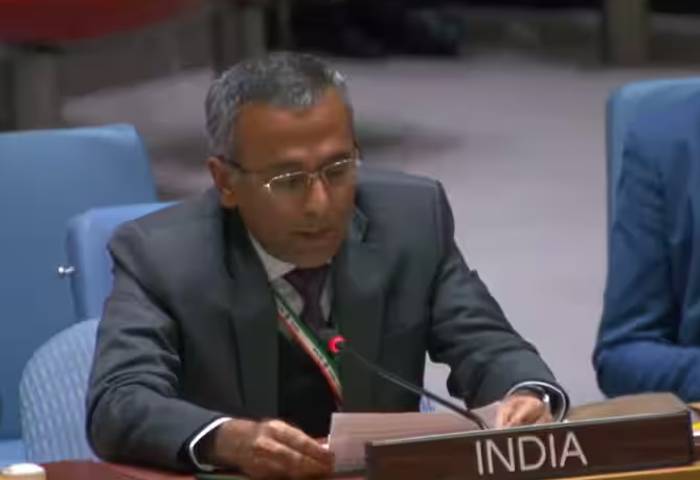
R. Ravindra, India’s Deputy Permanent Representative (DPR) to the United Nations on Wednesday before concluding his remarks at the forum called that the remarks from the Pakistan side unworthy of a response and not worth dignifying.

“Before I end, there was a remark of habitual nature by one delegation referring to Union Territories that are integral and inalienable parts of my country,” Ravindra said, adding, “I would treat these remarks with the contempt they deserve and not dignify them with a response in the interest of time.”

He also underlined New Delhi’s efforts to send humanitarian assistance to civilians in the Gaza Strip, amid the ongoing Israel-Hamas war, saying that it has sent 38 tons of food and critical medical equipment to the region.

Ravindra made the statement while representing India at the United Nations Security Council Open-debate on the “situation in the Middle East, including the Palestinian question”.

Thanking the United Nations General Assembly (UNGA) for the open debate on the latest chapter of hostilities in West Asia, he said India was deeply concerned about the deteriorating security situation and large-scale loss of civilians in the ongoing conflict.

“The mounting humanitarian crisis is equally alarming,” he said. “India has sent 38 tons of humanitarian goods, including medicines and equipment, to the people of Palestine. We also urge the parties to work towards creating conditions necessary for peace and for restarting direct negotiations, including through de-escalation and issuing violence,” Ravindra added.

“The escalation of our utilities in the region has only exacerbated the dire humanitarian situation,” he said, adding, “It has once again underscored the fragile nature of the ceasefire.”

The terror attacks that happened on October 7 in Israel were shocking and India condemned them unequivocally, the deputy permanent envoy to the UN noted.

Prime Minister Narendra Modi was one of the first global leaders to convey his condolences over the loss of lives and “prayers for the innocent victims and their families”.

“We stood in solidarity with Israel at their moment of crisis when they were facing these terror attacks,” Ravindra added. “We have also expressed deep shock at the tragic loss of lives at the Al Hali hospital in Gaza, where several hundreds of civilian casualties have occurred and thousands injured. Our heartfelt condolences to the families of the victims and prayers for the speedy recovery of the injured,” India’s deputy permanent envoy to the world body added.

PM Modi had also said those involved in the attack “must be held responsible”, Ravindra added, noting that the civilian casualties in the ongoing conflict are a matter of serious and continuing concern. All parties must protect civilians, especially women and children. “The Unfolding humanitarian crisis needs to be addressed. We welcome the efforts of the international community for de-escalation and delivery of humanitarian goods to the people of Gaza,” he added.

Also reaffirming India’s support for a two-state solution to the Israel-Palestine issue, he said the same can lead to the establishment of a sovereign, independent and viable state of Palestine, living within secure and recognized borders, side by side in peace with Israel, taking into account the legitimate security concerns of Israel.

“Towards this, we reiterate the need for an early resumption of direct peace negotiations. We also continue to support the Palestinian people through our bilateral development partnership, which covers a wide range of sectors including health, education, women’s empowerment, entrepreneurship and information technology,” Ravindra said.

He added India was also supporting grassroots Palestinian institutions in their development initiatives. “In these challenging times, India will continue to send humanitarian assistance to the people of Palestine,” India’s deputy permanent envoy to the UN said.

He stated that the current escalation of the conflict has once again underscored the need for immediate resumption of credible, direct negotiations between Israel and Palestine. “Every effort must be made to create conducive conditions for the resumption of these talks. We welcome all efforts of regional and global players aimed towards restoring normalcy,” he said.

Ravindra concluded his statement by reaffirming India’s firm commitment to achieving a “just, peaceful and lasting solution to the Israel-Palestine conflict”. 

(This news report is published from a syndicated feed. Except for the headline, the content has not been written or edited by OpIndia staff)

Haryana becomes first state to open schools under Center’s PM-SHRI scheme; 124 schools inaugurated in first phase, 128 more to come up soon

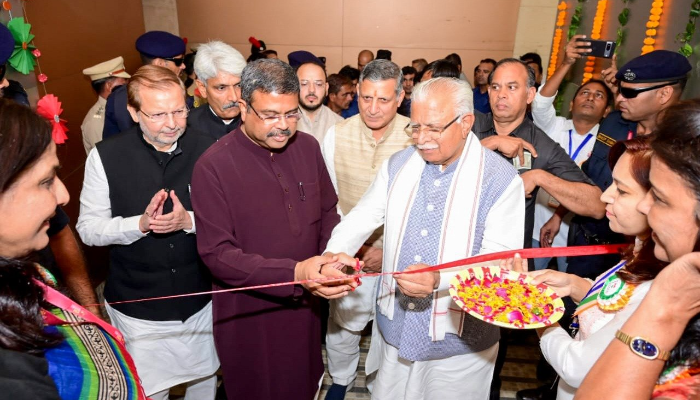
On 25 October, Haryana became the first state to launch schools under the PM SHRI (Pradhan Mantri Schools for Rising India) initiative. The first phase of the scheme includes the official opening of 124 schools throughout the state by state education minister Kanwar Pal Gujjar and union education minister Dharmendra Pradhan. 128 additional schools are going to be added to the program in the second phase.

The Central Government has allocated Rs 85 crore for the first phase of the construction of 124 schools with the objective of boosting educational standards in the state. Meanwhile, 128 other schools have already been chosen for the second phase of the PM SHRI scheme.

Addressing the program, Chief Minister Manohar Lal remarked that a person cannot be complete without education. The Haryana CM said, “Therefore, everyone needs education. We have improved education so that the spirit of culture and love of nation and country can be inculcated in the youth. PM Shri Schools were established so that schools could be respected. The new education policy would bring change to the country. It addresses the necessity of providing education from an early age.”

CM Khattar highlighted, “Education encompasses culture, behaviour, attributes and politeness. It is necessary to be attached to them. The government has made such provisions apart from education and employment.”

He further added, “4000 Play Way Schools have been started in Haryana. They are called ‘Bal Vatika.’ Simple methods should be used to deliver education. The teachers must take this into account.” The Haryana CM also shared examples by telling the story of a simple method of teaching. “There are mischievous children in the class and they have to be taught in their own method. Morals must also be taught in education. Efforts are being made to provide such education”, he said.

According to officials, the National Education Policy (NEP) 2020 curriculum would be taught in the Central Board of Secondary Education (CBSE)-affiliated institutions. The schools currently operating under PM SHRI include both, co-educational and all-girls government schools, that have undergone specific infrastructural renovations.

This initiative, which was authorised by the Cabinet in September 2022, is to upgrade 6,448 schools throughout India. According to Chief Secretary Sanjeev Kaushal, the Center has identified 3,893 schools in the state for further consideration based on an evaluation of accessibility, student population, and current infrastructure.

Furthermore, the state has also upgraded 67 more Government Senior Secondary Schools (GSSS) to Model Sanskriti Schools and linked them to the CBSE. Anjana Dhingra, the principal of GSSS Chakkarpur, one of the city’s four upgraded schools stated, “Students currently enrolled at the PM SHRI schools will start studying the CBSE from the next academic session.”

The new curriculum is set to be implemented for students in classes 6-8 to ensure that board preparations for students in senior classes are unaffected. The PM SHRI schools would carry out a five-year growth plan, with each school receiving approximately Rs 1 crore in funding annually to improve the teaching-learning environment, per officials.

Sanjay Kumar, secretary (school education and literacy) in the Ministry of Education said, “The scheme will be implemented from 2022-23 to 2026-27, after which it shall be the responsibility of the states/Union Territories to continue to maintain the benchmarks achieved by these schools. The total cost of the project will be Rs 27,360 crore spread over a period of five years, of which the Centre’s share is Rs 18,128 crore.”

A senior department of secondary education official while talking about the scheme said, “This includes smart classes, better arrangements for students to sit and study, sports labs and other facilities. Students can also choose their medium of study, English or Hindi.”

The official added, “Besides having ICT-based teaching infrastructure, these schools have been developed keeping carbon neutrality and environmental sustainability in mind. They have facilities such as solar panels, nutrition gardens, a plastic-free environment and waste management units.”

Every PM SHRI School has connections to the local entrepreneurial community to improve internship and career options along with a university for mentorship. Each year, the schools would receive subsidies that cover sports, libraries and the cost of science and math equipment. At the national level, 14400 schools are to be upgraded under the scheme.  

PM Modi reviews progress and implementation of projects worth Rs 31,000 Cr in 7 states, including West Bengal, instructs on 4G coverage in villages: Details

On Wednesday (25th October), Prime Minister Narendra Modi chaired the meeting of the 43rd edition of PRAGATI, the ICT-based multi-modal platform for Pro-Active Governance and Timely Implementation, involving Center and State governments. In this meeting, he reviewed the progress and implementation of projects worth Rs 31,000 crores across 7 states. The Prime Minister also reviewed the ‘Mobile Towers and 4G Coverage under USOF Projects’ during this meeting.

During the PRAGATI meeting, eight projects underwent review. Out of these, four projects centered on water supply and irrigation, two projects aimed at enhancing National highways and connectivity, and two projects focused on rail and metro rail connectivity.

Collectively, these projects amount to approximately Rs. 31,000 crore and pertain to 7 states viz. Bihar, Jharkhand, Haryana, Odisha, West Bengal, Gujarat, and Maharashtra. Notably, up to the 43rd edition of PRAGATI meetings, a total of 348 projects, with a combined cost of Rs. 17.36 lakh crore, have undergone review.

In a post from his X handle, PM Narendra Modi wrote, “Yesterday, I chaired the 43rd edition of PRAGATI where projects worth over Rs. 31,000 crore across 7 states were reviewed. Ways to make the PM Gati Shakti National Master Plan Portal even more effective were also discussed.”

According to a press release by the PIB, the Prime Minister stressed the importance of leveraging the PM Gati Shakti National Master Plan Portal and satellite imagery technology to tackle implementation and planning challenges related to project location and land requirements. Additionally, he directed all stakeholders involved in projects within densely populated urban areas to designate nodal officers and establish teams to ensure improved coordination.

Regarding irrigation projects, Prime Minister Narendra Modi advised organising stakeholder visits to areas where successful rehabilitation and reconstruction efforts have been undertaken. Demonstrating the transformative impact of these projects could serve as a motivation for stakeholders to expedite the execution of projects.

During the discussion, Prime Minister Narendra Modi also assessed the progress of ‘Mobile Towers and 4G Coverage under USOF Projects.’ As part of the Universal Service Obligation Fund (USOF), the aim is to provide mobile connectivity to 33,573 villages through the installation of 24,149 mobile towers. The Prime Minister emphasised the importance of establishing mobile towers in all unreached villages within the current fiscal year, underlining the necessity of regular meetings with all stakeholders. This approach will guarantee mobile network coverage even in the most remote regions.

What is PRAGATI?

PRAGATI stands for “Pro-Active Governance and Timely Implementation.” It is an ICT-based (Information and Communication Technology) multi-modal platform that was launched by the Government of India. This platform was established for the purpose of addressing the common man’s grievances, as well as simultaneously monitoring and reviewing important programs and projects of the Government of India, as well as major infrastructure initiatives.

PRAGATI enables the Prime Minister’s Office (PMO) to interact directly with central and state government officials, allowing for real-time monitoring and reviewing of important projects. By utilising technology, PRAGATI aims to ensure effective governance and timely implementation of government schemes and policies.

22 killed, 50 injured in Lewiston as US Army Reserve firearms instructor Robert Card goes on a shooting spree, FBI ready to assist investigation

0

At least 22 people were murdered and an additional 30 suffered injuries in firing in the US city of Lewiston on Wednesday (25th October) night. The authorities who confirmed the incident said that the gunman was still at large. The active shooter incident in Maine is said to have happened at three different locations: Schemengees Bar and Grille, a Walmart store, and Sparetime Recreation.

Lewiston authorities had already issued an emergency alert advising the public to seek cover as a result of an active shooter. The sheriff’s office in the area posted photos of a suspect clutching a high-powered assault gun. The Lewiston Police Department later identified the shooter as Robert Card. Card is a US Army Reserve firearms instructor who was recently freed from a mental health hospital after claiming hallucinations.

“Law Enforcement is attempting to locate Robert Card 4/4/1983, as a person of interest regarding the mass shooting at Schemengees Bar and Sparetime Recreation this evening. CARD should be considered armed and dangerous. Please contact law enforcement if you are aware of his whereabouts,” Lewiston police said in a statement.

Meanwhile, Maine Governor Janet Mills also commented on the issue. “I am aware of and have been briefed on the active shooter situation in Lewiston. I urge all people in the area to follow the direction of State and local enforcement. I will continue to monitor the situation and remain in close contact with public safety officials,” the governor wrote on X.

The White House press office said Wednesday, 25th October that US President Joe Biden talked over the phone with a number of Maine lawmakers in the aftermath of the deadly murders in Lewiston. “The President spoke by phone individually to Maine Governor Janet Mills, Senators Angus King and Susan Collins, and Congressman Jared Golden about the shooting in Lewiston, Maine, and offered full federal support in the wake of this horrific attack,” the White House said in a statement.

In an earlier post, Lewiston police stated that they are seeking a car with a black front bumper in connection with the ongoing gunshots in the city. In addition to local police, the FBI and US Homeland Security have offered assistance in the case of the horrific shooting.

“The entire Department of Homeland Security grieves with the loved ones of those killed and injured, and stands with the brave law enforcement officers and first responders who are currently working to secure and safeguard the people of Lewiston,” the spokesperson was quoted as saying.

The FBI also stated that it is ready to assist in the case of deadly mass shootings. “The FBI Boston Division continues to coordinate with our local, state, and federal law enforcement partners in Maine and we stand ready to assist with any available resources they need, including evidence response, investigative and tactical support, as well as victim assistance,” the FBI in Boston said in a statement.

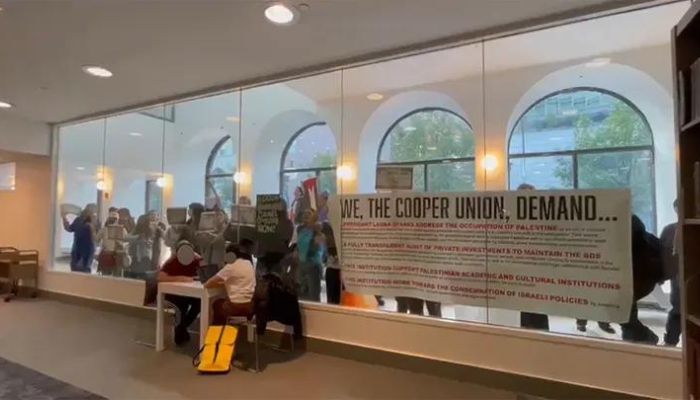
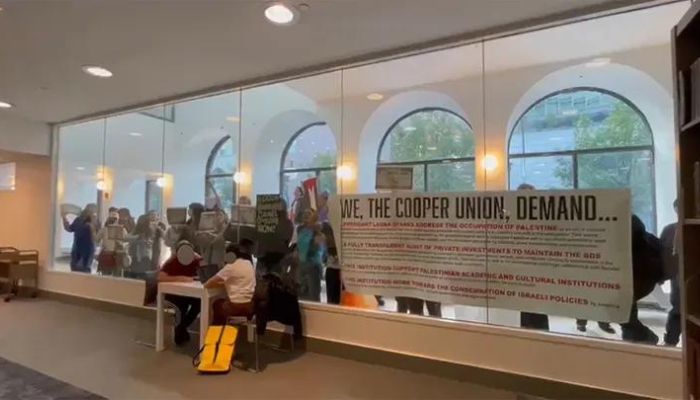
USA: Jewish students at Cooper Union locked inside library as Pro-Palestine protesters bang on the doors, rescued by police via the back door

On Wednesday (25th October), a series of college and university walkouts in support of Palestinians caused a security scare at a Manhattan campus. Jewish students at Cooper Union College in the United States were kept locked in the library on Wednesday night by a security team as a precaution against a pro-Palestinian mob that attempted to burst through the doors.

Since the 7th October terror attacks by Hamas and the subsequent war between Israel and the terrorist organisation in the Gaza Strip, there have been several anti-Jewish and pro-Palestinian demonstrations around the world. The latest of these instances took place at Cooper Union in New York.

A crowd gathered behind the door of The Cooper Union library, chanting “Free Palestine,” and attempting to smash down the door as Jewish students were stuck inside. Later, the Jewish students stranded in the library were rescued via the back door. A video of this incident has gone viral on social media.

Before proceeding to the library, the protesting group marched straight to the president’s office, where he was present and permitted them to stay on. Several Jewish students can be seen in a video stuck in the library while a crowd gathers behind the door and chants “Free Palestine.” The police forces finally escorted the students through tunnels using a back door.

When asked about reports that some Jewish students were trapped in a Cooper Union library because they were terrified during the march, school administrators indicated the reports were false. After the protests were over, the college president and the victim students met with NYPD officials, the regional head of the Anti-Defamation League, and municipal officials.

Jacob – one of the stranded students – said, “I genuinely don’t know what would have happened if the doors were left open.” Another student Gila said, “It was tense; people were nervous. The school fails to make good on their promises to students to provide a safe and productive learning environment.”

The pro-Palestine protestors were about to break the glass doors of the library. Image Source: Fox News

This is not the first pro-Palestinian protest on an American campus. Students for Justice in Palestine (SJP) planned a “National Day of Resistance” across American college campuses on 12th October. In a “Day of Resistance toolkit” published by the SJP, it was said that “students in exile are part of this movement, not in solidarity with this movement” and urged its followers to rally because “the Zionist entity is fragile, and Palestinian resistance is alive.”

SJP rallies were held on several US campuses on the so-called “National Day of Resistance,” including the University of Washington (Seattle), Columbia University, the University of North Carolina, the University of California, Los Angeles (UCLA), the University of Southern Florida (USF), University of Virginia, and the University of Illinois.

Hamas attacks Israel

On 7th October, thousands of missiles were fired by Hamas into Israel while more than 2,500 assistants broke through the border into the country.

Over 1400 people were killed in the terror attack including numerous infants. More than 220 persons of various ages were kidnapped and taken as prisoners back to Gaza and only four of them have been released so far.

Israel has launched heavy attacks in Gaza and vowed to eliminate the terror organisation in retaliation and informed that terror targets are being hit while attempting to prevent civilian losses. More than a million people in Gaza have been ordered to leave the northern portion of the Strip in anticipation of a ground invasion.

Here are the Indians or persons of Indian origin who signed a letter contextualising the rape and beheading of Jews by Islamic terror group Hamas

0

On 18th October, a letter by ‘sociologists’ surfaced on social media contextualising the rape and beheading of Jews by Islamic terrorist org Hamas. As the letter was written on behalf of the sociologists, a call was made to the sociologists worldwide to co-sign the letter. Hundreds of sociologists obliged and signed it using the Google Form provided.

Initially, anyone could sign the letter using any name by submitting the Google Form, which resulted in some vandalism to the letter. There were names like Adolf Hitler and notorious Nazi doctor  Josef Mengele among the list of signatories. After the vandalism was pointed out on social media, the author restricted voting for the letter, and now names appear under the letter only after they are verified by moderators.

When checked, the only name that was not anonymous that was accessing the letter at that time was Michael Rodríguez-Muñiz, who is an Associate Professor of Sociology at the University of California, Berkeley. His post on X (formerly Twitter) was the first to mention the letter, hinting at him being the author.

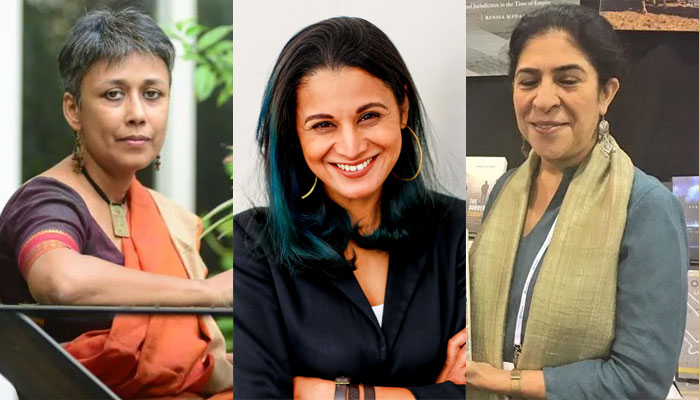
Among the signatories, some names stood out as they were of Indian origin. The first name we investigated was Professor Srila Roy, Professor of Sociology at Wits University in South Africa.

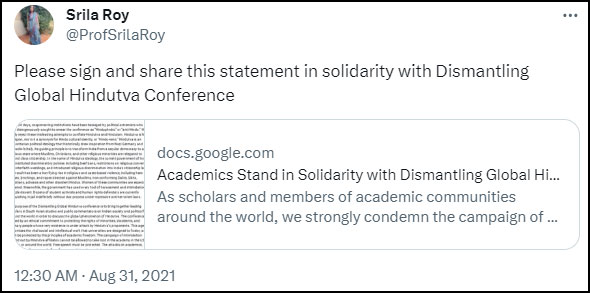
Stop Hindu Hate Advocacy Network (SHHAN) mentioned her in one of their posts about the signatories. They pointed out that Roy had rooted for the infamous anti-Hindu conference “Dismantling Global Hindutva Conference” (DGHC).

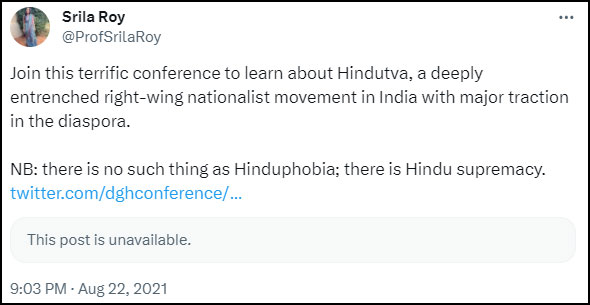
In August 2021, she urged people to join the conference. She wrote on X, “Join this terrific conference to learn about Hindutva, a deeply entrenched right-wing nationalist movement in India with major traction in the diaspora. NB: there is no such thing as Hinduphobia; there is Hindu supremacy.” It is often seen that anti-Hindu forces run a narrative that there is no “Hinduphobia”.

Source: X

After DGHC faced worldwide backlash, she was one of those who supported it and urged her followers to sign the statement in solidarity with the conference. Though the page containing a list of signatories no longer exists, there is an archive from October 2022 with a list of 1,100 signatories, which can be checked here.

Source: X

Another name that we spotted on the list was Radhika Mongia, Associate Professor of Sociology at York University. According to several websites, she was a member of the ad hoc organizing committee of the Dismantling Global Hindutva Conference. She was also one of the signatories who signed the letter in support of the conference that was mentioned above.

The third name on the list was Nandini Sunder, who was one of the speakers at the Dismantling Global Hindutva Conference. Nandini Sundar, quite privileged herself, is a professor of sociology at the Delhi School of Economics. She is also the wife of Siddharth Varadarajan, the founding editor of far-left Hindumisic website ‘The Wire‘. Nandini Sundar, who writes for various platforms, including her husband’s The Wire, was once accused of a tribal man’s murder in Chhattisgarh’s Sukma. She was accused of provoking the villagers against the government. It was claimed that the professors threatened to burn houses if villagers did not support Maoists. However, with the Congress party forming the government in Chattisgarh, Nandini Sundar was given a clean chit in the murder case.

Some other India names spotted in the list of signatories include:

Rajni Palriwala, Professor (retd.) University of Delhi

  • Papori Bora, Assistant Professor, Jawaharlal Nehru University
  • Abhijit Dasgupta, Professor of Sociology (Retd)
  • Maitrayee Chaudhuri . Retired Professor. Jawaharlal Nehru University
  • Satish Deshpande, Professor (Retired), University of Delhi
  • Suranjan Sinha, independent researcher, formerly University of Delhi, Sociology faculty
  • Ruchi Chaturvedi Associate Professor, University of Cape Town
  • Susila Gurusami, Assistant Professor, UIC CLJ
  • Pallavi Banerjee, Associate Professor of Sociology, University of Calgary
  • Nandita Sharma, Professor, Sociology, University of Hawaii at Manoa
  • Didti Mitra, Associate Professor, Sociology,
  • And many others, including professors, research associates and students

Dismantling Global Hindutva Conference

Dismantling Global Hindutva (DGH) was a three-day virtual conference organised in September 2021 that aimed to target Hinduism to fight Hindutva. Dismantling Global Hindutva (DGH) conference prompted Hinduphobia through fear-mongering without substantial evidence, delegitimizing Hindu critiques, and created a double standard by singling out Hindutva. The conference denied the existence of Hinduphobia and downplayed the concerns of the Hindu community.

“Feel very blessed”: PM Narendra Modi after he was invited to perform Pran Pratistha of Lord Ram’s idol at the Ram Mandir on 22 January 2024

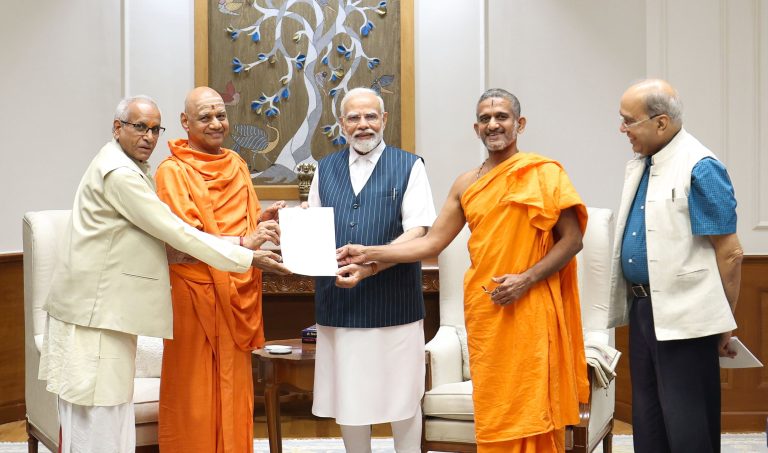
Shri Ram Janmabhoomi Teerth Kshetra Trust today formally invited Prime Minister Narendra Modi to attend the inauguration of Ram Mandir. PM Modi posted on X that officials of the trust met him at his residence today, and invited him to attend the event of Pran Pratistha at the Ram Mandir in Ayodhya.

PM Modi tweeted, ‘Jai Siyaram! Today is a day full of emotions. The officials of Shri Ram Janmabhoomi Teerth Kshetra Trust had come to meet me at my residence. They have invited me to come to Ayodhya on the occasion of (Pran Pratistha) consecration of Shri Ram temple.’ He further added, ‘I feel very blessed. It is my good fortune that in my lifetime, I will witness this historic occasion.’

At the same time, ‘Shri Ram Janmabhoomi Teerth Kshetra’ Trust has also announced that the consecration of the Shri Vigraha of Lord Shri Ramlala Sarkar at Shri Ram Janmabhoomi Mandir in Ayodhya will be done by the Honorable Prime Minister Shri Narendra Modi on January 22, 2024. With this, the date for the opening of the Grand Ram Mandir has been formally announced.

“Hon’ble Prime Minister Shri Narendra Modi ji will perform Prana Pratishtha of Shri Vigraha of Bhagwan Shri Ramlalla Sarkar in Shri Ram Janmabhoomi Mandir on 22 January 2024,” Shri Ram Janmbhoomi Teerth Kshetra posted from its X account, along with the photograph of the trust officials meeting PM and handing over the invitation letter.

Shri Ram Janmabhoomi Teerth Kshetra Trust’s Trustee Swami Vishwaprasanna Tirtha Ji Maharaj, Treasurer Swami Govind Dev Giri Ji Maharaj, Temple Construction Committee Chairman Nripendra Mishra, and Trust’s General Secretary Champat Rai met the Prime Minister to hand over the formal invitation.

The trust also added that 4000 priests and 2500 eminent citizens will be present at the historic moment. Other eminent guests to attend the event include RSS Sarsanghchalak Mohan Bhagwat and Uttar Pradesh Chief Minister Yogi Adityanath.

Trust General Secretary Champat Rai also said that members of the trust met PM Narendra Modi to invite him to attend the installation of the idol of Lord Ram in the Garbhagriha of the Ram Mandir. He added that the Prime Minister accepted the invitation, and thus the date for Pran Pratistha of the Mandir has been finalised.

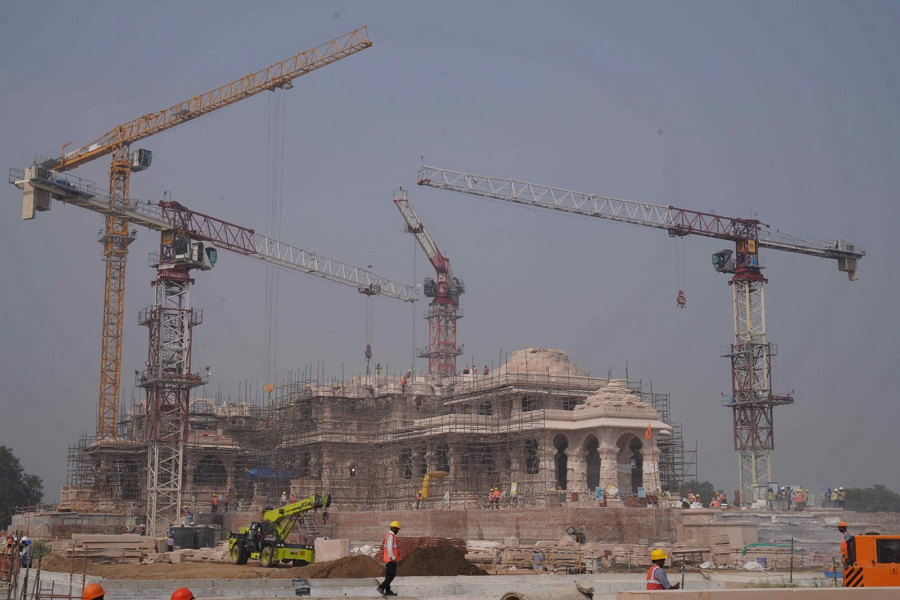
At present the construction work of the temple is going on very fast. Recently, Uttar Pradesh Chief Minister Yogi Adityanath had also visited Ayodhya to review the construction work of the temple. With the inauguration of the temple, it will be opened to the general public and devotees from all over the world will be able to visit the Mandir for darshan.

Earlier, Ram Temple Construction Committee Chairperson Nripendra Mishra had said the construction of the ground floor of the three-storey temple in Ayodhya will be completed by December this year. The rest of the floors are expected to be completed within the stipulated time.

The Mandir trust has decided to commence the consecration of Ram Lalla after Makar Sankranti on January 14, and it will be followed by the 10-day ritual of ‘Pran Pratishtha’ (blessing) of Ram Lalla. According to the Chief Priest of Ram Mandir, Acharya Satyendra Das Ji Maharaj, the rituals will be held from January 15 to January 24.

It is notable that RSS (Rashtriya Swayamsevak Sangh) chief Mohan Bhagwat had already informed that the Idol of Lord Ram will be installed in Ayodhya on January 22, 2024. Various events will also be organised at different places across the country to celebrate this occasion. A museum is also to be established on the banks of Saryu, in which the sculptures and other remains discovered at the site will be displayed.

Love Jihad in UP: Haroon rapes a Hindu girl after entrapping her in an affair under false pretences; arrested

0

A case of love jihad with a Hindu girl from Uttar Pradesh’s Meerut has come to light where a Muslim man named Haroon adopted a Hindu identity to exploit her. He tricked the victim into falling into a relationship with him and raped her. The accused, who is a resident of Narheda, has been taken into custody following a complaint by her. The police have registered a case and an investigation is underway.

According to reports, the incident transpired at the Lohianagar police station area of Meerut. The girl stated in the police complaint that she met with the perpetrator through social media. He introduced himself as a Hindu and befriended her. Afterwards, he regularly attempted to foster closer relationships by messaging her online and their frequent conversations developed into friendship.

The girl said, “He reached out to me on social media after changing his name following which we both became friends. During this time he trapped me into a romantic relationship with him and sexually violated me.” However, she learned about the truth after some time and protested. She revealed, “He then threatened and blackmailed me.” She grew tired of the torture and reported him to the authorities.

A case was lodged immediately as the matter was bipartisan. The culprit was arrested, however, he alleged that the issue was not of love jihad but merely a transaction dispute between him and the complainant. Later, cops conducted a medical examination of the girl and recorded her statement. She was also brought before the court and her testimony was noted down there as well.