Home Blog Page 2252

Pakistan-born progressive Muslim commentator Tarek Fatah passes away after prolonged illness

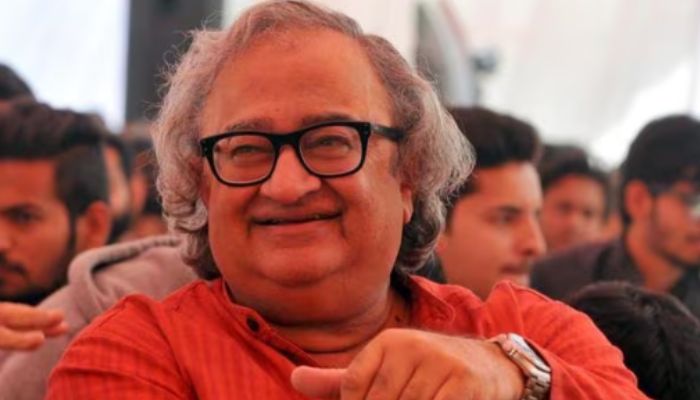
Progressive Muslim commentator, renowned Pakistan-born Canadian columnist and famous television personality Tarek Fatah passed away on Monday, 24 April, 2023 at the age of 73 in Canada after a prolonged illness. He was suffering from cancer. He is survived by his daughters Natasha and Nazia. His daughter Natasha took to Twitter to make the announcement.

In a tweet, Natasha said, “Lion of Punjab. Son of Hindustan. Lover of Canada. Speaker of truth. Fighter for justice. Voice of the down-trodden, underdogs, and the oppressed. @TarekFatah has passed the baton on… his revolution will continue with all who knew and loved him. Will you join us? 1949-2023”

Tarek Fatah was born on November 20, 1949, in Karachi, Pakistan. He was a leftist student movement leader during the late 1960s and 1970s. During these decades, he was imprisoned twice by Pakistan’s successive military rules. General Zia-ul Haq charged him with sedition in 1977 and prevented him from working as a journalist in the country. He went to Canada in 1987 and worked as a journalist ever since.

He was very proud of his Indian origins. He often told in his interviews that he hailed from a Rajput family that was forcibly converted to Islam in the 1840s. He identified himself as a Hindustani born in Pakistan. He was a staunch critic of Islamic fanaticism. Therefore, he was often attacked by Muslims across the world. However, he fearlessly put his thoughts through his writing for various media, blogs, and books.

In the late 1990s, Fatah became increasingly critical of Islamic fundamentalism and its impact on Muslim communities around the world. He wrote several books on the subject, including “Chasing a Mirage: The Tragic Illusion of an Islamic State” and “The Jew is Not My Enemy: Unveiling the Myths that Fuel Muslim Anti-Semitism.”

In his long public appearance, he would often show his respect for Hinduism and the pride he took in the Indian civilization. He also hosted a show on Zee News titled ‘Fatah Ka Fatwa’ which literally means ‘Fatah’s opinion’. He was often targeted by Islamist Maulanas for his bold and clear critical comments on radical Islam.

He would introduce himself as “I am an Indian born in Pakistan, a Punjabi born in Islam; an immigrant in Canada with a Muslim consciousness, grounded in a Marxist youth. I am one of Salman Rushdie’s many Midnight’s Children: we were snatched from the cradle of a great civilization and made permanent refugees, sent in search of an oasis that turned out to be a mirage.”

Tarek Fatah was one of the revered contributors to OpIndia. His articles can be read here.

“Modi hai to mumkin hai”, Pakistanis in Australia hail Indian PM Modi

Members of various religious communities, including Muslims and Christians in Australia praised Prime Minister Narendra Modi at an event held in Melbourne for his “ability to respect all communities.”

The Vishwa Sadbhawana event an initiative of the NID foundation was organised at Bunjil Palace in Melbourne in Australia on April 23. Religious leaders, intellectuals, scholars, preachers and researchers attended the event organised by the NID Foundation in association with The Indian Minorities Foundation (IMF), NID Foundation New Delhi, and Namdhari Sikh Society.

Dr Tariq Butt a member of the Ahmadiyya Muslim Community who hailed from Lahore in Pakistan said, “What I can say personally from my side I’ve got lots of Indian friends and I’ve seen them now getting united and doing many activities. We’ve been part of their activities as well. I think there is now more outreach between Indian Muslims and Pakistani Muslims altogether. We want to bring more commonalities than differences. Modi hai toh mumkin hai.”

Stating that the event was a great initiative and uniting Hindu and Muslim communities together and bringing them on one platform, he said that PM Modi is doing the right thing by encouraging the communities to engage with other communities to promote harmony and peace.

“PM Modi has the charisma where people are following him regardless of their religious inclination which is good,” he said.

Sadbhawana event is an initiative begun by NID Foundation taking the vision of Prime Minister Narendra Modi of ‘Vasudhaiva Kutumbakam’ where he called the whole world as ‘one family’, to every corner of the world.

Tahar Shakir from Karachi, a representative of the Dawoodi Bohra Muslim community said, “We recently had an event where we had a university, a new chapter of our university – Aljamea-tus-Saifiyah in Mumbai’s Marol and Modiji himself had come and one of the things he said to us was that please don’t call with a lot of honorifics. I am a part of your household.”

The PM inaugurated the campus in February. “We now have a good relationship and we have enjoyed a really good time in the last nine years and our community respects PM Modi. Our community will be there in Sydney to greet him when he arrives,” he said.

Imtiaz Ahmed Naveed, an Ahmadiyya Muslim from NSW, Australia also lauded PM Modi for trying to bring peace.

“Whatever news I see, I feel that he is working very hard, he is bringing all religions at one platform, talking about their progress, trying to bring peace. I think he’s trying his best,” he said.

Philip James Huggins, Bishop in the Anglican Church of Australia, said that the Sadbhawna event had the spirit of friendship and love and praised PM Modi.

“Well, not only Prime Minister Modi going to the Vatican, but I see him doing his best in that regard. And I think the new arrangements of trade and of parliamentary democracy and visits of friendship and the increased migration to Australia from India is making our partnership and our friendship absolutely wonderful and very important in terms of civilized life on the planet,” he said.

He pointed out that the relationship between India and Australia has blossomed under the leadership of PM Modi. “We have recently seen cricket diplomacy between the two countries. There is a beautiful feature of Indian Democracy is inclusive participation of different communities in each other’s festivals and rituals,” he said.

He also said that he does not adhere to the narrative being built against India that minorities are being targeted.

“In India, the majority population makes it easier for the minority communities to live together and progress and India is both spiritual and secular,” he added.

PM Modi will be travelling to Australia in May to take part in the QUAD leadership summit.

The announcement was made during the joint press conference hosted by the Prime Minister along with Australian counterpart Anthony Albanese, who was on a four-day visit to India in March.

“India and Australia are both members of the Quad. I thank PM Albanese for inviting me to Australia for the Quad Leaders’ Summit in May. I have invited him to India for the G20 summit in September,” PM Modi had said.

The leaders of the QUAD group have met on four occasions earlier and their next meeting will be held in Australia. The group’s importance in the region has increased due to its keen interest in sustainable and inclusive economic growth and increasing people-to-people connections between QUAD members and non-QUAD members.

Prime Minister Narendra Modi on several occasions has highlighted that QUAD is a force of global good and is aimed at developing the region while protecting the interests of all members of the Indo-Pacific region.

(This news report is published from a syndicated feed. Except for the headline, the content has not been written or edited by OpIndia staff)


Sant Khalsa Gurudwara, where Amritpal surrendered – read how it has links to Khalistani terrorist Jarnail Singh Bhindranwale

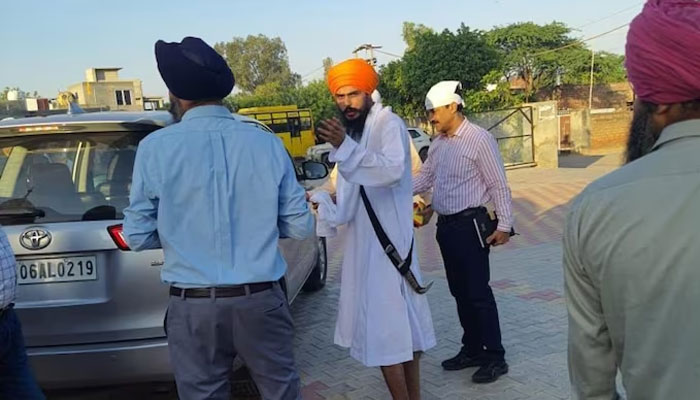
On April 23, pro-Khalistani separatist leader Amritpal Singh surrendered at Sant Khalsa Gurudwara in village Rode, district Moga, Punjab. Waris Punjab De’s chief strategically selected the Gurudwara to surrender, subtly establishing a deeper link with Khalistani terrorist Jarnail Singh Bhindranwale.

As per the Gurudwara cleric, Amritpal Singh reached Gurudwara on Saturday night and informed the police that he wanted to surrender. The police came at around 7 AM and arrested him. Keeping the sanctity of the holy place in mind, the police decided not to enter the Gurudwara and Amritpal Singh himself came out to surrender.

On the other hand, police have maintained their position claiming Amritpal Singh was arrested, and he did not surrender. Police have already invoked National Security Act (NSA) against Amritpal Singh, and he was taken to Dibrugarh, Assam, for further investigation.

Choosing Sant Khalsa Gurudwara was a strategic move

In September 2022, when Amritpal Singh returned to India from Dubai to officially take over the Waris Punjab De organisation, he went to Rode village for the Dastarbandi ceremony. The auspicious ceremony of Sikhs in which a turban is tied on the head of a newly baptised Sikh was held at the Sant Khalsa Gurudwara. Village Rode is the ancestral village of Khalistani terrorist Jarnail Singh Bhindranwale. Amritpal Singh has been trying to establish himself as the 2.0 version of Bhindranwale. Before the scheduled surrender, an ardas (prayer) was held at the Gurudwara in presence of Jasbir Rode and head granthi Balwinder Singh.

When Amritpal surrendered, he was dressed exactly like Bhindranwale. It is a reminiscence of the time when Bhindranwale surrendered at Mehta Chowk Gurudwara in September 1981 in connection to the murder of Lala Jagat Narain. Bhindranwale was released a month after the arrest. He addressed his supporters present at Mehta Chowk before surrendering to the police. In a similar way, Amritpal Singh gave a small speech at Sant Khalsa Gurudwara before surrendering to the police.

Bhindranwale’s family, including his brothers and nephews, lives in Rode Village. The place of his birth was converted into Sant Khalsa Gurudwara, and it was open to the public in 2018. Amritpal is doing everything to match the rise of Bhindranwale. Before the arrest, he was running deaddiction camps. He launched Khalsa Vahir, a march across Punjab, to connect with the Sikhs.

In the late 1980s, Bhindranwale too marched across Punjab, met people, and asked them to take Sikhism and leave drugs. At one point, Bhindranwale became so popular and powerful that people started to attend his courts to solve disputes rather than going to law enforcement agencies. Had Amritpal Singh not been arrested, he would have been walking on the same path at a faster pace.

The importance of becoming a shadow of Bhindranwale is clear because there is a video of Amritpal Singh circling on social media where he was seen paying respect to a portrait of Bhindranwale minutes before the arrest.

France evacuates Indian citizens along with French nationals from war-hit Sudan, earlier Saudi Arabia had helped too

0

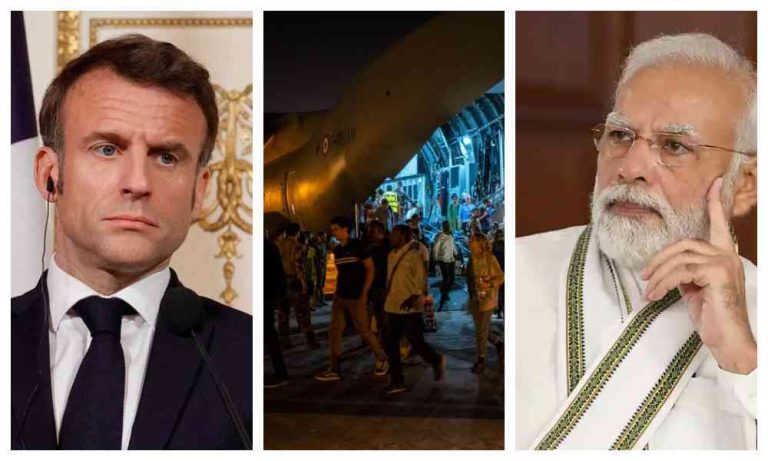
As war rages intensified in Sudan, France on Monday evacuated 388 people from 28 countries, including Indian nationals. 
Evacuation from the capital, Khartoum, has proved intensely dangerous since conflict erupted over the weekend between Sudan’s military and a powerful paramilitary group, the Rapid Support Forces, New York Times reported. But after days hunkered inside their homes, often as battle rages in the streets outside, more Sudanese and foreign nationals have sought to flee the city of five million people. 

“French evacuation operations are underway. Last night, two military flight rotations evacuated 388 people of 28 countries, including Indian nationals,” tweeted the Embassy of France in India. 

Millions of residents are trapped inside their homes, many running low on water and food after the eruption of fighting on April 15 between the army and the Rapid Support Forces (RSF) paramilitary group. 

It has triggered a humanitarian crisis, killing at least 420 people and leaving behind charred tanks, gutted buildings and shops that have been looted and torched, reported Al Jazeera. 

The WHO retweeted a post from Sudan’s Health Ministry on Sunday saying at least 420 people had been killed and 3,700 injured in the fighting so far. 

Countries scrambled to evacuate their diplomats and citizens from the Sudanese capital on Saturday and Sunday. 

“Today, on my orders, the United States military conducted an operation to extract US government personnel from Khartoum,” President Joe Biden said in a statement. 

In a separate statement, US Secretary of State Antony Blinken said that all US personnel and their families had been evacuated and operations at the US Embassy in Khartoum have been “temporarily suspended.” 

The foreign governments began landing aircraft and organising convoys in Khartoum to pull out their nationals. The US said special forces using MH-47 Chinook helicopters swept into Sudan’s battle-stricken capital from a US base in Djibouti, spending just one hour on the ground to bring out fewer than 100 people. 

United Kingdom Prime Minister Rishi Sunak said on Twitter on Sunday that members of his country’s armed forces had completed a “complex and rapid evacuation of British diplomats and their families from Sudan”. 

Germany and France announced Sunday that they had begun evacuating their nationals and those from other countries. Other European countries, including Italy, the Netherlands and Greece, also said they were planning rescue efforts, reported Al Jazeera. 
Long convoys of UN vehicles and buses were seen leaving Khartoum heading east to Port Sudan on the Red Sea, 850km (530 miles) away by road, carrying “citizens from all over the world”, according to one Sierra Leonean evacuee. 

Turkey began rescue operations at dawn Sunday via road from the southern city of Wad Madani. Still, the effort was postponed from one site in Khartoum after explosions near a mosque designated as the assembly area, the embassy said on Twitter. 

An Italian air force C-130 that left Khartoum with evacuees landed Sunday night at an air base in Djibouti, the country’s Defence Ministry said. 

Another plane, carrying Italy’s ambassador and military personnel involved in the evacuation, was expected in Djibouti later in the night, reported Al Jazeera. 

The foreign ministry said about 100 people were flown out of Khartoum by Spanish military aircraft — more than 30 Spaniards and the rest from Portugal, Italy, Poland, Ireland, Mexico, Venezuela, Colombia and Argentina. 

Egypt, which said it had more than 10,000 citizens in Sudan, urged those in cities other than Khartoum to head to consular offices in Port Sudan and Wadi Halfa in the north for evacuation, the state-run MENA news agency reported. 

On Saturday, Saudi Arabia said it evacuated 157 people, including 91 Saudi nationals and citizens of other countries. Saudi state TV showed a large convoy of cars and buses from Khartoum to Port Sudan, where a navy ship took them to the Saudi port of Jeddah, reported Al Jazeera.

(This news report is published from a syndicated feed. Except for the headline, the content has not been written or edited by OpIndia staff)
Leicester violence fame Majid Freeman tweets 2021 Ghaziabad fake hate crime incident, which was shared by Mohd Zubair, to defame India & Hindus

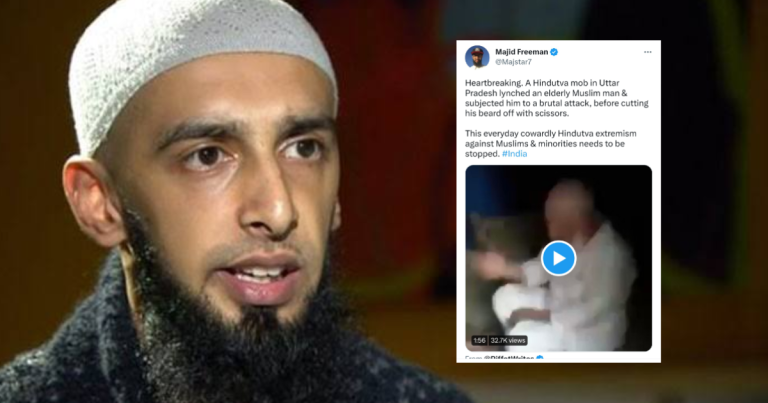
Islamist Majid Freeman, infamous for fanning the anti-Hindu violence in the United Kingdom’s Leicester earlier last year, on Monday, April 24, took to Twitter to share a video of miscreants assaulting an elderly Muslim man and shaving his beard off.

Freeman, a fundamentalist and an Islamic supremacist at heart, claimed that the incident took place in India’s Uttar Pradesh, where a ‘Hindutva’ mob lynched an elderly man and subjected him to a brutal attack before cutting his beard off with scissors. “This everyday cowardly Hindutva extremism against Muslims & minorities needs to be stopped,” he tweeted.

A cursory glance at the video reveals that the incident is of the 2021 Ghaziabad fake hate crime, a video of which had gone viral on social media that year after Alt News co-founder Mohammed Zubair manipulated a muted version of the same, claiming that the elderly Muslim man was subjected to assault after he refused to chant ‘Jai Shri Ram’.

After being called out over the fake video, Freeman doubled down on his twisted narrative, claiming that though the video is from June 2021, the further details are even more horrifying.

Ghaziabad fake hate crime: How Mohammed Zubair, Saba Naqvi, and others gave communal colour to a petty quarrel

On 14 June 2021, Alt News co-founder Mohammed Zubair took to Twitter to claim that an elderly Muslim man, Abdul Samad Saifi, in Ghaziabad was assaulted and forced to chant ‘Jai Shri Ram’. The incident took place in Loni in Ghaziabad in Uttar Pradesh.

Zubair tweeted, “An elderly man, Sufi Abdul Samad Saifi was attacked by five goons in Loni, Ghaziabad. He was threatened at the gunpoint, beaten, assaulted, and they forcefully chopped off his beard.” In a video shared by the ‘fact-checker, the victim could be seen being thrashed with sticks by the culprit. His beard was also cut forcibly using a scissor.

However, the police promptly punctured the claims made by Zubair and his supporters. In a tweet, Ghaziabad police informed that three accused had been arrested in the case. According to the police, the incident took place about 10 days ago on June 5, 2021. The victim Abdul Samad Saifi had travelled to the Loni border from Bulandshahr, where he was escorted to the house of accused Parvesh Gujjar in Banthala in Loni. After some time, the co-accused, namely, Kallu, Poli, Arif, and Adil aka Mushahid arrived at Parvez’s house and began thrashing the victim.

The victim Saifi sold amulets for a living. According to the police, the accused were miffed after the amulet proved harmful to them. Unlike what Zubair had alleged, the police said that the elderly man knew the culprits for a long time. Reportedly, Saifi had sold his amulets to several people in the village through the accused. The police had initially arrested Parvez while Adil and Kallu were nabbed on Monday (June 14). A case was registered against them under relevant sections of the Indian Penal Code (IPC).

In his confession, Parvez admitted to hitting Abdul Saifi, stating that he was angry as he felt that the tabeez (occult amulet) given to him by Saifi had backfired and he lost his unborn child because of it. However, several propagandists, including Saba Naqvi, Rana Ayyub, and Alt News’ Mohammed Zubair, etc. gave a communal spin to the incident, alleging that Saifi was assaulted for his refusal to chant ‘Jai Shri Ram’.

Nevertheless, Majid sharing the video and later, brazening out his stance, demonstrates how propaganda peddled by the likes of Mohammed Zubair, who was later involved in dog-whistling Islamists against former BJP leader Nupur Sharma and mobilising the Sar Tan Se Juda gang, is lapped up by his ideological brethren halfway around the world in their collective attempt to propagate Hinduphobia.

How Majid Freeman consistently peddled lies to instigate attacks against Hindus during Leicester violence

In August 2022, Leicester was convulsed with riots after Muslim mobs went on a rampage against the Hindu community. Violence erupted after a spate of targeted attacks on Hindus followed the Asia Cup India-Pakistan cricket match on August 28, when armed Islamists attacked Hindus and their residences in the vicinity.

Hundreds of Hindus had taken to the streets of Leicester to protest against the earlier violence by Muslims against Hindus in the area. During the protest by Hindus, the Muslim mob started indiscriminately attacking Hindus with stones and glass bottles. The protest by Hindus was disrupted by Islamists as they hurled glass bottles at the protestors. A Saffron flag was also desecrated by a mob of Islamists in front of the police.

Majid Freeman was one among the Islamists at the forefront of instigating the violence against Hindus. Freeman, a local Leicester Muslim “activist” who is known to harbour problematic and extremist Islamic views, spearheaded a fake news campaign during the Leicester violence to instigate the Islamists to continue attacking Hindus.

Majid lied about Quran being desecrated in Leicester, insinuating that the Hindus had committed this act. However, OpIndia tried to verify these claims. There is one video about this supposed Quran desecration where 2 men and 1 woman are seen collecting torn pages of the Quran from the street. There is no video evidence of the Quran being desecrated. Moreover, there has been no complaint filed by the police and no video evidence submitted for investigation either. 

There was another incident that was cited by Majid Freeman to claim that Hindus had been attacking Muslims. He claimed that a mob of 30+ Hindus had chased and assaulted a Muslim teenager. When confirmed, it turned out that while the Muslim organisations had claimed this, no video evidence was submitted to the police and no investigation was underway, OpIndia was told by Insight UK.

On the 4th of September, when the violence against Hindus started with mobs hunting them down in their houses and on the streets, Majid Freeman took to Twitter to dog-whistle against Hindus again.

From the 4th to the 7th of September, Muslim mobs went on a rampage against Hindus. On the 4th of September, when Majid tweeted and dog-whistled, the Muslim mob went on a rampage unprovoked while the Hindus were celebrating Ganesh Chaturthi. Eggs were thrown when Hindu symbols were spotted and where Ganesh puja was being held. A Hindu man was dragged out of his home and stabbed when his aunt ran out of the house to defend him, she was injured because the Muslim mob punched and beat her.

On the 8th of September, he repeated the lie that a Muslim boy was attacked by 30+ Hindus, and his evidence to back that claim was an unverifiable video and the fact that he wanted people to trust his word. As mentioned before, there is no investigation into this because there was no evidence provided. 

Even after the violence that was perpetrated on the 4, 5, 6 and 7th of September, Majid continued to lie. He claimed on the 9th of September that a Muslim boy was held by Hindus and asked for his religion. When they found out he was a Muslim, they tried to beat him, however, the Muslim boy managed to escape after beating the Hindus up. The Leicester police responded to Majid saying that such an incident had not happened.

Sachin Tendulkar turns 50: A look at legendary cricketer’s performance at ICC events

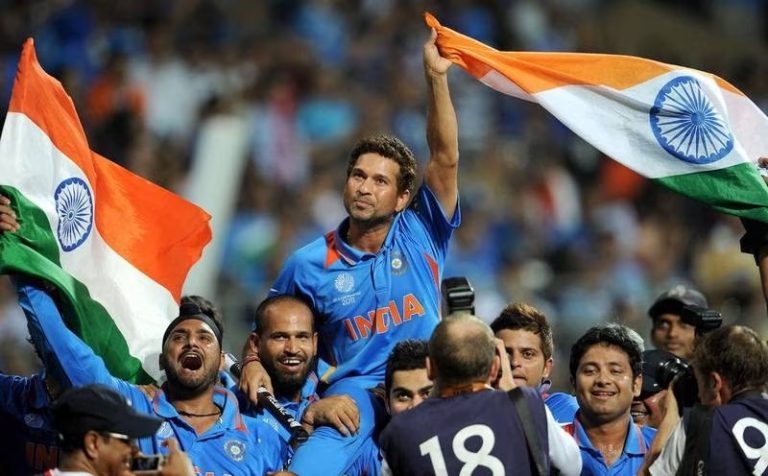
After hitting runs all over the ground throughout a two-decade career filled up with many centuries and half-centuries, legendary Indian cricketer Sachin Tendulkar completed half-century of his life on Monday. 

Tendulkar, known as ‘Master Blaster’ for his ability to blast his way through any bowling attack and his sheer mastery over every skill, technique and shot in the book, this right-handed batter entertained and mesmerised the entire world with his batting from 1989-2013. With 34,357 runs in 664 international appearances at an average of 48.52, Sachin is the highest run-scorer in international cricket. He has scored 100 centuries and 164 half-centuries, most in international cricket. He is the only player to have a century of centuries. 

With 18,426 runs in ODIs at an average of 44.83, 49 centuries and 96 half-centuries, and 15,921 runs in Tests at an average of 53.78 with 51 centuries and 68 fifties, Sachin has the highest runs in both formats as well. The Master Blaster is also the first-ever cricketer to have hit a double hundred in ODIs and to have played a total of 200 Test matches. 

Tendulkar is part of the Indian Team which won the ICC Cricket World Cup in 2011. After his World Cup debut in 1992, his dream to win the prestigious trophy came true in 2011 after India defeated Sri Lanka in the final by six wickets in the final. 

Though Tendulkar failed to win an ICC Champions Trophy with India, he was a part of a total of five CT campaigns with Team India. Tendulkar has a solid record in the Champions Trophy as well, though not as good as his World Cup records. 

Let us have a look at performances in ICC events, one tournament at a time, starting with World Cups: 

1).1992 ICC Cricket World Cup 

This tournament marked Tendulkar’s World Cup debut and he did not disappoint. He ended up as India’s second-highest run-scorer in the tournament next to Mohammed Azharuddin (332 runs). In eight matches, seven innings, Tendulkar scored 283 runs at an average of 47.16. He scored three half-centuries and had a best score of 84. Despite his solid performances, India could not make it to the semis. 

2).1996 ICC Cricket World Cup 

Tendulkar was India’s standout performer in this tournament and he carried India to the semifinals with his batting. He was the top-run scorer in the tournament, scoring 523 runs in seven matches, seven innings at an average of 87.16 with two centuries and three fifties. He had the best individual score of 137. 

The right-hander played some useful knocks in the knockout stages, with 31 runs coming against arch-rivals Pakistan in the quarterfinal and 65 runs coming against Sri Lanka in semifinal. Despite his contributions, India finished their campaign in the semifinal after a loss to Sri Lanka after chaos broke out at Eden Gardens, Kolkata after India sunk to 120/8 during a run-chase of 252 despite being 98/2 at one point. 

3).1999 ICC Cricket World Cup 

India failed to progress to the semifinal despite good performances from Rahul Dravid, Sourav Ganguly and Sachin. In seven matches, he scored 253 runs at an average of 42.16 with a century. He scored 140* against Kenya after missing a match against Zimbabwe due to his father’s demise. Due to Tendulkar’s personal circumstances and India’s initial struggles in the tournament, it is regarded as one of his best knocks. 

4).2003 ICC Cricket World Cup 

India had a campaign to remember despite their defeat to Australia in the final by 125 runs. Tendulkar was in explosive form throughout, tearing apart bowling attacks for fun. He was the top run-scorer in the tournament with 673 runs in 11 matches at an average of 61.18. He scored one century and six fifties in the tournament with the best score of 152. 

Tendulkar guided India to finals with an 83 against Kenya in the semifinal. But the final proved to be disappointing for India as he could score only four runs in a run-chase of 360 against the Aussies. His wicket triggered a collapse that Virender Sehwag and Saurav Ganguly tried to delay for a while, but it came nonetheless, sending millions of fans into heartbreak. 

5).2007 ICC Cricket World Cup 

This tournament marked India’s worst-ever outing as they crashed out of the competition in Group stages after losses to Bangladesh and Sri Lanka. They could register only one win against Bermuda. Sachin scored only 64 runs in three matches at an average of 32.00 with a fifty, which came against Bermuda. 

6).2011 ICC Cricket World Cup 

After a setback that was 2007, the Tendulkar of the old days was visible in 2011 WC. He ended as tournament’s second-highest run-scorer, scoring 482 runs at an average of 53.55, with two centuries and two fifties in nine matches. His best individual score was a knock of 120 against England. 

He delivered some crucial knocks in the knockout stages, starting with 53 against Australia in the quarterfinals and following it with a majestic 85 against Pakistan in the semi-finals. However, he failed to score in the final, walking back to the pavilion after scoring 18 runs. 

Overall, Tendulkar is the highest run-getter in Cricket World Cup history. In 44 innings across 45 matches, he has scored 2,278 runs at an average of 56.95 with six centuries and 15 fifties. His best score in the tournament is 152. 

Sachin had a great record in the knockout matches. In seven knockout stage matches in World Cups, he scored 339 runs at an average of 48.42. He scored four half-centuries in knockout matches for India, with the best score of 85. However, he was not able to hit it big in the two finals he played. 

Now, let us peep into Sachin’s performances at the Champions Trophy events: 

1).1998 ICC Champions Trophy 

Tendulkar played both matches for India in the 1998 Champions Trophy. In that tournament, he scored 149 runs in two matches at an average of 74.50, with the best score of 141 coming against Australia, along with a fierce bowling spell of 4/38. In the semifinal against West Indies, he scored only eight and India lost the match by six wickets. 

2).2000 ICC Champions Trophy 

In the 2000 edition of the tournament, India finished as runners-up to New Zealand, losing by four wickets in the final. In the tournament, Tendulkar scored 171 runs in four matches at an average of 42.75, with one half-century. He ended as the fourth-highest run-scorer in the tournament. 

Sachin delivered some solid knocks in the knockout stages, scoring 38 against Australia in QFs, 39 against South Africa in semifinal and a crucial knock of 69 in the final. But India lost due to Chris Cairns’s heroic century in the final. 

3).2002 ICC Champions Trophy 

India ended the 2002 edition of the tournament as joint winners with Sri Lanka after the final failed to produce result due to rain. This tournament was not good for Sachin with the bat as he could score only 39 runs in four innings, with the best score of 16, which had come in the semifinal against South Africa. Before the final was abandoned, he was batting on 7*. 

4).2006 ICC Champions Trophy 

India failed to advance to the knockout stages in this tournament held in India. He scored 74 runs in three matches at an average of above 24 with the best score of 35. 

5). ICC Champions Trophy 2009 

India failed to advance to the semifinals once again, finishing at number three in their group. Sachin also played only one match, against arch-rivals Pakistan, in which he could manage only eight runs. 

In all throughout his 16 ICC Champions Trophy matches, he scored 441 runs at an average of 36.75. He has managed only one century and fifty in this tournament. 

He managed only a total of 169 runs in knockout matches in this tournament at an average of 42.25, with one half-century. 

In all, across both these ICC events, Sachin has scored 2,719 matches in 61 matches at an average of 49.43, with seven centuries and 16 half-centuries. 

(This news report is published from a syndicated feed. Except for the headline, the content has not been written or edited by OpIndia staff)
‘Past Govts kept rural India deprived, BJP ended the injustice’: PM Modi on Panchayati Raj Diwas celebrations in MP’s Rewa

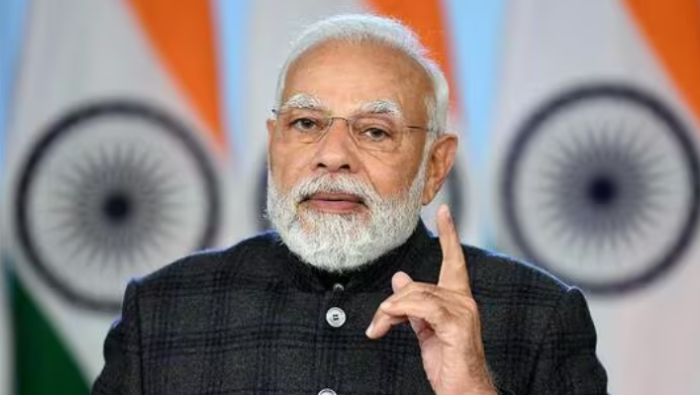
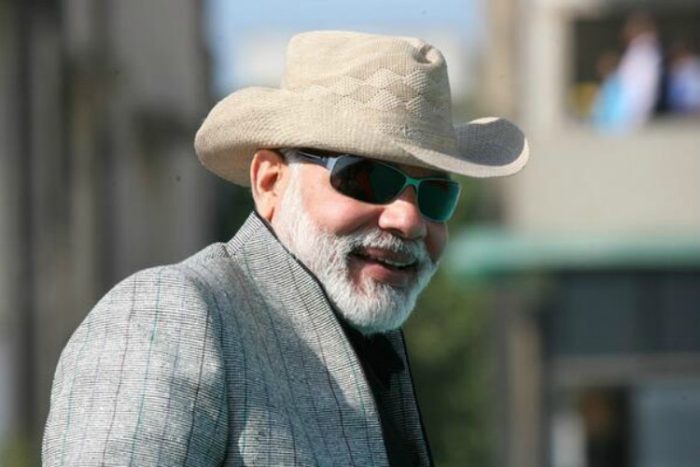
Prime Minister Narendra Modi on Monday said that the Bharatiya Janata Party government ended “injustice” done to the villages by the previous administrations which “ignored and avoided spending money in the rural areas”. 

The Prime Minister said that the political parties in the past indulged in “dividing the people of the village”. Addressing the Panchayati Raj Diwas celebrations in Madhya Pradesh’s Rewa, PM Modi said, “Earlier governments used to avoid spending money for the village… so they were ignored. Many political parties were running their shops by dividing the people of the village. BJP has also ended this injustice being done to the villages. Our government has opened the coffers for the development of villages.” 

The Prime Minister said that the governments after independence destroyed the Panchayati Raj System of India. 

“The system which existed hundreds of years, thousands of years ago, the same Panchayati Raj system was not trusted after independence. I always think, those people of Chhindwara whom you trusted for so long, why were they never serious about your development?…. The party that run the govt the most after independence broke the trust of those villages…”,” he said. 

Reflecting on the years before 2014, PM Modi said that only 6,000 panchayat buildings were built, while during the BJP rule in these eight years, more than 30,000 new panchayat buildings were constructed. 

“In the 10 years before 2014, around 6,000 panchayat buildings were built with the help of the central government. Only about 6,000 panchayat houses were built in the whole country. Within 8 years, our government has got more than 30,000 new panchayat buildings constructed,” he said. 

Lauding the work done by the BJP, the Prime Minister said that more than 2 lakh panchayats of the country have been connected to optical fibre. 

“The previous government had connected optical fibre to less than 70-gram panchayats. It is our government, which has taken optical fibre to more than 2 lakh panchayats in the country,” he said. 

He said that the panchayats of India are emerging as the lifeblood of the development of villages. 

“Since 2014, the country has taken up the cause of empowerment of its panchayats and the results are visible today. After 2014, the budget allocated for panchayats, which was earlier less than Rs 70,000 crores, has been increased to Rs 2 lakh crores. Today, panchayats of India are emerging as the lifeblood of the development of villages,” PM Modi said. 

“Our government is constantly working to strengthen the Panchayati Raj system in the country. Whichever schemes the government has made to make life easier for rural India, our panchayats are realizing them on the ground with full dedication,” he added. 

The Prime Minister said that every panchayat, institution, representative, and citizen of the country will have to unite for a developed India. 

“This is possible only when the basic facilities reach 100 per cent beneficiaries expeditiously, without any discrimination. We opened bank accounts of more than 40 crore people of the village by running the Jan Dhan Yojana. We increased the reach of banks to villages through India Post Payments Bank,” he added. 

Launching the e-Gram Swaraj-GeM Integrated Portal, he said that in this era of a digital revolution, now panchayats are also being made smart. 

“The e-Gram Swaraj-GeM Integrated Portal has been launched today. This will make the process of procurement done through Panchayats simple and transparent,” he added. 

PM Modi inaugurated and lay the foundation stone of various railway projects worth around Rs 2300 crore. The projects include 100 per cent rail electrification in Madhya Pradesh, along with various doubling, gauge conversion and electrification projects. 

(This news report is published from a syndicated feed. Except for the headline, the content has not been written or edited by OpIndia staff)
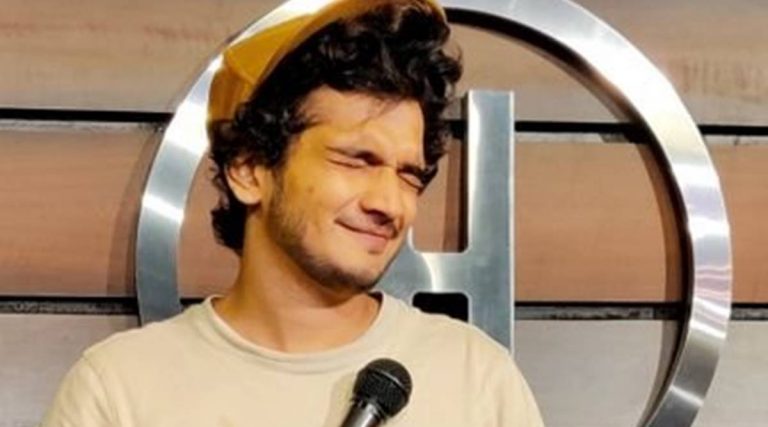
SC grants bail to Munawar Faruqui, clubs FIRs, transfers them to Indore

The Supreme Court on Monday granted bail to comedian Munawar Faruqui in relation to the case registered against him by the Madhya Pradesh Police for allegedly hurting religious sentiments. 

A bench of Justices BR Gavai and Sanjay Karol also clubbed all the complaints registered against the comedian and transferred them to Indore, Madhya Pradesh. The apex court in its order stated, “Taking into consideration the facts and circumstances, and the previous order of this court, we are inclined to transfer all the complaints to Indore. We have already granted ad interim protection, the same is made absolute.” 

The top court also granted him protection against the production of warrants by Delhi Police for three weeks. 

The order of the apex court came on the plea of Faruqui challenging the Madhya Pradesh High Court declining his bail and seeking to quash all the FIRs and criminal proceedings against him in the case. 

The plea also sought clubbing of FIRs. 

Earlier, the apex court had granted interim bail to Faruqui who was arrested by the Madhya Pradesh police in the case. 

The top court had earlier also stayed the production warrant issued against Faruqui by an Allahabad court. 

Faruqui, a resident of Gujarat, is accused of passing “indecent” remarks about Hindu deities during a show. 

Rejecting the bail plea, the High Court had said the liberty of a person has to be “balanced” with his duties towards other citizens. 

Faruqui and four others were arrested on January 1, 2021, following a complaint by Eklavya Singh Gaud, son of BJP MLA Malini Laxman Singh Gaud, that objectionable remarks about Hindu deities and Union Home Minister Amit Shah were passed during a comedy show at a cafe in Indore on New Year’s day. 

Later one more person was arrested.

(This news report is published from a syndicated feed. Except for the headline, the content has not been written or edited by OpIndia staff)
NIA attaches properties of Hizbul Mujahideen chief Syed Salahuddin’s son in Kashmir under UAPA

The National Investigation Agency (NIA) on Monday, April 24, attached the properties of Syed Ahmed Shakeel, the younger son of dreaded terrorist and Hizbul Mujahideen chief Syed Salahuddin, in Srinagar/Budgam of Kashmir, under relevant sections of the Unlawful Activities Prevention Act (UAPA), 1967.

Journalist Aditya Raj Kaul shared pictures of NIA officials attaching notice over the attachment of the properties of Syed Ahmed Shakeel.

“This is to inform everyone that immovable property Survey No. 1917/1566, 1567, and 1568 located at Revenue Estate, Nursing Garh, Mohalla Ram Bagh, Srinagar, Jammu and Kashmir, and under the ownership of Syed Ahmad Shakeel (son of Syed Yousuf Shah, also known as Syed Salahuddin, a ‘listed militant’ under UA(P) Act, 1967), is now attached under sub-section 33 (1) of the Unlawful Activities Prevention Act, 1967 by order of the Special NIA Court in New Delhi,” the notice read.

The move is considered a big move to clampdown on terror activities in Kashmir, especially by the terror outfit Hizbul Mujahideen.

Jammu and Kashmir administration sacks two sons of Syed Salahuddin after they were found indulging in terror activities

It may be recalled that the Jammu and Kashmir administration had in 2021, in an attempt to cripple the terror link-funding activities in the valley, sacked the two sons of terror outfit Hizbul Mujahideen chief Syed Salahuddin, from their government jobs. The termination of the duo came along with that of 9 other government employees, including two cops, with links to terror funding and other terror support activities. According to officials, the decision was taken in the nation’s interest as per the Constitutional Provision.

The two sons of the most-wanted terrorist and founder of the outfit Hizbul Mujahideen Syed Salahuddin, Syed Ahmad Shakeel and Shahid Yousuf were removed from their jobs after they were found to be involved in terror funding. The NIA had reportedly tracked terror funding trails of both sons of Syed Salahuddin. The agency said that Syed Ahmad Shakeel and Shahid Yousuf were found to be involved in raising, receiving, collecting, and transferring funds through Hawala transactions for terror activities of Hizbul Mujahideen.

Syed Ahmad Shakeel, the second son of Mohammed Yusuf Shah alias Syed Salahuddin worked as a lab technician at the Sher-e-Kashmir Institute of Medical Sciences (SKIMS), Soura. Meanwhile, Shahid Yousuf, the elder son of the Hizbul chief, was working in the agriculture department of the Jammu and Kashmir government.