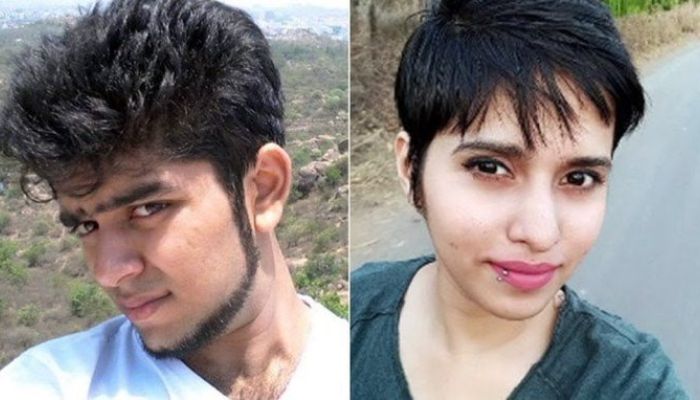
On Saturday, 15th April 2023, a Delhi court reserved its order on framing charges against Aftab Amin Poonawalla who is accused of killing his live-in partner Shraddha Walkar by strangling her and cutting her body into pieces. Additional Sessions Judge Manisha Khurana Kakkar postponed the matter to April 29. the argument submission on the charges was concluded on Saturday, April 15.
In the meantime, Shraddha Walkar’s father has submitted a plea to the court requesting the handover of her remains so that cremation rituals may be performed. The Delhi Police will submit a response to the application in the following court hearing, according to Special Public Prosecutor Amit Prasad.
On November 14, the Delhi Police solved the six-month-old murder case of Shraddha Walkarand arrested Aftab Poonawalla for murdering her, and then chopping her into 35 small pieces. Aftab executed the murder on May 18 and stored her body parts in the refrigerator. He then disposed of the body pieces in Delhi’s Mehrauli forest during the next 18 days.
The accused was arrested based on the complaint filed by Shraddha’s father on November 10. He stated in the complaint that the accused and the deceased had rented an apartment in Delhi and were staying in an unhealthy live-in relationship. He said that he had always opposed their relationship as Aftab used to physically assault Shraddha.
The girl, a resident of Palghar was adamant about continuing her relationship with accused Aftab and shifted to Delhi with him. Three days after they shifted to Delhi, they engaged in a quarrel and Aftab happened to kill Shraddha. He confessed his crime on November 14 and stated that they used to fight a lot. He said that he murdered Shraddha on May 18 as she was forcing him to get married to her. They also had a fight over who would manage the domestic household expenses.
The accused has been arrested and a case under IPC section 302 (murder) and 201 (causing disappearance of evidence of an offence committed) have been registered.
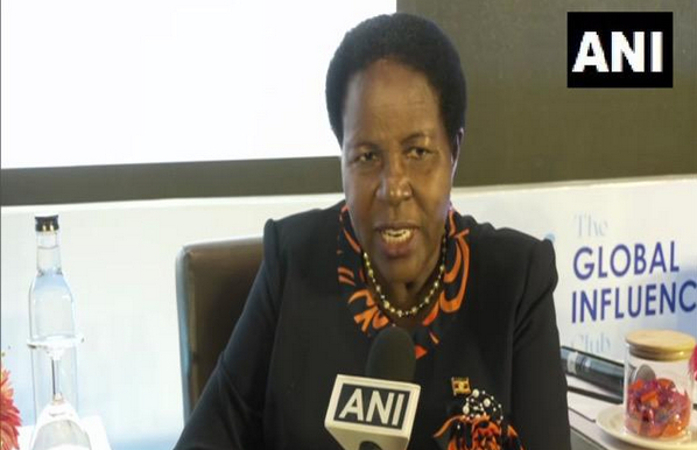
High Commissioner of Uganda to India Joyce Kakuramatsi Kikafunda on Saturday termed the visit of External Affairs Minister S Jaishankar to her country as beautiful and also said that India is going to be the voice of the Global South and it will bring her country’s issues to the G20.
Ugandan High Commissioner Kikafunda expressed her views on India’s presidency of G20 and believes New Delhi can be the voice of Global South.
“We believe that they (India) are going to be the voice of the South. India is already going to be a superpower. So we believe they (India) know our issues and they will bring them up and they are ahead of some big countries who have forgotten how it was. But we believe India will bring our voices, our issues or problems to the G20,” the Ugandan envoy elaborated.
Reflecting on Jaishankar’s visit, the Ugandan envoy told ANI, “The visit was beautiful. I actually accompanied him on that visit. Jaishankar had a beautiful visit. Our President doesn’t meet other ministers, he meets heads of state, but because of the relationship between Uganda and India, he met the visiting minister. India Opened the University of Forensic Sciences in Uganda for the first time ever outside India and the first one in Africa. So we are very proud and happy about it. It was a very good visit. The Minister of Foreign Affairs was very happy. And the minister left very happy and said that he loved Uganda and he will come back.”
Notably, EAM Jaishankar was on a visit to Uganda and Mozambique from April 10-15 to further strengthen India’s “strong bilateral relations” with the two countries.
She also spoke on the bilateral relationship between India and Uganda, “Our bilateral relationships are very good and strong, and they are focused on trade and investment,” Kikafunda added.
The envoy also mentioned that Uganda sees India as an elder brother and wants the relationship to continue along with development assistance.
“We don’t want just to trade, we want India to come and manufacture products in Uganda. We want the relationship to continue, also the development assistance, because we take India as our elder brother,” she added.
Kikafunda was participating in a women entrepreneurs conference hosted by Baroness Verma (Member of the House of Lords of the UK) on Saturday.
(This news report is published from a syndicated feed. Except for the headline, the content has not been written or edited by OpIndia staff)
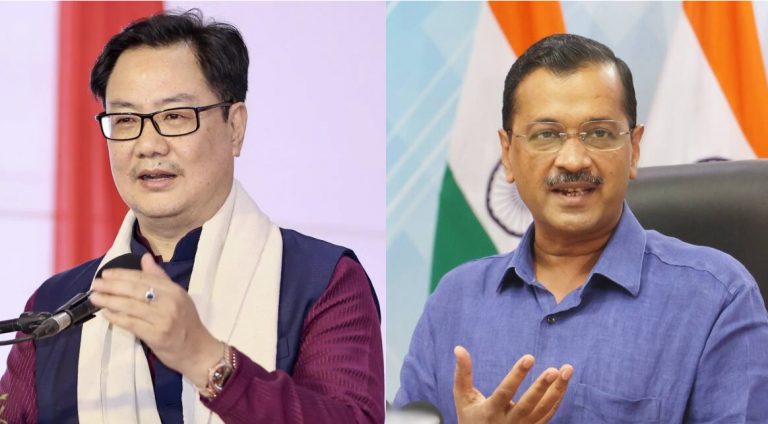
Union law minister Kiren Rijiju has asked Delhi CM Arvind Kejriwal if he will file cases against courts the courts issue adverse verdicts. Rijiju made the comments after Kejriwal said that he will file cases against CBI and ED officials who are probing cases against AAP ministers.
Earlier today, Arvind Kejriwal tweeted, “We will file appropriate cases against CBI and ED officials for perjury and producing false evidence in courts.” The outburst by the AAP chief came after CBI summoned him for questioning on 16 April in connection with the Delhi excise police case. Former Delhi deputy CM Manish Sisodia has already been arrested in the case.
We will file appropriate cases against CBI and ED officials for perjury and producing false evidence in courts
Kejriwal and his Aam Aadmi Party have been claiming that the allegations against them are false. Therefore, the Delhi CM said that they will file cases against CBI and ED officials, accusing them of submitting false evidence against AAP leaders in courts.
Forgot to mention that you will file case against Honble court also if it convicts you. Let law takes it own course & we must believe in rule of law.
ED, CBI के ख़िलाफ़ कोर्ट जाओगे और अगर कोर्ट भी ख़िलाफ़ गई तो फिर कोर्ट के ख़िलाफ़ भी जाओगे? pic.twitter.com/YAxSqE1bEx
Responding to this, Kiren Rijiju tweeted, “Forgot to mention that you will file case against Honble court also if it convicts you.” He further added in Hindi, ‘You will go against ED, CBI and if the court also goes against you then will you go against court also’?
Rijiju said, “Let law takes it own course & we must believe in rule of law.”
Addressing a press conference in the national capital today, Kejriwal said that he will be attending the questioning on April 16 by CBI as per the summon issued to him. Kejriwal alleged that he knew he would be next in line to be summoned by the CBI since the day he spoke against corruption in Delhi assembly.
“Central agencies are lying to courts against us in the liquor policy probe. Arrested people are being tortured, pressure is being created on them to nail us,” he said. “The CBI has falsely accused Manish Sisodia in the liquor policy case. People were beaten to obtain false statements. The agencies are torturing people for evidence. This was a great policy to eradicate corruption,” Kejriwal added.
Declaring himself the most honest man in the world, Arvind Kejriwal proclaimed that if he corrupt, then there no one in this world who is honest.
The Uttar Pradesh Police on Thursday, April 13 arrested a Maulvi identified as Gulam Waris for molesting a minor girl in the Deoria district of Uttar Pradesh. The accused, who worked in a local Masjid, spotted the girl alone at her home and molested her after barging into the premises.
According to the girl, the accused fled from the spot after she screamed and sought help. The incident is said to have happened in the Mahuadih village of the Deoria District of Uttar Pradesh.
The 13-year-old minor girl lives with her family next to a mosque. On the day of the incident, the family members of the victim had gone to work in the fields. The accused Maulvi, who hails from Bhulwariya village, learned about it and molested the girl in their absence.
The girl later filed a police complaint and revealed that Maulvi entered the house when she was alone and then grabbed her with ill intentions. The Maulvi then fled from the spot after the girl cried and sought help from the neighbors.
The Police lodged the complaint last week and launched an investigation into the case. The accused was finally arrested on Thursday, April 13, and sent to jail.
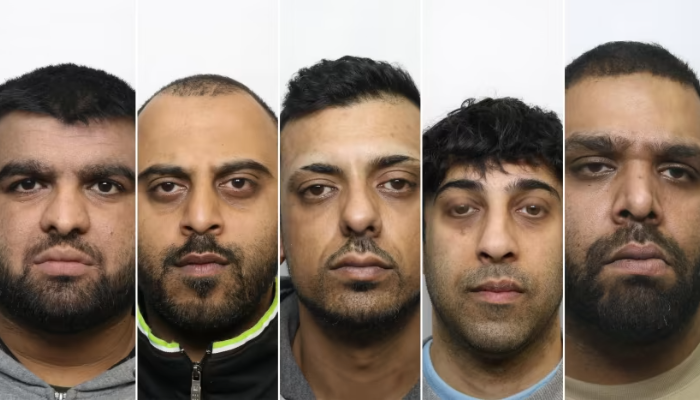
Five Muslim individuals who had previously been convicted of engaging in a grooming gang in Huddersfield have now been found guilty of additional crimes. Following a trial at Leeds Crown Court, Abdul Rehman, Mohammed Kammer, Nahman Mohammed, Wiqas Mahmud, and Mohammed Imran Ibrar were all convicted guilty.
At Bradford Crown Court on Thursday, the males who sexually assaulted a girl between 2005 and 2010 received their sentences. The men were convicted of crimes including rape and drug distribution.
Abdul Rehman, 36, of Sheffield was given a three-year and 11-month sentence. He was convicted of two charges, including selling drugs and participating in or aiding child sex crime.
Mohammed Kammer, age 38, from Huddersfield, was given a seven-year and six-month term. He was convicted of three counts of rape and one count of trafficking children for sexual exploitation.
Nahman Mohammed, 37, a resident of Huddersfield, was given a seven-year term. He was convicted of trafficking for sexual exploitation and two counts of rape.
Wiqas Mahmud, 42, of Huddersfield, was given a six-year and three-month sentence. He was convicted of a single rape offence.
38-year-old Huddersfield resident Mohammed Imran Ibrar received a five-year sentence. He was convicted of one rape offence and one sexual assault. He will serve three years and six months after time is subtracted from his present sentence.
They were jailed for a combined 28 years after they were convicted a second time after being imprisoned earlier, in the recent trial which came to an end on February 9. Their trial had been delayed since 2020.
A West Yorkshire Police investigation known as ‘Operation Tendersea’ has been a long-running West Yorkshire Police investigation focussed on the sexual exploitation and abuse of young girls in the Huddersfield area between 1995 and 2013.
42 men were found guilty in Operation Tendersea trials that started in 2018, several of whom had already faced multiple prosecutions. In addition to the convictions from this month, people found guilty in court have now received a total of 505 years and six months in prison.
“Operation Tendersea has been a major investigation into what has been truly evil sexual abuse committed against young females in the Huddersfield area,” stated DCI Ian Thornes of Kirklees Police.
“The fact that the courts have now given more than a combined 500 years in prison to the men who committed these offences speaks volumes about their sheer depravity. In case after case we have heard how those involved regarded their victims as objects to be used and then trivially discarded with no regard whatsoever for their welfare,” he unveiled.
He remarked, “These were vulnerable young teenage girls who endured utterly sickening offences committed by persons who demonstrated standards of behaviour which means they are not fit to walk the streets.”
“Police and partners have worked hard to deliver justice for these women over several years, but this long journey could never have begun without them having the courage to come forwards and report these offences,” he continued.
“Their determination has resulted in sex offenders who considered themselves above the law now finding themselves judged by it, and spending many years behind bars,” he mentioned and added, “I want to thank them for their determination in supporting these prosecutions and empowering the police, CPS and partners to act. Officers who have worked on this complex investigation have deep admiration for the bravery they have shown.”
“We are absolutely committed to preventing these heinous crimes and ensuring those that commit them are brought to justice. Every child in West Yorkshire deserves to grow up free from harm and protecting our most vulnerable is a key priority,” asserted Tracy Brabin, the Mayor of West Yorkshire.
Suella Braverman, the United Kingdom’s Home Secretary, recently took a fierce stance against British Pakistani men, who she observed, were abusing white English girls in Britain. She emphasised that some British Pakistanis were running networks of child abuse in the UK and that the authorities and civil society were turning a blind eye out of political correctness.
A new Grooming GangsTaskforce has been established, according to UK Prime Minister Rishi Sunak, to support police agencies to look into the major issue of Muslim grooming gangs in the country. The task force will have specialised police to help in the investigation to ensure that the criminals responsible for grooming gangs will be brought to justice, according to the official statement from his office.
Pakistani actress Hania Aamir, who is currently starring in the ongoing popular drama Mujhe Pyaar Hua Tha, found herself at the receiving end of a severe social media backlash after she posted pictures captioned, ‘mini photoshoots and massages,’ of herself posing in front of a clay Ganesha idol, on her Instagram account. She was vehemently attacked by her Muslim followers who expressed ferocious opposition and even unfollowed her for offending their religious sensibilities.
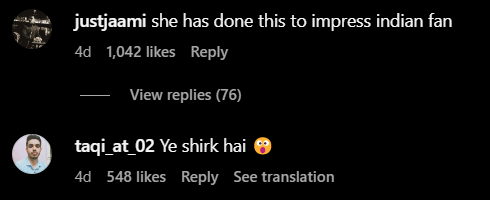
Muslim netizens slammed the actress and labelled it disrespectful and inappropriate for a Muslim to pose with an idol of a Hindu god. One user claimed, that she is trying to ‘impress her Indian fans,’ while another referred to her action as ‘shirk’ (idolatry or polytheism which is a sin in Islam).
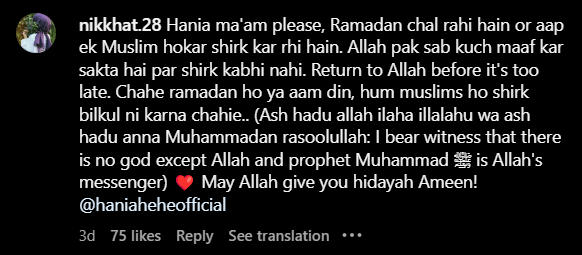
Nikkhat Perween also accused Hania Aamir of committing ‘shirk’ during Ramazan and warned her that ‘Allah’ (Islamic God) forgives everything except idolatry. She asked the actress to ‘return to Allah before it is too late’ and stated that Muslims should never commit ‘shirk’ even on ordinary days. She added ‘Shahada’ at the end of her criticism and asked ‘Allah’ to guide (towards Islam) Hania Amir.
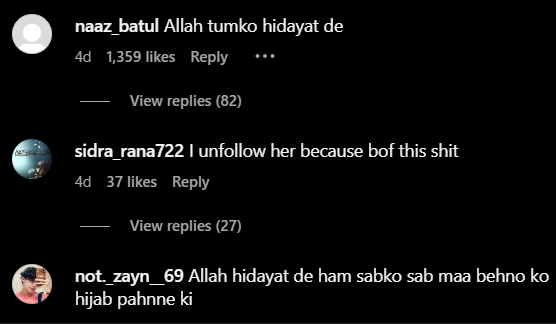
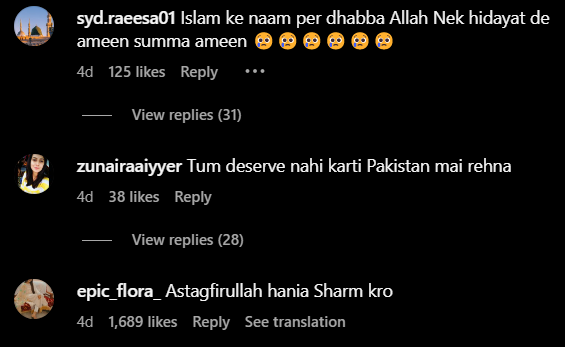
A netizen again wished for ‘Allah’ to provide the Pakistani star with guidance, and another unfollowed her because of ‘this shit.’ Meanwhile, someone wanted ‘Allah’ to direct her and all other Muslim women to wear ‘Hijab.’
A Muslim lambasted Hania Aamir for being a blot in the name of ‘Islam.’ Another viewed that she doesn’t deserve to live in Pakistan while someone told her to have some shame.
A user charged that “Tomorrow, worship him (Ganesha idol) in the name of fashion.”
Zoya Shaikh requested ‘Allah’ to pardon everyone’s faults, insinuating that the actress has committed a sin by clicking the picture with the murti.
Hania Aamir’s religious affiliation was questioned by one Muslim, who remarked, “Sometimes I doubt that she is a Muslim in name only.”
The ‘Mere Humsafar’ lead is currently vacationing in Cambodia and has dropped many pictures from there on her social media.
Muslim netizens have a history of harassing Indian celebrities who post anything related to Hinduism or wish the Hindu community on their special occasions. Many including, Sarah Ali Khan, Neil Nitin Mukesh, Mohammad Kaif, and Zaheer Khan, have been repeatedly slandered by radical Muslims for participating in Hindu rituals or wishing Hindus on their festivals.
Hinduism in Cambodia
Notably, Hinduism has roots in Cambodia dating back to the Funan Kingdom, which ruled between 100 BC and 500 AD. Hinduism was one of the recognised religions under the Khmer Empire.
The Khymers were the descendants of the queen of the Apsaras (heavenly Nymphs) named Mera and a Cambodian king named Kambu, per the local legends. Kings worshipped Lord Shiva and Vishnu throughout this time. Hinduism was the predominant religion during the Khmer Empire’s rule until Jayavarman VII (reigned 1181–1188).
The world’s largest complex of Hindu temple is located in this Southeast Asian country. Many of the temples in the park, which have provided historians with evidence of the Kingdom’s religious history, contain Hindu iconography. Among these are depictions of Ganesha and Hanuman in Khmer, as well as bas-relief sculptures of events from the Ramayana, also known as the Reamker in Cambodia and still a major component of traditional performances.
The Lord Vishnu temple at Angkor Wat, in the heart of the Khmer Kingdom, is one of the most renowned Hindu sites in the world. The temple’s walls are decorated in magnificent carvings that portray scenes and figures from the Mahabharata and Ramayana, as well as numerous exquisite Apsaras.
India was the first nation to respond and assisted in rebuilding the prominent temple after Cambodia had requested the international community to help save Angkor Wat in the year 1980.
Cambodia’s official religion is Buddhism. Theravada Buddhism makes up roughly 97% of Cambodia’s population, with the majority of the minor remainder being comprised of Islam, Christianity, tribal animism, and Baha’i beliefs.
Hinduism still has a significant influence in the country even though it is no longer the state religion. A sword allegedly given to the royal family by the Hindu deity ‘Indra’ is kept at the Royal Palace in Phnom Penh. A collection of Hindu statues can be found in the National Museum of Cambodia.
The adherents of the Hindu faith are in a tiny minority in the country, however, the fundamental connection and profound roots of Hinduism in Cambodia are undeniable.
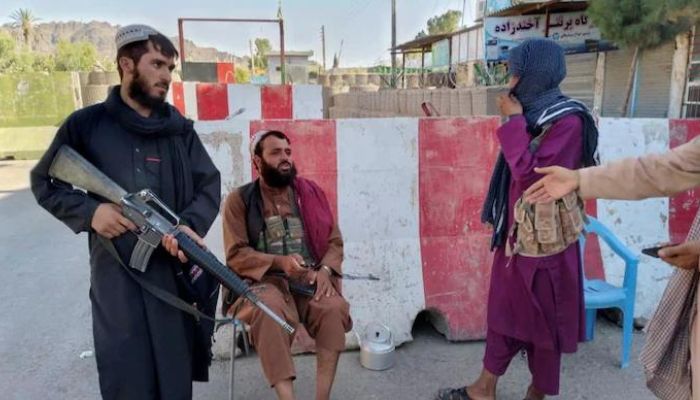
Video games, foreign movies, and music have been outlawed in Afghanistan under the Taliban government because they are considered to be anti-Islamic. This ban is first imposed in the western city of Herat in Afghanistan. More than 400 firms in Herat had to shut down as a result of the sudden ban enforced by the Ministry for the Promotion of Virtue and Prevention of Vice.
According to Maulana Azizurrahman Mohajir, the provincial head of the Ministry for the Promotion of Virtue and Prevention of Vice, the establishments were shut down after several parents complained about how their kids were wasting time there. He said, “These shops were selling films that depicted and promoted Indian and Western values and culture, which are very different from Afghan culture and traditions.”
Reiterating that the Taliban considers such activities un-Islamic, he added, “The films they were selling did not have women in hijab, which is against Sharia. This is why the sale of such films is prohibited.”
The ban came after restrictions on other pastimes and types of entertainment that go against the Taliban’s radical Islamic Sharia law. The Taliban, earlier this month, prohibited women and families from accessing the garden restaurants in Herat.
The Taliban closed hookah facilities across the nation in October 2022. Smoking hookah is an everyday pastime for Afghan men. The Taliban closed down eateries owned and run by women in the city of Herat earlier in May 2022 and forbade men and women from dining together there. The Islamist group, has forcefully imposed severe constraints on how Afghans can behave and how men and women can interact with each other.
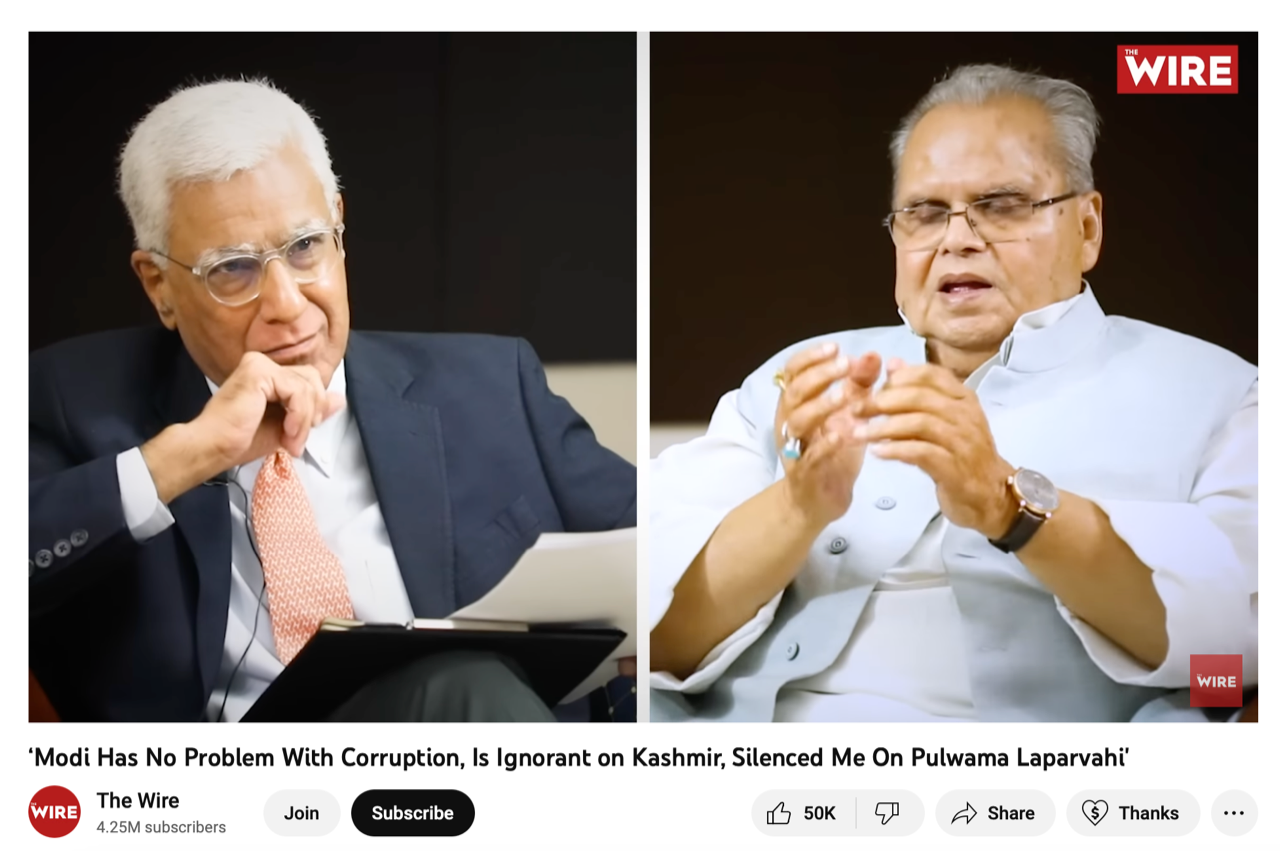
Earlier yesterday, leftist propaganda outlet The Wire, infamous for its Tek Fog and Meta hitjobs, published a video of Karan Thapar interviewing former governor of Jammu and Kashmir Satya Pal Malik.
Karan Thapar, a known Modi baiter whose pathological and irrational hatred of the current dispensation is well-documented, found in Satya Pal Malik a fitting ally to propagate the Left’s anti-Modi propaganda that has come to define his brand of ‘journalism’ and his organisation, The Wire’s predilection for attacking the BJP and shielding terrorism and corrosive Islamist mentality underpinning it.
While the interview covered a broad range of topics and events, one thing that stood out in the interview was Satya Pal Malik’s comments on the Pulwama attack and Karan Thapar’s alacrity to perversely interpret them to show the Modi government in a poor light and give a free pass to terrorists and Pakistan-based terror organisations that were responsible for the death of 40 CRPF personnel in a suicide bombing attack in February 2019.
And on expected lines, the interview had the ‘liberals’ bouncing off the walls as they enthusiastically shared the video and hailed Malik and Thapar for ‘speaking truth to power’ and ‘hard-hitting journalism’—word salads that the Left ideologues often resort to—to aggrandise malicious sensationalism that aides them in their ultimate goal of undermining their beté noire, the Modi government.
Satya Pal Malik, a mediocre administrator by all accounts, was until a few months back an object of criticism for the liberal ecosystem because he represented the Modi government. However, the change in the attitude of the Left came about after his fallout with the Centre. Moreover, his recent interview with the propaganda website The Wire washed him off of his past “sins” and firmly embedded him as the toast of the liberal firmament, with liberal ideologues and their trolls bending over backwards on social media platforms to exalt the former J&K governor.
Even though Karan Thapar and Satya Pal Malik touched upon various issues, their evident bonhomie and assistance to each other during the interview gave one an impression that the proverbial ‘you scratch my back, I will scratch yours’ sentiment was at play. Malik, who had fallen out of favour with the current regime owing to his mediocre handling of responsibilities entrusted to him, was the perfect stick for the Left to beat the Modi government, especially when preparations for the all-important 2024 general elections are already underway.
Malik, on the other hand, was seeking recognition and acknowledgement and perhaps even political revival by making statements that were music to Thapar and were in line with the leftist worldview. Toward the latter part of the interview, the mask of neutrality and objectivity eventually falls off as Thapar prompts and hints Malik towards answers that reinforce the Leftist canards against the Modi government, most notably over the Pulwama attack.
Satya Pal Malik blames Centre for the Pulwama attack
In his interview, Malik blamed the Modi government for the Pulwama attack—a line of argument long parroted by the Left—describing it as a false flag operation months before the 2019 general elections. Malik hews to the liberal narrative, claiming that the Home Ministry under the Modi government refused permission for airlifting of the CRPF personnel to Kashmir, which he claimed ultimately led to the ensuing tragedy.
“The CRPF people had asked for aircraft to ferry their people,” said Malik, to which Thapar promptly asks if they asked him for providing an aeroplane for the transfer of the soldiers. “No, they did not ask me. They asked the concerned departments, which are the Home Ministry and the Defence Ministry, which refused to provide them with aircraft to ferry the soldiers.”
“That very same evening I told the Prime Minister that the attack has taken place because of our fault. If we had provided aircraft to the CRPF convoy, this attack could have been avoided. But he asked me to remain silent,” Malik goes on to say.
“Even Ajit Doval, the National Security Advisor who was once my classmate, told me to remain silent on the issue. I then realised that the onus of the attack will now be shifted to Pakistan,” Malik added.
“So it was the policy of the government to blame Pakistan for the attack and it will help us in elections,” said Thapar, elaborating upon Malik’s claims.
Insinuating that the Pulwama attack was an inside job, Malik claimed that the road meant for the CRPF convoy was not properly sanitised. “There were 8-10 link roads on that specific stretch where the tragedy took place, and none of them was manned by police or Indian armed forces,” he said.
Subsequently, Thapar tries to absolve Pakistan of the attack, slyly asking Malik if they were indeed involved in the attack or wrongly blamed by the Centre for electoral gains in the upcoming general elections.
“Pakistan was involved in the attack. The amount of RDX that car was carrying could not have been internal, but we are responsible for not locating the car that was laden with such quantities of explosives running around in Kashmir,” Malik said.
Thapar’s interaction with Malik provides a fascinating insight into the two personalities. Malik’s ‘conscience’ to come out clean was awakened only 4 years after the incident and conveniently just a year before the next general elections, posing obvious questions on the timing and his political expediency over the matter. If he felt the government had erred on the matter, what took him so long to come out and express his opinions on the matter? If he were really a conscientious politician as he casts himself to be, why did he keep mum on the turn of events that allegedly took place in the wake of the Pulwama attack in February 2019?
Secondly, Thapar’s reaction, which was predictable owing to his political leanings and ideological moorings, reinforces the Left’s position on the stand, which had always been on the prowl to give a clean chit to Pakistan and pin the blame of the attack on the Centre as an “insider job” carried out to reap electoral benefits in forthcoming general elections in May 2019. It shows that the Left is yet to reconcile itself to the fact that an overwhelming majority of the country, cutting across religious and caste distinctions they had fomented, voted for the Modi government in the 2019 general elections.
Malik’s contentions gloss over the role of Islamist ideology that underpinned the Pulwama attack
In essence, the conversation between Karan Thapar and Satya Pal Malik held the Indian government and its concerned institutions responsible for the Pulwama attack that led to the death of 40 CRPF personnel because they had allegedly turned down the request to fly the soldiers directly to their desired destination.
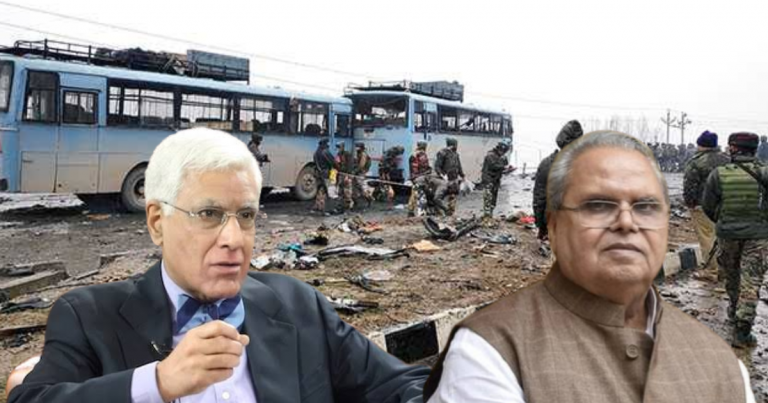
What such spurious arguments do is that it provides a free pass to the terrorists and Pakistan-based terror outfits and shifts the onus of responsibility for the attacks on the victims. In this case, India and the Indian government suffered a terrible blow when a convoy of vehicles carrying Central Reserve Police Force (CRPF) personnel to Srinagar via National Highway 44 came under a suicide bombing attack on February 14, 2019.
A 22-year-old Adil Ahmad Dar, a Jaish-e-Mohammed (JeM) terrorist from Kakapora in Jammu and Kashmir, rammed his explosive-laden vehicle into a bus carrying the CRPF personnel, resulting in the death of 40 jawans.
Tellingly, the Jaish-e-Muhammad terrorist even shot a video of himself justifying his act before carrying out the suicide attack against CRPF personnel. In the video released following the attack, Adil Ahmad Dhar referred to Indians as “Gaay ka Peshab Peene Wale(People who drink cow urine)”. Boasting about the terror attacks carried out by Jaish-e-Muhammad, Adil said those who committed such acts got Hoors in the afterlife and insisted that he would be in heaven by the time this video is released to the public.
Dar’s video laid bare the religious undertones of the attack and the extent of indoctrination carried out by Pakistan-based terror outfits against India, a Hindu-majority country. It also underlined the longstanding goal of Pakistan to continue sponsoring and carrying out terror attacks in India.
While Malik claims that the terror attack took place because the Home Ministry refused aircraft to CRPF personnel, the religious fanaticism reflected in Dar’s video and the history of terror attacks in Jammu and Kashmir reveal that the attack would have taken place regardless of the Indian government’s permission to CRPF. If the paramilitary forces had opted to fly through to their destination, Dar, like scores of other Pakistan-trained terrorists, would have attacked other police or military contingent to continue perpetuating their Islamic jihad in India.
In a nutshell, blaming the refusal of permission to CRPF to airlift their personnel is akin to blaming the creators of Mumbai for having turned a place on the Arabian Sea shore into a city that enabled Pakistani terrorists to carry out 26/11 attacks. Surely, Mumbai could have been a land-locked city, the Left would argue, and it was because of its proximity to the sea that Ajmal Kasab and his fellow terrorists managed to enter India. Such arguments take the onus away from the anti-social elements responsible for wreaking havoc and instead pin the blame on the administration for the attack, which is what happened during Satya Pal Malik’s interview with The Wire’s Karan Thapar.
Hours after The Wire published Satya Pal Malik’s interview, the Pakistan state media used it to give a clean chit to the country from its involvement in the Pulwama attack. Quoting Malik, the Pakistan state media claimed that it was immediately clear from the Pulwama attack that it was aimed at blaming Pakistan and advancing BJP’s gains in the elections.
The former governor says that in February 2019, Modi prevented him from revealing the truth about the Pulwama attack and it was immediately clear from the Pulwama attack that the attack was aimed at blaming Pakistan and benefiting the BJP in the elections. pic.twitter.com/P7FXTR65d7
How the Indian Left continues to act as toilet cleaners of terrorists and Islamists
Indeed, the Pulwama attack underscores the shocking failure of India’s intelligence agencies in sensing and warding off a devastating terror attack. But it in no way eclipses the role of Pakistan and radicalised youth in Kashmir, who are willing to offer themselves as suicide bombers and killers to achieve the mirage of Islamic supremacism, first in Kashmir and then in the rest of the country.
However, Thapar and Malik conveniently gloss over the scourge of Islamism facing the country and went on to blame the Indian government for the attack because it simultaneously allowed them to discredit the Modi government’s victory in the 2019 general elections and act as the toilet cleaners of the Islamists and terrorists. Such a lucrative opportunity could not be missed when PM Modi and the Centre could be blamed for the Pulwama attack over an administrative decision while terrorists and terror outfits based out of Pakistan could be exculpated for attacking the CRPF personnel.
Islamic terrorism emanating from Pakistan and growing radicalisation among the youth remains at the top of the list of the security challenges faced by India. By downplaying these grave security challenges, Malik and Thapar are not only shielding Islamist mentality and undermining India’s security apparatus but also providing ammunition to Pakistan and local non-state actors to continue inflicting wounds on the country with impunity as they are there to shift the blame on the Centre for any untoward incident in the future.
The Left often wrongly blames the Centre for exploiting the dead bodies to bolster its electoral prospects. But if the recent interview of Satya Pal Malik is anything to go by, it is the Left ecosystem, which feels no compunction in using dead bodies, that too of our soldiers, and in whitewashing Islamist criminality in their pursuit to malign the Centre and attack their ideological and political opponents.
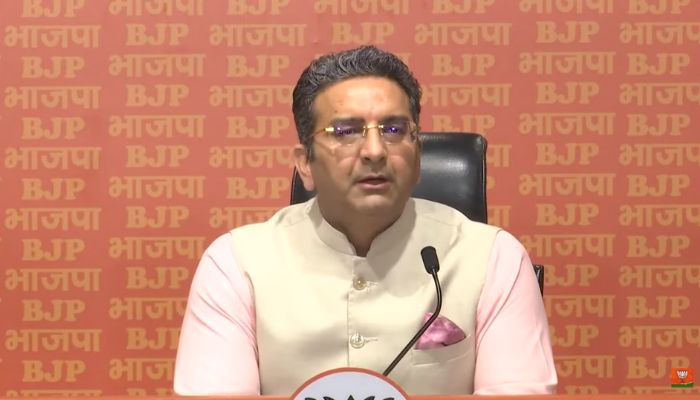
On Saturday, April 15, 2023, the Bharatiya Janata Party held a press conference in Delhi and implied that Delhi’s chief minister Arvind Kejriwal is the kingpin of the liquor scam in the national capital. BJP leader Gaurav Bhatia, who addressed the press conference, said that the moment Arvind Kejriwal was called for questioning by the CBI, he started trembling with fear. Gaurav Bhatia said that it’s quite clear that Arvind Kejriwal is the kingpin of the liquor scam.
In this press conference, BJP spokesperson Gaurav Bhatia said, “We have five questions in front of you. You were heading the meeting in which this whole liquor scam was developed. Why should you not be probed? Vijay Nair is the leader of your party. It has also now appeared that you have conversed with Sameer Mahendru who is one of the accused in this case. You talked to him on Facetime through Vijay Nair. You told him that this Vijay Nair is my man. So you also tell us whether you did converse with Sameer Mahendru on the Facetime call?”
Gaurav Bhatia further said, “Our third question is what is your relationship with the liquor traders? Our fourth question is if your liquor policy was so good then why was it withdrawn? We also have the fifth question. In October 2021, your government issued a notice to Sameer Mahendru’s company saying that his companies are blacklisted and he should give an answer within a week. They did file an answer, but what action did the government take against them? It proves that Arvind Kejriwal’s only work is loot, extortion, and corruption. Arvind Kejriwal is a staunch cheater.”
Bhatia added, “If Arvind Kejriwal has guts, he should answer at least one question out of these five questions. But he is a corrupt leader and will not answer any of them. He and AAP leaders will beat around the bush. Manish Sisodia, whom Arvind Kejriwal calls a staunch honest, went to the Supreme Court asking for relief but the court denied it. Then 14 parties went to court saying that agencies were being politically misused. The court also said that there could be no separate rule for politicians.”
Gaurav Bhatia also quoted the court’s observations about Manish Sisodia. He said, “Sessions court rejected Manish Sisodia’s bail on 31st March 2023. The court said in the order – Manish Sisodia called the then excise commissioner personally to grant L1 to Indo Spirit’s Sameer Mahendru. Why will a former liquor minister pressurize the excise commissioner to give a license to a particular trader? It is because Arvind Kejriwal has taken a bribe of Rs 100 crores. And we are not saying this on our own. The court has also mentioned that. It is the same Sameer Mahendru. You can connect the links. Arvind Kejriwal talked to him through Vijay Nair and told him that ‘he is my man, do as per he instructs. Consider it as my instruction only’.”
Gaurav Bhatia further said, “There is another big revelation in this order. A former deputy chief minister who is being called a staunch honest man is destroying his mobile phones which is important evidence. Why he is doing so? When he was interrogated, it was revealed that he had four mobile phones. When agencies asked for his four mobile phones, he provided only one and destroyed the other three. Why? If he was a staunch honest, he would have provided the three other mobile phones. Did he destroy them fearing that Arvind Kejriwal will also be caught? What kind of honesty is this?”
Concluding the address, the BJP spokesperson said, “Most importantly, the court said – thus it is clear from the above discussion that the applicant had played the most important and vital role in the above criminal conspiracy and he had been deeply involved. If you have not done anything and you do not fear anything then go and answer the questions asked by the agencies. Why does one new spokesperson come every other day and beats around the bush? Applying your standards to yourself, you should take a polygraph test. Take a lie detector test. But you won’t do that as you are afraid. If you answer any of the five questions in your press conference, we will continue this press conference and ask you more questions.”
The Central Bureau of Investigation has summoned Delhi Chief Minister Arvind Kejriwal to question him in connection with the Delhi Liquor Policy scam case. According to the news agency ANI, the AAP convenor has been asked to appear before the CBI on 16 April, Sunday.
Senior AAP leader and former Delhi Deputy CM Manish Sisodia has already been arrested in connection with the case. The AAP govt is accused of changing its excise policy to benefit select business houses.
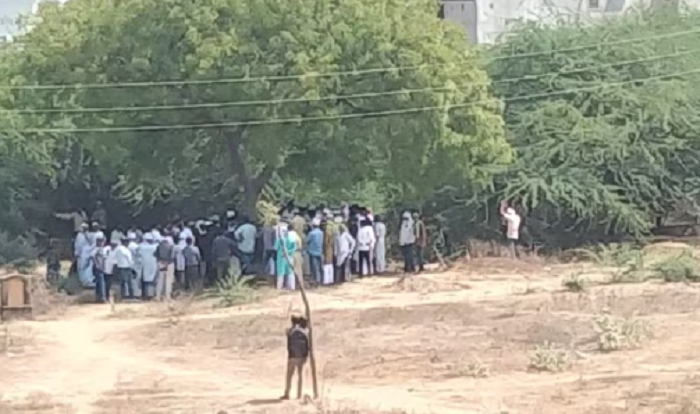
On Saturday, the dead body of Asad Ahmed, the 19-year-old son of gangster-turned-politician Atiq Ahmed’s son Asad Ahmed was buried at Kasari Masari graveyard in Uttar Pradesh’s Prayagraj. Asad and his close aide Gulam, both wanted in the murder case of Umesh Pal, were killed by the UPSTF in an encounter in Jhansi on 13 April.
According to additional police commissioner Akash Kulhary, Asad’s family decided to take him swiftly to the Kasari Masari cemetery. Asad was laid to rest at the Kasari Masari cemetery where all of his earlier other relatives, including his grandparents have been buried. Reportedly, the grave of Asad has been positioned next to that of Atiq’s father, Feroz Ahmad.
#WATCH | Uttar Pradesh: Last rites of Mafia-turned-politician Atiq Ahmed's son Asad being performed at Prayagraj's Kasari Masari graveyard.
Atiq’s attorneys meanwhile had arrived at the Kasari Masari cemetery to demand that the burial be postponed until the Prayagraj district court opened to hear the incarcerated politician’s request to be permitted to participate in the final rites of his son.
The body of Ghulam Hasan, who was also killed in the Jhansi encounter by the UP STF, was also transported to Prayagraj’s Mehendauri cemetery for burial.
As per the reports, entry into the Kasari Masari cemetery has been restricted and security guards are on high alert. Only about 20 individuals have been permitted to attend the burial at the Kasari Masari cemetery. Drones were employed by authorities to maintain a vigil around the cemetery. The event has been captured on tape by security guards.
This is a day after Atiq pleaded with officials to let him attend the last rites of his son. He and his brother Ashraf were also interrogated by the police for nearly 23 hours. He repeatedly begged for forgiveness for his family throughout the questioning and asked to go to his son’s burial. Around 10 night, the mafia was transported shackled to Prayagraj’s Colvin Hospital as his condition began to deteriorate due to stress.
Atiq, according to reports, had refused to eat. However, he ate the medications and dal-roti afterwards. Atiq meanwhile admitted to taking a shipment of weapons from Pakistan during interrogation and claimed to have called an ISI operative from within the jail.
Asad Ahmed and Gulam Muhammad, both wanted in the Umesh Pal murder case, were killed in a police encounter at Jhansi on April 13. They were travelling on a two wheeler when the UP STF traced them, and opened fire on the police when asked to surrender. The police shot at them in reply, killing them.
In the CCTV footage of Umesh Pal’s murder, Asad Pal was seen chasing and attacking Pal with a pistol. Ghulam Muhammad, son of Maksudan, was a gunman who fired shots during the Umesh Pal murder.
As reported earlier, Asad and Ghulam were constantly moving around to avoid capture by police and had reached Jhansi to meet someone, in preparation for leaving the state. UPSTF received information about the same and launched an operation. They had been tracking the two for 3 days before they were encountered.
On the basis of a complaint lodged by Umesh Pal’s wife Jaya Pal, a case was registered against Atiq Ahmed, his brother Ashraf, wife Shaista Parveen, two sons, aides Guddu Muslim and Gulam and nine others.
The Police earlier killed one of the prime accused, shooter, Mohammad Arbaaz, 24, in an encounter in Prayagraj, three days after the murder. The Uttar Pradesh STF team led by Dy SP Navendu and Dy SP Vimal at Jhansi confirmed the encounters meawhile and said that sophisticated foreign made weapons were also recovered from the spot after the encounter.