Home Blog Page 2293

Ram Navami violence is not sporadic: If one read RC Majumdar, one would know that history, leading up to 1947, is being repeated right in front of our eyes

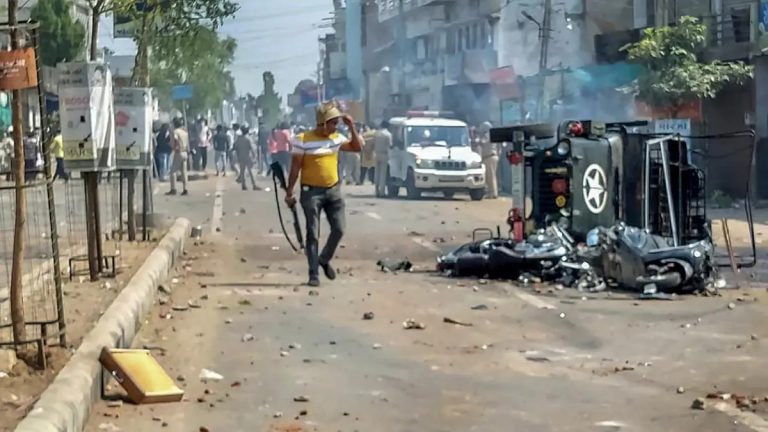
Every year, Hindus come under attack when they take their religious processions out and this year was no different. During the Ram Navami Shobha Yatras, Hindus came under attack as Muslim mobs pelted stones, created arson, attacked unsuspecting Hindus and then, blamed Hindus for their own persecution.

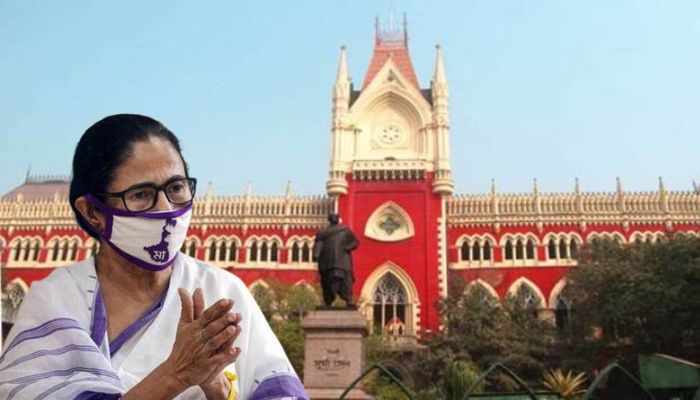
In Bengal, when Hindus came under attack, Mamata Banerjee, the Chief Minister, said it was the Hindus who pelted stones at their own procession because the Muslims can’t possibly commit violence during the month of Ramzan – they would be busy doing Namaz, after all. “Minority community was not at all involved as they were busy with Ramzan and Namaz”, she said. Not only that, she essentially insinuated that Muslims should annihilate the Hindus.

“Can’t you step up now and stop these rioters and goons? If women are with me, then, I will show my power to the rioters…”, she was heard saying in another speech in April. “Ki sonkha loghu bhai bona ra, Allah Tallah er kache doye kore danaga baaj der khotom korte parbe na (Can’t my brothers and sisters from the minority community pray to Allah to finish off these rioters),” she said.

From Gujarat to Maharashtra, Uttar Pradesh, Telangana, Uttar Pradesh and beyond, Hindus were hounded, attacked and humiliated while celebrating one of the most sacred festivals – Ram Navami and even as the intolerant minority went on a rampage, from Islamists to Leftists and even politicians blamed Hindus for coming under attack because they had the temerity to take out their religious processions through an area which was ghettoised by the Muslims.

For most Hindus, India is a civilisational state of their ancestors, where their faith, culture, tradition and stories lie. A soil that has been soaked with the blood of their ancestors who fought for the integrity and honour of this land. It can safely be argued that if some start believing that Hindus have no right to exist in areas which are ‘no longer Hindu’ (remember ‘Muslim areas’ is now a legitimate term by the ‘secular’ commentariat), then Islamists who tore Bharat apart in the name of Islam, must not be allowed their religious rights in a nation with a distinct Hindu nation, despite the cries of secularism. It could perhaps be argued that the Nehru-Liaquat pact which skirted the full population exchange post-partition is the true culprit of the malaise we face today. Had India been left only with Hindus and Pakistan, created in the name of Islam, only with Muslims, perhaps Hindus would not be humiliated for taking out their religious processions in their own land. These arguments are often shot down as “hate speech” because it supposedly “creates” a divide, a divide that clearly already exists and has existed for 100s of years.

For those who believe that Ram Navami processions and other Hindu religious processions have come under attack only recently after the rise of the BJP and perhaps, after the awakening of the collective Hindu consciousness in contemporary times, even a cursory reading of history would rupture that notion.

RC Majumdar is one of the most noted historians of modern India. His most noted work was his 11-volume series on the history of India which starts tracing Bharat’s history right from ancient history to the freedom struggle. The final volume of the series, ‘Struggle for Freedom’, is considered one of the most authoritative accounts of the freedom struggle and the events that shaped Bharat, especially leading up to the partition of India.

In Chapter 15 of his book “Struggle for Freedom”, RC Majumdar gives a bird’s eye view of the nature of Hindu-Muslim relations in the country, particularly in the 1920s and 1930s – a few years before the partition of India and around the same time of the Khilafat movement and the Malabar genocide of Hindus.

The Muslim League, RC Majumdar days, regained its old strength after the Khilafat movement dwindled in India and started playing its old tricks of communalism. Gandhi had managed to reach a hollow “truce” through the non-cooperation movement which was supported by Hindus and Muslims for very different reasons – Muslims, specifically, for their Khilafat dreams. As the non-cooperation movement died down in Bharat, the hollow “peace” was exposed for what it is – naked hatred for Hindus.

“At the back of it lay the old Muslim policy of deriving personal or communal advantages by cooperating with the Government against Hindus”, RC Majumdar writes.

“The revival of the old communal spirit resulted in discords over petty issues, such as music before mosques, cutting down the branches of the pipal tree, held sacred by the Hindus, which obstructed the very long pole carried in the Muslim Tajjiya procession, the killing of cows in public places during Id ceremony, and things of this sort”, he writes.

What is interesting is that RC Majumdar, the veteran historian, deemed it necessary to mention “music in front of mosques” as one of the distinct features which caused violence by the Muslim community. The slaughter of cows openly to humiliate Hindus was a feature that historically, was known, however, the fact that “music in front of mosques” got the Islamists to unleash violence against the Hindus then, a feature that is prevalent even today, is an interesting revelation.

1923 onwards, communal riots were an order of the day especially after the Hindus had started a shuddhi movement which was condemned by the Muslims, who were regularly converting Hindus by force at the time. In 1918, given the discord between Hindus and Muslims, a committee had been appointed at the Delhi session of Congress to draw up an “Indian National Pact”. A draft of the pact was placed before the committee in 1923. In the meantime, the Bengal Provincial Congress Committee, under the direction of CR Das, approved a strange “Hindu Muslim Pact”, specific to Bengal, that essentially curbed the rights of Hindus. Even in this pact, the “music in front of Mosques” played a prominent role.

Two features of the pact, which was later rejected by the Congress committee, as was the National Pact, need to be analysed specifically.

  1. No music should be allowed before a mosque
  2. There should be no interference with cow killing for religious sacrifices, but the cow should be killed in such a manner as to not wound the religious feelings of Hindus.

While no music in front of a mosque is something that the Muslim side specifically demanded, they also demanded their right to slaughter cows. The fact that the pact said that the manner of killing should not offend Hindus, it is pertinent to realise that any slaughter of cows would hurt the religious feelings of Hindus, regardless of the method adopted.

While this Pact was rejected later, it goes to show this history of attacks against Hindus because of the establishment of so-called “Muslim areas” where even music being played by Hindus invited violence from the Islamists.

RC Majumdar in his book then talks about incidents of violence that marred the period, with many of them revolving around music being played in front of mosques and Hindu religious processions being taken out from “Muslim areas”.

Mr Majumdar writes, “One of the worst communal riots broke out in Calcutta in May 1923. It arose out of an Arya-Samajist procession playing music while passing before a mosque. The Arya Samajists contended that they were merely following a regular practice which was never objected to before, while the Muslims asserted that the music disturbed their religious prayer. So fighting commenced and continued for several days, in the course of which there were many casualties on both sides”.

There are certain elements of what Majumdar wrote that deserve greater scrutiny.

Firstly, Majumdar writes that the Arya-Samajists said that they were following regular practice and that the processions were never objected to. Several times, when Hindu religious processions come under attack by Muslim mobs, the Hindus are left flummoxed, claiming that they were simply doing what they have done every year, and could never understand why they came under attack that specific time. Even during the Delhi anti-Hindu riots, there were testimonies reported by media portals where Hindus expressed shock over the violence, saying that they have coexisted in the area for many years. This phenomenon does not seem to be new. One possible reason could be that the Muslim population increased over the years and what was acceptable then, became “haram” later, however, that aspect would need deeper study.

Secondly, that the Muslims asserted it disturbed their prayers, is also an argument that is often used today to blame Hindus for the violence committed by Muslims. After the Ram Navami violence in Bengal in 2023, a Muslim cleric justified the violence by citing exactly the same reason. When the cleric was asked his views on the violence unleashed in Shibpur, Howrah on March 30, the cleric said that this is the month of Ramzan and when the Hindus were taking out the procession, it was time for Muslims to break their fast with Iftar. It was the state administration’s duty to make sure that the ‘Sobha Yatra’ passed the area either half an hour before or after the Muslims broke their Roza. He stated that the incident occurred in the evening during Maghrib Azaan. He claimed that if the procession had been held in the afternoon, this would not have happened. The violence occurred since Hindus chose an evening schedule for the ‘Sobha Yatra,’ which clashed with the Azaan time.

Therefore, it is safe to say that the reasons employed by Muslims in the 1920s to attack Hindus are being used in 2023 to attack Hindus as well. To assume that there is any authentic grievance that leads to violence against Hindus would be naive. Essentially, everything points to the fact that the violence by the Islamists is a mere tool for religious supremacy because the very existence of Kafirs in spaces they assume to be their own offends their religious sensibilities.

The fact that violence is indeed a tool for religious supremacy is proved by another incident narrated by RC Majumdar in his book. He writes, “The cause of the riot on Bakr-id day, 15th July, was an official notice closing an additional route through the Hindus quarters for cows destined for slaughter. The attempt of the Muslim butchers to take by force a cow through the prohibited road caused serious rioting in which about 12 Hindus were reported to have been killed and about a hundred seriously injured. Order was not restored till the military was called in and opened fire. Panic prevailed in Hindu quarters and houses and shops were closed for many days. A Hindu temple was desecrated and sporadic attacks on Hindu passers-by continued for several days. According to official estimates, hospital casualties were, Hindus – dead 8, injured 44; Muslims – dead 1, injured 25 and an unknown number being privately treated. Similar but less serious disturbances occurred in many other places on the Bakr-Id day. Some of the bigger street-fightings took place in Nagpur, Jubbulpore, and other places in CP where the Muslims, being much fewer in number, suffered more heavily than the Hindus”.

Further, RC Majumdar writes, “On the day of Muharram, some Mohammedans accompanying the punja processions molested Hindu men and women whom they met on the road and afterwards entered the Sharan Vishveswar Temple, remained in possession of it for some hours and did some damage. The next day, a story went around that Hindus had caused mischief to a mosque, thereupon, Muhammadan mobs attacked all Hindu temples in the city, numbering about 15, and broke the idols. They also raided the Sharan Vishweshwar Temple and attempted to set fire to the temple car. The police were eventually obliged to fire”.

The chronology of this event seems woefully familiar. While the Muslims committed violence when Hindus passed through “Muslim areas” so to speak, they also created violence on their festivals, forcing their way into Hindu areas and displaying how they were slaughtering a cow. Further, they created violence and took over a temple, and on the basis of a rumour, proceeded to attack all temples, desecrate idols and went on a rampage.

Essentially, then and now, it would appear as though it does not particularly matter if the Hindu procession was passing a “Muslim area” or it was the festival of Muslims – the eventual brunt had to be borne by the Hindus either way – it is therefore not far fetched to say that even the outrages today aren’t about Hindus “disturbing” Azaan or “provoking Muslims”. It is merely about Hindus’ presence and the fact that Kafirs exist.

Giving further credence to this, RC Majumdar writes, “The Hindu-Muslim relations continued to deteriorate in 1925 and 1926, the Bakr-Id ceremony causing serious riots in Delhi, Allahabad and Calcutta. No less than 16 communal riots took place in 1925, the worst of which were those in Delhi, Aligarh, Arvi and Sholapur. The most serious riot in 1926 took place in Calcutta in April over the question of music before the mosque. The riot which continued in full fury on 3, 4, and 5 April, caused 44 deaths and 584 injuries, besides looting, burning and desecration of both temples and mosques. There was another riot on 22 April, and the casualties were 66 killed and 391 injured. There was a third riot in Calcutta which continued from 11 to 25 July resulting in 28th Deaths and 226 serious injuries. There were also riots in the interior of Bengal as well as in Rawalpindi (14 killed and 50 wounded) and Allahabad (2 killed and 27 injured). There were no less than 5 riots in Delhi. The government made an unsuccessful effort to control, by regulation, the hours of music before the mosque but Hindus reacted very strongly against them”.

Interestingly, even in this case, all of these riots happened because Hindus were playing music somewhere in the vicinity of a mosque. The state, then as it does now, tried to control the Hindus and impose legislation on them instead of controlling the Muslim mobs. In contemporary times, one can recall that this year itself, in 2023, almost 100 years after these riots, the Ram Navami procession was banned in Jahangirpuri because the year before, Muslims had created violence during Hindu religious processions. Now, like it was then, Hindus asserted their rights and continued with their religious procession as planned. Even in 1926, after the government tried to impose legislation stopping Hindus from taking religious processions out and playing music, the Hindus asserted their rights and ensured that their religious rights were not curtailed. In fact, over 400 Hindus were arrested after they decided to not pay heed to govt impositions to protect the Muslim sentiment.

“Several communal riots broke out in 1927. At Kulkathi (Barisal, Bengal) a Muslim mob refused to allow passage to a Hindu procession which was permitted by the local authorities to proceed. The police opened fire, killing 17 and wounding 12 Muslims. Twenty-seven were killed in a communal riot in Lahore and eleven at Bettiah (Bihar)”, RC Majumdar wrote. In this case as well, the situation was then as it is now. Despite permission and the law being followed by the Hindus, the Muslims would have no part of it and attacked the Hindus regardless.

This phenomenon of Muslims attacking processions by Hindus and insisting upon cow slaughter simply to humiliate Hindus was also written about by Dr BR Ambedkar in his book “Pakistan or the Partition of India”.

He writes, “Another illustration of this spirit of exploitation is furnished by the Muslim insistence upon cow slaughter and the stoppage of muslim before mosques. Islamic law does not insist upon the slaughter of the cow for sacrificial purposes and no Musalman when he goes to Haj, sacrifices the cow in Mecca or Medina. But in India, they will not be content with the sacrifice of any other animal. Music may be played before. a mosque in all Muslim countries without any objection. Even in Afghanistan, which is not a secularised country, no objection is taken to music before a mosque. But in India, the Musalmans must insist upon its stoppage for no other reason except that the Hindus claim right to it”.

The fact that Hindu processions were being taken out from in front of mosques and/or music was being played in the vicinity of mosques was a point of massive riots and communal unrest that claimed the lives of several Hindus and Muslims with the Muslims often starting the violence citing hurt to their religious sentiments.

During the Ram Navami violence in 2023, it was emphatically asserted that Hindus were responsible for being attacked because they had the temerity to pass through “Muslim areas”. That they deliberately provoked the Muslims by their presence in that area and that, had the Hindus not provoked them, the Muslims would not have gone on a murderous rampage against them. Their argument today is exactly the argument they were making 100 years ago – that Hindu presence in these “Muslim areas” provokes Muslims. The Hindus are saying today exactly what they were saying then – ‘this is our right’ and sometimes, ‘we have always lived in peace, how did we get attacked this time’.

Either way, it would be a grave error for Hindus or the Indian political dispensation to assume that these attacks against Hindu religious processions are sporadic and lack pattern. What happened then led to the 1947 partition based on the principle that Muslims are a distinct nation unto themselves and cannot coexist with Hindus. The “Muslim area” demarcation is merely the same theory in play on a smaller scale. To ignore this violence or to assume that such low-level outrages are not leading to much bigger outrages would be foolish. One must remember that Moplah Muslims committed sporadic atrocities against Hindus for 100 years before the Malabar Genocide of Hindus took place. We, dare I say, are today somewhere in those 100 years – where what trajectory we might take depends on how the Hindus decide to steady their heart and if the state wakes up to uncomfortable realities that history has been trying to teach us for decades.

Documents show Amul expanded in Karnataka under Congress rule even as former CM Siddaramaiah says Modi is ‘coming to loot the state’ via Gujarat’s Amul

With the Karnataka assembly elections approaching, the Congress party, which is the primary opposition party in the state, has started playing dirty politics over milk by pitting Amul against Karnataka’s brand ‘Nandini’. Continuing his offensive against the ruling BJP, senior Congress leader Siddaramaiah on Sunday (April 9) tweeted asking Prime Minister Narendra Modi if the purpose of his visit was “to loot the state.”

“Is your purpose of coming to Karnataka to give to Karnataka or to loot from Karnataka? You have already stolen banks, ports and airports from Kannadigas. Are you now trying to steal Nandini (KMF) from us?” Siddaramaiah asked.

“It was Gujarat’s Baroda Bank that subsumed our Vijaya Bank. Ports and Airports were handed over to Gujarat’s Adani. Now, Amul from Gujarat is planning to eat our KMF (Nandini). Mr Narendra Modi, Are we the enemies for Gujaratis?” Instead of giving 2 crore jobs a year to youths, Narendra Modi took away the jobs of Kannadigas from our banks, ports and airports, he further said, adding that “Now Karnataka BJP wants to hurt the prospects of our farmers by giving KMF to Amul.” Modi was in Mysuru and Chamarajanagara districts to attend an event commemorating 50 years of ‘Project Tiger’.

The former chief ministers’ tweets came ahead of PM Modi’s visit to the poll-bound state on Sunday.

Notably, on April 5, Amul’s official Twitter handle posted an infographic hinting at its entry into Karnataka. This proved to be the opportune moment which Congress Party was looking for to take on the BJP before the state election. Congress immediately linked the Amul infographic and Union Home Minister Amit Shah’s December 2022 speech wherein he called for greater cooperation between Amul and Nandini, which is owned by the Karnataka Milk Federation to spread misleading information concerning Amul’s acquisition of the state’s local dairy brand Nandini. When the matter escalated and grew into a full-fledged controversy, Congress started milking it further for political gains.

Siddaramaiah, the Congress leader and former Karnataka Chief Minister, purposefully used the Amul-Nandini controversy, which patently was created by him and members of his own party, to inflame regional tensions among Karnataka voters before the state elections. However, in his haste to bring down BJP, Siddaramaiah probably forgot that Amul had already expanded its footprints in the state when he was at the helm of affairs in 2017.

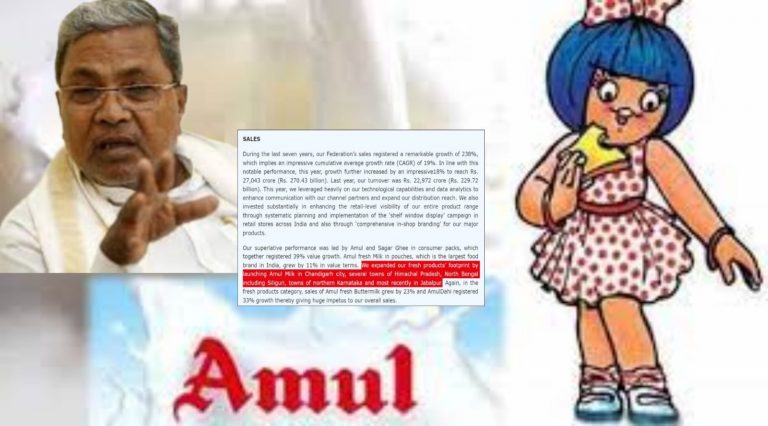
In fact, the minutes of Amul’s 2017 annual general meeting, clearly specified that in 2017 the cooperative launched Amul Milk in various parts of the country including towns in Northern Karnataka. While sharing details of how the sale of the cooperative increased in the last seven years then, the company categorically mentioned, “We expanded our fresh products’ footprint by launching Amul Milk in Chandigarh city, several towns of Himachal Pradesh, North Bengal including Siliguri, towns of northern Karnataka and most recently in Jabalpur.” The minutes of Amul’s 43rd annual general meeting can be read here.

Excerpts from Amul’s 43rd AGM

This meeting took place on June 15, 2017, and Congress senior leader Siddaramaiah served as Chief Minister of Karnataka from May 13, 2013, until May 17, 2018. This clearly indicates that Amul entered Karnataka in 2017, while the Congress was in power in the state and Siddaramaiah himself was the CM.

Additionally, the incumbent Chief Minister of Karnataka Basavaraj Bommai on Saturday clarified that his government had taken all kinds of measures to make Nandini number one at the national level. Calling the house brand Nandini the pride of Karnataka Bommai said, “Nandini’s market reach is wide, there is no need to fear Amul.” Congress politicising everything is not in the interest of the state, he had said.

“We are also going to other states and marketing….we will do all that is required to put Amul behind in the competition.” State Cooperation Minister S T Somashekar on Sunday reiterated that there was no proposal to merge KMF with Amul.

So to now imply that Amul is attempting to ‘root out’ Nandini by entering Karnataka and thus undermining Kannadiga identity and culture and that the Modi government wants to harm Kannadiga farmers’ prospects by giving Amul KMF is a complete fallacy that Congress is fanning for obvious political gain ahead of the upcoming crucial assembly elections.

Consumer goods are marketed all over the country and Congress’ claim that Amul being sold in Karnataka is a conspiracy to root out the state milk cooperative’s business is a baseless one. Customers buy products based on their own convenience and preference.

Congress tries to fan hatred against anything that comes from Gujarat

But why aren’t we surprised? That’s because the Congress Party’s disdain towards Gujarat and Gujaratis is nothing new. In reality, it emerged almost soon after Modi took office. Since the two top men (Narendra Modi and Amit Shah) running the nation are Gujaratis, and so by extension, Congress paints all Gujaratis as evil. Rahul Gandhi, the Congress blue-eyed boy, who promised to make India ‘hate-free’ in his ‘Bharat Jodo Yatra,’ has conveniently forgot on countless occasions in the past that Gujarat is very much a part of Bharat. He has never left a single opportunity to insult Gujaratis.

In 2021, during the runup to the Assam elections, Rahul Gandhi said that to fund the extra wage rate of Assam tea workers, he will take money from Gujarati tea traders.

In September 2021, when authorities were busy busting drug rackets, which are often used for terror funding, Rahul Gandhi again attacked Gujaratis and cast aspersions that they are drug addicts.

During an election rally in the run-up to the 2019 elections, Rahul Gandhi had mocked an entire community in Gujarat by saying, “Nirav Modi, Lalit Modi, Narendra Modi… how come they all have Modi as a common surname? How come all thieves have Modi as a common surname?” He has now been held guilty in this case and he is an out-on-bail convict.

When the police recently arrested a conman from Gujarat who posed as a member of the PMO entrusted with the responsibility of looking for improvement in hotel facilities in Jammu and Kashmir, the Congress ecosystem and its elements fell over themselves to defame Gujarat and Gujaratis over the incident.

Siddharamiah, Congress senior party leader, has now taken up where his supremo left off. He has begun to spread this freshly woven anti-Gujarati rhetorics in order to attract votes and reestablish his stronghold in Karnataka. However, before moving ahead, the Congress should pause and consider that in their desperate attempt to reclaim a foothold in Karnataka, they are playing with fire. The party is presumably ignoring the fact that a former CM tweeting such disparaging remarks about a specific community when a sizable component of that population dwells there could jeopardise their lives. Will the party accept responsibility if the CM’s effort to pit Kannadigas against Gujaratis leads to the latter being victims of hate crime in the state?

Pro-Khalistanis using Twitter bots to promote violence, anti-India propaganda, says NCRI research

In its latest research, Network Contagion Research Institute (NCRI) found that pro-Khalistani elements are using Twitter bots to promote violence and anti-India propaganda on social media platforms. As per the Washington Post report, the backers of the separatist ideology are using multiple networks of linked accounts to trend tweets that include videos and calls for action simultaneously.

Interestingly, once the trend gets the required traction, these accounts were found to have deleted those tweets to avoid suspensions. According to NCRI’s research, these accounts used several evasive tactics, such as using the word “device” instead of a bomb and calling for the “political death” of the leaders in India.

These activities have increased exponentially since the Punjab Police and Central Agencies started a massive crackdown on pro-Khalistani separatist leader Amritpal Singh, the report says. The activity on social media has been found to revolve around the violent protests outside Indian consulates in San Francisco and other cities worldwide and assaults on Indian officials and journalists during these protests.

Notably, Twitter is working extensively to cut off bots promoting violence, but the platform has remained a remarkable source for separatists and propagandists to spread misinformation and call for action in the real world.

As per WaPo’s report, NCRI captured tweets seeking direct action against train tracks, power plants and other strategic targets across India and in Indian establishments worldwide. One of the videos captured by NCRI was from Khalistani terrorist group Sikhs For Justice, which talked about damaging railway tracks.

NCRI found around 359 accounts actively indulging in such activities since January. Any message or video gets promoted by a group of 20-50 accounts. Most of them have messages from the founder of Sikhs For Justice, Gurpatwant Singh Pannu. Each account would post the tweet multiple times, tagging journalists and other public features to increase visibility.

Chief Operating Officer of NCRI Jack Donohue said, “When you look at the escalation and the intensity of the rhetoric, and how that precedes the events in the real world that result in vandalism or violence, that’s where the concern is.”

Furthermore, 20 per cent of the accounts identified by NCRI were found to be originated from Pakistan. Some of these accounts also praised Pakistan and urged Sikhs to thank the neighbouring country. These accounts also tweeted in favour of the political leaders of Pakistan.

Donohue is the former head of cyber intelligence at the New York Police Department. A copy of the report will be shared with law enforcement agencies with a list of cities that could be possible targets.

NCRI said, “Involvement by a self-identified Pakistani network of putative SFJ supporters thus suggests not just bot-like activity but raises the possibility of a broader effort for covert influence. The fact that this network of self-identified Pakistani accounts amplifies attacks against Hindu houses of worship, agitates for terror and attacks Indian consulates aligns well with Pakistani strategic interests,” in the report.

NCRI noted Twitter swiftly took action against many pro-Khalistani accounts and suspended them, including those that referred to the wise use of hand grenades. However, these accounts keep returning with slightly changed handles.

OpIndia’s investigation

In March 2023, OpIndia reported how pro-Khalistani accounts on Twitter trended #WeStandWithAmritpalSingh on the social media platform. Our research found that over 40,000 tweets were published using the hashtag in a single day. Out of these, over 11,000 tweets originated from the US, and 18,000 originated from India. Propaganda channels on YouTube and other social media platforms have mushroomed over the years, pumping anti-India and pro-Khalistani propaganda.

Though the majority of the tweets get deleted within hours of posting, OpIndia tracked a few accounts and hashtags to give an overview of what has been happening.

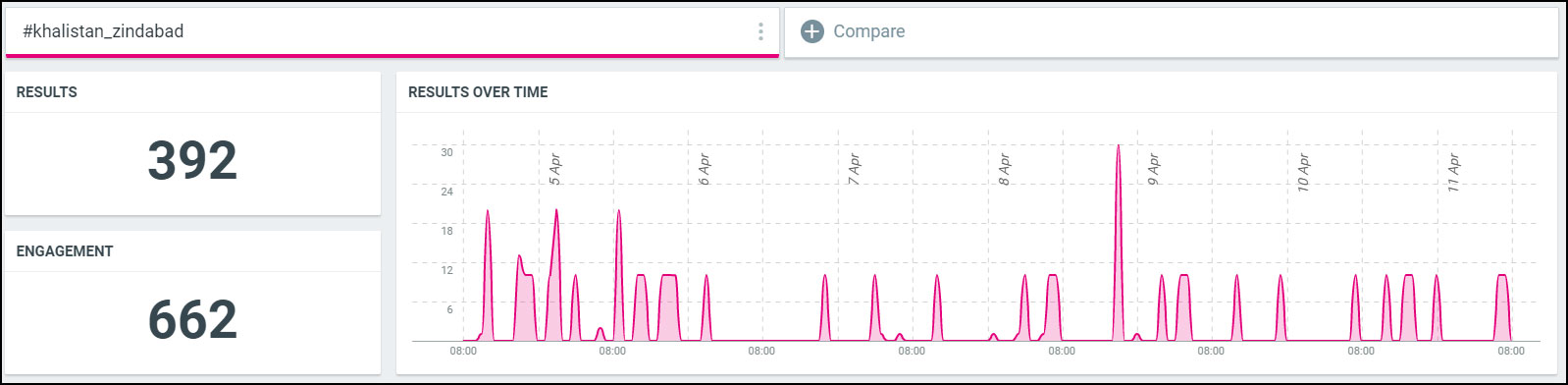
Three hashtags, #WeStandWithAmritpalSingh, #CallForSarbatKhalsa and #khalistan_zindabad, have been extensively used. While we covered #WeStandWithAmritpalSingh, the case of #Khalistan_Zindabad and #CallForSarbatKhalsa was no different. One of the active accounts, singh99826891, has been using the #Khalistan_Zindabad hashtag extensively. Several other accounts regularly post using the hashtag.

Source: TalkWalker

In the last seven days, the hashtag appeared in over 390 tweets. The number appears to be low because Twitter users or bots regularly delete tweets to avoid suspension.

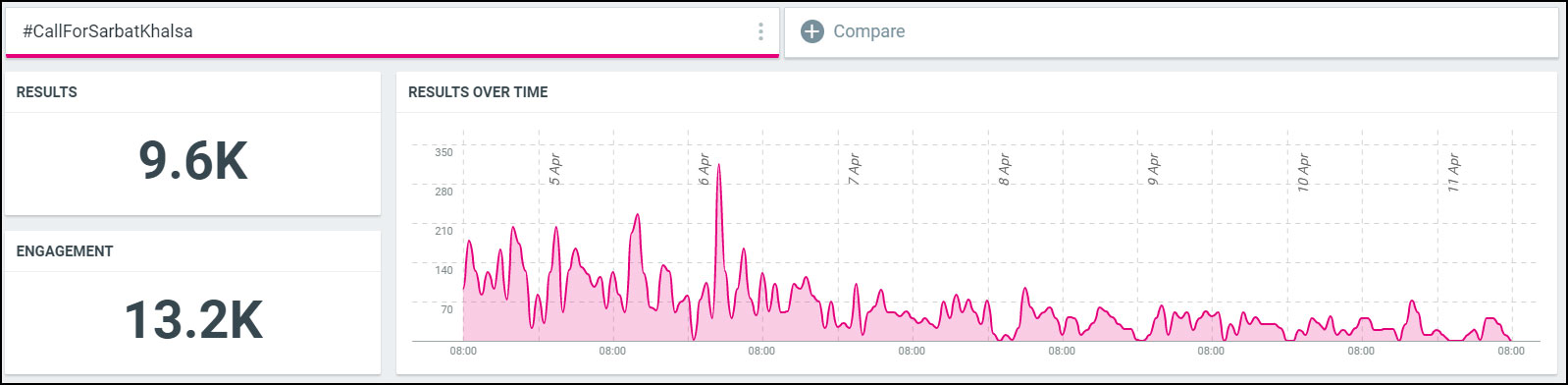
Another account, dharmkaur_, has been using #CallForSarbatKhalsa extensively. This account was not alone in using the hashtag. The hashtag has appeared in over 9,600 tweets in the last seven days.

Source: TalkWalker

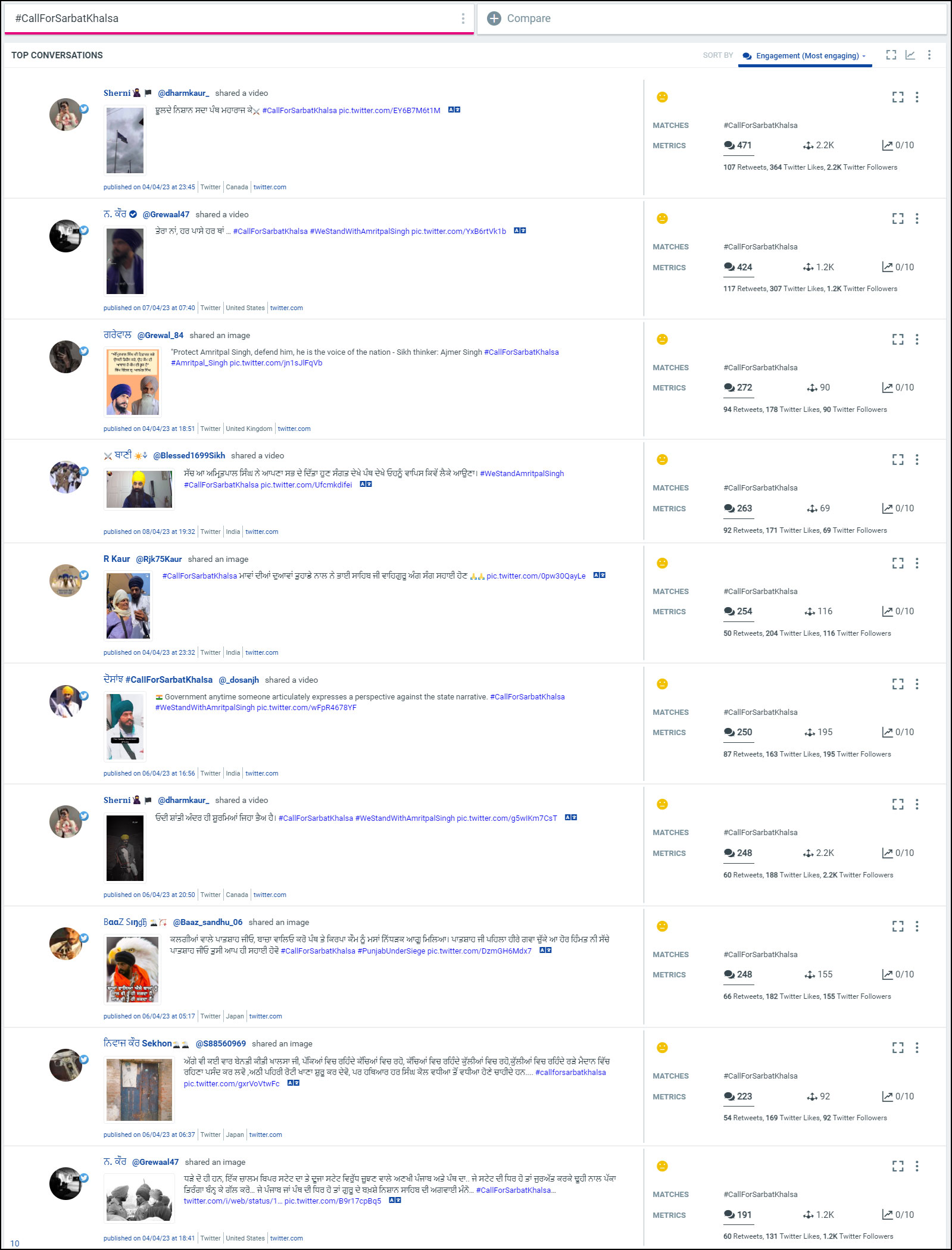
Here are the top accounts that pushed the hashtags according to TalkWalker.

Source: Talkwalker

Other hashtags we noticed being used include #FreeKhalistan, #Lashker_e_Khalsa, #FreeSikhPoliticalPrisoners #FreeJaggiNow and more. Interestingly, “Free Jaggi Now” campaign was piggybacked on farmer protests as well.

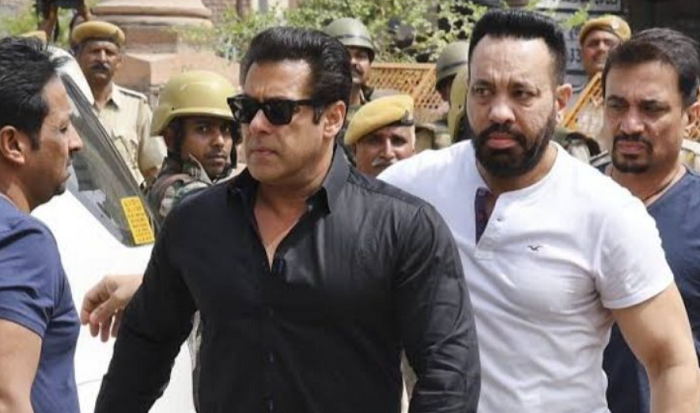
Mumbai Police detains ‘Rocky Bhai’ who threatened to kill Salman Khan on April 30

0

The Mumbai Police has arrested a minor named ‘Rocky Bhai’ who said that he would kill Bollywood actor Salman Khan by April 30. The threat call was received by the Mumbai Police control room on Monday, April 11, at around 9 pm.

The Mumbai Police identified the caller and took him into custody. The Police said, “The caller who made the threat call is a minor. There is no seriousness in this call. Further investigation is underway.”

The threat comes while the Bollywood actor is busy promoting his forthcoming movie Kisi Ka Bhai Kisi Ki Jaan. In response to threats from mobster Lawrence Bishnoi, Salman Khan recently purchased a bulletproof SUV that is yet to be launched in the Indian markets.

The caller, who identified himself as ‘Rocky Bhai’, claimed that he was from Rajasthan’s Jodhpur district and worked as a cow protector. “In a call received at Police Control Room yesterday, a man who identified himself as Roki Bhai from Rajasthan’s Jodhpur threatened to kill actor Salman Khan on April 30,” the Mumbai Police confirmed in the statement.

Notably, this is not the first time that the actor is receiving death threats. Earlier in March 2023, the actor had received a threatening email after which the Police increased his security. A complaint was filed against Lawrence Bishnoi, Goldie Brar and Rohit Brar under ICS sections 506 (2), 120 (B), and 34.

The email was sent from a Mohit Garg’s id, in which it was written that Goldie wanted to talk to Salman Khan. After the email, the Mumbai Police arrested Ram Bishnoi from Jodhpur’s Luni area in the case.

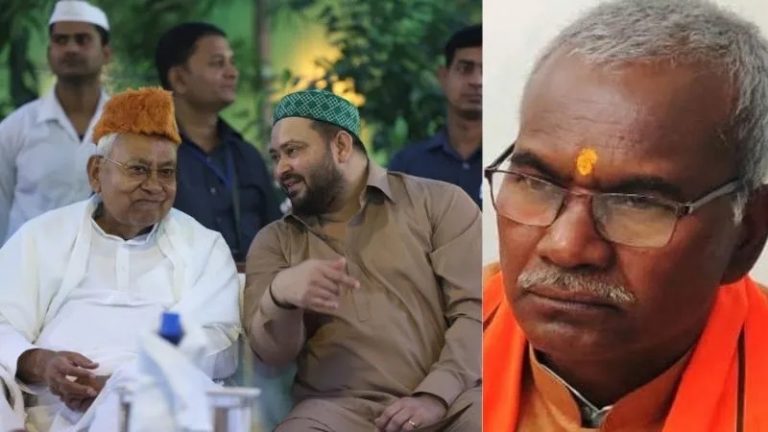
‘Those responsible for Bihar Sharif violence are only doing probe, want to defame Hindus’: Questions raised on Bihar Police’s claims

During the Ram Navami celebrations in Bihar’s Nalanda district’s Bihar Sharif area, violence took place during the procession. Now, the Bihar Police is holding the Hindus responsible for the Ram Navami violence that took place. Police is claiming that a WhatsApp group was created to coordinate the violence. Police is holding the local Bajrang Dal leader Kundan Kumar responsible for the violence.

However, Vishwa Hindu Parishad (South Bihar) district head Kameshwar Choupal has termed this preplanned violence an administrative failure. He has said that as per directions of the state government, this conspiracy is floated to give a bad name to the Rashtriya Swayamsevak Sangh (RSS), Vishwa Hindu Parishad (VHP), Bajrang Dal and other such Hindu organisations.

Choupal is also a member of the Shree Ram Janmabhoomi Teerth Kshetra Trust. He has also been a member of the Bihar state legislative council. He was the one who laid the first brick in the foundation of Ram Janmabhoomi temple on 9th November 1989. Speaking to OpIndia, Choupal said, “We had kind of expected this. What Bihar Police is saying today the same thing was said by Nitish Kumar and Rabri Devi right after the violence and without any investigation.”

Questioning the intentions of Bihar Police and state administration, he said that investigation should be carried out by central agencies or through an SIT. In this regard, on Monday, April 10, 2023, a delegation of the VHP even met the Governor. They asked for a high level inquiry on the violence that took place on Ram Navami in Rohtas, Nalanda, Bhagalpur, Gaya and other parts of the state.

The questions Choupal is raising about the violence has also been discussed on social media. People are unable to comprehend that in a Hindu festival, where Hindus are celebrating, but are also being attacked and dying, their property is being destroyed – how would Hindus then conspire for violence? The police administration that failed to stop the violence immediately and even questions were raised regarding their role in violence and their investigation has also led to same conclusion as state government had already suggested. Let us try and understand the chronology of events at Bihar Sharif.

Ram Navam violence in Bihar Sharif

On 31 March, 2023, a Shobha Yatra (procession) was carried out on Ram Navami in Bihar Sharif. When it reached a mosque near Diwanganj area, stones were pelted on the procession. Shots were fired and things were set ablaze too. 17 year old Gulshan Kumar died during the firing during the communal violence.

Eyewitness accounts of those injured in the violence

Vikas, brother of Gulshan Kumar who was killed in the violence spoke to a media house and said that both of them had stepped out to get some ration and groceries. They were returning home when firing took place near the masjid. Gulshan was shot at and he fell down there. People there helped him reach the hospital but he could not be saved. Then in name of postmortem, Bihar Police kept stalling till late night.

As per Vikas, Bihar Police even verbally abused him. When he tried to record the police behaviour towards him on his phone camera, police allegedly snatched away his phone. He was also not allowed to get in touch with his family members.

Right behind Sogra college in Bihar Sharif, some Hindu shops were burnt. Witnesses told a media house that a mob of about 50-60 people armed with petrol bombs had descended and started looting the shops. Despite repeated requests to officials, the fire brigades arrived hours late by then everything had turned to ashes. Witnesses also allege that when the mob was unleashing violence on them, the police administration was aware of the same. They had even gone to the police station to seek help but their pleas fell on deaf ears.

While interacting with one media house, some women alleged that Hindus were leaving their homes. However, eventually Bihar Police had denied the allegations. These women had alleged that after the violence, the police entered their homes and took away the men. Women had also raised concerns regarding their own safety. They accused the police of penalising the Hindus, abusing them and making them leave the police station.

These are some of the allegations. More allegations made against the Bihar Police are viral on social media. All these viral videos are questioning the role of police administration. They also, in as many words, allege that the attack on Ram Navami processions took place in Muslim dominated area.

Claims by Bihar Police on violence in Bihar Sharif

Bihar Police DG (Headquarter) Jitendra Singh Gawar, on 9 April, 2023 said that the Bihar Sharif violence was well planned conspiracy.

He said that a WhatsApp group of about 457 people was created through which problematic and inflammatory statements were circulated. He accused Bajrang Dal leader Kundan Kumar of being a mastermind in it. He said that Economic Offenses Research Team has also filed a separate FIR and is carrying out the investigation. Moreover, over 140 people were arrested.

Bihar Police has issued a statement in which it said that an FIR has been registered against 15 people by EOU. It said that under a well planned conspiracy, misleading messages were floated against one particular community. It said that they have arrested on Manish Kumar, Tushar Kumar, Dharmendra Mehta, Bhupendra Singh Rana and Niranjan Pandey. They further said that five mobile phones were seized from them which were allegedly used to upload the content.

Bihar Police statement

Why questions are being raised on Bihar Police’s claims

Speaking to OpIndia, Kameshwar Choupal said, “It has been a tradition that procession is carried out on Ram Navami, Hanuman Janmotsav and Durga Puja. For this purpose, proper permission is also taken from the administration. In Bihar Sharif case also same process was followed. DM, SP and SDM were present in the meeting. Police station heads had also held a meeting regarding this. Peace committee meeting also took place. During the meetings it was discussed which routes are communally sensitive and which could be taken and which could be avoided.

The place where the violence took place was communally sensitive. The place where attack took place was also sensitive. During the meetings, the kind of security arrangement that the administration promised was not seen on ground on the day of the procession. Some women police officials were also deployed. When the procession was attacked, these women police officials themselves saved their lives by hiding behind Bajrang Dal members. If the procession was being carried out from that lane then you could not imagine the destruction that would have taken place.”

If these allegations are to be believed one thing is clear that the Ram Navami violence is an administrative failure on part of Bihar Police. But soon after violence, the state administration got working to put the blame of attack on Hindus on Hindus. Deputy Chief Minister Tejashwi Yadav tried to put the blame on the RSS for the violence.

In a tweet on 2 April, 2023, Yadav put the blame on the RSS for the communal violence. Similarly, his mother and former Bihar CM Rabri Devi claimed that the BJP is perpetrating the violence. She had claimed that the government will carry out investigation and then all things will be clear. Similarly, Bihar CM Nitish Kumar had called the violence a ‘conspiracy’ and tried to blame BJP and Asaduddin Owaisi for the violence.

Do keep in mind that all these allegations of putting the blame on the BJP and Hindus for violence had started long before any investigation even took place.

All these allegations on Hindus started on the day Nitish Kumar attended an iftar party in Phulwara Sharif where his picture was shown with a Red Fort background. The Prime Minister of India addresses the nation from Red Fort on 15th August every year on Independence Day. Nitish Kumar has long held dreams of becoming India’s Prime Minister.

Nitish Kumar was also criticised for attending iftar amid violence. After this iftar party, his alliance partner RJD also organised and iftar party. On the other hand when questions were raised on the violence in the state assembly, BJP leader Jivesh Mishra was taken out of the house by marshals. He said that when he asked Nitish Kumar to come to the Assembly and answer questions pertaining to attacks on Hindus on Hindu festivals, he was thrown out unceremoniously like that.

Is Bihar Police throwing Hindus under the bus?

When OpIndia asked Kameshwar Choupal if there was any truth to police having evidence against Hindus for inciting violence, he replied, “The police is under the Bihar government. When the government has declared Hindus guilty without investigation, how will the police say anything different from that. Police can implicate anyone if they want. They can plant evidence like weapons and can file a case under the Arms Act.”

Questioning the capability and impartiality of the Bihar Police, he said that the Ram Navami violence in the entire state should be investigated by a central agency or headed by a High Court judge. The attack on the Ram Navami Shobha Yatra is a failure of the police. Getting the same police to investigate is like getting the culprit to investigate the matter.

Choupal further said, “There have been arrests from Bihar in terror attacks across the country. In 2013, there were blasts in Patna before the rally of the current Prime Minister Narendra Modi. But the Bihar Police never gets a clue of the terrorists present in the state. But in Bihar Sharif, the police found conspirators and evidence in a jiffy? Phulwari Sharif and Bihar Sharif may have ‘Sharif’ in their names but everyone knows that these places are the headquarters of Islamic fundamentalism. Even after the revelation of PFI’s anti-national conspiracy in Phulwarai Sharif, the fundamentalists are active in these places. Is it just a coincidence that after this revelation, the government in Bihar changed and now Hindu festivals are under attack.”

Bihar Police repeats what OIC says

Organization of Islamic Cooperation i.e. OIC, an organization of Muslim countries, had also blamed the violence of Bihar Sharif on Hindus. It had said in a statement, “The OIC Secretariat is concerned at the incidents of violence and vandalism targeting the Muslim community in several states of India during the Ram Navami Shobha Yatra. A mob of radical Hindus set ablaze the madrasa and library in Bihar Sharif on 31 March.” On this statement, the Government of India lambasted the OIC and described its statement as a sample of religious thinking and anti-India agenda. The claims that the Bihar Police is now making are similar to calling Hindus ‘radicals’ and Muslims ‘victims’.

It is also a strange coincidence that after the violence on Ram Navami in West Bengal, Chief Minister Mamata Banerjee blamed the Hindus. Now a fact-finding team comprising a former HC judge has blamed the police for the violence, terming it well-planned. Along with this, the NIA inquiry into the violence has been called necessary. There is also a similarity in both the states that opposition leaders are being prevented from visiting the violence affected areas. According to Choupal, this is being done deliberately with the intention of winning the trust of the Muslim vote bank before the 2024 Lok Sabha elections and dividing the Hindus.

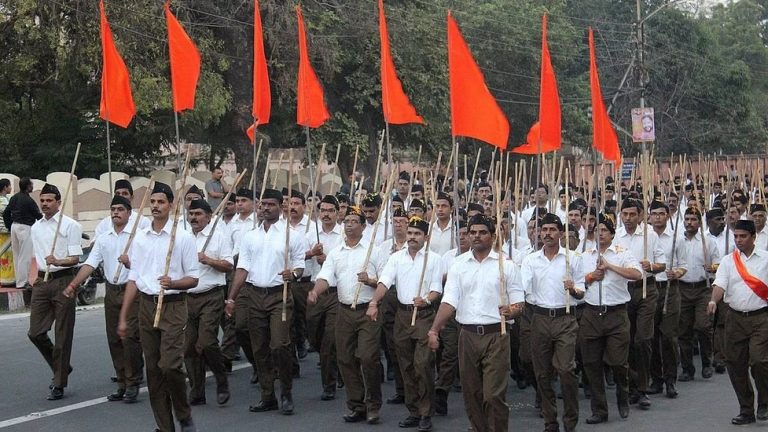
Supreme Court dismisses DMK government’s appeal against the Madras HC judgement, permits RSS street marches in Tamil Nadu

0

The Supreme Court has dismissed the appeal by the Tamil Nadu government against the Madras high court judgement which permitted RSS route marches across the state.

On February 10, the Madras High Court permitted the Rashtriya Swayamsevak Sangh (RSS) route marches despite the state’s opposition, The state government cited potential law and order issues while opposing the marches.

The state government had appealed the high court’s decision in the supreme court, but a bench of justices led by V. Ramasubramanian and Pankaj Mithal dismissed the appeal on Tuesday.

On March 3, the Tamil Nadu government informed the supreme court that it is not wholly averse to allowing the RSS’s route marches and public meetings throughout the state on March 5 but that these cannot be organised in every street or locality, citing intelligence inputs about potential threats to the law and order situation.

Senior advocate Mahesh Jethmalani, who was representing the RSS, stated that without a very good cause, the freedom to assemble peacefully without weapons under Article 19(1)(b) cannot be restricted.

“Not a single incident of violence was reported from the areas, where these marches were carried out,” Jethmalani said, adding that members of the RSS were attacked where they were sitting peacefully.

The state government had filed a new appeal challenging the original order, dated September 22, 2022, that instructed the Tamil Nadu Police to consider the RSS representation and grant permission to conduct the programs without conditions. On March 17, the top court had postponed the hearing after learning that the state had filed the new appeal.

‘I was morally obligated to apologise after the author took down his article’: Vivek Agnihotri explains why he tendered an apology to Delhi HC

0

On Tuesday, filmmaker Vivek Agnihotri released a statement in the 2018 Contempt-of-Court case to reveal that he respects the Indian judiciary and would never say or write anything that is unsubstantiated and which goes against the sanctity of the judiciary.

This is a day after the Delhi High Court discharged Agnihotri after he appeared in person and tendered an unconditional apology and reiterated his remorse over his remark made condemning S Justice S Muralidhar for granting bail to Urban Naxal Gautam Navlakha. Agnihotri on Monday, appeared physically before a division bench of Justice Siddharth Mridul and Justice Vikas Mahajan to tender his ‘unconditional apology and remorse.’

“Vivek Agnihotri, the alleged contemnor is present in the court in person and reiterates his remorse. He also tenders an unconditional apology for the allegedly offensive statement on Twitter. The affidavit also reflects the remorse expressed by him. For the sake of completeness, the relevant are extracted. He accordingly stands discharged,” said Justice Siddharth Mridul, as the bench accepted Agnihotri’s apology and cautioned him to remain careful in the future.

Releasing a statement on Tuesday, Agnihotri tried to explain the incident and claimed that a few ‘biased’ media reports and political parties had wrongly reported the incident against him. “5 years ago, Dristhikone published an article on Gautam Navalakha who was arrested on serious charges of threatening the integrity and sovereignty of India. I merely posted the article and cited the source and author. The Delhi High Court then issued a suo moto contempt of Court against Drishtikone, S Gurumurthy and myself.”

“The article was taken down by the author with an immediate apology, followed by S Gurumurthy unconditionally apologising to the Court. This left me with no locus standi and I was morally and intellectually obligated to apologise for sharing information from a source that had retracted the article and apologized. To project it otherwise, as a fight for justice and courage would be pretentious and misplaced. Playing to the gallery by turning this issue into what it is not, is an untruthful and sheer waste of creative energy,” Agnihotri said.

Last year, in May, the Delhi High Court sent fresh notices to filmmaker Vivek Agnihotri, scientist and political commentator Anand Ranganathan and Swarajya Magazine in a 2018 Contempt-of-Court case. In October 2018, The Delhi High Court initiated contempt proceedings against Economist S Gurumurthy over his article on Justice S Muralidhar, where he had questioned S Muralidhar’s credibility as the High Court judge in connection with granting bail to Gautam Navlakha, one of the accused in the Koregaon Bhima violence case. Agnihotri and Ranganathan, who had tweeted about the issue on similar lines, were slapped with charges of contempt later.

It all started when Senior Advocate Rajshekhar Rao wrote a letter to then Chief Justice Rajendra Menon, about an article written by S Gurumurthy alleging bias on the part of Justice Muralidhar for granting bail to Urban Naxal Gautam Navlakha in the Bhima Koregaon case. Gurumurthy penned the article “Why has Delhi High Court Justice Muralidhar’s relationship with Gautam Navlakha not been disclosed?” on Desh Kapur’s blog ‘Dhristikone’. The article was retweeted by Filmmaker Vivek Agnihotri in a tweet, following which a contempt of court notice was sent to him as well.

Anand Ranganathan, who is a free speech absolutist, allegedly condemned this action by the High Court in a couple of Tweets. It was later known that the same charges had been levied against Dr Ranganathan as well.

To note, while Agnihotri mentioned in his statement on April 11 that economist S Gurumurthy had issued an unconditional apology in the case, the latter’s lawyer had informed earlier that he has not apologised in the case.

Agnihotri further indicated that he wanted to save his creative energy for creating awareness among the younger generation about the Indic civilization and India’s great history, philosophy, sacrifice, strength and achievements. “Entangling an individual in legal cases, discrediting them through fake news and consuming their time and energy in reacting all the time, thereby distracting them from their pursuit is not uncommon in our democracy,” he said.

Meanwhile, scientist and political commentator Anand Ranganathan, who was also made a party in the contempt case against Gurumurthy and Vivek Agnihotri, has agreed to appear in person before the bench during the next hearing which has been fixed for May 24.

Madhya Pradesh: Aishwarya, who was forced to become Aaysha by Irshad, returns home after seven years, files complaint

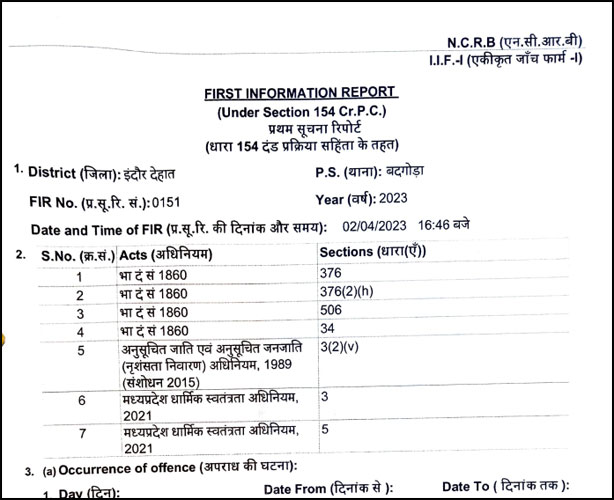
A new case of forced conversion has come to light in the state of Madhya Pradesh. On April 2, Aishwarya, who was converted to Aaysha, filed a complaint against Irshad and accused him of forced conversion. An FIR based on her complaint was filed at Badgoda Police Station, district Indore Dehat, under Sections 376, 376(2)(h), 506, and 34 of the Indian Penal Code (IPC), Section 3(2)(v) of the SC/ST Act and Sections 4 and 5 of the Madhya Pradesh Freedom of Religion Act, 2021.

FIR copy. Source: Organiser

As per the complaint, Irshad and Aishwarya eloped in 2016, but they never got married. The couple has two children. Aishwarya complained that Irshad also forced her to sleep with his brother. The victim is from the Khandwa district, and Irshad took her to Indore. Her family said Hindu Jagran Manch, Khandwa, members made her return possible. Irshad is on the run following the complaint.

Aishwarya, who is now 24 years old, met Irshad in 2016. He was working as a driver when they met for the first time. On November 20, 2016, they eloped but never got married as per Hindu or Islamic rituals. Soon after, Irshad took Aishwarya to Mahow and started living as a couple. Aishwarya gave birth to a boy and a girl during that period.

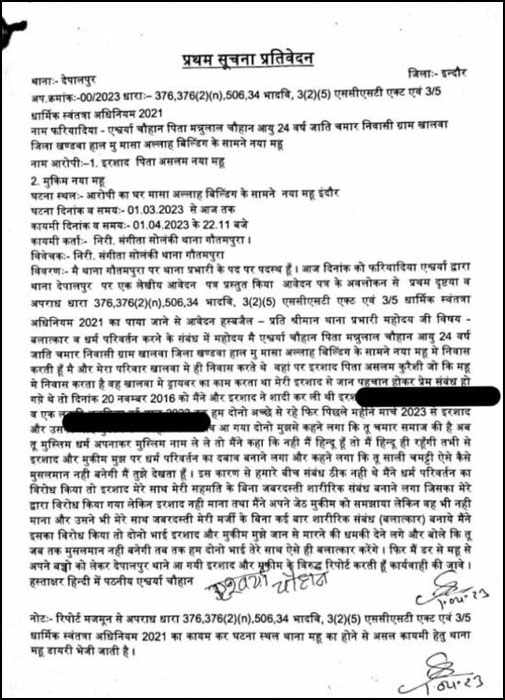
FIR copy. Source: Organiser

In 2022, Irshad and his brother Mukeem forced her to convert and abused her for belonging to a lower cast. When Aishwarya refused, Irshad hurled casteist slurs and abused her. She alleged her brother-in-law Mukeem also raped her. They threatened if she refused to convert, they would keep raping her and threatened to kill her. She managed to escape and registered a complaint at Depalpur Police Station on April 1, 2023.

Speaking to Organiser, ASI Krishna Jadaon of Badgoda Police Station said the police arrested Mukeem, but Irshad was still on the run. Aishwarya has submitted her statement under Section 164 of CrPC at the court.

Irshad posed as a Hindu

Speaking to Organiser, Aishwarya said Irshad introduced himself as Shakti Chouhan before marriage and claimed he was from the (Naik) Banjara community. As Aishwarya thought he was a Dalit, she felt connected to him. Aishwarya did not inform her parents about him. At Mahow, she came to know his real identity. After that, when she tried returning home, he locked her up inside the home.

Aishwarya said in her statement that Irshad had physical relations with her from day one. After one year, she gave birth to a boy. Whenever she asked him to get married, he would say no one could separate them as they had a child. Aishwarya said they lived in a joint family with Irshad’s four brothers, who all are married. One of them has a Hindu wife. Being a Dalit, she was never accepted as a family member.

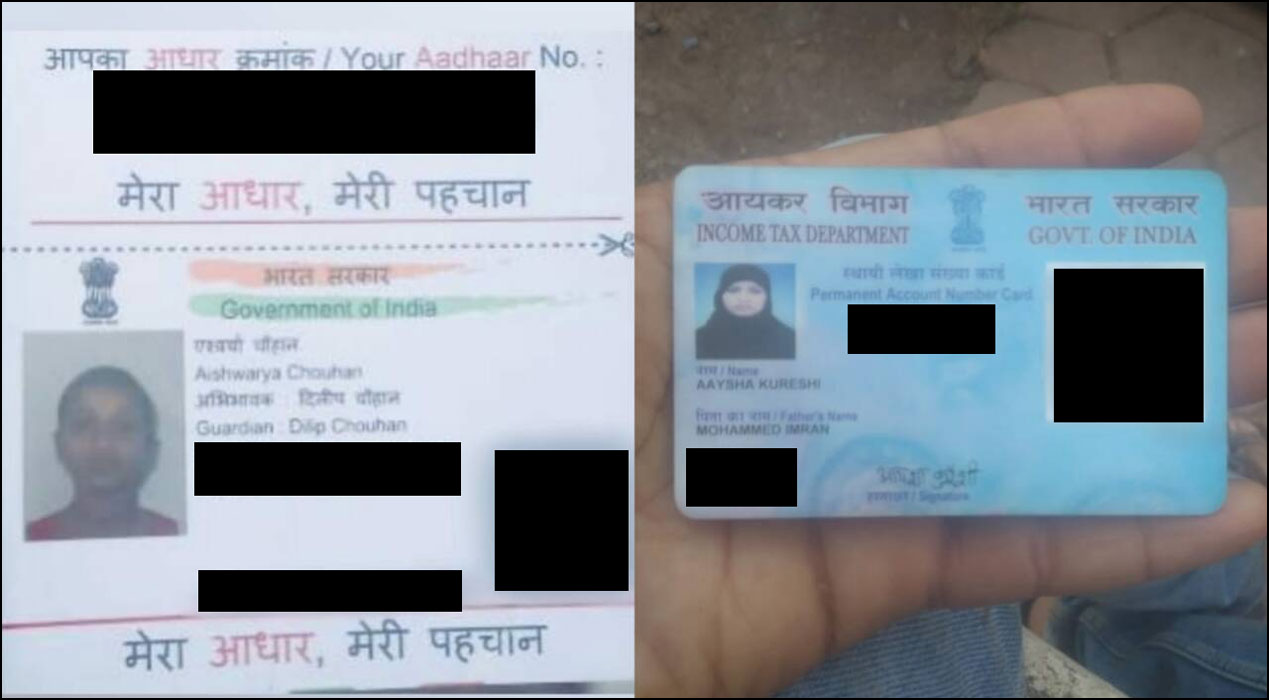
Sometime later, Irshad got her name changed to Aaysha Khatun. He also got her a new PAN card on which the fake name of her father was mentioned. A cleric was involved in the process of changing her name. Though her name was changed, Aishwarya refused to follow any Islamic rituals that angered Irshad’s family. She alleged they would not treat her well and refused to eat the food she cooked.

Fake father’s name on PAN card after changing her name. Source: Organiser

She was never allowed to follow Hinduism and was forced to wear a burqa while leaving home. Irshad also circumcised their son at a camp in 2017. She tried to stop him but could not. Irshad often used abusive language against Hindu Gods and Goddesses. He would abuse Aishwarya for doing Murti Puja. He kept telling her she was a child of a Kuffar and would remain a Kafir.

Physical relations during pregnancy

Aishwarya said in her statement Irshad would forcefully make physical relations with her even during pregnancy. He did not stop even in the ninth month. When she tried to stop him, he would say, “Let the child die, I will make another one”. If she ever denied physical relations, he would beat the children.

Victim approached Hindu Jagran Manch

Hindu Jagran Manch’s head Dr Anish Arjhare said in a statement that in 2022, the police tracked the couple. She was presented before the court, where she said she would live with Irshad.

HJM members were aware things were not right in her life. When Aishwarya escaped last month, she contacted an HJM member and told him about her ordeal after they rescued her and ensure her safe return to her parents.

‘Not possible to take stones to rooftops in 10-15 mins’: Calcutta HC observes that Ram Navami violence in West Bengal was prima facie ‘pre-planned’

On Monday (April 10), the Calcutta High Court noted that the violence orchestrated on the occasion of Ram Navami was prima-facie ‘pre-planned.’ It made the observations while listening to a plea by BJP leader Suvendu Adhikari to transfer the probe in the case to the National Investigation Agency (NIA).

A 2-Judge Bench of Justice Hiranmay Bhattacharyya and Acting Chief Justice TS Sivagnanam heard the matter. “Internet suspension usually takes place when there has been an external danger or infiltration etc,” the court asked.

“But for a religious procession, we don’t understand why (internet was suspended). Sudden violence is when people are walking and there is an altercation etc. But your (State’s) reports prima facie show these (violence) were all pre-planned,” Acting Chief Justice TS Sivagnanam added.

“There are allegations of stones being hurled from rooftops. Obviously, it is not possible for anyone to take stones up to the rooftop within 10 to 15 minutes,” he further pointed out.

The court also noted that violence, which took place during Ram Navami, happened on a ‘large scale.’ Meanwhile, Advocate General (West Bengal) SN Mookherjee accused the Hindu devotees of being armed with lathis and swords.

The Judges observed that incidents of violence during religious festivals in West Bengal had become a commonplace affair. “It appears a regular feature now. I think all religions…suppose the other community, even they have religious processions…”Acting Chief Justice TS Sivagnanam added.

“Every year there are 7 to 8 incidents of violence and then petitions are filed, a probe by the central agency is sought,” he stated. The court also sought to know whether there was a need for sensitisation of the police or any incapability on their part.

Ram Navami violence in West Bengal

On March 30 this year, stones were pelted on a Ram Navami procession from the terraces of the buildings in the Shibpur area of Howrah. This led to a clash between the Hindu and Muslim groups, leading to violence and arson. Vehicles and shops were also torched during the attack.

Several disturbing videos of the incident went viral on social media. A large contingent of police was deployed to contain the law and order situation in the area. The cops conducted a flag march, fired tear gas shells and chased away the rioters.

West Bengal Chief Minister Mamata Banerjee had insinuated that violence occurs when Hindus take out Ram Navami processions through ‘Muslim areas’ and also attempted to give a clean chit to the Islamists by invoking their Faith and Ramzan.

Muslim groups in the UK are upset because Suella Braverman spoke about Pakistani grooming gangs without mincing words: details

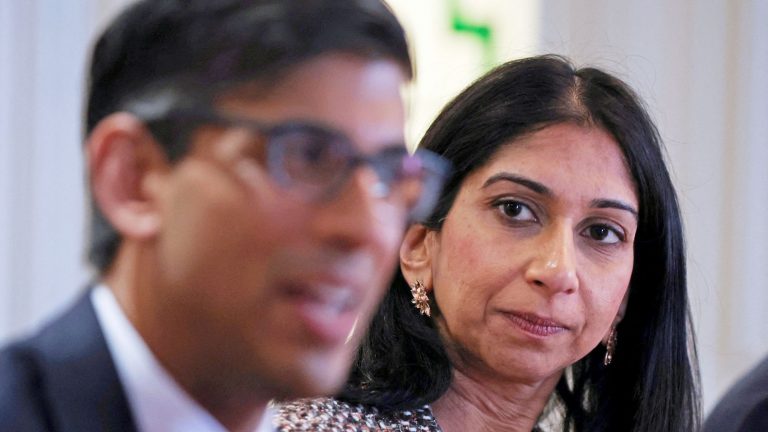
Numerous Muslim organisations from all around the UK wrote to Rishi Sunak to express their deep concern on what they called home secretary Suella Braverman’s “ill-considered and divisive statement”.

The home secretary has come under fire from Muslim organisations across the UK. “What’s clear is that we’ve seen a practise whereby vulnerable white English girls, sometimes in care, sometimes in difficult situations are being pursued and raped, drugged, and harmed by gangs of British Pakistani men who’ve worked child abuse rings or networks, it’s now down to the authorities to track these perpetrators down without fear or favour relentlessly and bring them to justice,” said Suella Braverman.

Braverman also stated that these crimes weren’t tackled in Labour-run areas for fear of being branded as racist.

One of the letters was signed by Dr Shahid Latif, chair of the British Pakistani Psychiatrists Association, who said that he wanted the statement to be withdrawn immediately. “There is simply no other option, and the prime minister ought to publicly distance himself from these remarks. He must understand that they only serve to polarise society further.” He further said, “In this country, Muslims are only recently no longer being associated with terrorism. As a result of such statements, when people think of child sexual exploitation, they immediately associate it with British Pakistanis, which is actually going back to the beginning and starting all over again.”

Muslim organisations in England, Wales, and Scotland described it as “an act of collective punishment for the reprehensible acts of a few,” while the Muslim Women’s Network, said Ms Braverman’s “approach…of demonising an entire community and lending credibility to far-right narratives undermines the need to ensure that all victims of child sexual abuse are protected and all perpetrators are brought to justice.”

On April 3, the United Kingdom’s Prime Minister Rishi Sunak announced a new Grooming Gangs Taskforce to assist police forces in investigating the serious problem of Muslim grooming gangs in the country. As per the official statement from his office, the task force will have specialist officers to assist in the investigation to ensure the criminals behind grooming gangs will be brought to justice.

The problem of Muslim grooming gangs in the UK

In recent years, there have been several reports of vulnerable young girls, especially minors, being exploited by organised grooming gangs across the country. In October last year, it was reported that Omar, Khalid, Jameel and 21 others were charged with raping a minor girl for four years in Bradford. These grooming gangs typically consist of Pakistani Muslim men, the reason why the mainstream media and even the authorities try to keep them hushed up. An independent inquiry into the matter revealed due to political unease, these cases were ignored by the authorities.

Besides the child sex abuse, the case also pertains to Grooming Jihad, a global issue that has become particularly stark in the UK, where Islamists prey on young girls and women, exploit their vulnerability and use rape as an instrument to inflict punishment.

In 2020, the police charged 32 men for over 150 sexual offences against eight underage teenage girls in West Yorkshire, United Kingdom.

The crimes were committed between 1999 and 2012 against the victims, who were aged between 13-16 years in the Kirklees, Bradford and Wakefield areas. Reportedly, several such victims were subjected to heinous crimes even after they turned adults.

Nearly 19,000 children were sexually abused in England in 2018-2019

According to the official figures, it is estimated that nearly 19,000 minors in England were sexually groomed in England in the last year, reported Dailymail. The local authorities in England identified around 18,700 suspected victims in 2018-19, up from 3,300 five years ago. The latest figures showed a sharp increase in the number of child grooming victims over the last five years.

The highest rates of child grooming victims in Britain were reported in areas including Birmingham, Lancashire and Bradford. One of the most horrific cases was of Charlene Downes who disappeared from Lancashire. She was feared to be groomed by Muslim gangs and murdered. Her body was allegedly minced into pieces and served as kebabs to customers at a takeaway restaurant in the area.