Home Blog Page 306

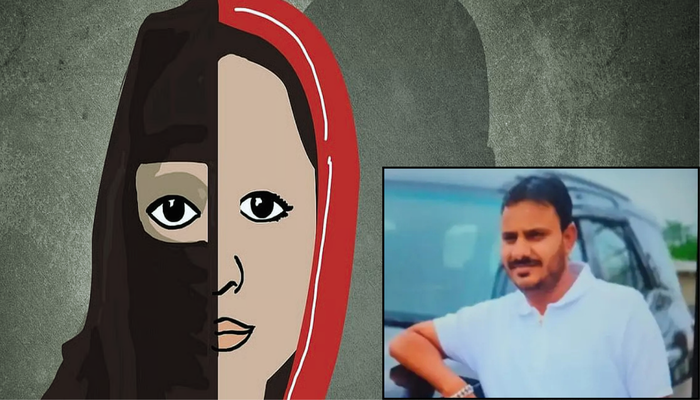
Bhopal: Zoya trapped, threatened Hindu girls on behalf of ‘Muslim gang’ led by her brother, blackmailed them with their obscene videos

In April this year, a ‘Muslim gang’ that preyed on Hindu girls was busted in Bhopal, Madhya Pradesh. Obscene videos of 64 girls were found on the phone of Farhan, the leader of the gang, 58 of these videos were of girls from the same educational institution. It has also come to light that his sister, Zoya, assisted him in luring Hindu girls.

Zoya would intimidate Hindu girls by threatening to make their explicit videos public. Meanwhile, Farman forced Hindu girls to recite the Kalma and told them about Roza. All these findings have emerged from the SIT (Special Investigation Team) investigation.

According to a report in Dainik Jagran, Farhan specifically targeted female students from TIT College in Bhopal. Most of the girls trapped were from there. The report revealed that Zoya was involved in trapping Hindu girls for him. She also did this for his other friends. Zoya would call a girl even if she stopped speaking to Farhan.

Zoya often informed them that her brother was distressed because they stopped talking to him and urged them to start communicating again. She would then issue the blackmail threat of releasing their graphic videos to the public. Zoya told a girl that Farhan would eventually make the video viral but Zoya would do it even before him. At the same time, Farhan and his friends were making every effort to convert the girls to Islam.

The report indicated that Farhan and his associates would inform the girls about the significant power of their prayers. Additionally, they would provoke them against Hinduism. They even attempted to indoctrinate the girls regarding Roza and taught them Kalma. An SIT investigation is currently underway in the matter. Farhan and four others have been arrested in the case while one accused is still absconding. Efforts are ongoing to locate him. New information is being uncovered each day during the interrogation.

The SIT investigation is currently in progress. The authorities have uncovered that Farhan even engaged in share trading using the accounts of two girls. The police have discovered that he conducted transactions amounting to lakhs from these accounts. He has executed transactions ₹15 lakh from these two accounts in total.

Moreover, transactions amounting to ₹50 lakh have also been found in Farhan’s accounts. Farhan is currently under further questioning and attempts are being made to identify the parties with whom he transacted.

The Muslim gang that assaulted and raped Hindu girls in Bhopal did so for the purpose of gaining rewards. They viewed their actions as virtuous. They aimed to target as many Hindu girls as they could. These disclosures were made by Farhan.

During police interrogation, Farhan stated that he feels no remorse for trapping, raping and threatening the girls via their objectionable videos. He informed the police that this is considered a virtuous deed for them in accordance with Islamic beliefs. The police are diligently working to apprehend the other suspects in this case.

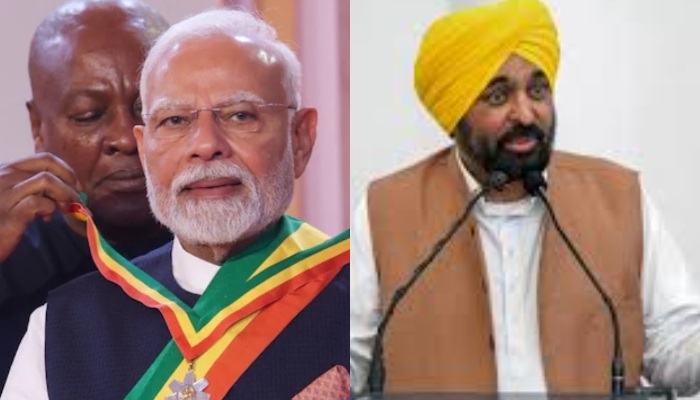
Taking a dig at the opposition, PM Modi says everything was recorded on camera during Operation Sindoor so that no one back home can ask for proof

0

Terming Operation Sindoor as a “decisive action” PM Narendra Modi said that nine terrorist hideouts were destroyed in 22 minutes during India’s airstrikes against Pakistan adding that the entire action was recorded in front of cameras so that nobody will ask for proof.

Addressing a rally in Gandhinagar, the Prime Minister said that India is a “land of the brave” and highlighted that the terror attacks on the country can now no longer be termed as “proxy wars”.

“This is a land of the brave. Until now, what we used to call a proxy war, after the scenes witnessed post-May 6, we can no longer make the mistake of calling it a proxy war. The reason is that when nine terrorist hideouts were identified and destroyed within just 22 minutes, it was a decisive action. And this time, everything was done in front of the cameras, so that no one back home would ask for proof,” PM Modi said.

Addressing the rally, the Prime Minister said, “I say this can no longer be called a proxy war because the terrorists whose funerals were held after May 6 were given state honours in Pakistan. Pakistan’s flags were placed on their coffins, and their army saluted them. It proves that terrorist activities are not a proxy war but a well-planned war strategy. You are already at war, and you will receive the response accordingly. We do not seek enmity with anyone. We want to live peacefully. We also want to progress so that we can contribute to the welfare of the world…” Furthermore, PM Modi highlighted how the country was ruined due to the Indus Water Treaty.

“I want to tell the new generation how our country was ruined. If you study the 1960 Indus Waters Treaty, you’ll be shocked. It was decided that the dams built on the rivers of Jammu and Kashmir would not be cleaned. Desilting would not be done. The bottom gates for clearing sediments were to remain shut. For 60 years, these gates were never opened. Reservoirs that were supposed to be filled to 100 per cent capacity have now been reduced to only 2 per cent or 3 per cent…”

Taking a dig at Pakistan, PM Modi stated that till now he has not done anything but people in the neighbourhood are “sweating”.

Right now, I haven’t done anything and people are sweating there (Pakistan). We have opened small gates for cleaning the dams, and there is already a flood there…”

Remembering the time of India’s partition in 1947, PM Modi stated that Pakistan annexed a part of Kashmir with the help of terrorists. He said that if those terrorists had been killed that day and if Sardar Patel’s advice had been accepted, then the series of terror activities in India would have stopped, which has been going on for the past 75 years.”

“In 1947, Mother India was torn into pieces. The chains should have been cut, but the arms were chopped off. The country was divided into three parts, and the same night, the first terrorist attack took place on the soil of Kashmir. Pakistan captured a part of Mother India with the help of terrorists, in the name of Mujahideen. If these Mujahideen had been killed on that day and Sardar Patel’s advice had been accepted, then this series (of terrorist incidents) that has been going on for the last 75 years would not have been seen.

The Prime Minister said that the country has decided to root out the thorn of terrorism. “…Shareer kitna hi swasth kyu naa ho lekin agar ek kaanta chubhta hai toh poora shareer pareshan rehta hai. Ab humne tay kar liya hai uss kaante ko nikaal ke rahenge…” (No matter how strong or healthy the body is, even a single thorn can cause constant pain–and we’ve decided that the thorn must be removed)”, PM Modi said.

The Prime Minister further exposed Pakistan’s capability and stated that it cannot defeat India in war, due to which they have begun a proxy war. He asserted that the terrorists kept on attacking India, and the citizens tolerated every attack.

“When the need for war with Pakistan arose, India’s military power defeated Pakistan all three times. Pakistan understood that it could not defeat India in a war. It started a proxy war against India. They kept attacking wherever they got a chance, and we kept tolerating it”, PM Modi said.

(This news report is published from a syndicated feed. Except for the headline, the content has not been written or edited by OpIndia staff)

Gujarat: Muslim mob assaults Dalit family with ‘Allahu Akbar’ slogans for objecting to recording videos when women were changing clothes

A Muslim mob reportedly assaulted a Dalit family from Surat who were visiting a reservoir in Thuti village, located in the Uchchhal area of Tapi district. The women were bathing along the banks of the Ukai dam reservoir and were changing their clothes. However, some Muslim youths were seen recording their video. When the family objected to filming and asked to respect the privacy of the women, they were assaulted. Furthermore, a group of 15 Muslims subsequently attacked them in the hospital and on the road.

An FIR (First Information Report) has been lodged at Uchchhal Police Station on the basis of a complaint. OpIndia has a copy of the official complaint. According to the complaint, the incident transpired on 18th May. Sections 115(2), 117(2), 189(2), 190, 191(2), 191(3) of the Bharatiya Nyaya Sanhita (BNS) and Section 135 of the Gujarat Police (GP) Act have been invoked against 15 unidentified individuals of the Muslim community.

Accusation of capturing video of women and assault

According to the allegations, Pratap Singh Chauhan, a Dalit man employed as a driver in the emergency ward of Kiran Hospital in Surat, along with his family and neighbors, traveled to the Ukai dam reservoir in Thuti village of Uchhal taluka by bike and car. They were accompanied by women and children. They went to bathe in a reservoir in the afternoon. According to the complaint, after exiting the bathing, one of the women was changing her clothes behind a bedsheet.

As per the complaint, the family noticed that some Muslim individuals were filming the woman. Furthermore, an individual accompanying the complainant was assaulted by the Muslim men. Once the incident came to light, all members of the Dalit family came together and requested the Muslim youth to refrain from making the video. However, the accused attacked the family members. Moreover, when the latter checked the mobile phone of one of the offenders, they found no video present, but the other one did not allow them to examine his device.

Afterward, the confrontation ended and the Muslim men exited the area. However, shortly after, at approximately 4 pm, the Muslims accompanied by a group of 15 to 20 other members of their community returned armed and initiated a direct assault. It is reported that a member of a Hindu family sustained serious injuries during the attack and was subsequently transported to Songadh Hospital.

On their way to Songadh, two other members of the Muslim mob came onto the road and began to target the vehicle. According to the complaint, following this incident, the Dalit family members made their way to the Hospital where the wounded were given first aid and subsequently admitted to Kiran Hospital. However, it is charged that a Muslim mob gathered at the hospital and created a scene.

Accusations against the police

A video showcasing the victim family has gone viral on social media in which they recount their harrowing experience. A young man revealed that when he visited the Songadh police, they responded, “It’s a good thing you survived, otherwise, the Muslims of Songadh would have killed you.” Furthermore, in the video, someone has likened this incident to the Pahalgam terror attack.

The woman also recalled her experience and stated that as she was changing her clothes, two Muslim men and a Muslim woman began to record her from above. When the family questioned them, the youth came down and started to argue. Furthermore, another person also shared the incident in the video.

‘Mob raised Allahu Akbar slogans’, says victim family

In an interview with OpIndia, Pratap Singh Chauhan, reported that a Muslim mob assaulted his family while shouting “Allahu Akbar.” The attack also resulted in injuries to women and children. Additionally, a group of Muslims congregated at Songadh Hospital and issued threats. He further mentioned that the Songadh police earlier accepted a complaint lauched by the perpetrators in the matter.

A local Hindu organization official Chandan Singh Gohil informed OpIndia that one of the accused is a Muslim individual who serves as a local councilor. He also mentioned that the latter has previously been involved in several crimes and on one occasion, the police even organized his public procession. He informed that the Muslim mob filed a false complaint against the family and the police even accepted the same.

Singh added that the culprits are strongmen of Songadh. Only two months ago, one of the accused and his father were paraded in a procession by the police. Furthermore, accusations were made concerning their role in a murder case. He also criticized the local police. He indicated that a councilor was part of the group that arrived to confront which swayed the police’s action in their favour.

The Hindu leader indicated that when the accused became aware of the intention to file a case, they swiftly went to the police station to lodge a complaint claiming that the Dalit family had molested a Muslim woman. He voiced, “There is no rationale behind this complaint. Since Hindu men were present with their wives, children, and families, how could they have acted in such a manner?” He also accused the police of registering complaints in succession with the intention of settling the issue.

Police pressure on Hindu man

Gohil mentioned that for the majority of the time, this instance went unnoticed. However, after a day or two, a Hindu individual filmed the victim’s family and shared it on social media, leading to the incident gaining attention in Gujarat. The person who captured the video hailed from Surat. Gohil stated that the Police Inspector of the relevant area in Surat began to exert pressure him, ultimately resulting in deletion of the footage.

However, it already gained significant traction online through alternative channels and subsequently came to the attention of Vishva Hindu Parishad and Bajrang Dal. The video continues to circulate widely on social media. The authorities have initiated action regarding the issue and received complaints from both parties. In a conversation with OpIndia, the Police Inspector of Uchchhal police station stated that following the incident, six individuals have been apprehended for rioting, and two complaints have been lodged against them.

Notably, several days have passed since this incident and two days since the video went viral, however, no information has surfaced in any media regarding the case. There are probably two likely explanations behind this. One is that the media is intimidated by the accused councilor, who has significant influence and the second is that the police themselves are suppressing the matter. It is difficult to ascertain what the truth is. Nevertheless, it is evident that efforts have been made and are ongoing to conceal the incident.

Read the report in Gujarati here.

BSF hit terror hubs 3 KMs inside Pakistan Occupied Kashmir during Operation Sindoor, destroyed LeT launchpad

0

Stressing that India’s response to the cross-border shelling from Pakistan was answered loudly and in an effective manner, the Border Security Force (BSF) on Tuesday reiterated that they were planned to also strike the terrorists launchpads near the Line of Control on the night of May 9 and 10.

Addressing a press conference, Shashank Anand (BSF IG), Jammu Frontier emphasized that the Pakistani post opened fire on India’s positions, for which it was already prepared.

“As a result of this preparedness, we inflicted heavy damage on several Pakistani posts during the cross-border firing. We did not suffer any losses ourselves,” Anand said.

“On the night of May 8, when we carried out this operation, the enemy’s morale in that area was visibly shaken. The next day, i.e., on May 9, Pakistan began unprovoked cross-border firing along the international border in the northern areas of Jammu, moving away from the Samba region. The BSF was already prepared for such a situation, and on May 9 and 10, the BSF launched heavy shelling on Pakistan’s border belt. During this period, we had planned that if the opportunity arose, we would also strike the terrorist launch pads located near the international border,” he said.

He further said that the BSF carried out a “deliberate” attack on a Lashkar-e-Taiba launch pad in Looni area near the LoC.

“As part of this operation, on the night of May 9 and 10, the BSF carried out a deliberate and planned attack on a Lashkar-e-Taiba launchpad in “Looni”, which is located in Pakistan just 3 kilometers from the international border,” Shashank Anand said.

Virender Dutta, DIG Sector Sundarbani, said that they had an input of the presence of 18-20 militants in Looni area who were planning to infiltrate by taking the advantage of cross-border firing.

“After May 8, we received intelligence that 18-20 militants were present in Looni, and it was expected that they would attempt to infiltrate by taking advantage of the cross-border firing. Their intention was likely to target our installations later. We executed a highly coordinated and well-planned operation in two phases to inflict maximum casualties. We achieved that goal, and Looni was completely destroyed,” Dutta said.

Operation Sindoor was India’s decisive military response to the April 22 Pahalgam terror attack. Launched on May 7, Operation Sindoor led to the death of over 100 terrorists affiliated with terror outfits like the Jaish-e-Mohammed, Lashkar-e-Taiba, and Hizbul Mujahideen.

After the attack, Pakistan retaliated with cross-border shelling across the Line of Control and Jammu and Kashmir as well as attempted drone attacks along the border regions, following which India launched a coordinated attack and damaged radar infrastructure, communication centres, and airfields across 11 airbases in Pakistan.

After this, on May 10, an understanding of the cessation of hostilities between India and Pakistan was announced. 

(This news report is published from a syndicated feed. Except for the headline, the content has not been written or edited by OpIndia staff)

India unveils the Bharat Forecast System, the world’s most precise weather model with 6 km resolution. Powered by the supercomputer Arka: Details

On 26th May, India unveiled the Bharat Forecast System (BFS), a breakthrough in indigenous weather modelling that now allows forecasts down to the village level. The BFS has been developed by the Indian Institute of Tropical Meteorology (IITM). It was launched by Union Earth Sciences Minister Dr Jitendra Singh at Vigyan Bhawan, New Delhi. This system is backed by the supercomputer ‘Arka’ and marks India’s entry into the world’s most accurate weather prediction league. With BFS, India is now ahead of the US, UK and EU.

A leap from 12 km to 6 km resolution

Until now, India’s forecasts were based on a 12 km grid model. The new BFS shrinks it to a 6 km resolution, which enables hyperlocal predictions for every village, rather than a cluster of 4–5 villages. This development has placed India’s model at the highest spatial precision among global weather systems that operate at resolutions of 9 km to 14 km.

According to the ministry, this leap could mean a 30% improvement in extreme rainfall forecasts and a 64% boost in monsoon core zone accuracy, which means it will significantly enhance disaster preparedness and agricultural resilience.

India-made system, India-wide impact

Speaking at the launch, Dr Singh said, “This indigenous breakthrough positions India among global leaders in weather prediction. The efforts are Indian, the technology is Indian, and the beneficiaries are Indian. This is true Atmanirbharta.”

The system has been developed under the ‘Make in India’ initiative. It uses the advanced Triangular Cubic Octahedral Grid model and will also serve other tropical regions between 30°S and 30°N latitudes.

In simpler terms, the system uses a special 3D grid system called the Triangular Cubic Octahedral Grid that helps divide the Earth’s surface more evenly than regular square grids. This makes weather predictions more accurate, especially in complex areas like the tropics, which is the region around the equator between 30 degrees South and 30 degrees North, including India and many other developing countries. With the help of the new system, farmers and local authorities in the area will get more precise and timely weather alerts.

The BFS is powered by the new High-Performance Computing (HPC) system ‘Arka’, located at IITM Pune and NCMRWF Noida. With 11.77 petaflops of computing speed and 33 petabytes of storage, Arka slashes model run time from 10 hours (on the previous system ‘Pratyush’) to just four hours.

In simpler terms, the earlier system Pratyush was taking 10 hours to run forecasts. With Arka, the same process can be completed in just four hours.

Women scientists

One of the most significant highlights of BFS is the announcement that the project is being led by four women scientists, which is a reflection of Prime Minister Narendra Modi’s vision of Nari Shakti. Dr Singh remarked, “Science ministries no longer empower women, we are being empowered by them.” Dr Suvarna Fadnavis, Dr Swapna Panickal, Dr Susmitha Joseph and Dr Medha Deshpande are leading the team.

Designed for today’s climate realities

The government’s Economic Survey has already pointed out how weather volatility, including heatwaves and sudden rains, has driven up food inflation and crop losses. Between 2022 and 2024, the IMD observed heatwaves on 18% of days, a steep rise from 5% in 2020–21.

BFS will be supported by 40 Doppler weather radars across the country, which will address these challenges. The government is planning to expand the number of radars to 100. It will enable real-time alerts and “nowcasting”, which is forecasting events in the next two hours, in every part of India.

A whole-of-government, whole-of-science approach

Dr Singh praised the collaborative effort of institutions including IITM, IMD, ISRO, and others in realising the BFS. With over 20 ministries relying on weather data daily, from agriculture to transport, the Bharat Forecast System is not just a scientific feat but a national asset, which will reduce losses, boost gains, and fuel India’s ascent to become the world’s top economy.

Defence Minister Rajnath Singh approves AMCA programme execution model to boost indigenous aerospace industry

0

Union Defence Minister Rajnath Singh on Tuesday approved the Advanced Medium Combat Aircraft (AMCA) Programme Execution Model, a key step to boost India’s indigenous defence capabilities and strengthen the domestic aerospace industry, the Ministry of Defence (MoD) said in an official statement.

According to MoD’s statement, in a significant push towards enhancing India’s indigenous defence capabilities and fostering a robust domestic aerospace industrial ecosystem, Defence Minister Rajnath Singh has approved the Advanced Medium Combat Aircraft (AMCA) Programme Execution Model.

The Aeronautical Development Agency (ADA) is set to execute the programme through industry partnership.

The Execution Model approach provides equal opportunities to both the private and public sectors on a competitive basis. They can bid either independently or as a joint venture, or as consortia. The entity or bidder should be an Indian company compliant with the laws and regulations of the country, the statement said.

This is an important step towards harnessing the indigenous expertise, capability and capacity to develop the AMCA prototype, which will be a major milestone towards Aatmanirbharta in the aerospace sector.

ADA will shortly issue an Expression of Interest (EoI) for the AMCA Development Phase, the statement added.

Earlier reports indicate that India is actively encouraging private sector involvement in the indigenous fifth-generation AMCA project to ensure its timely completion, even as the US pushes to sell its F-35 fighter jets to the country.

A Defence Ministry committee led by Defence Secretary Rajesh Kumar Singh, with members from the Indian Air Force and Hindustan Aeronautics Limited (HAL), has been formed to explore ways to enhance private sector participation in the project.

The committee is considering multiple models, including joint ventures between HAL and private firms, or having private companies partner in the design and development phases. Given HAL’s extensive experience in aerospace manufacturing, its involvement remains central to the project.

Currently, HAL outsources significant portions of work for fighter jets to private companies like L&T, Godrej, and Azad Engineering. Among private players, the Tata Group has some experience in aircraft integration, working with Airbus on assembling C-295 transport aircraft in India.

A full-scale model of AMCA, designed by ADA for the Indian Air Force, was showcased at Aero India 2025, held in Bengaluru from February 10 to 14. This 25-ton aircraft will feature manned and unmanned teaming capabilities, enhanced by artificial intelligence (AI) technologies.

The AI-powered electronic pilot includes multi-sensor data fusion for better situational awareness, a pilot decision support system, an automatic target identification system, and a combined vision system for navigation under poor visibility conditions.

According to ADA, the integration of AI will significantly advance the AMCA’s operational capabilities, making it one of the most advanced fifth-generation fighter aircraft globally.

(This news report is published from a syndicated feed. Except for the headline, the content has not been written or edited by OpIndia staff)

Operation Push-back:India continues its crackdown on illegal Bangladeshis and Rohingyas, 742 deported so far

India has reportedly pushed-back a whopping 172 illegal Bangladeshi immigrants back to their home country between Saturday night (24th May) and Sunday morning (25th May) as part of its ongoing crackdown on infiltrators (Operation Push-back).

The deportations were carried out through the borders located in Bangladesh’s Sylhet, Meherpur and Moulvibazar.

India pushed back a total of 19 Bangladeshi infiltrators in Meherpur on Sunday morning. They were then taken by the Border Guard Bangladesh to a temporary shelter.

The Bangladeshi citizens who were living illegally in India were later taken into custody by the police. They infiltrated Indian territory at various points in time and resided in the State of Haryana.

After being intercepted, these 19 infiltrators were brought to Berhampore in the Murshidabad district of West Bengal and then pushed back to the Bangladeshi side.

A total of 153 illegal Bangladeshi immigrants were pushed-back through the borders in Sylhet (32) and Moulvibazar (121) by BSF between Saturday night (24th May) and Sunday morning (25th May).

They are natives of Kurigram in Bangladesh and have been working in India for several years.

BGB commanding officer Lt Col Mehedi Hasan lamented, “After Saturday’s push in through the Kanaighat border, we increased our vigilance in the border. However, the BSF managed to push in 153 people through five points in the border between 2:00am to 8:30am.”

He claimed, “The BSF switched off the security lights they installed in their part of the border and pushed in these people. After we detained them, we confirmed their nationalities as Bangladeshi and, considering the humanitarian ground, detained and later handed them to the police.

According to BGB, the illegal immigrants were working at different stone quarries and brick fields in India.

Previously, the BSF pushed back 16 Bangladeshi infiltrators back to their home country on 14th May this year.

BGB has stated that India has similarly pushed back 664 Bangladeshi infilitrators through borders in 11 districts of Bangladesh.

These districts include Khagrachhari, Kurigram, Sylhet, Moulvibazar, Habiganj, Dinajpur, Thakurgaon, Panchagarh, Cumilla, Feni, and Jhenidah.

In total 742 Bangladeshi immigrants have been deported under ‘Operation Push-back’ so far.

Operation Push-back: A success story

For decades, India has followed established protocols to deport Bangladeshi infilitrators and Rohingyas to their home country.

The process has been slow (pending trial in courts), cumbersome (because Bangladesh government and Bangladesh Border Guard often refuse to acknowledge their own citizens) and has failed to attain success.

The situation has been exacerbated due to continued illegal immigration through the porous India-Bangladesh border with the help of agents and brokers but not enough deportations year-on-year.

Screengrab of the data on Bangladeshi nationals deported to their home country

For the unversed, there are more than 2 crore Bangladeshis living illegally in India (2016 data).

Following the undemocratic ouster of Sheikh Hasina and the hostile attitude of the Yunus-led interim government, the deportation protocol has been rendered useless by Bangladesh.

Forced by circumstances, the Indian government has now resorted to what is being unofficially referred to as ‘Operation Push-back.’

The Indian government has devised a new strategy to get rid of Bangladeshi infiltrators and Rohingyas who are caught red-handed at the Eastern border as well as living in India illegally for several years.

Instead of going through the hassle of handing them over to the police, registering a FIR, producing them before the court, continuing trials for years and then sending them back through established protocols, the Indian security forces are now increasingly pushing-back the infiltrators to the other side almost instantenously.

‘Operation Push-back’ has been in motion since April 2025. Assam Chief Minister Himanta Biswa Sarma was quoted as saying –

“Infiltration is a big issue. We have now decided we will not go through the legal process. Earlier, decision was to arrest a person and then bring him to the Indian legal system… Earlier also we used to arrest 1,000-1,500 foreigners…they must be sent to jail and then they are produced before a court of law. Now, we have decided that we will not bring them inside the country, we will push them. This pushing back is a new phenomenon. Every year, 5,000 people enter the country and because of pushback this number will become minimise now.”

In cases where Bangladeshis are nabbed from different cities of India (far from the Eastern borders), they are first flown to either Tripura, Assam or West Bengal and then pushed over to Bangladeshi side.

Several States in India including Rajasthan, Tripura and Odisha have stepped up the process of identification of illegal immigrants.

The impact of crackdown on infilitrators have been successful so much so that some Bangladeshis are now ‘voluntarily returning‘ to their home country.

The interim government of Bangladesh, led by ‘chief advisor’ Muhammad Yunus has been rattled by India’s paradigm shift in strategy at dealing with infiltrators.

On 8th May, his Foreign Minister wrote to India to raise concerns over ‘people being pushed into the country and urged New Delhi to adhere to established repatriation mechanisms.’

“For the sake of peace and stability along the Bangladesh–India border, such push-ins are unacceptable and should be avoided,” it claimed.

In the meantime, the Indian Ministry of Home Affairs (MHA) has set a 30-day deadline for verification of the credentials of illegal Bangladeshis and Rohingyas, following which they would deported (mostly through Operation Push-back).

Delhi: 4 illegal Bangladeshis arrested by anti-auto theft squad, Md Asad Ali and his family sent to deportation centre

0

 In a major crackdown on illegal immigration, the Anti-Auto Theft Squad (AATS) of South West District Police has apprehended four Bangladeshi nationals residing unlawfully in the national capital for the past 12 years, officials said.

As per the officials, the accused have been identified as Mohd. Asad Ali (44), his wife Nasima Begum (40), and their children Mohd. Naim Khan (18) and Asha Moni (13), originally from Farooq Bazar Ajwatari, Phulbari Kurigram, Bangladesh.

Acting on a tip-off from a secret informer, the AATS team intercepted the suspects in the Delhi Cantt area.

During questioning, the individuals failed to produce any valid Indian identification and admitted to crossing into India illegally via the river route over a decade ago. Photocopies of Bangladeshi national ID cards were recovered from their possession, the officials said.

Following legal formalities and verification, the suspects were handed over to the Foreigners Regional Registration Office (FRRO) and later transferred to a deportation centre for repatriation.

A senior police official said, “This operation underscores our zero-tolerance policy towards illegal immigration. We remain committed to maintaining internal security and upholding the rule of law.”

Further investigation is currently underway.

In a similar case related to illegal immigration, Delhi Police Foreigners Cell, North-West District, recently apprehended nine Bangladeshi nationals residing unlawfully in India following a sustained and meticulous surveillance operation. During the raid, authorities recovered a smartphone equipped with the banned IMO application from their possession, Delhi police said.

“Delhi Police Foreigners Cell, North-West District, apprehended nine Bangladeshi nationals from Wazirpur JJ Colony residing illegally in India, within the jurisdiction of Bharat Nagar Police Station. One smartphone equipped with the banned IMO application was recovered from them,” Delhi police said.

Delhi Police further revealed that they had illegally crossed into India through the Cooch Behar border.

“All individuals have been handed over to Foreigners Regional Registration Office (FRRO), RK Puram, New Delhi, for further deportation proceedings. It was revealed that they had illegally crossed into India through the Cooch Behar border,” Delhi Police further added.

The arrested individuals were identified as Md. Saidul Islam (45), Nazma Begum (42), Nazmul Ali (23), Azina Begum (20), Apple Ali (19), Laden Ali (17), Idul Ali (8), Shaida Akhter (6), and Aryan Ali.

This operation aligns with ongoing efforts to curb illegal immigration and protect the region’s security and demographic balance. 

US lawmakers, Indian community leaders slam Mira Nair’s son Zohran Mamdani who has been spewing hate against PM Modi to cash on his ‘Gujarati Muslim’ identity in NYC mayoral race

New York City mayoral candidate and Democratic Socialist Zohran Mamdani is facing criticism after he labelled the Prime Minister of India, Narendra Modi, a “war criminal” during a public forum held on 15th May (local time) by New York Focus. At the event, titled “New Mayor, New Media”, Mamdani compared Modi to Israeli PM Netanyahu, saying, “This is someone we should view in the same manner we do Benjamin Netanyahu. This is a war criminal.”

The remarks have sparked outrage among Indo-American leaders and community representatives as they accused Mamdani of promoting hate and deepening religious divides.

Mamdani, who is of Indian Muslim descent, is known for making derogatory remarks against Indian Hindu leaders, especially PM Modi. In 2020, he called Hindus associated with Modi’s party “fascists” and attacked fellow New York politicians Jenifer Rajkumar and Kevin Thomas for not denouncing Modi. At that time, Rajkumar responded strongly, calling Mamdani’s comments “extreme and divisive,” and urged voters to “reject hate, whether from the far left or far right.”

The question on PM Modi came when a journalist asked Mamdani if he would join the stage with PM Modi in case he became mayor and PM Modi held a rally in New York and asked for a joint press conference. Bluntly refusing to attend such a joint press conference, he invoked the Gujarat 2002 riots and said that his family comes from Gujarat in India and his family is Muslim, he is a Muslim.

He then continued to blame PM Modi for the riots and said, “Narendra Modi helped to orchestrate what was a mass slaughter of Muslims in Gujarat to the extent that we don’t even believe there are Gujarati Muslims anymore. And when I tell someone that I am, it’s a shock to them that that is even the case. And this is someone who we should view in the same manner that we do Benjamin Netanyahu. This is a war criminal.”

Mamdani, who is the son of filmmaker Mira Nair, did not do his homework, neither in the case of Gujarati Muslims nor in the case of the Gujarat riots. The Supreme Court has already given a clean chit to PM Modi in the riots and there was no evidence that could prove he was involved in orchestrating the riots. He also skipped the fact that the riots broke out after 59 Hindu karsewaks returning from Ayodhya were burnt alive in Godhra by a Muslim mob, a case in which several mobsters were convicted.

Furthermore, according to the 2011 census, the Muslim population in Gujarat stood at almost 10%, which must have increased in the past decade. Claiming that there are no Gujarati Muslims left is an absurd statement and deserves a strong opposition from the Indian High Commission in New York.

Jaspreet Singh, a Sikh Community Leader and human rights lawyer, criticised Mamdani and said, “Hate has no place in our city. We believe in equality, love and respect for all. We believe all are children of the same God. But Zohran has used his platform to amplify some of the worst anti-Hindu rhetoric imaginable. Words matter, and instead of uniting the Indian community, he seeks to divide us by religion, pitting Muslims and Hindus against each other. Associating Hindus with fascism and using derogatory words against them is highly objectionable.” He accused Mamdani of dehumanising the Hindu community and questioned if he is fit to serve the City Hall.

Mamdani and his long history of Hinduphobic comments

Notably, Mamdani has a history of targeting Hindus, which has drawn concerns within New York’s 250,000-strong Indo-American community, comprising mostly of Hindus. When Ram Mandir was being built in Ayodhya, he led a rally against it in 2020. While he was speaking at the rally, derogatory remarks against Hindus were being raised behind him. The rally was organised by Khalistani elements.

In 2023 as well, when PM Modi was scheduled to visit New York, he spewed venom against him accusing him for the 2002 Gujarat Riots.

Who is Zohran Mamdani?

Mamdani was born in Uganda to ‘filmmaker’ Mira Nair and ‘author’ Mahmood Mamdani. He is currently running as a mayoral candidate for New York City (NYC). The controversial Democrat is currently a member of the New York State Assembly. Mamdani is currently positioned 2nd in the race within the party. Despite his vicious record at peddling Hinduphobia and defaming India, our media ecosystem was yet again seen eulogising the American politician.

Zohran Mamdani and his brazen anti-Semitism

The reference to Israeli Prime Minister Benjamin Netanyahu as a ‘war criminal’ in the same breath stems from his deep-seated anti-Semitism. Just 4 months earlier, Zohran Mamdani passed on signing a resolution ‘condemning the Holocaust.’

He also refused to sign a resolution, which recognised 77th anniversary of Israel. His innate hatred for Jews and Israel became crystal clear after he targeted Israel for responding to October 7 terror attack by Hamas.

He condemned Israel the day after October 7th, regularly gives interviews on unapologetic antisemitic platforms and just proudly accepted an endorsement from a disgraced former fire-alarm pulling Congressman who denied October 7th rapes before walking that back,” New York State Assembly member Sam Berger pointed out.

Mamdani’s persistent pattern of vilifying Hindus and Jews under the garb of political dissent has not only alienated large sections of New York’s diverse electorate but also raised serious questions about his suitability for public office. In a city built on pluralism, his brand of identity-driven politics, laced with half-truths and historical distortions, threatens to undo the very fabric of coexistence. The voters of New York will soon decide if such divisiveness deserves a place in City Hall.

‘Fund Kaveri Engine’ trends as India eyes self-reliance in aero engine technology: All you need to know about DRDO’s turbofan jet engine project

On 26th May, ‘Fund Kaveri Engine’ trended across social media platforms as citizens, defence experts and defence enthusiasts rallied behind India’s long-standing but underfunded indigenous jet engine project. The trend reflected public sentiment urging the Modi government to prioritise and accelerate the development of the Kaveri engine that has long symbolised India’s aspiration for self-reliance in military aviation technology.

Social media user Abhay wrote, “Nirmala Sitharaman ji, 18% ki Jagha 20% lelo Caramel popcorn pe but Kaveri Engine ko Fund kardo.”

X user Krishnan wrote, “Fund a flying test platform for the Kaveri.” Several of them posted Soviet-style posters.

Akshit urged PM Modi to fund Kaveri engine for nation interest.

Dharmic aeroplate v2 called for crowdfunding for the engine.

Even NDTV journalist and defence expert Shiv Aroor joined the campaign.

What is the Kaveri engine?

The Kaveri engine was conceived in the late 1980s. It is a turbofan jet engine project spearheaded by the Gas Turbine Research Establishment (GTRE), a DRDO lab based in Bengaluru. Initially, it was developed to power the indigenously built Light Combat Aircraft (LCA) Tejas. However, it now seeks to reduce India’s dependence on foreign suppliers like GE Aerospace.

Though the Tejas Mk-1 ended up using GE’s F-404 engine, the Kaveri programme was never abandoned. Instead, it evolved with new objectives, including adaptation for India’s upcoming fifth-generation fighter aircraft, the Advanced Medium Combat Aircraft (AMCA), and for powering unmanned combat aerial vehicles (UCAVs) and naval vessels.

The Kaveri is a two-spool bypass turbofan engine that features advanced technologies such as a full annular combustor, transonic compressors, and directionally solidified turbine blades. It has undergone over 3,000 hours of testing across various conditions, which includes successful trials at high altitudes and integration on marine platforms.

Recent upgrades include the use of single-crystal turbine blades, polymer matrix composites, and a redesigned fan for stealth aircraft compatibility, all aimed at improving thrust-to-weight ratio and thermal efficiency.

Why has the project been delayed?

There is no doubt that the Kaveri engine is a technologically promising project. However, it has faced significant delays and setbacks. One of the prime reasons is the complexity involved in ab initio development, with high-end disciplines including aerothermal dynamics, materials science, advanced metallurgy, and control systems. India had to build expertise from the ground up in these areas.

Apart from that, Western countries continuously denied access to critical technologies and materials, particularly single-crystal blade technology and high-performance superalloys, which slowed research and indigenous development.

There is also a shortage of skilled manpower and specialised infrastructure, which further hampered progress. India lacked sufficient high-altitude test facilities, which forced the developers to rely on foreign establishments such as Russia’s CIAM, introducing logistical hurdles and delays.

The project also suffered from unrealistic early expectations. The plan to power the Tejas fighter with Kaveri without first validating it on an intermediate platform was premature. The engine, in its early configuration, could only produce 70–75 kN of thrust, well below the 90–100 kN required for frontline fighter aircraft, leading to its decoupling from the Tejas programme and a redirection towards AMCA and UCAVs.

What further complicated the matter was the collapse of international collaboration. DRDO’s negotiations with France’s Snecma collapsed in 2013 after it became clear that the French engine maker was only willing to offer a partial solution by replacing Kaveri’s core with their existing Eco Core, rather than transferring the latest engine technologies in full. India found it unacceptable and remained firm on acquiring genuine, cutting-edge capabilities.

The project is, however, seeing renewed hope, thanks to newer components such as blisks, advanced coating, and an indigenous afterburner under joint development with BrahMos Aerospace. Defence Minister Rajnath Singh recently confirmed India is in talks with global firms like GE, Rolls-Royce, and Safran for partnerships to bridge capability gaps while retaining control of the Kaveri’s technological base.

India is racing to build fifth-generation aircraft, and the success of Kaveri is no longer just a symbol of prestige, but a strategic necessity. Netizens now want the project adequately funded, not forgotten. Not to forget, India is still in action mode amidst ongoing Operation Sindoor, a military action against Pakistan following the deadly Pahalgam terrorist attack. At such a time, Indians want indigenous technology to get priority so that the country does not depend on foreign suppliers in future.