Home Blog Page 3151

On this day in 1947, Congress agreed to the partition of undivided India to form ‘New India’ and Pakistan

The partition of India is one of the greatest horrors inflicted on India that haunts every Indian even today. Back in 1947, at least a million Hindus were killed during the mass migration after partition and millions had to give away their assets, and later millions of Hindus suffered the pain of loss of their dear ones at the hands of Islamists.

So what led to the partition and the horrors that came with it.

75 years ago today the ‘nationalist’ Congress party along with MK Gandhi approved the plan of dividing the Bharat into two sovereign entities- India and Pakistan, to maintain its basic ‘secular nationalist’ character. What we know today is that the then-political leaders believed that partition was necessary, but what we don’t know is that one belief that led to the so-called political separation of Bharat.

Many people to date believe that India was divided due to political differences. But the fact remains though ignored by so-called ‘liberals’ that it was Islamist religious fear and the ‘secular’ character of the Congress party that led to the partition of undivided India into two countries. Islamists’ sham religious fears were pat touched by the Congress which believed (believes) in the code of ‘secularism’! In most countries, secularism means the non-recognition of every religion, but in India, sadly it meant the recognition and pampering one one particular religion.

Islamists called for separate nation since the 19th century

Partition was inevitable as believed by the then leaders, but understanding what led to the decision is important. The Pakistan Movement was started by those who were educated at Aligarh Muslim University and they sought another country to ‘protect’ the identity of Islam. The Congress and its associates to date, fail to believe that the two-nation theory was first promulgated by Syed Ahmad Khan, the founder of the Aligarh Muslim University, and not Veer Savarkar.

In 1876, Khan had said that Hindus and Muslims could never become one nation as their religion and way of life were quite distinct. Seven years later, he voiced similar sentiments. He said, “Friends, in India, there live two prominent nations which are distinguished by the names of Hindus and Mussalmans…To be a Hindu or a Muslim is a matter of internal faith that has nothing to do with mutual relationships and external conditions…Hence, leave God’s share to God and concern yourself with the share that is yours…India is the home of both of us…By living so long in India, the blood of both has changed.”
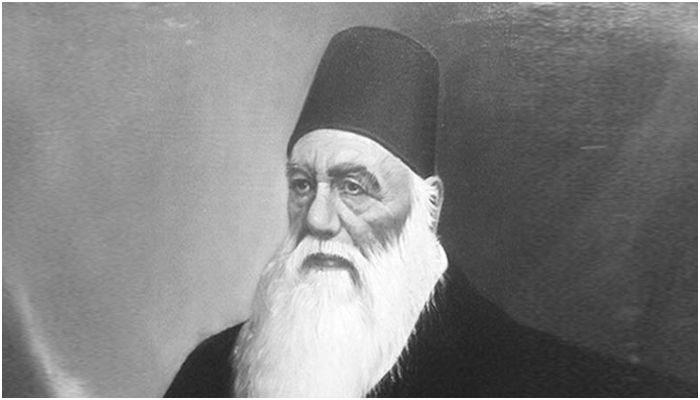
Syed Ahmed Khan, founder of Aligarh Muslim University (Image Source- Dialogue Pakistan)

Further, twelve years later, he stated that if the British community and the army were to leave India, taking with them all their cannons and their splendid weapons and all else, Hindus and Muslims could not sit on the same throne to rule this one nation. “Is it possible that under these circumstances two nations—the Mohammedans and the Hindus—could sit on the same throne and remain equal in power? Most certainly not. One of them must conquer the other. To hope that both could remain equal is to desire the impossible and the inconceivable. But until one nation has conquered the other and made it obedient, peace cannot reign in the land.”

Further, in the year 1906, the Muslim members of the then Congress party formed the All India Muslim League claiming that they were not respected as much as the Hindu leaders in the party. Later in the year 1930, one of the members of the newly formed Muslim League, Allama Iqbal placed his demand for a separate state for Muslims. He thought that a separate Muslim state was important in a Hindu-dominated India.

Jinnah, who had striven for the Hindu-Muslim unity earlier, also began to feel insecure about the claimed ‘dreadful condition’ of the minorities in India and blamed Congress for being unfair to the Muslims. The Muslim League under the leadership of Jinnah then drafted a resolution to form a new Islamic state.

In the year 1940, Jinnah, at the Lahore conference, advanced his call for a separate nation. Though the definition of Pakistan was not clear until 1940, Jinnah’s opinion powered many Muslim leaders to quit Congress and join Muslim League to support the two-nation theory.

By 1946, the Cabinet Mission tried to solve the issue by proposing a decentralized state instead of the idea of a separate nation named Pakistan. But neither of the proposals was accepted by the Islamic Party, the Muslim League as Jinnah remained adamant on his idea of a separate nation for Muslims. Also, Congress’s Nehru then refused to agree to a decentralized state in which substantial powers would be given to local governments.

Congress approved the ‘3rd June’ plan

On February 20, 1947, Clement Attlee, the then British Prime Minister, declared that the British would quit India by 30th June 1948. The declaration by Attlee meant that a deadline was already fixed for the transfer of power even if the Indian politicians had not agreed on a constitution. On the other hand, the Muslim League led by Jinnah had boycotted the Constituent Assembly after his call for a separate country (Pakistan) was rejected by the Cabinet Mission.

The process of injecting the fear of ‘threat to Islamism’ in the minds of Islamists by Islamists themselves had begun back in the 19th century. Jinnah’s Islamist party believed that Muslims in Bharat were under threat and that there was a need for a separate nation for Mohammedans. Jinnah had also given the ‘direct action‘ call to the Islamists wanting for Pakistan to take matters into their own hands for the creation of Pakistan out of undivided India.

After a series of continuous genocide of Hindus, the Islamists won only after the ‘secular’ Congress Party failed to stop violence and negotiate a better deal over Pakistan. They (Congress leaders) eventually sensed the ‘plight’ of the Islamists and accepted the Mountbatten Plan on June 15, 1947. This is days after, Lord Mountbatten, the last Viceroy of India, announced a ‘key’ to the political and constitutional deadlock created by the refusal of the Muslim League to join the Constituent Assembly which was posed to frame the Constitution of India.
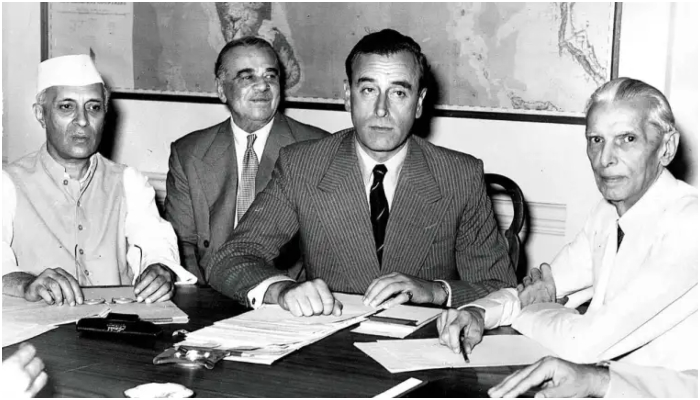
Nehru(L), Mountbatten (C) and Jinnah (R) at conference table (Image source- Rediffmail.com)

On June 3, 1947, Mountbatten was able to bring leaders of both, the Indian National Congress and the Muslim League around a conference table, where they collectively endorsed Mountbatten’s plan also known as the ‘3rd June’ plan. The new plan was accepted by both sides, Congress and the Muslim League, paving the way for the partition in less than 6 hours. Under this plan, the British had agreed to immediately transfer power to two successor authorities and the plan envisaged dividing British India into two dominions – India and Pakistan on a territorial-cum-communal basis. The idea of Mountbatten was to divide India but to retain maximum unity, to which the Congress Party had readily agreed.

However, hinting at partition on February 20 itself, Attlee had stated in its statement that the British paramountcy on the princely states would lapse with the transfer of power and that it would not be transferred to ‘any successor government’. The League’s position on the creation of Pakistan was tactically conceded by the Indian National Congress in exchange for the Congress’s position on the unity of the future Indian state, especially on not granting independence to princely states, but being a given to choice to join either India or Pakistan. The idea was to keep Pakistan as small as possible.

Congress had earlier rejected the ‘secretive’ plan

Lord Mountbatten was sent to India by George VI, the then King of the United Kingdom and the Emperor of British India in March 1947. He was asked to liquidate the British empire and quit India as soon as possible with a deadline issued until June 1948. But he wanted to return to Britain to advance his naval career as the earliest. So, he decided to prepone the transfer of power by ten months, to August 1947, and for this, he chalked out several plans and held long discussions with Congress and the Muslim League leaders.

Jinnah’s call for ‘direct action’ and Congress’s failed attempts to avoid violence obviously had Jinnah’s rising hand in influencing Mountbatten. In the wake of increasing communal riots in the country, he asked Ismay, his Chief of Staff, to prepare a plan for the transfer of power to responsible hands and the division of the country. It was discussed that the entire plan was to be kept secretive, and none of the parties in India should have any information before the plan was finalised.

However, Nehru who was staying with Mountbatten as a guest at his residence at Simla looked at the plan and rejected it in its entirety. Later a Boundary Commission headed by Sir Cyril Radcliffe was constituted by the British government and tasked to delineate the boundaries between India and Pakistan. Radcliffe who had never been to India in the past was assigned to create artificial boundaries between the two countries.
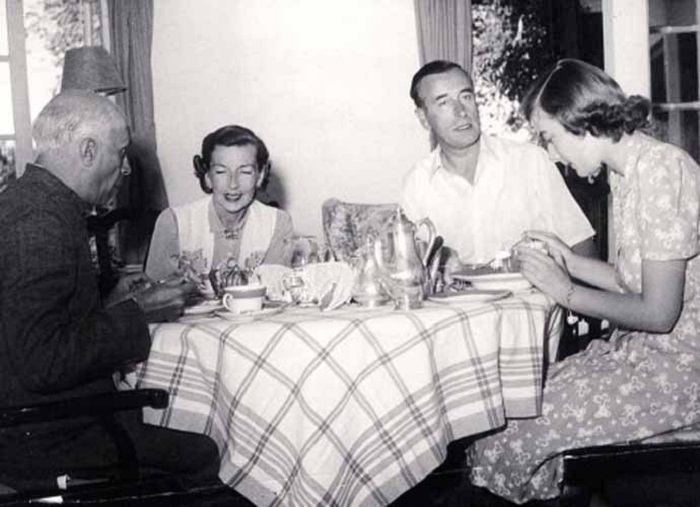
Congress’s Nehru with Lord Mountbatten and his family in Shimla (Image source- DailyO)

Mountbatten went to London, where he got approved the plan without any alteration. Attlee and his cabinet approved in a meeting that lasted not more than five minutes. On May 31, Mountbatten returned to India and met the Indian leaders, including Jawaharlal Nehru, Sardar Patel, Acharya Kripalani, and Mohammad Ali Jinnah, Liaqat Ali, and Baldev Singh. After both Congress and Muslim League leaders approved the plan without raising any objections, Mountbatten discussed it with MK Gandhi and convinced him saying partition was the best plan under the circumstances.

Why did MK Gandhi accept partition?

While many people staunchly claim that MK Gandhi was against the Partition of India, it was he who later supported the Congress, putting the blame of partition on the Hindu and Sikh community as well. “The Congress never asked for it. But Congress can feel the pulse of the people. It realized that the Khalsa as also the Hindus asked for it”, he was quoted.

Among many prime reasons for MK Gandhi to accept the proposal of partition of India, he chose to accept it only after taking into consideration the ‘pulse of people’. As the Britishers hurriedly prepared for their exit from India, they chose not to interfere in the ongoing communal violences and instead use the situation to execute their pre-planned exit.

Reportedly, Gandhi had at first proposed to make Jinnah as an interim Prime Minister of the country. He had made an attempt to satisfy Jinnah’s long standing ambition to establish power and hence kept him away from his insistence on Pakistan. But, later Gandhi himself withdrew the offer as Jinnah had earlier rejected one similar proposal. It is Gandhi in the end who saw no option but to approve the partition of country.
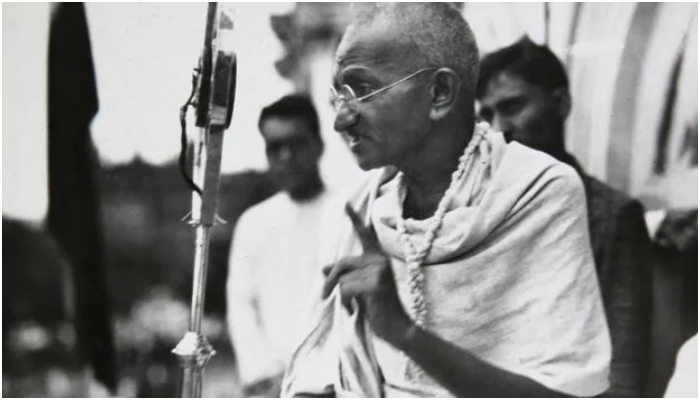
MK Gandhi addressing the masses (Image source- Hindustan Times)

To note, Gandhi was also of opinion that there was nothing wrong on their (Muslims) part to demand Pakistan as they could never live where the Hindus had always been in majority. “They are harming themselves by making this demand and I pray to God to save them in time from any harm coming to them,” he had said after meeting the Viceroy on June 4.

Later in September 1947, after the partition, Gandhi also began showering his worries for Pakistan and the Muslims of Delhi. He claimed that Muslims were not safe in Delhi. He met Maulana Azad and laid down some conditions in favor of Islamists. He demanded that the annual fair (Urs) should be organized peacefully at Khwaja Bakhtiyar Dargah of Mehrauli. He also demanded that the 100 mosques in Delhi that have been converted into refugee camps – be brought back to their former status.

Apart from this, he demanded free movement of Muslims in Old Delhi. Non-Muslims should not object to Muslims returning from Pakistan. Muslims should travel fearlessly in trains. Economic boycott of Muslims should not be done. And Hindu refugees should be settled in the territory of Muslims only if they get permission from Muslims. Gandhi also blackmailed the then Government of India to lend Rs 55 crores to Pakistan.

India attained independence on August 15, 1947, at the cost of millions of lives and brutal riots between Hindus and Muslims. People left behind their homes and all that they owned in fear of communal violence. Crores walked miles to their newly promised homeland. While Indian Muslims left for their newly created home of Pakistan, Hindus and Sikhs who were in what is now Pakistan were forced to move to India. And the rest is history!
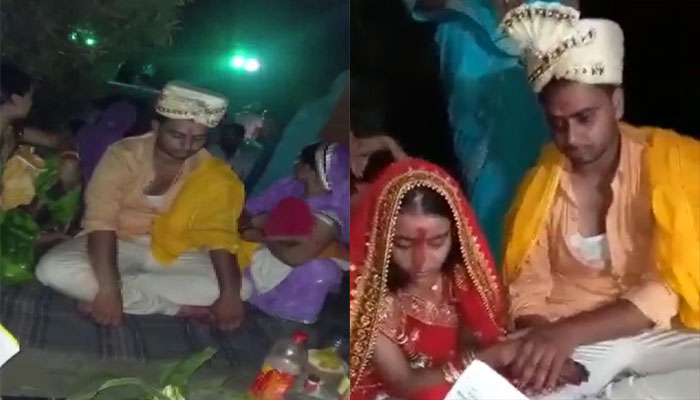

Bihar: Veterinary doctor forcefully married after getting kidnapped in Begusarai, ‘Pakdaua Vyah’ reported again

On June 14, a case of Pakadua Vyah (forced marriage) came to light from Begusarai, Bihar. As per reports, a veterinary doctor identified as Satyam Kumar was allegedly kidnapped and forced to marry a woman in the Begusarai district of Bihar.

Kumar’s father, Subodh Kumar Jha, said Satyam was called by a man named Vijay Singh of neighbouring Hasanpur Village to treat livestock on Monday. However, on his way, Satyam was kidnapped and forcefully married to a woman. Jha, who is a resident of Pidhauli village under Teghra Police Station limits, has filed a complaint against three people in the matter.

The Police have initiated a probe into the matter, and teams have been formed to find Satyam and nab the culprits. Notably, it is still unclear if Satyam married the woman himself or if he was forced to marry her. Begusarai Superintendent of Police (SP) Yogendra Kumar said in a statement that his father had filed a complaint, and the Police are looking into the matter from every possible angle. So far, Satyam has not made any contact with his family.

Speaking about the tradition of ‘Pakadua Vivah’, SP Kumar said, “In Bihar’s Begusarai, the tradition of Pakadua Vivah started in the 1970s, but later on, incidents of forced marriages were curbed. We have received information from the family of a veterinary doctor that he was abducted and forcefully married. The man’s father has filed a police complaint, and we are investigating the matter from all angles.”

Video of Satyam getting married emerges on social media

Meanwhile, videos and photos of Satyam dressed as a groom and sitting in a temple have emerged on social media. He could be seen performing marriage rituals with a woman who was dressed as a bride. An old man, presumably a Pandit, could be seen chanting mantras.

What is Pakadua Vyah?

Pakadua Vyah, or forced marriage, is a tradition that has been rampant in several areas of Bihar. It is usually done by families who cannot afford a dowry. During the 1970s, the tradition had started, and it became a major headache for the authorities. Eligible bachelors are kidnapped and forced to marry women. The “groom” is often kept with the family of the bride till he accepts the woman as his wife. The tradition was curbed by the authorities, but such reports of ‘Pakadua Vivah’ often emerge every now and then.

Despite Allen Institute’s threats, Unacademy opens its doors in Kota: All you need to know inside the ‘Kota Factory’

On Tuesday, edu-tech portal Unacademy launched two offline learning centres in Rajasthan’s Kota. The move was part of Unacademy’s larger plans to establish offline experience learning centres for its userbase across many cities in the country. After opening its first flagship centre in Delhi, Unacademy inaugurated a similar touchpoint in Kota, the hub of IIT coaching in the country.

Talking about the company’s expansion, Gaurav Munjal, co-founder and CEO of Unacademy said, “Every two weeks, a new store is being launched starting with Kota, followed by Lucknow and Jaipur in the next phase. After these four stores, we are going to take a call on whether we want to open large stores or keep them small – and open 100 or 200 of them. Depending on the response, we are going to decide on the next plan of action.” The Unacademy centres will facilitate the offline classes in the NEET-UG, IT JEE and Foundation (9-12) course categories.

With Unacademy’s rival BYJU’s already opening offline tuition centres, its announcement to do the same starting with Kota put a challenge before its established offline contemporaries – notably the Allen Institute. When Allen’s co-founder Brajesh Maheshwari found out that Unacademy was looking to hire teachers and other faculties from institutes like Allen, it warned its teachers of leaving the institute and moving to the other offline coaching centres.

Recently, in a widely circulated video, Brajesh Maheshwari was seen warning teachers in his institute that action will be taken against teachers who leave the company and join its rivals. “Teachers who leave the institute will be blacklisted from working with Allen again. They will not be allowed to join back,” Maheshwari added.

Maheshwari added that he dosent want to work with teachers who work only for money while adding, “Sharafat ki duniya khatam, jaise duniya waise hum.” (there is no decency left on earth, we will treat others how they treat us).

It is to be noted that a number of faculty members who were instrumental in Allen’s growth were recently hired by Unacademy which is on an expansion spree. This includes Ashish Arora, co-founder of Allen Jaipur who has now defected to Unacademy to head the operations at Unacademy’s centre of excellence.

According to INC42‘s source, Some of the top tutors at Allen had easily drifted to Unacademy because compensations they were offered were huge as compared to what they were being given traditonally. In an era where teachers have become stars with a massive following that attracts students to a particular teaching facility, the competition among the traditional players and new entrants in the offline markets is only set to grow.

Paying no heed to Allen’s threats, the company has recruited Kota’s top names in teaching including Mohit Bhargava, Parvez Khan, Insaf Ali, Vijay Kumar Tripathi, Ashish Gupta, who will be part of the Unacademy’s larger faculty team. Unacademy’s flagship centre will have a massive library, doubt-solving zones along with several classrooms and a multi-functional café as well.

Followed by Delhi and Kota similar institutes will be set up in Jaipur, Bengaluru, Chandigarh, Ahmedabad, Patna, and Pune in the next phase by Unacademy. The company in August 2021 raised USD 440 million in a funding round with a total valuation of USD 3.44 billion. Whereas, the traditional mogul in the education market in Kota, Allen was co-founded by the Maheshwari brothers in 1988 and has coached more than 25 lakh students since its inception.

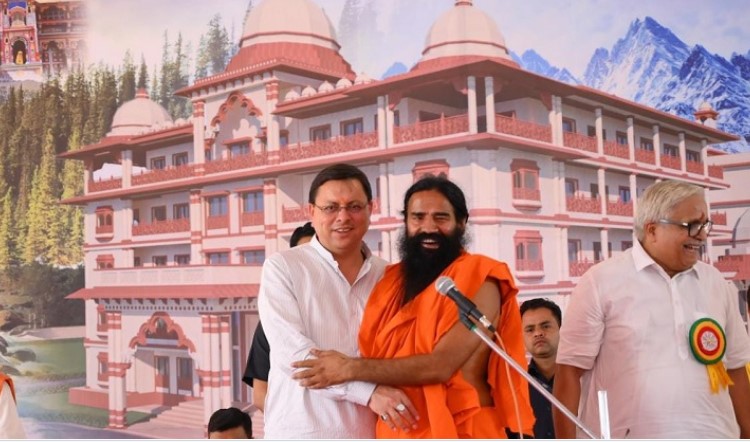
Uttarakhand: 400-bed lodging facility for AIIMS patients to come up in Rishikesh, CM Pushkar Dhami govt allots Rs 50 lakhs for construction

A boarding and lodging facility is being constructed for patients and their family members coming to the All India Institute of Medical Sciences (AIIMS) in Rishikesh, Uttarakhand for treatment. Bhaurao Deoras Seva Nyas, an NGO founded in 1993 has taken the initiative to build this 400-bed Vishram Sadan (rest house). Here, the patients of Rishikesh AIIMS and their relatives will be provided accommodation and food at a very nominal cost.

Sanjay Garg, the trustee of Bhaurao Deoras Seva Nyas, said that the facility, named Madhav Seva Vishram Sadan, coming up at Virbhadra town in the Dehradun district close to AIIMS Rishikesh will be built on 3.5 acres of land that has been leased to the trust. The project is expected to be completed by December 2023 at a cost of Rs 55 crores. He further said that the Uttarakhand government has announced a grant of Rs 50 lakh to the trust for the construction of the facility. Once operational, the patients who have undergone treatment at AIIMS Rishikesh and their family members will be able to find affordable lodging and food here.

The building, which will feature roughly 135 rooms, will have a capacity of 400 beds, according to reports. This building will be built keeping traditional Indian architecture in view. There would be provision for free eye checkups for the patients and their family members in the Vishram Sadan. The centre will also include a restaurant, library, auditorium, and meditation rooms, as well as physiotherapy, naturopathy, yoga, and panchakarma facilities.

In the Vishram Sadan, patients and their families will have access to all of the necessary amenities. Once completed, patients and attendants travelling from Uttarakhand, Himachal Pradesh, and Western Uttar Pradesh for treatment of critical illnesses at AIIMS will greatly benefit from this facility. Until now, such patients and their families are having to depend on expensive hotels for lodging and food.

It may be noted that recently, on June 13, the Uttarakhand Chief Minister Pushkar Singh Dhami had laid the foundation stone of Madhav Sewa Vishram Sadan in Rishikesh. Yoga Guru Baba Ramdev, Juna Akhara chief Swami Avdheshanand Giri, Hindu seer Vijay Kaushal Maharaj, Suresh Bhaiyyaji Joshi, a prominent member of Rashtriya Swayamsewak Sangh (RSS), Sangh’s head worker Gopal Krishna Sharma, former CM and Haridwar MP Ramesh Pokhriyal Nishank, former CM Trivendra Singh Rawat, Rajya Sabha MP Naresh Bansal, cabinet minister Prem Chand Agarwal and others were present on the occasion.

During the event, the Chief Minister said that, in addition to being a centre for yoga, Rishikesh is also a centre for health services, as people come from all over the state and beyond to be treated at the All India Institute of Medical Sciences (AIIMS) facility. The CM described the idea of opening a Vishram Sadan for patients and their kin as a divine service and assured the Bhaurao Deoras Seva Nyas of all possible assistance. Dhami went on to say that the Uttarakhand government would provide Rs 50 lakh to help with the construction of the Madhav Sewa Vishram Sadan.

It’s worth mentioning here that the trust’s upcoming facility in Rishikesh will be the sixth of its kind. Five similar rest houses are already operational near AIIMS in various regions of the country, offering patients and their families affordable lodging, food and various other facilities at nominal rates.

RSS-affiliated Bharatiya Mazdoor Sangh raises concern about ‘slave labor like conditions’ for FIFA World Cup preparations in Qatar at the Geneva labor conference

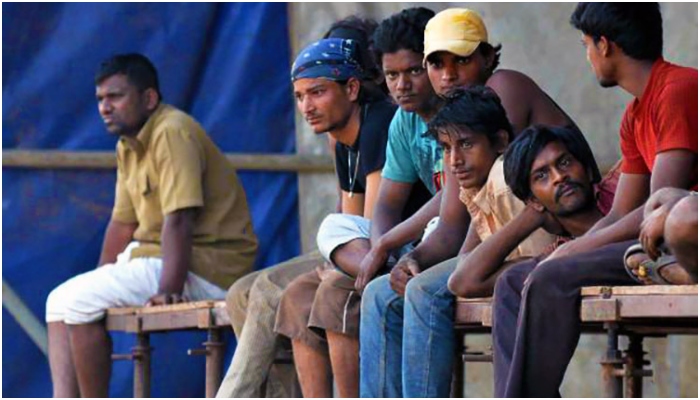
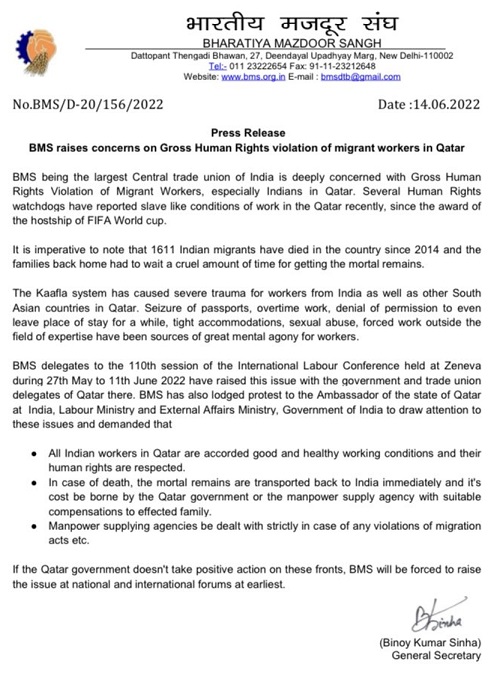
On Tuesday, the RSS affiliate labor organization, Bharatiya Mazdoor Sangh (BMS), raised serious concerns over the human rights violations of the Indian migrant workers in Qatar. Releasing the statement on June 14, it said that it was deeply concerned with gross human rights violation of migrant workers, especially that of Indians, which is ongoing in Qatar.

“The Kafala system has caused severe trauma for workers from India as well as other South Asian countries in Qatar. Seizure of passports, overtime work, denial of permission to even leave the place of stay for a while, small accommodations, sexual abuse, forced work outside the field of expertise, have been sources of great mental agony for workers”, BMS said in the statement.

Statement by Bharatiya Mazdoor Sangh (Image source- Twitter)

The Bharatiya Majdoor Sangh stated that since Qatar won the bid in 2010 to host the upcoming edition of FIFA World cup, several human rights watchdogs have reported slave-like conditions of migrant workers in the country. “1,611 Indian migrants have died in the country since 2014. The families back home had to wait for a cruel amount of time to get the mortal remains of their loved ones”, the statement added.

BMS has also lodged a protest with the Ambassador of the State of Qatar to India, the Indian Labour Ministry, and the External Affairs Ministry to draw attention to severe issues related to the migrant workers in Qatar. It demanded that all Indian workers be accorded with good and healthy working conditions and that their human rights are respected.

Further, in the case of a worker’s death, the organisation demanded that the mortal remains of the deceased are sent back to India immediately and the cost of the same be borne by the Qatar government or the manpower supply agency with suitable compensations to be provided to the aggrieved family. It also demanded that manpower supplying agencies should be dealt with strictly in case of any violations. “If the Qatar government doesn’t take positive action on these fronts, BMS will be forced to raise this issue at both national and international forums at earliest”, the statement read.

BMS raised these issues with the government authorities and trade union of Qatar at the 110th session of the International Labour Conference, Geneva that was held between May 27 and June 11 this year.

To note, the kafala system is a system used to monitor migrant laborers who are dependent on the ‘Kafeel’ (sponsor, employer) for their livelihood and stay of living under the Kafala system. It is a contemporary form of slavery due to the control of Kafeel over the migrant worker. This system is primarily practiced in West Asia.

Earlier, on May 20, Amnesty International and other rights groups had called on FIFA to set aside $440 million to compensate migrant workers in Qatar for human rights abuses amid the 2022 FIFA World Cup preparations. In a letter to FIFA President Gianni Infantino, the groups said that world soccer’s governing body should also work with the host nation to protect the rights of migrant workers in the future.

However, the Qatar government, denying the accusations said that it had already introduced various reforms in the last five years, including a new national minimum wage and the removal of exit permits. The 2022 FIFA World Cup is scheduled to be the 22nd edition of the FIFA World Cup competition. It is scheduled to take place in Qatar from November 21 to December 18, 2022.

Here’s what Islamists have achieved with their veto on street violence: 5 prominent instances

Islamists have long employed violence as a strategic tool of contention to exact obedience, assert their hegemony, and silence their critics. More so with street violence, which they have monopolised by institutionalising thuggery over decades, or perhaps centuries, to prevent a critical assessment of their religious dogmas and immutable convictions.

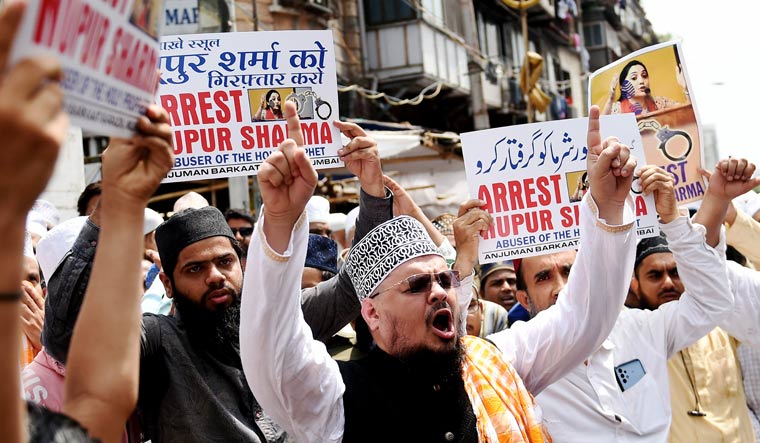
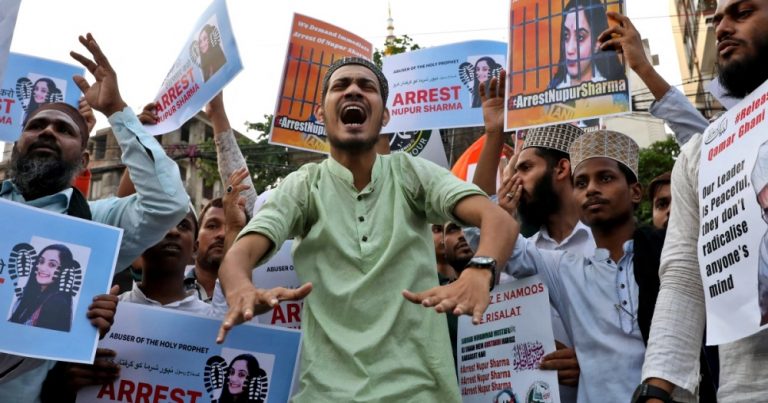
For instance, when former BJP spokesperson Nupur Sharma made remarks on Prophet Muhammad derived from Islamic Hadiths, the Islamists felt no qualms in leveraging their metier—street violence—to wreak havoc in cities and towns across the country with complete abandon.

Thousands came out on the streets, not just to oppose Nupur Sharma’s comments on Prophet Muhammad and hurl death threats at her, but to demonstrate the disproportionate hold their community enjoys over violence to instil fear among critics and pressurise the government into eating out of their hands.

Cities and towns across the country were burning with the fire of Islamic radicalism as Islamists went on a rampage, wantonly indulging in violence, vandalism and arson for what they considered an insult to Prophet Muhammad. The attacks resulted in deaths and injuries, caused huge losses to the public exchequer and created an atmosphere of fear and terror, precisely what the Islamists wanted to discourage ‘Kafirs’ or idolators from weighing in on their religious beliefs and scriptures.

For Islamists, having an open discussion of the teachings of Islam or the life of Prophet Muhammad is a strict no-go zone. While the public scrutiny of the Islamic religious texts has attracted intellectual opposition from ideological enablers of Islamists, and left-liberals, it has also drawn crude reprisals in the form of violence and intimidation from extremists, as evident in the Nupur Sharma case.

Anyone who speaks against Islam or broaches the topic of Prophet Muhammad has to face severe backlash from Islamists, who are perpetually itching to use street violence against ‘Kafirs’, often manufacturing ‘provocation’ to justify their resort to violence. For them, Islam is inviolable, and their Prophet is unimpeachable. Those who do not conform to this worldview are regarded as a fair game, a reasonable and justifiable target to unleash their fury of street violence under the pretext of seeking instance ‘justice’ over perceived infractions.

While one might be inclined to dismiss the repeated use of street violence as an attribute intrinsic to the community, the ramifications are not just limited to the realm of law and order and extend well into the country’s political systems. Besides stamping their authority and seeking instant gratification from taking to street violence, the larger aim of the Islamists in employing violence as a strategic tool is to hold the government of the day to ransom, bend them to their will and push toward their fantasy of supplanting the secular democracy with a Sharia-compliant government.

And they have been quite successful in coercing governments and authorities into doing their bidding by the sheer use of unrestrained force and wanton violence. Over the years, they have mastered and honed the skill of leveraging this veto of violence to suppress any attempts at public scrutiny of Islamic tenets and chipping away at India’s millennia-old pluralistic culture and civilisational ethos.

For centuries, India was the epitome of multicultural co-existence, where people of different faiths, value systems, and beliefs lived in peace and harmony. It continues to remain as one, but its character endured an indelible change after the Islamic marauders and later, the British, cast their evil eyes on it.

The arrival of Islamic invaders on the Indian shores brought in its wake the primitive culture of the nomadic tribes that did not flinch from using violence as an instrument of repression against the ‘Kafirs’ and non-believers. Hindus, Jains, Buddhists and people of other faith were oppressed, persecuted, and killed because they refused to abandon their faith and embrace Islam.

The strife between Hindus and Muslims continued for much of India’s history as Muslim rulers slaughtered Hindus, demolished their places of worship and took their women as war exploits. The British, in their desire to establish control over the subcontinent, fuelled the divide between Hindus and Muslims. But over the last century, Islamists have cunningly used the veto over street violence to make significant gains and reinforce their political and social might.

Insertion of Section 295A in the Indian Penal Code

Though Islamists had long mastered the use of street violence to push through their demands and gain concessions from the prevailing government, their first substantial achievement came with the inclusion of Section 295A in the Indian Penal Code. Section 295A deals with deliberate and malicious acts intended to outrage reli­gious feelings of any class by insulting its religion or reli­gious beliefs.

The genealogy of Section 295A has its roots in 1927 when a book called ‘Rangeela Rasool’ was published in response to continuous provocation by the Islamists mocking Hindu Gods and Goddesses. Hindus, who refused to take the insult of their faith lying down, decided to give Islamists back in the same coin. They launched a pamphlet titled ‘Rangeela Rasool’, a satirical take on the domestic life of Mohammed.

The pamphlet elicited a sharp reaction from the minority community of then undivided India on the grounds that it allegedly contained demeaning passages about the founder of the Islamic faith. The opposition to the pamphlet swelled and metamorphosed into widespread protests, with Islamists at the time hitting the streets and demanding the arrest of its author and the publisher. Mahashay Rajpal, the publisher, was initially arrested but was later acquitted by the court.

This naturally raised the hackles of the Islamists who have been demanding capital punishment for him for having hurt their ‘religious sentiments’. In several places, riots broke out after provocative speeches given by religious leaders. Al-Jamiat an official arm of the Jamiat-Ulaima-i-Hind warned in an article that “under sharia the punishment for insulting the prophet is death and it is legally permissible to kill those who insult the prophet”.

The street protests and demonstrations witnessed after Rajpal’s acquittal forced the British Government of the day to enact a specific law against causing insult to religious feelings, resulting in the insertion of Section 295A in the Indian Penal Code in 1927. However, despite winning the concession in the form of the inclusion of Section 295A in the IPC, Islamists remained resentful toward Mahashay Rajpal, for ‘Ghustake Rasool ki Ek hi saza, sar tan se juda’, and two years later, in 1929, a 19-year-old Islamist named Ilm ud din stabbed him to death.

Partition of India

The partition of India was another bloody chapter when Islamists, who by the sheer use of violence and their capability to incite anti-Hindu riots, were able to vivisect the country into two—India and Pakistan—on the religious grounds. Years before India’s independence, the Muslim League, the party that pioneered the two-nation theory, mobilised radical Muslims by promising them an Islamic country governed by Sharia.

Intoxicated by the dream of a separate nation, Islamists rallied behind the Muslim League, giving it a fresh lease of life against the much more robust and pervasive Congress party. India’s partition and the creation of Pakistan became a rallying cry for the radical Muslims, who already harboured a deep aversion to living in a Hindu-majority country and adhering to the prevalent syncretic ethos of the society.

However, when the Congress party rejected India’s partition as demanded by the Muslim League, thousands and lakhs of Islamists across the country came out on the streets to exercise their veto of violence, indulging in riots, violence and vandalism over their demand for the creation of Pakistan. With the Congress party wary of responding to the Islamists in the language they understand for fear of losing its popularity among Muslims, it cravenly capitulated to the street violence of Islamists and agreed to the partition of India.

Salman Rushdie forced into hiding over Satanic Verses

In 1989, author Salman Rushdie’s ‘The Satanic Verses’ stirred massive controversy after outrage swept among the Muslim community over the content of the book that they said was blasphemous. Muslim critics of ‘The Satanic Verses’ accused Rushdie of portraying Islam as a “deceitful, ignorant, and sexually deviant religion”, sparking transnational uproar and widespread protest from the Muslim community.

India, with one of the largest Muslim populations in the world, was also affected by the ripples caused by Rushdie’s The Satanic Verses. Giving in to the Islamists, India, which preened itself on being a bastion of democracy and free speech, became one of the first countries in the world to ban The Satanic Verses. The Home Ministry of India had then recommended Rajiv Gandhi-led Congress government that the publication and sale of the said book could cause a riots-like situation in India, advising it to ban the book to maintain communal harmony in the country.

The Home Ministry anticipated violent reaction from the Muslim community over ‘The Satanic Verses’ and preempted them by recommending the Centre on banning the book. The Rajiv Gandhi government accepted Home Ministry’s recommendation and announced a ban on the book, months before the Ayatollah Ruhollah Khomeini of Iran issued a fatwa ordering Muslims to kill Rushdie. Even ‘moderate Muslims’ within the Congress party such as former Union Minister Salman Khurshid, who is an Oxford graduate, justified and defended the ban on the book.

The episode underscored the Indian government’s cowardly surrender to the rioting Islamists, fearing whom it deemed acceptable to ban a book without proper scrutiny, as alleged by Salman Rushdie years later. In his memoir, Joseph Anton, Rushdie writes that The Satanic Verses “was not examined by any properly authorised body, nor was there any semblance of judicial process”, before the Indian ban was enacted, and that “the ban came, improbably enough, from the finance ministry, under section 11 of the Customs Act, which prevented the book from being imported.”

Several Islamic nations undid the initial ban on the book, but India continued to enforce the ban, fearful that the removal of the ban could trigger Islamist violence, ultimately forcing the government into imposing the ban again. Nevertheless, the entire episode underlined the shocking pusillanimity of the Indian government by allowing radical extremists to influence its decisions and undermine its longstanding commitment to freedom of speech and secularism.

Rajiv Gandhi-led government surrenders to Muslim hardliners to overturn the SC judgment in the Shah Bano case

In 1986, the Indian state headed by Rajiv Gandhi set a dangerous precedent of capitulating to Muslim hardliners. The Mohd. Ahmad Khan vs. Shah Bano Begum & Others case and the subsequent legislation passed by the Rajiv Gandhi government in 1986 is often remembered as a pivotal moment in India’s political history.

It all started when Shah Bano, the 62-year-old Muslim woman, filed a petition in court in April 1978 demanding maintenance from her divorced husband Mohammed Ahmad Khan, a renowned lawyer in Indore, Madhya Pradesh. Shah Bano’s husband Khan divorced her by uttering triple talaq later in November stating he was not obliged to pay her any maintenance as she is not his wife under Islamic law.

The two were married in 1932 and had five children — three sons and two daughters. Shah Bano’s husband had forced her to move out of the residence three years before, after living with Khan and his second wife.

Shah Bano, who went to court against her husband, filed a claim for maintenance for herself and her five children under Section 123 of the Code of Criminal Procedure, 1973. In August 1979, Shah Bano won the maintenance case in the local court, which ordered Khan to provide her with the maintenance of Rs 25 per month. However, Khan contested the claim on the grounds that the Muslim Personal Law in India required the husband to only provide maintenance for the iddat period after divorce.

Years later, Shah Bano filed another plea seeking revised maintenance in Madhya Pradesh High Court. In April 1985, in a historic judgment, the Supreme Court ruled in favour of Shah Bano and upheld the decision by the High Court stating that she was entitled to be paid for maintenance by her husband.

Islamists, having commanded the art of using street violence to their advantage once again pulled the arrow of violence and intimidation out of their quiver. Large-scale protests were launched, with Muslim fundamentalists describing the judgment as an attempt to undermine the Muslim Personal Law. The Muslim hardliners, and clerics pushed the then Rajiv Gandhi government, elected in 1984, to pass the Muslim Women (Protection on Divorce Act), 1986. This law overturned the Supreme Court’s verdict in the Shah Bano case. The 1986 Muslim Women (Protection on Rights of Divorce) Act diluted the Supreme Court judgment and allowed maintenance to a divorced woman only during the period of iddat, or till 90 days after the divorce.

The Muslim Women Act in 1986, virtually pitted women’s individual rights against the rights of a religious group and the latter with their street veto power were capable of enforcing the law over a weak, minority appeasing government led by Rajiv Gandhi.

Narasimha Rao’s government buckled under the pressure of Islamic radicals; enacted the Places of Worship Act of 1991, to prevent Ram Janmabhoomi-like movements in future

The Ram Janmabhoomi movement in the late 1980s and early 90s was married with violence and riots as the Muslim fundamentalists took to the streets to oppose the Hindu side’s demand for the reclamation of the disputed site of the Babri structure, where they said a Ram temple existed before Mughals brought it down.

As the Ram Janmabhoomi movement was at its peak, the Islamists once again resorted to deploying violence as a strategic tool to pressurise the government into granting them concessions. Consequently, the Narasimha Rao govt at the centre brought a new law with a motive to prevent Ram Janmabhoomi-like reclamation movements by Hindus in India. This law was the Places of Worship (Special Provisions) Act 1991.

The statement of objects and reasons of this act reads as, ‘An Act to prohibit conversion of any place of worship and to provide for the maintenance of the religious character of any place of worship as it existed on the 15th day of August 1947, and for matters connected therewith or incidental thereto’.

The act declares that the character of a place of worship freezes on 15 August 1947, meaning if a place of worship is a mosque as on 15 August 1947, its character is that of a mosque even if it was originally a temple. The act provides for punishment if any person changes or attempts to change the character of any place of worship of one religious denomination or section thereof into another section of the same denomination or other.

The act provides for abatement of any suits or proceedings in any courts in the country relating to disputes about the character of places of worship already pending at the time of commencement of this act. The act also prohibits any suits or proceedings that may be instituted after the commencement of this act. Ram Janmabhoomi dispute had been excluded from the purview of this act.

Thus, with the veto of street violence, Islamists were able to secure favourable legislation from the government to ensure that there could be no Ram Janmabhoomi-like movement in the future to reclaim other occupied Hindu religious sites. Apparently, when a Shivling was discovered inside the wuzukhana of the Gyanvapi mosque, the Islamists resorted to citing provisions of the Places of Worship Act, 1991 to prevent Hindus from reclaiming their religious sites, stating that the Act says a site of worship’s religious character must remain the same as it was on August 15, 1947.

Dogs, cats and cows have ‘voted’ in the app-based internal elections of the Chhattisgarh Youth Congress: Reports

Around 17 lakh votes were polled in the internal elections of the Indian Youth Congress (IYC) in Chhattisgarh in the election process that ended on June 12 at midnight, according to the Hindi daily Jagran, and several dogs, cats, and cows are among the individuals who cast their franchise.

According to the new system adopted by the Youth Congress to conduct internal polls, elections are conducted online, using an app-based system named Congress Sandesh app. As per the Jagran report, voters have to enrol as IYC members using documents to establish their identity, and then exercise their franchise. This app-based system was first used in the Maharastra Youth Congress election conducted last year.

Congress Sandesh app

The Jagran report has now quoted a source close to a member of the Chhattisgarh Youth Congress as saying that the party has received several applications enrolled in the name of dogs, cats and cows.

Voters registered as IYC members using identification documents to take part in the polls, which were held online using an app-based system. Additionally, applicants had to provide an 8-second video to prove their identity. According to sources, numerous clips that were uploaded on the IYC enrollment app- the Congress Sandesh app, contained the videos of dogs, cats, and cow, and the names used to register these applications are also names that are generally associated with animals.

As per reports, the Chhattisgarh Youth Congress received as many as 17 lakh new applications seeking membership, which included these applications that were registered on the names of animals. High-ranking sources inside the Youth Congress claim that if the central level of monitoring is not tightened, then these votes will likewise be deemed legal.

Besides, it is also being reported that many voters had voted three to five times at the district and assembly level. The candidates received the results of the ballots cast by those who voted before the results were even announced. Moreover, a fee of Rs 50 was also charged as nomination process and candidate voting fees. As just a result, over Rs 11 crore has been deposited in the Youth Congress’s account. If the sources in the Chhattisgarh Congress Youth unit are to be believed, it is expected that these votes would get rejected, when a scrutiny into the same is conducted.

It should be mentioned that roughly one-third of the over 19 lakh votes cast in Maharashtra’s internal elections to elect Indian Youth Congress (IYC) office-bearers were rejected due to irregularities such as voters exercising their franchise multiple times, data inconsistencies, and other anomalies.

The election process, which includes nominations, voter registration, and polling, had begun in Maharashtra on November 12, 2021, and ended on December 12, 2021. For the first time, polls were conducted online, utilising an app-based method, in which voters had to register as IYC members using documents to prove their identity and then exercise their franchise.

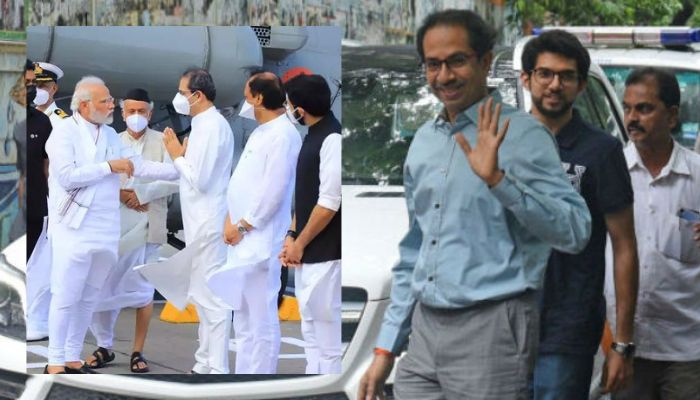
Uddhav Thackeray lashes out at officials after they asked Aaditya Thackeray to come out from his car as per security protocols during PM’s visit: Report

News has come from Maharashtra where CM Uddhav Thackeray has reportedly lashed out at Prime Minister’s security officials after they asked his son and Maharashtra Environment Minister Aaditya Thackeray to get out of his car. As reported by TV9 Marathi, CM Thackeray lost his cool and had a minor scuffle with the security officials, after the father-son duo was to follow the PM Modi’s convoy during his visit to Mumbai on Tuesday.

On Tuesday, after wrapping up his visit to Dehu in Pune, PM Modi reached Mumbai two grace two functions in the city. He was welcomed by Maharashtra CM Uddhav Thackeray, Deputy CM Ajit Pawar, Minister Aaditya Thackeray and Leader of Opposition Devendra Fadnavis at INS Shikra point, Naval Helipad in Mumbai.

However, following the protocol, the security officials asked Aaditya Thackeray to get out of the CM’s car, which was to follow the PM’s convoy until the next destination. According to a said security protocol, only the Chief Minister of the state is allowed to become part of the PM’s convoy.

At this time, CM Uddhav Thackeray lashed out at the security men for asking Aaditya Thackeray to do so. Apparently, this led to a two to three-minute delay in following up the PM Modi’s convoy up to the Raj Bhavan to unveil the Revolutionaries’ Gallery in the city.

PM Modi is on a day-long visit to Maharashtra on June 14. In the afternoon, he inaugurated the ‘Shila Mandir’ of Sant Tukaram Maharaj in Dehu, Pune. Further, Modi landed in Mumbai to inaugurate an exhibition gallery commemorating Indian Revolutionaries at Raj Bhavan, Mumbai. Further, he will precede the bi-centenary celebrations of the Gujarati Newspaper ‘Mumbai Samachar’ at the Bandra-Kurla Complex.

‘Islamophobia’ does not exist: It’s time to push for this ‘politically incorrect’ reality

At the very core of humanity, is a war to survive. It is a paradigm that no animal or man can escape. The civilisational war we see today may be dressed up differently depending on the issue we choose to debate – reclamation of cultural heritage and places of worship, judicial reforms, police reforms, demographic challenge, citizenship to persecuted minorities from neighbouring Islamic nations, the law against forceful religious conversion and the list is endless – however, at the very heart of it, every issue revolves around the survival of an ancient civilisation that has now morphed into a “secular” quip or a people, who have fought, for centuries, for the preservation of that ancient civilisation.

When Rangeela Rasool was published by Mahashay Rajpal, the court had clearly exonerated him saying that commentary on historical figures, including Prophet, does not promote enmity between groups. That, however, did not stop the Islamists from murdering him brutally. It was also craftily brushed under the rug that Mahashay Rajpal had published Rangeela Rasool (written by Pandit Chamupati Lal) after serious provocation by the Muslim community where they chose to publish two books mocking Hindus and their faith. In this case, Mahashay Rajpal and Pandit Chamupati Lal chose to answer words with words. Book with a book. However, for the Islamists who constantly want special treatment and concessions from the Hindu community, that was “blasphemy”, a crime punishable by death under Sharia.

The trajectory of the Nupur Sharma case was not too different. After the discovery of the Shivling, Islamists on television debates and social media started mocking Hindus and their faith. They called Hindus penis worshippers and far worse. During the TimesNow debate, when panellists started mocking the Hindu faith yet again by calling the Shivling a fountain, Nupur had had enough. She lashed out asking the Islamist panellist how he would feel if she was to mock their faith. She did not mock him per se – she asked how he would feel.

And boy did the Islamists answer. They took to the streets, shouted ‘sar tan se juda’ slogans, pissed on her picture, hung her effigies and did everything that one expects from uneducated barbarians.

So far, Nupur Sharma is safe. Alive. However, one has to reconcile with the fact that she is a woman marked for life. Wouldn’t take much for us to reconcile with it, sadly. That is just how the human race is. An atrocity that shocked us yesterday would become the norm tomorrow. The Hindu memory is painfully short and soon, the community would move on to the next outrage cycle leaving Nupur Sharma alone to deal with the consequences of bruising the extremely fragile sentiments of the Islamists.

One would expect the Nupur Sharma issue to be one that united the Left and the Right (for the lack of a better phrase) in India. After all, it is the Left and the Liberals who claim that India is stifling freedom of speech and expression. They also rally vociferously for the right to offend and the right to criticise religion – we saw that in several cases – Munnawar Farooqi being a case in point. The Right, let us assume, would speak up because Nupur Sharma commented on Islam specifically, a religion they allegedly despise, but the Left would speak up for Nupur’s right to speech, therefore, uniting the two factions. That did not happen. Instead, there were cries about Hindus becoming increasingly hateful under the Modi regime, atrocities against Muslims being on the rise and general wails of Islamophobia that we have heard all too often.

Pakistan approached the United Nations demanding action against India due to Nupur Sharma’s “Islamophobic comments”. Bhutto demanded that the UN take note of “rising Islamophobia” in India. Attempting to arm-twist the UN further, Bilawal Bhutto reportedly said, “Silence could be taken as complicity and could lead to further incitement to violence, communal discord and hate incidents”.

Essentially, Pakistan told the UN that if it does not get involved and chastise a nation of 1.3 billion people because one woman politician went on a TV debate and made a 10-second innocuous comment that repeated what the Islamic hadiths say, Hindus would get emboldened to exercise their free speech further and incite the Muslims to riot and indulge in violence. If you find something fundamentally flawed in that argument, where 1.3 billion people need to be condemned for a factually correct statement by one person so that the tolerant, peace-loving, sar tan se juda chanting, stone-pelting and rioting Islamists do not indulge in violence, you are an Islamophobe.

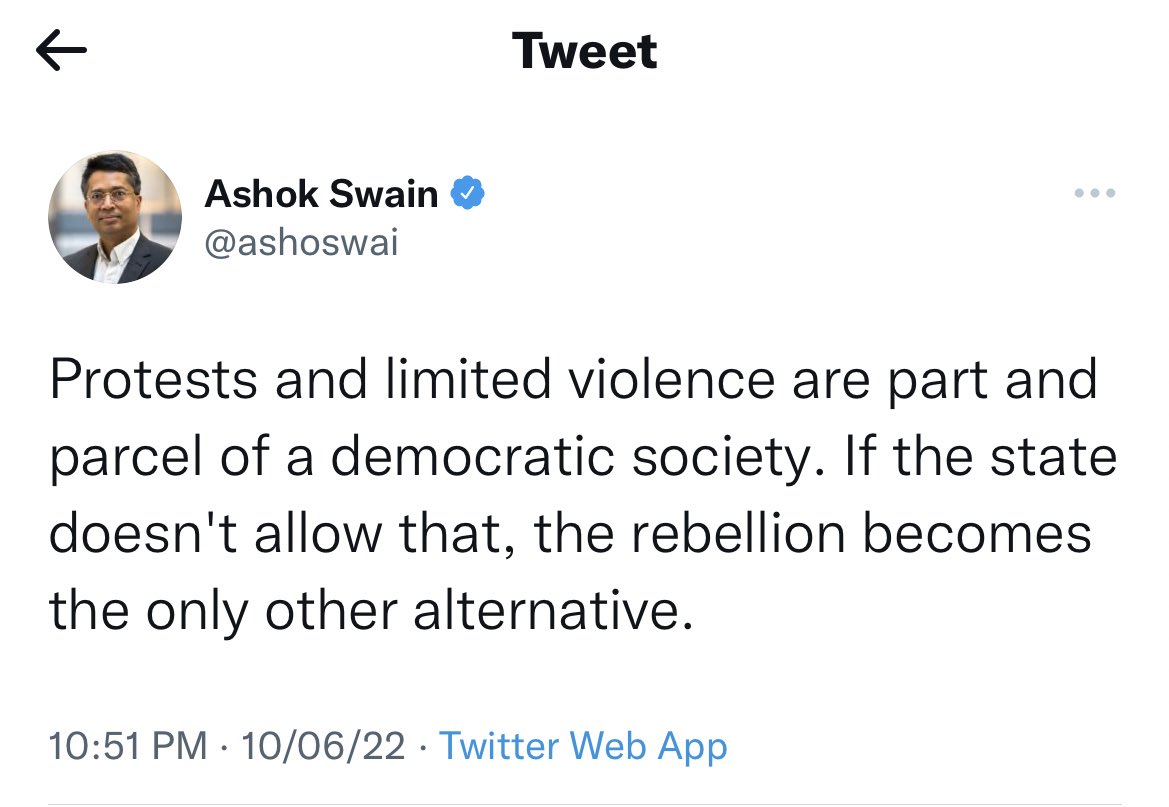
We live in an age where any criticism of Islam or even a comment on the collective behaviour of the Ummah based on facts is seen as Islamophobia. If you report a crime committed by Islamic fundamentalists with a clear religious motive, like conversion, it is Islamophobia. If you condemn the violence that the intolerant minority indulges in, it is Islamophobia. In this case, Nupur’s response to Hinduphobes was Islamophobia and the Hindu community’s condemnation of rape, death and beheading threats to Nupur Sharma was also Islamophobia – they are just upset about the comment, after all. A little anarchy is justified. A little violence is a part of the democratic process, it was said – the state must allow it. If you disagree with this asinine view, you, my friend, are an Islamophobe.

'Islamophobia' does not exist: It's time to push for this 'politically incorrect' reality
Tweet by Ashok Swain

So what is Islamophobia?

The United States House of Representatives in December passed a bill called ‘Combating International Islamophobia Act’. It was introduced by famed Jihad supporter, Ilhan Omar. The bill aims to combat global Islamophobia. The bill allows the Department of State to establish an office to monitor and combat Islamophobia and address related issues and of course, it requires the submission of annual reports to Congress about global Islamophobia and what countries have done to act against it.

The vague, subjective law allows all speech directed at Islam, forget criticising it, to be termed as Islamophobic – a term that in itself is problematic on several levels.

A phobia, by its very definition, is an irrational fear. Islamophobia, essentially means, that anybody who comments negatively against Islam has an irrational fear of Muslims and Islam similar to that of xenophobia or racism. Firstly, it is rather hilarious that a bunch of converts believe that they are a separate race. But beyond that, to accept absolutely anything as “Islamophobia”, we need to evaluate if the fear of Islam or that of the Ummah is one that is irrational, to begin with.

According to the UN definition, Islamophobia refers to irrational hostility and fear toward Islam, and therefore aversion and fear toward Muslims or the majority of them. It also refers to the practical consequences of such hostility in the form of discrimination, unequal treatment toward Muslims (individuals and communities) and their exclusion from the main political and social agenda.

Let us break this down.

The first defining characteristic of Islamophobia is that the fear and/or hostility has to be ‘irrational’. The predominant fear against Islam is that it treats non-Muslims as sub-humans and believes in waging Jihad against those who don’t follow Islam. That Jihad is violent and humiliating. They believe in converting non-Muslims by force and have indulged in several genocides of non-Muslims in the name of Islam. These are all factual statements. We have seen the rise of Al Qaeda, ISIS, Jaish e Mohammad, Lashkar e Toiba, Hamas, Al Shabab, Hizballah, Al-Aqsa Martyrs Brigade, Lashkar e Jhangvi, Boko Haraam etc and the common aim of all of these Islamic organisations that have been designated as terror organisations, is to establish an Islamic Caliphate.

India, specifically, has seen Islamic terrorism perhaps far more than any other nation in the world. Even if we move past the Mughal invasions, the Khilafat movement and the Malabar genocide of Hindus itself is an examples of how Muslims executed Hindus in a concerted manner because they had sworn their allegiance to the Turkish Caliphate. We have seen grooming gangs in the UK, grooming jihad in India, Taharrush in Egypt, Germany, the UK and other places like Pakistan, genocides across the world and sporadic incidents of violence directed at non-Muslims from Sweden, to Africa, the US, UK, Germany, India, Pakistan, Bangladesh and everywhere else where a substantial Muslim population exists.

The go-to reason to brand such basic facts as “Islamophobic” is to claim that none of this is the true representation of Islam. An erstwhile Muslim, Waseem Rizvi, had once gone to court with a list of Quranic verses that directed violence towards Kafirs. Here are some of them:

Surah 2 (Al-Baqarah)

Verse 191: And kill them [in battle] wherever you overtake them and expel them from wherever they have expelled you, and fitnah1 is worse than killing. And do not fight them at al-Masjid al-Ḥarām until they fight you there. But if they fight you, then kill them. Such is the recompense of the disbelievers.

Surah 3 (Ali ‘Imran)

Verse 151:

We will cast terror into the hearts of those who disbelieve for what they have associated with Allah of which He had not sent down [any] authority.1 And their refuge will be the Fire, and wretched is the residence of the wrongdoers.

Surah 4 (An-Nisa)

Verse 56: Indeed, those who disbelieve in Our verses – We will drive them into a fire. Every time their skins are roasted through, We will replace them with other skins so they may taste the punishment. Indeed, Allah is ever Exalted in Might and Wise.

Verse 89: They wish you would disbelieve as they disbelieved so you would be alike. So do not take from among them allies until they emigrate for the cause of Allah. But if they turn away [i.e., refuse], then seize them and kill them [for their betrayal] wherever you find them and take not from among them any ally or helper,

Verse 101: And when you travel throughout the land, there is no blame upon you for shortening the prayer,1 [especially] if you fear that those who disbelieve may disrupt [or attack] you.2 Indeed, the disbelievers are ever to you a clear enemy.

This is a short indicative list. The full list of 26 verses listed by Waseem Rizvi can be read here.

Therefore, the argument that it does not represent Islam is certainly not an accurate one. Let us, for a moment, assume that none of this represents Islam and it is indeed a peaceful religion that wishes nothing more than peaceful coexistence. Given that assumption, one has to then ask the question of why so many factions of the Muslim community take to terrorism and overall violence against non-Muslims. Who are those thousands and lakhs of Muslims who have, in India, taken to the streets to demand the beheading of Nupur Sharma? Are they not Muslims and do their wishes not adhere to true Islam?

I am no Maulana and these are questions that the Muslim community has to answer.

Given this, and the fact that their conduct has been similar throughout the world, can we really blame someone for being scared of Islam and can we, logically, call that fear irrational? For most living organisms, anything that threatens their right to exist would be deemed an enemy. Nobody in their right mind can say that all Muslims are the enemy, however, their fear that Islam threatens their existence is not misplaced, given the mountain of evidence and the trail of blood that stand as a witness.

In fact, the term Islamophobia itself reveals the true intent of the Muslim Brotherhood in coining and furthering this term. Islam as a religion has to be open to criticism and it is completely rational to be scared of certain aspects of Islam, as detailed above. One may want to fight “Muslimphobia” and if that is the aim, the phrase used has to be that and not Islamophobia. When one shuts down all criticism of Islam and even deems quoting the Hadiths as blasphemy, one can safely argue that it is not the non-Muslim who is Islamophobic but those taken offence who are truly Islamophobic since they have a fundamental problem with their own texts being quoted.

Frankly, one suspects, that the Muslim community themselves don’t believe that these facts are “Islamophobic”. This term, which was popularised by the widely fundamentalist Muslim Brotherhood, was only a tool to ensure that all comments and criticism of Islam is stifled. It was a tool to scare people into submission and exploit the innate goodness in the world that makes people not want to hurt the sentiments of others, overall. It is a mythical beast that has been peddled with influence and money to ensure that the atrocities of the Islamists get shielded by piggy-backing on the victims of real atrocities – those who have been discriminated against because of their colour, race or worse, religion (Hindus and Jews come to mind).

If the Muslim community believes that the terrorists, stone pelters, those demanding Nupur Sharma’s beheading etc do not follow “real Islam”, they need to give the world a reason to trust them and explain the parts of their faith that propagate violence. If they think it is a part of Islam, they need to evolve and summarily denounce the last stone pelter and hardliner on the streets. Failing this, Islamophobia as a blanket term cannot stop people from fighting for their own survival by being scared of people who have persecuted those who don’t follow their diktat for centuries.

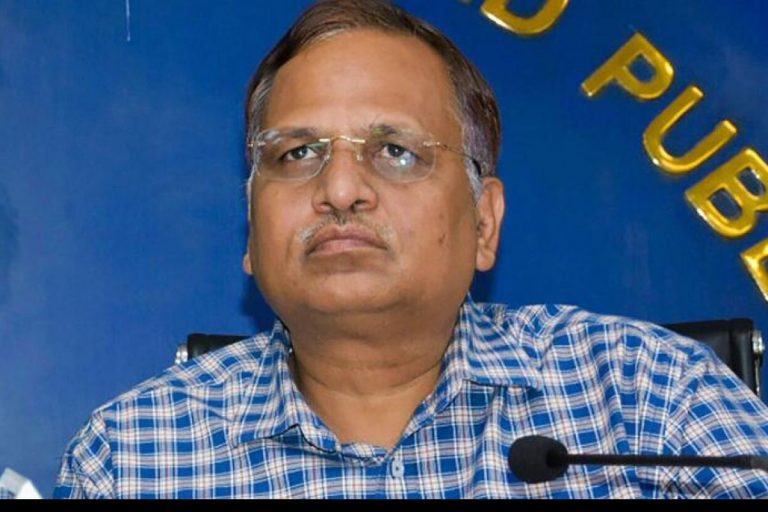
Delhi minister Satyendra Jain claims he lost his memory due to covid, cannot recall details pertaining to hawala transactions

The Enforcement Directorate (ED) notified the trial court on Tuesday that during questioning, Delhi minister and AAP leader Satyendra Jain claimed that he lost his memory owing to the effect of Covid.

According to the Additional Solicitor General (ASG) SV Raju who is appearing on the behalf of ED in court, Satyendra Jain made the assertion that he lost his memory after being faced with papers pertaining to his involvement in trusts that received money from hawala operations.

The AAP minister’s ED detention had already been extended till Monday, June 13. The bail hearing for Jain was set for Tuesday, June 14. The court heard Satyendra Jain’s bail application on Tuesday and reserved its decision until June 18.

In his argument before the Rouse Avenue Court last week, ASG Raju, representing the interests of the ED, stated that Satyendra Jain is a very slow writer. “He Takes about two hours to write one page. His statement has to be taken in his handwriting otherwise he says ‘it’s not my statement’,” ASG Raju said.

On May 30, the ED arrested Satyendra Jain under the provisions of the Prevention of Money Laundering Act. On May 31, the trial court remanded him to the custody of ED. ED raided the residence and other places associated with Aam Aadmi Party leader and Delhi Minister Satyendra Jain on June 6 and 7. Following the raid, the agency confiscated Rs. 2.85 crore in cash and 133 gold coins weighing 1.80 kg in total.

Satyendra Jain was charged with money laundering in August 2017 by the Central Bureau of Investigation (CBI). Based on the FIR made by the Central Bureau of Investigation (CBI), the ED initiated a criminal case against the AAP leader, alleging that Jain could not explain the source of income received by four firms in which he was a stakeholder. From 2010 to 2014, the firms allegedly laundered Rs 16.39 crores in cash.

The Home Ministry authorised the prosecution of Delhi minister Satyendra Jain in matters including disproportionate assets and money laundering in November 2019. Under the PMLA, 2002, the Enforcement Directorate temporarily attached immovable assets worth Rs. 4.81 crore owned by Akinchan Developers Pvt. Ltd, Indo Metal Impex Pvt Ltd, and others in April of this year. The move was taken in connection with the case filed against AAP minister Satyendra Jain, his wife Poonam Jain, and others for disproportionate assets and money laundering.