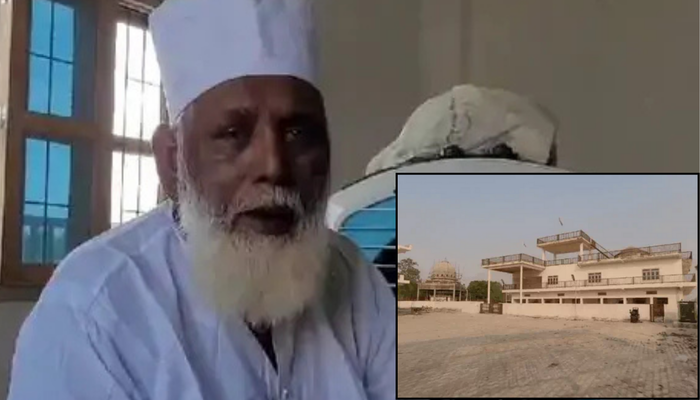
A man named Mohammad Tarif, who is accused of spying on behalf of Pakistan, was recenty arrested by Haryana Police in a major counterintelligence operation in the Nuh area of Haryana. He is from the village of Kangarka under the jurisdiction of the Taoru police station.
Taoru police have registered a case against three individuals, including two staff members of the Pakistani Embassy, and have launched an investigation. The police are interrogating the offender and have recovered a mobile phone from him.
After being arrested, Tarif confessed that he had visited Pakistan several times and interacted with Pakistani officials, including providing them with SIM cards. Additionally, he admitted to talking to a Pakistani official who sought confidential information from him in exchange for money.
“I went to the Pakistan Embassy in 2018 for my Visa. A Pakistani officer interviewed me. He took my number and said he would tell other details on Phone. He called me after three-four days and said, if you want a visa, give me two new Sims. I bought two new Sims from Nuh, and then I went to that Pakistan Embassy and met that officer. He issued me the Visa after I gave him the Sims,” he stated in a video.
The perpetrator mentioned, “Then I left for Pakistan. When I returned from Pakistan, he again called me. He said that send some people who need a Pakistani Visa then we will distribute the money among us. Then I referred 8-10 people to him for visas. We shared the money among us.”
“He called me in 2024 and said, you have work here; come to the Pakistan embassy. He then introduced me to another officer named Jafar and said I may get transfer soon so get in touch with him. Then Jafar took my number and contacted me after a few days. He also asked me to get two new Sims. Then he called me and said, you have to do something for us and we’ll pay you in lakhs. He asked me to go to Sirsa airbase and click pictures and videos and send them to them,” he disclosed.
Nuh Police have registered charges under the Indian Penal Code, the Official Secrets Act, 1923, and sections related to sedition against the Mohammad Tarif, Pakistani national Asif Baloch, posted at the Pakistan High Commission, and Jafar. The arrested accused has been presented before the court and remanded to police custody for further interrogation.
OpIndia previously reported that multiple individuals, including the well-known YouTuber Jyoti Malhotra, have been arrested on charges of espionage for Pakistan amid the strained relationship between the two neighbouring countries following the Pahalgam terror attack which led to Operation Sindoor.
In Madhya Pradesh’s Bhopal, a case of grooming jihad (also called love jihad) has surfaced wherein a Hindu man approached the police, alleging coercion for marriage and conversion to Islam by a Muslim woman named Nilofer Asif who posed as a Hindu woman named Shreya.
On Monday (19th May), Shekhar Silawat approached the Ashoka Garden with a written complaint alleging that he was in acquaintance with a woman named Shreya in 2021. The woman resided in the same building where the complainant resided.
The two soon became friends and entered into a relationship, however, things started turning bitter after three years of relationship as Nilofer Asif pretending to be Shreya, allegedly started harassing Shekhar mentally, pressurising him to marry her.
Shekhar alleged that Shreya used to threaten to commit suicide if he refused to marry her and naming him in her suicide note. Though terrified, Shekhar reportedly told Shreya that his parents are not consenting to their union.
However, on 6th May 2025, Shreya allegedly convinced Shekhar to marry her at an Arya Samaj temple in Rattibad area and inform his parents about the same later. The complainant claims that he was afraid of Shreya’s harassment and somehow agreed to marry her.
It was only after their marriage that Shekhar came to know the truth of Shreya’s religious identity. He found out that Shreya in reality is a Muslim woman named Nilofer Asif. Moreover, Nilofer is a divorcee and has three children.
The complainant alleged that after learning about Nilofer’s true identity, he distanced himself from her. However, on 18th May 2025, around 10 male acquaintances of Nilofer allegedly barged into Shekhar’s house and abducted him and his brother.
The abductors took Shekhar to the Bhanpur village where they assaulted him and pressured him to take responsibility of Nilofer and her three children. Moreover, they also coerced the Hindu man to convert to Islam.
So far, no FIR has been lodged in the case. However, as per Ashoka Garden police station in-charge Hemant Shrivastava, an investigation into the matter is underway and further action will be taken accordingly.
A report submitted by a fact-finding committee constituted by the Calcutta High Court has implicated a leader of the ruling Trinamool Congress (TMC) in the communal violence that erupted in Murshidabad last month. The report states that the violence, which coincided with the passage of the Waqf Amendment Bill, was targeted at members of the Hindu community and resulted in extensive damage to life and property.
The committee, comprising members of the National Human Rights Commission (NHRC), the West Bengal State Legal Services Authority, and the Judicial Services, conducted field visits to affected areas, including Betbona, Samserganj, Hizaltala, and Shiulitala. The findings were presented before a division bench of the Calcutta High Court.
Key Findings
Involvement of Political Figures: The report identifies local TMC councillor Mehboob Alam as having led a group of miscreants involved in the attack. It also names Amirul Islam, who allegedly directed the mob to properties that had not yet been attacked, prompting further arson.
Police Inaction: The local police are reported to have been “completely inactive and absent” during the violence. Calls for help from the villagers of Betbona reportedly went unanswered. The incident occurred within a 300-metre radius of the local police station, yet no intervention was made. Additionally, a Member of the Legislative Assembly (MLA) was allegedly present during the attacks but did not attempt to prevent or stop the violence.
Extent of Damage: According to the report:
113 homes in Betbona village were severely damaged and rendered uninhabitable.
Water connections were deliberately severed to prevent residents from extinguishing fires.
Victims, particularly women, have taken refuge with relatives due to fear and lack of shelter.
Casualties and Communal Targeting: On April 12, a Hindu man and his son were killed by their Muslim neighbours, the report noted. The violence that followed led to the destruction of several businesses and places of worship.
Looting and Arson of Commercial Properties:
Twenty-nine shops were affected in Ghoshpara.
A mall-style shopping complex was looted and shut down.
Grocery stores, hardware shops, textile outlets, and temples were destroyed.
The report concludes that the violence was organized and communal in nature, with clear political involvement and failure of law enforcement to protect citizens. The findings are likely to intensify the political debate in the state and raise serious concerns regarding the state’s response to communal unrest and the politicization of local governance structures.
The High Court is expected to deliberate further on the report’s findings and may consider directing the state government to take appropriate action against those named.
A new variant of coronavirus has insidiously spread throughout Asia, including China, Singapore, Hong Kong, Thailand and India. 257 active infections were reported nationwide, indicating a small rise in cases in India, according to data from the Ministry of Health and Family Welfare (MoHFW). Infections in Singapore rose from 11,100 cases in the final week of April to over 14,000 cases in early May 2025.
New Omicron sub-variants, especially JN.1 and its descendants like LF.7 and NB.1.8, are the primary cause of the surge. With 69 cases since 12th May, Kerala has seen the highest number of new infections followed by Tamil Nadu with 34 and Maharashtra with 44. Karnataka recorded 8, Gujarat 6, Delhi 3 while Haryana, Rajasthan and Sikkim each witnessed one new case.
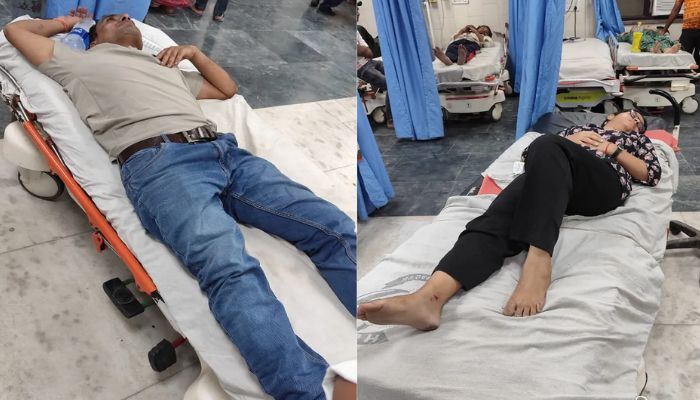
Two recent Covid-19-related deaths were reported at King Edward Memorial (KEM) Hospital in Mumbai. Both patients had severe medical issues, according to the doctors. One was a 54-year-old cancer patient and the other was a 14-year-old with nephrotic syndrome-related renal failure. Health professionals have frequently expressed concern that India might observe a rise in cases as a result of the population’s declining immunity.
The LF.7 and NB.1.8 variants, which are sub-lineages of the larger JN.1 variant, have been connected to the raise in cases in Singapore and Hong Kong. However, the existence and dissemination of JN.1 strains in India have not yet been verified by health authorities.
“A new wave of Covid-19, circulating in southeast Asia with its epicentre in Singapore, has been in the news for the last few days. Along with Singapore, Hong Kong and Bangkok are also reporting a sudden rise in cases Such a peak can be due to the waning population immunity, non-compliance with the annual vaccination protocol, and the emergence of new sub-variants,” stated Dr Subhashree Samantaray, associate consultant, infectious diseases, Manipal Hospital Bhubaneswar, reported Hindustan Times.
What is JN.1
The JN.1 strain is closely related to BA.2.86 (commonly known as “Pirola”), a lineage of the Omicron variant, according to Yale Medicine. “A difference between BA.2.86 and JN.1 is that the latter has one mutation in its spike protein, a single change that may or may not alter any of the traits that characterise the virus, although preliminary research shows that it may provide extra immune evasion,” revealed Yale Medicine.
“It has acquired the ability to transmit efficiently through an additional one or two mutations,” as per Johns Hopkins Medicine. The World Health Organization (WHO) designated JN.1 as a Variant of Interest in December 2023 after it was first discovered in August 2023. It possesses roughly 30 mutations that enable it to evade our immune systems. This variat could spread more effectively than its predecessors because it has even evolved with more mutations.
However, among the SARS-CoV-2 variants that were in circulation in 2023, the BA.2.86 coronavirus variant never emerged as dominant. Now, JN.1 altered to propagate more effectively despite its parent’s immune evasion. Doctors maintain it’s not necessarily more severe, despite being genetically intelligent. However, it is challenging because it can avoid immunity.
Dr Sandeep Budhiraja, Group Medical Director, Max Healthcare & Senior Director, Institute of Internal Medicine informed, “The current JN.1 variant is not more severe than past variants but is more transmissible. That’s why it’s causing concern across Asia.”
JN.1 in India and its symptoms
The current wave is unusual, especially during the summer when respiratory diseases typically decline, according to Dr Diksha Goyal, Senior Consultant, Internal Medicine, Marengo Asia Hospitals, Gurugram. The increase is probably due to declining immunity because most people have not had booster injections recently and were vaccinated a long time ago.
“This unusual summer wave is being linked to waning immunity, since many people haven’t received booster doses in over a year,” she stated. “Covid-19 hasn’t disappeared. It’s become endemic and will likely cause periodic spikes. What’s important is to monitor these carefully, especially through genomic surveillance,” Dr Sandeep Budhiraja disclosed.
The majority of JN.1 cases are minor and its symptoms are akin to those of earlier Covid-19 variants. Common signs and symptoms include: a sore throat, blocked or runny nose, dry cough, fever and chills, headache, muscle aches, fatigue or exhaustion, nausea or diarrhoea and loss of smell or taste (less common now).
According to Johns Hopkins, there are indications that JN.1 might be causing more diarrhea than earlier strains. “There’s nothing unusual about the symptoms. It behaves like earlier Omicron strains. But people with weaker immune systems may experience more fatigue,” Dr Sandeep Budhiraja outlined.
The majority of cases, according to doctors, are moderate and manageable at home. Nonetheless, high-risk groups, including the elderly, those with heart disease or diabetes and individuals using immunosuppressants should exercise special caution. “Most patients recover well, but we are seeing more moderate cases in high-risk groups,” Dr Diksha Goyal expressed.
How does JN.1 spread, its testing and precautions
Doctors stated that JN.1 spreads more effectively than its parent strains. Its modifications let it to evade some immune reactions and adhere to human cells more readily. The virus spreads similarly to previous Covid variations:
Droplets in the air from sneezing, coughing or talking.
Close proximity in congested or inadequately ventilated indoor environments.
Surface contamination (less frequent but still possible).
Dr Niranjan Patil, AVP at Metropolis Healthcare explained, “Standard real-time reverse transcription polymerase chain reaction (RT-PCR) tests are used for diagnosis. If a sample tests positive, it is then sent for genomic sequencing to identify the specific variant, such as JN.1.” The primary options for testing are:
RT-PCR (gold standard, accurate, but takes 24–48 hours) is one of the primary testing options.
Rapid Antigen Tests (RATs): less sensitive but faster
Multiplex PCR techniques that detect Covid and other respiratory viruses (e.g., BioFire, QIAstat)
Most labs charge between ₹500 and ₹800 for RT-PCR, according to government capping. The cost of multiplex tests is higher.
Dr Sandeep Budhiraja clarified, “Updated Covid-19 boosters provide significant protection against symptomatic JN.1 infections. They also significantly reduce the risk of severe disease and hospitalisation.” Although there are currently no vaccines that are specific to JN.1, health professionals strongly advise booster doses, particularly for individuals who belong to vulnerable populations.
Doctors advise wearing masks, particularly when in a high-risk group or in congested indoor environments. Precautionary actions consist of:
When in public indoor areas, wear a mask that fits properly.
Wash hands often.
Stay away from crowded areas if feeling sick.
Get dose of booster if haven’t already.
If tested positive, remain at home and isolate.
Physicians have advocated for improved reporting and increased international cooperation in order to stay ahead of future waves and prevent another worldwide epidemic. “Genomic surveillance helps identify emerging variants and track their spread. It is also crucial for updating treatment guidelines and vaccine strategies,” mentioned Dr Sandeep Budhiraja.
In India, the situation is still under control. On 19th May, the Director General of Health Services (DGHS) presided over a review meeting of specialists from the Indian Council of Medical Research (ICMR), the Emergency Medical Relief (EMR) division, the Disaster Management Cell, the National Center for Disease Control (NCDC) and central government hospitals.
The Health Ministry is nonetheless “vigilant and proactive in monitoring the situation closely,” according to a source who spoke to PTI and the right procedures are in place to protect public health.
A US-based Hamas supporter and anti-Semite, Jackson Hinkle, has been at the forefront of Pakistan-sponsored disinformation warfare against India in the aftermath of the Pahalgam terror attack and Operation Sindoor.
According to a report by The New York Post published on Monday (19th May), Hinkle is helping Pakistani intelligence spread ‘false flag’ narratives against India.
It cited a study conducted by the Network Contagion Research Institute (NCRI).
Screengrab of the report by The New York Post
The New York Post reported, “A week following Hinkle’s interview with Pakistani High Commissioner to India Abdul Basit on his program “Legitimate Targets,” he accused India of conducting a false flag operation against Pakistan in Kashmir. This was propaganda spread by Inter-Services Intelligence, Pakistan’s primary intelligence agency, the NCRI study claims.”
The report added that lies peddled by Jackson Hinkle were amplified by Pakistani bots on social media. This was highlighted in the study by NCRI.
The New York Post added, ““In the aftermath of the Pahalgam attack, inauthentic networks used generative AI [bots] to create and circulate provocative memes pushing the false flag narrative, featuring Indian symbols, political figures and inflammatory slogans,” says the NCRI report. Those “inauthentic” bots have been spreading Hinkle’s message to millions of social media users, according to NCRI.””
Lies of Jackson Hinkle amplified by Pakistani bots, image via The New York Post
OpIndia analysed the social media activity of Jackson Hinkle and found a drastic spike in X posts, which falsely claim ‘Pakistani victory over India’ in the aftermath of Operation Sindoor.
His fake stories found overwhelming support among Pakistani intelligence machinery, which otherwise could not prevent Indian strikes on its military bases and terror camps.
Some of the tweets by Jackson Hinkle read –
“India fucked up big time”
“India was so shocked by Pakistan’s military capabilities, they begged Trump for a ceasefire last night.Don’t start a war you can’t win…”
“Instead of pursuing dedollarization with BRICS, India started a war with Pakistan. Good slaves of Western finance capital”
“Maybe India would have better air defenses if all their engineers weren’t in the US…”
Pakistan is humiliating India…Modi never should’ve started this
“India seriously underestimated Pakistan…”
“Trump DID NOT force INDIA to agree to peace. Chinese air defenses FORCED INDIA into SUBMISSION.”
“Pakistan won, India lost”
“Pakistan embarassed India”
Screengrab of the tweet by Jackson Hinkle
It must be mentioned that the X (formerly Twitter) handle of Jackson Hinkle was withheld by the Indian authorities. However, the temporary ban on access from India was lifted on Monday (19th May).
The military operation by India, which kicked off on 7th May, ended up causing irreparable damage to Pakistan, so much so that it went begging to the United States for help.
India’s military capabilities had spooked the Pakistan army to the extent that it was forced to make a desperate call to for an immediate ‘ceasefire.’ OpIndia had explained in detail how India humbled Pakistan, once and for all.
The firm resolve of the Modi government and the capabilities of the Indian armed forces, which it exhibited by firing drones and missiles deep inside the enemy territory, sent shivers down the spine of the Pakistani Army and its generals.
India was close to decimating Pakistan’s nuclear arsenal – a bargaining chip that the hostile country had used to deter Indian governments (pre-2014) from taking adverse military action for its proxy terror attacks.
After having realised that it was fighting a losing battle and was close to losing its military bases, Pakistan was forced to dial the US and then India for a ‘ceasefire agreement.’
This timely decision on the part of the Pakistan army helped them avoid second-hand embarrassment at home and avoid accountability for their incompetence.
After all, they did not need to surrender publicly like in 1971 and face the wrath of the general public. This reaffirms the age-old saying – Peace can only be maintained from a point of strength.
As long as India flourishes economically, militarily and diplomatically, we will continue to maintain peace in the region.
We will do so by exerting our strength each time against Pakistan, which relies on radical Islamic outfits to perpetrate terror and hostility in the region.
Everything to know about Jackson Hinkle
He is a US-based ‘social media influencer’ with over 3 million followers on X (formerly Twitter). Hinkle, known for peddling fake news and conspiracy theories, have been banned by Instagram, YouTube and Twitch.
He had even spoken at a conference organised by Houthis in Yemen and attended the funeral ceremony of Hezbollah terrorist Hassan Nasrallah in Beirut. He also gave interviews to Hezbollah-run channels Al-Manar TV and Channel 3.
Hinkle had even interviewed Hamas terrorist Basem Naim. He has been called out by the Anti Defamation League (ADL) for his “extensive anti-Zionist, antisemitic and anti-Israel rhetoric since the start of the Israel-Hamas war.”
Concerns over academic freedom and the level of government involvement in higher education institutions have been raised by the controversy triggered by the Left government’s proposed University Laws (Amendment) Bill in Kerala.
The bill’s main clause forbids college and university teachers from participating in activities that criticise state legislation and university regulations, reported Mathrubhumi. Meanwhile, opposition of laws and policies of the central government continues to be acceptable. This selective restriction has come under fire for stifling free expression in academic settings.
Moreover, the bill requires that no written, printed or electronic promotional materials provided on campuses violate state or university statutes. Many people view the move as a means of silencing opposing viewpoints in academic circles.
It reads, “Teachers or their groups or organisations may distribute and display written or printed or electronic material in campus without prior approval of the university so long as the distributed material is consistent with university policy and state law. The person or persons responsible for such material must be clearly indicated.”
Additional disputes are emerging over the clauses that confer expanded authority to the Higher Education Minister, who functions as the university pro-chancellor. The bill gives the minister direct control over academic and administrative affairs, including the ability to examine university facilities, curricula, exams and financial dealings. It might erode university autonomy and result in more political meddling, per critics.
Notably, the Raj Bhavan previously voiced his disapproval of faculty members and vice-chancellors attending a seminar hosted by the state government to protest clauses in the proposed UGC (University Grants Commission) regulations. Most of the vice-chancellors then abstained from attending the seminar. The university legislation amendment is believed to have lifted the ban against criticizing the central government to get over these obstacles.
The bill already encountered strong opposition in March with the opposition claiming that the state government was trying to erode university autonomy by converting them into government departments. VD Satheesan, the leader of the opposition, charged that the University Amendment Bill was designed to undermine public institutions in favor of private ones.
He added that the bill will allow for undue intrusion in academic affairs by restricting the powers of vice-chancellors while granting significant power to the Higher Education Minister, who is the statutory pro-chancellor.
On the 14th of May 2025, a Delhi court acquitted 11 persons accused of arson, rioting with a deadly weapon, theft, and being part of an unlawful assembly during the 2020 anti-Hindu Delhi Riots. The court raised questions over the credibility of the police witnesses who identified the accused men and observed that the witnesses were artificially planted.
Additional Sessions Judge (ASJ) Pulastya Pramachala of Karkardooma Court noted that charges against accused persons, namely: Ankit Chaudhary alias Fauji, Sumit alias Badshah, Pappu, Vijay, Ashish Kumar, Sourabh Kaushik, Bhupender, Shakti Singh, Sachin Kumar alias Rancho, Rahul and Yogesh, were not proven beyond reasonable doubt. Giving the accused persons benefit of doubt, the court acquitted them of all charges.
Case background and charges against the accused Hindu youths
The case against the accused Hindu persons was registered after a complaint filed by one Mohammad Imran Sheikh at the Gokulpuri Police Station on 1st March 2020. In his complaint, Imran Sheikh claimed about loot and arson committed in his medical shop ‘Crown Medicos’. First and second floor of his shop was full with medicines. He further alleged that one Aslam who was working in a salon, which was situated in front of his medical shop, had telephonically informed him at around 01:30 AM that some persons had looted his aforesaid shop and were setting it ablaze. Immediately thereafter, complainant Imran Sheikh made call at 100 number to police about this incident. Eventually, an FIR was registered on Sheikh’s complaint.
During the probe, Investigation Officer (IO) Laxmi Narayan Sharma visited the site of incident and was later informed that accused Ankit Chaudhary and Sumit who were already arrested in another FIR, had “confessed” their involvement in vandalising Imran Sheikh’s shop. Subsequently, the duo were arrested in this case.
On 9th March 2020, the remaining accused were arrested. ASI Gajraj informed IO of this case about receiving a CD of certain video of riots in his case. He also informed that some rioters were visible in the same and that, videos related to place of incidents in this case as well. IO obtained a copy of that CD and seized it in this case. This CD was sent to FSL, Rohini for forensic examination.
On 11th March 2020, another complaint was filed by one Akram Ali at the Gokulpuri Police Station. In his complaint, Akram Ali alleged that he was running his shop at C-12, Main Road, ground floor, Gokalpuri in the name and style of ‘Smart Looks Salon’ and he, along with his brother Aslam was residing on rent on the second floor of C-12, Main Road, Gokalpuri. On 24.02.2020 at around 6 PM, a number of persons came and started vandalism and thereafter he and his brother left Delhi for their native place, in order to save their lives. On 29.02.2020, when Aslam Ali (brother of Akram Ali) visited said shop, he informed Akram Ali that rioters had vandalized his shop.
Given the proximity of the date, time and place of incident, Akram Ali’s complaint was clubbed in the present case. Following this, the IO added IPC section 436 in the present case.
Ankit Chaudhary alias Fauji, Sumit alias Badshah, Pappu, Vijay, Ashish Kumar, Sourabh Kaushik, Bhupender, Shakti Singh, Sachin Kumar alias Rancho, Rahul and Yogesh, were chargesheeted by the Delhi Police for offences under 147/148/149/ 380/427/436 IPC on 3rd May 2020.
The prosecution alleged that the accused Ankit Chaudhary and others formed an unlawful assembly with the common object of committing riots by carrying stones, sticks and other weapons of rioting and to create fear and insecurity in the minds of members of other community and by use of force or violence in prosecution of a common object of such assembly committed rioting. It was alleged that the accused persons trespassed in complainant Imran Sheikh’s shop and looted several articles.
Further, the prosecution alleged that the accused broke open the locks and entered in the aforesaid shops and then set those on fire by explosive substance with the intent to destroy the same. The prosecution also claimed that the accused committed mischief by causing wrongful loss and damage to the aforesaid shops of complainants Imran Sheikh and Akram Ali. In 2022, additional charge was framed against the accused under IPC section 188.
The prosecution presented 12 witnesses before the court to back its case against the accused.
One eyewitness Mohammad Imran Sheikh (PW2), the owner of the vandalised shop, claimed to have known a number of the accused before to the crime. However, he did not name the accused during the investigation, but rather after the trial began. The Court noticed that even while filming the video of the incident, he did not name the accused.
PW2 was declared hostile by prosecution and he denied the suggestions that he had come to shop in the night of incident, or that he had seen and identified accused persons in the mob of rioters.
Meanwhile, PW5 Aslam (brother of Akram Ali) identified accused Ankit before the court, stating that on previous occasion he could not identify Ankit on display screen. PW5 had recorded incidents of vandalism by the mob on his mobile phone. PW5 earlier identified accused Sumit alias Badshah, Rahul, Amit, Ankit Chaudhary, Vijay and Pappu before the court by taking their correct names. He claimed that he knew their names. PW5 identified accused Sandeep @ Mogli, Rahul, Shakti Singh, Saurabh, Ashish before the court, stating that he did not know their names. PW5 deposed that Saurabh was known as Kachhua in the locality. PW5 had not handed over videos recorded by him to the police, rather he had uploaded them on Facebook. Later, he provided these videos to the police.
PW6 Akram Ali, the other complainant said in his statement that he did not see any incident in the shop and he remained closed inside his room with other workers. His brother Aslam had locked them in a room and had gone to terrace. PW6 had wrongly mentioned in his complaint that on 24.02.2020 PW6 had left Delhi along with Aslam.
Arguments of defence and prosecution
The accused persons pleaded not guilty and asserted that they have been falsely implicated by the investigators. They also argued that the prosecution witnesses in this case have deposed falsely against them. They took plea that they were falsely identified by witnesses at the instance of IO and that PW9 ASI Jahangir & PW10 ASI Vanvir were planted witnesses in this case.
Notably, PW9 and PW10 had identified about 10-11 persons in that mob and they knew them by their names. They were accused Ankit Chaudhary, Sumit Badshah, Sachin, Saurabh, Bhupender, Ashish, Rahul, Vijay, Shakti & Pappu. As per PW9 and PW19, the accused youths were also part of the mob which had vandalised Crown Medicos. PW9 & PW10 identified all accused before the court by taking their correct names.
The defence counsels challenged the presence of PW5 at the relevant time in the property of his shop. They referred to complaint which was made by brother of PW5. In this complaint it was mentioned that PW6 and his brother both fled away from their shop and went to village through train. Before the court, PW6 had clarified that his brother PW5 had not gone with him. However, defence treated it as false improvement in the stand.
The, however, noted that the videos of the incident were examined by the CFSL, and there is no reason to suspect the veracity of these videos, which were claimed to be recorded by PW5 himself, with his voice recorded therein.
The Delhi court said that the core issue was the identification of the accused, whether they were a part of the mob that was responsible for setting ablaze Crown Medicos and vandalising Smart Look Salon or not.
The prosecution relied upon PW5, PW9 and PW10 to argue the presence of all accused in the mob of rioters, which attacked both the aforesaid shops. PW5 deposed that he already knew accused Ankit Chaudhary, Sumit @ Badshah, Rahul, Amit Kumar, Vicky, Sumit. He identified accused Sumit @ Badshah, Vijay and Pappu, as the persons whom he knew by their names.
Delhi court finds merit in defence’s arguments, raises question over credibility of testimonies of prosecution witnesses
ASJ Pulastya Pramachala noted accused Ankit Chaudhary was appearing through video conference and PW5 could not identify him. However, during his examination on a subsequent date, when he had identified videos in DVD furnished by him, accused Ankit was physically present in the court and at that moment PW5 identified him, stating that on previous occasion he could not understand the appearance of the person on the computer screen and he was not told name of that person, hence, he could not identify Ankit Chaudhary on that occasion.
PW5 further identified accused Sandeep @ Mogli, Rahul, Shakti Singh, Saurabh and Ashish, stating that they were also members of the mob of rioters, but he did not know their names. At the same time PW5 deposed that Saurabh was known as Kachhua in that locality. Meanwhile, PW9 and PW10 identified all the accused persons claiming that they knew them since prior to the incident.
The court, however, noted that “both these officials were posted in the same police station, despite that their statement regarding identifying the accused persons, was recorded at much belated time.”
In addition, the court pointed out that if these accused persons were already known to these two police officials, then there could not have been any need to identify them in any video or photographs.
“It is worth to note here that by the time IO recorded statement of these two police officials, all accused were already arrested and chargesheeted in this case. Therefore, their identification of accused persons, at such belated time, is not beyond controversy and doubt,” the court noted.
Finding merit the defence’s argument, the court noted that defence challenged evidence of PW9 and PW10, mainly on the grounds that despite being posted in the same police station, they came up to name and identify photographs of the accused persons after a huge gap of around 10 month.
“I do find merit in this argument. If PW9/ASI Jahangir and PW10/ASI Vanvir had actually seen and identified the accused persons among the rioters on 24.02.2020, then there was no good reason for them to keep silence for such a long period. From the record of duty roster, even IO could have known the particulars of officials, who were on duty at the concerned place. Still, even IO did not make any attempt to examine such officials at the earliest possible time,” ASJ Pramachala stated.
Deeming the visual evidence provided by PW9 ASI Jahangir, ASJ Pramachala stated, “Showing photographs of accused to PW9, when they were already arrested in this case, appears to be unnatural action, giving impression that PW9 was artificially made an eye witness to identify the accused persons. Therefore, evidence of PW9 cannot be relied upon to assume presence of any accused in the mob of rioters. Same logic applies to discard the identification by PW10.”
The court further noted that the defence counsel challenged the credibility of PW5’s (Aslam)testimony contending that he falsely identified the accused persons before the court as after-thought plea. Aslam confirmed to have identified that the accused persons since they were residents of the same locality, however, he denied defence’s allegation that he identified the accused since they were Hindus and he had enimity with them.
The court pointed out that if PW5 (Aslam) had informed PW6 and his brother Akram about the incident, and knew some of the rioters whom he identified before the court, then why he did not mention their names before PW6 as well. ASJ Pramachala noted that neither in his complaint nor in his testimony did PW6 (complainant Akram) mentioned that he was ever informed by his brother about the names of the rioters.
“It has to be appreciated that PW5, though claimed that he knew some of the accused persons by names since prior to this incident, but he did not get name of any such person mentioned in the complaint made by his brother Akram/PW6. PW6 deposed that PW5 had informed him about the incident. If that was so and if PW5 knew at least some of the rioters by their names, whom he identified before the court, then it was natural for PW5 to mention their names before PW6 as well. However, PW6 neither in his complaint nor in his testimony before the court, stated that he was ever informed about name of any of the rioter by his brother PW5,” ASJ Pramachala observed.
The court further noted that even in the statement recorded by the Investigation Officer LN Sharma, there was no mention of of all the names of rioters as claimed by PW5 before the court. IO Sharma said that except for the disclosure statement of the accused persons, he had no evidence against them at the time of arrest. Sharma added that Aslam had stated that he could identify the culprits from the video, however, that phone and video was not provided to IO Sharma by Aslam.
“If PW5 knew the name of rioters as named by him before the court, then even if he did not have his mobile phone to hand over the videos to police/PW1, PW5 would have mentioned those names before PW1. Thus, claims of PW5 that he knew some accused persons by their names since prior to the incident and that he also had seen and identified them among the rioters, are incompatible with his omission to mention such names before PW6 or before PW1 at the first occasion itself,” the court said.
The court noted that even in the videos PW5 himself recorded during the incident, he did not take names of the persons he could see indulging in arson and vandalism. Although PW5 did point out to accused Sumit and Ankit in two videos, they could not be clearly seen in the videos.
“Therefore, naming and identification of accused persons by PW5 before the court for the first time, in the background of his claim of having known some of them since prior to the incident, is suspicious, and in absence of any corroboration to such evidence of PW5, it is risky to act upon his identification,” the court stated.
All 11 accused acquitted of all charges levelled against them
Judge Pramachala thus concluded that charges levelled against the accused persons in this case are not proved beyond all reasonable doubts and accused are entitled for benefit of doubt. Consequently, the accused were acquitted of all charges brought up against them.
Excerpts taken from relevant court order
“In view of my foregoing discussions, observations and findings, I find that charges levelled against the accused persons in this case are not proved beyond all reasonable doubts and accused are entitled for benefit of doubt. Hence, all accused 1. Ankit Chaudhary @ Fauzi, 2. Sumit @ Badshah, 3. Pappu, 4. Vijay, 5. Ashish Kumar, 6. Sourabh Kaushik, 7. Bhupender, 8. Shakti Singh, 9. Sachin Kumar @ Rancho, 10. Rahul and 11. Yogesh, are acquitted of the charges levelled against them,” the judge stated.
Apple farmers in Himachal Pradesh have demanded a complete ban on the import of Turkish apples into India, citing Turkey’s political stance during heightened tensions between India and Pakistan.
A joint delegation of fruit growers and farmers, led by Himachal Pradesh Sanyukt Kisan Manch Convener Harish Chauhan, submitted a memorandum to the Prime Minister and President through the Governor of Himachal Pradesh.
Speaking to ANI, Chauhan expressed deep anger over Turkey’s support to Pakistan, particularly during Operation Sindoor. “Turkey is an ally of our enemy nation. It supported Pakistan during a critical time when India was fighting against Pakistan. At the same time, back in February 2023, when a devastating earthquake hit Turkey, the Government of India helped them on humanitarian grounds. In return, Turkey stabbed us in the back by aiding Pakistan,” he said.
Chauhan said Turkey currently tops the list of countries exporting apples to India, a trend he claims is hurting local growers. “The farmers of Himachal, especially those in the apple belt, are the worst affected. That is why we are demanding a complete ban and boycott of all Turkish apple imports into India,” he said.
The delegation pointed out that India spends between Rs800 to Rs1,000 crore annually on apple imports, with a significant chunk going to Turkey. “We must strike at the economic roots of enemy-supporting nations like Turkey. If we stop importing Turkish apples, it will break their economic backbone while benefiting our own farmers,” Chauhan added.
He said the Governor assured the delegation that their memorandum would be forwarded to the Prime Minister and President. Chauhan also thanked farmer groups and traders across Madhya Pradesh, Jammu & Kashmir, and Uttarakhand, who have pledged to boycott Turkish apples.
“Through the media, I want to thank the people of India, traders, and farmer groups who have taken a vow not to eat or buy Turkish apples. 140 crore Indians have decided not to consume these apples, and that sends a powerful message,” he said.
The delegation also urged the central government not to reduce import duties on apples, highlighting past lobbying efforts by Turkey and the United States for zero duty. “If the government reduces import duty on apples, it will be nothing short of a death warrant for farmers in Himachal, Jammu & Kashmir, and Uttarakhand,” Chauhan said.
He called for the minimum import price (MIP) to be raised to at least Rs100 per kg and for higher import duties on apples from all countries, including Iran, to protect domestic growers. “This is our demand, and we hope the Indian government takes swift action in the interest of our farmers,” he said.
The farmers’ strong demand to ban Turkish apple imports highlights their determination to protect local livelihoods and send a clear message against foreign support to adversaries.
(This news report is published from a syndicated feed. Except for the headline, the content has not been written or edited by OpIndia staff)
In a major action against land encroachment near the Indo-Nepal border, the Uttar Pradesh government has demolished 286 illegal religious structures across seven districts. The demolished structures include 225 madrasas, 30 mosques, 25 mazars, and six eidgahs.
भारत-नेपाल की सीमा पर यूपी के कई जिलों में उग आए आतंक के अड्डों पर योगी सरकार बुलडोजर एक्शन कर रही है।
संवेदनशील सीमा पर बने अवैध मदरसों, मजारों और ईदगाह पर योगी सरकार ने चाबुक चलाया है।
महाराजगंज, सिद्धार्थनगर, श्रावस्ती और बहराइच में सरकार ने सीमा से 15 किमी अंदर तक अवैध रूप… pic.twitter.com/813lKbSSQn
Demolition drive across 7 districts near Nepal border
The demolition drive is being carried out in districts adjoining the Nepal border, including Maharajganj, Siddharthnagar, Balrampur, Shravasti, Bahraich, Lakhimpur Kheri, and Pilibhit. According to official data, the highest number of demolitions has taken place in Shravasti, where 100 illegal madrasas, one mosque, five mazars, and two eidgahs were demolished.
UP में जमकर गरजा योगी का बुलडोजर
एक सप्ताह में
– 225 अवैध मदरसे – 30 मस्जिद – 25 मजार /दरगाह – 6 ईदगाहों को मिट्टी में मिला दिया गया
अकेले श्रावस्ती जिले में 110 अवैध ढांचों को ध्वस्त किया गया. नेपाल बॉर्डर पर योगी जी का ये ज़ोरदार बुलडोजर एक्शन हुआ है pic.twitter.com/y5fGjcYHl3
In Siddharthnagar, 35 madrasas and nine mosques were demolished. In Balrampur, 30 madrasas, 10 mazars, and one eidgah were identified as illegal structures and were removed. Maharajganj saw action against 29 madrasas, nine mosques, seven mazars, and one eidgah.
In Bahraich, 13 madrasas, eight mosques, two mazars and one eidgah were demolished. Lakhimpur Kheri recorded demolitions of eight madrasas, two mosques, one mazar and one eidgah. In Pilibhit, only one mosque was identified and brought down.
Government’s rationale, encroachment removal and border security
The demolition campaign is being conducted under the direct orders of Chief Minister Yogi Adityanath. He has mandated the removal of encroachments within 10 km of the Indo-Nepal border. Speaking to the media, officials said that the purpose of this drive is twofold, that is, reclaiming illegally occupied government and forest land, and ensuring better border security.
So far, the state has identified 429 cases of encroachment in the region, which include 345 illegal madrasas. Additionally, 41 mosques and 43 mazars were also marked for further action. Of these, 139 madrasas have already been sealed.
Ongoing operations and recent demolitions
The drive that started in the month of April continued after mid-May. On 11th May, demolitions took place at two locations in Maharajganj’s Semrahni and Jugouli villages, one madrasa in Shravasti’s Bhinga tehsil, and a mazar on forest land in Bahraich.
Earlier, between April 25 and 27, another 89 illegal structures, including madrasas, mosques, mazars and eidgahs, were demolished across the border districts. In April 2025, 17 madrasas were sealed during a similar campaign phase.
In recent demolitions, government officials reported that a mosque built on government land in Siddharthnagar’s Mohana area was razed. In Bhojpur Billi village of Shravasti, a madrasa operating on land belonging to a primary school was demolished. In Bahraich, an unauthorised religious structure was removed from forest department land. Additionally, in Balrampur’s Tulsipur tehsil, a madrasa under construction on public land was brought down.
Follow-up actions and monitoring
These demolitions did not happen overnight. Officials confirmed that legal proceedings took place before the demolition drive was carried out. For the pending cases, the legal proceedings are under way. Several notices were issued under Section 67 of the Revenue Code. The entire campaign is under state-level monitoring.
Government records suggest that many of the demolished madrasas were operating without approval from the education department. The other structures were not running with local Waqf Boards’ permission. The state government has reiterated that no religious encroachment will be tolerated, especially in sensitive regions bordering Nepal.
OpIndia investigation into illegal religious structures on Indo-Nepal border
OpIndia prominently highlighted the issue of illegal madrasas in 2022, with over 25 ground reports addressing the matter on our website. These reports shed light on the demographic shifts observed in villages bordering Nepal, as well as incidents of love jihad in these areas.
Notably, in March 2024, OpIndia reported that on the orders of Yogi Government, the Special Investigation Team (SIT) tasked with probing illegal madrasas has submitted its findings to the administration. The report advocates for the closure of approximately 13,000 unauthorised madrasas. Many of these Islamic institutions were discovered to be situated near the Nepal border. Moreover, investigations revealed that these illicit madrasas were established within the past two decades, with funding predominantly sourced from Gulf nations.
Earlier in September 2022, OpIndia published 25 ground reports that can be checked here. The impact of ground reporting was almost immediate and the state government started action with installation of thermal cameras across border.
“Operation Sindoor” has delivered a humiliating setback to Pakistan while decisively transforming the terms of engagement with the rogue nation. India is undergoing a significant shift in its foreign policy while demonstrating its military strength to both adversaries and the global community, however, the petty politics of opposition parties remain unchanged.
Rahul Gandhi, infamous for placing political ambitions above the nation’s interests, has once more acted as a pawn for Pakistan propaganda due to his habitual tendencies. He posted a video featuring External Affairs Minister S Jaishankar, claiming that the latter had notified the Pakistan military about the operation beforehand. He also raised inquiries regarding the number of aircraft lost by the Indian Air Force.
Notably, the Press Information Bureau (PIB) fact-check had already declared the video to be a fabrication. The Indian government has debunked several phony videos and pictures that have surfaced on social media amid tensions between India and Pakistan.
Jaishankar orginally conveyed, “At the start of the operation, we had sent a message to Pakistan saying we are striking at terrorist infrastructure. We are not striking at the military. So, the military has an option of standing out, and not interfere in this process. They chose not to take this good advice.”
He did not state that Pakistan was notified prior to the commencement of the strikes. In reality, the timeline verified by Indian defense officials and corroborated by the PIB indicates that the operation had already concluded by the time the message was delivered to country’s authorities.
Furthermore, the Gandhi scion reiterated the falsehood concerning India losing its aircraft, a claim that lacks any evidence aside from the embarrassing “it’s all over social media” statement by Pakistan’s Defence Minister Khawaja Muhammad Asif on CNN. However, the former remained unfazed by the truth, continuing to propagate distortions.
The party even stepped up its attack on Jaishankar on 19th May, the day Foreign Secretary Vikram Misri informed the Parliamentary Standing Committee on External Affairs which was chaired by Congressman Shashi Tharoor, on developments in relation to India and Pakistan foreign policy.
The leader of the opposition in the Lok Sabha charged that Jaishankar’s silence was “damning” and again questioned how many aircrafts India lost because Pakistan was aware of its action. He termed it a crime and proclaimed that the nation has a right to know the truth. Predictably, the Islamic Republic latched onto his remarks and its media used them to claim victory and represent “Operation Sindoor” as a loss for India.
Reason replaced by conspiracy theories in Congress
Pawan Khera, the head of the Congress media department, repeated the accusations during a briefing of the All India Congress Committee (AICC). He alleged that Jaishankar’s comments might have assisted terrorists to abscond. “Prime Minister Narendra Modi and the Foreign Minister S Jaishankar will have to answer why this was done. The government should answer how many aircraft did India lose? What losses did the country suffer? How many terrorists escaped,” he asked.
Lowering the standards of political discourse even further he asked, “What does it mean that you informed them? Do you trust the terrorists so much that they will stay there once you inform them? What is your relationship with them? Do you call this strategy. I am sorry, but in village language, it is called mukhbiri (acting as an informant). This is spying, a crime and betrayal.”
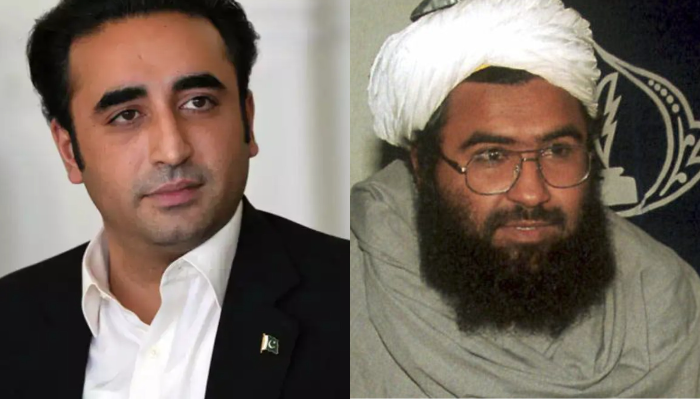
The Congress veteran even carried political mudslinging into the territory of outrageous conspiracy theories and added, “Was it because of this spying that Azhar Masood and Hafiz Saeed escaped alive? Does the country not deserve to know that you saved Azhar Masood? This is the same person who was saved earlier in Kandahar. Why was there a conspiracy to save him for the second time? If we have forewarned Pakistan, then obviously terrorists like Azhar Masood and Hafiz Saeed must have escaped.”
He implied that the United States and China might possess compromising information regarding Prime Minister Modi, Jaishankar and other leaders of the Bharatiya Janata Party, given their reticence when dealing with these countries.
Row over MP delegation
The petty politics, as expected, is not confined solely to India’s military action but also encompasses its efforts to inform the world regarding Pakistan’s sinister schemes that resulted in the operation. Congress has expressed massive outrage following the selection of Shashi Tharoor by Modi government to head one of the seven delegations abroad for diplomatic efforts aimed at exposing Pakistan and emphasizing India’s ongoing battle against cross-border terrorism.
Notably, the party proposed the names of foreign union minister Anand Sharma along with Congress MPs Gaurav Gogoi, Syed Naseer Hussain and Amarinder Singh Brar. However, the government selected only one name from this list, Anand Sharma and substituted the remaining names with individuals not recommended by Congress, including Lok Sabha MPs Shashi Tharoor, Manish Tewari and former union minister Salman Khurshid.
The government clearly selected those who would be most effective in conveying the truth and the nation’s perspective. However, the Congress transformed this into an issue of political pride, labeling the decision as “dishonest” and “cheap politics” as well as alleged that the centre was “playing games.” It was remarked that the government appeared to have settled on the names even before seeking input from Congress.
“Everyone can see that Operation Sindoor is being politicised. US President Donald Trump’s repeated claims, made at least seven times, that the conflict was de-escalated due to his mediation. Yet, PM Modi has not responded. The EAM is silent,” Congress General Secretary in charge of Communications Jairam Ramesh accused. He even declared that there is a “huge difference between being in Congress and being of Congress.”
Meanwhile, the Thiruvananthapuram Lok Sabha MP has chosen to be part of the delegation. He voiced his intention to diligently carry out his designated duties. He even underscored that although his party leadership may hold differing opinions, his commitment to the country is unwavering. The announcement further incensed the top brass of Congress.
Moreover, Manish Tewari has also cited the “call of the nation” as reason for his decision to accompany the Indian delegation on its international outreach campaign against terrorism supported by Pakistan.
TMC refuses to join the delegation
The All India Trinamool Congress (AITC/TMC) also chose not to send its Lok Sabha MP Yusuf Pathan who was nominated by the centre or any other Member of Parliament in the multi-party delegations traveling to various nations to advocate against Pakistan’s cross-border terrorism. “They cannot decide member’s name on their own. It is not their choice. If they request the mother party will decide as is customary,” West Bengal Chief Minister Mamata Banerjee stated.
“How can the union government decide the representative of Trinamool? They should have held discussions with the opposition to decide which representative a party will send,” party’s National General Secretary Abhishek Banerjee argued. “The BJP government is at the helm of affairs. They can decide for their party, but not for Congress or AAP (Aam Aadmi Party),” he added.
The government selected the MP from Murshidabad to be a member of the delegation after its floor leader for the Lok Sabha, Sudip Bandhyopadhyay, stated that his health prevented him from taking part in the campaign. According to TMC, the government did not consult them.
MP delegation: A norm in democracies
A parliamentary delegation refers to an official overseas visit by one or more legislators. Parliamentary delegations are established to promote solidarity, engage in negotiations, conduct research, carry out investigations and disseminate information. India has welcomed numerous delegations from different democracies in the past and has dispatched similar groups to various nations for diverse objectives.
The aim of the present delegation is to showcase the true nature of the cross-border terrorism instigated by Pakistan through its “bleed India by a thousand cuts” strategy. A recent instance of this was the Pahalgam terror attack, which resulted in the deaths of 26 Hindu tourists and escalated the conflict between the two neighboring countries.
In a copycat move, Islamabad also announced its own intentions to send a high-level team headed by former foreign minister Bilawal Bhutto-Zardari to important international capitals, just hours after India made the declaration.
“I was contacted earlier today by Prime Minister (Shehbaz Sharif) who requested that I lead a delegation to present Pakistan’s case for peace on the international stage. I am honoured to accept this responsibility and remain committed to serving Pakistan in these challenging times,” Bilalwal wrote on social media.
It is widely acknowledged that Pakistan functions merely as a democracy in name, as it is effectively governed by its military which possesses the authority to manipulate elections, murder and imprison elected officials and leaders, including prime ministers.
Opposition leaders doubt “Operation Sindoor”
Congress leaders have already cast asperions on “Operation Sindoor.” Kothur Manjunath, the MLA from Kolar City in Karnataka, asserted that the action has proven ineffective and failed to deliver justice to the family of the victims of the Pahalgam terror attack. “If terrorists can enter our country, kill our people, and escape unscathed, isn’t that a glaring security failure? What was our army doing at the border? Did they have any plan at all,” he asked.
Prithviraj Chavan, a veteran Congress leader, criticized the administration over the operation’s codename, claiming it was picked to obtain “sentimental benefits.” Congress leader Udit Raj also levelled similar allegations and accused, “During discussions with intellectuals, it was pointed out that Sindoor is associated with a specific religion, and it would have been better if a different name was chosen.”
Mahua Maji, a Member of Parliament in the Rajya Sabha representing the Jharkhand Mukti Morcha, voiced her dissatisfaction with the name of the operation, indicating that a more suitable title could have been chosen. She contended that the name was laden with political connotations and stated that the operation should have been assigned a different codename.
Senior Congress leader Rashid Alvi stated, “Much better reply needs to be given, this is bare minimum. Our forces did what govt of India told them to do, but the question again arises. Was every single terrorist killed? Will there won’t be another Pahalgam?”
The operation was met with skepticism from controversial Congressman and Lok Sabha MP Imran Masood. “How many (terrorists) were killed and what all damages could they inflict, this also should be announced, then we will feel at peace,” he asked. “The whole world mocked the air strike. Pakistanis were saying that they killed our three crows,” he claimed in an earlier interview to ridicule 2019 Balakote airstrike.
Conclusion
The opposition has transitioned from questioning the operation’s results to criticizing its name, and now to politicizing the government’s initiative to dispatch the MP delegation, opting to engage in political mudslinging instead of standing united with the government in these critical moments.
Nonetheless, their behavior is not unexpected, as the opposition parties, particularly the Congress, have consistently prioritized political interests over national issues and have aligned with the narrative of India’s hostile neighbour.