Home Blog Page 3406

Rajasthan: Son of Congress MLA Johari Lal Meena booked for gangrape, blackmail and extortion of a minor girl

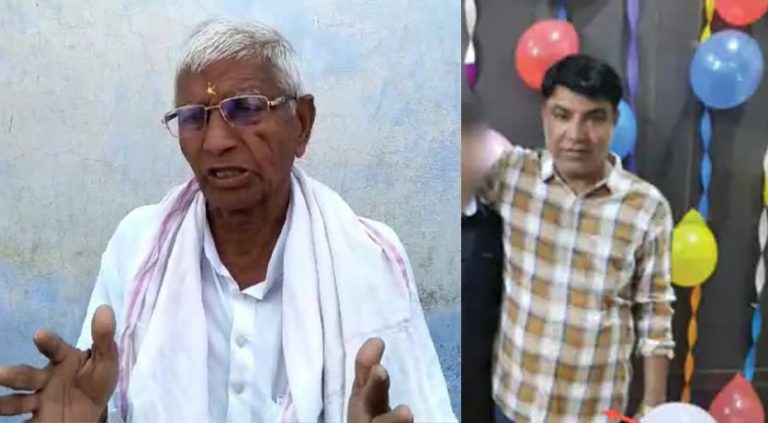
Deepak Meena, the son of Congress MLA Johari Lal Meena from Rajgarh, Rajasthan has been arrested by the police in a case of rape of a minor. The case pertains to the gang-rape of a minor girl studying in class 10th at Mandavar police station in Dausa.

A total of five people have been charged by the police in the case. Deepak Meena, the son of Rajgarh MLA Johari Lal Meena, is one of the accused. The police have filed charges against everyone under the POCSO Act and also under relevant sections of IPC for gang rape.

According to Mandawar police station SHO Nathu Lal Meena, a case of gang rape has been lodged against a total of 5 persons on the complaint by the girl’s relatives, with three accused identified. The identified accused are Vivek, Deepak, and Netram.

The incident reportedly happened in February 2021. The victim’s relatives have also claimed that the accused committed gang rape on many occasions with the victim. The crime occurred at a hotel in the Mandawar police station area, where the accused persistently blackmailed the victim and gang-raped her.

The accused, according to the victim’s relatives, allegedly recorded pornographic films of her and used them to blackmail her. According to family members, the suspects threatened them and took over 15 lakh rupees in cash and jewels worth lakhs from the residence. 

It must be noted that a similar case was also registered against Deepak Meena’s father and Congress leader Johari Lal Meena for allegedly raping a widow several times back in 2019. Meena reportedly raped the victim, who was inebriated and unable to stop him. According to the victim, Meena also threatened her on his way back to the village, claiming that he had videotaped the incident. 

Johri Lal Meena, a Congress MLA from Alwar’s Rajgarh-Lakshamngad seat, has been embroiled in a number of other crimes. Soon after the Rajasthan assembly elections, Johri Lal Meena was spotted chastising Dalit voters in his area for not voting for him. He had stated that he will not work for Dalit villages because they did not vote for him.

Karnataka, Mandya villagers protest after DC Ziyaullah allocates land to Muslim burial ground despite no Muslim population in 15 nearby villages: Reports

0

A new controversy has erupted in Karnataka’s Mandya over sanctioning an illegal Muslim cemetery in Hosa Budhanoor village despite the absence of any Muslim population in the surrounding villages.

According to the reports, the villagers of the Budhanoor village of Mandya taluk in Karnataka is facing a serious problem. For years, the villagers were demanding a crematorium in the Hosa Budhanoor. The district authorities not only ignored their demands for allocating government land to build the crematorium but also silently allocated land to a burial ground for Muslims even though none of them lived in the surrounding 15 villages. 

The villagers have alleged that the Waqf board has converted the 1.13 acres of land allocated to Hindus in the village into a Muslim burial ground in 2017. The villagers have alleged that the then Deputy Commissioner of Mandya S. Ziyaullah had given his permission to convert the land into Muslim burial even as there were no Muslim populations in nearby villages.

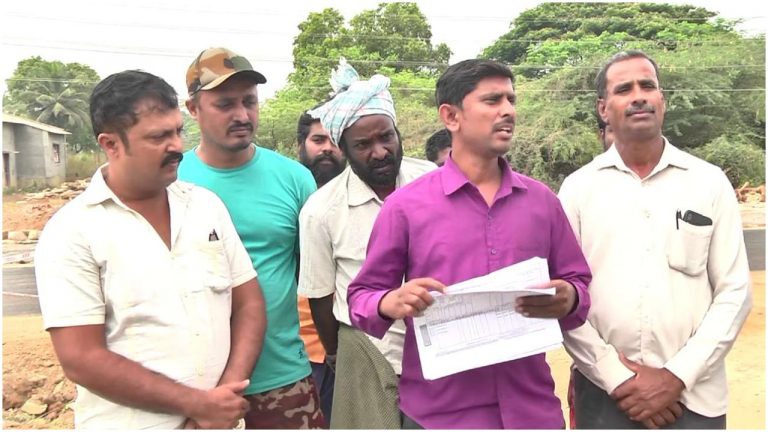
On Friday, the villagers of Budhanoor organised a padayatra from their village to the Mandya DC office to submit a memorandum to reconsider the decision to allocate the government land to the Muslim burial ground and urged them to allocate a cemetery for Hindu villagers.

Meet Ritu Khanduri, the first woman Speaker of Uttarakhand Assembly

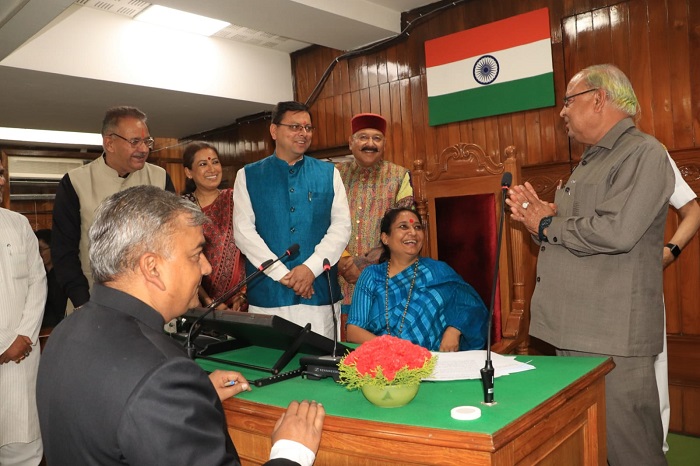
On Saturday, Ritu Khanduri of the Bharatiya Janata Party was elected as the fifth Speaker of the Uttarakhand Legislative Assembly, becoming the first woman Speaker of the state Assembly. Khanduri succeeded BJP’s Premchand Aggarwal whose term ended on March 10. Chief Minister Pushkar Singh Dhami congratulating Khanduri said that under her leadership, the state Assembly would create a new history.

“I want to congratulate Ritu Khanduri for being elected as the first woman speaker of the state Assembly. She will run the House well and our Assembly will create new history under her leadership,” Dhami said on March 26.

Meanwhile, Khanduri expressed her gratitude and thanks for being elected unopposed as the first woman Speaker of the State Assembly and said that it was a proud moment not only for her but for the entire Uttarakhand. “This is a proud moment not only for me but for the entire Uttarakhand too that a woman has been elected unopposed as the Speaker. I am delighted. This is an honour for women, for Uttarakhand”, she said.

“I will discharge the highest parliamentary ideals and traditions to the best of my abilities”, she added on Twitter. Khanduri had contested and won the 2022 Uttarakhand assembly elections from the Kotdwar assembly constituency. She won the Kotdwar seat by a margin of 3,687 votes and defeated Congress’ Surendra Singh Negi, who had defeated her father from the same seat in the 2012 assembly elections.

Before taking a plunge into politics, Ritu Khanduri worked as a teacher at Amity University in Noida. While being active in politics, Khanduri rose to public prominence in 2017 when she won the Yamkeshwar seat in the Uttarakhand Assembly elections. She was appointed to the State Committee on Information and Technology at the time. According to the reports, she was hesitant to leave the teaching profession and join politics but did so at the behest of her father Bhuwan Chandra Khanduri.

Bhuwan Chandra Khanduri had lost the assembly elections in the year 2012 from the Kotdwar seat to Surendra Singh Negi. He then happened to distance himself from politics. His legacy was later taken over by Ritu Khanduri who contested the Yamkeshwar seat for the first time and defeated former minister Surendra Singh Negi.

Interestingly, Ritu Khanduri’s brother, Manish Khanduri, is a member of the Indian National Congress and had contested the Lok Sabha polls from the Garhwal constituency in 2019, but lost the elections. In the 2019 assembly elections, Ritu’s father, Bhuwan Chandra Khanduri, former CM of Uttarakhand, had refused to contest citing age-related problems. Following this, Tirath Singh Rawat contested from the Pauri Garhwal seat and won against Khanduri’s son.

Snare the fundamentalists, spare the fundamentals, but what about the Constitution

Anand Ranganathan is a well-established academic – he has studied at Cambridge, and currently holds an Associate Professor rank in the Department of Molecular Medicine at JNU. His work includes serious research on pathogens for tuberculosis and malaria. However, in a sign of the times, he’s perhaps best known for his debates on nightly TV panels.

One of his most famous techniques is to quote several verses from the Quran that most ‘liberals’ will find questionable at best in any other context. The viewer becomes more educated and also entertained, as the so-called liberal panellists either squirm in discomfort or try to maintain a studious look. He usually ends one of his rapid-fire recitals with the punch line, ‘why are you snaring the fundamentalist, but sparing the fundamentals’. Said differently, many people decry fundamentalism such as the one practised by the Taliban but turn into Gandhi’s three monkeys when it comes to speaking on the fundamentals, i.e. the Quran itself.

Borrowing Dr Ranganathan’s framework, what we see in current discourse is the snaring of the fundamentalists, for example, those advocating for the wearing of a burqa (slyly referred to as a hijab in most media) in the classroom, but sparing the fundamentals that even allow this question to come up. The fundamentals, in this case, are the Articles and directives in our constitution and how they are put into practice downstream. This includes the judiciary that passes judgments based on it and the state institutions that are caged to operate within key constitutional limitations. 

While the burqa (hijab) battle went in the favour of schools and not fundamentalists, for now, the greater war will be lost as it’s played out on an uneven field. A field that is the constitution with certain colonial undertones – one that, in part, sees Hindus as heathens that need to be civilized, while incentivizing minorities with vested interests to take up maximalist positions. A few examples of how Hindus face state-sanctioned second-class treatment:

– Hindus have no right to set up their educational institutions while minorities do.

– Minorities have the right to govern themselves based on their own laws while Hindus have to follow a common code. This and the above is why you have the example of many Hindu groups asking for minority status.

– Major Hindu temples that have been destroyed and replaced by churches or masjids have no right to ask for a reversion to the original structure.

– (Mostly) Hindu land captured by Islamic tyrants and British colonizers and given subsequently to Waqf boards and Churches have no right for recapture by the modern democratic state.

– Constitutional muzzling of any criticism of Abrahamic beliefs, supported by muscle power on the street that only allows for one-way traffic of abuse of Hindu Gods, beliefs, and practices.

– A judiciary that rules through an Abrahamic lens of ‘essential practices’ which by its very nature, seeks to erase the diversity of Hinduism. In the absence of ‘one true book, one true prophet’ Hindu practices can mostly be deemed not essential and hence banned.

– Institutionalized support for increasing fissures in Hindu society through an unfair reservations system. A system that incentivizes brain drain and forces students to go to faraway lands to pursue higher studies.

More specifically, Articles 25 – 30 of the Indian constitution serve as a double sword – one that cuts down Hindu society at the knees and lifts up minorities through state-sanctioned support. One must read those Articles (to get the full effect, the reader may choose to read these rapid-fire, in the voice of Anand Ranganathan).

While Articles 25 – 30 sound rosy in their titles, the interpretations are poisonous for Hindu society. Here is each article and a summary of what it means in reality:

Article 25. Freedom of conscience and free profession, practice and propagation of religion. The detailed text clearly calls out Hindu heathens as needing to be civilized and this clause is what enables States to take over temple boards.

Article 26. Freedom to manage religious affairs. Enables parallel systems such as Sharia law to be setup.

Article 27. Freedom as to payment of taxes for promotion of any particular religion. Enables institutions such as Churches to avoid paying taxes for the common good while Hindu temple boards already get ensnared based on Article 25.

Article 28. Freedom as to attendance at religious instruction or religious worship in certain educational institutions. While this clause has not been actively utilized by Hindu haters, expect court cases to come up to challenge any references or teaching of dharmic values and practices such as Yoga in schools.

Article 29. Protection of interests of minorities. Explicit promotion of minority rights versus common protection for all faiths, cultures, and linguistic groups.

Article 30. Right of minorities to establish and administer educational institutions. This article and its tyrannical child, the Right to Education Act, enable minorities to set up their own institutions but deny the same to Hindus.

Until Hindu samaj gets honest with itself on the real problem, there is only a slow and steady march to the fires of annihilation, regardless of the mini-victories during the journey.

Uttar Pradesh CM Yogi Adityanath resumes his welfare mission in the second term, extends free ration scheme by three months

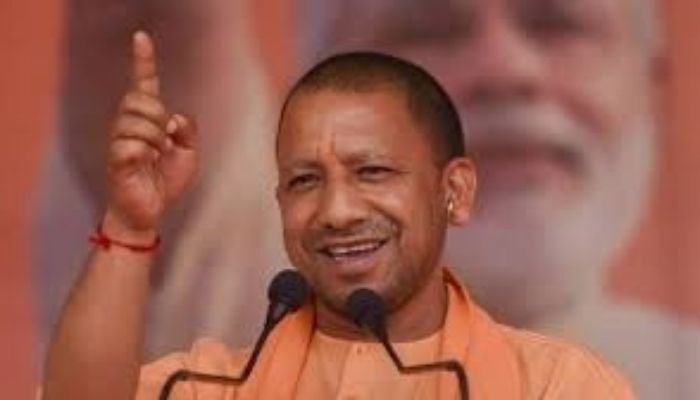
Soon after getting sworn in for the second consecutive term, Uttar Pradesh CM Yogi Adityanath has resumed his mission of public welfare through good governance. In the first decision of his second term as the CM of India’s largest state, Yogi Adityanath extended the free ration scheme by three months. He announced this decision in a press conference organized at Lok Bhavan in Lucknow on 26th March 2022. The free ration scheme will now be operative till 30th June 2022.

While informing about this decision, CM Yogi Adityanath said, “This decision is dedicated to the people of the state. In the pandemic times, PM Narendra Modi had started the Pradhan Mantri Anna Yojana which served 80 crore people of the country. Between April 2020 and March 2022, people were benefitted for almost fifteen months through this scheme.”

He further said, “In Uttar Pradesh, about 15 crore people received the benefits of this scheme. Uttar Pradesh government had started a scheme to benefit 15 crore beneficiaries of this scheme and the Uttar Pradesh Antyoday Scheme. It started in April 2020 for three months and subsequently, in 2021, it was extended for three months in May, June, and July. After that, in December, the scheme was resumed by the state government from December 2021 to March 2022. 15 crore people of Uttar Pradesh are benefitted and these people include families eligible for the Uttar Pradesh Antyoday scheme and Uttar Pradesh Paatra Grihasthi Yojana. The Antyoday families get 35 kilograms of ration while the Paatra Grihasthi families get per unit five kilograms of ration.”

CM Yogi Adityanath added, “Alongside, the state government provided 1-kilogram each of pulses, refined oil, and iodized salt to every family. Not only this, the state government provided one kilogram of sugar to every Antyoday family. This scheme was valid till March 2022. But, today, the cabinet has decided in the meeting that this scheme will be applicable to all the 15 crore beneficiaries in the state till 30th June 2022. The cabinet has dedicated this decision to the 15 crore beneficiary people of this scheme.”

Yogi Adityanath said, “This is the double engine government. Even before we were with the people of Uttar Pradesh. In the COVID pandemic period, we provided free ration, free testing kits, free treatments, and free vaccines to the people of the state. Any pandemic brings along with it, a side-effect like starvation. But the state, just like the nation, today has robust systems to fight such problems. So this is the first decision of our cabinet that I have just informed you about. We have used modern technologies and given our best to ensure transparent distribution systems.”

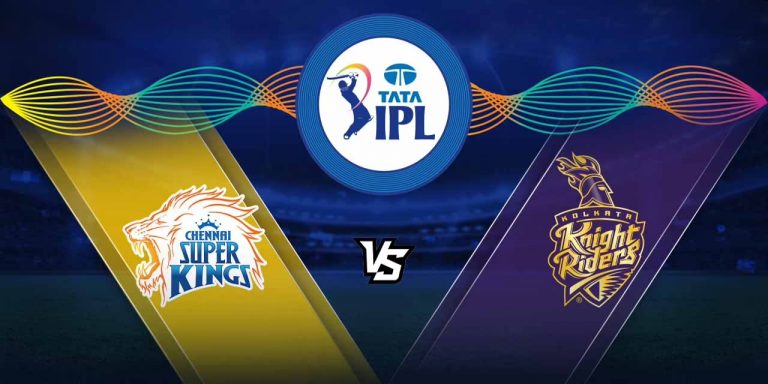
Chennai Super Kings vs Kolkata Knight Riders match at Wankhede stadium to kick off two months long IPL carnival

Last year’s finalists, Champions Chennai Super Kings (CSK) and runners-up Kolkata Knight Riders (KKR), will be back at it again to kick-start the 2022 edition of the Indian Premier League. The 15th edition of the IPL will run from 26th of March till the 29th of May. Entire group stage of the tournament will take place in Maharashtra this year, to minimize players’ travel during Covid.

Back in October 2021 in Dubai, CSK had gotten the better of KKR quite comfortably in the end to claim their 4th IPL title. However, the teams set to clash at Mumbai’s Wankhede stadium will be quite different to the XIs that took the field at the Dubai International Stadium just over 5 months ago.

New Captains at the helm

In his typically understated way, MS Dhoni handed over the captaincy to all-rounder Ravindra Jadeja on the eve of the competition. Jadeja becomes only the 2nd player in IPL history to become the full-time captain of Chennai Super Kings (3rd player to captain them overall, with Suresh Raina having filled in for Dhoni on occasions previously). This will be the first time when Jadeja will be captaining a team in the competition.

Just like CSK, Kolkata will also be taking the field under a new captain in Shreyas Iyer. Having decided not to retain, or even buy Eoin Morgan at the mega IPL auction, KKR really wanted to get Shreyas as their captain. They eventually got him for 12.25 Crores, making him one of the most expensive buys in the auction. Shreyas has previously captained Delhi Capitals, even leading them to the IPL Final in 2020.

The Squads

Chennai, as they have always done, have tried to keep their core together even during the recent auction. Apart from retaining MS Dhoni, Ravindra Jadeja, Moeen Ali and Ruturaj Gaikwad, the team also bought back their regulars Deepak Chahar, Dwayne Bravo, Robin Uthappa, Ambati Rayudu and Mitchell Santner. While Moeen will be unavailable for the first match due to issues with his Visa, they have a ready replacement in the highly rated Devon Conway who joined them this year.

Complete Chennai Super Kings Squad: Ruturaj Gaikwad, Robin Uthappa, Devon Conway, Ambati Rayudu, Ravindra Jadeja(c), Shivam Dube, MS Dhoni(w), Dwayne Bravo, Chris Jordan, Rajvardhan Hangargekar, Maheesh Theekshana, Adam Milne, Mitchell Santner, Tushar Deshpande, Hari Nishanth, N Jagadeesan, Subhranshu Senapati, Prashant Solanki, Mukesh Choudhary, KM Asif, Simarjeet Singh, Bhagath Varma

KKR were dealt a blow ahead of the IPL when opening batsman Alex Hales decided to pull out of the competition citing bubble fatigue. His replacement, Aaron Finch, will miss the early part of the competition as well. Kiwi fast bowler Tim Southee will also be missing after his wedding recently. They will once again be looking at their West Indian duo, Andre Russell and Sunil Narine, to lead their charge along with other regulars from last season, Varun Chakravarthy, Nitish Rana and Venkatesh Iyer. With the arrival of Ajinkya Rahane, along with Captain Shreyas Iyer, they have added experience to their batting order following the departure of experienced pros like Dinesh Karthik and Eoin Morgan.

Complete Kolkata Knight Riders Squad: Venkatesh Iyer, Ajinkya Rahane, Nitish Rana, Shreyas Iyer(c), Sam Billings(w), Andre Russell, Sunil Narine, Chamika Karunaratne, Shivam Mavi, Varun Chakaravarthy, Umesh Yadav, Rasikh Salam, Mohammad Nabi, Sheldon Jackson, Baba Indrajith, Rinku Singh, Anukul Roy, Pratham Singh, Abhijeet Tomar, Aman Hakim Khan, Tim Southee, Ashok Sharma, Ramesh Kumar

New IPL Rules

  • The DRS reviews have been increased from 1 to 2 for each team. Earlier teams were allowed only 1 review in an innings.
  • As per MCC‘s latest rules, new batsman will take strike after a catch is taken even if the batsmen cross while the catch is taken.
  • Matches will be rescheduled if a team doesn’t have 12 fit players for a match due to any Coronavirus breakout in the squad.
  • If conditions don’t permit a Super Over, the champion will be decided based on the teams’ league standings after the group stage.

Karnataka: Days after pro-Hijab Muslim students protested against Saraswati Puja, Saraswati idol vandalised in Belagavi’s school

Two separate incidents of desecration of idols of Hindu deities have been reported in Karnataka.

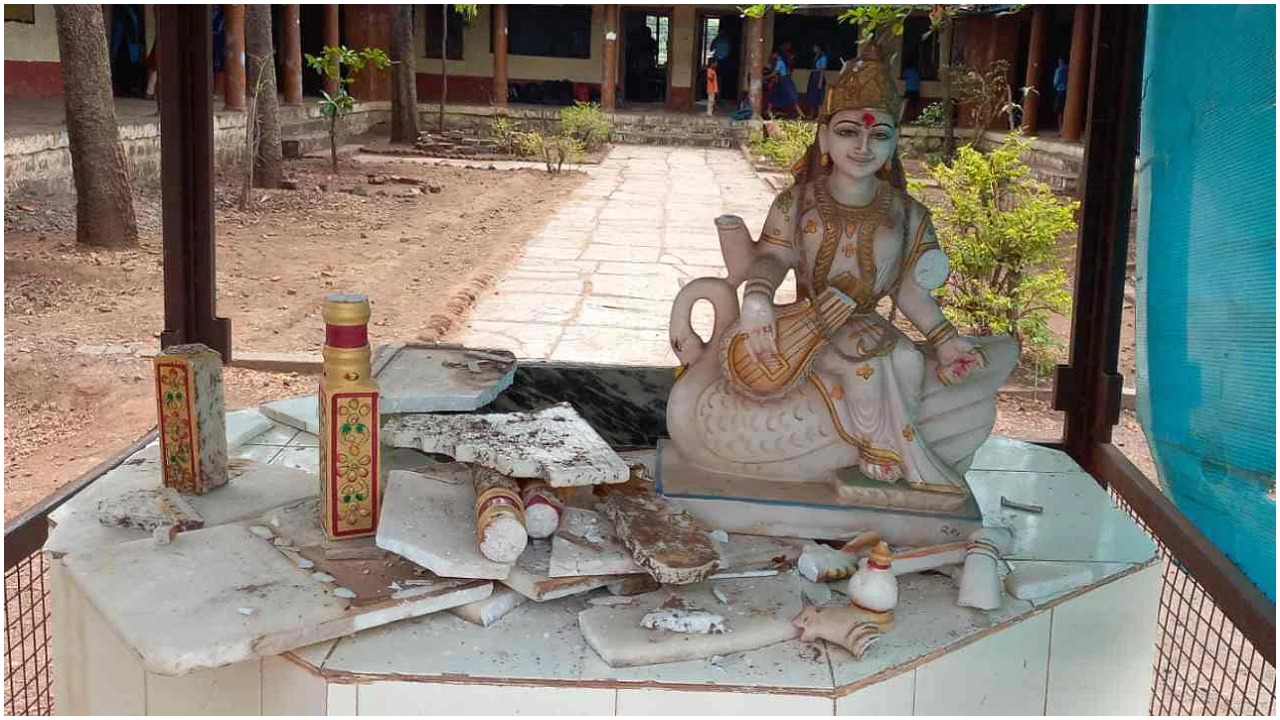
In Chikkodi taluk of Belgaum district, some unidentified miscreants have vandalised the idol of Saraswati idol present inside the government primary school.

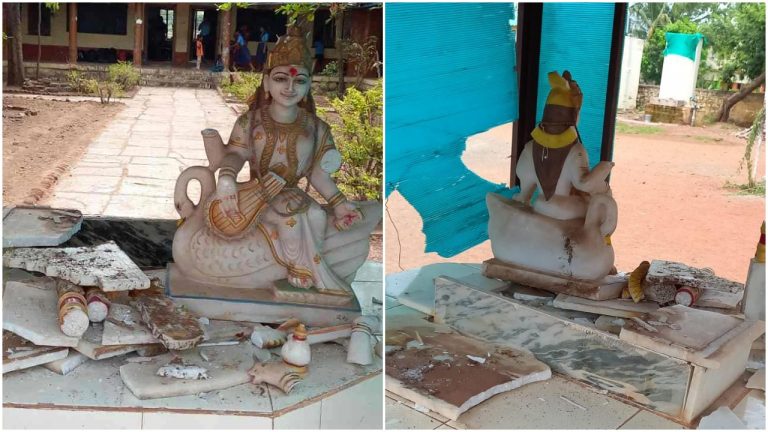
Saraswati idol desecrated in Belagavi’s Chikkodi taluk/ Image Source: TV9

From the photographs, it can be seen that the marble idol has been severely damaged in the attack. Two of the four hands have been broken, the Veena is broken, and several marble slabs and pieces can be seen lying around the tiled platform.

According to the reports, the incident occurred on Thursday evening at the government primary school in the Chinchani village of Chikkodi taluk. The school authorities became aware of the desecration of the Saraswati idol on Friday. They have now lodged a complaint with the Chikkodi police.

The Chikkodi police visited the site and inspected the school premises on Friday. The situation became tense after the incident, and a police team has been deployed to prevent any untoward incident.

Saraswati, Mohandas Gandhi and Vivekananda idols damaged in Shivamogga

Similarly, in another recent incident, miscreants had desecrated idols of Swami Vivekananda, Mahatma Gandhi and Saraswati at a government primary school at Harohally in Shivamogga district. The miscreants had entered the school premises to vandalise the idols and statues and also destroyed the backyard of the school.

The attack on the Harohally government school, which is a learning centre of several poor students, has angered the school alumni and villagers, who have now demanded strict action against the culprits.

The villagers have alleged that the illicit liquor mafia in the village is responsible for such attacks on the school. They said some men get drunk every night and create mischief in the village area.

Following the incident, the village panchayat and the school authorities have lodged a complaint in the Tirthahalli police station.

Interestingly, the attacks on Saraswati idols inside school premises comes weeks after several Muslim girl students protesting against the hijab ban in Karnataka’s schools had objected to government schools and colleges celebrating Saraswati pooja.

The abandoned minorities of Pakistan: Discrimination with impunity, state and constitutional support to the forced conversion, humiliation of Hindus

The everyday instances of discrimination against religious minorities are not only the result of Islamic extremism but many repugnancy provisions in the constitution of Pakistan actively emboldens and institutionalise these discriminations. 

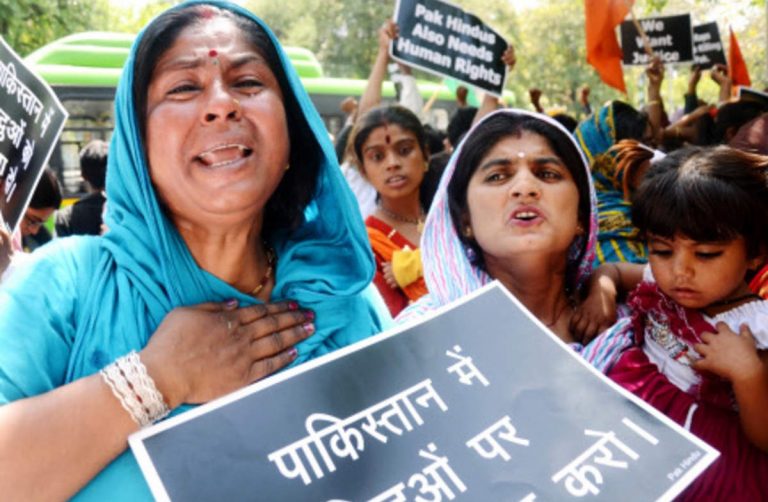
The recent incident of killing of a Hindu girl, Pooja Oad in Sindh district for resisting abduction attempt and forced conversion summarises the constant fear under which non-muslims, particularly Hindus and Sikhs, are forced to live in Pakistan. Apart from the constant threat to their lives via false blasphemy charges, there exist discriminatory legal, institutional and constitutional provisions which force religious minorities in Pakistan to live a life of second class citizens.

This article makes an attempt to show the many ways in which Hindus and Sikhs of Pakistan are being discriminated against and their human rights are violated with impunity albeit with State support.

Rampant violations of rights of religious and other minorities are reported from Islamic countries on a daily basis. In this context, Pakistan is a living hell for religious minorities. Pakistan, the so-called land of pure, is literally on its way to becoming ‘Pure’ i.e free of Hindus and Sikhs. The 2017 census data shows that Muslims have become 96.47% of the total population and on the other hand religious minorities have shrunk. Hindus, for example, are at their all-time low at 1.73% of the population.  

Similar is the situation for other religious minorities. Religious minorities are not treated as equal citizens and this fact is even boasted by the constitutional heads of the country. For example, Khawaja Nazimuddin, the 2nd Prime Minister of Pakistan, had said, “I do not agree that religion is a private affair of the individual nor do I agree that in an Islamic state every citizen has identical rights, no matter what his caste, creed or faith be”. 

In Pakistan, there lies religious merit in converting non-Muslims to Islam and whole state machinery is found complicit in such activities against minorities. According to their own human rights commission report, around one thousand young Hindus and Christians are forced to convert to Islam every year. Atrocities on Hindu minorities, particularly on Scheduled Caste Hindus and women are particularly worse.  

These atrocities started with the very birth of Pakistan in 1947. Then Scheduled Caste leader of Bengal, Jogendranath Mondal (1904-68), who made a so-called common cause with the Muslim League, had to come back to India just after a few years. His letter is a historic document indicating the abysmal status of minorities in the then just born Pakistan. Also, it is a lesson for today’s so-called Ambedkarites who are seeking a common goal with such Islamic fundamentalist forces in India.

Constitutionally, Pakistan being an Islamic state, its present constitution has many repugnancy clauses which discriminate against religious minorities. For example, sections 298-B and 298-C of the Pakistan Penal Code restrict religious groups from freely practising their faith and Clauses 295-B and 295-C on blasphemy can endanger the very life of the accused individual. Blasphemy laws perpetuate dehumanizing discrimination against minorities. They live under a constant threat of Islamic vigilantism. 

Since 1990, scores of Pakistanis hailing from religious and linguistic minorities in Pakistan have been killed over claims of blasphemy. Even Muslims who speak against these inhuman laws are killed. The Minorities’ Minister, Shahbaz Bhatti, was assassinated in 2011 for speaking against the blasphemy laws. Also, Asia Bibi languished in jail for many years. After calling the blasphemy law a ‘black’ law, Salman Taseer, the governor of Punjab, was shot dead by Mumtaz Qadri, his bodyguard, in 2011. As recently as in 2020, UN High Commissioner for Human Rights Michelle Bachelet called out this draconian law and stated, “Religious minorities in Pakistan continue to face violence and repeated attacks on their religious places of worship and government’s failure to amend the blasphemy law led to violence against them”.

Legally also, Pakistan State discriminates against religious minorities in many ways. Take the example of the “Hindu Marriage Act, 2017” for the constitutional recognition of Hindu Marriages. However, a major loophole in it is used in the forceful conversion of Hindu women. It is section 12 (iii) which stipulates “…the marriage may be terminated on the basis of either the husband or the wife converting to some other religion”. This section annulled any imaginary protection provided to women. Abduct a married woman, force her to convert, force her to say it is voluntary and her marriage is annulled. Similarly, Ahmadis live in constant fear of harassment or assault either to themselves or their homes, workplaces and places of worship. For instance, under Section 298-B of the Pakistan Penal Code, Ahmadis are prevented from using any Islamic epithets that might result in them being mistaken as Muslims. In addition to this, Section 298-B (2) criminalises the use of the word “Azan” for the call to prayers by Ahmadis. 

In a country infested with Sunni Islamic radicalisation, there is no security and freedom for women and even other ethnic and linguistic Muslim minorities. Women belonging to religious and ethnic minorities face double marginalisation. Though Pakistan is a signatory to the Convention on the elimination of all Forms of Discrimination against Women (CEDAW) yet crime against women continues unabated. Hatred is being fomented in society through an inappropriate representation of minorities and particularly women folks in society and also in the educational curriculum. The judicial system has also failed to prevent the occurrence of the crimes and give justice to the victims.

Punjab dominated military-politician complex violates the human rights of Balochs, Hazaras, Sindhis, Ahmadis and people of Gilgit-Baltistan. Violent attacks on their social gatherings or religious places by Sunni extremists groups and people are very common. Shias, Ahmadi Muslims, Christians, and Hazaras are particular targets of these attacks. In 1974 Ahmadis were officially denied even the legal rights to be considered Muslims. The Gojra riots were particularly harrowing in which several Christians, including women, were killed. Baluchistan’s independence movement is violently suppressed by the Punjabi dominated military here. Forceful abductions, rape, enforced disappearances and extra-judicial killings of the detainees by the military are frequent in the case of the Baloch and Pashtun minorities. Though Pakistan adheres to the Universal Declaration of Human Rights and is a signatory to several international human rights treaties such as the International Covenant on Civil and Political Rights (ICCPR). However, these ethnic and linguistic minorities along with religious minorities remain disenfranchised in society and are not fully included in the political life of the country.

Thus, every basic norm of human rights is being grossly violated in Pakistan by legal institutions, society and non-state actors. Hence, it’s a mandate on the international community concerned with the protection of human rights to take necessary measures. This is high time that international agencies, like the Office of the High Commissioner for Human Rights (OHCHR), must intervene effectively before it is too late and minorities are completely wiped off from the country. Pakistan is signatory to many humanitarian covenants however gross violations of rights of religious minorities go unnoticed internationally. The UN and the other concerned agencies must give up their partisan behaviour and speak up vocally for religious minorities of Pakistan.

(This article is an aggregation of the facts that are already in the public domain. Inputs have also been taken from the various reports of a Delhi based Centre for Democracy, Pluralism and Human Rights headed by Dr Prerna Malhotra).


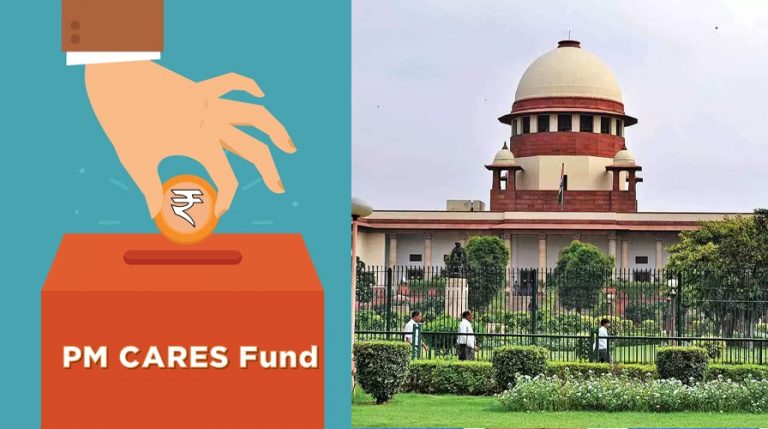
Supreme Court refuses to consider plea against PM Cares Fund, tells petitioner to go back to High Court for review

On Friday 25th March 2022, the Supreme Court refused to consider a plea against the PM Cares Fund. The plea was submitted in the apex court to challenge an Allahabad High Court order rejecting a challenge to the constitutional validity of the PM Cares Fund. The petitioner’s lawyer Devdatt Kamat said that the High Court had not dealt with all the points raised in the petition. The Supreme Court bench of Justice L Nageswara Rao and B R Gavai instructed the petitioner Divya Pal Singh to go to the High Court for a review.

The bench said in its order, “You might be right in saying that all issues were not considered. You go and file a review. Let us have the benefit of the High Court order. You can approach the top court again in case of grievance after HC decides the matter.”

Senior advocate Devdatt Kamat represented the petitioner. He said the High Court was not correct in dismissing the Writ Petition solely based on the judgment of the Supreme Court. He submitted that the Prime Minister National Relief Fund (PMNRF), a public charitable trust, was created on January 24, 1948. When the constitution of India came into force on 26th January 1950, at that time, as per Entry 10 of the Concurrent List in the Seventh Schedule funds were prescribed to be created only by the force of law. In 2005, Disaster Management Act was passed and National Disaster Relief Fund (NDRF) was created. Therefore, PMNRF lost its utility.

The petition claimed that the PM Cares Fund that was created in March 2020 during the pandemic weakens the already existing Disaster Management Act of 2005 because it is a substitute to NDRF and that the PM Cares Fund is taken out of the purview of the RTI Act 2005.

Advocate Kamat said, “Validity and disclosure were sought in this Writ Petition. That is not the scope of judgment in the Center for Public Interest Litigation (CPIL). This becomes all the more important because the judgment in CPIL is premised on the PM-CARES Fund does not receive money from the Government.” Replying to this argument, Justice Rao said, “We find too many public-spirited lawyers. Last week an advocate in Bangalore was saying reduce NEET cut off marks.”

The bench passed the order that says, “The senior counsel for the petitioner referred to the relief claimed in the writ petition and submitted that the points in the writ petition had not been dealt with by the High Court while dismissing the writ petition. The only ground on which the writ petition was dismissed was that the list is covered by the CPIL. The senior counsel seeks permission to withdraw to approach the High Court filing review to argue the other grounds. The petitioner is at liberty to approach this court against the order of the high court.”

BJP MLA Nitesh Rana says he has an eyewitness record of Disha Salian’s alleged murder, hints at the involvement of a Maharashtra minister

0

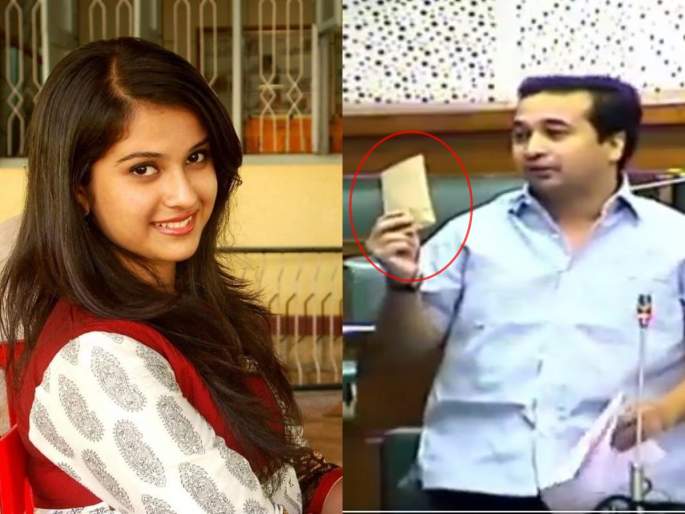
BJP MLA Nitesh Rana made an explosive revelation about the Disha Salian murder case while speaking in the Maharashtra legislative assembly on Friday. Rane said he had in his possession a pen drive and had prepared a transcript of an eyewitness account of Disha Salian’s gang rape and alleged murder, stating that a state minister is involved in the case.

The BJP leader said he drew lessons from the “pen drive university of Devendra Fadnavis”, stating if the former Maharashtra CM can make two pen drives, why can’t he make at least one.

“If we assume that she committed suicide then why has the CCTV footage from her building disappeared. The watchman has disappeared, pages 8 and 9 of the visitors’ register are missing. Her fiancé Rohan Rai who used to live with her and is an eyewitness is not traceable. I say with full responsibility that it is not a suicide but murder,” Rane said. 

Rane further added that he could have submitted the evidence with the police but he has doubts about their intentions. “The investigations are being done in a particular manner to save someone,” he said.

Asserting that the pen drive bears evidence about the involvement of a state minister in the gang rape and murder of Disha Salian as alleged by an eyewitness, Rane said he would, therefore, submit the pen drive to CBI and not the speaker of the assembly.

“I will not hand it over to you (speaker), rather I shall give it to the CBI through the courts, I do not believe the eyewitness will be alive otherwise,” he said.

Earlier, Rane had alleged that the death of Disha Salian is linked to her fiance Rohan Rai, who has since disappeared.

The mystery surrounding the death of Disha Salian, the former manager of actor Sushant Singh Rajput

Disha Salian, who had worked as Sushant Singh Rajput’s manager for a brief period of time, was found dead under mysterious circumstances on 8 June 2020, six days before Sushant allegedly died of suicide. 

Initially, it was alleged that Disha Salian had committed suicide. However, later reports emerged that Salian’s death could have been a murder and possibly linked to the mysterious death of actor Sushant Singh Rajput.

Investigations conducted in the matter revealed that Salian’s phone had remained active even after her death on June 8, 2020. Sources privy to the details claimed that Disha’s phone remained active for 9 days after her death. They also stated that Internet calls were made between June 9 and June 17 from Disha’s phone. However, no phone was seized by the officials of Mumbai Police, who had reached the spot within minutes of Disha’s death.