Home Blog Page 4192

Sonia Gandhi’s constituency Raebareli among districts with lowest vaccination rate, locals blame Akhilesh Yadav for vaccine hesitancy: Details

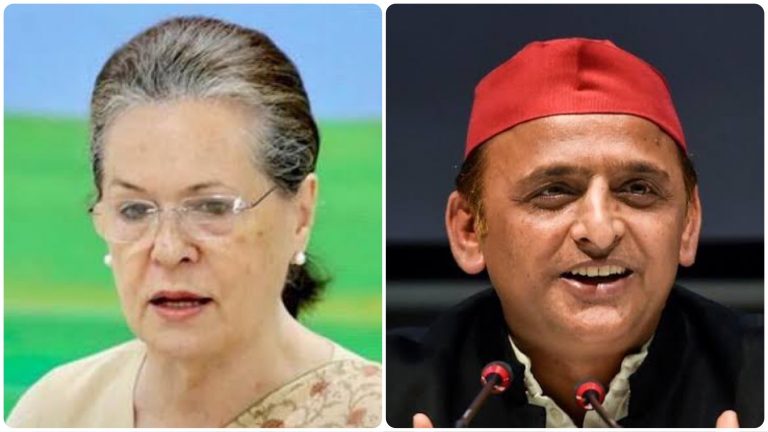
While the COVID-19 vaccination across India is galloping at an inexorable pace, it is remarkably low in the VIP constituency of Congress interim president Sonia Gandhi. Raebareli holds the unenvious distinction of being the district with the lowest vaccination rate in Uttar Pradesh and perhaps even the country, a report published on News 18 said.

Raebareli has an estimated population of almost 39 lakhs, a majority of which, that is, 85 per cent, is rural population. Out of 39 lakh people, only 2.12 lakh people have been vaccinated in Raebareli so far. Of the 2.12 lakh people, 1.81 lakh of them are jabbed with their first dose while others are fully vaccinated. This means, only about 4.6 per cent of the district’s population has been inoculated till now. This is significantly lower than the state’s average vaccination coverage, which is hovering around 9 per cent.

Notably, only 32,263 people have got both the jabs in Raebareli, which means that not even 1 per cent of the town’s population is fully vaccinated.

In its ground coverage, News 18 found vaccine hesitancy one of the primary reasons for Raebareli’s dismal vaccination coverage. People they spoke to admitted that there was a palpable fear about the possible side effects that vaccine might induce among the people of the town.

“We got our first dose in April and today we got our second jab. There’s a lot of vaccine hesitancy here. In fact, so many people tried to persuade me to not come and get the second jab,” News 18 quoted 69-year-old Dinesh Bahadur Singh as saying. His wife, Jyotima Singh (65), recalled how her sister in Delhi paid Rs 900 for a jab in a private hospital in Delhi while it was free of cost at Raebareli and yet people were not inclined to take it.

The condition of the interiors of Raebareli is even more abject. The crowd at the Community Health Centre in Amawan was thinner as people stay away from the vaccination centre. One of the residents, Gulab Kali Devi (75), who arrived at the centre for her second dose, patiently waited as the staff kept waiting for more people to arrive before they could open the vial that contains 10 shots so that none of it goes to waste.

Devi’s son Surendra Pratap Singh says people in his village are afraid of taking the jab. “If people get fever after taking the first jab, they would start dissuading other from taking the vaccine. But I got both my aged parents fully vaccinated,” Singh said.

A healthcare worker lamented about how they were finding it increasingly difficult to convince people to take the jab. She said there is a need to continuously motivate people and help them understand the benefits of vaccines and how they help in fighting the coronavirus.

Politicians, especially Akhilesh Yadav, responsible for fueling doubts among people with regards to vaccination

Another resident of the town, Virendra Singh, who got his 24-year-old daughter vaccinated with the first shot, blamed the confusion created by politicians for the vaccine hesitancy prevalent in Raebareli. He said most Yadavs and Muslims in his village have refused to get jabbed after Akhilesh Yadav earlier said that he would not take the vaccine.

Though the Congress party recently claimed that its president, Sonia Gandhi, took both doses of vaccine, the local people are unaware of it. “We did not see her picture of taking the vaccine. Gandhi can issue an appeal to the people of Raebareli to take jabs. Maybe it helps,” a student Nitin Mohan said.

NK Shrivastava, the chief medical superintendent at the Raebareli district hospital, admitted that there is some reluctance among locals about the vaccines. “Villagers come and ask me before taking the vaccine if they will have to stay indoors for three days after taking a shot. Taking advance registration for 18-44 category is also an issue for some apart from misinformation on social media. We try and remove the doubts of people,” Shrivastava said.

After a tepid response to vaccination initially, the Chief Medical Officer of Raebareli, Virendra Kumar Singh says that things are improving. “Initially, our vaccination programme did hit roadblocks with the hesitance among the locals, especially those belonging to 45+ age group. Now, the situation is improving and from July, we are planning a big increase in vaccination,” Singh said.

However, the number of people vaccinated on Friday was less than impressive. A paltry 3,300 people got vaccinated on Friday and only 2,700-odd people were inoculated on the earlier two days. The 85 per cent of the rural population, which are spread over 4,000 sq kilometres, has made it even more difficult for the authorities to get people to vaccinate at 89 vaccination centres in Raebareli.
UP CM Yogi Adiyanath suspends Electricity Board official for frequent power cuts, warns officials against delays

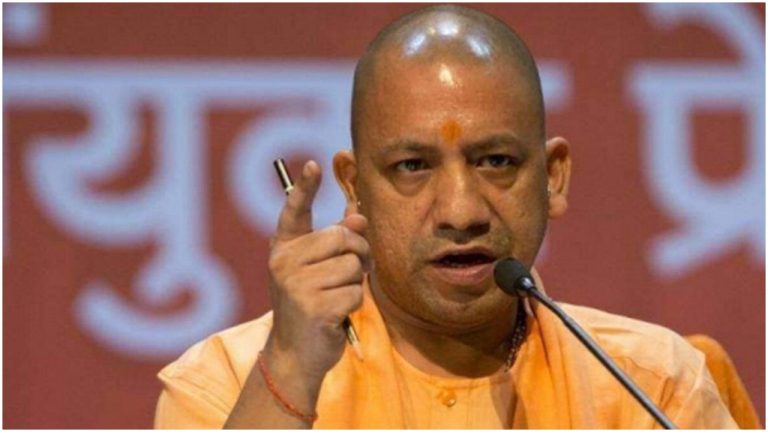
CM Yogi Adityanath, who was on a visit to Varanasi on Friday, held important meetings with the officials to take stock of the development works in the city. In one such meeting with Electricity Board officials, the Uttar Pradesh Chief Minister Yogi Adityanath observed that the Managing Director of the Purvanchal Vidyut Vitran Nigam Saroj Kumar was not present at the meeting.

According to reports, the absence of Kumar left Chief Minister Yogi Adityanath in anger, who suspended him with immediate effect for his negligence in the work of Purvanchal Vidyut Vitran Nigam. The Chief Minister did not stop there. He also gave strict instructions to the department officials to complete the projects, failing which strict actions would be taken, he warned.

Reportedly, Kumar’s absence was not the only reason for his suspension. The frequent power cuts and the delay in completing projects were also the reasons for his suspension. To discuss these issues, the Chief Minister had summoned Saroj Kumar. However, Kumar did not attend the meeting.

In addition, the Chief Engineers and Municipal Commissioners of Jal Nigam have also been given strict warning to improve the situation in the region.

The Chief Minister, who has taken a special interest in the development works of Eastern Uttar Pradesh, has been making several visits to the region. The Chief Minister is himself taking stock of the several development works that the government has initiated. 

Who is Vishal Jood? An Indian national arrested for taking on Khalistani extremists in Australia

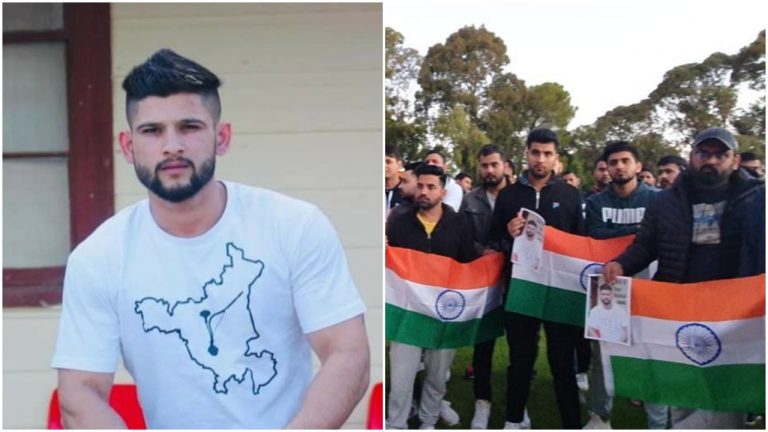
Hundreds of supporters have gathered in Sydney, Australia, in the last few days in support of Vishal Jood, an Indian arrested by Australian authorities over charges of attacking Khalistani extremists in Sydney.

According to reports, Indian student Vishal Jood was arrested by Australian police on April 16 for involving in an attack in Sydney. As per the Indian diaspora in Australia, it has been two months since his arrest, and Australian authorities have neither released him on bail nor allowed them to speak to him.

Thousands of supporters are seen defending Jood and rallying to free the jailed student, the face of pro-Indian rallies against the Khalistani onslaught in Australia in the last few months. Joining the Indian diaspora, several netizens from India have demanded the immediate release of the Indian nationalist arrested in Sydney and trended hashtag #JusticeForVishalJood, with posts calling for the government and diplomatic agencies to aid his release.

BJP leader Kapil Mishra also tweeted in support of the nationalist from Haryana, saying, ”Vishal Jood stood up for India Vishal Jood stood up for Tiranga. He needs justice. Pls ensure Consular access for Vishal Jood Pls help @AusHCIndia @MEAIndia @HCICanberra @cgimelbourne #JusticeForVishalJood”.

India’s Olympic wrestler from Haryana, Yogeshwar Dutt was also among the public figures that supported Jood. He tweeted, “I demand #JusticeForVishalJood who raised his voice against #Khalistan and save our #tricolor Please help @AusHCIndia @dpa_mea @HCICanberra @cgimelbourne.”

Several Indians have now joined the campaign seeking the immediate release of Vishal Jood, who asserted that he was arrested for taking on the Khalistani elements in Australia, who have been defaming Indian for a very long time now.

Who is Vishal Jood?

Vishal Jood, the 24-year-old from Haryana, a student in Australia, was arrested on 16 April in Sydney for his alleged involvement in three criminal incidents. The Australian police officials picked Vishal Jood after a group of Indian nationalists had clashed with Khalistanis in Australia. Vishal Jood has been languishing in a jail in the down in the country for two months now. The police have arrested the Haryana-based Jood on charges of damage to property, affray, and assault.

Reportedly, Vishal has been accused of three crimes that allegedly occurred on 16 September 2020 and 14 and 28 February 2021. Interestingly, the Khalistani victims have been named the ‘victims’ in all three cases. These Khalistani elements are believed to Indian-origin, however, they do not identify themselves as Indians but prefer being identified with their religious identity and support the idea of Khalistan.

According to few Indian nationalists who spoke to OpIndia, the hostilities between the Indian diaspora and the Khalistani extremists existed for a long time but took a violent turn on August 28, 2020. The fight started after Jassi, a Khalistani, started posting pro-Khalistani and anti-India content on TikTok.

The Indian diaspora individual took objection to the video, and soon, the matter escalated to a point where both sides convinced their friends to gather for a gang fight at Harris Park. When they gathered, the Khalistanis raised pro-Khalistan slogans as well before the sides clashed with each other. People from both sides were injured in the process, and Jassi, the main culprit, was badly injured.

Apparently, the matter did not end there as Jassi continued to threaten Hindus, saying he will thrash Haryanvis if he comes across them alone. 

However, the tensions escalated between Indians and Khalistanis once again after the passing of farmer bills in the country and the subsequent protests that began in Punjab in September last year. The protests led by rich farmers, instigated by Khalistani elements, reached Australia too.

The Khalistanis had organised similar protests in Australia too, and at one such protest, last year in Quakers Hill, Sydney, Vishal and his friends countered the anti-India protests. The pro-Khalistan extremists were seen abusing India and Prime Minister Modi, saying, “Modi Kutta”. As the Indian diaspora, including Vishal, confronted the radical elements, the Khalistanis attacked them leaving many injured.

A few months later, on January 26, the alleged farmers camping at the Delhi border, joining hands with Khalistani elements had unleashed violence on the streets of New Delhi and desecrated the national flag at the Delhi’s Red Fort. The incident sent shockwaves across the world and the Indian diaspora in many parts of the world condemned the incident.

Similarly, the Indian diaspora in Australia too had organised a rally to condemn the attacks on Indian soil by Khalistanis on the same day. Incidentally, Australia Day is also celebrated on the same day as Republic Day in India on January 26, and the Indian diaspora had taken out a car rally.

The Khalistani elements, perturbed by the solidarity rallies, attacked the Indian diaspora in Australia, and there were some reports of attacks on Indian-owned businesses in Perth, Sydney, and Melbourne. It was reported that an Indian flag was burnt at a Gurudwara in Sydney. However, OpIndia could not verify this independently.

Later, in retaliation, a group of Indian students in Sydney retaliated by burning a Khalistan flag and one of them posted a picture of him standing on the same Khalistan flag.

The burning of the Khalistani flag set the extremists on fire, who retaliated against Indians with more hatred. A Tiktok video went viral from a pro-Khalistan account that showed many Khalistanis beating someone up brutally. Soon, they declared they had bashed an individual named Vishal Jood who had ‘insulted their flag’.

However, a day later, it came to light that the Khalistanis had ended up beating some random guy, not Vishal. The next day Vishal was seen organising a car rally in solidarity with the tricolour, triggering Khalistani extremists. The Khalistanis continued to provoke Indians, and the latter countered by similar videos, however, they ended up giving away their address, daring the Khalistanis to attack.

On 28 February, the Khalistanis entered the localities near Sydney’s Harris Park, where Indians leave and vandalised cars and properties. Driven by their frustration of not avenging the burning of the Khalistan flag, the extremists wanted to bash Vishal in the house that he was renting, only to be outmatched by the Haryana lad and his friends.

As they could not attack the Indian diaspora, the desperate radical, pro-Khalistani Sikh leadership approached the powerful politicians claiming that Hindus are targeting them due to their turbans. The local media ran stories supporting Khalistani elements, who form a powerful vote bank in the area.

On April 16, a few weeks after the alleged crime, Vishal was arrested from his house in Sydney. The Australian Police stated that there is an outstanding warrant against him since 2018 for “other crimes”. As per his friends, they have not specified any details about such crimes. The Indian High Commission counsellor was also not allowed to access him, his friends said.

Family accuse Australian police deliberately delaying to please Khalistanis, says Indian High Commission is not helping them too

Ever since the Sydney police arrested Vishal on dubious charges, supplemented by the purported videos presented by the Khalistanis, the Indian diaspora has been demanding the release of Vishal Jood. They have approached the Sydney police authorities, however, their efforts have gone in vain.

Meanwhile, Vishal’s lawyer took it up with prison authorities, threatening legal action, which led to the police adding further criminal charges against Vishal and transferring the case to a higher court to cause further trouble to Vishal and the Indians community.

Vishal Jood’s friends and family have alleged that Australian police have targeted Jood for frequently standing up for India and challenging Khalistani elements operating from Australian soil. Vishal Jood’s friends and family have said the police have acted under pressure from Khalistani groups to frame him.

Later, it emerged that Vishal Jood is a diabetic and did not have access to his medicine in jail. For days, his friends and family were denied access despite his medical condition. In fact, his friends, who spoke to OpIndia, has said that Vishal’s only fault was that he tried to take out a tricolour rally in support of India, which seems to have upset a few Khalistani groups back in Australia.

His father said, “We want consular access to Vishal. He should be free as early as possible, he tried to save India’s flag, he has done nothing wrong, but Khalistani people framed him.”

The father of Vishal Jood has been trying to access consular access to Vishal. However, the Indian High Commission in Australia has not obliged the requests of the Indian diaspora yet. Speaking to OpIndia, one of the members of the Indian diaspora expressed his disappointment over the reluctance of the Indian High Commission to stand for the interests of the Indians. He claimed that the authorities are showing any interest in releasing Vishal Jood or seeking consular access.

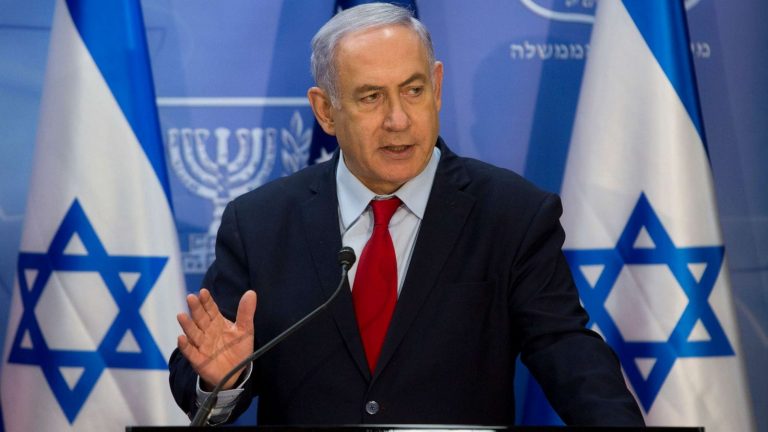
Benjamin Netanyahu lost the chair after 12 years because he lost the Israeli ‘caste arithmetic’

Just the other day there was still a consensus here. Netanyahu’s opponents were sure he was going to pull a rabbit out of a seemingly empty hat at the last minute. It was a scary and even chilling thought for them. Supporters of Benjamin Netanyahu I spoke to, still believed that the king of the Israeli politics horse-trading would recruit or seduce defectors from right-wing parties who had earlier betrayed him and them.

After 12 years under Bibi rule, and 60 MPs promising to vote against Netanyahu, the mythology was still stronger than any cold mathematical calculation.

Politicians and commentators already knew that Bibi would probably go to the opposition benches on Sunday, and the Lapid-Bennett government would inherit the most powerful Israeli prime minister ever, but the normal people felt that a solid gut feeling is as good as information they hear from political pundits.

Arithmetic overcame intuition, and in the end, the process that began back in 2019 has been materialised. Bibi is no longer the prime minister of Israel, and taking into account Netanyahu’s legal situation, it is not clear whether he will continue to be the leader of the opposition, say, another year from today.

Bibi’s loyal Likud party MPs attacked other right-wing MPs who decided to leave Bibi’s front, with the vituperation they usually reserved for their traditional loathed targets; Arab and left parties. Israeli security chief has even issued a rare warning over of mass violence ahead of Netanyahu departure.

Do not let the close result of 60-59 mislead you, the vote that expelled Bibi from the PMO was not particularly dramatic given the special circumstances, but the long weeks before the vote were tense and full of uncertainty.

In September 2019 I published an article titled “Netanyahu started like Modi but ended up like Trump”. In those pre-coronavirus innocent days, Trump was a leading candidate for a second term, and many failed to see the fundamental difference between professional conservative populist politicians like Modi, operating within a party system, and agents of chaos like Trump.

Bibi of 2015 was a conservative leader who respected all Israeli institutions and especially the Supreme Court. Since his legal entanglement, Netanyahu has adopted at least a tinge of an anti-institutional approach, preferring to appoint unsuitable people to key positions.

For example, one of Israel’s greatest disasters ever is April 2021 Meron crowd crush, that resulted with a death-toll of 45 people. Meron is the largest Jewish yatra in Israel each and every year, and everyone knows that professional management of the event is required to prevent casualties. Amir Ohana, Minister of Internal Security, is considered the ultimate symbol of blind loyalty to Mr. Netanyahu. Ohana has appointed an inexperienced police commissioner with expectation that the later would be as loyal as Ohana to the prime minister.

Netanyahu, who is currently on trial for bribery, has been accused of appointing his loyalists and cronies to the most sensitive positions in the law enforcement system. The disaster on Mount Meron has heightened criticism of Netanyahu who is accused of abandoning human life in favour of amateur appointments, designed to assist him legally. The Ministry of Internal Security is just one example of Netanyahu’s harm to the public service. The Ministry of Foreign Affairs and the Ministry of Communications were also emptied or politicised in the Bibi Era.

Along with the criticism, Netanyahu also has sound supporters who deny the theory that Netanyahu is working for the destruction of state institutions with the help of inappropriate appointments. Dr. Avishay Ben Haim, a prominent journalist and intellectual, divides Israeli society into two groups. The “first Israel” is the privileged secular European-oriented group that hates Netanyahu, while members of “second Israel” – who live in the periphery and their religious parents immigrated to Israel from Islamic countries – adore Bibi. For Ben Haim, the Netanyahu era is not a corruption of Israeli politics and the public service, but a democratisation and “mandalisation” of Israeli politics. The “first Israel” in his opinion, is simply mourning the reduction of its privileges.

There is a grain of truth in his argument, but even Bibi’s supporters cannot deny that he made very generous proposals in the coalition negotiations, and he still could not find a single competent partner to believe him. The orthodoxy among political pundits was that Netanyahu’s loyalty was no longer to the right-wing camp, nor to The Likud party, but only for himself and his supporting family; the working assumption was that Bibi’s unprecedented promises to his potential coalition partners were worthless.

Ben Haim is not the first to divide Israel into tribes, and the truth is that this division helps explaining Netanyahu’s failure in the past two years.

On June 7, 2015, our President Reuven Rivlin delivered what many would come to consider a defining speech, commonly referred to as the “Four Tribes” speech. Israel – he said- is now composed of four growingly equal-sized “tribes” – secular, national-religious, ultra-orthodox and Arab. For the Indian reader who knows how to decipher the political impact of dozens of castes and jatis in India, the Israeli equation is really a child’s play.

Of our four tribes, Netanyahu had solid support among three of them. national-religious and ultra-orthodox voters were in his pocket. He also had nice support among the secular voters, especially those who immigrated from the Soviet Union to Israel and constitute about 12% of the Israeli electorate. Bibi gave up on the Arab voters, most of whom are Muslims. Officially, Arabs are one-fifth of Israel’s citizens, but Palestinians in Jerusalem are boycotting elections, and voter turnout among other Arabs has always been low, usually, they don’t get more than 12-13 out of 120 seats in the Knesset, our parliament.

Thus, Netanyahu had the solid support of more than half of Israel’s MPs in the 2009, 2013 and 2015 elections.

Netanyahu lost his PM post because he lost two semi-tribes. Russian-speaking immigrants were angry at Netanyahu’s surrender to the dictates of the ultra-Orthodox tribe. This created a united anti-religious front against him. At the same time, the national-religious tribe has split into two in recent years. The conservative half-tribe remained loyal to Netanyahu, and the more liberal half became more critical of the prime minister. Naftali Bennett, Israel’s new prime minister, belongs to the liberal half of the tribe. Although he won only a quarter of the votes Bibi won, Naftali Bennett knew how to leverage his modest achievement in the 2021 election and replace Netanyahu after 12 years.

In the last election, Netanyahu realized that the tribe-arithmetic was working against him, and he came up with a brilliant idea that almost succeeded. Netanyahu recognised that Arab voters – who are always marked by pundits on the left side of the political map in Israel – are actually close in their cultural views to the Jewish religious public. For example, many Arab voters oppose equality for LGBTs, just like most religious Jews.

Netanyahu nurtured and legitimised Mansour Abbas who hails from the Islamic Movement, which was established along the lines of the pan-Arab Muslim Brotherhood group. Netanyahu turned Abbas from pariah to king maker. Abbas eventually kicked the old Bibi king and crowned two new kings. Naftali Bennett and Yair Lapid, who signed a rotation agreement for the prime minister’s chair.

Will the rotation government of Lapid and Bennett last after two years of instability that also included four unnecessary elections? Will the rotation government succeed in persuading the Biden government to stop the Iranian nuclear program? Will the precedent of an Arab party in a Zionist coalition reduce the economic and social disparities between Arabs and Jews in Israel? Will the deteriorating relations between Israel and Jordan be restored? Will this strange coalition of pro-West Bank annexation hawks along with dovish supporters of a Palestinian state succeed in producing a coherent foreign policy?

These are difficult questions. It is likely that as long as there is a danger that Netanyahu can make a comeback, the glue between the partners will work. And vice versa.

But even if it is difficult to offer good answers to difficult questions, one can at least point to a small change in the international gaze on Israel. Netanyahu was a great strategist, he managed the de-hyphenation of the deadlock in Israel-Palestine relations, from the branding of Israel as a strong sought-after country in the international arena. Most citizens of the world who knew anything about Israel knew only Netanyahu. This created great admiration for Israel, and at the same time, it also fuelled hatred towards us, especially when Israel and Hamas fought in Gaza.

In any case, Netanyahu’s greatness had cast a giant shadow over his fellow ministers and the opposition in Israel. We now have a different style of government. A prime minister who is at best first among equals. The Israeli government will make more than one voice in the international arena, and this is an opportunity that may not return to see the State of Israel as a mosaic of attitudes and opinions, a mosaic that was well hidden in the Netanyahu era.

Exclusive: Agitators not farmers but criminals, says wife of victim burnt alive at Tikri border, farmers harass woman of village, says sarpanch

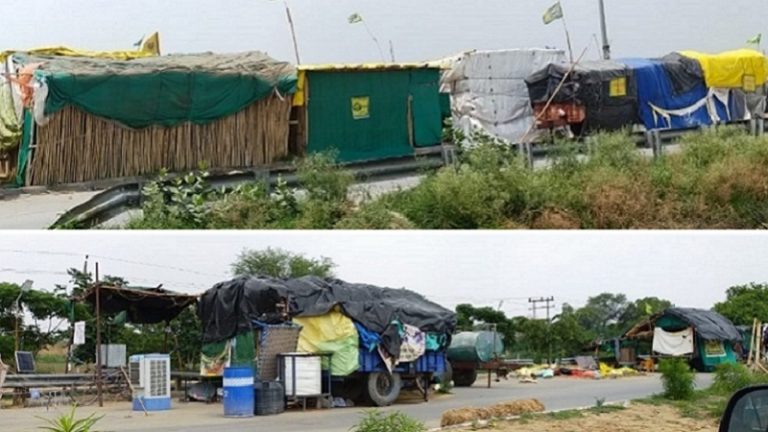
A man named Mukesh (42), a resident of Kasar village in Bahadurgarh of Jhajjar district of Haryana had succumbed to burn injuries after farmer protestors allegedly set him ablaze at the Tikri border protest site on May 16 (Wednesday). Haryana police arrested one of the main accused named Krishna. The investigation into this inhumane incident has revealed so far that the protestors, under the influence of alcohol, got into a dispute with the deceased. In that inebriated state, the accused hurled casteist slurs at Mukesh thereafter burnt him alive.

During his treatment at the hospital, Mukesh revealed that one Krishna first got him intoxicated and then set him on fire. However, he later succumbed to injuries.

The Haryana Police have registered a case against culprits based on the statement of the deceased person’s brother. The case has been registered under IPC sections – 302 (murder), said the police officials.

The horrifying incident has left Mukesh’s family and the villagers in a state of disbelief and shock. When OpIndia reached this village on Friday (18 June 2021), a blanket of eerie silence swept the place. While speaking to OpIndia, Mukesh’s inconsolable widow Renu, appeared apprehensive about her and her 10-year-old son’s future. “What will happen to us?” repeatedly inquired the despondent widow of Mukesh.

Villagers submit memorandum to state administration, give an ultimatum of 7 days

The villagers who had earlier asserted that the farmer protestors had hatched a conspiracy to make Mukesh appear a ‘martyr’, to defame the government and its farm laws, have submitted a memorandum to the state administration, giving an ultimatum of 7 days. They said that though the deceased’s family is satisfied with the investigation, we have urged the administration to make sure that all the perpetrators are brought to books in the next 7 days. They have also demanded financial compensation for Mukesh’s bereaved family.

“Agitators at Tikri border, not farmers but hardcore criminals”, says the wife of Mukesh

Reminiscing the horrifying incident which has left Mukesh’s family devastated, his widow Renu said she was informed about the godawful incident by her brother-in-law. Renu rued that when her husband had left the house on Wednesday evening at around 5 pm, he was perfectly fine and in high spirits. Assuring to be back soon, Mukesh had asked Renu to keep the food ready. Renu had urged him to take his mobile phone along with him, but he refused, saying he is going to be back soon.

Renu lashed out claiming that the people who have hijacked the border areas in the name of protesting against the farm laws are not farmers but hardcore criminals. “They are perpetually drunk and always under the influence of alcohol. It’s been a year, these people are not going from here. They have created chaos over here”, said Renu, wondering if they were actual farmers fighting for their rights would they be perpetually drinking and creating a ruckus as they have been for the past year?

“Farmers molest and harass the women of our village”: Sarpanch of Mukesh’s village informs

Likewise, Tony Kumar, the Sarpanch of the village also cast doubts upon the intent of these people, who have been protesting as farmers. Expressing his trepidation after the ghastly incident, Tony Kumar said that in the past, many villagers have come to him with complaints against these protesting people. Villagers complain that these farmers go to their fields to defecate, they molest and harass the women of the village.

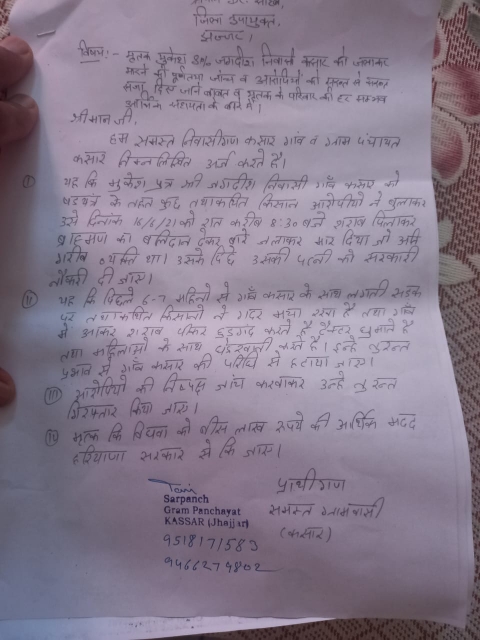
In fact, in the complaint submitted to the police, a copy of which is with OpIndia, the villagers have mentioned the constant harassment they have been facing in the hands of these so-called farmers for months now. “For the last 6-7 months, the alleged farmers have created a ruckus on the road adjoining village Kasar. They come to the village riding on tractors and make a fuss after drinking alcohol. They molest and harass our women. They should be removed from the periphery of village Kasar with immediate effect”, read the complaint.

Complaint submitted to police by the villagers

“Hoodlums, pretending to be fighting for the rights of farmers, burnt my innocent son”: Mukesh’s mother

Meanwhile, Mukesh’s grief-stricken mother Shakuntala, whose whole world came crashing down around her when her son was merciless set ablaze while speaking with OpIndia also remembered how her son had told her and his wife Renu to prepare food. Accusing the hoodlums, pretending to be fighting for the rights of farmers, of burning her innocent son, Shakuntala named Krishna as one of the main culprits. She lamented how her son left the house on Wednesday evening for a walk to the nearby field never to return back.

‘These are butchers, not farmers’: Village head Tony Kumar

Following the incident, Tony Kumar, the village Sarpanch said that he does not want any farmer leader to come to their village. “These are butchers, not farmers. The administration is fully cooperating with us. We have given a week’s time for the removal of the tents put up by the farmers. If they are not removed in a week, we will take law into our own hands,” Kumar said.

Kasar village’s contribution to ‘farmers’ protest at Tikri border

When inquired about how the Kasar village is supporting the alleged farmers’ agitation, Tony responded that they fulfil the responsibility entrusted to them by the village khap. The main task, he says, is to collect donations from the village and give it to the ‘agitators’. Mukesh’s brother Sanjeet admitted to pooling money in the village for the ‘protesters’. However, the people in the village have refused to actively participate in the protests.

As per Tony, despite provocative statements made by Rakesh Tikait, the villagers have donated to the cause of the farmers. He says, “We don’t want to spoil the atmosphere. We want to maintain brotherhood. But they are trying to vitiate the atmosphere. Complaints of agitators harassing the people after getting drunk in the evening have become fairly common here.”

Mukesh was burnt alive at Tikri Border because he was a Brahmin? Village head thinks so

When OpIndia asked him why he believes that Mukesh was attacked because of his caste, the sarpanch said that he has a video of Krishna admitting that Mukesh was targeted because he was a Brahmin. Kumar also claims that BKU leader Rakesh Tikait is the mastermind of the entire conspiracy. Kumar cites Tikait’s anti-Brahmin remarks he had made in December 2020. “When their leaders spew venom, those below them are expected to do the same thing. I strongly suspect a conspiracy behind the death of Mukesh, orchestrated by the protesters to defame the government,” Tony said.

Meanwhile Mukesh’s brother Manjeet claimed that the Jind protesters are creating the most amount of ruckus. Interestingly, Krishna, the main accused in this case, is also from Jind.

“All I want is that those guilty should be punished”: grief-stricken father of Mukesh

When we tried to talk to grieving father, Jagdish Chandra, regarding the unfortunate incident, he refused to face the camera. Weeping bitterly, he painfully wondered about the future of Mukesh’s family. Mukesh is survived by his wife Renu and 9-year-old son Rahul. Mukesh was the eldest of three brothers. Jagdish Chandra is not as fortunate as the ones who are sitting on protests around the Delhi borders. His family does not have a piece of land to be put to use for agriculture. Chandra’s sons did odd works to feed their family. Mukesh worked as a driver. Because of the lockdown, Mukesh was idle and had no work. Thinking about his son who was burnt alive, Chandra says, “All I want is that those guilty should be punished and the government should take care of Mukesh’s family.”

This horrifying tragedy that befell Mukesh, forces a person to stand back and think, are these people actually fighting for the rights of farmers or are they just pawns of a well-planned conspiracy orchestrated by vested interests to defame the central government. If for a moment we believe that these are poor farmers agitating for their rights, the question which crosses the mind is from where are they getting the limitless funds to carry on their protest for months. Who is sponsoring the drugs and the expensive liquors which are flowing freely in the places where these so-called farmers have been camping for months now? How is it that so many instances of rape and molestation are being reported from the protest sites?

Basically, it is evident from incidents like these and the Delhi violence on Republic Day and the Greta Thunberg Toolkit that the ‘farmers’ protest is nothing but a huge International plot, carefully crafted with the tactical support of the opposition parties to defame and break India in the name of farmers’ agitation.

TV9 Bharatvarsh documentary shows ISIS bride Shamima Begum holding a document with Congress party’s logo: This is how it happened

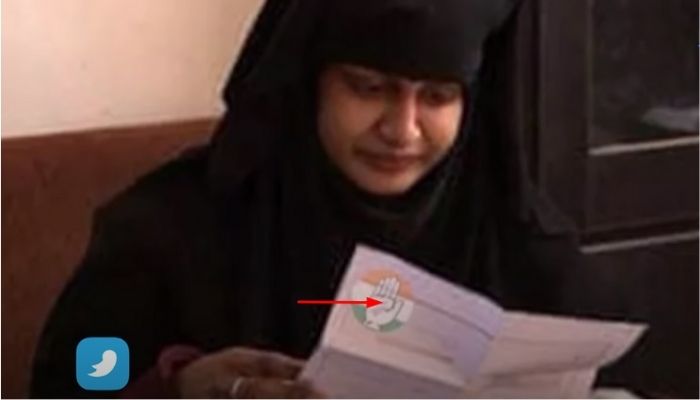
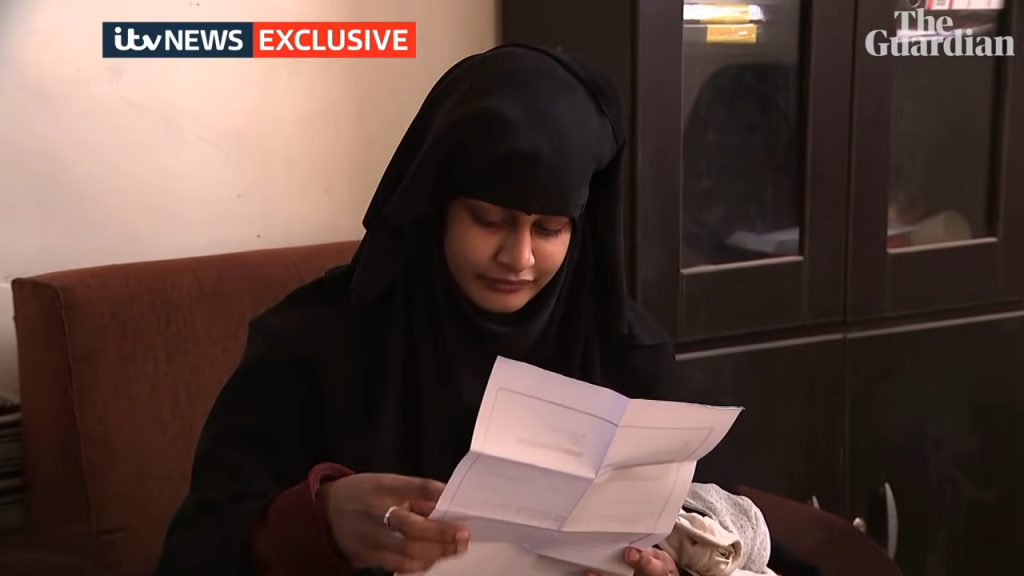
News channel TV9 Bharatvarsh recently sparked controversy, after a YouTube video showed former ISIS bride Shamima Begum holding a sheet with the Indian National Congress logo affixed to it.

The contentious video was uploaded on the official Youtube channel of TV9 Bharatvarsh on June 11. At about 2 minutes 30 seconds into the video, Begum was seen holding a piece of paper. Surprisingly, the logo of the Congress party could be seen affixed to the back of the document. The revelation had created a furore on social media.

(Video Courtesy: Youtube/TV9 Bharatvarsh)

The TV9 Bharatvarsh video was originally sourced from a 2-year-old documentary uploaded by Guardian News in February 2019. The document, which Shamima Begum held in her hand, was issued by the UK Home Office and declared that she had been stripped of her British citizenship. At about 3 seconds into the Guardian News video, and also later, it could be seen that the sheet was devoid of the Congress logo on its backside, and that side of the paper was completely empty.

Original image showing Shamima Begum holding the document without Congress logo

Therefore, it can be concluded that the Congress logo was not there on the UK Home Office order issued to Shamima, but when TV9Bharatvarsh used a frame from the video in its own video, the logo mysteriously appeared on the document.

(Video Courtesy: Youtube/The Guardian)

When we probed how the Congress logo appeared on the backside of the document in the footage, we found that TV9 Bharatvarsh used the image from a satire site, perhaps not realising that it was digitally edited.

In April 2019, just over a month after the video had emerged, Indian satire site The Fauxy had published an article titled “ISIS Bride Shamina Begum Gives Thumbs Up To Congress Manifesto”. The satirical article said that Shamima Begum had praised the manifesto of the Congress party for the general elections.

The Fauxy had used a screenshot of Shamina holding the document from the video, and had digitally affixed the Congress logo on the paper to go with the article. The same image can be seen in the TV9 Bharatcarsh report.

Therefore, it can be concluded that TV9 Bharatvarsh used the image from The Fauxy due to some unknown reason, instead of using the original footage, perhaps not realising that the image is digitally altered to add the Congress logo to it.

It must be mentioned that the 21-year-old Shamima is a former ISIS bride who had left the UK to join the Islamic terrorist outfit in Syria at the age of 15. Following her arrival to the ISIS territory, she was married to Dutch-born jihadist Yago Riedijk. In Syria, she gave birth to three children, all of whom died eventually, and later was locked up in two Kurdish-run detention camps in north-east Syria, following the defeat of ISIS.

In the documentary ‘The Return: Life After ISIS’ which premiered in the US, Shamima Begum described herself as the ‘black sheep of the family’ growing up and claimed that the difficult relationship with her mother, who did not make her feel loved, was one of the reasons for her to join the ISIS. Essentially, Begum held her mother and her ‘lack of love’ responsible for her decision to join the terror group ISIS. She said that she always wanted to be part of a Muslim community because when she was young, however, she always felt like an outsider in her community.

Her citizenship was revoked by the UK government on national security grounds after she was found in a Syrian refugee camp in February 2019. In February this year, the Supreme Court blocked her return to the UK to appeal against the loss of her citizenship.

Pakistan, where intelligence goes to die: How ISI was trying to ‘honeytrap’ a fake Indian Army officer

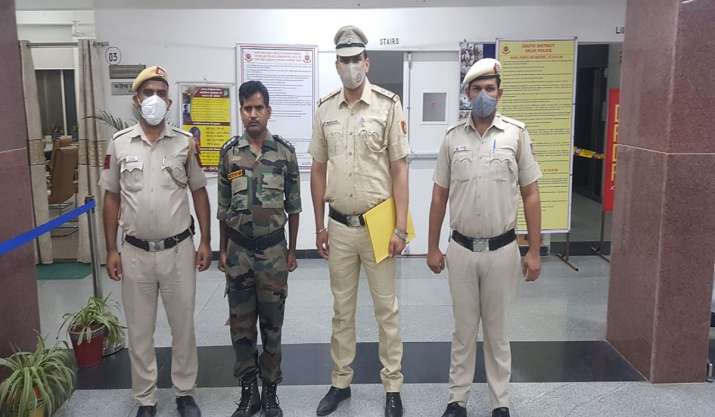
A 40-year-old man who was arrested by the Delhi Police for impersonating an Indian Army Officer revealed in his interrogation that Pakistan’s Inter-Services Intelligence(ISI) was trying to honey trap him as they considered him to be a real officer.

The accused was identified as Dilip Kumar (40), a resident of Mohan Garden, New Delhi. Acting on a tip-off, the police was deployed close to Archana Red Light and the accused was nabbed in military camouflage. One forged Army ID card in the name of Dilip Kumar and a mobile phone was recovered from him.

Delhi Police said he was a member of many groups and was in touch with several international Whatsapp numbers from other countries. “When his mobile phone was examined, it was revealed that the accused had made video calls with international numbers also,” the police said.

In his interrogation, the accused said that he posed as Captain Shekhar of the Indian Army to lure women on social media. He also disclosed that he had chatted with several foreign nationals and shared some videos and pictures with them.

The accused also revealed that Pakistan’s ISI was trying to honeytrap him considering him to be a real Indian Army officer.

A case has been registered against him under section 170/419/420/468/471 of the Indian Penal Code (IPC) and further investigation is underway.

OBC benefits for Muslims: How WB Police’s recruitment drive has exposed how parties found a way to make religious reservations

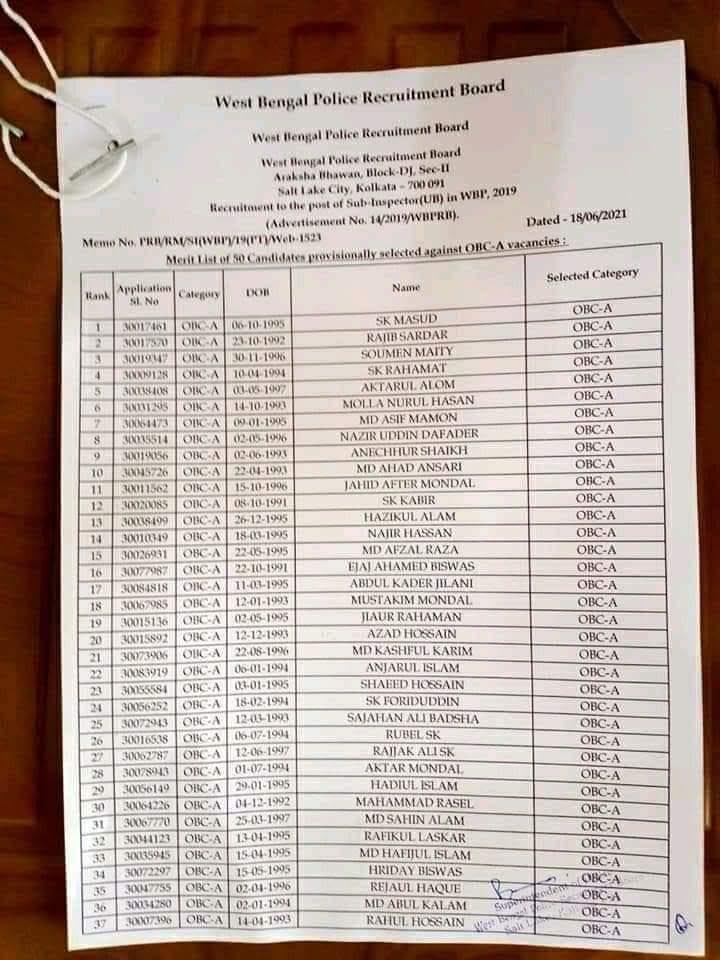
The merit list of a recruitment drive published by the West Bengal Police Recruitment Board has attracted a lot of attention on social media. The drive was meant to fill vacancies in the OBC-A category in the state. The list showed that apart from one or two individuals, all of them were Muslims.

It is not the first time that Bengal’s recruitment drive merit list has gone viral. The same had happened in 2019 as well. While it is probably an incomplete list that has gone viral and the complete list is likely to include a few more names since it mentions a list of 50 candidates, it is unlikely that complete list will deviate from the claims being made with regards to the list.

Source: Social Media

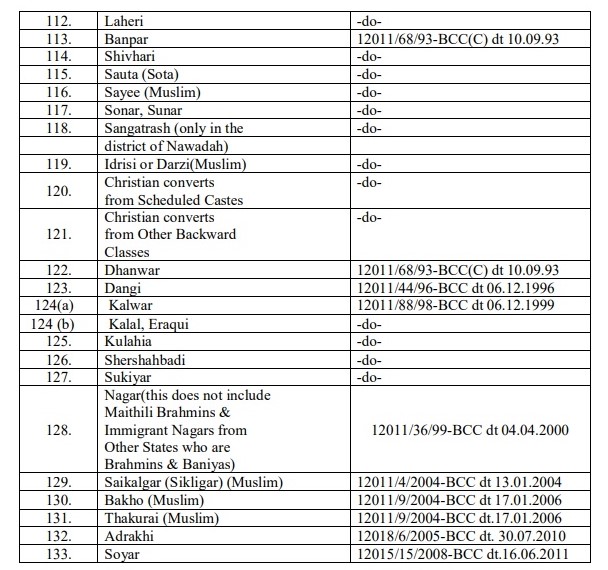
There are a total of 80 groups included in the OBC-A category, of which 72 are Muslim groups. In the OBC-B category, about 40 groups are Muslim. Thus, out of 170 groups listed in the OBC category in total, 112 are Muslim. OBC-A is defined as ‘more backward’ and OBC-B as just backward.

Thus, the over-representation of Muslims in the OBC categorization in West Bengal is quite shocking. But such classification of Muslims in OBC categories can be found in other states too. In Bihar, 24 out of 133 groups in the OBC category are Muslim. Muslim groups figure in the Economically Backward Class caste list in Bihar as well.

Groups such as Dafaliya, Pamariya, Madari and Momin figure in the Bihar EBC caste list.

Apart from that, Christian converts from the SC and OBC category are also listed as OBCs. Thus, Christian converts from these groups do enjoy benefits of reservation after converting out of Hinduism. The state list of OBCs mention numerous Muslim groups as well as Christian converts as well.

Central OBC list for Bihar

In Maharashtra as well, Muslim groups such as Ansari and Kasab are included in the OBC category in both the state list and the central list. In Uttar Pradesh, the central OBC list includes numerous Muslim groups such as Muslim Kayasthas and Qureshis.

The state list of OBCs in Uttar Pradesh consists the same as well. Gujarat has Muslim groups in the OBC central list as well. Groups such as Ansari, Mirasi, Mansuri-Pinjara find themselves in the list. In addition, Christian converts are included in this list too.

90% of groups in OBC-A category in West Bengal are Muslim

Such inclusion of Muslims in the OBC category is not limited to only the states mentioned here but is the reality in most states of India. There are multiple problematic aspects of the categorization.

Firstly, the Muslims and Christians in the OBC lists can still access the minority benefits available to minority communities in the country. Secondly, there is the blatant incentive for Hindus to convert with such a categorization.

If they convert to Islam, then they can access benefits both under the OBC category and minority benefits. For Christian converts, the negative consequences of conversion are limited by their inclusion to the OBC category.

But there is another thing of consequence to note here. While Muslim groups are included in the OBC category in other states, nowhere is the situation so dire as in West Bengal. In West Bengal, an overwhelming majority of the OBC groups are Muslim, 2/3rds in fact.

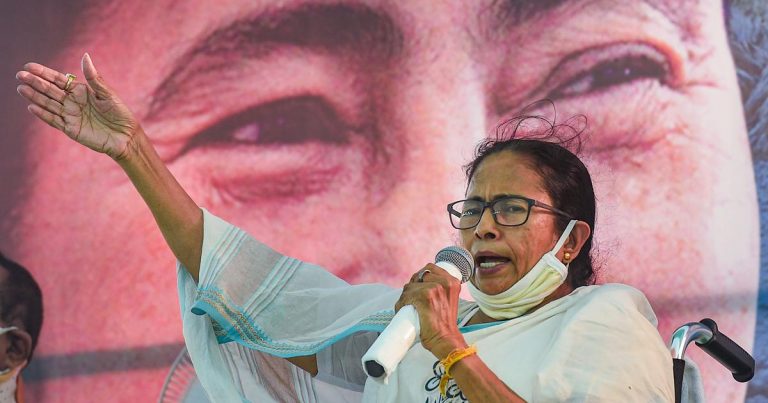
Back in 2012, Mamata Banerjee had said, “At present there are 65 communities in the OBC category and today the cabinet has taken a decision to include 33 more castes and sub-castes into the list which will bring 98 of the identified 143 castes in the state under OBC category.” “This will bring 99 per cent of the Muslim community under this category,” she added.

Since then, the policy has been implemented and it basically amounts to religious reservations in the state. When 99% of the Muslim community has been added to the OBC category where Muslim groups constitute for 2/3rd of the total groups, it leaves little room for any other interpretation.

Especially in the OBC-A category for the ‘more backward class’, 90% of the groups are the Muslims. It had become a political flashpoint in the state with the BJP’s OBC Morcha acusing the Trinamool Government of depriving Hindu OBCs.

“We will carry out a week-long campaign in all Assembly constituencies to let people know that the government is depriving Hindus by allotting more than half of the OBC quota to Muslims, even though Hindu OBCs constitute bigger chunk of the population than Muslims,” the BJP’s OBC Morcha president had said in 2019.

Dangers of such categorization

Reservations in India have been implemented on the premise that there are castes and sub-castes which have been historically oppressed in India. It is also supposed that caste is an intrinsic feature of Hinduism.

It is for this reason that individuals from Christianity and Islam cannot avail benefits reserved for the SC community. But it is quite clear that political parties have found a loophole and have found ways to award benefits to their minority vote-banks through the OBC category.

It directly negatively impacts Hindus of the OBC caste who then have to compete with more individuals for the limited set of resources. Scheduled tribes in numerous states already include Christian converts, thereby, further reducing the incentives against converting out of Hinduism.

Under such circumstances, it is of paramount importance that benefits awarded to OBC communities are reserved for Hindus only. Otherwise, it poses a grave demographic threat to the country and West Bengal in particular.

The inclusion of Muslims in OBC category amounts to religious reservations as in West Bengal, a conscious decision has been made to include 99% of Muslims in the category. There is the risk that other states will follow the same path and provide reservations to the Muslim community under the guise of OBC benefits.

Religious reservations are unconstitutional and for good reason but quite clearly, parties have found a way.

2 days after China admitted 5 fuel rods were damaged at Taishan nuclear plant, top nuclear scientist found dead under mysterious circumstances

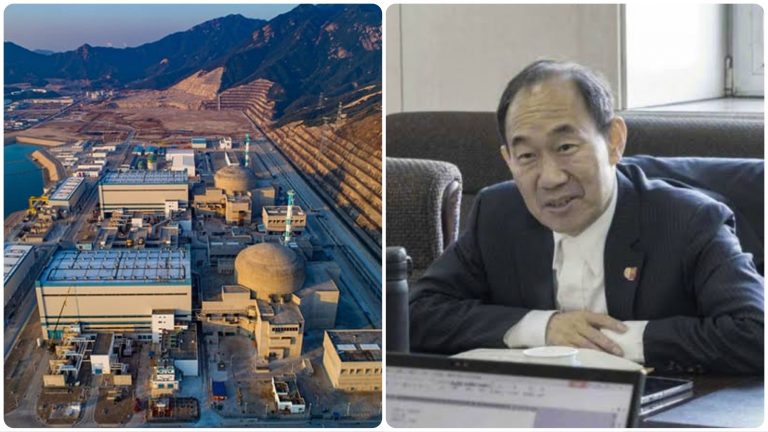
A potentially dangerous mishap took place at a nuclear power plant near Hong Kong when five damaged fuel rods led to a buildup of radioactive gases inside the reactor. The Chinese government on Wednesday this week acknowledged the incident but said no radioactivity leak was reported from the plant.

In a statement released by the Ministry of Ecology and Environment, China admitted to radiations rising inside the No 1 reactor of the Taishan Nuclear Power Plant in Guangdong province but insisted that it was contained by barriers that functioned as planned.

The reports of a possible leak at the Taishan Nuclear Power Plant prompted concerns in nearby Hong Kong. The government of Hong Kong said it was closely monitoring the plant and asking officials in Guangdong for details after its French co-owner on Monday reported increased “noble gases” in the reactor. According to the experts, the suggested fuel rods broke and leaked radioactive gas produced during nuclear fission.

Noble gases such as xenon and krypton are by-products of fission along with particles of cesium, strontium and other radioactive elements.

“There is no threat of radioactive leakage to the environment,” the ministry said in its statement. It also added that the radiation in the reactor coolant increased but was within the “allowable range”.

The Ministry also said that the protective envelope on about five of the reactor’s 60,000 fuel rods is damaged. The Ministry chalked up the damage to the manufacturing and other problems in the reactor. It said regulators would supervise measures to control radiation levels within the reactor but gave no details.

The Taishan plant, which began its commercial operations in 2018, is jointly co-owned by China Guangdong Nuclear Power Group and France’s Electricite de France. The reactors are a first of their type called European Pressurised Reactors designed by Framatome, of which Electricite de France is the majority owner.

Though experts believe that a Chernobyl-like fate was averted, they are still doubtful of the extent of the damage as claimed by China. The skepticism is driven from the fact that China has often been misleading and not entirely honest about the its internal operations.

Top Chinese nuclear scientist found dead after falling from a building

In a separate incident, one of China’s top nuclear scientists and the Vice-President of Harbin Engineering University died after falling off from a building. On Thursday, Zhang Zhijian, Vice-President of the Chinese Nuclear Society was found dead.

Reports say police have ruled out homicide as the cause of death after on-site investigations failed to provide any further details.

“Harbin Engineering University announces with deep grief that Professor Zhang Zhijian regrettably fell off a building and died at 9.34 am on June 17, 2021. The university expresses deep sorrow over the passing of comrade Zhang Zhijian and deep condolences to his family,” the statement issued by the University said.

Professor at the college of nuclear science and technology at the university, Zhang was also the vice-president of the Chinese Nuclear Society. He was also a member of the standing committee of the Communist Party committee at the university.

UP Police arrests Samajwadi Party leader Umer Pahalwan Idris, accused of inventing fake hate crime over Ghaziabad assault case

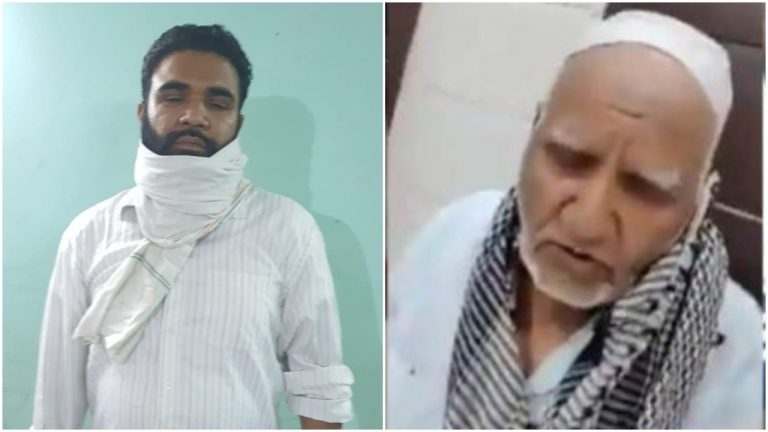
Samajwadi Party leader Umed Pahalwan Idris, who appeared in a Facebook Live video alongside Ghaziabad assault victim Abdul Samad, has been arrested by the Uttar Pradesh police in Delhi on Saturday.

Addressing the media, the Ghaziabad Senior Superintended of Police (SSP) said they arrested the Samajwadi Party leader Umed Idris near Lok Nayak Jai Prakash Narayan hospital in the national capital. The officer added that the arrested accused will be now brought to Lucknow in connection with the Ghaziabad assault case.

Earlier, on June 17, Uttar Pradesh Police had booked Umer Idris on June 17 for trying to portray the personal animosity between Abdul Samad and his alleged attackers as a ‘communal’ incident. The SP leader had falsely claimed that the victim of the assault was forced to chant “Jai Shri Ram” by Hindu attackers.

The Uttar Pradesh police said they have arrested nine persons in connection with the Ghaziabad assault case.

Umer Pahalwan Idris communalised the Ghaziabad incident, put out video on Facebook

In the Facebook live video released on June 7, Idris was seen alongside Ghaziabad assault victim Abdul Samad, in which he falsely castigated Hindus for beating up the elderly victim, chopping off his beard and forcing him to chant Jai Shri Ram slogans. Umed Pahalwan Idris, who was seen doing most of the talking on behalf of the victim, gave the incident a communal spin by claiming that Hindus attacked Samad.

Using extremely abusive and crass language, the SP leader had issued open threats to Hindus who he claimed had attacked Abdul Samad.

The “liberal-secular” media establishment, Islamists, had latched onto this particular Facebook live video and began to peddle their usual anti-Hindu propaganda. The left-leaning brigade rushed to communalise the incident of personal animosity to defame the ‘Jai Shri Ram’ chant, which is sacred to Hindus.

This video, along with one another muted video (which now stands deleted) of the incident where the victim was being assaulted, was shared on social media handles by people like Alt News co-founder Muhammed Zubair and several others, namely Rana Ayyub, The Wire, Salman Nizami, Maksoor Usmani, Sama Mohammad and Saba Naqvi. Zubair claimed that Abdul was forced to chant ‘Jai Shri Ram’ as he was beaten up and tried to give the incident a communal angle. 

However, acting swiftly, a few hours later, the Ghaziabad police uploaded a video apprising of the case giving relevant details and kept the social media users updated with the development thereon.

Taking cognizance of the matter, the Uttar Pradesh government had also filed an FIR on June 15 against Twitter for failing to flag the video with unverified claims as ‘manipulative’ and lack of action. Alt News co-founder Zubair, Rana Ayyub, The Wire, Salman Nizami, Maksoor Usmani, Sama Mohammad and Saba Naqvi have also been booked for spreading misleading and fake news.

Here is the detailed timeline of the Ghaziabad assault case which was used by the Islamists and the secular establishment to shame Hindus.

Umed Pahalwan Idris takes an U-turn

A few days later after the incident, Samajwadi Party leader Umed Pahalwan Idris, who earlier communalised the petty incident, took an u-turn by claiming that he was not aware of any religious angle in the incident. Idris further denied knowing anything about the ‘tabeez’ (occult amulet), for which even one Bauna Saddam had hired the services of occultist Abdul Samad Saifi.

The Samajwadi Party leader also declined of being aware that Abdul Samad was attacked by a group of people that included Muslims too. In fact, he lamented that he was being targeted since he wears a skullcap and has a beard. 

The cornered SP leader also put out his “victim card” to claim that he is being targeted since he wears a skullcap and has a beard. He furthered that he did not lie, it was the victim who claimed that he was made to chant “Jai Shri Ram”.