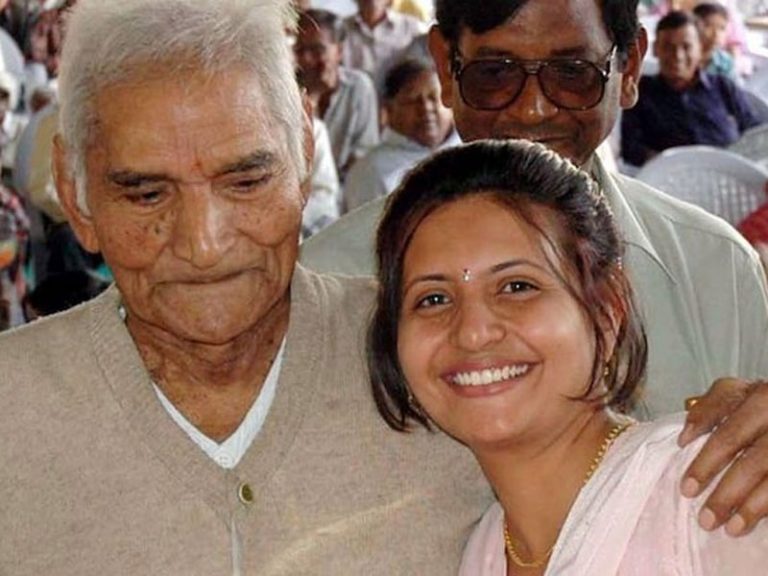
Sheetal Amte-Karajgi, the granddaughter of social worker Baba Amte was found dead at her residence in Anandwan, Chandrapur district, Maharashtra. There was a family feud going on, which was reported resolved. 39-year-old Sheetal Amte, doctor and CEO of Maharogi Seva Samiti (MSS), a social service organization founded by Baba Amtre, allegedly took her life on Monday. The police have not confirmed the cause of death, but some local reports are suggesting that she injected herself a lethal dose. Her body was taken to Chandrapura for post-mortem.
Maharashtra: Granddaughter of social worker Late #BabaAmte & Chief Executive Officer of Maharogi Seva Samiti, Dr. #SheetalAmte commits suicide at her residence in Warora, Chandrapur. pic.twitter.com/Q5vlW75RHs
Recently, Sheetal had posted a video on Facebook alleging irregularities in MSS trust. She raised allegations against her family members, who are trustees of the organizations and other activists associated with it. The video was removed from Facebook within two hours.
The family claimed Sheetal is suffering from stress and depression
Denying the allegations, Sheetal’s parents, uncle, and aunt issued a statement that she is suffering from mental stress and depression. They said, “Maharogi Seva Samiti, Warora is a leading social service organisation in the country. It provided direction and inspiration for the development of the deprived. Lakhs of social activists were trained here. Three generations of Amtes are deeply involved in this work.”
They further added that Sheetal has contributed to the work done by the organization. However, she is facing mental stress and depression. “While admitting it in her social media posts, she made inappropriate statements about the work, trustees, and workers of Maharogi Seva Samiti.
All her comments are baseless. The Amte family is issuing this statement after mutual discussions to prevent any likely misunderstanding caused by Sheetal’s allegations,” the statement added.
‘War and Peace’ – the last tweet before death
Hours before allegedly committing suicide, Dr Sheetal had posted a cryptic message on Twitter. She posted an abstract painting with the caption “War and Peace.” Though she regularly posted paintings made by her on social media, the last post’s timing has raised suspicions.
Cryptic tweet posted by Sheetal on Twitter before allegedly committing suicide
Baba Amte, the social worker
Baba Amte, a recipient of the Ramon Magsaysay Award and Padma Vibhushan, was a renowned social worker. He was often called the modern Gandhi of India. He was known for his work for the people suffering from leprosy, which he carried out at Anandwan, an asylum for such patients. I was founded in 1959 and currently being administered by MSS. Baba Amte died in 2008. Vikas Amte and Sheetal Karajgi were appointed as secretary and Chief Executive Officer for the organization respectively three years ago. In 2016, Sheetal had received the Young Global Leader’ award from the World Economic Forum.
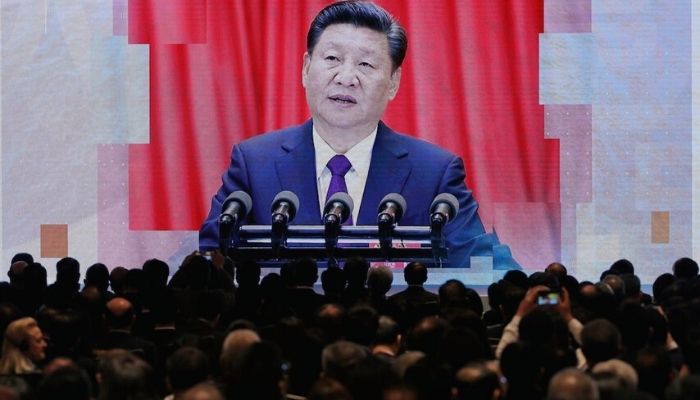
While the Coronavirus pandemic has infected over 63 million people worldwide and took over 1.4 million lives, it has now come to light that the Chinese authorities had tried to downplay the outbreak of the disease in the country, reported CNN. The news channel has verified over 117 pages of leaked documents from the Hubei Provincial Center for Disease Control and Prevention.
Downplaying confirmed Coronavirus cases
The documents accessed by CNN show that China presented ‘optimistic data’ to the world, far away from the actual numbers. On February 10, confidential internal documents showed that the total number of confirmed Coronavirus cases was 5,918 while the Chinese government had only placed 2,478 cases (half the original number)in the official data. Similarly, on March 7, the total number of official deaths in Hubei stood at 2,986 while internal report claimed the number to be as 3,456.
“This larger figure was never fully revealed at that time, as China’s accounting system seemed, in the tumult of the early weeks of the pandemic, to downplay the severity of the outbreak,” the report noted. Analysts believe that the discrepancy was the result of the instinct to suppress bad news and a broken reporting system.
Long waiting time for tests and inaccurate results
The internal documents revealed that China’s testing system was flawed from the very onset. As such, most of the data published by the Chinese authorities on a daily basis was thus inaccurate. On January 10, one document revealed that the Coronavirus test kits were regularly providing false-negative results. “The high false-negative rate exposed a series of problems China would take weeks to rectify,” the CNN report noted.
The internal documents also revealed that it took roughly 23.3 days to process a case (from someone experiencing symptoms to confirmed diagnosis). While considering the internal difficulties, experts have conceded that the time lag was extraordinary. “You’re looking at data that’s three weeks old and trying to make a decision for today,” stated Dr Amesh Adalja from John Hopkins Centre for Health Security, as per the CNN report.
Failure of early warning system
The internal documents revealed that the Center for Disease Control and Prevention operations in Hubei was underfunded and lacked the right testing equipment. “The CDC internal report complains over an absence of operational funding from the Hubei provincial government and notes the staffing budget is 29% short of its annual target,” the article stated. Although many of the issues were addressed by the authorities, the broken system created major problems in diagnosis and containing the spread of the disease. Moreover, bureaucratic restrictions meant that the process of rapid data collection was largely hindered.
Flu outbreak in Hubei
As per the report, there was a 20-fold increase in the number of influenza cases in the Hubei province in December 2019, thereby leading to 2059% rise in such cases compared to the previous year. The influenza outbreak affected Xianning (2148 cases), Yichang (6135 cases) and Wuhan (2032 cases) in a massive way. The CNN article stated, “Public data shows a nationwide spike in influenza in December. Experts, however, note the rise in influenza cases, while not unique to Hubei, would have complicated the task of officials on the lookout for new dangerous viruses.”Chi
China concealed crucial information, revealed Intelligence Report
While China had employed a propaganda offensive to counter the increasing pressure mounted by a growing chorus of voices around the world blaming the country for unleashing the coronavirus pandemic, a report prepared by intelligence agencies of five different countries in May had claimed that China had deliberately resorted to falsehoods about the coronavirus outbreak.
The spy dossier put together by the intelligence agencies of the US, Canada, the United Kingdom, Australia and New Zealand stated that despite crystal clear evidence of human-to-human transmission, China withheld the crucial information from the rest of the world until January 20, thereby catching many countries girding for the pandemic flat-footed. The report stated that China’s deliberate opacity in not revealing the full scale of the pandemic was an “assault on international transparency”. “Despite the red flag raised by the officials in Taiwan as early as December 31 and experts in Hong Kong on January 4, China remained tight-lipped about the challenges posed by the infection,” the report observed.
On November 30, the Press Trust of India (PTI) reported that CPI MP Binoy Viswam from Kerala has written to Information and Broadcasting Minister Prakash Javadekar, alleging that AIR is closing down government-financed radio and television channels. The allegations were picked up several news agencies.
In his letter, the MP has alleged that in the meeting held on November 18, it was decided to curtail the programs originating from Kerala. “This new move by Prasar Bharati is against this principle and its very motto of public service broadcasting,” he added.
CPI MP Binoy Viswam writes to Union Information and Broadcasting Minister Prakash Javadekar, accuses Prasar Bharti of making concerted efforts to close down government-financed radio and television channels and says online mediums cannot be substitute for them
Before the PTI report, on November 12, The Hindu had reported that the Kozhikode, Thrissur AM stations might close down soon. The report suggested that shutting down the stations is part of a nationwide policy to cut down the functioning costs of the institutes. At some places, FM segments will be retained. The report further suggested that AIR has asked the listeners to use their web application, which won’t be feasible due to network issues. The machines at the stations are old, and it is not possible to replace them.
Prasar Bharti’s CEO denied the report
Shashi Shekhar, CEO Prasar Bharati took to social media to clarify AIR’s stand. Shekhar denied all allegations and called it fake news. “No radio station of All India Radio is being shut down either in Kerala or anywhere in India,” he added. Similar misinformation is being spread about the radio stations in other parts of the country, including Jalandhar, Gorakhpur, and Bhuj. These stations will continue to originate content in terrestrial, satellite, and internet modes.
Similar fake news was spread by vested interests claiming shut down of AIR stations in Jalandhar, Gorakhpur and Bhuj, all three of which continue to originate radio content in multiple modes – terrestrial, satellite and internet.
Shekhar further added that AIR is the only radio service that operates in multiple modes, including FM, MW, SW, Digital Radio DRM, DTH Satellite, and Internet, making it possible to serve the people in under-served and unserved areas.
While replying to comment under his Twitter thread where The Hindu’s report was mentioned, Shekhar said that two different issues were being mixed. The content from the stations will continue to be available. However, AIR has decided to phase out the obsolete modes of technology. “Phasing out has been put on hold pending to a review to ensure no loss of service to listeners,” he added.
Two different issues are mixed up here. Content from these stations will continue to be available while obsolete modes of technology are phased out, new technologies are enabled. However phase-out has been put on hold pending a review to ensure no loss of service to listeners.
After Shashi Shekhar called out PTI’s reporting, they clarified and said that they did not run a story about “shutting down the stations” but reported that CPI MP had written a letter to the union minister alleging the stations are being shut down. Shekhar replied to them, saying that PTI should have sought clarification before publishing the report.
Would have appreciated @pti_news seeking a clarification first before rushing to press. Thanks for the edits highlighting the clarification.
While replying to a comment where the user had suggested “Gujarat broadcasting from Rajkot, Bhuj, Ahwa (The Dangs) and other stations will stop, program staff will be transferred to Ahmedabad,” Shekhar denied it and said AIR had not taken any such decision.
No such decision has been taken. Action will be taken against those responsible for distorting and spreading misinformation.
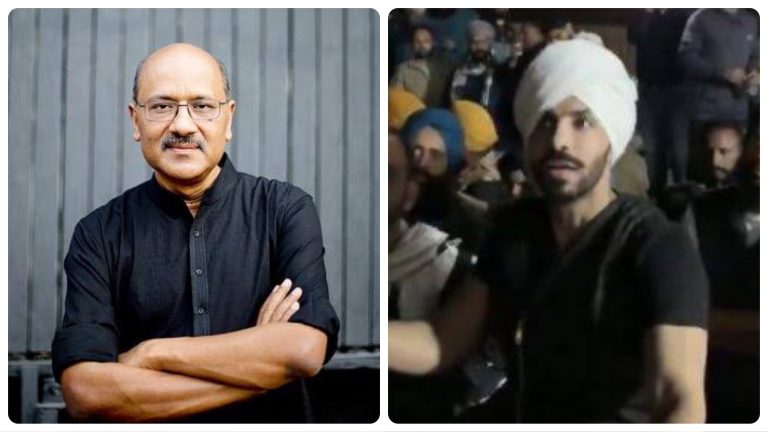
Days after journalist Barkha Dutt spectacularly failed in whitewashing the support of Deep Sidhu support for Khalistan and terrorist Jarnail Singh Bhindranwale, the founder of The Print, Shekhar Gupta picked up the mantle for salvaging the Punjabi actor’s discredited reputation.
Despite Sidhu’s persistent denial to condemn Bhindranwale as a terrorist during his interview with Barkha, The Print provided a platform to the Punjabi actor, glorifying him for his support for the ongoing ‘farmers’ protests and providing him with a fresh opportunity to redeem himself after his contentious stand on Khalistan.
The article titled “I am from a farmer’ family, not using these protests for stardom, actor Deep Sidhu says” published on The Print tried to paint Deep Sidhu as an honest and sincere individual, someone who is involved in the ongoing farmer protest, not for the sake of hogging the limelight and catapulting his otherwise underwhelming film career.
In the article, the Punjabi actor glibly claimed that he had a “deep sense of association with the land and people” which pushed him to join the farmers’ protest. To defend his claim, Sidhu cites that when he wanted to become an actor, he did not travel to Mumbai but came to Punjab and build his own production house.
Source: The Print
Sidhu came out of obscurity after a video of him saying that the farmers’ protests will be the defining moment of the geopolitics of not just India but also entire South Asia had gone viral on the internet. However, the video invited a lot of flak on social media websites, with netizens pointing out that the protests are hacked by attention-seekers masquerading as farmers.
But, Sidhu cunningly deflected the allegations levelled against him and connected them to the modern stereotypes that exist in the society.
“See how ignorant modern society is. Diversity exists in our country and modern society should understand they don’t have the sole right over higher education and that only elites can go to college and university. A person from a farmers’ background can also go to those universities. Let’s not make ourselves prisoners of stereotypes,” The Print quoted Sidhu as saying.
Sidhu says Khalistan sentiments should not be raised during farmers’ protests; fails to condemn Khalistan
The actor feigned victimhood when confronted on his controversial stand on Khalistani terrorism. Speaking to The Print, Sidhu dishonestly claimed that he was “forced” to talk on the issue to clear misconceptions. Taking a cue from his previous interview which ended up being disastrous for both him and Barkha Dutt, Sidhu asserted that the protests had no place for Khalistani sentiments.
However, it is pertinent to note that even in his interview with The Print, Sidhu did not plainly deny his support for Khalistan. Nor did he condemn Jarnail Singh Bhindranwale as a terrorist who had occupied the Golden Temple with arms and ammunition. Instead, the Punjabi actor resorted to using ambiguous language to justify the references to Khalistan during the farmers’ protests by alleging that in Punjab there’s always a “parallel emotion” that gets built up during a protest.
“The ground reality is that in Punjab, whenever there’s a protest a parallel emotion gets built up as well. This is also due to the association with land. If you are not part of that culture it is difficult to understand. But, yes, it should not have been brought up in this farmers protest. At this protest we are only talking about a strong federal structure that also affects West Bengal, Maharashtra and Tamil Nadu and other states as well,” Sidhu told in an interview to ThePrint.
What Sidhu alluded with his specious argument in the interview was that the sentiments in support of Khalistan were completely legitimate, only that their manifestation during the farmers’ protest was wrong. Earlier in his interview with Barkha, Sidhu had been unapologetic and unabashed about his support for Khalistan, which was evident in his stout denial to denounce Jarnail Singh Bhindranwale as a terrorist. This time around, Sidhu seems to be more circumspect was tacit in expressing his support for Khalistan in his interview with The Print.
Barkha Dutt had provided Deep Sidhu with a platform to ‘distance himself’ from OpIndia report that he supports Khalistan
As the ‘farmer’ protests continue to rage along the Punjab-Haryana border, controversial journalist and YouTuber Barkha Dutt had provided her platform to a known Khalistan sympathiser, actor Deep Sidhu, an allegedly aggrieved farmer who was seen in a viral video threatening the authorities that the ‘farmers’ protests will be the defining moment of the geopolitics of not just India but also entire South Asia.
In the interview broadcasted on Barkha Dutt’s YouTube channel ‘Mojo Story’, Sidhu made startling responses that left the host red-faced. Referring to OpIndia, Barkha Dutt confronted Sidhu on reports that claimed that the actor was a Khalistan supporter. However, the controversial journalist was disappointed when Sidhu, instead of plainly condemning Khalistani terrorist Jarnail Singh Bhindranwale, went on to hail him as the revolutionary who fought for a strong federal structure.
Even after Barkha expressed her staunch disapproval on Sidhu hailing Bhindranwale as a fighter, Sidhu did not budge from his stand, reiterating that a narrative was weaved by the then state government to portray Bhindranwale as a terrorist.
In fact, Barkha was so disappointed by Sidhu’s refusal to change his stance that she claimed disbelief on spending 2 minutes discussing whether Bhindranwale was a terrorist or not. Despite Barkha’s palpable irritation and her continued insistence, Sidhu persistently denied calling Bhindranwale a terrorist, and patronisingly told Barkha that she is unaware of the culture in Punjab and has formed her opinion from a studio in Delhi.
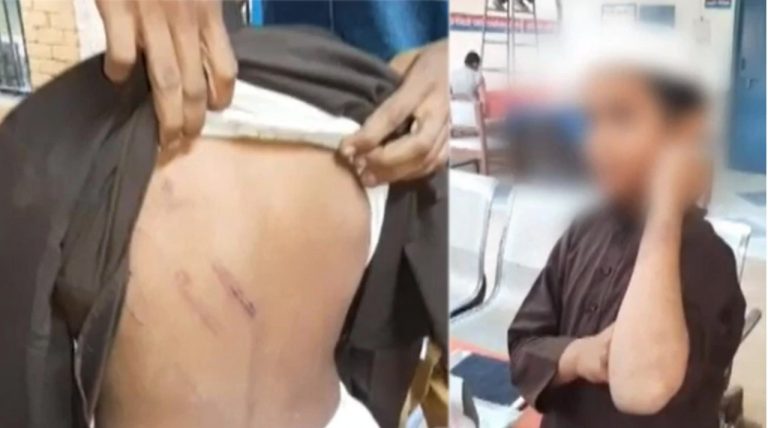
Members of child helpline in Pilibhit rescued a vulnerable 12-year-old boy who had escaped from a madrassa alleging torture. As per a report published in the Times of India, the boy had confided to the members of child helpline that he was beaten and chained when he attempted to escape from the Islamic seminary located in the Jahanabad area of the town.
Child helpline rescues the 12-year-old boy who ran away from the madrassa
The case pertains to Al-Jamiatul Razvia Madinatul Islam madrassa in the Kotwali police station area. The minor has alleged that the teacher of the madrassa, named Hazrat Saheb, had tied him with chains and thrashed him with wooden sticks when he expressed his desire to return to his house. The child was rescued by the child helpline after he ran away from the madrassa.
The coordinator of the child helpline, Nirbhan Singh stated that the child was chased by the staffers of the madrassa and had caught him at Nehru Park in Pilibhit city. However, they fled from the location after locals gathered in the park on hearing the child cry. Subsequently, the police were called at the spot, which approached the child helpline and handed over the victim to them.
Police waiting for the CWC report to file a case against the madrassa
The child was then produced before the Child Welfare Committee(CWC) for further action, Singh said. The police are now waiting for a report from the CWC to lodge a case in the matter.
Singh added that the boy was admitted to the madrassa by his parents a few months ago but he was reluctant to study there. He was later sent for the medical examination at the district government hospital, where he was also tested for COVID-19.
Due to the two consecutive holidays on November 29 and 30, the parents of the boy were given his custody. A report in the matter will be sent to police on December 1, Singh said.
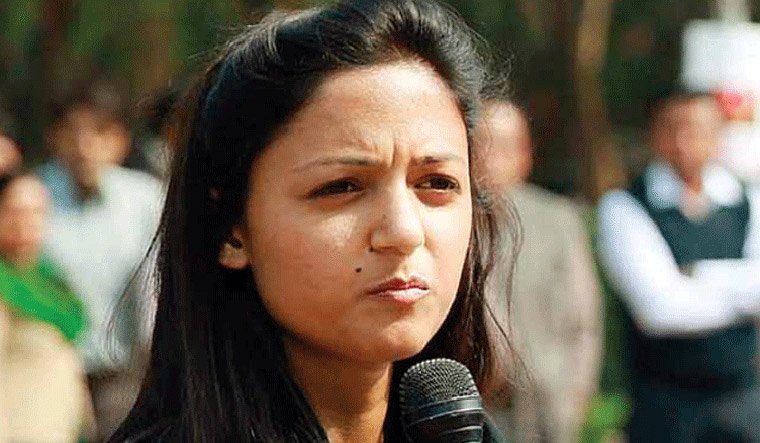
Abdul Rashid Shora, the father of ex-JNU student leader and former general secretary Jammu and Kashmir Peoples’ Movement, Shehla Rashid,has approached the office of DGP, Jammu and Kashmir Police with a written complaint that he is facing death threats from his own daughter, reports local newspaper JK News Wire. In his letter to the DGP Shora throws light on her daughter’s “notorious activities” and urges the Jammu and Kashmir police to investigate her bank accounts,the property acquired by her at New Delhi, her email accounts and her mysterious financial dealings.
Claiming that some anti-national activities have been going on in his house and there is a threat to his life from his own daughter and other family members, Shehla Rashid’s father has asked for security cover.
Letter written to J and K DGP by Shehla Rashid’s father (source: Jammu Kashmir Now)
Letter written to J and K DPG by Shehla Rashid’s father (source: Jammu Kashmir Now)
Letter written to J and K DGP by Shehla Rashid’s father (source: Jammu Kashmir Now)
Abdul Rashid in his letter addressed to the DGP has claimed that Shehla is being supported by his elder daughter Asma Rashid, his wife Zubeida Shora and one of the security guards, Sakib Ahmad.
Claiming that Shehla took 3 Crores in cash to join Kashmir centric politics from ‘notorious people’, Shora said that Shehla had mysterious financial dealing with Feroz Peerzada, Kashmiri businessman Zahoor Ahmad Shah Watali and Rasheed Engineer, an ex-MLA.
Abdul Rashid wrote that in 2017, just two months before Zahoor Watali was arrested in a terror funding case under stringent UAPA Act, he was summoned by Zahoor Watali and Rasheed Engineer at Watali’s residence at Sanat Nagar, Srinagar.
For the uninitiated, Zahoor Ahmed Watali, who heads the Trison group and is considered to be a vital link among the extensive network of seditious elements in the valley, was arrested by the NIA in a terror funding case in 2017. According to the IB officials, he allegedly used his business to funnel ISI funds into Kashmir to promote separatist activities. He was believed to have developed close-knit relations with the ISI officers since his days as a driver of late Hurriyat leader Abdul Ghani Lone. He was reputed to be in constant touch with retired and serving personnel of the Pakistan Army and ISI.
The Enforcement Directorate (ED) first attached properties of Watali worth Rs 1.73 crore in August 2019 and then worth Rs 6.20 Crore in November 2019.
Meanwhile, the former independent MLA Sheikh Abdul Rashid, popularly known as Rashid Engineer, was also arrested by the National Investigation Agency (NIA) in August 2019 in connection with a case related to the funding of terror activities in Kashmir.
Father of Shehla Rashid confirms being offered Rs 3 crores to partake in Zahoor Watali and Rasheed Engineer’s game plan
Shora furthered that at the time when he was called by Zahoor Watali and Rasheed Engineer, Shehla was in the last semester of her PhD in Sociology. He said that in the meeting, the duo revealed their plans to launch the Jammu and Kashmir People’s Movement (JKPM) party and urged him to ask Shehla to join them. He confirms in his letter that he was offered Rs 3 crores to partake in their game plans.
In 2019, the former IAS officer Shah Faesal, had launched his political party the ‘Jammu and Kashmir Peoples’ Movement’ and freelance protestor, Shehla Rashid had also joined Faesal’s party.
“As I felt that the money is coming from illegal channels and shall be used for unlawful activities I did not take the money and later asked my daughter to not indulge in any such transactions with these people”, said Shora, furthering that though he resisted Shehla found support in her mother Zubeida Shora and elder sister Asma Rashid. He said that Shehla was joined by a local boy named Sakib Ahmad, whom she introduced to him as her bodyguard as he carried a pistol.
Shehla accepts Rs 3 crore offered to her father in cash
After a week when Shehla came to Srinagar from Delhi, she confirmed to me that she has got the said money transferred to Delhi in cash asked him to not to disclose anything regarding the said transaction and his meeting with Rasheed Engineer and Zahoor Watali as it could put his life in danger. “She also told me that she has accepted the money and much more is about to come in future and so I need to shut up my mouth. As a concerned father, I strongly objected to my daughter’s decision for joining these notorious people as I felt the money coming will be used for unlawful activities”, wrote Shehla’s father in his letter to the DGP.
“I have a strong belief that there are anti-national activities going on in my house, the characters involved in this plan are my daughters, my wife and Shehla’s security guard namely Sakib Ahmad who lately threatened me with his pistol for my resistance posted to Shehla for her activities”, alleged Shora furthering that irked by his decision to oppose Shehla’s nefarious activities, she along with her mother, sister and her alleged bodyguard hatched a ploy to throw him out of his own house. They implicated himunder the provisions of Protection of Women from Domestic Violence Act in the court of 3rd Additional Munsiff, Srinagar.
He says that despite getting a legal remedy from the court, local police did not cooperate. When he reached his house with the court orders Shakib reportedly threatened to kill him, fearing which Shora confirms running away from Srinagar to Jammu.
“I, therefore, humbly request you to ensure my personal security and kindly direct the concerned police station to extend their support to me in getting back to my house as per court order. He said I also request you to order investigations into the conduct of Sakib and his associates, bank details of Shehla Rashid, Asma Rashid and Zubeida and Sakib, property acquired by them at New Delhi, their email accounts and their mysterious financial dealing with Feroze Peerzada, Zahoor Watali and Rashid Engineer and notorious activities being done by them in the name of Empowerment of Women and Social justice NGO”, wrote Shehla Rashid’s father.
Shehla Rashid denies allegations
After her ‘biological father’ made the allegations, Shehla Rashid issued a statement denying them. She described him as ‘wife-beater and an abusive, depraved man’, and said that finally they have decided to act against them. She alleged that her mother was abused and tortured by her father.
1) Many of you must have come across a video of my biological father making wild allegations against me and my mum & sis. To keep it short and straight, he's a wife-beater and an abusive, depraved man. We finally decided to act against him, and this stunt is a reaction to that. pic.twitter.com/SuIn450mo2
She also posted proofs that the family had earlier lodged complaint against her for domestic violence, and the authorities had asked him to stop them. “Since he was restrained from entering home by the Hon’ble Court, he’s trying to derail the judicial process by resorting to cheap stunts,” she alleged.
Amidst the renewed protests and the ongoing debate surrounding the historic farm bills, apple farmers have been largely benefitted by private procurement centres in Shimla, Himachal Pradesh.
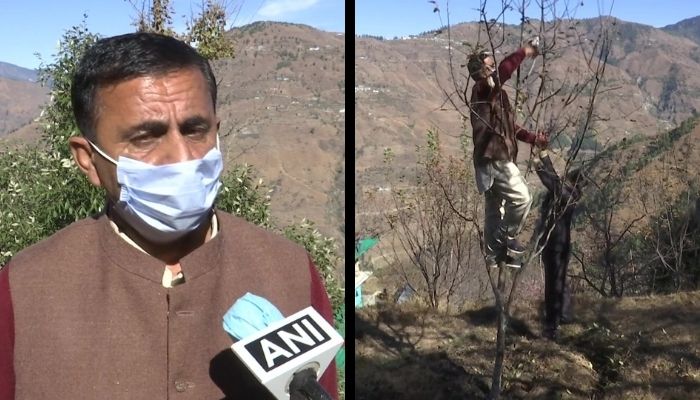
As per reports, the availability of these centres has increased the income of farmers and eliminated the middlemen from the procurement and distribution chain. While speaking about the development, a farmer named Layak Ram stated, “Earlier we had to go to Delhi. Now we sell apples directly to the centre here. I gave them 12,000 crates of apples last year and around 10,000 crates this year.” He informed that the payment is received directly in the bank account, whereas earlier he had to shell out more money on commissions and to grading officials, and labourers.
I gave them 12,000 crates of apples last yr & around 10,000 crates this yr. Payment is made directly into our bank account. Earlier, we used to spend a lot on paying grading officials, labourers, on commission etc. Now we save a lot & earn good money: Layak Ram, an apple grower https://t.co/DHjbumg0Zcpic.twitter.com/7UTr1ckdJI
While thanking the private player Adani group, Ram Layak informed, “We take care of the quality of our produce. Earlier there was a lot of exploitation because of monopoly. Our labour costs are saved as we have contracted out our lands. We are very happy because we earn more now. The Adani group has helped us.”
Orchard manager Manjeet Singh Dhillon informed that Adani group had been purchasing apples from farmers since 2006. He stated that the focus is on improving the income of farmers. Dhillon added that the production capacity was increased to 22,000 metric tonnes this year as compared to last year’s 18,000 metric tonnes. He also stated that 50% more apples had been procured this year and that 17,000 farmers have been benefited by the increased income.
Highlighting about the procurement process, Dhillon stated that the group has now availed the services of scientists to help the farmers in production to be able to compete at the international market. “There are three collection centres in Himachal Pradesh. The growers get their earnings faster now (directly to their bank accounts),” he emphasised. The orchard manager reiterated that about 90% of the workforce in orchards consists of local people, thereby providing employment and catering to the needs of the people in the district. He added that the new technologies are now being employed to help farmers meet quality standards.
The ‘farmers’ protesting against the three farm bills approved by the Modi government have blocked Delhi’s entry points as the protest enters its sixth day. Despite the protests causing extreme inconvenience to the people of Delhi, CM and Aam Aadmi Party supremo Arvind Kejriwal is in no mood to let go of the opportunity to score political brownie points.
Asserting that the Delhi government stands with the protesting farmers and will ensure that they are taken care of, Arvind Kejriwal led government has made arrangements for drinking water, food, medical facilities and shelter for these protesting farmers.
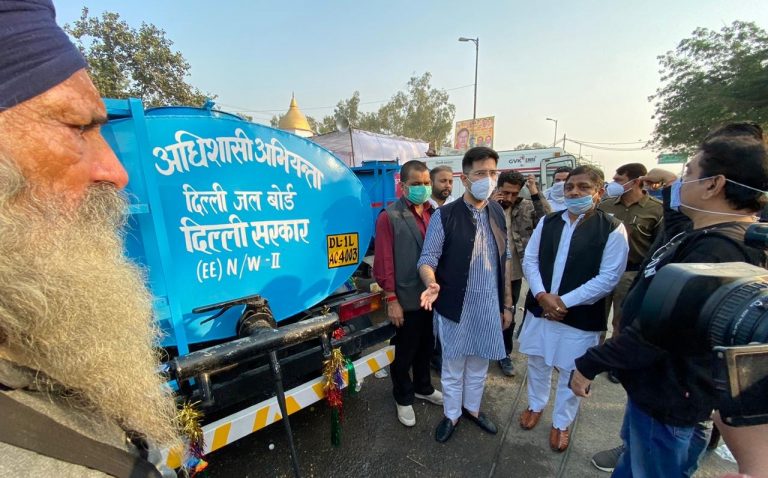
Delhi Jal Board vice-president and AAP MLA and spokesperson Raghav Chadha, himself went to Burari to ensure water tankers are available for the protesting farmers. AAP took to it’s official Twitter handle to brag about the same.
दिल्ली जल बोर्ड के वाईस चेयरमैन श्री @raghav_chadha ने किसानों के लिए पानी की उचित व्यवस्था की समीक्षा करने के लिए सिंघू बॉर्डर का दौरा किया। जहाँ किसान विरोधी काले कानूनों का विरोध कर रहे किसानों के लिए पानी के टैंकर का इंतज़ाम किया जा रहा है। pic.twitter.com/Jsi2aJWw2g
Raghav Chadha also Tweeted that his party is happy to host the protesting farmers and like “sewadar” (servicemen or volunteers) Kejriwal government has made arrangements to ensure that the protesting farmer brothers get basic facilities like food, water and sanitation, and medical care”.
CM @ArvindKejriwal जी की सरकार एक सेवादार की तरह सभी आंदोलनकारियों के लिए जल, भोजन, शौचालय, दवा सबका इंतजाम कर रही है।
आज मौके पर पहुंचकर सरकार द्वारा दी जा रही सुविधाओं का प्रबंध व निरीक्षण किया, किसान भाई केजरीवाल सरकार की मेज़बानी से खुश हैं। pic.twitter.com/C7QNukb5ic
Continuing to play petty politics over the protests, the AAP spokesperson reportedly told Times Now: “The Prime Minister & the Govt should not make this an ‘ego battle’. They must do away with this arrogance, their apathy towards the Indian farmers needs to be shunned”.
The Prime Minister & the Govt should not make this an ‘ego battle’. They must do away with this arrogance, their apathy towards the Indian farmers needs to be shunned: @raghav_chadha, AAP Spokesperson tells TIMES NOW. | #ModiKashiKisanCounterpic.twitter.com/06JHxay6yK
While Arvind Kejriwal is today busy showcasing himself as the Messiah of the ‘distraught’ farmers, he should recollect a few of his recent misendeavors. He forgets how his government had not batted an eyelid in risking the lives of destitute migrant labourers at the time of a crisis as serious as the Coronavirus pandemic.
After Prime Minister Narendra Modi urged Indians to stay at home, wherever they are, in a bid to contain the Chinese coronavirus pandemic, Arvind Kejriwal-led Delhi government had spread lies and unnecessary rumours which had impelled the mass exodus of lakhs of migrant labourers, in an attempt to return to their respective villages.
When most of the state governments had sealed their borders and banned commercial vehicles to ply, the AAP government had made false announcements in colonies, where migrants from UP and Bihar were staying in Delhi, informing them that Delhi government-run DTC buses will take them to the Anand Vihar bus terminal, from where they would be able to get the buses to take them further to UP and Bihar. This had compelled lakhs of migrant labourers to take foot journeys to their homes after they found not buses waiting at the Anand Vihar bus terminal as told by the Delhi govt.
The Uttar Pradesh government, which had then come to the rescue of these migrant workers had on 28 March 2020 accused the Delhi authorities of disconnecting the water and electrical energy connections of individuals, forcing them to leave their homes in Delhi and head back to their villages. “Throughout lockdown, individuals weren’t even supplied meals and milk in Delhi,” stated a report quoting UP govt sources.
Meanwhile, the Aam Aadmi Party chief should also not forget that he who is today so eager to host the farmers from all across the country, had earlier, with a straight face, shown cold shoulder to all ‘outsiders’ battling with the deadly coronavirus in the national capital. In June this year, when the entire country was fighting the scourge of the Chinese virus, Kejriwal had insensitively announced that the Delhi Government hospitals will only treat patients that are residents of Delhi. He had suggested that the outsiders could go to central govt hospitals for treatment.
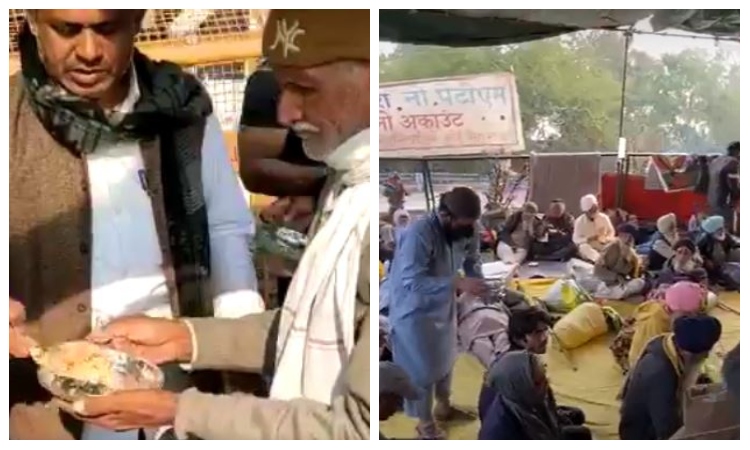
Amidst the ongoing protest by ‘farmers’ against the farms bills passed by the Modi government, a video shared by Times of India (TOI) has gone viral on social media which shows Biryani being served to ‘farmers’ camping in Ghazipur, Delhi. The video captioned “Biryani time at Ghazipur farmers protest spot” by TOI, showed hundreds of protestors queueing up for free Biryani.
The video attracted a barrage of reactions on the micro-blogging platform as it brought back the memories of the ‘organic’ Shaheen Bagh protests, where Islamists sat on a so-called ‘protest’ beginning in December last year, against the Citizenship Amendment Act. Netizens were quick to draw equivalences between the ongoing farmers’ protest at Delhi border areas and the anti-CAA protest at Shaheen Bagh, which had turned out to be a professionally organised left-wing managed anti-India event.
Biryani at the farmers’ protest brings back memories of the ‘organic’ Shaheen Bagh protests
Reacting to the video, some social media users opined that the farmers’ protest was the season 2 of Shaheen Bagh protests. “After roaring success of “Kudrati Biryani-PincherProtests” Presenting Season 2 of India’s biggest Nautanki (aka Reality Show): Shahinbagh 2 theme is: “Kudrati Biryani-FarmerProtests”, wrote one social media user.
After roaring success of “Kudrati Biryani-PincherProtests”
Presenting Season 2 of India’s biggest Nautanki (aka Reality Show):
There is this one Twitter user who opined that the radical Islamic organisations, leftist parties, AAP and Congress who helped to stage the Shaheen Bagh ‘protests’ are the ones who are behind this so-called ‘farmers’ protest.
Shaheen Bagh protests were well-oiled, well-funded (plus, biryani)
It may be recalled how OpIndia’s ground report had earlier talked about biryani being brought in then to be distributed amongst the Shaheen Bagh ‘protestors’ and ‘volunteers’. Along with biryani, there was packaged water, fruit juices and other snacks made available. If this was not enough, there was a music system there, where rental charges are anything between Rs 8,000 to 10,000 per day. The tent would cost anything between 10,000 to 30,000 per day. During day time, there are about 200-300 ‘protestors’ who are provided with water and tea and free food. On average, these protests had cost about Rs 10,00,000 per day.
Moreover, a video shared by BJP’s IT cell head Amit Malviya had also exposed how protesting women at Shaheen Bagh were paid between ₹500 and ₹700 on a daily basis. A man who had appeared in the video had also claimed that the protestors worked in shifts so that the crowd looks huge at all times of the day. According to him, the women are incentivised to dedicate their free time to the protests. He also added that the protestors are provided with food, rest and shift-based rotational ‘duty hours’ in a well-organised manner. He claimed that the Shaheen Bagh protest was more of a mode of income for the locals.
Meanwhile, reports suggest that some women from Shaheen Bagh have also come to the Singhu border to show support for the farmers’ protest. Farm union leaders claim some 3 lakh farmers are participating in the protest march.
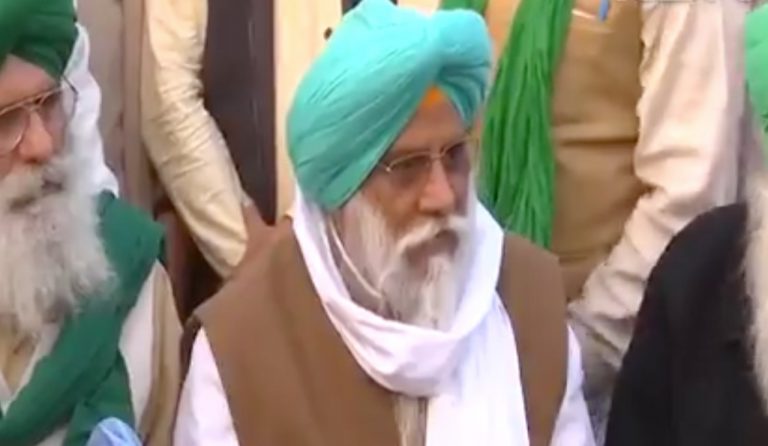
Even as the central government tried to assuage the apprehensions harboured by ‘farmers’ regarding the agriculture laws by saying that the new laws would seek to remove middlemen, a group of farmers speaking to the media appeared to bat in support of the middlemen involved in the sale and purchase of their agricultural produce.
#FarmersProtest | “The government is saying that they have introduced the new farm laws to eliminate the middlemen. We are asking them to define ‘middlemen'”: Farmers address the media pic.twitter.com/bDfaRauVTm
“The government is saying that they have introduced the new farm laws to eliminate the middlemen. We are asking them to define ‘middlemen’. The system that is in place in Punjab and Haryana is considered as the best in the world. When we take our produce to mandis in Punjab and Haryana, the individuals there help us in unloading our trolleys filled with our produce. They pack the grains in sacks and receive money on our behalf from the buyers. They are not middlemen, they are service providers, and if they are charging a commission for providing their service, so be it,” a ‘farmer’ said to the media.
The ‘farmer’ further alleged that the bills that were introduced by the government under the pretext of helping the farmers were brought under the pressure from middlemen in other areas. He said that the Indian government has employed middlemen in several areas of its functioning such as Defence, Trade and Commerce and contended that not a single government transaction happens without a ‘middleman’ being involved.
No restrictions faced by farmers, bills are redundant: Farmer Group
The ‘farmer’ continued his attack against the central government, stating that the reasons provided by them for the introduction of the farm bills are not satisfactory. He stated that the government had introduced the bills for helping the corporates and not for the welfare of the farmers. Rubbishing the central government’s claim of bills helping in removing the impediments to the farmers for selling their products anywhere in the country, the farmer claimed that they still sell their produce across the country without any difficulty.
“The government states that the bills have enabled ‘One country one mandi’ but in reality, the laws have resulted in ‘One country two mandis’. They have pandered to the corporates. In 1976, we fought for the zonal restrictions that prevented farmers from selling their produce to other states. A case was filed and the high court in November 1976 gave a verdict in our favour. Since then, farmers in Bihar send paddy to Punjab. We sell our produce to Bengaluru and Bengal. Apples from Himachal and Kashmir are sold across the country. Maharashtra sends Bananas, Onions and Oranges to other states,” the farmer said.
Farmer indulges in fear-mongering about agricultural reforms carried out by the Modi government
While scare-mongering about the central government’s decision to carry out reforms in the agricultural sector, the farmer inadvertently listed down the benefits that the farmers would receive from the reforms undertaken by the Modi government. Speaking to the media, the farmer said that the new laws would enable anyone from across the country, who has a government authorised identification card such as Pan Card, Aadhar, to buy directly from the farmers. However, he did not shy away from fear-mongering about the reforms, adding that such a provision would be catastrophic for the farmers as there is no effective grievance redressal mechanism in place if the buyer refuses to pay his due to the farmers.
Modi government announces three new bills to overhaul the agriculture sector
Continuing the reform agenda on the back of a Unified National Agriculture Market (NAM) which was announced in 2014, the Modi government had in September 2020 introduced three more bills to promote much easier trade for the farm produce and to provide a competitive market for the producers outside the existing APMC system.
The objective of the three proposed laws is to make way for creating the Modi government’s ambitious vision of ‘One India, One Agriculture Market’. The law intends to end the monopoly of Agriculture Produce Market Committees (APMCs) in carrying out the trade of farm produce in the country.
The Farming Produce Trade and Commerce (Promotion and Facilitation) Bill, 2020 aims at creating additional trading opportunities outside the APMC market yards to help farmers get remunerative prices due to additional competition. Farmers can now sell their agricultural produce in a market of their choice at better prices.
The Farmers (Empowerment and Protection) Agreement on Price Assurance and Farm Services Bill, 2020 creates a framework for contract farming through an agreement between a farmer and a buyer prior to the production or rearing of any farm produce.
The amendments to the Essential Commodities Act, 1955 allows the central government to regulate the supply of certain food items only under extraordinary circumstances.
Significance of the proposed laws
The three historic legislation will unlock the overly regulated agricultural markets in the country. The laws will provide more choices for the farmer and lessen the marketing costs for the farmers thus helping them to get better prices. It will also help farmers of regions with surplus produce to get better prices and consumers of regions with shortages, lower prices.
The laws will enable the farmer to make use of modern technology and better inputs to enhance their farm produce and its trade. It will reduce the cost of marketing and improve the income of farmers. These new laws will encourage large companies, food processing firms, exporters, etc, to invest in the farm sector and source good-quality farm produce.
The announced amendment to the Essential Commodities Act is expected to help both farmers and consumers while bringing in price stability. The proposed changes will also create a competitive market environment and prevents wastage of agri-produce that happens due to lack of storage facilities.