Home Blog Page 500

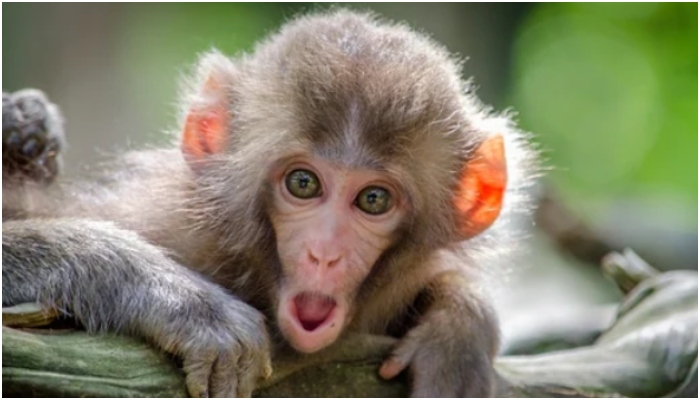
Sri Lanka faces blackout because of a monkey? Monkey blamed for nation-wide power disruption

0

On Sunday, 9th February, the country of Sri Lanka faced 6 hour-long nationwide power outage after a monkey caused disruption at a Colombo suburb grid station. Following this, the island experienced a 90-minute power cut on Monday, 10th February and the authorities have stated that the country might face the same on Tuesday, 11th February.

Energy minister Kumara Jayakody commented on the matter and stated that a monkey came into contact with the grid transformer at the Colombo suburb grid station, causing an imbalance in the power system. As per the reports, the power cut began at 11.00 local time (05:30 GMT) on Sunday and it forced the authorities to rely on generators. However, later it was informed that the restoring power could take crucial time.

The event led to a breakdown at the Norochcholai coal power plant, which further resulted in scheduled power cuts on Monday and Tuesday for around 90 minutes.

The Ceylon Electricity Board, the state power entity issued a statement on Sunday confirming that a 90-minute power cut would be imposed in two slots between 3 pm and 9.30 pm. “Sunday’s sudden power outage forced the operations at Lakvijaya power station to shut,” it added.

Several persons shared posts on social media regarding the issue. They stated that a monkey was enough to create chaos in the lives of Sri Lankan people. “Sri Lanka’s Internet Usage Dropped by 51% – Because of a Monkey? A bizarre nationwide power failure took down half the country’s internet yesterday,” one of the users said.

“Sri Lanka has an ancient history of losing to monkeys! Island nationwide power outage,” another one said referring to the times of Ramayana when Ravana lost war with the army of monkeys led by Lord Rama.

The Ceylon Electricity Board eventually put up a notice on its website saying, “We are making every effort to restore the island-wide power failure as soon as possible. We apologize for the inconvenience and thank you for your patience.”

Notably, following the power outage scheduled, several people are expressing concerns about the rising temperatures, lack of internet network due to lack of electricity supply to the network towers, and also temporary shortage of water supply, probably due to stoppage of electric pumps or motors.

Lucknow: Hindus protest against Christian conversion activities in Gomti Nagar church, locals say Christians buying land and houses at double price

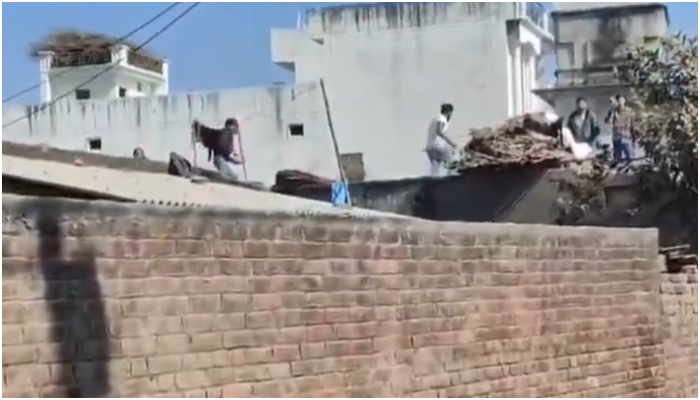
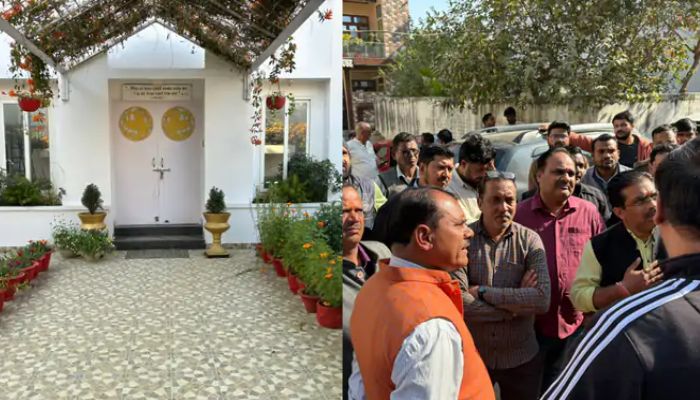
In the Chota Bharwara of Gomti Nagar Extension area in Lucknow, a massive uproar has erupted over alleged Christian conversion activities going on in a house. The local Hindus staged a protest, accusing the Christian residents of the said house of holding Sunday prayer meetings and converting locals to Christianity. It has been alleged that the accused are pressuring local Hindus to convert to Christianity or sell their houses and leave the area.

On Sunday (9th February), the Gomti Nagar Extension police arrived at the location and brought 50 people from the house where Christian conversion activities were reported, to the police station. The police, however, noted down the names and addresses of all and let them go. They said that they had come for the prayer meeting. Police also investigated Christians who organised the prayer meeting. The police warned those who attended the prayer meeting that if the atmosphere of the area deteriorates, action will be taken.

Meanwhile, PAC has been deployed as tensions prevail in the area.

Ritesh Mishra, a resident of Bharwara Estate Colony in Chhota Bharwara, lodged a complaint in Gomtinagar Extension police station that a church had been built in a house in his neighbourhood. Every Sunday, a prayer meeting is held in the house. A large number of people gather in it and religious conversion is also done here. The Christian missionaries involved in this were warned many times, however, they continued with their illegal activities. On Sunday at 10 am, a large number of people came for the prayer meeting.

The people of the locality alleged that during this time there were preparations to convert some people. When the people of the locality protested, the people present in the house came out and started threatening. Hearing the noise, other people from the vicinity also gathered. On receiving information about the ruckus, ADCP East Pankaj Kumar Singh reached with the Gomtinagar Extension and Gomtinagar police team. People were pacified. Inspector Gomtinagar Extension Sudhir Awasthi said that some people have been questioned based on allegations.

If the Hindus refused to convert, the Christian missionaries put pressure on the locals to sell their houses. Yogesh Mishra, Mohit, Bharat Bhushan, residents of Bharwara State Colony said that this house was built six years ago and earlier, a few people used to come here. However, for the past six months, a large number of people have gathered at the house every Sunday.

Locals alleged that the people who come to the house also tempt them to change their religion. They lure them with a job and lakhs of rupees if they change their religion. On refusing to change their religion, they pressured them to sell their house and leave the area. The local Hindus said that these Christian missionaries were buying land and houses in the area at double the price.

A local resident Dhananjay Kumar Pandey said that a church-like house has been constructed with no explicit religious symbols. The gates and walls are so high that nothing can be seen from outside. One Manoj Sharma said that these Christian missionaries are luring people to Christianity by offering financial enticements and properties. The local Hindus are harassed and if they oppose the missionaries, they get threatened. Sharma added that they had complained about the illegal conversion activities earlier as well, however, no concrete action was taken.

Some locals alleged that the police are hushing up the matter instead of acting against the Christian missionaries.

Speaking about the matter Shashank Singh, DCP East said, “At 10 am, information was received about religious conversion in a prayer meeting being held at a house in Chhota Bharwara. The police went to the spot and investigated. No evidence of religious conversion was found. The people brought to the police station have been warned that action will be taken if the atmosphere of the area deteriorates. The crowd gathered here has been pacified and sent back. The situation is normal now. Police and PAC have been deployed as a precaution. Further action will be taken on the basis of the complaint.”

So far, despite a complaint being lodged, no FIR has been registered in the matter.

Meanwhile, Hindu Samaj leader Angad Shukla said that illegal Christian conversion activities have been going on in the colony for many years. Even after complaints, the police are not taking any action. When there was a ruckus on Sunday, the police removed everyone and finished their work. He said that even after 24 hours, no case was registered against anyone.

The Hindu rights activist further announced that every Sunday, the Hindu Samaj group and local Hindus will recite Sundarkand in the Bharwara Estate Colony. Angad Shukla said that he has met DCP Shashank Singh, who assured him that necessary action will be taken in the matter. Shukla demanded that the said church’s registration, water and electricity bills etc should be examined. The Hindu Samaj said that if the police fail to take appropriate action, they will launch a massive protest.

As per a Bhaskar report, one Rajivlal constructed a church-like house in the colony 5 years ago. Following this, three more houses were built in a line. These houses are connected to each other from the inside, and there is a church in Rajiv’s house. The house is a place for frequent religious gatherings and possible conversion activities.

Ranveer Allahbadia, Samay Raina, and public outrage – why comedians will never be ‘left alone’: The serious business of ‘jokes’

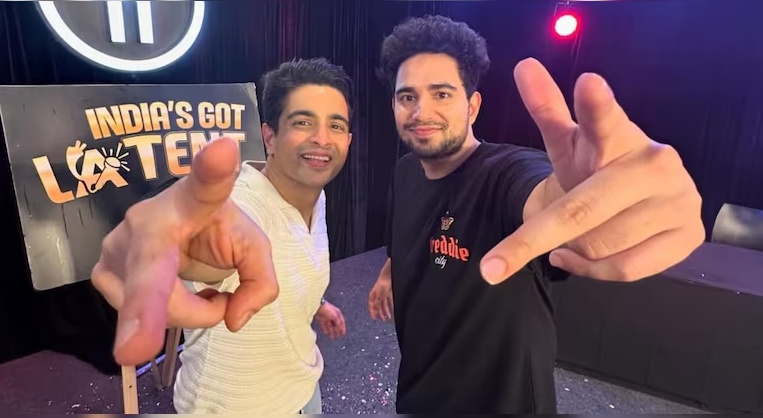
Having been a satirist and humorist by profession once, I suddenly realize that it’s a crime if I don’t dispense gyaan on controversies around Ranveer Allahbadia aka BeerBicepsGuy who has now apologized for his ‘joke’, though the issue has now reached police; FIR has been registered, national child commission has issued notice, and one Rajya Sabha MP from Uddhav Sena has even promised to raise the issue in the parliament too.

Taking a cue from the joke which landed him in trouble – even if he decided to join this clusterf*ck instead of just watching it, he won’t be able to stop it forever.

It’s never-ending anyway. Even if some comedians may think/argue that ‘why give us so much importance when all we are doing is to crack silly jokes to help few people relax and destress’, they won’t be left alone as comedy is a serious business.

Except for physical comedy, such as clowns in a circus, all comedy, especially those involving words, do end up touching issues that have social and political facets. Even physical comedy, like some acts by Chalie Chaplin, can make social points. Whether or not a comedian is aiming to be or wants to be, he or she becomes some sort of an activist or a social worker – absurd as it may sound. And that’s when you can’t escape scrutiny and can’t wish to be left alone.

Now this risks comedy being regulated, censored, and worst, being self-censored – all of which impediment creativity, which is the worst thing that can happen to an artist.

Wait a minute, so is a comedian an artist or an activist?

The main difference between an artist and an activist is that an artist is primarily on the journey of self-exploration while an activist is bothered mainly about others. Both of these are not mutually exclusive domains though, and there are overlapping areas. Some have entirely blurred the lines and call themselves artist-activists, and they usually suck at both.

However, every form of art touches social and political facets too, so an artist wouldn’t be left alone either – even if he or she would like to and even deserves to be. Society as a whole insists on an order to be maintained, and a social contract to be followed, and it will do what it takes to keep things in check. Art and literature have done far more to bring about social and political changes compared to wars or elections, thus it is naïve to expect that they would be left alone by existing power structures (both social and political).

It is also important to realize what humour is. Not always, but often, there is an object of humour – an idea, an entity, a person – which is being ridiculed. It allows you to criticize some things that otherwise might be difficult to do when done in a serious manner. Now, if those ideas, entities or persons on the receiving end are directly related to the existing power structures, there will be pushback.

Please do note that “power structures” don’t necessarily mean who is in power – i.e. political party, government, etc. It is essentially any system that maintains the status quo and social equilibrium. It could be ‘right-wing’ in some sectors, and ‘left-wing’ in another, and no explicit wing in many.

When it comes to jokes like what caused the current furore – the idea that is being ridiculed is the concept of social taboos in general and incest in particular. Now, personally, if you think there shouldn’t be any concept of taboo in society, and practices should fall strictly into either legal or illegal domains, you’d find the entire pushback absurd and unwanted.

Jokes around violence, sex, morality, death, tragedy, injustice, crime, etc. would fall into this domain. They don’t encourage illegal activities (unless direct call for violence, rape, etc.), but they go against taboos. It will always be a tricky domain because taboos are not well defined as laws and taboos differ from one group to another, even from one individual to another.

A comedian may crack a morbid joke thinking it’s just a random timepass expression not aimed at ridiculing an idea or weakening a structure, but rarely that is going to be received in that manner. In fact, it does weaken those things.

If you are a professional comedian, unfortunately, you can’t really have the luxury of not being scrutinized like this. You can’t compare your act with say a drunk party of some college kids where they blurt all obscenities at each other only to (hopefully) forget it all when their senses are back, even if it was a private closed-door event. There is hardly anything private and closed anyway these days thanks to modern technologies.

Someone on X tagged me to what appears an old voice note of Samay Raina (embedded below), a comedian on whose YouTube show Ranveer uttered that stupid joke involving incest, where he is saying “comedy has no responsibility” in response to what I assume is someone asking him why does he indulge in vulgarity on his shows. He then adds that “comedy is to take you away from the reality and to make you have fun” because people are already burdened with hundreds of issues in their lives and they just want to switch off and enjoy some time off.

Maybe he doesn’t realize but he contradicted himself. When he gives his comedy that purpose or mandate, he is taking up an important responsibility of making people destress and unwind – something for which some people have to take medical assistance and need therapies. He then can’t go on to say comedy has no responsibility. He himself only took on one.

However, his approach appears to be what I described above – have fun like friends who are drunk. Nothing wrong with that on a base level. I actually liked some of his jokes/acts (I discovered him only after this outrage – yes, I’m getting old); he has a good sense of timing and perhaps no sense of filter, which has caused the trouble now. I for sure won’t want him or Ranveer jailed, but they should realize that comedy won’t be left alone just like that, for the reasons I pointed out above.

It’s time to realize that comedy is indeed a serious business. 

Himachal Pradesh: Mandi SDM attacked by mining mafia, suffers injury

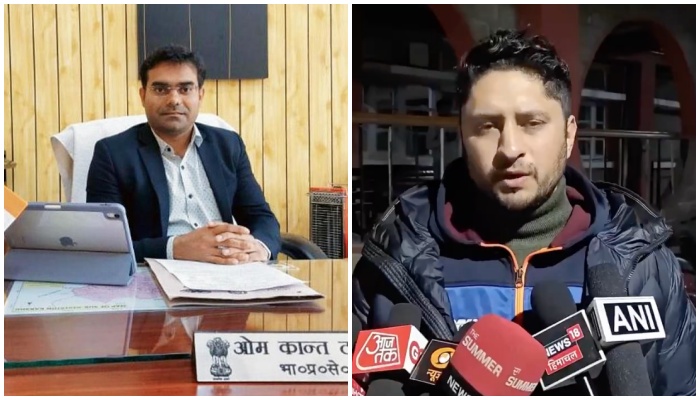
Sub Divisional Magistrate (SDM), Mandi Sadar, Omkant Thakur, was allegedly attacked by mining mafia when he went to the banks of the Beas River to take action against illegal mining.

According to the officials, the assailants fled the scene after the attack. The attacker was later nabbed by the police,

It is believed that something heavy struck SDM Thakur’s face, causing his tooth to break. He was brought to the Zonal Hospital in Mandi in an injured condition, where he was treated by a dentist.

Upon receiving the news, the Deputy Commissioner (DC) of Mandi, Apoorv Devgan, the Additional Deputy Commissioner (ADC) of Mandi, Rohit Rathore, the Additional District Magistrate (ADM) of Mandi, Madan Kumar, and the ASP of Mandi, Sagar Chand, among other officials, reached the hospital.

Speaking to the media, District Collector of Mandi, Apoorv Devgan said the police are investigating the matter, asserting that the administration will continue to control cases of illegal mining in the district.

“He (SDM Thakur) went to the banks of Beas River in the evening for inspection where he was attacked. Others with mining vehicles fled the scene. He (SDM Omkant Thakur) has sustained injuries on his face and he has been given treatment. Police are investigating. Mandi administration will continue to monitor and control cases of illegal mining in the district,” he said.

Assistant Superintendent of Police (ASP) Sagar Chandra said that the attacker has been detained.

“The SDM was attacked when he went to inspect a mining site. We are investigating the matter and we will take his and his driver’s statement too, before we file an FIR. The attacker had been detained,” ASP Chandra said.


(This news report is published from a syndicated feed. Except for the headline, the content has not been written or edited by OpIndia staff)

Ravish Kumar, Pratik Sinha, and more: Know leftwing propagandists associated with Prashant Bhushan’s Sambhaavnaa Institute and its link with USAID-funded Internews

0

On 8th February (local time), WikiLeaks uncovered a massive funding operation by the United States Agency for International Development (USAID). In connection with the exposé, another threat came to light, putting the spotlight on propagandist advocate Prashant Bhushan, whose involvement with Internews through his Sambhaavnaa Institute of Public Policy and Politics has been highlighted. The exposé on Bhushan has been carried out by X user ‘The Story Teller’.

Notably, in August 2024, when the former Prime Minister of Bangladesh, Sheikh Hasina, was removed from her post, the X user pointed out how global media propaganda was working with an anti-India cabal within India, aiming at a regime change. Revisiting information from the 2024 thread, The Story Teller explained how Bhushan fits perfectly into the anti-India propaganda running across media houses, with funds coming from USAID.

About Sambhaavnaa Institute of Public Policy and Politics

Sambhaavnaa Institute of Public Policy and Politics was established 20 years ago, in 2004, under the Kumud Bhushan Education Society by Prashant Bhushan. Kumud Bhushan was Prashant’s mother. According to the organisation’s website, since 2011, it has emerged as a platform for individuals and organisations to “reflect on and engage with the injustices that prevail in society today”. However, the true agenda is not as simple as it appears. A deeper dive into the organisational structure linked to people, and associated entities reveals a more sinister plan to create a heavily left-leaning ecosystem within the media landscape in the country.

Fast forward to 2010, Bhushan purchased a piece of land and a tea estate in Kandbari village near Palampur, in the Kangra district of Himachal Pradesh, where he constructed a permanent base for the organisation and its sister initiative, named “Udaan Learning Centre”.

Since its inception, the centre has become a hub for workshops and discussions, often featuring prominent left-leaning figures, including Yogendra Yadav (former AAP leader and currently a self-proclaimed political activist), Harsh Mander (founder of Project Karwan-e-Mohabbat, known for his dubious history, including anti-CAA views and FCRA violations), Medha Patkar (known for her misplaced activism against the Narmada project in Gujarat), Pratik Sinha (co-founder of the propaganda website Alt News), Sori Sori (Naxalite activist), Nandini Rao (known for her anti-Hindu views), Ravish Kumar (propagandist YouTuber who often asks people about their caste [‘kaun jaat ho’ fame] and spreads anti-BJP propaganda), Kavita Krishnan, Vijayan MJ, Nityanand Jayaraman, Atreyee Mazumdar, and many others.

If we talk specifically about journalists associated with Bhushan’s organisation as ‘Resource People‘, the names include Paranjoy Guha Thakurta (independent), Ravleen Kaur (independent), Manu Moudgil (independent), Neetu Singh (independent), Bhasha Singh (independent), Swati Pathak (Bharat Samachar), Atul Chaurasia (Newslaundry), Sandeep Chaudhary (News 24), Poonam Kaushal (Dainik Bhaskar), Vishwa Deepak (National Herald), Navin Kumar (Article 19 India), Akash Banerjee (YouTuber/ex-Times Now), Apporvanand Jha (columnist, The Wire), Neel Madhav (independent), V Sridhar (The Hindu Group, commissioner at Peoples Commission on Public Sector and Public Services), Professor Karunashankar Kusuma (Mobile journalism expert), Harsh Mander (columnist), Professor Subhash Saini (Founder, Desh Haryana Magazine), Bhanwar Meghwanshi (former RSS member, journalist covering Dalit movement), and Aparna Dewal (fact-check and media literacy trainer).

Exploring interconnected organisations, funding sources, and who sets media narratives

A pivotal event mentioned in the thread was a workshop held in August 2024, supported by three key partners: Factshala, DataLEADS, and Internews. This workshop, aimed at media literacy and fact-checking, underscores the collaborative efforts to shape media narratives in India. Internews, founded by David Hoffman in 1982, is portrayed as a non-profit committed to independent media and access to information globally but is heavily funded by USAID, alongside giants like the Ford Foundation, the Open Society Foundation, and tech companies such as Google and Facebook.

In a previous report, OpIndia explored connections between USAID and Internews. USAID funnelled around $472.6 million into the Internews Network, an international media non-governmental organisation (NGO). The network operates under the guise of journalistic development. WikiLeaks revealed that Internews Network has provided financial support to over 4,291 media outlets worldwide, producing extensive media content while engaging in social media censorship and information control strategies in the name of “fact-checking”.

Internews Network has an India link, exposing a far-reaching attempt to influence narratives in prominent media houses operating in the country. The connection that has emerged is with a so-called media literacy programme called “Factshala”.

Factshala claims to be an educational platform for media personnel. It operates under DataLEADS and claims to have trained over 75,000 media professionals, reaching an audience of over 6.5 crore. Factshala is backed by the Google News Initiative against “misinformation”. However, its crucial link to Internews reveals the interference of USAID-backed funding. With this revelation, it becomes more evident that USAID was indirectly shaping Indian media education, much like its influence in other politically sensitive regions worldwide.

Factshala has an ambassador programme that includes controversial media personalities such as Shekhar Gupta of The Print, Ritu Kapur of The Quint, and Faye D’Souza of Beatroot News. According to its website:

“The FactShala Ambassador Programme is run by DataLEADS in collaboration with The Poynter Institute for Media Studies and its digital media literacy programme, MediaWise, with support from the Google News Initiative. It is an initiative to enhance the voice of media literacy in India by empowering people of all age groups to become more critical consumers of content online. In an era of abundant misinformation, the ambassadors will provide invaluable resources and offer knowledge and insights to sort fact from fiction online and slow the spread of misinformation – an opportunity to drive positive change within the community.”

Notably, the Poynter Institute has a long list of funding sources, including the Institute for War and Peace Reporting, the John D. and Catherine T. MacArthur Foundation, National Public Radio (a US government-funded entity), The Washington Post, and others.

Internews and its leadership

Now comes a tricky part of the story. Internews has hidden sections that reveal information about the organisation’s top leadership. Although these pages are accessible via archive.org, it is concerning that an organisation heavily funded by a US government body is concealing details about who runs it.

The President and CEO of Internews is Jeanne Bourgault. She leads Internews while drawing a salary of $451,000. Notably, the sum she pays herself is far higher than the standard for an NGO executive.

The CEO of Internews Europe is Meera Selva. She is a member of the Centre for Economic Policy Research, which is funded by the Ford Foundation, the Open Society Foundation, and the Omidyar Network.

The CFO of Internews is Robyn Mordeno. She previously served as CFO for the Institute for War & Peace Reporting (IWPR). IWPR is managed by the family of former US Under Secretary of State Victoria Nuland, the famous “regime change queen” of the US government.

Brian D. Hanley is the Regional Director of Asia-Pacific Programmes at Internews. He has served as a Senior Democracy and Governance Field Advisor in USAID’s Centre of Excellence on Democracy, Human Rights, and Governance (DRG).

These names are just the tip of the iceberg, and it is evident that they are either directly linked to the US government or USAID.

As mentioned before, Internews was founded by David Hoffman. His profile on Internews is also hidden. Notably, he also founded Global Forum for Media Development. According to its website, “The Global Forum for Media Development is the largest global community for media development, media freedom, and journalism support. Through collaboration, coordination, and collective action our network of 203 member organisations — as well as our dozens of partners — creates, promotes, and delivers policies and programmes to sustain journalism as a public good.”

GFMD’s funding comprises 15% of its membership fees. Apart from that, the National Endowment for Democracy, the Aisa Foundation, the Open Society Foundations, the Swiss Agency for Development and Cooperation, BBC Media Action, UNESCO’s International Programme on the Development of Communication, and DW Akademie are among its donors.

The Anti-Corruption Conference

USAID also funded the annual International Anti-Corruption Conference (IACC). Interestingly, in 2022, the IACC provided a platform to Disha Ravi. For those who may have forgotten, in February 2021, Disha Ravi was arrested by the Special Cell of the Delhi Police for her involvement in the anti-India toolkit that was inadvertently posted on Twitter by so-called environmental activist Greta Thunberg. The toolkit referred to a set of documents containing details of planned protests in support of the farmer protests.

Another name that appeared in the same year was Sanjay Pradhan who is an Ambassador of the Open Government Partnership. OGP is one of the funders of V-Dem Institute, the infamous organisation known for publishing dubious data-based anti-India propaganda in the name of the Global Democracy Index which has classified India as Semi semi-autocratic state for several years. According to OGP’s website, “OGP Ambassadors are senior figures charged with raising the partnership’s profile, protecting its credibility and promoting its sustainability. Their roles are designed to complement the work and existing responsibilities of the Steering Committee members and other OGP participating governments and civil society organisations.”

Internews and Equality Labs

Another X user, Tapesh Yadav, exposed a link between Internews and Equality Labs. Internews has a fund called the Platform Impacts Fund (PIF) which claims to support tech governance and accountability but seems to prioritise funding organisations with a clear ideological bias. One such recipient is Equality Labs. Though Internews identifies it as an India-based group, Equality Labs’s headquarters are located in the US. The organisation brands itself as a Dalit civil rights organisation. However, it has been widely criticised for promoting divisive narratives under the guise of activism. Equality Labs pushes an agenda centred on caste apartheid, Islamophobia, and religious intolerance, often painting an exaggerated and one-sided picture of social issues in India.

It had collaborated with the Organisation for Minorities in India (OFMI), among other organisations, for a report titled ‘Caste in the United States: A Survey Of Caste Among South Asian Americans’. The OFMI was founded by Bhajan Singh Bhinder, a known ISI operative, and his puppet Pieter Friedrich was part of the organisation too. Equality Labs also campaigned hard against Amit Jani, who had worked in the Joe Biden campaign, accusing him of supporting ‘Hindu Fascism’. It had also inserted a ‘Dalit’ angle to the anti-farm law protests even though the demonstrations were clearly an attempt by the dominant caste groups in Punjab and Haryana to preserve their privilege. Moreover, Jack Dorsey, the former CEO of the erstwhile Twitter, had once stoked a massive controversy when he held an anti-Brahmin placard that said ‘Smash Brahminical Patriarchy’, a poster designed by Thenmozhi Soundararajan, the executive director of Equality Labs.

The USAID’s propaganda network is yet to be fully exposed. From funding media houses to set narratives, regime change, censorship, promoting religious conversions and other dubious activities, USAID has misused billions and billions of dollars over the decade.


Adani Group to partner with US’ Mayo Clinic to establish ‘Adani Health City’ and provide affordable healthcare and education

Industrialist and Adani Group chairman Gautam Adani has unveiled plans to establish Adani Health City (AHC) integrated health campuses through the Group’s not-for-profit healthcare initiative.

Taking to X, Mr Adani tweeted, “Proud to launch Adani Health City in partnership with Mayo Clinic, pioneering world-class medical research, affordable healthcare & education. Starting with two 1000-bed hospitals and medical colleges in Ahmedabad & Mumbai, we are on a mission to bring cutting-edge medical innovation across India.”

“This is just the beginning of a healthier, stronger India – one campus at a time!” he further tweeted.

The plans for Adani Health City (AHC) are in accordance with Mr Adani’s social philosophy—सेवा साधना है, सेवा प्रार्थना है और सेवा ही परमात्मा है—the Adani family will fully fund the initiative to deliver affordable, world-class medical care and education across India. An initial donation exceeding INR 6,000 Cr will support the construction of the first two campuses in Ahmedabad and Mumbai, with future expansions planned in other cities and towns.

Each AHC campus will feature a 1,000-bed multi-super-speciality hospital, a medical college admitting 150 undergraduates, 80+ residents, and 40+ fellows annually, along with step-down and transitional care facilities and state-of-the-art research centres. The ecosystem will cater to all socio-economic groups, foster medical education, and advance research in clinical sciences, artificial intelligence, and biomedical informatics.

To ensure global best practices, Mayo Clinic Global Consulting (USA) has been engaged to provide strategic guidance on clinical operations, technology integration, and healthcare quality enhancement.

“Two years ago, on my 60th birthday, my family pledged INR 60,000 Cr towards healthcare, education, and skill development. Adani Health City marks the first major project from this commitment, aiming to deliver affordable, world-class healthcare to all Indians. Our collaboration with Mayo Clinic, the world’s largest integrated not-for-profit medical group, will help raise healthcare standards in India, especially in advanced disease care and medical innovation,” Mr Adani was quoted as saying in the Group’s press release.

Lex Fridman will fast for 48 hours before talking to PM Modi, finds PM’s spiritual side fascinating: Why the interview may be unique

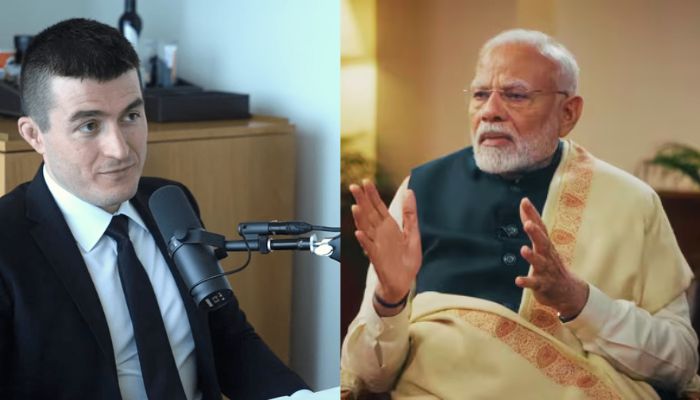
American podcaster Lex Fridman is set to arrive in India to interview “the most fascinating human beings” he has ever studied—Narendra Modi. Fridman will interview the Indian Prime Minister this month. While PM Modi is known for being a devout Hindu and observing fasts, Lex Fridman has also announced a 48-hour fast before conducting his interview with PM Modi, adding an intriguing layer to what promises to be a unique conversation.

Beyond the role of PM Modi in India’s politics, Fridman says he has been intrigued by the Indian Prime Minister’s human side and his spiritual practices. In an X post published on 8th February, Lex Fridman expressed his excitement to interview PM Modi. What piqued Fridman’s interest in PM Modi’s human side is his observance of various fasts including the nine-day fast during the Hindu festival of Navratri. The US podcaster has also said that he will observe a 48-72 hours fast before interviewing PM Modi, in an apparent attempt at setting the stage for a deeper and more insightful interaction.

“Narendra Modi is one of the most fascinating human beings I have ever studied. I can’t wait to talk to him on the podcast for several hours in a few weeks. On top of the complex, deep history of India, and his role in it, just the human side of Modi is really interesting. For example, he has often done multi-day fasts (9+ days) for spiritual reasons. I fast often as well. So I’ll do a 48-72 hour fast once I arrive to India before talking to him. It’s a good opportunity to meditate, and to reflect on how incredibly lucky I am to be alive, to have the weird brain that sees so much beauty in the world even though I’ve increasingly seen a lot of the darker sides of human nature. And most of all… To reflect on how lucky I am to have so much love in my life. Alright, enough procrastinating, back to reading,” Fridman posted.

Last month, the American podcaster announced that he would be travelling to India to host Prime Minister Modi later in February at the popular “The Lex Fridman Podcast”. “I’ve never been to India, so I’m excited to finally visit and experience many facets of its vibrant, historic culture and its amazing people as fully as I can,” Fridman said.

In Hinduism, fasting purifies the body and the mind and enhances spiritual growth. Moreover, fasting (Vrat) is a form of devotion to the gods. Observance of Vrat during festivals like Navratri or personal spiritual goals is a common practice among devout Hindus. Before the fasting begins, the observer takes a “Sankalp” or vow essentially stating the purpose and desire behind undertaking the Vrat as well as committing to observe the fast in accordance with the traditions.  

While PM Modi observes fasts on major Hindu festivals or ahead of what he sees as big events, however, Fridman’s decision to fast before shooting the podcast with PM Modi seems to be a homage to the Indian Prime Minister’s religious beliefs and practices alongside being a means to mental clarity and spiritual reflection. Fridman’s emphasis so far on PM Modi’s human and spiritual side hints that the conversation between the two might transcend the typical political discourse and shed light on the human elements of leadership, spirituality and its role in political and policy decision-making. This would offer the audiences both in India and the world a rare glimpse into how fasting and such spiritual practices coupled with cultural and religious values help gain mental clarity and influence decision-making and vision at the highest levels of leadership alongside aiding stress management and personal growth as well as deepening spiritual connection.

As fasting becomes an intriguing point for Lex Fridman ahead of his interaction with Prime Minister Narendra Modi, it is pertinent to discuss how the BJP stalwart and an unapologetic Hindu observes complex fasts with his resolute “Sankalp”.

Navratri to Ayodhya Ram Mandir Pran Pratishtha: PM Modi fasts before all major events of his life

Prime Minister Narendra Modi is someone who takes pride in his religious beliefs and follows Hindu traditions with utmost devotion towards the gods. PM Modi observes the nine-day fast during both Chaitra Navratri and Sharad Navratri, celebrating the nine forms of Maa Durga. During his fast annually on these occasions, PM Modi follows a Satvic diet. He only consumes water during the holy nine days with a limited consumption of water with lemon drops and some fruits. Despite the arduous fasts, PM Modi never took an off day or allowed his personal spiritual practices to hinder his duties as India’s Prime Minister indicating his perseverance as well as commitment towards his constitutional duties.

Back in 2022, PM Modi joked at a public meeting in Gujarat about how he regretted not being able to enjoy “Surat nu jaman” and other regional delicacies due to his Navratri fast. Despite the strict fasting, PM Modi attended back-to-back events in various districts of the state, laid foundation stone for projects worth Rs 29000 crore and then attended the Navratri event as well.

In 2022, when Japanese PM Shinzo Abe was assassinated. PM Modi attended his close friend’s funeral on 27th September during Sharad Navratri. PM Modi travelled to Japan to pay his respects to the Japanese leader despite his fast.

Even during the 2014, 2019 and 2024 Lok Sabha election campaign, all of which coincided with Chaitra Navratri, PM Modi remained undeterred from fasting and continued election campaigning, addressing back to back poll rallies.  

Interestingly, back in September 2014, PM Modi went on his maiden trip to the United States. His visit, however, coincided with Navratri.  Despite the hectic schedule, PM Modi abstained from food and adhered to strict diet of lemon water and a meal of one fruit just once a day. Many Gujaratis who observe the Navratri fasts consume sabu dana during the fasting period but PM Modi avoids that too.

PM Modi’s commitment towards his religion amazed even then US President Barrack Obama.

PM Modi also met the Indian diaspora during the 2014 US visit and despite having attended meetings, he greeted 700 NRIs at Madison Square Garden and Central Park. He also posed for photos with nearly all the NRI guests there, to much surprise of the Indian diaspora.

In 2016, PM Modi observed a nine-day fast during Chaitra Navratri ahead of the crucial Goods and Services Tax (GST) bill being tabled in the parliament.

Even before becoming Prime Minister, Narendra Modi has been fasting on Navratris annually. Back in 2001, when Modi became Chief Minister of Gujarat, his immediate concern was to expedite rehabilitation work in Kutch which was devasted by the earthquake. Despite the workload, Modi continued his Navratri fast and only consumed water and lemon juice.  In fact, PM Modi once wrote in his blog in 2012 that he has observed Navratri fast since 35 years.

Other than Navratri fasting, PM Modi follows a strict diet during Chaturmas. The Chaturmas are the four months in the Hindu lunar calendar during which Hindus take vows and fast. PM Modi during this time, eats one meal a day for four months. Back in 2015, PM Modi followed this “one-meal-a-day” routine even when he visited New York for a UNGA meeting.

11-day Niyama ahead of Ram Mandir Pran Pratishtha

In January 2024, Prime Minister Narendra Modi observed a strict 11-day —Yama Niyama, living an austere life ahead of the Pran Pratishtha ceremony of the Ram Mandir in Ayodhya. PM Modi was one of the “Yajman” and was to perform certain rituals during the consecration ceremony on 22nd January 2024. 

During his popular radio program, Mann ki Baat, PM Modi said, “It is my good fortune that I am starting my 11-day ritual from Nashik Dham-Panchavati. Panchavati is the sacred land where Lord Shri Ram spent a lot of time. As it is also mentioned in our scriptures, we have to awaken divine consciousness in ourselves for the Yagya and worship of God. For this, fasts and strict rules have been prescribed in the scriptures, which have to be followed before consecration. Therefore, according to the guidance I have received from some ascetic souls and great men of the spiritual journey and the Yama-Niyams suggested by them, I am starting a special ritual of 11 days from today. On this holy occasion, I pray at the feet of God… I remember the virtues of the sages and ascetics and I pray to the people, who are the form of God, to bless me. So that there is no lack from my side in mind, words and deeds.”

During the 11-day Yama Niyama, PM Modi visited 6 temples across the country. These temples find relevance in Ramayan as they are situated in places where Lord Rama had set foot. It was only after the consecration of Bhagwan Ram Lalla at his rightful abode that PM Modi broke his fast with Lord Ram’s charanamrit (divine elixir) fed to him by Swami Govind Dev Giri Maharaj. The Swami Ji back then had lauded Prime Minister Narendra Modi for his deep spiritual commitment and strict observance to be worthy of the auspicious ritual. He highlighted how PM Modi practised rigorous fasting and meditation, which far exceeded the expectations set by the religious leaders.

Swami Ji revealed that 20 days before the Ram Mandir Pran Pratishtha, a request from the Prime Minister came asking for a list of observances he should follow as PM Modi was scheduled to be Yajmana at the Pran Pratishtha ceremony. After consulting with the religious leaders, an advisory was prepared for PM Modi that included different observances, including fasting, sleeping on the floor, and more. While the advisory mentioned only a three-day fast, PM Modi undertook an 11-day complete fast, relinquishing even the consumption of grains.

Besides, fasting and frequent temple visits, PM Modi has also engaged in spiritual retreats including his visit to caves in Kedarnath for meditation and to deepen his spirituality.

From interviewing Donald Trump, Zelenskyy to Elon Musk and Mark Zuckerberg, Lex Fridman’s engaging podcasts on complex topics impacting the world

Lex Fridman is a very popular podcaster, computer scientist and AI researcher with a deep interest in geopolitics. His interviews with Donald Trump last year, or his earlier interview with Ukrainian President Volodymyr Zelenskyy have been much talked about. He has interviewed billionaire Elon Musk, Amazon founder Jeff Bezos and Facebook co-founder Mark Zuckerberg. Fridman’s podcast became popular among the masses for its long-form format and an engaging and in-depth exploration of a plethora of topics ranging from geopolitics, and personal life philosophies, to technology and Artificial Intelligence. Fridman’s interviewing style and calm demeanour has been praised by his audience. Besides, his Massachusetts Institute of Technology (MIT) affiliation also adds credibility and prestige to his podcast given he was a researcher at MIT.

Considering Fridman’s interest and respect for PM Modi’s spiritual practices and quest to explore the human side of one of the world’s most powerful leaders, his interview with Prime Minister Modi is anticipated to be a confluence of two worlds—one where intellect meets introspection as well as the one where Dharmic practices of a global leader intersect with the intellectual curiosity of a podcaster. The audiences will probably get to see a conversation that transcends mere policy or polity or leadership and governance but also delves into religious philosophies that guide India’s top leader.

Roorkee, Uttarakhand: 14-year-old Hindu girl abducted, parents suspect two Muslim men, communal tensions erupts

On Sunday, 9th February, massive communal tensions erupted in the Rorkee area of Uttrakhand after a 14-year-old Hindu girl was found missing. The family members of the girl alleged that she had been kidnapped by two individuals from the Muslim community, reportedly two brothers. As per the reports, the persons from that community also pelted stones at Hindus as the latter protested against the incident and demanded justice.

The incident reportedly happened on 7th of February evening when the 14-year-old girl went missing from the Laksar village of Roorkee. The parents of the girl began looking for the girl. Meanwhile, one of the villagers informed the parents that he saw two boys from the specific community taking her away with them. Following this, the parents reached the police station and filed a complaint saying that their daughter had been kidnapped.

On 9th February, the Hindu organizations learned about the incident and protested against the accused. The Hindu members along with the locals gathered in the village and demanded justice for the parents of the girl. Following this, people from specific community also gathered and began pelting stones at the Hindus. They also abused and threatened the Hindus as the two groups engaged in an argument.

The police eventually reached the spot immediately after being informed. They resorted to lathi charge to disperse the crowd and calm the chaos. The Hindus questioned the police action and demanded that the accused be identified and punished strictly. The family of the girl meanwhile stated that they would set themselves on fire if their girl was not recovered.

At present, given the communal tensions, a massive police force has been deployed at the spot. A special investigation team has also been formed to recover the girl and look for the accused who are absconding at present.

People from both communities have obtained injuries as a result of stone pelting. As per the local reports, stones were also pelted at the police as the latter restored to lathi charge to calm the situation. The injured persons are being treated at the hospital and police force has been deployed at the village.

The police are conducting operations to search for the minor Hindu girl who is allegedly been abducted by two individuals from the specific community. Further investigations are underway.

OpIndia exclusive investigation into Sam Pitroda’s NGO being funded by USAID and the US State Department stirs a storm in Parliament

On Monday (February 10), BJP MP Nishikant Dubey stirred a storm in the parliament after he raised the issue of the USAID funding to trusts owned by the Gandhi family and individuals closely affiliated with the Congress, a matter first reported exclusively by OpIndia.

Later taking to X, Dubey tweeted, “Since independence, Congress has only worked to divide the country. Rajiv Gandhi Foundation and many NGOs took money from USAID to benefit anti-national elements. The opposition wants to divide the country.”

Speaking in the parliament, Dubey said US President Donald Trump has put an end to the USAID, alleging that the US government agency has primarily spent money for engineering regime changes over the years. Dubey asked if the USAID had funded Rs 5,000 crores to Soros’ Open Society for dividing India.

During Zero Hour in the Lok Sabha, Nishikant Dubey alleged that USAID-funded organizations were involved in protests against the government’s Agniveer initiative, advocated for a caste census, and supported naxalism in India.

His remarks triggered strong objections from Congress members, who attempted to raise a point of order but were prevented by presiding officer Sandhya Ray, who clarified that such rules do not apply during Zero Hour.

Dubey’s assertions in the parliament came months after an investigative report by OpIndia that examined the connections between Sam Pitroda, Chairman of the Indian Overseas Congress, and various U.S. government entities and foundations through his NGO, the Global Knowledge Initiative (GKI). GKI, co-founded by Pitroda, received funding from organisations such as USAID, the U.S. State Department, and the Rockefeller Foundation. The article highlighted that two of GKI’s co-founders, Nina V. Fedoroff and Sara Farley, had notable connections to the US government and the Rockefeller Foundation, raising concerns about potential influences on Indian political figures, particularly Rahul Gandhi, due to these associations. 

Sam Pitroda, a longtime associate of the Gandhi family and Chairman of the Indian Overseas Congress, has played a key role in organising Rahul Gandhi’s foreign engagements. Though he previously held U.S. citizenship, he renounced it at Indira Gandhi’s insistence and served as an advisor to former Indian PM Manmohan Singh.

In 2009, while advising Singh, Pitroda co-founded the Global Knowledge Initiative (GKI) in the U.S. alongside Nina V. Fedoroff and Sara Farley, both of whom have deep ties to the U.S. government and global foundations.

  • Nina V. Fedoroff: Former U.S. Science and Technology Adviser, closely linked to the Rockefeller Foundation, USAID, and Monsanto. She played a significant role in lobbying for genetically modified (GM) crops in India, particularly Bt Brinjal, under the Indo-U.S. Knowledge Initiative on Agriculture.
  • Sara Farley: Vice President of the Rockefeller Foundation’s Food Initiative, overseeing global food strategies and investments.

In the wake of US President Donald Trump’s recent efforts to clamp down on USAID, it is noteworthy to mention that Pitroda’s NGO, GKI, is funded by USAID, the U.S. State Department, the Rockefeller Foundation, and the Bill & Melinda Gates Foundation. USAID, a known instrument of U.S. foreign policy, funds projects that influence governance and economic policies in developing nations.

The investigation suggested the possibility of GKI serving as a channel for U.S. interests in India, particularly in sectors like agriculture and policy-making, raising concerns about foreign influence on Indian governance and decision-making.

CAG report on Govt expenses on Arvind Kejriwal’s ‘Sheesh Mahal’ will be tabled in first session of Delhi Assembly: BJP’s Vijender Gupta

0

 Reiterating Prime Minister Narendra Modi’s remarks, BJP’s winning candidate Vijender Gupta on Monday emphasized that the Comptroller and Auditor General’s (CAG) report will be tabled in the first session of the Delhi Assembly.

“In the first session of the Delhi Assembly, we will table the CAG report (over expenses on renovation of Chief Minister’s residence),” Gupta told ANI.

Further, on being asked about BJP’s CM face for Delhi, Vijender Gupta said that the party high command will decide on this.

“All 48 MLAs are equal in the eyes of the party and any of them can be the CM,” the BJP leader said.

Vijender Gupta won the Rohini Assembly seat by a huge vote margin of over 37,000 votes, defeating AAP candidate Pardeep Mittal. Bharatiya Janata Party MP Bansuri Swaraj also said that the party leadership will decide the CM face.

“BJP double-engine government will now be formed in Delhi. I thank and congratulate all of you. The party leadership will decide (the CM face),” Swaraj said.

On February 8, Prime Minister Narendra Modi assured the people of Delhi that the CAG report will be presented in the first assembly session as the Bharatiya Janata Party is set to form the government in the national capital.

“These AAP-da (disaster) people tried to put up various conspiracies every day to win the assembly election. But I guarantee that now the CAG report will be presented in the first assembly session, whoever has looted will have to return it,” PM Modi said, addressing thousands of party supporters at their headquarters.

Notably, the CAG report revealed a significant revenue loss of Rs 2,026 crore due to irregularities in the Delhi government’s excise policy. The report’s findings stated that there were deviations from the objectives of the policy, a lack of transparency in pricing, and violations in issuing licenses that were not penalised.

Of the losses amounting to Rs 2,026 crore to the state exchequer, Rs 890 crore resulted from the government’s failure to re-tender the surrendered licenses before the policy period concluded, according to the report. Additionally, the exemptions granted to the zonal licenses led to a loss of Rs 941 crore.

The BJP won the Delhi assembly election by a comfortable margin, winning 48 out of 70 assembly seats. The AAP saw a dismal performance this time, winning only 22 seats, a far cry from their 2020 performance, where they won 62 seats.

(This news report is published from a syndicated feed. Except for the headline, the content has not been written or edited by OpIndia staff)