Home Blog Page 521

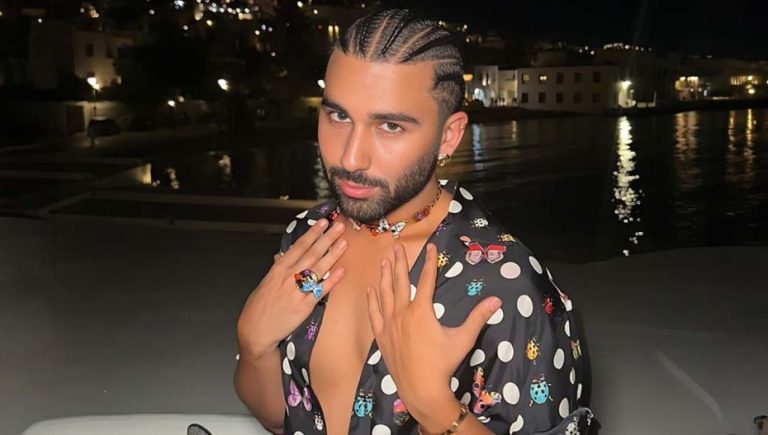
Bollywood socialite Orry and 7 others booked for consuming alcohol and non-veg near Vaishno Devi shrine

Bollywood socialite Orhan Awatramani (ORRY) is among several individuals named in an FIR lodged on March 15 by Katra police for allegedly consuming alcohol at a hotel in Katra.

As per a press note from the Jammu and Kashmir Police, “Taking cognizance of the complaint regarding an issue involving certain guests who were staying at Hotel of Katra and found taking Alcohol, Katra police has lodged an FIR on March 15 against Orhan Awatramani (ORRY), Darshan Singh, Parth Raina, Ritick Singh, Rashi Dutta, Rakshita Bhogal, Shagun Kohli, and Anastasila Arzamaskina, who consumed alcohol in hotel premises despite being told that alcohol and non-vegetarian diet is not allowed inside Cottage Suite as it is strictly prohibited at such a divine place of Mata Vaishno devi pilgrimage.”

The release notes, “Sensing the gravity of the matter the strict instructions were passed by SSP Reasi Paramvir singh (JKPS) to nab the defaulters thereby setting an example of no tolerance of any such act of drugs or alcohol at religious places which hurts the sentiments of the common masses.”

As per the release, the team was constituted under the supervision of SP Katra, Dysp Katra and SHO Katra to track the culprits who violated the rule of the land and showed disrespect to the sentiments of the people connected with the faith.

According to the release, SSP Reasi, while giving a tough message to the defaulters, added that there is no place for those who don’t follow the law of the land and try to disrupt the peace by resorting to any means, especially by way of drugs/alcohol and iron hands will deal with them.

(This news report is published from a syndicated feed. Except for the headline, the content has not been written or edited by OpIndia staff)


Hungary announces tax exemption for women who bear children, aims to boost birth rate

In a historic move to tackle declining population growth, Hungary has announced massive tax exemptions up to the age of 30 for women who have one child. Women who have two or more children will be completely exempt from paying income taxes throughout their lives. This move is an expansion of an existing policy wherein life-long income tax exemptions are granted to mothers with four or more children.

The Hungarian authorities dubbed this decision aimed at boosting the country’s birth rates as a “global sensation” and a “new chapter” in Hungary’s economic history. 

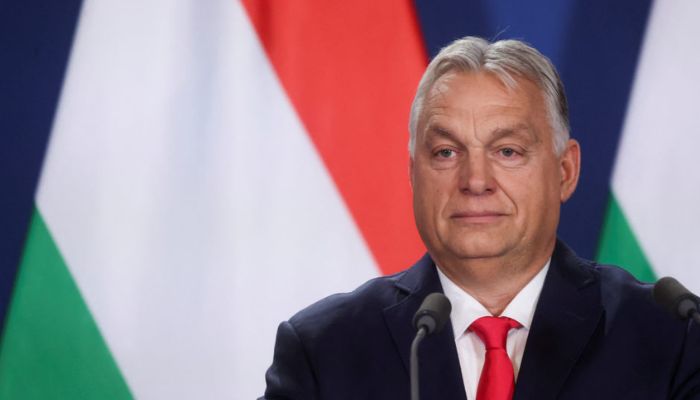
During his State of the Nation speech in Budapest, Hungarian Prime Minister Viktor Orban announced that the tax exemptions for women with three children would take effect in October 2025 and in January 2026 for those with two kids.

In addition to this, the interest rates on housing loans will be capped at 5% beginning in April, as part of steps to shore up the economy. PM Orban called fresh tax exemptions “the biggest tax reduction programme in Europe.”

“This will be a huge expense, but the reviving economy, the measures to support businesses and full employment combined are capable of paying for this in a way that the budget deficit and public debt both decline,” the Hungarian Prime Minister said.

Taking to X, Prime Minister Viktor Orban said, “Hungary is making history with the largest tax cut in Europe & the entire Western world! We are building the world’s first family-centred economy: One-child mothers exempt from income tax until they turn 30. Two or more children? No income tax for life! Securing the future of Hungarian families for decades to come.”

Informing about the budget of the tax deduction programme, Hungarian Economy Minister Marton Nagy said the tax exemption for mothers of three comprises 250,000 people and costs the budget 170 billion forint ($441 million) every year. The Hungarian authorities said that at present, around 70000 mothers of four children are exempt from paying taxes and this costs about 50 billion Hungarian forints annually.

Notably, much like many other European nations, Hungary is also witnessing a sharp decline in birth rates. Data shows that in 2023, Hungary’s population shrunk by 15,000. The country’s total population is estimated to be around 96 lakh. In the last decade, reports say that Hungary’s population has slumped from nearly 10 million to 9.7 million. The proportion and number of childless people in Hungary’s 2022 census recorded a substantial surge.

As per the preliminary demographic data by the Central Statistical Office (KSH), in December 2024 alone, 6,339 children were born while 11,773 people died. This caused a natural population drop of 5,434 and represented a 4.1% drop in births and a 7.0% decline in deaths compared to the same month in 2023, Budapest Business Journal reported.

In 2024, Hungary’s total fertility rate fell to an estimated 1.38 children per woman. This is in line with a rapid population and birth rate decline in many developed countries, like Japan, South Korea and Singapore.

Uttar Pradesh: Police arrest 4 men for forcibly converting Hindus to Christianity, accused promised ‘financial benefits’ to victims

On Saturday (15th March), the police arrested four individuals accused of coercing members of the Hindu community into converting to Christianity. The incident took place in the Paniyara police station area, which falls under the Maharajganj district of Uttar Pradesh.

The police acted on a tip-off from activists of the Rashtriya Swayamsevak Sangh (RSS).

The FIR has been registered under Sections 3 and 5(1) of Uttar Pradesh Prohibition of Unlawful Conversion of Religion Act, 2021 against Nagendra Singh, Ramesh Kumar, Imarti and Radha.

Allegations of forced conversion

According to media reports, RSS activists learned that a group of individuals in Beniganj village was luring Hindus to convert to Christianity by promising them financial incentives. RSS members reached the location and alerted the police.

Vishva Hindu Parishad (VHP) and Bajrang Dal’s district head, Arvind Singh, said in a statement that certain individuals were targeting poor Hindus with monetary benefits if they converted to Christianity. He affirmed that VHP would continue to demand legal action against such activities.

FIR details and police action

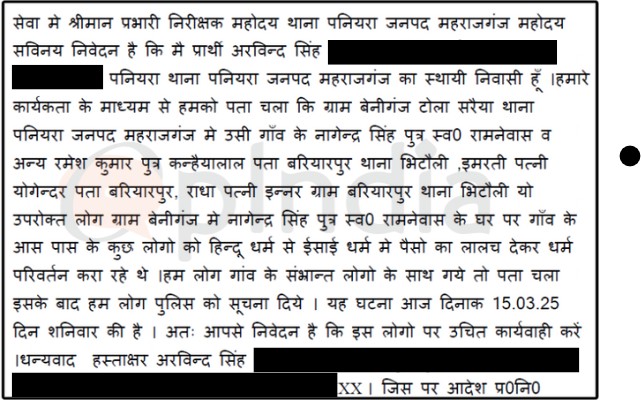
OpIndia accessed FIR filed in the case. The FIR in the matter has been registered on the complaint of Arvind Singh. He informed the police in his complaint that Nagendra Singh, Ramesh Kumar, Imarti, and Radha were allegedly persuading locals to convert to Christianity by promising them financial benefits. The conversion was taking place at Nagendra Singh’s residence in Beniganj village. The other three accused in the matter are residents of Bariyarpur. Singh and other locals reportedly confronted the accused and informed the police about the conversion event.

Source: UP Police

Following the complaint, police took swift action and arrested the four accused. After the preliminary investigations confirmed that the conversion event was indeed taking place, the accused were sent to jail. Officials stated that further investigation into the matter is underway and assured that strict action will be taken as per the law.

HUDCO extends a massive ₹11,000 crore loan for construction of Andhra Pradesh capital Amaravati, MoU signed

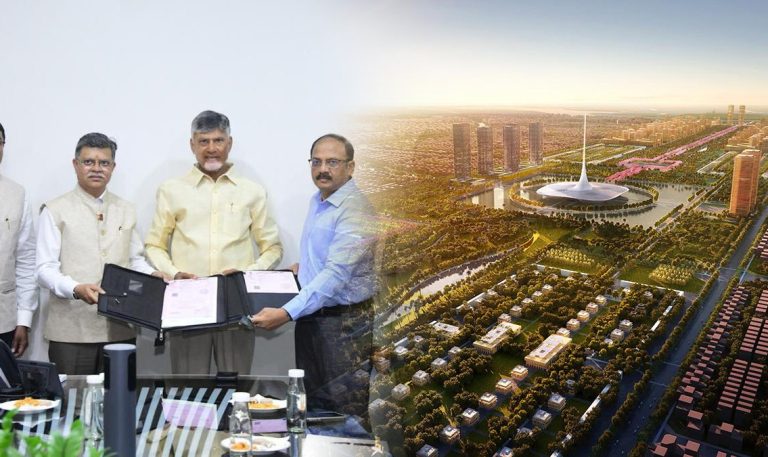
In a significant development, the Housing and Urban Development Corporation (HUDCO) has extended a massive Rs 11,000 crore loan to the Capital Region Development Authority (CRDA) for the construction of Amaravati, the state capital of Andhra Pradesh, said the official statement.

This agreement was signed in the presence of Chief Minister Nara Chandrababu Naidu at his residence in Undavalli and was attended by Minister for Municipal Administration and Urban Development (MAUD), P Narayana, HUDCO CMD Sanjay Kul Shreshtha, and other officials.

As per the agreement, HUDCO will provide a loan of Rs 11,000 crore for the construction of the state capital. The loan is part of the Rs 26,000 crore needed for constructing Amaravati Phase-1. With this loan, HUDCO has helped bridge the funding gap, as the World Bank and Asian Development Bank had already committed Rs 15,000 crore.

Earlier, during the HUDCO board meeting in Mumbai on January 22, approval was granted for funding. Following this, the agreement was formally signed with CRDA today.

Chief Minister Naidu welcomed the loan agreement, stating that it would accelerate the development of Amaravati.

Meanwhile, on Saturday, CM Naidu also urged citizens to participate in the ‘Swachh Andhra’ campaign, emphasizing the importance of protecting the environment and keeping public spaces clean.

He also accused the previous YSRCP government of having burdened the people with a debt of Rs 10 lakh crore.

“Every individual should be a part of achieving the goal of a Clean Andhra. Everyone must contribute to protecting the environment. It is our collective responsibility to keep our homes, surroundings, schools, colleges, government offices, public places, and places of worship clean,” the Chief Minister said while participating in the Swarna Andhra – Swachh Andhra program in West Godavari district’s Tanuku.

Naidu said that with the cooperation of the Centre, his government had embarked on a path of development.

“On March 15, 1978, exactly 45 years ago, I stepped into the Assembly for the first time. I have been honored in an extraordinary way that no one else in this state has experienced. My only goal is to serve the Telugu people. We are bringing reforms in governance. The people have blessed the alliance of the TDP, BJP, and Jana Sena. With the cooperation of the central government, the state has embarked on a path of development. We have introduced a clear policy under ‘Swarna Andhra 2047’,” he said.


(This news report is published from a syndicated feed. Except for the headline, the content has not been written or edited by OpIndia staff)
Lex Fridman Podcast: PM Modi praises Donald Trump’s unshakeable dedication to his country, draws parallels between ‘India First’ and ‘America First’ ideologies

0

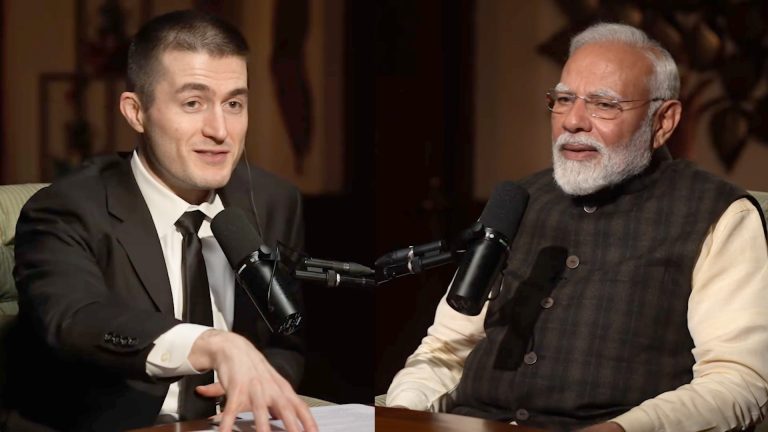
In a podcast with AI researcher Lex Fridman, Prime Minister Narendra Modi appreciated US President Donald Trump’s unshakeable dedication to his country, particularly in the wake of assassination attempts last year.

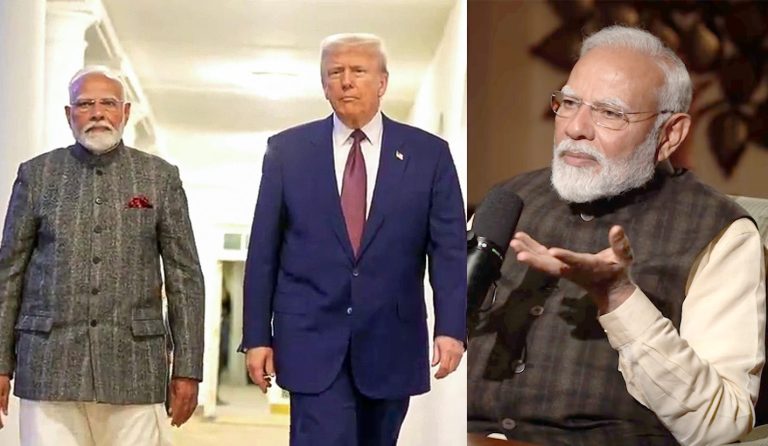
Recalling Trump’s resilience and determination during campaigning for US elections, even after being shot, he said, “When he was shot during the recent campaign, I saw the same resilient and determined President Trump, the one who walked hand-in-hand with me in that stadium. Even after being shot, he remained unwaveringly dedicated to America. His life was for his nation.”

He also drew parallels between Trump’s “America First” ideology and his own “India First” approach, highlighting their shared commitment to prioritizing their nations’ interests. This alignment has fostered a strong connection between the two leaders.

“His reflection showed his America First spirit, just as I believe in Nation First. I stand for India first and that’s why we connect so well. These are the things that truly resonate. And I believe that across the world politicians are covered so much by the media that people mostly perceive each other through its lens. People rarely get the chance to truly meet or personally know one another and perhaps third-party intervention is the real cause of tensions,” he added.

Recalling their memorable meeting at the “Howdy Modi” event in Houston in 2019, Modi praised Trump’s humility and courage, noting that the then-President of the United States sat in the audience while he spoke from the stage.

“We had an event in Houston, Howdy Modi. Both President Trump and I were there and the entire stadium was completely packed. A massive crowd at an event in the US is a huge moment. While packed stadiums are common in sports, this was extraordinary for a political rally…Both of us delivered speeches and he sat down below listening to me speak. Now, that’s his humility. The President of the United States sitting in the audience while I spoke from the stage, that was a remarkable gesture on his part,” he said.

After finishing his speech, PM Modi suggested taking a lap around the stadium to greet the large crowd of Indian diaspora. courage. Despite strict security protocols, Trump agreed to take a lap around the stadium with Modi, demonstrating their mutual trust and respect.

“After finishing my speech, I stepped down and as we all know, security in the US is extremely strict and thorough. The level of scrutiny there is on a completely different level. I went over to thank him and casually said, “If you don’t mind, why don’t we take a lap around the stadium? There are so many people here. Let’s walk, wave and greet them.” In American life, it’s almost impossible for the President to walk into a crowd of thousands, but without even a moment’s hesitation, he agreed and started walking with me,” he added.

PM Modi described the moment as “truly touching,” adding that “It showed me that this man had courage. He makes his own decisions, but also he trusted me and my lead at that moment enough to have walked with me into the crowd.”

“It was that sense of mutual trust, a strong bond between us that I truly witnessed on that day,” PM Modi added “and the way I saw President Trump that day walking into a crowd of thousands without even asking security, it was truly amazing. And if you watch the video now, you’ll be amazed.”

Highlighting his first White House visit, when Trump broke formal protocols and personally gave PM Modi a tour, he said, “When I visited him in the White House for the first time, there was already a lot written about President Trump in the media. At that time, he was still new to office and the world had a rather different perception of him. Even though I had been briefed in many different ways before meeting him, to my surprise, the very moment I stepped into the White House, he broke all formal protocols right away. And then, he took me on a tour of the White House. As he showed me around, I noticed something striking, he wasn’t holding any notes or cue cards, nor was anyone accompanying him to assist.”

“He pointed things out himself. This is where Abraham Lincoln lived,” he said. “He even explained why the courtroom was designed so long. He would point at the table and tell me which President signed here and on what date. I found that incredibly impressive. It showed how much he honoured the Presidency and how respectful and deeply connected he was to America’s history. I could feel that. And he spoke to me freely, discussing many things openly. That was my experience from our first meeting,” added PM Modi.

PM Modi also appreciated Trump’s kind gestures, including his warm words about their friendship even after his first term ended.

“Later, when his first term ended, and President Biden won, four years passed, but during that time whenever someone we both knew met him, and this must have happened dozens of times, he would say, ‘Modi is my friend, convey my regards.’ That kind of gesture is rare. Even though we didn’t meet physically for years, our direct and indirect communication, our closeness and the trust between us remained unshaken,” he said.

In addition, PM Modi praised Trump’s preparedness and clear vision in his second term, observing that he seems “far more prepared than before.”

“I have observed President Trump both during his first term and now in his second run. This time, he seems far more prepared than before. He has a clear roadmap in his mind with well-defined steps, each one designed to lead him toward his goals,” he said.

PM Modi also noted that during his recent visit to the United States, he also met with several influential figures, including Tech billinore Elon Musk, US Vice President JD Vance; United States Director of National Intelligence Tulsi Gabbard and American entrepreneur and politician, Vivek Ramaswamy.

He added that his meeting with Elon Musk was particularly warm and friendly, as Musk was accompanied by his family and children. PM Modi has known Musk since his time as chief minister, and their discussion covered a range of topics, including Musk’s exciting new DOGE mission.

“I also had the chance to meet members of his team, and I truly believe he has put together a strong, capable group with such a strong team, I feel they are fully capable of implementing President Trump’s vision based on my interactions with them. I met several people, Tulsi Gabbard, Vivek Ramaswamy, Elon Musk, and there was a family-like atmosphere, everyone had come with their families. As for Elon Musk, I have known him since my time as chief minister. He was there with his family and children, so naturally, the atmosphere felt warm and friendly,” he said.

“Of course, we had discussions and we talked about many different topics. Now, with his DOGE mission, he is incredibly excited about how it’s progressing and honestly, it makes me happy too because when I took office in 2014, I wanted to free my country from the deep-rooted issues and harmful practices that have crept in, and I’ll continue striving to eliminate as many of them as I possibly can,” he added.

As per his official website, Lex Fridman has been a research scientist at the Massachusetts Institute of Technology (MIT) since 2015. His podcasts cover several themes, such as artificial intelligence, global politics, cryptocurrency, productivity, global geopolitics, and technology. His YouTube page has 4.8 million subscribers with over 82,00,00,000 views.


(This news report is published from a syndicated feed. Except for the headline, the content has not been written or edited by OpIndia staff)
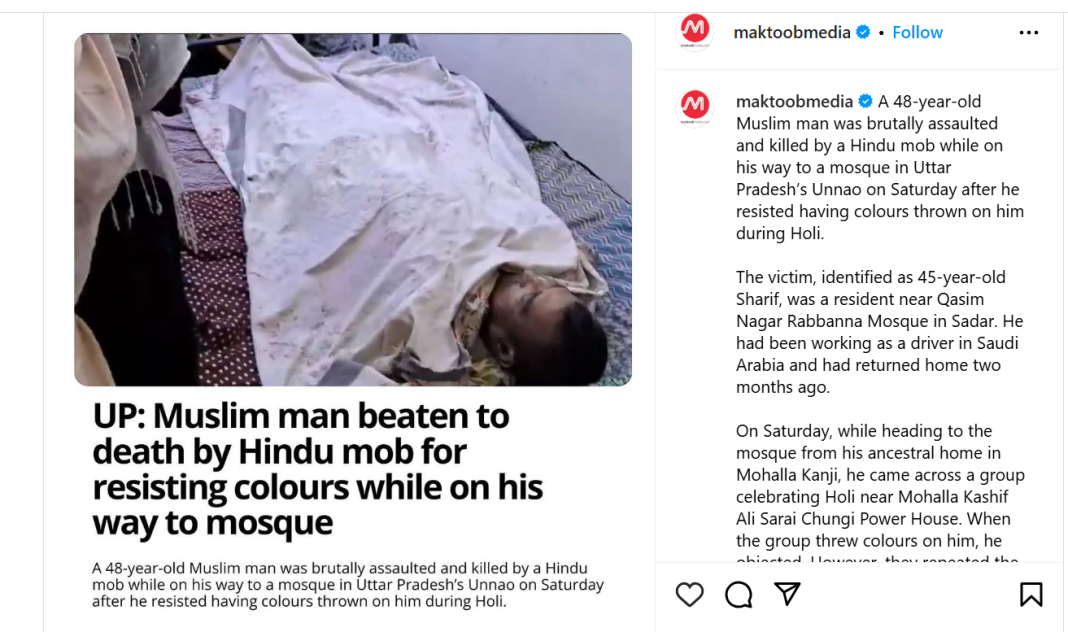
Maktoob Media and Islamists claim Muslim man was beaten to death by Hindus for resisting Holi colours in Unnao, postmortem reveals cardiac arrest and no sign of injury

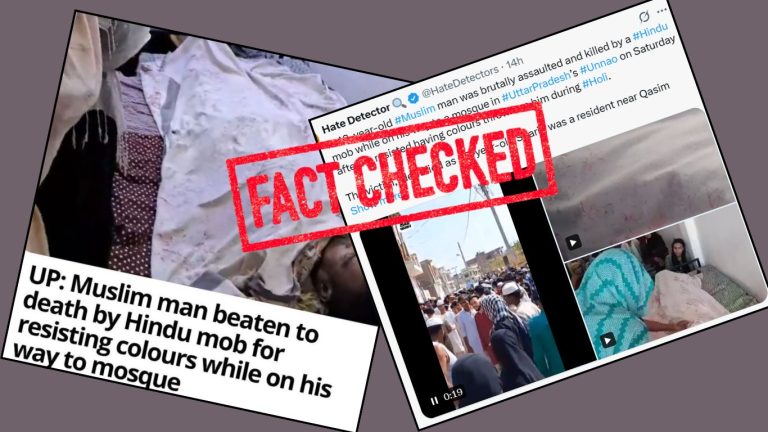
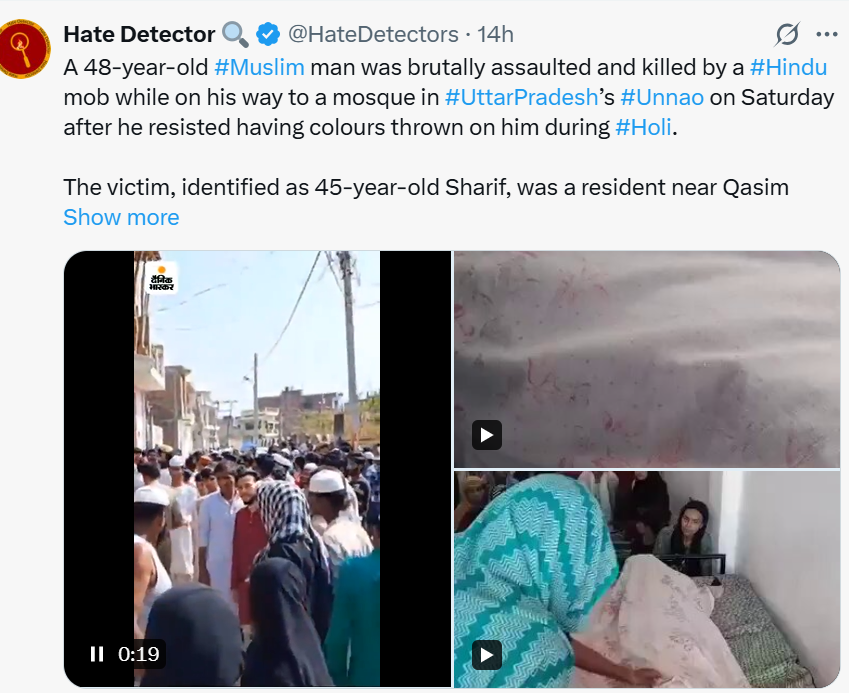
Some Islamist handles on social media shared a post on Sunday (16th March) alleging that a Muslim man died in Unnao, Uttar Pradesh, after being beaten by a group of people celebrating Holi on Saturday (15th March). The social media handles, including Maktoob Media and Hate Detector, claimed that the Muslim man died after he was physically attacked by a group of Hindus playing Holi after he objected to being coloured.

Citing a report of Jagran, the social media handles alleged that the 48-year-old Muslim man named Sharif was going to a mosque on Saturday when he reportedly encountered a group of men celebrating Holi near Mohalla Kashif Ali Sarai Chungi Power House. The group threw colours on him, to which he objected. The group allegedly physically attacked him. He was rescued by some bystanders who made him sit down on a platform nearby and gave him water to drink. However, a few moments later, he collapsed and died.

The victim reportedly lived near Qasim Nagar Rabbanna Mosque in Sadar. He returned to India 2 months ago from Saudi Arabia, where he worked as a driver.

Maktoob Media shared the post on Instagram.

A similar story was shared by Hate Detector on X alleging that the Muslim man died after being brutally assaulted by a Hindu mob.

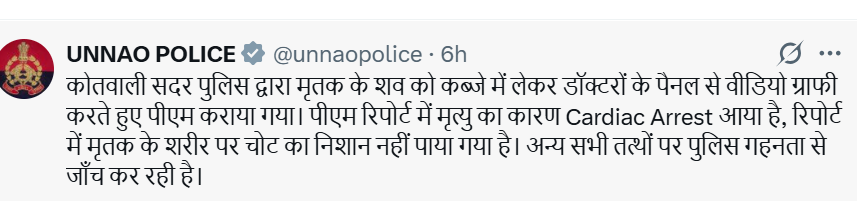
However, the claims of the Islamist social media users that the Muslim man died after being assaulted by a Hindu mob were refuted by the Unnao Police. Commenting on the post shared by Hate Detector on X, the Unnao Polie said that the deceased died of a cardiac arrest.

The police said that the body of the deceased was sent by the police for post-mortem, which was conducted by a panel of doctors and was videographed. The post-mortem revealed that there was no sign of injury on the body of the deceased. The police are investigating the matter.

Therefore, it can be concluded that the man died due to cardiac arrest, not due to any assault by people celebrating Holi.

Everyone was super kind, excellent, efficient, great communication, and just great people all around: Lex Fridman on PM Modi’s team during podcast recording

0

Computer scientist and podcaster Lex Fridman has talked about living in India for a few weeks, calling it a “magical experience.”

He spoke about his experience staying in India during the episode of his podcast, during which he interviewed PM Narendra Modi. During the interview, PM Modi spoke on diverse issues, including artificial intelligence (AI), cricket, football, China, US President Donald Trump, Pakistan, and his early life.

Fridman also praised the team working around PM Modi, calling them “super kind, efficient, and excellent at what they do.” Lex Fridman also praised the interpreter who, he said, simultaneously interpreted for him and PM Modi.

Praising people working around PM Modi, he said, “Let me give a shout out to the amazing team around the Prime Minister. Everyone was super kind, excellent at what they do, efficient, great communication, and just great people all around. And since I spoke English and Prime Minister Modi spoke Hindi, I have to comment on the interpreter who was doing simultaneous interpreting for both of us. She was absolutely amazing. I can’t sing her enough praises, from the equipment used to the quality of the translation, to just the human touch of it all.”

He said that India is composed of many distinct subcultures and Delhi represents “just one slice” and added that he will “most certainly” travel around India with his friend Paul Rosalie in the near future.

Speaking about his experience of travelling around New Delhi, he said, “In general, my travels around Delhi and India revealed to me some early glimpses of what felt like another world, almost like another planet, different culturally from anything I’ve experienced before. A chaos of human interactions out there, big dynamic personalities and characters. Obviously, India’s composed of many distinct subcultures, and Delhi represents just one slice. Much like neither New York or Texas or Iowa alone represent America. They’re all different flavours of America.”

He said that during his stay in India, he walked around, rode auto rickshaws and wandered on the streets. He spoke about interacting with people in India and said that everyone in India was “super kind in the genuine human way” and said that it was easy to understand even when they did not speak in English.

He said, “On my visit, I walked around and rode rickshaws everywhere, just aimlessly wandering the streets, looking to talk to people about life. Of course, like many places on earth, there are always some people, especially those that have something to sell, who will at first see me as a tourist, a foreign traveler, one with some money to spend.”

“Like always, I avoided such shallow interactions and went straight past the small talk to the meaningful conversations. Shooting the shit about what they love, what they fear, what kind of hardship and triumph they’ve experienced in their lives, I think the cool thing about people anywhere on earth is they quickly do see the real you, past the facades that strangers put up for each other, if you’re vulnerable and honest enough to let them and I tried to do just that and I should say that for the most part, everyone was super kind in the genuine human way even when they didn’t speak English, it was always easy to understand. Probably more than any other peoples I’ve interacted with in India, people’s eyes, faces, body language, all communicate a lot of information, a lot of emotion, not reserved at all,” Fridman added.

He said that reading a person was “much tougher” when he travelled through Eastern Europe. He stated that there is often a protective layer between a person’s heart and the outside world and added that it is all there “on full display” in India.

“When I traveled through Eastern Europe, for example, in contrast, reading a person is much tougher. The meme does have some truth to it. There’s often a protective layer between the heart of the person and the outside world. In India, it’s all there on full display. So, I had a lot of epic conversations and interactions as I walked around Delhi for a couple of weeks. In general, on the topic of reading people, I do believe the eyes can often say more than words can. We humans are a fascinating bunch. There really is a deep turbulent ocean behind the surface waves we show the world. In some sense, what I try to do in conversations, on and off the mic, is to get to that depth,” he said.

Describing his experience of staying in India for few weeks “magical”, Fridman stated, “Anyway, the few weeks I spent in India were a magical experience. Traffic alone was a wild time, like the world’s most difficult test for self-driving cars. It reminded me of watching nature documentary videos of swarms of fish when it’s thousands of them swimming around at insane speeds, seemingly in complete chaos. And yet when looking at the big picture of it it all works like a perfectly tuned orchestra. I will, most certainly, travel around India with my friend Paul Rosalie in the near future, maybe with some other friends all around from the north of India to the south.”


(This news report is published from a syndicated feed. Except for the headline, the content has not been written or edited by OpIndia staff)
2002 Gujarat riots took place amid major terror attacks in previous months, happened just 4 days after I became MLA: PM Modi on Lex Fridman podcast

Prime Minister Narendra Modi said that the 2002 Gujarat Riots took place just 3-4 days after he became an MLA of the Gujarat Assembly, and the Godhra attack and the subsequent riots must be seen against the backdrop of major Islamic terror attacks in the months before that. He also denied that the Godhra riots were the biggest riots in Gujarat, saying that similar riots took place many times in the past, but no such incident have taken place after that.

PM Modi made the comments in a podcast with Lex Fridman released today evening. In the podcast, Fridman asked him about what lessons he has drawn from the riots. Fridman noted that Supreme Court of India has ruled twice that Modi had no role in the riots, and wanted to know what were the broad lessons Modi drew from that time.

Responding to the query, PM Modi said that to fully understand the situation at that time, he would like to narrate what happened in the 12 to 15 months leading up to the riots. He said, “for instance, take December 24, 1999, roughly three years earlier. An Indian flight from Kathmandu to Delhi was hijacked, redirected to Afghanistan, and landed in Kandahar. Hundreds of Indian passengers were held hostage. It caused massive turmoil across India, as people faced life-and-death uncertainty.”’

He then reminded that the Red Fort was attacked in 2000, and after that the Twin Towers in the USA were attacked in September 2011. Then, in October 2001, terrorists attacked the Jammu and Kashmir Assembly, and soon after the Indian Parliament was attacked in December 2001.

“Within just 8 to 10 months, these major global terrorist attacks took place, violent incidents that led to bloodshed and the loss of innocent lives. In such a tense environment, even the smallest spark can ignite unrest,” PM Modi said.

He also reminded that all these terror attacks were carried out by people driven by similar mindsets, implying that all the terror attacks were by Jihadi terrorists.

Talking about the 2002 Gujarat riots, Modi said that he became CM of Gujarat on 7 October 2001, when the state was recovering from the devastating Bhuj earthquake. “My first major task as Chief Minister was overseeing the rehabilitation of survivors. This was a crucial task, and from day one after my oath, I immersed myself in it,” he said.

Modi added that he had absolutely no prior experience with government, he never been part of any administration, never even served in government, and never contested an election before he was made the CM.

“On February 24, 2002, I became an MLA, and stepped into the assembly only on 25th or 26th February. We were in the assembly for the budget session, and that same day, when suddenly, the horrific Godhra incident occurred,” he said, adding that the attack took place just 3 days after he became an MLA.

He then narrated, “It was a tragedy of unimaginable magnitude, people were burned alive.  You can imagine, against the backdrop of incidents like the Kandahar hijacking, the attack on Parliament, and then to have so many, people killed and burned alive, you can imagine how tense and volatile the situation was. Of course, this was tragic for everyone, everyone prefers peace.”

PM Modi also refuted the claims that the 2002 Gujarat riots were the biggest riots, calling it misinformation. He said that riots took place frequently in Gujarat before that, sometimes over trivial issues.  “If you review the data from before 2002, you’ll see that Gujarat faced frequent riots, curfews were constantly being imposed somewhere. Communal violence could erupt over trivial issues, like kite-flying contests or even minor bicycle collisions.”

He added, “Before 2002, Gujarat witnessed over 250 significant riots. The riots in 1969 lasted nearly six months. So there was a long history long before I was in the picture. But that one tragic incident in 2002 became a sparking point, leading some people towards violence.”

PM Modi further added, “At that time, our political opponents were in power, and naturally, they wanted all allegations against us to stick. Despite their relentless efforts, the judiciary analyzed the situation meticulously, twice, and ultimately, found us completely innocent. Those who were truly responsible have faced justice from the courts. But the most important thing is, in Gujarat, where riots used to happen somewhere or the other every year. But after 2002, in 22 years, there hasn’t been a single major riot in Gujarat. Gujarat remains completely peaceful.”

Lex Fridman Podcast

The Lex Fridman Podcast episode featuring Narendra Modi, released on March 16, 2025, offers a profound three-hour exploration of the Indian Prime Minister’s life, philosophy, and leadership. In the Podcast, Modi discussed his early years, including his time in the Himalayas and his association with the RSS, alongside his views on spirituality, fasting, and national governance, drawing parallels with figures like Donald Trump’s “America First” policy.

The conversation also delved into critical global issues, such as the path to peace in Ukraine, India-Pakistan relations, and India’s stance on China and Xi Jinping, underscoring India’s emerging role as a geopolitical powerhouse. Available in English, Hindi, and other languages, the podcast reflects Modi’s engagement with international audiences, addressing controversial topics like the 2002 Gujarat riots while showcasing his vision for India as the world’s largest democracy.

Lex Fridman, the host, is a Russian-American computer scientist, AI researcher, and podcaster based at MIT, known for his in-depth interviews with global figures in science, technology, and politics. Born in 1983 in Tajikistan and raised in Moscow, Fridman moved to the U.S. as a child and earned degrees from Drexel University before joining MIT’s Laboratory for Information and Decision Systems.

Since launching his podcast in 2018—originally focused on AI but later expanded to broader topics—he has interviewed luminaries like Elon Musk, Donald Trump, and Volodymyr Zelenskyy, gaining a following of over 4.59 million subscribers. Fridman’s approach, marked by humility and intellectual curiosity, has made his platform a leading space for exploring complex global issues, with this Modi episode marking a significant milestone in his career.

The full podcast can be watched below:

UK: Most watched ‘Muslim Channel’ under investigation for glorifying Jihad and promoting violence against ‘secular’ West

The Islam Channel, said to be the most-watched Muslim TV channel in the United Kingdom (UK), is facing investigation by the Office of Communications (Ofcom), a government-approved regulatory and competition authority for broadcasting, telecommunications and postal industries in the country.

According to a report in The Telegraph, the Islam Channel is accused of ‘glorifying violent Islamic movements, inciting hostility against the West and portraying Jihadist causes in a sympathetic light’.

The TV channel, which reportedly claims to have 2 million viewers every day and is estimated to be watched by 60 per cent of British Muslims will be investigated for allegedly breaching the rules on impartiality and inciting extremism. If found guilty, the channel will face penalty.

The action came after a report was submitted to Ofcom accusing the channel of recurringly broadcasting material praising the October 7 (2023) Hamas attack on Israel and comparing the latter with the Nazis. The channel is also accused of providing a platform to extremists, failing to maintain impartiality in its political coverage and misleading viewers about important facts.

The Islam Channel is accused of legitimising Jihadist groups

As per the report, a report highlighting multiple violations by the TV channel was submitted to the Ofcom by Dr Taj Hargey, the Director of Oxford Institute for British Islam.

Dr Hargey, who is considered to be a liberal thinker within British Islam, claimed in his report that the Islam Channel consistently breached the Broadcasting Code between November 2024 and January 2025.

He alleged that the channel portrayed Islam as under siege from an oppressive West, and presented Hamas, Iran and other Islamist Jihadist groups as legitimate resistance movements against Western secular liberal democracies and presenting a one-sided view in its coverage of Gaza by not including pro-Israel speakers. He further alleged that the Islam Channel promotes a narrow Wahhabi-Salafi version of Islam and excludes Muslims belonging to Shia, Sufi and Ahmadi denominations and also secular Muslims.

“Islam Channel epitomises hideous Islamic fundamentalism in the UK. It purports to represent British Muslims, but its sectarian ideology is nothing but an insidious initiative to mainstream Muslim extremism and fanaticism in this country. It revels in their ‘them and us’ narrative, inhibiting any effective social cohesion. Ofcom needs to take action to mitigate the channel’s incendiary language and partisan guests who do not subscribe to traditional British values,” Dr Hargey told The Telegraph.

The Ofcom reportedly mandates that a broadcaster’s content should not cause harm or undue influence or incite crime, disorder or violence. The Islam Channel is accused of breaching the requirement. The Ofcom is currently assessing the complaints against the channel to decide whether or not to proceed with an investigation.

Canada: Justin Trudeau govt releases ‘Islamophobia guide’ to appease Muslims, downplays the meaning of ‘Jihad’ and dubs it ‘racist’ to criticise pro-Hamas activism

The Justin Trudeau-led Canadian government released a special 60-page guide [pdf] on 4th March this year on ways to combat ‘Islamophobia’ in the country.

For the unversed, Muslims constitute roughly 5% of the population of Canada, thereby making Islam the second-largest religion in the country. Justin Trudeau created the role of a Special Representative on Combatting Islamophobia in 2023 to appease Muslims.

“The Guide does not constitute a binding directive on any government department or agency and is not legally binding,” noted the Office of the Special Representative on Combatting Islamophobia.

As per the guide, 18.9% of immigrants who came to Canada between 2011 and 2021 were Muslims. It highlighted definitions for Islamophobia, its 3 levels (system-level, community-level and individual) and behaviours that constitute ‘Islamophobia’

The guide, drafted using taxpayer funds, attempted to negate the Muslim community’s lack of assimilation in Western societies, involvement in acts of terrorism, or presence of any ulterior political ideology.

It also decried the concept of ‘Islamic Trojan Horse’ (which implies that Muslim immigrants or refugees are secretly infiltrating Western societies with the goal of undermining national values)

Islamic trojan horse concept

The guide listed several ‘drivers of Islamophobia’. According to the Office of the Special Representative on Combatting Islamophobia, these drivers included economic reasons, political reasons, ‘rage-baiting’ by media, misinformation and ‘religious intolerance.’

It also claimed that an ‘intricate web of networks’ exists which influence and fund ‘Islamophobia.’ The guide, funded by Canadian taxpayers’ money, listed 8 impacts of Islamophobia.

There was also a dedicated chapter on ‘diverse identities’ within Canada’s Muslim communities and ways to fight ‘Islamophobia’ including amplification of Muslim voices.

Islamophobia guide dubs it ‘racist’ to criticise anti-Israel protests

On Page 31 of the guide, the Office of the Special Representative on Combatting Islamophobia attempted to brand it ‘racist’ to criticise rampant anti-Israel protests and pro-Hamas activism in Canada.

It, therefore came up with a broad term called ‘Anti-Palestinian racism (APR)’ to silence public discourse on brazen anti-Semitism in the country.

“Public discourse often unfairly associates Palestinian and Muslim identities with terrorism, leading to harassment, hate crimes, and other negative consequences in schools, workplaces, and communities. Advocacy for Palestinian human rights is sometimes viewed through the lens of suspicion, hostility, and incompatibility with national values,” the guide stated.

Downplays the meaning of ‘Jihad’ and ‘Sharia’

The Canadian Guide to ‘Understanding and Combatting Islamophobia’ also misguided the taxpayers about the real meaning of ‘Jihad’ and ‘Sharia.’

On Page 52 of the document, the Office of the Special Representative on Combatting Islamophobia downplayed terrorism perpetrated in the form of ‘jihad’ as ‘struggle, effort and striving.’

“Jihad: The widely used English translation of “holy war” has greatly misrepresented this term, since jihad literally means struggle, effort and striving. The term holy war has no root in Islamic terminology. The most important struggle is to purify one’s heart to follow God’s commands and to do good works. Islam makes provision for war only under strict conditions,” the guide alleged.

At the same time, it deliberately misconstrued the meaning of ‘Sharia’ as a means to ‘establish justice and peace in society.’

The guide misled, “Shar’iah is a comprehensive body or collection of opinions and jurisprudence that covers all spheres of life: social, political, economic and spiritual. Muslims follow Shar’iah in their daily lives on a personal level, such as abstaining from alcohol or gambling. Shar’iah is derived from the Qu’ran (the first and believed to be the divinely revealed source of faith), and Hadith (the second source of faith), the Prophet’s sayings. The objective of Shar’iah is to establish justice and peace in society.“