Home Blog Page 526

Persecution, forced conversions, and migration to India: A grim chronicle of Hindu exodus from Sindh. Read what the Pakistan Human Rights Commission report says

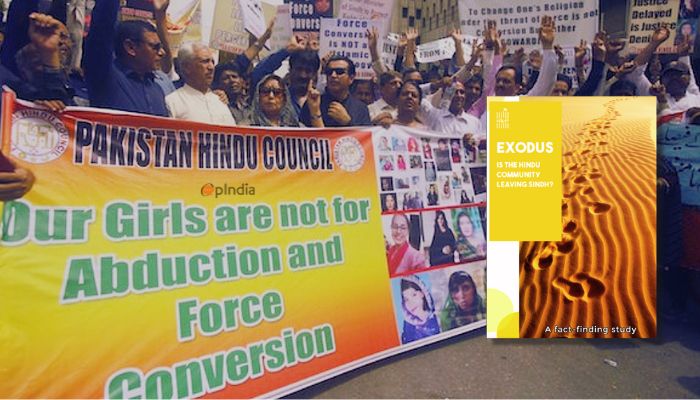
The Islamic Republic of Pakistan has since its very creation in 1947 been persecuting its Hindu and religious minorities at an alarming scale. Forced marriage and conversion to Islam, rape, discrimination, desecration of temples and violence against Hindus by Islamic fanatics in Pakistan has been a cruel “normal” in Pakistan. Shedding light on this disturbing pattern in Sindh, the Human Rights Commission of Pakistan (HRCP) published its fact-finding report titled “Exodus: Is the Hindu Community Leaving Sindh?” on 23rd January 2025.

The report highlighted that deteriorating law and order, Islamist violence, and economic challenges coupled with climate conditions are among the key factors that have compelled the poor and vulnerable Hindus to migrate from Sindh, a province with the highest concentration of Hindus in Pakistan.

Tracing the roots of migration of Pakistani Hindus

At the onset, the report mentioned a 2014 statement by Pakistan Muslim League (Nawaz) leader Ramesh Wankwani in Pakistan’s parliament wherein he said that 5000 Hindus annually migrate to India due to religious persecution. The report then highlighted the issue of Hindus migrating from Sindh’s Kashmore district to India due to “fears of kidnapping by bandits”. HRCP found that despite there being reports of 300 Hindus migrating from Kashmore, the Pakistan government blamed ‘conspiracy’ against Pakistan instead of taking necessary action.

“According to a recent press report, more than 300 Hindus from Kashmore district have migrated to India due to lawlessness and fears of kidnapping by bandits. Despite such alarming reports, government responses typically downplay the issue, framing it as a ‘conspiracy’ against Pakistan rather than addressing the underlying causes. This response reflects a broader sense of denial,” the report says adding that estimating the exact scale of migration is hard to determine due to underreporting and intentional concealment of information by the authorities.

The report recorded that migration of Pakistani Hindus is not a new phenomenon, rather a 1986 incident wherein 34 convicted prisoners involved in the abduction of Hindu traders for ransom escaped from jail and the demolition of the Babri structure erected atop Shri Ram Janmbhoomi in Ayodhya city of India’s Uttar Pradesh in 1992 served as a catalyst for the migration of the persecuted community.

“One of the pivotal moments cited by these leaders is the demolition of the Babri Masjid in Ayodhya, India, on 6 December 1992. This incident provoked widespread anti-Hindu violence in Pakistan, with attacks on Hindu temples and places of worship by the Muslim population. This surge of violence in response to events in India became a catalyst, intensifying the trend of Pakistani Hindus emigrating to India,” the HRCP report said.

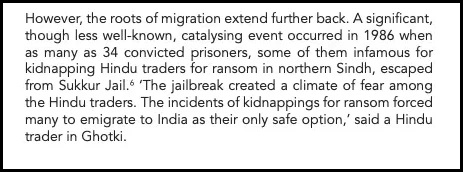
“However, the roots of migration extend further back. A significant, though less well-known, catalysing event occurred in 1986 when as many as 34 convicted prisoners, some of them infamous for kidnapping Hindu traders for ransom in northern Sindh, escaped from Sukkur Jail. ‘The jailbreak created a climate of fear among the Hindu traders. The incidents of kidnappings for ransom forced many to emigrate to India as their only safe option,’ said a Hindu trader in Ghotki,”  it continued.
Notably, while the Pakistani Human Rights Commission finds that the said 1986 incident and the demolition of the illegal Babri structure in 1992 were a major trigger for Hindu migration to escape persecution, OpIndia earlier reported how even before the Babri demolition, hundreds of temples were demolished by Islamists. Since 1990, nearly 95% of Hindu temples have been destroyed, usurped by Islamists or repurposed by Pakistani governments as mosques, madrasas, chicken shops, cattle farms, and sometimes even toilets.

Key factors behind Hindus migrating from Sindh

The HRCP report found that while incidents of large-scale violence against Hindus have become less, the minority community lives in fear of kidnapping for ransom and targeted attacks. The report said that Hindus in Sindh live in constant fear and insecurity since law enforcement in the province is “severely compromised”.

“In 2023, an HRCP fact-finding report observed that northern Sindh was riddled with organized crime, militant violence, poor governance, and entrenched feudal power structures. The report highlighted significant shortcomings in the police, judicial, and revenue systems, presenting formidable challenges to maintaining law and order. Tribal feuds further destabilize the region, paralysing socioeconomic development and creating a perilous environment for all residents, particularly for the Hindu minority,” the fact-finding report reads.

The HRCP pointed out that kidnapping of Hindus and extortion is rampant in Sindh, particularly in northern Sindh. The Hindu community, especially the so-called “upper caste” Hindus are targeted both for their religious identity as well as for their wealth.

“Hindus feel frightened and insecure due to the rise in kidnappings for ransom by dacoits operating from the Katcha [riverine] areas’ was a recurring concern in interviews with Hindu community leaders and rights activists in northern Sindh. Interviews reveal that the Hindu community is often targeted for its economic standing. In districts such as Ghotki, Jacobabad and Kashmore, the upper-caste Hindu community dominates trade, markets and transportation,” the report says.
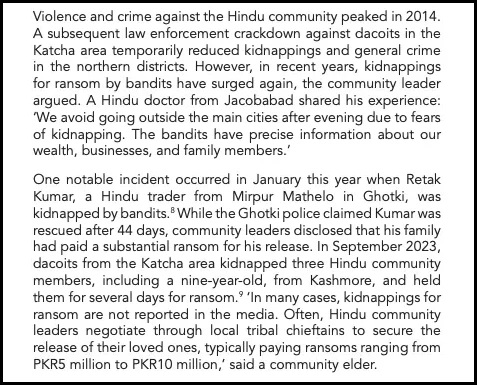
Furthermore, the HRCP found that the law enforcement authorities and the government have monumentally failed to protect the “wealthy” Hindus in northern Sindh, making them an easy target for bandits and tribal chieftains. To save themselves, several Hindus are forced to make these tribal chieftains business partners who take about 20 and 30 per cent share in profits and their names are displayed on the boards and banners of Hindu shops and businesses to deter bandits.

However, the HRCP stresses, “desperate strategy underscores the deep-seated insecurity and lack of faith in official law enforcement channels. The fear and uncertainty extend beyond northern Sindh, spilling over into cities like Sukkur, Karachi, and Hyderabad.”

Notably, the Pakistani bandits are hardcore Islamic fanatics and regularly force Hindu girls to convert to Islam. In April 2024, Pakistani senator Danesh Kumar Palyani raised this issue in the Pakistani parliament and said, “You see in Sindh, bandits are forcefully converting our Hindu girls to Islam. Bandits in mud forts areas kidnap people but Bandits in settled areas are forcing girls to convert their religion. However, Pakistan gives us the right that no one should force anyone else to convert.

“The daughters of Hindus are not a booty that someone should forcibly change their religion, Hindu girls are being forcibly converted to the religion in Sindh. It has been two years since innocent Priya Kumari was abducted,” he said on X.

Events in India trigger Islamists in Pakistan to attack Hindus for simply existing

It must be recalled that in 2023,  a Pakistani married woman named Seema Haider illegally entered India to marry her Hindu lover Sachin. The couple received massive media attention while many raised concerns over her presence in India. While the Pakistani woman continues to live peacefully in a Hindu-majority India, her departure from Pakistan came with unsettling consequences for Pakistani Hindus. The Islamist bandits in northern Sindh abducted threatened to destroy Hindu temples to avenge Seema Haider’s voluntary exit from Pakistan. Besides the threats to attack temples, these Islamist dacoits in Kashmore and Ghotki also took several Hindus, including women and children hostage. The HRCP report says that a rocket was fired at a Hindu temple in Kashmore’s Ghauspur.
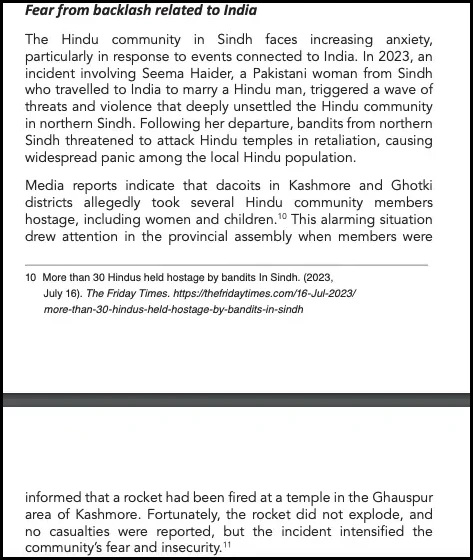
“…dacoits in Kashmore and Ghotki districts allegedly took several Hindu community members hostage, including women and children. This alarming situation drew attention in the provincial assembly when members were informed that a rocket had been fired at a temple in the Ghauspur area of Kashmore,” the report said adding that Prime Minister Narendra Modi consecrating Ram Mandir in Ayodhya last year also exacerbated the Hindu community’s fear and anxieties. This was apparently because Hindus in India reclaiming their temple offended Islamists everywhere in the world including India’s hostile neighbour.

Alongside, the fear of Islamist bandits, the Hindu community in Sindh also faced troubles during the wave of terrorism against Shias and suicide bombings on their mosques between 2013 to 2017. Although in this case Hindus were not directly targeted, the HRCP found that Hindus were asked by the local police to heighten the security of their temples in Jacobabad, Shikarpur, and other areas due to the threat of suicide attacks by local Taliban groups.

The HRCP report said that while the killing of Hafeez Pandrani, a dreaded terrorist  in 2019 halted violence, “some Hindu families migrated to major Pakistani cities such as Karachi and Hyderabad, while others crossed the border to India.”

Religiously motivated and blasphemy-related violence against Hindus in Sindh

With a significant Hindu population, Sindh has been an epicentre of anti-Hindu violence. In June 2024, Islamist miscreants vandalised a dilapidated temple of Lord Ram in the Kacchi Colony in an overnight attack. They desecrated the Hindu temple and stole idols of Hindu deities and several copies of Geeta, the Holy Book despite the temple doors being locked. They also covered revered Hindu religious symbols including Om with spray paint. Before this, Islamists looted and desecrated an ancient Hindu temple in Sochi Pada, Tando Adam which falls in Sindh’s Nawabshah district. OpIndia has reported numerous such incidents over the years from not only Sindh but other provinces of Pakistan.

Unsurprisingly though, HRCP went from acknowledging that Hindus institutionalised discrimination, arbitrary blasphemy accusations and forced conversions, to asserting that there is no organised campaign targeting the Hindu community. However, the pattern of Islamists targeting Hindus for their religious identity, forced conversions for example, indicates that there is an organised campaign against Hindus. There have been numerous cases with modus operandi wherein Hindu girls including minors are abducted, forced to convert to Islam and marry abductors then compelled to make a declaration of conversion out of free will. Later, the courts in most cases also support the perpetrator instead of the victim thus facilitating Islamist designs of forced conversion and demographic alteration.

“Despite public claims of social cohesion, these minorities face continuous threats due to institutionalized discrimination, arbitrary blasphemy accusations, and forced conversions. However, most respondents contend that there is no organized campaign targeting Hindus and other minorities in the region. Nonetheless, the environment of fear and suspicion remains a significant concern,” the HRCP report said.
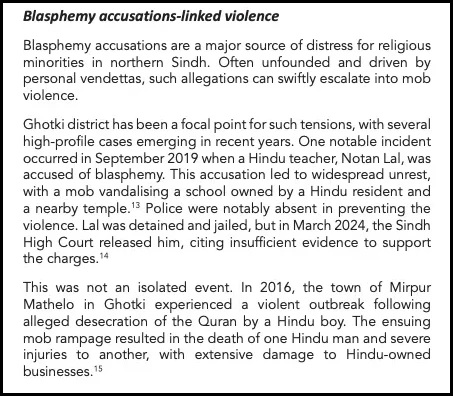
The report further pointed out that allegations of blasphemy though often unfounded and driven by personal vendetta have been a major source of distress for Hindus and other religious minorities.  The fear of being falsely accused of blasphemy by Muslims has compelled Hindus to leave Sindh altogether for either Karachi or India.

“In the face of blasphemy accusations, some Hindus choose to leave Sindh altogether. A Hindu Panchayat leader in Ghotki revealed that two community members had fled to India after being accused of blasphemy. Initially believed to have relocated to Karachi, it was later discovered that they had settled in Indore, India,” the report said.

Forced conversions and marriages: The unheard ordeal of Hindu women in Sindh

The Pakistan Human Rights Commission report highlighted that Hindu women in Sindh grapple with perpetual threats of harassment, kidnapping and forced conversion forcing the Hindu families to discontinue the education of their daughters and move to safer areas often to larger cities and sometimes to India.

Recalling a disturbing case, a local activist Panu Aqil said, “At a wedding, a tribal chieftain’s son inappropriately touched a Hindu bride, causing deep humiliation. Unable to retaliate, the family quietly moved to India within three months.”
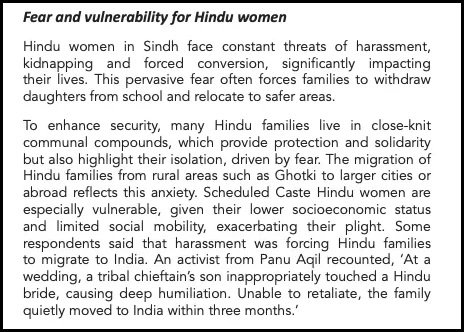
The HRCP found that forced conversions and marriages have been a systematic issue in Sindh Ghotki being an epicentre. In addition to highlighting several high-profile cases of forced conversion of Hindu girls to Islam and marriage to Muslim men, the HRCP particularly mentioned Islamist Mian Abdul Haq alias Mian Mithu.

“Mian Mithu stands accused of leveraging his influence to facilitate the forced conversions and marriages of underage Hindu girls. His seminary, Dargah Bharchundi Shareef in Daharki, Ghotki, is frequently cited as a key location where such abductions and conversions allegedly take place. While Mian Mithu maintains that these conversions and marriages are voluntary, this claim is vehemently contested by Hindu community leaders. They argue that the girls, often minors, are too young to make such life-altering decisions and are pressured or manipulated into conversion. The complete absence of similar cases involving Hindu boys casts further doubt on the legitimacy of these conversions,” the report reads.

Furthermore, it was found that even though the Sindh Child Marriage Restraint Act 2013 sets the legal marriage age at 18, its weak enforcement enabled Islamists to marry off Hindu girls in the Punjab province where the legal marriage age is 16. The report mentioned the cases of Reena and Raveena wherein despite their families appealing that they be returned to them, the Islamabad High Court ordered that the girls who were abducted, forcefully converted to Islam and married off to their abductors to stay with their Muslim abductors-turned-husbands— Safdar Ali and Barkat Ali.

The report further pointed out that the ‘upper caste’ Hindus have better socioeconomic standing and resources allowing them to raise the issue of forced conversions, and violence against Hindus, however, since Dalit Hindus are not well represented and lack resources to raise their issues more effectively,  they do not receive much media attention, parliamentary and civil society clout.

Moreover, the report suggested that the vulnerability of Scheduled Caste Hindus is exploited by Islamic organisations and individuals sometimes they are denied some religious rights by ‘upper caste’ Hindus or at unaffordable costs while the Muslim community discriminates against them. The report mentioned a 2021 case incident wherein local Muslims in Jacobabad’s Thull town banned SC Hindus from burying their dead in a shared graveyard.

These marginalised people are then lured by Islamists to their religion while similar attempts are also made by Christian, Sikh and Ahmadi missionaries.

Economic hardships have also been a major factor behind Hindus migrating from Sindh. The HRCP report says that while unemployment, inflation and related issues are not unique to Hindus but are faced by the wider Pakistani population, these issues coupled with fear of persecution due to their social and religious identity worsen things for them making their migration about “more than just seeking better opportunities.”

The Hindu traders in Sindh explore opportunities for investment and relocation to India during their religious or business visits to the neighbouring country. This is due to the fact that unlike the situation in Pakistan where they are harassed by Muslim business partners who often refuse to repay loans and even local electricity bodies who hand inflated bills selectively to Hindu traders, in India they feel a certain sense of peace and security. In addition, extremely hot climatic conditions in Sindh also drive Hindus to migrate to other locations including India as unbearably hot conditions adversely affect agricultural productivity, which is a major source of livelihood for Sindhi Hindus.

All images via HRCP’s report

According to the Human Rights Commission of Pakistan, Hindus in Sindh practice internal migration, especially to cities like Karachi where they find comparatively better educational opportunities and safety. While those who remain in their own cities prefer to reside in gated communities, colonies and apartment towers in urban areas to have a sense of safety and community. The HRCP report said that Hindus have limited options since they lack any significant political influence and to highlight their grievances they take out non-violent protests, shutter strikes, and hunger strikes. Hindus lamented that in the wake of violent threats, they approach the police and government to protect them, however, the Pakistani criminal justice system leaves them frustrated since the authorities remain reluctant in acting against tribal chieftains and criminals. In such cases, Hindus are forced to negotiate with their kidnappers.

India’s CAA becomes a ray of hope for Pakistani Hindus to have a safer and more dignified life that their homeland failed to provide

Enacted in 2019 and implemented in March 2024, India’s Citizenship Amendment Act has been a major driving factor for Pakistani Hindus, particularly those from Sindh to relocate to India, gain Indian citizenship and live a dignified and safe life here. Although CAA provides a fast-track path to citizenship for non-Muslim migrants from Pakistan, Bangladesh, and Afghanistan who had entered India before December 2014, the HRCP report says that “Pakistani Hindus continue to arrive on long-term visas, allowing five years of residency and a potential pathway to citizenship after meeting certain criteria.”

Highlighting the impact of CAA on Sindhi Hindu refugees, the HRCP report said, “In Madhya Pradesh, a significant number of these refugees have been granted citizenship. NDTV reported in 2021 on a family from Jacobabad that had received citizenship certificates in Indore, reflecting a broader trend where approximately 2,000 Hindu refugees from Sindh obtained Indian citizenship over the past five years, with 1,200 more applications pending.”

HRCP’s recommendations to Central and Sindh governments to address issues faced by Hindus

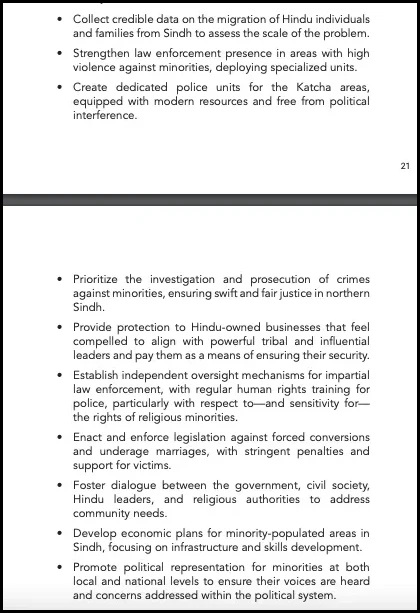
The Pakistani Human Rights Commission though it failed to make a single mention of the word Islamist or Islamic threat to Hindus, made certain recommendations to the federal government led by Prime Minister Shehbaz Sharif and the Sindh government led by Murad Ali Shah. The commission said that authorities should collect credible data on the migration of Hindu individuals. It also stressed the necessity to strengthen law enforcement presence in areas with high violence against minorities, deploying specialized units. The HRCP recommended that dedicated police units for the Katcha areas, equipped with modern resources and free from political interference should be set up.

In addition, the investigation and prosecution of crimes against minorities, ensuring swift and fair justice in northern Sindh should be prioritised. One of the key recommendations included providing protection to Hindu-owned businesses that feel compelled to align with powerful tribal and influential leaders and pay them as a means of ensuring their security.

“Establish independent oversight mechanisms for impartial law enforcement, with regular human rights training for police, particularly with respect to—and sensitivity for—the rights of religious minorities. Enact and enforce legislation against forced conversions and underage marriages, with stringent penalties and support for victims. Foster dialogue between the government, civil society, Hindu leaders, and religious authorities to address community needs. Develop economic plans for minority-populated areas in Sindh, focusing on infrastructure and skills development. Promote political representation for minorities at both local and national levels to ensure their voices are heard and concerns addressed within the political system,” the HRCP recommended.
The Pakistani government, courts and the administration in Sindh have so far failed to protect Hindus from Islamists in Pakistan, the rampancy of unchecked forced conversion of Hindu women, violence and discrimination against Hindus demonstrates the same. Majorly due to these factors not Sindhi but Hindus in other parts of Pakistan are also forced to search for safer avenues and often migrate to India. This, however, is high time for Pakistan to ensure that the Hindu minorities in Pakistan can lead a secure and dignified life in their homeland and a good start towards this could be with the implementation of the recommendations made by the Human Rights Commission of Pakistan.
Popular distortion of history was a psychological experiment and ‘Chhaava’ is proof that Hindus have managed to shift the Overton Window – forever

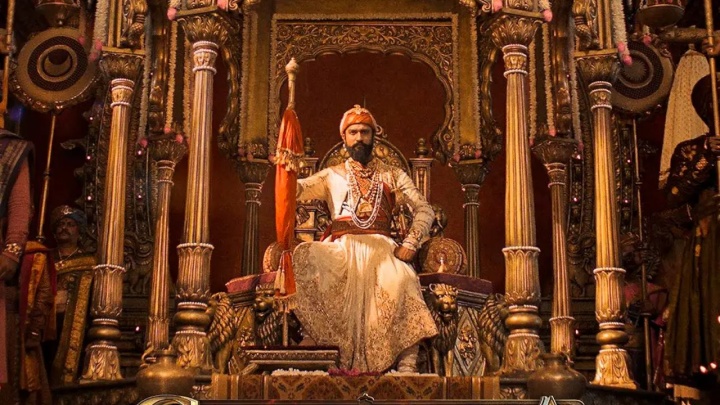
“The lion is no more, but Chhaava is still roaming the jungle” – the movie trailer starts with this iconic line. “We will rip the Mughals apart if they dare to challenge the Maratha empire” – Vicky Kaushal, playing Sambhaji Maharaj roars. With chants of Har Har Mahadev, Chhaava promises to be a movie that would stand as a testament to the Overton Window, decisively, shifting forever.

The much anticipated period film sees Vicky Kaushal take on the role of Chhatrapati Sambhaji Maharaj, with Rashmika Mandanna playing Maharani Yesubai. The trailer was fittingly released on the 22nd of January 2025 – 1 year since the grand Praan Pratishtha of Ram Lalla in Ayodhya – the day which marks the civilisational rejuvenation of Bharat.

Surely, the day chosen for the release of the trailer was no coincidence. The reclamation of Ayodhya, Kashi and Mathura always played a central role in the establishment of Hindavi Swaraj for the Maratha empire and in the many wars waged by Hindu Kings. From Malhar Rao Holkar to Ahilyabai Holkar, the reclamation of Ayodhya was never a project abandoned. The Marathas never reached a point where they could reclaim the sites without adverse consequences for Hindus as well as their own political power and the tides of time have flown by since then. For them, Ram Janmabhoomi remained a dream unfulfilled. For the Chhaava trailer to be released on the very day that Ram Lalla returned to Ayodhya, a decision one can hope the makers took consciously, only foretells the shift of the Overton Window in favour of the truth.

Islamic tyrant Aurangzeb was particularly miffed with the Marathas – the “infidels” who did not conform to the will of Allah. In Maasir-i-Alamgiri, the sheer rage Aurangzeb felt towards the Marathas, including Chhatrapati Shambhaji Maharaj is evidenced.

In a chapter titled ‘Capture and execution of Sambha’, the phrase “Satan has been chained” has been used to describe the capture of the Chhatrapati. “To speak more plainly, through the power of the Emperor’s fortune, the infernal infidel Sambha was made prisoner by the army”, the biography reads.

Muḥammad Sāqī Mustaʻidd Khān then writes, ”Mukarabh Khan’s son Ikhlas Khan went inside the Haveli and dragged Sambhaji Maharaj and Kavi Kalash by their hair and 25 of Maharaj’s chief followers and their wives were made prisoners”. This news reached the emperor who was staying in Akluj, after hearing this he ordered Hamduddin Khan, to bring the captives (Sambhaji Maharaj and Kavi Kalash) in chains and manacled. The writer further mentions that ”the Emperor’s devotion to Islam ordered that Sambhaji Maharaj should be made to wear a wooden cap (a sign of a criminal) and as he enters the camp, there should be drum beating and trumpets pealing so that” Muslims ”might be heartened and infidels (Hindus) will be disheartened“.

During captivity, Kavi Kalash’s tongue was severed and Sambhaji’s eyes were gouged out. Sambhaji Raje was asked to surrender to Islam but he never accepted it. The warriors, including Chhatrapati, were hacked limb by limb thereafter.

To think that up until February 2023, an entire city was named after Aurangzeb is unthinkable and yet, it is true. It was only in February 2023 that Aurangabad was renamed Chhatrapati Sambhaji Nagar. Then, as we see now, Mughal lovers suffered an epic meltdown, essentially calling the move not just Islamophobic but an erasure of the real history of India. At the time the decision was taken in 2022, dubious ‘historian’, Audrey Truschke, also suffered a meltdown when the Maharashtra government took the decision to rename Aurangabad. 

“Thinking today about Sambhaji, a seventeenth-century Maratha ruler who, by the end of his life, had alienated many supporters through brutal and miscalculated tactics. Seems that those who honour him may honour his legacy too. #Sambhaji,” she had tweeted.

Today, we see a similar meltdown after the release of the Chhaava trailer.

Here are some samples:

Of course, Muslim fanatics idolising Aurangzeb who followed Islam to the letter is no surprise. Aurangzeb was, indeed, a good Muslim. He tortured “Kafirs”, desecrated Temples and humiliated Hindus – the archetype of the perfect Muslim.

While Muslims deify Aurangzeb for being a “good Muslim ruler” because he followed their religious doctrine (which is, of course, torturing Kafirs), our popular discourse exalted him as a just, honourable and noble ruler – conveniently leaving the definition of a “good Muslim ruler” to the public imagination. The result was the absolute whitewashing of historical facts to present the Mughal rule as a golden era for India – as a whole.

That today a movie like Chhaava can be released and celebrated presents undeniable proof that India – Bharat – Hindus – have traversed unchartered territory to shift the Overton Window forever from the rocky pathways where the truth was considered radical and lies were considered popular.

The Overton Window is a set of ideas and policies that are acceptable to the mainstream population at a given time. The spectrum of acceptability ranges from what the society deems “unacceptable” to what set of ideas eventually becomes a government policy acceptable to the mainstream population. 

Joshua Treviño has postulated that the six degrees of acceptance of public ideas are roughly:

  • Unthinkable
  • Radical
  • Acceptable
  • Sensible
  • Popular
  • Policy

The Overton Window, simply put, shifts when an acceptable idea becomes popular and then translates to policy. Or better yet, when a radical idea journeys its way through being considered ‘sensible’ to ‘popular’ and then translates into policy.

The idea that the Mughals were Islamic barbarians was one that was considered radical. Not too long ago, when the decision was taken to reduce the portion glorifying the Mughal era from textbooks, there were wails of how history was being deleted and the Mughal greatness was being erased to weaponise the past. The argument was rather simple – if students don’t learn about the “glory” of the Muslim invaders and they ushered a period of economic prosperity (an absolute lie), they would view present-day Muslims with disdain and start believing in the “radical” idea that Bharat’s civilisational glory and existence was despite the Muslim invaders, not because of them.

The whitewashing of history was a psychological experiment, at its core. If Muslim invaders are exalted, those who still take pride in them hundreds of years later would be seen as conscientious citizens who take pride in the history of India itself. Those who would then point out that the pride of the Muslim class stems from how effectively the invaders “tamed” Hindus as per the diktats of the Quran, would immediately be branded bigoted, conspiracy theorists or worse – Hindu nationalists.

This very strategy was used over and over again. Take the Malabar genocide of Hindus, for example. Left historians successfully convinced generations that the murder of 1000s of Hindus in 1921 was a result of Muslim peasants revolting against the terrible Hindu landlords – this – despite documentary evidence that the peasant uprising theory was hogwash. In the same vein, Khilafat leaders like Shaukat Ali and Maulana Mohammad Ali were branded freedom fighters in our history books. We were told, repeatedly, that they fought for the freedom of India from the British colonisers and therefore, were heroes. The truth, that they were fighting against the British to establish the Turkish Caliphate, the Ottoman Empire again and that they actively massacred Hindus was neatly tucked away – never to be talked about.

Malabar province in Kerala had a large number of Muslims. These people, known as Moplah or Mappila, worked mainly with Hindu landlords as day labourers. Poor and uneducated, they believe that they are descendants of Prophet Mohammad. Influenced by the speeches of Khilafat leaders, Mohammed and Shaukat Ali, a religious teacher Ali Musliar rose to prominence as a Khilafat leader.

He made people believe that the end of British rule was near and a Muslim army would invade India soon. Calls were given to mobilise Moplahs; weapons were arranged for the revolt. Their agitation against the British rule soon became a religious uprising and was directed against non-Muslims in the region. Ali Musliar declared himself as the king and Ernad and Valuvnad as Islamic State. When the British sent troops to stamp out the uprising, the Moplahs started slaughtering people.

In August 1921, as per estimates, close to ten thousand Hindus were massacred. A large number of women were raped, temples were vandalized, people’s homes were burnt and they were banished. There were many incidents of burning people alive, peeling their skins, people were asked to dig graves for themselves and were buried in them. Marxist historians have tried to play this violence down by stating that it was caused by economic injustice and not by religious fanaticism. But that makes a case for such revolts across the country.

The Khilafat movement, aided by Mohandas Karamchand Gandhi, unleashed the beast of Islam-driven Hindu massacres and planted the seeds, the poisonous fruits of which haunt us to this date.

Once we understand the grand experiment of historical subversion, the shift in the Overton Window only seems far more remarkable. That Aurangabad was renamed Chhatrapati Shambhaji Nagar and a movie like Chhaava can be released and celebrated today is a testament to the Hindus who have managed to make the truth, considered radical and unthinkable up until a decade ago, is today mainstream enough to not only turn into a motion picture but translate into policy as well.

A few years ago, for a mainstream actor like Vicky Kaushal to chant Har Har Mahadev on celluloid would be unthinkable. A few years ago for a motion picture to depict Aurangzeb as the scrawny tyrant he was would be sacrilege. A few years ago, for Bollywood to even consider depicting the capture, torture and murder of Chhatrapati Shambhaji Maharaj for his refusal to convert to Islam would be blasphemy. A few years ago, for a movie to showcase the proud campaign of the Marathas to establish Hindavi Swaraj would be terrorism. Today, it is not just anticipated but ceremonialized.

Hindus are, one step at a time, learning that if they don’t tell their stories, nobody will. If they don’t speak of their warriors, the barbarians would speak of their tyranny as valour.

The Hindus are finally, finally, waking up – perhaps.

AAP, Punjab Police claim security to Kejriwal ‘forced to withdraw’, Delhi Police bust falsehoods, say he already is a Z+ protectee with 63 personnel

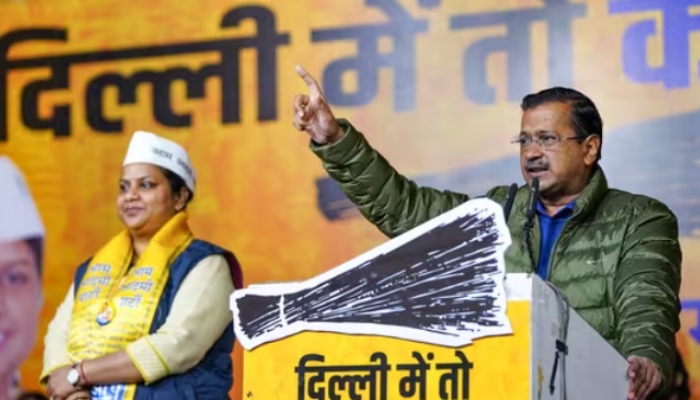
On Thursday, 23rd January, the Punjab Police alleged that they had been forced to withdraw the additional security provided to AAP supremo Arvind Kejriwal. They claimed that the Delhi Police and the Election Commission of India had issued them the orders to do so ahead of the Delhi state assembly elections scheduled to take place on 5th February this year.

The Punjab Police claimed that they constantly get reports of threats to Punjab Chief Minister Bhagwant Mann and AAP supremo Arvind Kejriwal and that they share such reports with concerned agencies, however, now they have withdrawn a component of security from Kejriwal’s security detail.

Responding to these claims, the Delhi Police clarified that no security component for Kejriwal was withdrawn. “We’ve just taken over the charge. He already has been provided with Z+ security with 63 personnel by Delhi officials,” the officer from Delhi Police said.

“Occasionally, we get reports of threats to Chief Minister Bhagwant Mann and Arvind Kejriwal and share them with the concerned agencies. Today, after the Delhi Police’s intervention following the directions of the Election Commission, we have withdrawn Punjab security from Arvind Kejriwal’s security cover. We will continue to share inputs with Delhi Police,” Director General of Police Gaurav Yadav from Punjab Police was quoted as saying.

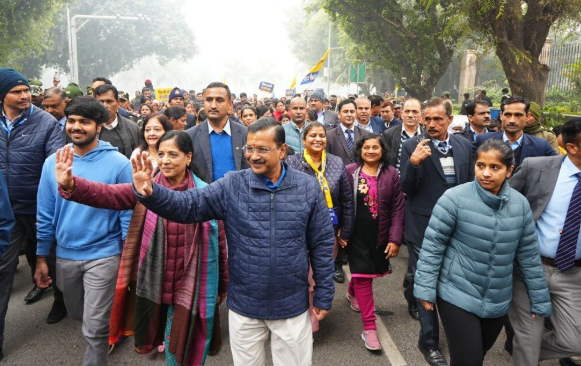
AAP protesting for alleged security withdrawal (India Today)

Yadav also claimed that they showed their concerns to the Delhi Police and the Election Commission but eventually had to withdraw the security component. The decision sparked political outrage with AAP alleging that the security was deliberately withdrawn and BJP saying that the orders by the Delhi Police and the Election Commission were administrative decisions taken by the government forces.

The DGP further added that both Mann and Kejriwal had Punjab’s Z+ security protection, but following the concerns raised by the Delhi Police, a component of security was withdrawn. The Punjab Police tried to blame the Delhi Police for ‘forcing’ them to withdraw Kejriwal’s security.

Delhi Police: One person cannot have two special securities by law

However, Delhi Police confirmed the matter and revealed the exact reason behind issuing such orders. It said that it was capable enough to protect the leader and the elections and that no other state security was permitted to protect the leader ahead of the elections.

“He (Kejriwal) continues to be a Z+ protectee of Delhi Police,” said one of the Delhi Police officers to the media. Another officer from Delhi police said, “It is a rule that if anyone has a special category of security from any specific state police, the state police giving the security cover has to inform the other state’s police that the person has a threat perception. The moment a new state’s police takes charge of the person’s security, the earlier security cover returns to its parental state.”

“We have not withdrawn Kejriwal’s security cover. We’ve just taken over the charge of his security from Punjab police. It is by the law. Why would we allow Punjab police personnel to give security cover to a person, for whose security we are more competent?” he added.

“Z+ security” refers to the highest level of security provided to individuals in India, typically including a large team of highly trained security personnel, often including NSG commandos, to protect high-profile individuals facing significant threats, essentially the second highest level of security after SPG protection for the Prime Minister; it usually consists of a security detail of around 55 personnel with advanced vehicles and close surveillance.

Delhi Police said that the rules set out by the Union Home Ministry did not allow a person to have special security from two states. The officials also added that Kejriwal already had security of 63 personnel from Delhi Police.

Matter was raised by BJP who saw Punjab security vehicles roaming in Delhi

The Delhi Police on January 6th had written to the Punjab Police to reveal the details of the movement of security of Punjab leaders well in advance, who would come to Delhi for election campaigning ahead of the polls and also for Republic Day. The Delhi Police said that they had been maintaining tight schedules and monitoring things closely in the wake of the upcoming Republic Day parade. It also said that despite written communications, they were not being informed about the police presence from other states, including Punjab.

Notably, on 18th January, the Punjab Police said that it would provide all the details of security accompanying the Punjab leaders while they travel to Delhi. The issue was again politically raised when BJP leader Parvesh Verma, the opponent of Kejriwal in one of the Delhi seats stated that the AAP leaders were calling people from Punjab. “Thousands of vehicles with Punjab registration plates were roaming around in Delhi,” the BJP leader said.

Kejriwal accuses Delhi Police of ‘attack’

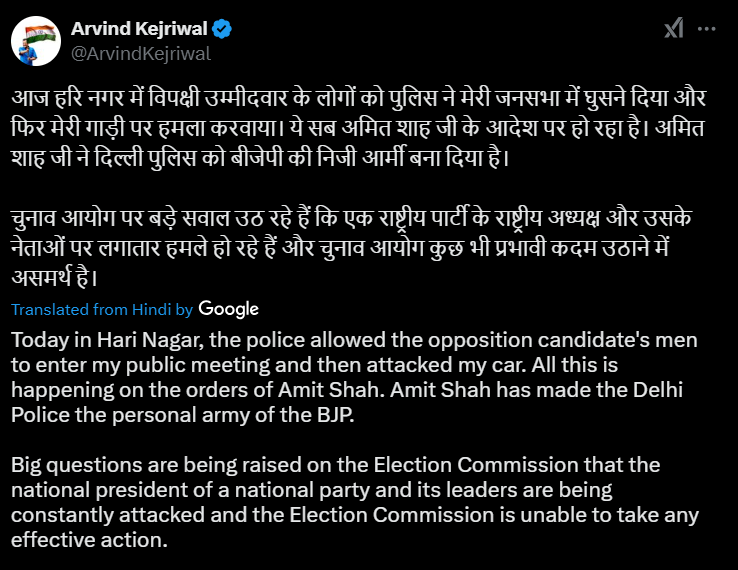
It is crucial to note that Delhi supremo Arvind Kejriwal accused the Delhi Police on Thursday, 23d January saying that it allowed the opposition candidate’s men to enter his public meeting and attack his car. “Today in Hari Nagar, the police allowed the opposition candidate’s men to enter my public meeting and then attacked my car. All this is happening on the orders of Amit Shah. Amit Shah has made the Delhi Police the personal army of the BJP. Big questions are being raised on the Election Commission that the national president of a national party and its leaders are being constantly attacked and the Election Commission is unable to take any effective action,” he said in an exclusive tweet.

He also accused Home Minister Amit Shah of furthering the attack. He meanwhile also said that the Delhi Police was ‘the personal army of BJP’, showing complete mistrust of the Delhi authorities working rigorously to provide Z+ security to the leader. Amid this, he also alleged the Election Commission of taking no action in the matter.

A week ago also, Kejriwal had made similar claims saying that his convoy was attacked during a door-to-door campaign in the New Delhi constituency. The party released a video purportedly showing a stone landing on Arvind Kejriwal’s vehicle. The video also showed people waving black flags next to the convoy, which AAP claimed was part of a deliberate attempt to disrupt the election campaign of the AAP leader. However, the BJP later stated that the car in which Kejriwal was campaigning had hit two people during the campaign.

AAP’s Sanjay Singh spread misinformation saying security had been ‘withdrawn’

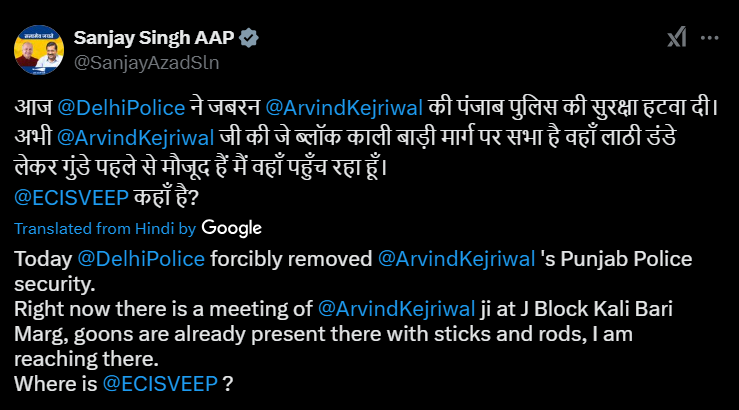
Meanwhile, AAP Rajya Sabha MP Sanjay Singh attempted to spread fake news claiming that the Delhi police had ‘forcibly’ withdrawn Kejriwal’s additional security and that there was a threat to Kejriwal’s life. “Today Delhi Police forcibly removed Kejriwal’s Punjab Police security. Right now there is a meeting of Kejriwal at J Block Kali Bari Marg, goons are already present there with sticks and rods, I am reaching there. Where is the Election Commission?” he asked, again showing mistrust in Delhi Police which is providing Z+ security to Kejriwal already.

The Delhi Police eventually denied these allegations and stated that the security had not been withdrawn but taken over by another state police. “We have not withdrawn Kejriwal’s security cover. We’ve just taken over the charge of his security from Punjab police. It is by the law,” the Delhi Police states.

“The deployment of security personnel from another state is legally restricted to a maximum duration of 72 hours. Even within this timeframe, prior approval must be obtained from DCP Security to ensure compliance with established protocols. Extending security arrangements from another state beyond 72 hours is deemed legally inappropriate,” the police said.

Conclusion

Kejriwal has a history of showing mistrust in the Delhi Police. A few days ago, he accused that the police prevented the screening of a documentary exposing the ‘secrets’ and ‘conspiracies’ behind the arrest of his party leaders. However, later the Delhi Police said that no permission was sought by the leaders for the screening event given Model Code Conduct in force ahead of the Delhi State polls scheduled on 5th February.

The AAP leader’s constant allegations on the Delhi Police of highlight also his suspicion about the security arrangements led by the authorities to protect his life. He was issued Z+ security by Delhi Police in 2015. Despite this, he made alleged attempts to get security from the Punjab Police claiming threats. If he has this level of mistrust in the Delhi Police, why doesn’t the administration look into probably discontinuing the Z+ security for the leader?

The Punjab Police also claimed that Delhi Police ‘forced’ them to withdraw the additional security. However, the Delhi Police stated that the leader already had Z+ security and that it was more capable and competent than the Punjab Police to ensure the protection of the leader.

Tracing the history of Sambhal: From ancient Puranic legends to Mughal conquests and the colonial account of the centuries-old Harihar Mandir-Shahi Jama Masjid conflict

A Bench consisting of Chief Justice Sanjiv Khanna and Justice Sanjay Kumar reviews a petition submitted by the Jama Mosque Committee challenging a civil court’s order that permitted a survey of the mosque to ascertain if it was constructed on the remnants of a temple. Violence erupted on November 24 during the study in Sambhal, resulting in the deaths of four individuals and injuries to numerous others, including police personnel, a review of the history of the heritage site will be in order.

In 1879 CE, a significant survey report prepared by archaeologist Archibald Campbell Carlleyle for Major General Alexander Cunningham reached the British Army headquarters in British India. It states: “The principal building in Sambhal is the Jami Masjid, which the Hindus claim was originally the temple of Hari Mandir.” 

This claim has become central to the legal dispute between the Shahi Jama Masjid and the Harihar Mandir, highlighting its historical importance.

What specific evidence did Archibald Campbell Carlleyle use to support the claim about the Jami Masjid’s origins? What are the historical traces of the conflict between the Shahi Jama Masjid and the Harihar Mandir? The historical significance of the ASI reports and the chronology of events influenced contemporary views on religious sites in the region and the exact timeline of Sambhal.

Origin of Sambhal and the tale of two timelines

Sambhal is a historically important Uttar Pradesh city founded by Emperor Yayati, as noted in the Matsya Purana. Senior historian Dr Ajay Anupam highlights the significance of the Harihar Temple there, referenced in the Shrimad Bhagwat Purana, Skanda Purana, and Matsya Purana. He asserts that the temple’s origins date back at least 5,000 years and that the Shrimad Bhagwat Purana details its establishment, emphasizing its historical and religious importance.

The name “Sambhal” is referenced in Carlleyle’s 1879 Archaeological Survey of India report as Sambhaleshwar in the Satya Yuga, Mahadgiri in the Treta Yuga, and Pingala in the Dwapar Yuga. Carlleyle recognized its historical significance in Hindu texts, underscoring its importance over time.

During Mauryan rule, Pingala was renamed Sambhalgram, later shortened to Sambhal. In the 5th century BCE, it was part of the Panchal state, which was included in Emperor Ashoka’s empire. The Panchal state is also mentioned in the Mahabharata, again highlighting Sambhal’s historical significance.

During the rule of the Chauhan Rajputs in northern India, Emperor Prithviraj Chauhan governed Sambhal. A significant event in Sambhal’s history, noted in Carlleyle’s ASI survey report, occurred during this time. We will discuss this event later in this section.

After the Second Battle of Tarain in 1192 CE, Mohammad Shahabuddin Ghori took control of Sambhal, followed by his slave Qutubuddin Aibak. This period was marked by continuous attacks, especially during Sultan Balban’s reign.

In the 14th century, Sambhal city faced its first proper siege under Sultan Firoz Shah Tughlaq, who eliminated several small Hindu rulers and established direct Muslim control from Delhi. In the late 15th century, Sikandar Lodhi ruled Sambhal for four years and made it the capital of his empire.

Sambhal’s historical importance is underscored by the First Battle of Panipat in 1528 CE, a pivotal event that fundamentally reshaped India’s course. This battle marked the arrival of Babur, the first Mughal invader, and decisively transformed Sambhal’s narrative. This is the second critical event in Sambhal’s history.

Findings of ASI and debunking of fake narratives

Having explored two timelines, it’s time to pinpoint their twists. The first timeline we analyze is that of Prithviraj Chauhan, featuring three key accounts related to Harihar Mandir, or Hari Mandir.

Carlleyle ‘s ASI report from 1879 clearly states that under Prithviraj Chauhan, a temple named Hari Mandir was rebuilt. This Vishnu temple was dedicated to the Kalki avatar. Since it was rebuilt by the Chauhan dynasty, it indicates its existence before Chauhan’s reign.

Also, we have already seen the critical importance of the temple built by Emperor Yayati and Harihar, supported by historical accounts. So, it again confirms the existence of the Harihar temple before the Prithviraj era.

The 1891 ASI report by A. Fuiirer highlights Prithviraj Chauhan’s key role in the rebuilding of Hari Mandir, a fact further confirmed by the 1911 Moradabad gazetteer by H.R. Nevil.

Western historians tend to prioritize European narratives, often overlooking Prithviraj Chauhan’s crucial role in rebuilding Hari Mandir in Sambhal.

2nd timeline

Now the second timeline of the Mughal invader Babur, as documented in Carlleyle’s report. Carlleyle discovered an inscription at the Shahi Jama Masjid stating that Babur’s commander, Mir Hindu Beg, built the mosque — a claim validated by local scholars.

However, Carlleyle noted a significant error: Babur’s name is incorrectly recorded as “Shah Jamjah Muhammad Babar,” instead of “Shah Zahiruddin Muhammad Babur,” although Mir Hindu Beg’s contribution is accurately acknowledged. Carlleyle directly engaged with local Muslim scholars, who confirmed that the inscription was indeed a forgery. Meanwhile, Hindus insisted that this inscription had been backdated in the mosque.

Carlleyle stated that after 1857 CE, control of the monument rightfully shifted to the local Muslims, who effectively utilized the forged inscription to win a civil court case against Hindus regarding possession of the site.

Nevertheless, the question remains: How was the Shahi Jama Masjid converted from a Hindu temple, and what conclusion did Carlleyle reach?

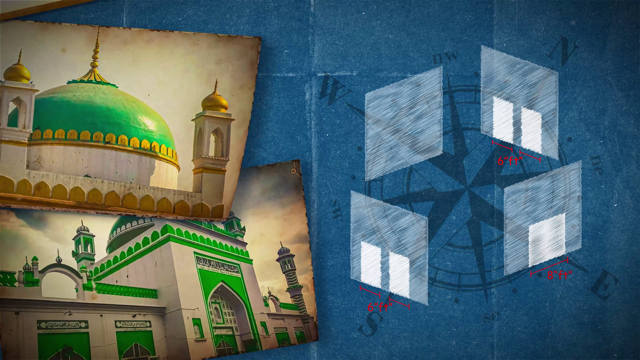
Carlleyle noted significant architectural flaws in the Shahi Jama Masjid during his inspection. He observed that the dome is designed on both an octagonal and square base. He found that the walls, originally made of red limestone, were later covered with mismatched plaster. Carlyle noted that while the original stones in the courtyard were replaced with smaller bricks, some older stones remain. He noted that the original square-based temple had a single 8-foot-wide doorway facing east, while the new masjid features four 6-foot-wide doorways cut from the original stone door.

Most ancient Hindu temples were constructed from stones, typically with a square base & a single eastern-facing doorway.

Both the 1891 ASI report and the 1911 Moradabad gazetteer reports conclude the exact continuation of Carlleyle ‘s 1879 ASI report.

This conclusively shows that the Shahi Jama Masjid was not built by Babur, debunking the narrative of the Shahi Jama Masjid Prabandhan committee, which many Muslims still accept as truth.

Sambhal’s religious importance

In the early 14th century, China was under the rule of the last Mongol dynasty. During this period, the Chinese Mongol Empire sent an official ambassador to the Sultan of Delhi, Muhammad bin Tughlaq.

The ambassador was dispatched with a request for permission to rebuild a temple in Sambhal. However, a question arises: which temple was to be rebuilt?

Before addressing the question, it’s important to note that both ancient Tibetan and Hindu beliefs regard Shambhala, or Sambhal, as the birthplace of Lord Vishnu’s future avatar, the Kalki Avatar. Tibetan texts typically place Shambhala in Tibet or Mongolia, while Hindu texts refer to it as modern-day Sambhal. In both traditions, the religious significance of Shambhala/Sambhal is profound.

Sambhal is undeniably a site of substantial religious importance, firmly establishing its connection to the influential Chinese Mongol Empire. Recognizing this relationship is essential for appreciating Sambhal’s vital role in the intricate narrative of Asian history.

Now, returning to the story, the official request from the Chinese Mongol Empire was denied by Mohammad bin Tughlaq. Here, we again encounter the term “rebuilt,” which indicates the ghastly condition of the ancient Harihar Mandir during that period. 

Ibn Battuta, a renowned traveller of medieval times, recorded this account during the rule of Mohammad bin Tughlaq at the royal court.

Here are two important questions to address:

  1. Who was responsible for the destruction of the ancient Harihar Temple?
  2. Who constructed the current Shahi Jama Masjid in Sambhal? We will discuss the answers in chronological order.

Who destroyed the ancient Harihar Temple?

To find the specific answer, we need to analyze various historical timelines. During the late 13th century, Sultan Balban ruled India and, in 1254 CE, he launched a brutal attack on Sambhal to suppress a local Hindu uprising. This onslaught nearly wiped out the Hindu population there.

This event is detailed in the “Tarik-i-Firozshahi” and referenced in Brijendra Mohan Sankhder’s book, “Sambhal: A Historical Survey,” specifically in the section titled “Balban’s Ruthless Massacre at Sambhal.”

As a result of this devastation, the chances of the ancient Harihar temple surviving until the time of Babur, two centuries later, are very slim.

During the reign of Sultan Sikandar Lodhi, in the 15th century, Sambhal served as the capital of his empire for four years. As a staunch Muslim imperialist, Sikandar Lodhi established various Islamic educational centres in Sambhal, which significantly diminished the survival of the ancient Harihar temple.

Even Babur’s grandson Akbar’s court historian Abul Fazl’s book “Ain-i Akbari” has a strong reference to the ancient Harihar temple in Sambhal. Ain-i-Akbari, page 281, quotes:

In the city of Sambhal, there is a temple of “Harimandal”, the temple of Vishnu, belonging to a Brahmin, from whose descendants, the 10th Avatar will appear in this spot.

However, this quote doesn’t mention the condition of the temple in that era, such as whether it was functional or in ruins. 

Interestingly, the current Shahi Jama Masjid in Sambhal is not mentioned in the Ain-i-Akbari. This implies that until the era of Akbar, the Shahi Jama Masjid likely did not exist. It can thus be concluded that the ancient Harihar temple was destroyed between the rule of Balban and that of Sikandar Lodhi.

Who built Sambhal Shahi Jama Masjid?

To understand this answer, we must first examine the demographic changes in Sambhal. The region, historically part of the Panchal state, is located in the heart of Rohilkhand. It is important to note that the term “Rohilkhand” did not come into existence until the time of Mughal Emperor Aurangzeb.

In the late 17th century, around 1670 CE, Aurangzeb decided to compile a book that would serve as a comprehensive guide to Sharia-based codes of conduct for Indian Muslims. This book, called “Fatawa-e-Alamgiri”, encompasses various aspects such as statecraft, general ethics, military strategy, economic policy, justice, and punishment. It is now considered one of the greatest compilations of Muslim law during Mughal India. Subsequently, it became the reference legal text for enforcing sharia in colonial South Asia from the 18th century through the early 20th century.

To compile Fatawa-e-Alamgiri, emperor Aurangzeb gathered 500 experts in Islamic jurisprudence, 300 from the entire Indian subcontinent (India, Pakistan, Bangladesh & Myanmar) 100 from Iraq and 100 from the Hejaz (Saudi Arabia). So, during this very time, the migration of certain tribes happened from central Asia to India, as all these scholars were accompanied by their local servants. 

There was a tribe originally from the Kandahar region, which is located in present-day Afghanistan. This tribe gradually migrated towards the current Afghanistan-Pakistan border, known as the Durand Line, due to continuous waves of invasions from Central Asia into India. 

This particular tribe was called “Rohillas”.This term “Rohilla” originated from “Roh”, meaning the hilly country, where Rohilla was used as a fairly broad notion of the people from Roh. Later Roh referred to a geographical term which corresponded with, in its limited sense, the territory stretching from Swat and Bajaur in the north to Sibi in the south, and from Hasan Abdal (Attock) in the east to Kabul and Kandahar in the west, which corresponded with the homeland of the Pashtuns. 

This migration increased significantly during the time of Nader Shah’s attack(1739 CE), and the migrants eventually settled in the towns of Saharanpur, Rampur, Pilibhit, Badaun, and Bareilly. All of this occurred within a brief 40-year period, spanning from the end of Aurangzeb’s era to the arrival of Nader Shah.

During the period when the Marathas were trying to expand their influence in northern India, the Rohillas emerged as a dominant force in the region of Panchal, which is now part of western Uttar Pradesh. Sambhal became the central focal point during the era of the Rohillas.

The Rohillas were instrumental in inviting Ahmad Shah Abdali, the founder of Afghanistan, to invade India, much like his predecessor Nader Shah, who had been Abdali’s original master. This resulted in the Third Battle of Panipat, which took place in 1761 CE. The Third Battle of Panipat was a pivotal moment in history, fundamentally reshaping the trajectory of modern India. 

Before this fierce battle, Abdali was invited in 1757 CE also, which led to the devastation of Mathura, Gokul, Bulandshahr, and Vrindavan. This attack was orchestrated by the Rohillas and executed by Abdali. The Third Battle of Panipat was a response by the Marathas to this invasion by the Afghans.

In 1772 CE, after the Marathas regained their lost northern territories and successfully routed the Rohillas under Mahadji Scindia, Queen Ahilya bai Holkar constructed a temple in Sambhal. This temple, known as the Kalki Mandir, was built just 300 meters from the current Shahi Jama Masjid. Similarly, Ahilya bai also constructed the current Kashi Vishwanath temple next to the Gyanvapi Mosque in Varanasi.

This event indicates that the current Shahi Jama Masjid was a significant presence at the scene in Sambhal during this period.

Although it is now the responsibility of the Archaeological Survey of India (ASI) to determine the exact date of the construction of this masjid, we can get a clearer understanding of when the current Shahi Jama Masjid in Sambhal was built by studying historical timelines.

Note: This article was initially published on December 23, 2024, on thesquirrels.in. Except for its headline, OpIndia has reproduced the article as it is after seeking due permission. You can read the original article here.

References

  • ASI Report of Tours in the Central Doab and Gorakhpur in 1874- 75 and 1875- 76, A.C. Carlleyle, 1879.
  • The Monumental Antiquities and Inscriptions in the North-Western Provinces and Oudh,  A.Fuiirer, 1891.
  • Volume XVI of The District Gazetteers of the United Provinces of Agra and Oudh, H.R. Nevill, 1911.
  • Sambhal: A Historical Survey, Brijendra Mohan Sankhder,1971.
  • The Ain-i-Akbari, Vol. 2, Abul Fazal, English translation by Col. H.S. Jarrett, 1891.
  • Marathas & Panipat, Hari Ram Gupta, 1961.
  • Rulers of India: Madhav Rao Sindhia, H.G. Keene,1901
  • Hastings and the Rohilla War, Sir John Strachey, 1892.
  • History of Afghans, J.P. Ferrier, 1858.

Bombay HC rules that use of loudspeakers is not essential in any religion, directs to implement mechanism to control decibel levels

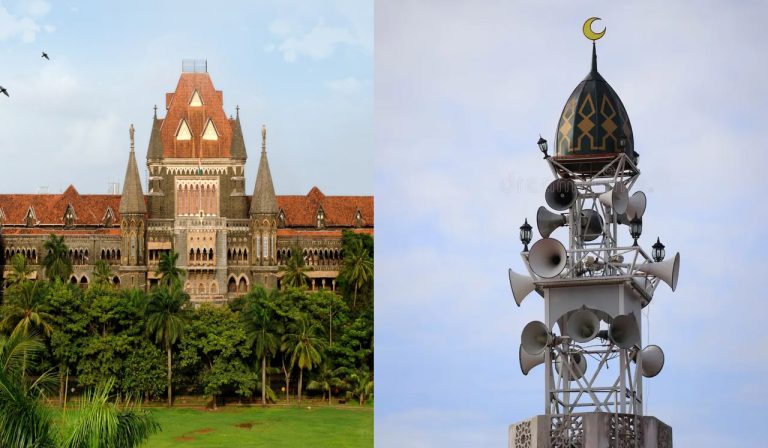
In a significant ruling, the Bombay High Court has declared that the use of loudspeakers is not an essential practice of any religion. A Bench of Justices Ajay Gadkari and Shyam Chandak made the observation while directing the Mumbai police to strictly implement the Noise Pollution (Regulation and Control) Rules, 2000 on 23 January 2025.

The case was brought before the court by petitioners who argued that the use of loudspeakers for religious activities, such as Azaan and religious discourses, was causing noise pollution and disrupting the peace in their localities. They contended that noise from loudspeakers used in mosques and other religious events were exceeding permissible limits, and such practices infringed upon their right to a peaceful environment. The petitions were filed two resident welfare associations in Mumbai’s Kurla and Chunabhatti areas.

The petitions added that despite repeated complaints to authorities, no action was taken against such use of loudspeakers. The pleas said that the inaction by police amounted to negligence and a violation of the Noise Pollution Rules.

In its judgment, the court expressed its inability to issue any direction for the registration of FIR, but emphasized that while the Constitution guarantees the freedom to practice and propagate religion, this right does not extend to practices that impinge upon the rights of others. The court stated that the use of loudspeakers cannot be considered an integral part of any religious practice.

Therefore, the court directed the state to take appropriate actions to control the decibel level of loudspeakers, voice amplifiers, public address systems or any other sound-emitting gadgets used in religious places. The court suggested that the govt may issue directions for calibrating or auto-setting decibel limits for such loudspeakers and amplifiers.

The Bombay High Court also directed the govt to ensure that police officials use mobile apps to monitor decibel levels of such sound systems. If violations are found, police should seize the equipment and take appropriate action, the court added. The bench further added that once a complaint is received, the police must take action without identifying the complainant.

This ruling aligns with previous decisions by the Bombay High Court aimed at regulating noise pollution during religious events. In a 2022 order, the court held that festivals like Navratri, which involve Garba and Dandiya dances, do not necessitate the use of loudspeakers or DJs, emphasizing the need to conduct such events without causing disturbance to others.

UK: Teen who killed 3 little girls in Southport dance class given 52 years jail, had Al-Qaeda material but prosecution insists ‘no religious motive’

A teenager who murdered three young girls at a Taylor Swift-themed dance class in Southport, United Kingdom, last year has been sentenced to more than 50 years in prison, Al Jazeera reported.

Axel Rudakubana, 18, was sentenced on Thursday, with the judge noting that he had attempted to carry out a mass murder of innocent, happy children.

Despite his age, the judge ruled that Rudakubana must serve a minimum of 52 years before being considered for parole, stating that it was likely he would never be released.

Rudakubana, 17 at the time of the attack, killed three young girls–Bebe King, six, Elsie Dot Stancombe, seven, and Alice da Silva Aguiar, nine–at a dance class in Southport last July. In addition to the murders, Rudakubana wounded eight other children and two adults.

“Axel Rudakubana has been sentenced to life imprisonment, with a minimum of 52 years, for the murder of Elsie Dot Stancombe, Bebe King, and Alice da Silva Aguiar and the attempted murder of ten others after the attack in Southport on 29 July 2024,” The Crown Prosecution Service posted shortly after the sentencing.

On Monday, Rudakubana admitted to the killings and pleaded guilty to 10 counts of attempted murder, producing ricin, and possessing an al-Qaeda training manual. Prosecutors, however, insisted that Rudakubana had no political or religious motive for his actions but was instead obsessed with violence and genocide.

Rudakubana was not present in court for the sentencing after being removed earlier for disruptive behaviour. His crimes sparked widespread social unrest, with anti-migrant protests and clashes with police occurring across the UK.

Born in Cardiff to Rwandan Christian parents, Rudakubana’s motives remain unclear, and investigations have not yet revealed a definitive cause for his actions. Authorities had been alerted to his violent tendencies prior to the attack.

In response to the attack, the UK government has ordered a public inquiry, citing the need to address critical questions surrounding the incident, Al Jazeera reported.

The attempt by the prosecution to insist that it was not a religiously motivated crime has been raising many questions. Liverpool Muslim Council leader Tawhid Islam was seen trying to divert the question from a Sky News reporter when she mentioned the Al Qaeda material and terrorism charges. He was seen insisting that it should be seen as a general crime against women and not an act of extremism.

British Prime Minister Keir Starmer expressed his commitment to delivering change following one of the country’s most harrowing events. “We owe it to these innocent young girls and all those affected to deliver the change that they deserve,” Starmer said.

As per reports, the MP from Southport has advocated for a review of the sentencing. Reports indicate that Rudakubana showed no remorse, but kept shouting for medical attention, disrupting the court proceedings again and again. Despite being told that all medical treatment has been provided to him, his disruption continued, till the judge ordered him removed.


(With inputs from ANI)

Supreme Court rejects advocate Ashwini Upadhyay’s petition seeking to scrap the Tax Deducted at Source (TDS) system

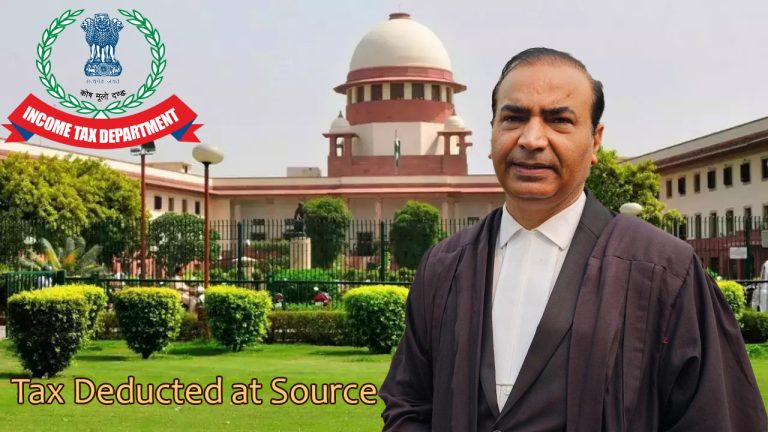
The Supreme Court on Friday refused to entertain a PIL seeking to declare that the Tax Deducted at Source (TDS) system is “manifestly arbitrary, irrational and violative of various fundamental rights”.

A bench of Chief Justice of India Sanjiv Khanna and Justice Sanjay Kumar declined the plea filed by advocate petitioner advocate Ashwini Upadhyay and said he may approach High Court with his plea.

“Sorry, we will not entertain. It is very badly drafted. You can move the High Court. Some judgments have upheld it. We will not entertain. Dismissed,” said the bench.

The petition contended that the TDS system disproportionately burdens assesses with significant administrative expenses.

“Declare the TDS system manifestly arbitrary, irrational and against Articles 14 (right to equality), 19 (right to practice profession) and 21 (right to life and personal liberty) of the Constitution, hence void and inoperative,” the plea stated.

The petition made the Centre, Ministry of Law and Justice, Law Commission, and NITI Aayog as parties in the case.

The plea urged the apex court to direct the NITI Ayog to consider contentions raised in the plea and suggest necessary changes in TDS system.

Law Commission should examine the legality of the TDS system and prepare a report within three months, it sought.

The petition said the system violated Article 14 by disproportionately burdening economically weaker sections and small earners who lack the capacity to navigate its technical requirements.

The plea while referring to Article 23 said the imposition of tax collection duties on private citizens amounted to forced labour.

“The regulatory and procedural framework surrounding TDS is excessively technical, often requiring specialised legal and financial expertise, which most assessees lack. The result is an unjust shifting of sovereign responsibilities from the government to private citizens without adequate compensation, resources, or legal safeguards,” it said.

While TDS ensures steady revenue inflow for the government, it imposes substantial administrative and financial obligations on the assessees, the advocate said.

These obligations include determining applicable TDS rates across various provisions, deducting taxes before payments or credits, depositing taxes with the government treasury within specified timeframes, issuing TDS certificates to deductees, filing returns and ensuring compliance with frequent legal amendments and defending against assessments, penalties in cases of inadvertent non-compliance, added the plea.

The TDS framework under the Income Tax Act mandates the deduction of tax at the time of payment by the payer and its deposit with the income tax department. These payments include salaries, contractual fees, rents, commissions and other taxable sums. The deducted amount is adjusted against the payee’s tax liability.


(This news report is published from a syndicated feed. Except for the headline, the content has not been written or edited by OpIndia staff)

Delhi Court refuses to order FIR against Art Gallery over MF Hussain’s paintings depicting Hindu deities with nude women, to proceed with complaint of hurting religious sentiments

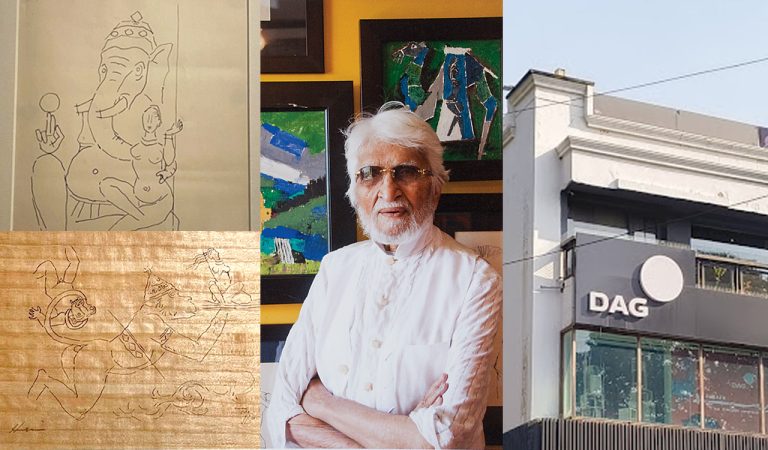
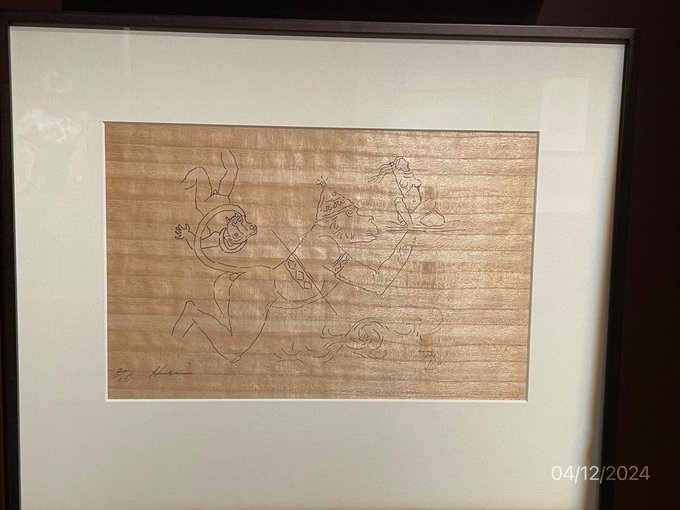
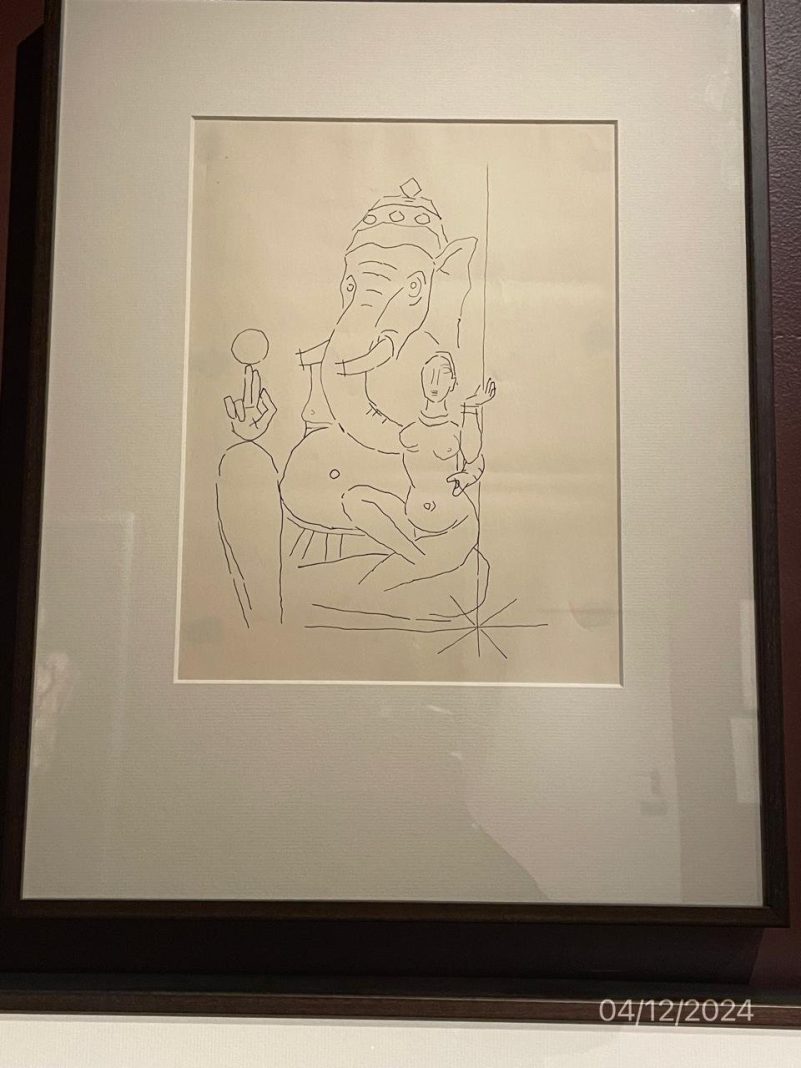
The Patiala House Court on Wednesday declined to order the registration of an FIR against Delhi Art Gallery in response to a petition claiming that two paintings by the late artist MF Husain offended religious sentiments of Hindus. The two paintings displayed recently at the art gallery have already been seized by police.

However, the Court decided to proceed on the complaint filed by advocate Amita Sachdeva who had claimed that the paintings of Lord Ganesha and Lord Hanuman by MF Hussain hurt the sentiments of Hindus.

The Court will examine the accused persons to determine whether there is sufficient ground to proceed with the matter or not. While declining to order FIR, Judicial Magistrate First Class Sahil Monga noted that the complainant was already aware of all the facts and circumstances surrounding the case. Additionally, the CCTV footage from the Delhi Art Gallery and the disputed paintings had already been seized.

The judge further stated that, in its considered view, no additional investigation or evidence gathering was needed at this stage, as all pertinent evidence was already in the complainant’s possession and on record.

The court further added that in the present case, all the facts and circumstances of the case are within the knowledge of the complainant. CCTV footage of Delhi Art Gallery, NVR and the paintings in question have already been seized.

The court stated, “It is settled law that U/s. 175(3) BNSS, Magistrate has power to direct the police to register a case and investigate the matter, but this power is to be exercised judiciously and not in a mechanical manner. In the matters where the complainant has in his/her possession all the evidence required to prove his/her allegations, there should be no need to pass an order U/s. 175 (3) BNSS.”

Allowing the case to proceed on the complaint of hurting religious sentiments of Hindus, the court said, “This matter may be proceeded as a complaint case henceforth. Let notice be issued to proposed accused persons in terms of first proviso to section 223 BNSS for 12.02.2025.”

The Court on Wednesday reserved its decision on whether an FIR should be registered against the Delhi Art Gallery (DAG) and its Owner and director over the display of controversial paintings by renowned artist MF Husain. The petition was filed by advocate Amita Sachdeva stating that artworks depicted Hindu deities Hanuman and Ganesha holding nude female figures.

The controversy began when Complainant Amita Sachdeva, a practicing Advocate visited the Delhi Art Gallery in Connaught Place on December 4, 2024, and took photographs of the disputed paintings. The pencil sketches, not seen previously, depicts Lord Ganesha with a nude woman on his lap and Lord Hanuman carrying a nude woman onhis hand and a nude man with his tail while flying.

Following this, she filed a complaint with the Parliament Street Police Station on December 9, 2024, after researching past FIRs lodged against Husain for similar works. However, during a subsequent visit on December 10, 2024, with the investigating officer, the paintings were mysteriously removed and gallery officials claimed that they had never been on display.

She then approached the Court seeking directions for FIR against the art gallery and preservation of evidence. In response to Sachdeva’s petition, Judicial Magistrate (First Class) Sahil Monga reviewed the Action Taken Report (ATR) from the police, which included CCTV footage and a list of artworks provided by the gallery.

The Action Taken Report by the Police stated that the paintings in question were indeed displayed as part of an exhibition, however it was held in a private space. The report confirmed that the disputed paintings were listed under Serial Nos. 6 and 10 in the gallery’s inventory. It stated that the paintings displayed as original work of the artists.

Judge Monga then issued an order for the paintings to be seized, directing the investigating officer to file a report on the seizure by January 22, 2025. Accordingly, the two paintings were seized, as confirmed by the compliance report filed by the police. However, the police reportedly said that the commission of cognizable offence could not be ascertained.

Accountability and integrity of bureaucracy go for a toss as scam-tainted IAS officer Pooja Singhal gets reinstated to office by Jharkhand government

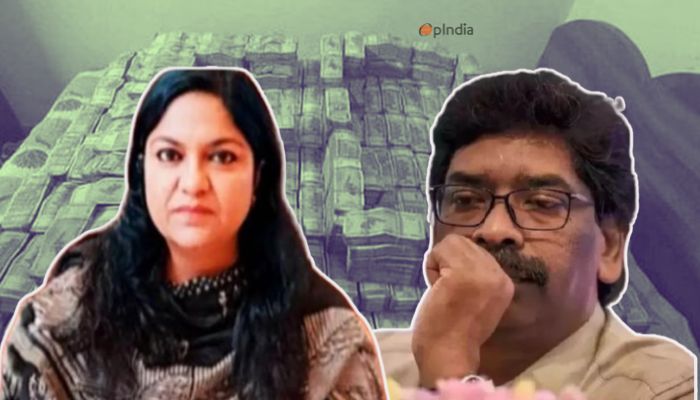
It happens only in India where corrupt politicians thrive with impunity, corrupt “Sarkari babus” cling to their positions like barnacles and all it takes for a career comeback for a money laundering accused IAS officer is a brief stint in jail and the backing of a land scam-accused government. The dramatic episode of corruption-tainted IAS Pooja Singhal’s arrest to reinstatement to “public service” in Jharkhand would make even the most seasoned corruption-accused politicians blush. Money laundering accused IAS Pooja Singhal has been welcomed back to the prestigious bureaucratic fold by the CM Hemant Soren-led government in Jharkhand on Wednesday (22nd January 2025).

Pooja Singhal’s reinstatement to her position comes after she secured bail from a special court on 7th December 2024. Singhal was arrested by the Enforcement Directorate over allegations of corruption in the implementation of MNERGA, the Centre’s flagship scheme for rural employment. Now Pooja Singhal will serve in the Department of Personnel, Administrative Reforms and Raj Bhasha.

A notification issued by the Department of Personnel, Administrative Reforms and Raj Bhasa, revoking Singhal’s suspension read, “In light of the recommendations made by the Suspension Review Committee after due consideration, Pooja Singhal, an Indian Administrative Service (IAS) officer, has been reinstated with effect from December 7, 2024, following her release on bail.”

It has been reported that Pooja Singhal arrived at the PMLA court on Wednesday to examine the attested documents seized by the Enforcement Directorate. However, due to undisclosed reasons, she could not do so. In this case, accused CA Suman Kumar inspected the attested documents. The next hearing on the matter is slated for 30th January.

Slamming JMM and Congress for Pooja Singhal’s reinstatement, BJP MP Ravi Shankar said, “Jharkhand’s IAS officer Pooja Singhal was arrested for corruption. Rs 16 crores were recovered from her CA… PMLA officials also recovered Rs. 36 crores in cash from her… She was in jail for the last 28 months. She got bail in December and on January 21, her suspension was withdrawn and she was reinstated… An IAS officer against whom a trial is underway and PMLA court has registered a case, crores of rupees were recovered, has been reinstated as soon as she got out of jail… Congress is also a part of the Jharkhand government and they have to answer what is happening… My question is to Rahul Gandhi who roams around with the Consitution in his hand… We condemn this and demand an answer from Congress…”

From becoming one of the youngest IAS officers to getting arrested for corruption: The journey of  IAS Pooja Singhal

Pooja Singhal is a 2000-batch IAS officer of the Jharkhand cadre. On the 6th of 2022, six places in Ranchi were raided by ED, one of which is a super speciality hospital of her second husband. Her first husband is a 1999 batch IAS officer in Jharkhand. The probe pertained to a case registered under the Prevention of Money Laundering Act (PMLA) by the Enforcement Directorate in 2020 against Jharkhand junior engineer Ram Binod Prasad Sinha.

The central probe agency had taken cognizance of 16 FIRs and a charge sheet filed by the Jharkhand Vigilance Bureau against Sinha, according to which Sinha was accused of misappropriating government funds worth Rs 18.06 crore. Ram Binod Prasad Sinha was a junior engineer in Khunti when Pooja Singhal was the District Collector of Khunti.

Ram Binod Sinha had told the investigators that Pooja Singhal had obliged two NGOs, Welfare Point and Prerna Niketan with Rs 6 crores fund and had granted a mining lease on 83 acres of forest land in contravention of the environmental regulations. As deputy commissioner in Chatra, Palamu, and Khunti districts, she is alleged to have committed irregularities in the MNRGEA funds as well.

While Pooja Singhal was supposed to work for the upliftment of the poorest of the poor, she along with other accused ended up allegedly looting the poor people in the high-profile MNREGA Scam. Between February 16, 2009 and July 19, 2010, Pooja Singhal served as the deputy commissioner (DC) of Khunti. MGNREGA money was allegedly misappropriated in the Khunti region, along with other shady financial activities, during her stay there.

Based on the multiple FIRs filed by the Jharkhand Police and the Vigilance Bureau Jharkhand, the ED launched a money laundering probe against IAS Pooja Singhal. The Khunti district MGNREGA scam in Jharkhand is one of the biggest high-profile scams.

Pooja Singhal, who was apprehended by the Enforcement Directorate on the 11th of May in 2022, had served over two and a half years in prison. Her attorney argued for her release under the altered legal framework, which allows bail for accused whose judicial detention equals or surpasses one-third of the maximum term in the case at hand.

Singhal, a 2000 batch IAS officer, was arrested by the federal investigative agency for allegedly embezzling crores of MGNREGA funds in Jharkhand. In connection with the money laundering investigation, the Enforcement Directorate raided multiple Singhal-linked properties. Interestingly, back in 2022, Jharkhand Mukti Morcha leader and now CM Hemant Soren’s close aide Ravi Kejriwal was interrogated by ED in connection with this case. The former treasurer of JMM was expelled from the party after the scam was unearthed. Kejriwal revealed that on the instructions of Chief Minister Hemant Soren, his close aide Prem Prakash ordered money for illegal mining from Santhal and gave it to Kolkata businessman Amit Agarwal.

In a statement, the Enforcement Directorate said that it seized more than Rs 36.58 crore in cash tied to illegal mining operations during two separate investigations after the initial seizure of Rs 19.76 crore from premises linked to IAS Pooja Singhal and her accomplices. During this search operation, ED also seized five stone crushers that were being illegally operated from the Site and five illegal firearm cartridges. The evidence collected during the course of the investigation including statements of various persons, digital evidence and documents revealed that the seized cash/bank balance is derived from illegal mining being rampantly done in the Sahibganj area including the forest area.

A trail of further Rs. 100 Crore of Proceeds of crime generated from illegal mining was also unearthed by the probe agency. In May 2023, the ED said that they had attached immovable properties of Pooja Singhal worth Rs 82.77 crore.

In September 2024, the Supreme Court rejected Singhal’s bail plea as the bench noted that it was an “extraordinary case”. The ED had opposed the plea saying that Pooja Singhal most of her time in custody period in a hospital in Ranchi.

A detailed OpIndia explainer on the MNREGA Scam and Pooja Singhal’s role in it can be read here.

Corrupt ‘public servants’ coming back in the “system” with impunity: Accountability and integrity of public service in India undermined

The revocation of Pooja Singhal’s suspension and her reinstatement in office by the Jharkhand government despite serious money laundering allegations is alarming. The very fact that IAS Pooja Singhal could return to her duties after crores of unaccounted cash was seized by the federal probe agency, incriminating evidence of misuse of official position found and the money laundering case remaining sub-judice, indicates a clear lack of accountability within the “system”. Apparently, even serious corruption allegations may not have lasting consequences for those in power or influential positions.

This is a blatant normalisation of corruption and violation of public trust wherein corruption-accused government officials out on bail are allowed back into their roles with there being no clear resolution, or punishment for their illegal activities. While the court granting bail to Pooja Singhal is outrageous enough, the Jharkhand government revoking her suspension and reinstating her to office sends out a message to the public that there is no real accountability for corrupt officials while also sets a bad precedent. Clearly, the “system” not only shamelessly turns a blind eye to the wrongdoings of such officials but also rewards them.

Instead of fighting the menace of corruption in bureaucracy, the Hemant Soren-led government’s move fosters a culture of impunity wherein officers accused of corruption and misuse of position are emboldened, knowing that their malpractices would hardly have any impact on their careers in the long run. Apparently, political patronage helps the corrupt escape the clutches of the law.

Besides the fact that even blatantly corrupt individuals can be back in the “system” with impunity, the work of investigative agencies like ED who invested their relentless efforts and resources to investigate such cases, recover unaccounted funds and pursue legal action, are also undermined. The Pooja Singhal episode sends out a message to present and future civil servants that even corrupt practices are not essentially career-ending, particularly, if the government is keen on showing more dexterity in reinstating corruption-accused officials to office simply because they are out on bail than on ensuring that corruption does not happen under their watch.

While the legal proceedings against IAS Pooja Singhal will continue, the Jharkhand government’s decision to allow her back into service mocks the seriousness of judicial processes and obligation to ensure that the system is free from scam tainted officials and bureaucratic integrity is maintained. These deep-seated flaws within the administrative and political system of the country needs to be fixed. Singhal’s revocation of suspension and reinstatement to service not only puts a question mark on the effectiveness of anti-corruption measures and seriousness of the government but also violates moral fabric of public service.

Ajmer: Police deployed during wedding procession due to old Dalit-OBC conflict, media peddles false propaganda about caste discrimination

A recent wedding in Ajmer, Rajasthan grabbed significant media attention over the past few days. However, this interest stemmed not from the event itself but from the inculcation of caste dynamics and the perpetuation of a victimhood narrative where none existed. Notably, the media has consistently sought to incorporate caste issues into its coverage and this instance was no exception. However, the propaganda was soon busted and the truth was unveiled.

The matter came to light on 22nd January when notable media outlets including The Times of India, The Print, ETV Bharat and NDTV among others projected the presence of police during the wedding procession as a glaring example of atrocities on the members of the Scheduled Caste or Dalit community without looking into or rather deliberately ignoring the reality of the situation. The casteist undertone in their reports conveyed a portrayal that was fundamentally at odds with the actual circumstances.

Each story tried to depict the presence of police officers as a result of aggressive behaviour from the upper caste people who could attack the wedding party because members of the Dalit community are allegedly not allowed to ride horses. However, the cops were, in fact, deployed since there was an old conflict between the members of Dalit and Other Backward Classes (OBC) communities which transpired around twenty-years ago. Dilip Mandal also called out “The Times of India” for spreading fake news.

Notably, the cops were not called by the groom or his family members and the matter had nothing to do with the upper caste.

The actual background of the incident

The incident happened in the Lavera village of Ajmer district in Rajasthan. The prominent members of the Gurjar community and villagers participated in the marriage ceremony of Vijay Bakolia, who had travelled from Srinagar with the wedding procession, delivering an example of social and community harmony. They not only welcomed the procession but even joined it on the way to the bride’s house. The locals dispelled all of the unfounded accusations that a Dalit groom perched atop a mare could stir trouble in the community. 200 police officers from 12 police stations were stationed in every street and neighborhood in the village in response to the request for police protection by the bride’s family which turned the area into a cantonment.

The bride, Aruna, was regarded as the hamlet’s daughter by the residents of Lavera, a Gujjar-dominated region who bid farewell to her. The sacred rituals were completed peacefully. The wedding party also adhered to the village customs according to which it is customary for the groom from any community to not pass close to the temple of Charbhuja and Devnarayan while riding a horse. The long-standing practice was also observed on that day.

The participation of the villagers in the wedding ceremony was also seen in full swing at the bride’s house. The wedding ceremony was carried out amicably with Hindu traditions owing to the cooperation of the villagers, the district police’s understanding and the subdivision administration’s support.

On 9th July 2005, members of a group in Lavera village objected to a marriage which led to a serious dispute. The police administration had put in place stringent security measures at that time as well. The horseman left with his mare from the baraat despite the deployment of additional police officers. The groom had to to sit in a police jeep and the wedding procession was then able to move forward.

The police were obviously present because of an old feud involving the bride’s family and not because anyone was afraid of being harmed by persons from upper caste. Unfortunately, the turth has always been overshadowed by the propaganda of the liberal ecosystem and mainstream media and this time was no different.