On 16th January, Gulriha Police of Gorakhpur district, Uttar Pradesh, booked Aman alias Jalaluddin for sexually exploiting a woman on the pretext of marriage for over a year. Jalaluddin, who is a resident of Madhwalya in Maharajganj district, fled with her jewellery and cash when she pressured him to marry her.
According to media reports, the victim is a mother of two. She got married in 2013 and moved to the Gida area with her husband. Due to financial hardships at home, she started a tea stall near the BRD Medical College area to support her children. During this time, she came into contact with Jalaluddin, who ran a clothing shop nearby.
As time passed, Jalaluddin gained her trust. He convinced her to leave her husband by promising that he would take care of her and her children. The woman stated in her complaint that she trusted him and left her husband. Jalaluddin sexually exploited her for over a year, and whenever she asked him about marriage, he would evade the question.
Meanwhile, he forcibly took her jewellery and cash. As she ran out of money, the victim was forced to set up a tea and snack stall near the railway station. However, Jalaluddin would come every evening and take away the cash she had earned.
On 9th January, the victim once again insisted on marriage. When she continued to pressure him, he allegedly confined her to a room, assaulted her, and later absconded. A week later, when Jalaluddin did not return, the victim filed a complaint at Gulriha Police Station seeking justice.
Following the complaint, an FIR was registered under relevant sections of the Bharatiya Nyaya Sanhita (BNS). Further investigation into the matter is underway to determine the full extent of the offences.
On 17th January, Jabalpur Police arrested a 42-year-old man named Mohammad Islam for abducting and sexually assaulting a five-year-old minor girl. The crime took place on 15th January in Hanumantal Police Station Area. According to media reports, the victim used to call the accused “Nanu” (maternal grandfather). Islam allegedly lured the girl with a mere five rupees and sexually assaulted her.
On the day of the incident, at around 7 PM, the girl was playing just a few metres away from her house with her friend, who happened to be the granddaughter of Mohammad Islam, a familiar face in the neighbourhood. Islam approached her with the promise of buying her chips and handed over Rs 5 to the little girl. He then carried her into his home under the guise of playing. Once inside, he stuffed a piece of cloth into her mouth to ensure she did not shout and sexually assaulted her. After the assault, Islam left the crying girl outside her house and escaped the scene at around 8:30 PM.
When the distressed kid returned home, she started removing her clothes. Her mother noticed that her pyjama was wet and asked her what happened. She managed to explain what Islam did to her, specifically mentioning that “Nanu took off my clothes”. The shocked mother immediately went to Islam’s residence to confront him, but the house was locked.
On the day of the incident, the victim’s father was not at home. The next day, on 16th January, when he returned, the victim’s mother informed him about the incident after which he reached the police station and filed a complaint.
Acting on the complaint, a team was formed, led by Station Officer Dheeraj Raj and Sub-Inspector Sangita Choudhary to nab Islam. On 17th January, the police got a tip-off from an informant that Islam was seen near his house in the morning attempting to leave the city. Police swiftly swung into action and cordoned off the area where he was last seen. Islam operates a garbage truck for his livelihood.
Islam has been booked under relevant sections of Bharatiya Nyaya Sanhita (BNS) and the Protection of Children from Sexual Offences (POCSO) Act. The young survivor was promptly taken to a hospital for medical examination. Further investigation in the case is underway.
OpIndia tried contacting police in the matter but could not connect.
Far-left propaganda portal The Wire recently published an article showcasing the Uttar Pradesh Police in a bad light for arresting a group of 5 Muslim men who hoodwinked a Dalit family with superstitious claims of curing their illness by praying to their Muslim ‘saint’.
The men were arrested in the Hamirpur district of Uttar Pradesh on charges of unlawful religious conversion after they organised a commemorative prayer ceremony for a Muslim spiritual leader’s death anniversary at a Dalit family’s residence.
The individuals—Nooruddin (55), Meraj Hasan (32), Khalif (42), Irfan (46), and Mohammad Hanif (52)—were charged with criminal intimidation and violations under Sections 3 and 5(1) of the Uttar Pradesh Prohibition of Unlawful Conversion of Religion Act, 2021.
The Wire published a report seeking to shield perpetrators of religious conversion
The accused also got the Dalit family to build a mazar inside their residence. They persuaded the unsuspecting victims to pray to their saint to mitigate the health issues of Urmila, one of the members of the Dalit family, and alleviate their hardships.
According to a report published in the Times of India, the accused were arrested after Urmila filed a complaint that she was coerced to change her religion under threats while being promised treatment for her illness and involvement of Hindu advocacy groups that amplified her assertions and forced police to act.
According to Urmila Verma from Mohalla Purvi Tarous Baki Talaiya, Maudaha, she had been suffering from an illness for about two years. During this period, she met a person from Mohalla Chipathari in the Banda district, who introduced her to Nooruddin, an alleged cleric from Mohalla Kasoda Mathura Mandir in Maudaha. Nooruddin assured her that visiting a shrine would cure her condition.
Subsequently, Nooruddin and his nephews Merajul Hasan and Khaliq from Mohalla Ragaul visited Urmila’s home. They suggested constructing a shrine in a corner of her room and conducting prayers and a Urs ceremony. They allegedly discussed religious conversion with her family members.
On January 10, at around 2:30 a.m., Nooruddin, Khaliq, and Irfan Ahmad from Hussainia, along with Hanif Shah from Baki Talaiya, arrived at her residence. They performed the Urs ceremony and led prayers. The ceremony was reportedly halted for a brazen attempt to convert a Dalit Hindu family into Islam by promises of healing and financial inducements.
While The Wire mentioned in its report that the accused offered allurements and promises of curing her illness to get Urmila and her family to embrace Islam, the far-left publication did all it could to brand the accused as victims and the Hindu advocacy group, namely Bajrang Dal in this case, as the aggressor responsible for the predicament of the 5 Muslim men arrested for religious conversion.
The headline of the article “Uttar Pradesh Police Arrest 5 Muslim Men After Bajrang Dal Alleges ‘Conversion’ Plan” suggests that Bajrang Dal brought about the arrest of the 5 Muslim men and not the criminal activities they were involved in. The men were arrested on the complaint filed by the victim, yet The Wire crafted a headline that spotlights Bajrang Dal, a Hindu advocacy group that steadfastly supports Hindus around the country and is often the thorn in the side of the Islamists wanting to paint the society with its radicalising colours.
Arfa Khanum Sherwani, a propagandist with a penchant for supporting Islamist causes and who is a senior editor at The Wire, posted a tweet seeking to advance the portal’s attempt to demonise the police for doing its job and stopping Muslim zealots who consider bringing non-Muslims into the fold of Islam as their bounden duty, often employing a range of tools, including inducements, intimidation, and gaslighting, to achieve their goals.
Taking to alarmism, which she often does, presumably to keep Muslims in a state of perpetual fear, Arfa hyperbolically tweeted, “In Hindu Rashtra, simply being Muslim is a crime. You don’t need to break laws or commit any crime. All it takes is existing, breathing, & being who you are—and that alone makes you a target.”
In Hindu Rashtra,simply being Muslim is a crime. You don’t need to break laws or commit any crime. All it takes is existing,breathing, & being who you are—and that alone makes you a target This is the ugly truth of a regime that criminalizes Muslims for daring to live as they are pic.twitter.com/RYrpPQ2EtD
She added, “This is the ugly truth of a regime that criminalizes Muslims for daring to live as they are”, for the arrest of men who took advantage of the misery of a Dalit family and attempted to convert them to Islam.
However, this is but one case where The Wire has subtly tried to shield Islamists using unfair means to indulge in religious conversions. In many instances in the past, the far-left publication has resorted to every trick in its propaganda playbook—from lying to gaslighting to conjuring up fictitious scares such as the Tek Fog and Meta fictional stories—as a part of its agenda to discredit the government and contribute towards its longstanding goal at effecting regime change.
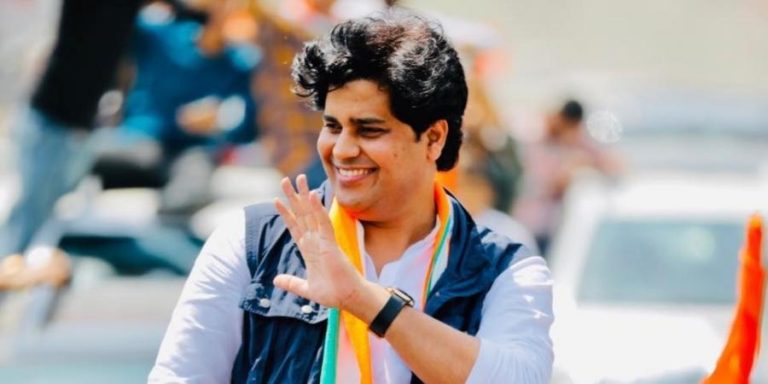
Congress Rajya Sabha MP Imran Pratapgarhi, who attended a ‘mass marriage’ in Jamnagar, and following that, posted on X (formerly Twitter) a controversial poem, has landed in trouble. The Gujarat High Court has rejected his petition seeking quashing of the FIR filed against him in Jamnagar. This FIR was filed after Pratapgarhi posted a video from his X handle with a provocative song with lyrics like ‘Us Rab ki kasam hanste hanste, itni lashe dafna denge’ (Swear to God we will bury so many dead bodies with a smile on our face).
An appeal was filed was filed in the Gujarat High Court by the Congress MP Imran Pratapgarhi demanding quashing of this FIR. The petition described this provocative poem as giving a message of ‘love and non-violence’, and said that Pratapgarhi had no intention of inciting communal sentiments. However, the High Court did not accept these arguments.
The court said, “Looking at the tone of the poem, it is clear that it talks about ‘throne’ or ‘power’. Moreover, the reactions to the post also make it clear that the message was conveyed in a way that would harm communal harmony.”
More responsible behavior is expected from MPs: High Court
Justice Sandeep Bhatt said in the order, “The behavior of the citizens of the country should be such that it does not disturb social harmony. The petitioner is an MP and therefore there is an expectation that he will behave with more restraint. Moreover, as an MP, it is natural that he would know better what the consequences of such a post can be.”
The court has asked Imran Pratapgarhi to cooperate in the investigation and has refused to grant any relief. It also said, “If further discussion on the merits of the case is done at this stage, it will be considered as prejudice to the rights of both the parties. But after reading the FIR and looking at the sections that have been imposed in the case, an investigation is required at this stage.”
Co-operate in the investigation, you are an MP: High Court
Apart from this, the court also took cognizance of the arguments of the public prosecutor, in which it was stated that Imran Pratapgarhi has not appeared despite repeated notices issued by the police to appear for questioning. Regarding which, the High Court said that the petitioner is an MP and as a person participating in the law-making process, it is expected from him to provide full cooperation in the investigation and to fully respect the law.
The court held that, “There does not appear to be sufficient reason to exempt him under Section 528 or 226 of the Indian Civil Security Code-2023, hence this petition is dismissed.”
What was the entire issue
A mass marriage program was organized for young men and women of the Muslim community in Jamnagar on January 3, 2025. After participating in this program, Pratapgarhi posted a video of it on social media, in which the background music used was provocative, and Jamnagar A Division Police registered a case and started further action.
According to the FIR available with OpIndia, the accused include Imran Pratapgarhi, Altaf Khafi, and Sanjari Education and Charitable Trust. Action is being taken against all of them under sections 196, 197(1), 302, 299, 57, 3(5) of the Indian Penal Code. The mass marriage was planned on the birthday of Altaf Khafi, a corporator of ward number 12 of Jamnagar Municipality.
Described as a poem of peace and non-violence, the poem talks about burying dead bodies
In the petition filed by the Congress MP, it said that the poem is one of peace and non-violence, while the lyrics of the poem shared in the video say ‘Us Rab ki kasam hanste hanste, itni lashe dafna denge’ (Swear to God we will bury so many dead bodies with a smile on our face). Now, taking these provocative words into consideration, the Gujarat High Court has rejected the petition filed by Imran Pratapgarhi.
On 15th January, Surat Police arrested a Muslim man named Musibul Sheikh for using forged documents to live with a Hindu girl in a live-in relationship.
According to media reports, Sheikh assumed the identity of Pradeep Kshetrapal and started living with a Hindu girl in a live-in relationship in Surat, Gujarat.
He had lured the Hindu girl from Mumbai into a relationship and brought her to Surat. Surat SOG arrested him and handed him over to the Rander Police for further investigation.
The Surat police launched an operation after receiving a tip-off about a suspicious person living in the Rander area using forged documents.
Teams from the Surat SOG were deployed to apprehend the suspect. After arresting the accused, 26-year-old Musibul alias Raj alias Pradeep Makbul Sheikh, he was handed over to the Rander Police for further investigation.
Media reports suggest that he was living in Swicon Wings, located at Canal Road, Jahangirabad, in Rander, Surat. He had been working at various spas for the past 14 years.
Around 1.5 years ago, he met a Hindu girl in Mumbai. He sought a rented house in a Hindu locality to live with her in a live-in relationship. However, because of his Muslim identity, he could not secure a house.
Reportedly, he then forged documents on his mobile phone using an application and created a fake Aadhaar card under a false name. He started living in a Hindu locality around five months ago.
During the search, police recovered two Aadhaar cards with different names, one PAN card, one RC book, a mobile phone, and ₹15,000 in cash.
OpIndia accessed the FIR filed in the case.
Content of the FIR
The FIR has been registered at the Rander Police Station based on a complaint filed by ASI Jalubhai Maganbhai of SOG Surat City under Sections 319, 336(2), 336(3), and 338 of the Bharatiya Nyaya Sanhita (BNS).
According to his complaint, ASI Maganbhai and his colleagues acted on a tip-off from a confidential source about a suspicious individual.
The source informed the police that a person named Musibul alias Raj alias Pradeep Makbul Sheikh was living in Swicon Wings, located at Canal Road in Jahangirabad, Rander, Surat, under false pretences by creating fake documents in different names.
Surat SOG, along with two independent witnesses, reached the specified location as informed by the source and apprehended the accused.
Upon questioning, the accused informed the police that he originally hails from Navdeep Village, Purbasthali Taluka, Bardhaman District, West Bengal.
During a search in the presence of the witnesses, the police recovered two Aadhaar cards, one in the name of Musibul Makbul Sheikh and another in the name of Pradeep Sujay Kshetrapal.
The police also recovered a PAN card in his original name. Furthermore, the police recovered an RC book and a mobile phone with two SIM cards.
The accused told the police that he had created the fabricated Aadhaar card using mobile applications as he was residing in a Hindu area and had assumed the identity of a Hindu man to maintain a live-in relationship with a Hindu girl.
On 17th January, the Bharatiya Janata Party (BJP) sharply criticised Congress for submitting a plea in the Supreme Court in support of the Places of Worship (Special Provisions) Act, 1991. The BJP has accused the Congress party of declaring “open war against Hindus”. In a post on the social media platform X, BJP’s IT Cell Chief Amit Malviya likened Congress to the “new Muslim League”.
In his post, Malviya said, “The Congress consented to India’s partition along religious lines. Following this, it introduced the Waqf law, enabling Muslims to claim properties at will and establish mini-Pakistans across the country. It later enacted the Places of Worship Act, 1991, effectively denying Hindus the right to reclaim their historical and religious sites. Now, the Congress has approached the Supreme Court, seeking to deny Hindus their fundamental constitutional right to legal remedies for addressing historical injustices. It has urged the top court to dismiss petitions challenging the Places of Worship Act, 1991, under the pretext of ‘safeguarding secularism’. The Congress has declared open war against Hindus. It is the new Muslim League.”
The Congress consented to India’s partition along religious lines.
Following this, it introduced the Waqf law, enabling Muslims to claim properties at will and establish mini-Pakistans across the country.
It later enacted the Places of Worship Act, 1991, effectively denying…
Notably, the BJP has historically opposed the Places of Worship Act since it was enacted by the then-Narasimha Rao government amidst the Ram Janmabhoomi movement. The Act states that the character of places of worship as they existed on 15th August 1947 is to be frozen, except for the Ram Janmabhoomi site in Ayodhya. Malviya said that the plea submitted by Congress in the apex court denies Hindus their “fundamental constitutional right to legal remedies for addressing historical injustices.” He further accused Congress of pushing its agenda under the guise of “safeguarding secularism”.
The petitions against the Act
The Supreme Court is hearing petitions challenging the Act. The petitions argue that the Act violates constitutional rights, including Articles 14, 15, 25, 26, and 29. Furthermore, the petitioners have contended that sites like Gyanvapi in Varanasi, Shahi Eidgah in Mathura, and others were built over Hindu religious sites, namely the Kashi Vishwanath Mandir and Lord Krishna’s birthplace, respectively. The petitions have the support of the Sangh Parivar (Rashtriya Swayamsevak Sangh or the RSS).
Congress, however, insisted in its plea that the Act is vital to preserving secularism and ensuring communal harmony. The grand old party has claimed that if the Act is repealed, it could lead to social unrest.
The BJP openly opposing Congress’s move to save the Act marks a significant reiteration of the BJP’s opposition to the legislation. Interestingly, the party has taken this stance against the Act at a time when RSS chief Mohan Bhagwat has faced severe criticism after he cautioned against “looking for temples under every mosque”. His views were in stark contrast to the stance taken by prominent Hindu leaders.
Malviya linked Congress’s current stance on the Act to its historical actions and accused the party of enabling the Partition of the country along religious lines, introducing Waqf laws, and enacting legislation that prioritised Muslim interests over those of Hindus.
Congress claims the Act is essential for ‘secularism’
In the intervention plea filed by Congress leader KC Venugopal on 6th January 2025, the party sought strict implementation of one of the provisions of the Places of Worship Act (POWA) which prohibits lawsuits to reclaim a place of worship or to change its character from what it was on 15th August 1947. The party claimed that the enactment of the Places of Worship Act in 1991 reflected the mandate of the Indian voters as it was envisaged in the Congress party’s election manifesto.
The party further contended that the Places of Worship Act safeguards ‘secularism’ in India and that the challenge to its constitutional validity is a “malicious attempt” to undermine secularism. “The POWA is essential to safeguard secularism in India and the present challenge appears to be a motivated and malicious attempt to undermine established principles of secularism,” Congress said in its intervention plea.
The Sessions Court in Ferozpur district in Punjab has issued arrest warrants against 25 farmers belonging to the Bharti Kisan Union (Krantikari) and Krantikari Pendu Mazdoor Union.
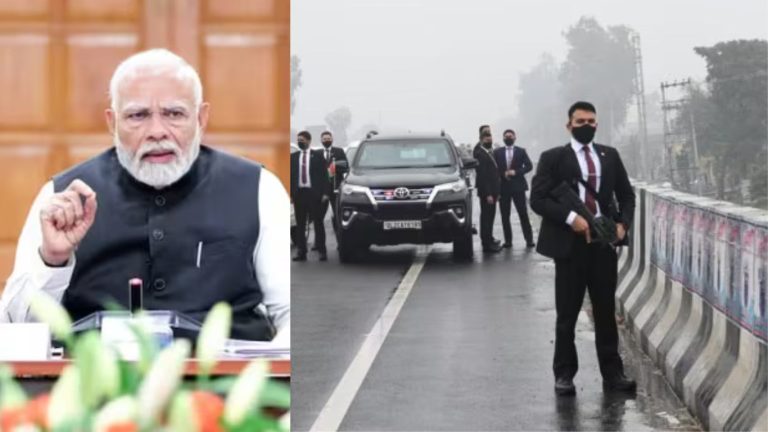
The arrest warrants have been issued in connection with a case of security breach that happened during PM Modi’s visit to Ferozpur on January 5, 2022. P
M Modi was going to address a public rally in Ferozpur when his safety was jeopardised after his cavalcade got struck on a flyover for over an hour because of farmers blocking the road.
Sessions Judge, Virinder Aggarwal, issued the arrest warrants under the provisions of the Bharatiya Nyaya Sanhita (BNSS) and the National Highways Act.
Initially, an FIR was lodged regarding the incident on January 6, 2022, against unknown persons under section 283 (obstruction in public way) of the India Penal Code.
However, following protests from BJP leaders over filing a weak FIR, a three-member SIT was formed. Additional charges under sections 307 (attempt to murder), 353 (assault on a public servant), 341 (wrongful restraint), 186 (obstruction of duty), 149 (unlawful assembly) and 8-B of the National Highway Act were added based on the investigation of the SIT.
A total of 26 persons were named in the FIR, including Baldev Singh Zira, general secretary of BKU Krantikari along with others. One of the accused named Major Singh passed away leaving the total number of accused 25.
Directives of the court
No arrests have been made in the case so far. The court issued the arrest warrants on January 3 after the accused persons failed to appear before the court despite multiple summons and warrants.
The court directed SHO Kulgarhi police station to arrest the accused persons and produce them in the court by January 22.
The court rejected the application filed by one Kamaljeet Singh seeking anticipatory bail on the ground that he was not named in the FIR as it was lodged against unknown persons.
The bail order accessed by OpIndia mentioned that the accused was named among 25 persons found involved in road blocking during the investigation of the SIT.
The court said, “The allegations contained in the FIR are serious in nature as the Prime Minister of the country, who was coming to Ferozpur to attend a public program, was obstructed for a period of more than one hour thereby jeopardising his security”.
Details of the case
On March 21, 2023, Chief Minister Bhagwant Mann directed the initiation of disciplinary proceedings for the major penalty against Sidharth Chattopadhyay, the then DGP Punjab, Inderbir Singh, the then DIG, Ferozepur Range and Harmandeep Singh Hans, the then SSP Ferozepur over the Prime Minister Narendra Modi’s security breach in Punjab.
In a major lapse and seemingly deliberate act to endanger the Prime Minister’s security, the Punjab government has today allowed political protestors to block the Prime Minister’s convoy on January 5, 2022. The PM’s convoy was blocked for over 20 minutes by protestors at a flyover about 30 km away from Hussainiwala.
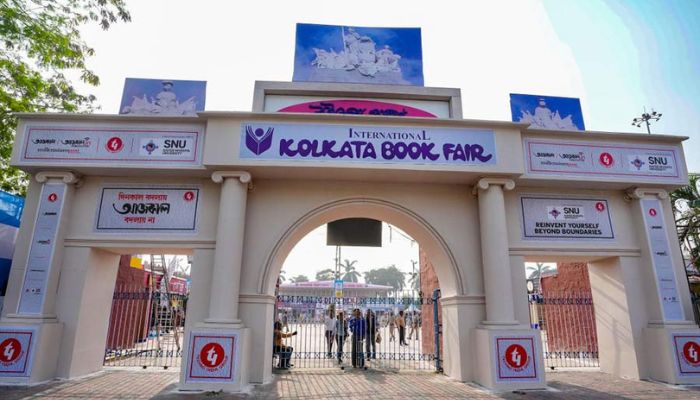
On Friday (17th January), the Vishwa Hindu Parishad (VHP) moved the Calcutta High Court after being denied a stall at the 48th International Kolkata Book Fair.
The Hindu rights organisation applied for a stall with the Publishers & Booksellers Guild in October last year. In their application, VHP mentioned that it had participated in the book fair for several years and wanted a designated stall this time around as well.
“The application was kept pending,” it noted. Despite the VHP’s representation, no response was received from the Publishers & Booksellers Guild.
The Guild is now claiming that the application submitted by the VHP for the stall is ‘not in form’ and was therefore rejected. It also alleged that the Hindu rights organisation did not ‘qualify the conditions’ required for participating in the event.
During the hearing, the lawyer representing the Guild claimed, “The books published by the Parishad are sensitive and controversial. The books can spread disturbance.”
He further stated, “The guild does not want any such disturbances. So it has decided against allotting a stall to VHP at this year’s fair.”
Justice Amrita Sinha inquired, “Is the Guild aware that VHP possesses its publications? The guild had allotted stalls to VHP on previous occasions. What happened suddenly, that the Guild has started to feel that the publications by the VHP are so sensitive and controversial that they may create trouble?”
It must be mentioned that the 48th International Kolkata Book Fair is scheduled to start on 28th January 2025. The writ petition will be listed for consideration on Monday (20th January).
Congress party has a history of trying to legally handcuff the Hindu community’s rights while patting itself on the back maintaining ‘communal harmony’ by appeasing the Muslim community. The grand old party’s legacy has been of turning ‘secularism’ into a synonym for silencing Hindu voices, all while passing it off as its endeavours to uphold “Aman and Bhaichara” while in reality, it’s all about pandering for Muslim votes. In its yet another attempt to uphold ‘secularism’ by crushing Hindu rights, the Congress party has filed an intervention petition in the Supreme Court demanding strict implementation of the contentious Places of Worship Act 1991 as the top court begins hearing on the Act’s constitutional validity.
In the intervention plea filed by Congress leader KC Venugopal on 6th January 2025, the party sought strict implementation of one of the provisions of the Places of Worship Act (POWA) which prohibits lawsuits to reclaim a place of worship or to change its character from what it was on August 15, 1947.
The party claimed that the enactment of the Places of Worship Act in 1991 reflected the mandate of the Indian voters as it was envisaged in the Congress party’s election manifesto.
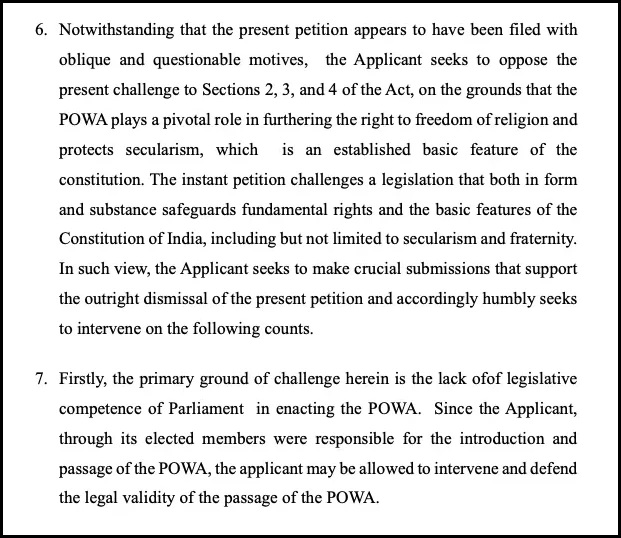
“It may be relevant to mention that at the time of the passing of the POWA, it was the Applicant along with the Janata Dal party that were in the majority in the legislature for the 10th Lok Sabha. The Applicant humbly submits that the POWA was enacted by the Parliament, as it reflected the mandate of the Indian populace. The POWA had been envisaged before the year 1991 and the same was made a part of the Applicant’s then Election Manifesto for the Parliamentary elections,” the Congress party said.
The party further contended that the Places of Worship Act safeguards ‘secularism’ in India and that the challenge to its constitutional validity is a “malicious attempt” to undermine secularism.
“The POWA is essential to safeguard secularism in India and the present challenge appears to be a motivated and malicious attempt to undermine established principles of secularism,” Congress said in its intervention plea.
The party went on to emphasise how any alteration in the Places of Worship Act would “jeopardise” communal harmony and the secular fabric of India. Congress stressed that making any alteration in POWA would threaten the sovereignty and integrity of India.
“The Applicant seeks to intervene in this matter to emphasize the constitutional and societal significance of the POWA, as it apprehends that any alterations to it could jeopardize India’s communal harmony and secular fabric thereby threatening the sovereignty and integrity of the nation,” the plea reads.
The leitmotif of Congress’s intervention plea is a supposed threat to ‘secularism’ and how it is paramount to strictly implement the Places of Worship Act, thus barring the Hindu community from approaching courts to reclaim its places of worship destroyed and/or encroached by the Muslim or any other community, to prevent the country from descending into communal anarchy.
Accusing the petitioners who challenged the validity of POWA, Congress said that it “seeks to oppose the present challenge to Sections 2, 3, and 4 of the Act, because the POWA plays a pivotal role in furthering the right to freedom of religion and protects secularism, which is an established basic feature of the constitution.”
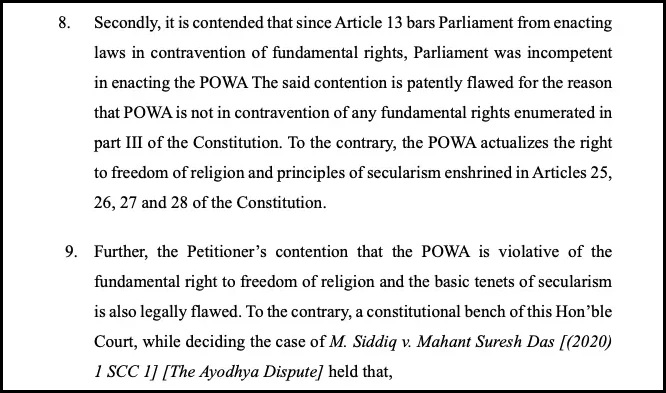
Disputing the arguments of petitioner Ashwini Upadhyaya that since Article 13 bars Parliament from enacting laws in contravention of fundamental rights, Parliament was incompetent in enacting the POWA, Congress contended that the Act is not in contravention rather “actualizes the right to freedom of religion and principles of secularism enshrined in Articles 25,26, 27 and 28 of the Constitution.” The Congress party argued that since the Act was introduced and passed in the Parliament, it should be allowed to intervene and defend the Act’s constitutional validity.
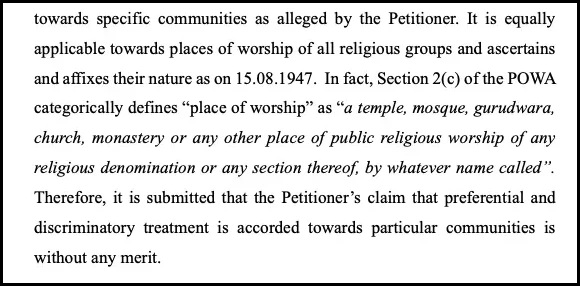
In response to the contention that the Places of Worship Act is discriminatory towards Hindu, Sikh, Jain and Buddhist communities, the Congress party argued that the Act promotes “equality” and does not accord special treatment towards any specific community (read Muslims).
The Congress party said that POWA “is equally applicable towards places of worship of all religious groups and ascertains and affixes their nature as on 15.08.1947” and that POWA’s section 2(c) defines “places of worship” as a temple, mosque, gurudwara, church, monastery or any other place of public religious worship, to advance its insinuation that it somehow stops Muslims also from challenging religious character of Hindu places of worship, it failed to mention one case wherein Hindus or erstwhile Hindu rulers in the pre-independence era have on any occasion arbitrarily demolished a mosque to erect Hindu temples or are encroaching any property that was originally an Islamic place of worship.
Further, the Congress party presented its arguments to support its position that the Parliament somehow had complete authority and legitimacy to enact the POWA.
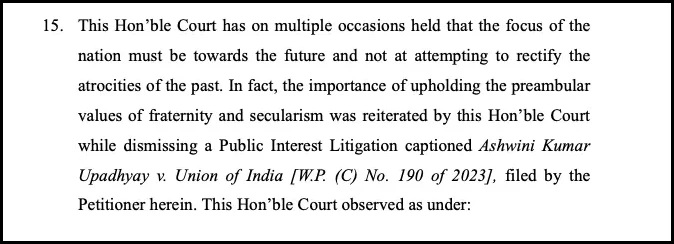
It submitted that the POWA is “essential” to allow for ‘communal harmony’ and to promote cordial relations amongst all communities in the country. The Congress party threw its weight behind the Supreme Court to put forth the hackneyed argument that the focus of the nation must be towards the future and not on attempting to rectify the atrocities of the past.
The Congress party emphasized on the importance of upholding preambular values of fraternity and secularism, however, the party failed to elaborate on why it opines that Hindus seeking legal remedy to reclaim their places of worship would jeopardise fraternity and secularism but the Muslim community deliberately encroaching places of worship which originally had a Hindu character does not harm the holier than thou preambular values. Why does the imperative to serve the supposed higher purpose of upholding secularism and communal harmony fall on the shoulders of the Hindu majority and hardly on the second-largest majority?
Excerpts taken from Congress intervention plea
In its plea filed to Advocate Abhishek Jebaraj, the Congress party prayed that it be allowed to intervene in the writ petition challenging the validity of the Places of Worship Act and file written submissions and adduce arguments as and when required by the Supreme Court.
Congress and its legacy of attacking the Hindu faith and undermining Hindu rights to appease its Muslim vote bank
Congress party evoking “preambular values” like fraternity, secularism, communal harmony and so on to stop Hindus from exercising their fundamental right for the sake of Muslim appeasement is not a new phenomenon. Rather, the party has historically intervened to hinder the Hindu struggle to legally and constitutionally reclaim its places of worship. To better understand how the Congress party has historically denied Hindus the right to reclaim its religious sites, one must recall how the Congress-led UPA 1 filed an affidavit in the Supreme Court in 2007 denying the existence of Lord Ram saying that there is no historical proof of Bhagwan Ram’s existence.
An affidavit filed by the Congress-led government read, “Valmiki Ramayana and Ramcharitmanas admittedly form an important part of ancient Indian literature, but these cannot be said to be historical records to incontrovertibly prove the existence of the characters and occurrences of events depicted therein.” The affidavit was filed to register the UPA government’s opposition to the demand to scrap the Sethusamudram project as it would damage the Ram Setu. Congress-led government’s affidavit was a clear attempt at delegitimising the Hindu beliefs since if Ram didn’t exist, there is no question of the existence of a Ram Setu, thus it should not be a problem to damage the Ram Setu for the said project.
Not to forget, Congress’s affidavit denying the existence of Lord Ram came at a time when the Ayodhya case was ongoing. Fast forward to 2024, Rahul Gandhi openly boasted of having defeated the Ram Janmbhoomi Movement of Hindus in Ayodhya as Samajwadi Party candidate Awadhesh Prasad won from Faizabad Lok Sabha seat which included Ayodhya.
Similarly, senior Congress leader of the time, Kapil Sibal fought the Ram Janmabhoomi case for the Sunni Waqf Board opposing the building of a magnificent Ram temple at the disputed site in Ayodhya. He also employed dilatory tactics and asked the apex court to delay the decision in the Ram Janmabhoomi case till the 2019 elections. Another eminent Congress leader Shashi Tharoor had earlier claimed that no ‘good Hindu’ would want a Ram Mandir at the Babri site. Tharoor urged that one should have the Ram Mandir in one’s heart.
Basically, Congress’s position was that Hindus should believe that either Bhagwan Ram does not exist or even if they want to believe he does, they should keep him in their hearts and not demand Ram Mandir at the birthplace of Lord Ram and let ‘Babri’ of secularism remain untouched.
Now Congress’s intervention plea on the Places of Worship Act falls in line with this trend of denying Hindus the fundamental right to approach courts to reclaim their places of worship implying that the grievances of the Hindu community can easily be sacrificed for the sake of preserving the Congress party’s distorted idea of peace, communal harmony, secularism and brotherhood.
Places of Worship Act itself is violative of the principles of natural justice
Back in 1991, the PV Narasimha Rao-led Congress regime passed the Places of Worship Act to protect the religious character of places of worship as they existed in 1947, except the Ram Janmabhoomi-Babri Masjid issue, which was already in court. It also provided for the preservation of the religious character of such a place of worship on that particular day.
As per this Act, a site of worship’s religious character must remain the same as it was on August 15, 1947. The law also says that nobody ever shall translate any religious denomination’s holy site into one of a distinct denomination or section. In addition, the law asserts that every lawsuit, appeal, or other proceedings about changing the character of the area of worship pending before any court or authority on August 15, 1947, will be terminated as soon as the legislation becomes effective, meaning there cannot be any further legal proceedings. Furthermore, the act also imposes a positive obligation on the state to maintain the religious character of every place of worship as it existed at the time of independence. The Act has an exemption under which legal proceedings can be initiated under the Places of Worship Act of 1991 if the change of status occurred after the August 15, 1947 deadline.
Incidentally, the introduction and enactment of the Places of Worship Act in 1991, which the Congress party boasted in its intervention appeal as some sort of achievement, itself demonstrates that the grand old party can go to any lengths to appease the Muslim community even at the expense of depriving the Hindu community the fundamental right to seek legal restitution for its lost/destroyed or encroached places of worship.
Places of Worship Act was passed when the illegal Babri Mosque was still standing on top of Ram Janmabhoomi although the Hindu demand for reclamation of the Ram Janmbhoomi site where the illegal structure stood was at its peak. Moreover, the arbitrary deadline of 15th August 1947 was Congress’s way of telling the Hindus that your time to seek justice was before independence, now in independent India, you have to bear the burden of secularism and brotherhood for the sake of those whose co-religionists already carved out a separate Islamic nation on the corpses of Hindus, Sikhs and other non-Muslim communities.
A question that comes to one’s mind is why the Congress party backs the Places of Worship Act even though it is predominantly anti-Hindu. To answer this, one needs to understand the mindset of Congress leaders, particularly, those who held important positions at the time of the passage of this contentious Act.
While passing the act in 1991, the then Union Home Minister S B Chavan said, “It is considered necessary to adopt these measures in view of the controversies arising from time to time about the conversion of places of worship which tend to vitiate the communal atmosphere… Adoption of this Bill will effectively prevent any new controversies from arising in respect of conversion of any place of worship…”.
Unbelievable isn’t it? The country’s Home Minister stands on the floor of Lok Sabha and tells Hindus that they should accept injustice to preserve ‘peace’ and ‘secularism’ that too at a time when advocacy and activism for restoration of Ram Mandir at the Ram Janmbhoomi site in Ayodhya where the Babri structure stood was at the peak. The timing of the Act’s passage indicates, that more than being a law for ‘social justice’, POWA was a political Act brought by the Narasimha Rao government to empower the Muslim community to continue occupying the places of worship which originally had Hindu character, who in exchange would function as Congress’s vote bank. This was also a time when the Bhartiya Janata Party registered its meteoric rise from 2 seats in 1984 to 120 seats in the general elections of 1991.
Besides S B Chavan, the views of Congress motormouth Mani Shankar Aiyar who was a Lok Sabha MP when the POWA was passed, also give an insight into why Congress not only takes pride in bringing a fundamentally anti-Hindu legislation like POWA but also defends it. Mani Shankar Aiyar once admitted that he sees the Gyanvapi Masjid structure in Kashi as a “symbol of secularism”.
When a debate on the Places of Worship Act was going on in the Lok Sabha, the BJP which traditionally has been supportive of the Hindu cause, vehemently opposed the POWA. Then BJP MP Uma Bharti had said that peace cannot be attained by outrightly dismissing Hindu sentiments.
During her speech, the BJP MP said, “Owners of bullock carts in villages, create a wound on the back of the ox and when they want their bullock carts to move faster they strike at the wound. Similarly, these disputes are wounds and marks of slavery on our ‘Bharat Mata’. So long as ‘Gyan Vapi’ continues in its present condition at Banaras and a grave remains in a temple at Pavagarh, it will remind us of the atrocities perpetrated by Aurangzeb including his efforts to convert Hindus to Islam and this would be very painful.”
Back then, Congress MP Mani Shankar Aiyar called the Gyanvapi structure a “symbol of secularism” and downplayed the fact that those broken walls of the erstwhile Hindu temple attached to Gyanvapi ‘mosque’ do not symbolise secularism as the temple and mosque did not come together as a result of some mutual understanding but through the violence against Hindus and destruction of the Hindu temple by Islamic invaders.
“Uma Bharti told us that when she had visited Varanasi and saw a temple and a mosque together, a feeling came to her that the temple had been demolished. She considered it to be a disgrace to Hinduism. According to her, a Muslim king had built a mosque there. There is only one difference between her and myself, what she thinks is a sign of servility, I take that thing as a symbol of secularism. The difference between Bhartiya Janata Party and myself is that it understands the last thousand years were the years of slavery, but I think that in these thousand years a new culture, a new religion, new feelings and new ideas have entered into our These influenced and attracted us. I say that if India is the first Hindu country in the world, I also say that India is the second Muslim country in the world. After Indonesia, the Muslim population in our country is far more than their population in any other country which includes all the Gulf..” Aiyar said.
Why does Cong back Place of Worship Act, 1991 that is predominantly anti-Hindu? That's because for Cong Gyanvapi Mosque built by demolishing a temple is a "symbol of secularism"! Unbelievable, but true. Read below: This is admitted by then Cong MP Mani Shankar Aiyar's in LS,… pic.twitter.com/zKIzL9yS6q
What better can be expected from a political party whose lawmakers not only justify the destruction of Hindu temples but also glorify the act and Islamic invaders who killed and raped the native Hindu and other non-Muslim communities, forcibly converted Hindus and others to Islam, plundered their wealth and destroyed their temples to establish Islamic supremacy. The Places of Worship Act was a result of the desperation of the Congress party to legally justify the misdeeds of Islamic invaders like Babur and Aurangzeb of breaking temples and building mosques over them to suppress the Hindu efforts to reclaim their temples which are the heart of Hindu spirituality. In doing so, Congress denied Hindus their right to identity, right to justice, freedom of religion, and right to equality all in the name of preserving communal harmony and secularism.
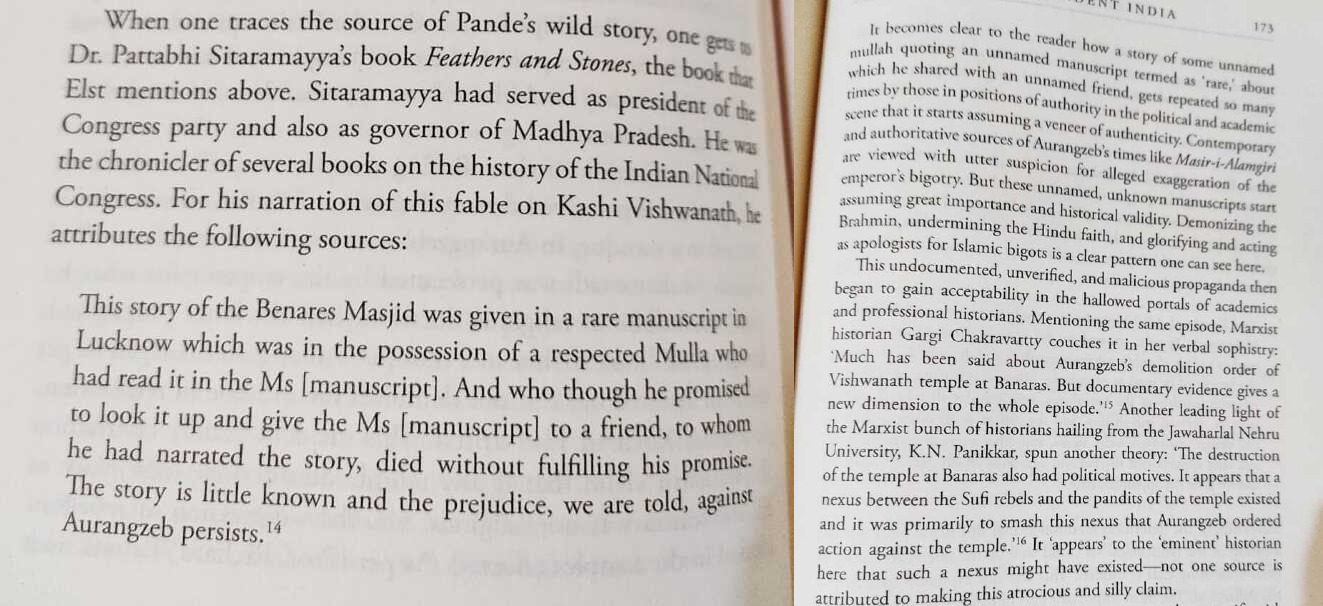
Other Mani Shankar Aiyar, Congress leader Pattabhi Sitharamayya and Bishambar Nath Pande were also among those who justified Islamic fanatic Aurangzeb’s barbarity in demolishing the Kashi Vishwanath temple. In fact, Sitharamayya went as far as to concoct an absolutely fake story based on the ‘rare’ manuscript provided by a ‘respected Mulla’ to justify the destruction of Kashi Vishwanath Temple. Pande furthered a false story that Aurangzeb ordered the demolition of the Kashi Vishwanath Temple because the Brahmin priests used to loot wealthy pilgrims as claimed by a Rani of Kutch. In his book Waiting for Shiva, historian Vikram Sampath uncovered the source of these false stories fabricated by Congress leaders Sitharamayya and. Bishambar Nath Pande. It was found that the story Pattabhi Sitharamayya fabricated was based on an unnamed mullah acquaintance of Sitharamayya quoted an unnamed manuscript termed as ‘rare’ to suggest that Aurangzeb was a man of golden-heart who destroyed Kashi Vishwanath temple for ‘social justice’.
Source: Waiting for Shiva: Unearthing The Truth of Kashi’s Gyanvapi by Vikram Sampath pg no. 172-173
Congress’s opposition to any attempt of the Hindu community to rectify atrocities of the past, particularly when it comes to Hindu temples does not begin with the Places of Worship Act. In fact, Congress stalwart and India’s first Prime Minister Jawaharlal Nehru had vehemently opposed the reconstruction of Somnath Temple in Gujarat which endured numerous attacks until the final the final destruction in 1665 CE when it was converted into a mosque on the instructions of Aurangzeb. While Sardar Patel advocated for the restoration of Somnath Temple, Nehru dubbed it as a sign of “Hindu revivalism”.
Amusingly, while Congress often accuses the BJP of mixing religion with politics, the Congress party itself has a history of pandering to the Muslim community for electoral and ideological benefits. The Waqf law brought by the Congress government exemplifies the same. The Act brought by the Congress party made the Waqf Board powerful beyond imagination. So much so that the Waqf Board arbitrarily makes ownership claims over the lands, properties, colleges, Hindu-majority villages and even temples of Hindus. Waqf Board managed to keep Hindus away from Ayodhya Ram Janmbhoomi for decades. Even in the Kashi Vishwanath Temple case, the Sunni Waqf Board out of nowhere claimed that the temple land was a Waqf property.
Unsurprisingly, when the BJP government brought the Waqf Amendment Bill last year, the Congress party vehemently opposed it citing concerns over the ‘religious freedom’ of the Muslim community. Here the Congress party won’t urge the Waqf Boards to stop randomly claiming ownership of lands and properties for communal harmony and secularism since doing so would upset its coveted Muslim votebank.
Communal Violence Bill: Congress’s attempt to label blame Hindus as rioters even when they would be the victims
Just as Congress leaders justified and even glorified the destruction of a centuries-old Hindu temple citing the imaginary magnanimity of Islamic tyrant Aurangzeb’s heart and impetus to protect people from “wicked brahmins”, they justify their own suppression of Hindu rights to the supposed higher purpose of upholding communal harmony and secularism. Similar to the way some Congress leaders and Marxist historians blamed Hindus only for the destruction of the Kashi Vishwanath temple and thus should not seek its reclamation, the Congress party also has always expected Hindus to maintain harmony even when being massacred.
Congress exemplified this mindset in its contentious Communal Violence Bill. In 2005, UPA1 introduced a communal violence bill. In 2011, under the guidance of the NAC, UPA2 introduced a revised draft of the same. Although the bill had to be dropped in 2014, the grounds for its withdrawal were primarily due to concerns about overlap with the powers of the State government.
In the 2005 version of the bill, any “group” that has become a victim of communal attacks could seek redressal. However, in 2011, a new definition of the “group” which is protected, was introduced. “Group means a religious or linguistic minority, in any State in the Union of India, or Scheduled Castes and Scheduled Tribes within the meaning of clauses (24) and (25) of Article 366 of the Constitution of India”. This meant that only minorities and SCs/STs could be “victims” and the perpetrators of communal violence would always be the majority, which is Hindus. The definition of “offences” itself was so wide — any sort of crime could be brought under the ambit of this Act.
While the Congress party claims that it is backing the Places of Worship Act to safeguard ‘secularism’, it must answer how its Waqf Act safeguards secularism, how its decision to gift 123 properties to the Delhi Waqf Board in 2014 ahead of elections safeguarded secularism. The Congress party should enlighten Hindus as to how to align with DMK, a political party that has a history of spreading hatred against Brahmins and whose leaders describe Sanatan Dharma as dengue and malaria and call for its eradication, safeguard secularism, preserve peace in the country.
Conclusion
Congress party and its supportive ecosystem have long been guilt-tripping Hindus for having fought the legal battle for the reclamation of Ram Mandir in Ayodhya. In the name of maintaining communal harmony, secularism and ‘bhaichara’, the Muslim-appeasing party believes that Hindus should let go of Gyanvapi-Kashi Vishwanath temple, Shri Krishna Janmbhoomi in Mathura, Harihar Mandir in Sambhal to all such places of worship which stand on the ruins of Hindu temples. Beyond the Muslim appeasement politics, Congress’s deliberate reluctance to comprehend the fact that communal harmony cannot be built on the denial of justice to one community stems from the fact it does not really believe that Hindus have faced any injustice to an extent that it would support the undoing of the injustice committed against Hindus.
Be it Digvijay Singh who heaped praises on Mughals or Mani Shankar Aiyar who declared Mughal tyrants Babur and Humayun as patriots, when a party has leaders who celebrate and glorify the oppressors of their country’s majority community and peddle victimhood of a specific community due to their capability to consolidate their votes, how will they be able to relate to the Hindu community’s quest to undo the historical wrongs not establish religious supremacy over any particular community or to humiliate them but simply because it is their fundamental right to approach the courts and seek legal and constitutional remedy for reclamation of their temples. By invoking communal harmony and secularism, the Congress party expects Hindus to bear the burden of peace even when they are being denied their basic rights. The Congress party’s intervention plea is not merely about preserving the status quo, it is about continuing a historical pattern of denying Hindus their right to justice for the sake of political expediency. But then, it must not be forgotten that Congress once betrayed Muslim women and overturned the Supreme Court ruling in the Shah Bano case to appease Islamists.
Congress’s intervention petition filed before the Supreme Court repeatedly emphasises how strict implementation of the Places of Worship Act is necessary to preserve secularism and peace, however, what it actually is trying to preserve is nothing but a temporary truce before the “nizam” changes. True secularism and brotherhood beyond religious lines, although both of these concepts are alien to the Islamists, would only be when the Muslim community voluntarily returns all the Hindu temples destroyed or converted into mosques by Islamic invaders without the need to approach courts. Hindus are not randomly claiming ownership of any property or looking for Shiv Lingam beneath the mosques, Hindus do not have a Waqf Board-like body for that, but only are using the legal and constitutional methods at hand to reclaim their lost temples for which they claim to have historical and archaeological evidence, however, Congress wants to strip Hindus of that right as well, in fact, it already stripped Hindus of this right with the enactment of Places of Worship Act, now its fight is to perpetuate the denial of fundamental rights of Hindus and travesty of justice.
The Apex Court pulled up the Aam Aadmi Party-controlled Municipal Corporation of Delhi (MCD) on Friday for not paying attention to the problem of untreated solid waste in the national capital. Highlighting that over 3000 tonnes of solid waste remain untreated daily, a bench of Justices Abhay S Oka and Ujjal Bhuyan expressed astonishment over MCD’s plan to clear the waste by December 2027. The court’s remarks came during the hearing of a case filed against air pollution in the national capital.
On an earlier occasion, the court asked the Delhi government to submit an affidavit by January 15, 2025, outlining measures to prevent fires and mitigate environmental harm at these sites. While going through the affidavit today, the court asked the MCD as to where it was dumping the 3000 tonnes of waste daily. Questioning the claims of the MCD to get rid of all the waste by 20277, the court said, “You don’t say where the 3000 tonnes of untreated solid waste goes. You have made a tall promise that by 2027 it will be cleared, and you have not accounted for 3000 tonnes of dumping. You must file an affidavit stating where you’re dumping 3000 tonnes of solid waste every day because the affidavit is completely silent. Just see the brazen manner in which the affidavit is filed”.
Senior Advocate Menaka Guruswamy, appearing for MCD, referred to a judgment passed by a bench led by Justice Gavai regarding the solid waste management to which, she assured, the Delhi government would comply by December 2027. Guruswamy highlighted that the present matter is related to the issue of fires occurring at dump sites. She said that the Delhi government would answer the issue relating to solid waste management on January 27 when the issue will come up for hearing.
The court also criticised the central government, represented by Addl. Solicitor General Aishwarya Bhati, asking it ‘not to shut its eyes’ towards the serious issue. “How can the Union of India remain silent? What action does it want to take? The Union of India can’t close its eyes. they should take action against whosoever is not performing. In the capital city, this is happening. What we propose to do is that we will pass an order putting restrictions on new constructions”, the court remarked. Highlighting the urgency of the matter, the court said, “Such issues will have to be dealt with in drastic manner only. Construction will create more waste that cannot be dealt with. So the 3000 tonnes will go up to 5000 tonnes within no time”.
Senior Advocate Aparajita Singh, amicus curiae, informed the court that the Union and the Delhi governments were not coordinating, to which the court said, “We will make them coordinate”. Senior Advocate Singh also suggested that the MCD should take on multiple agencies, instead of just one, to clear the 45 metric tonnes of legacy waste as soon as possible.