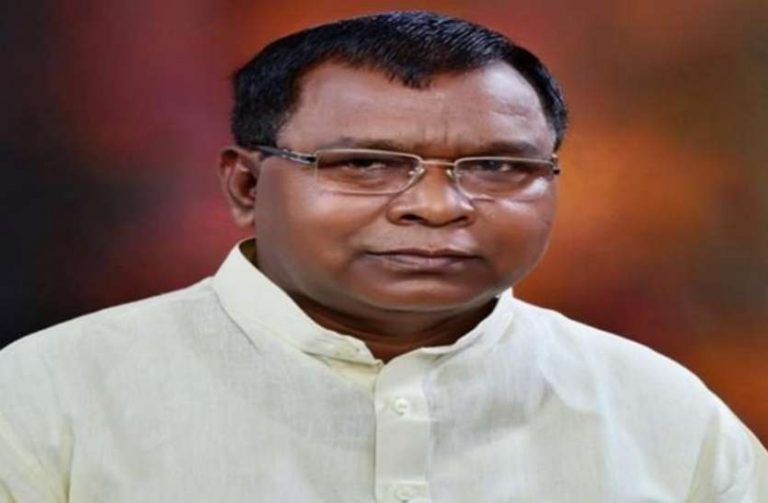
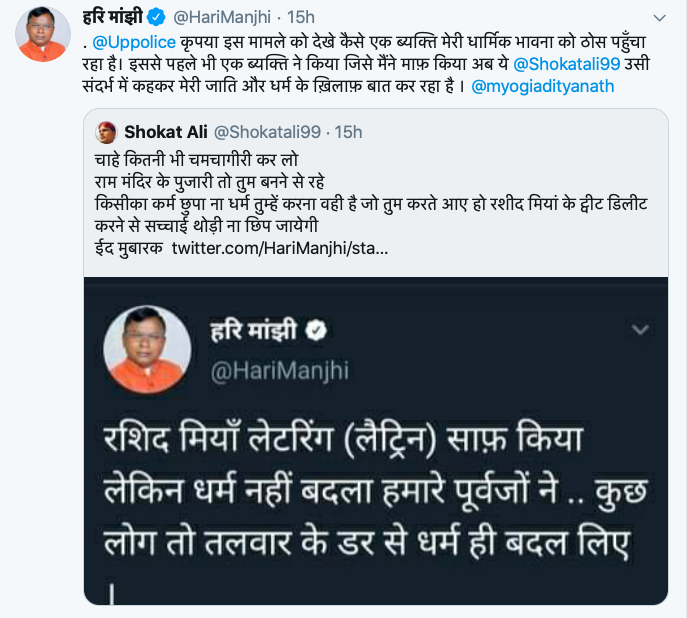
The former BJP MP from Gaya, Hari Manjhi has taken to Twitter on Monday to write to the Uttar Pradesh police, seeking action against one Shokat Ali for humiliating him using casteist slurs. Tagging the Uttar Pradesh police and chief minister Yogi Adityanath, Hari Manjhi, who belongs to the Scheduled caste community, sought action against Shokat Ali for targeting him over his caste and religion.
Manjhi mentions that previously another person named Rashid Mian had also humiliated him for being a Dalit, but he had forgiven him. But this time he sought action against his detractors, wrote the BJP MP.
Hari Manjhi had sought action against Shokat Ali for a Tweet in which Ali wrote in Hindi: “How much ever you wish you cannot become a priest, you will keep doing what you have been for all these years. No one can change your Karma and religion”, insinuating that he is a Dalit and no matter how hard he tries his destiny cannot change.
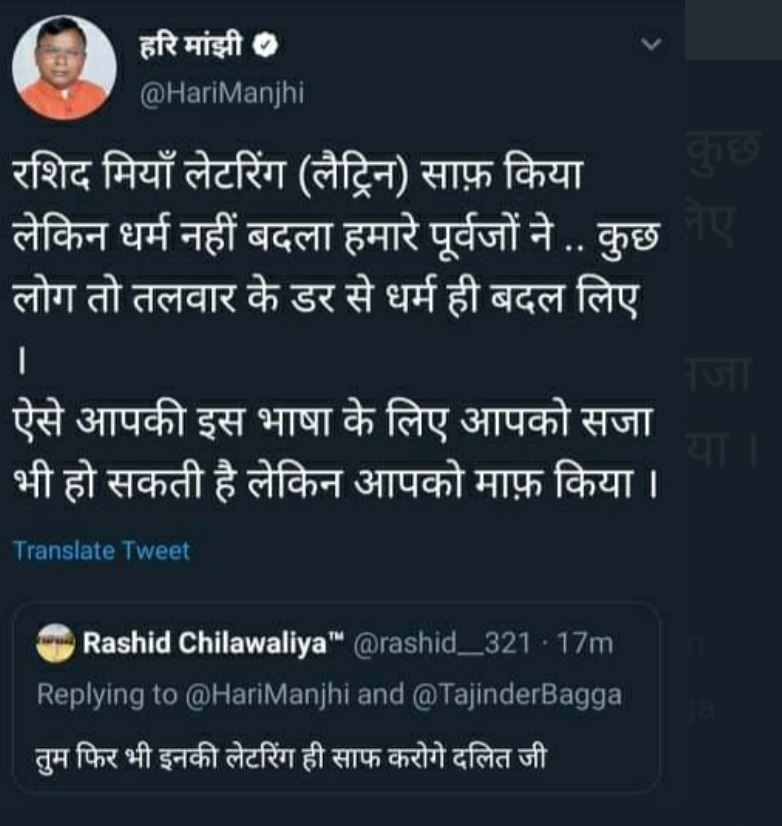
One Rashid Mian had referred to Hari Manjhi as a “toilet cleaner”
In a now-deleted tweet, a user named Rashid Chilawalia had written to Manji that he will forever remain a manual scavenger, an insult against his Dalit caste.
Replying to Rashid, the BJP MP had written that his ancestors may have been manual scavengers, but they never gave up their religion for the fear of sword. He added that Rashid’s casteist slur is a legal offence and can land him in jail but he is willing to forgive him.
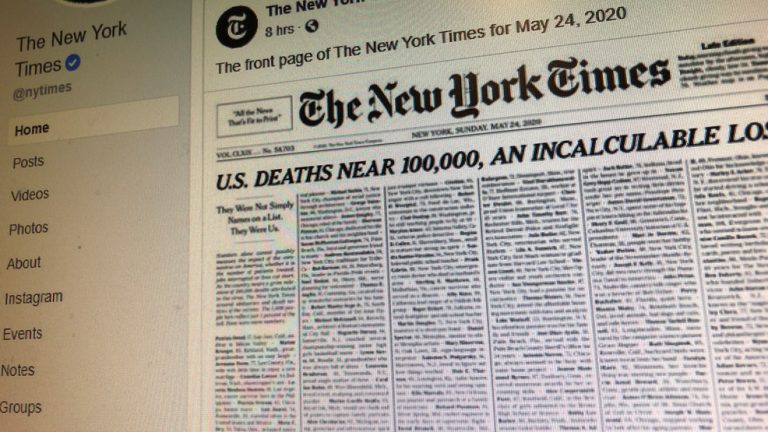
On Sunday, the New York Timespublished a list of about 1000 people (roughly 1%), who died due to the Coronavirus outbreak in the US, on its front page, and 3 other inside pages. The list was a part of an article titled – “US Deaths near 1,00,000, An Incalculable Loss.”
Devoid of photographs, graphics, and advertisement, the international newspaper carried the stories of 1000 victims of the Chinese pandemic who have been reduced to mere statistics. The sub-heading read, “They were not simply names on a list. They were us.”
Homicide passed off as Coronavirus Death
A Twitter user (@timcrimmins) pointed out the curious case of one 27-year-old man named Jordan D. Haynes. His name featured in the list put out by the New York Times. The inclusion of his name suggested that Jordan died due to the Wuhan Coronavirus. The newspaper, in its story, described the person as a “generous young man with a delightful grin.”
Citing a news report, the Twitter user highlighted that Jordan was found murdered in his vehicle by the Rapids Cedar Police. According to his autopsy report, Jordan’s death has been ruled as a case of homicide. As such, the claim made by the New York Times is erroneous.
Responding to Timothy, Brian Stelter, the Chief media correspondent of CNN conceded that the name of Jordan, published alongside the long list of coronavirus victims, was an error on the part of the newspaper. According to him, a representative from the New York Times told him that the error has been removed in the latest editions of the paper. Moreover, a corrected version of the list would also be running in print.
One of the names on the NYT’s long list of Covid-19 victims was actually a murder victim. Some critics are using this to attack the paper as a whole. A rep tells me the error “has been removed for later editions of the paper. A correction will be running in print.” https://t.co/uWzuFxnWha
Alert netizens were quick to uncover that the error was not a case of mere oversight. A Twitter user (@AltKurtis) asked, “Is the internet going to uncover that the New York Times just pulled a thousand random names without actually verifying that they died from Coronavirus?”
Took all of 5 minutes on google to realize that the “journalist” literally just searched obituaries for the keyword Covid-19. Haynes obituary states that his funeral was delayed due to Covid-19. How a professional can make a mistake like this is unreal.
Another Twitter user, Patrick, conceded that it took about 5 minutes to realise that the said journalist who supposedly penned the stories of 1000 Coronavirus victims had picked it up from orbituaries using keywords for the Chinese virus.
Took all of 5 minutes on google to realize that the “journalist” literally just searched obituaries for the keyword Covid-19. Haynes obituary states that his funeral was delayed due to Covid-19. How a professional can make a mistake like this is unreal.
Another netizen also pointed out how one Davis Begaye’s obituary, who was mentioned in the NYTimes’ list of coronavirus casualties didn’t quite mention the virus, casting aspersions whether NYTimes mixed up more than one people.
The reputation of the New York Times has been falling fast in recent years due to its questionable editorial standards. The falling standards of the ‘failing’ New York Times were once again on display when they provided a platform to an Islamic Terrorist from the Taliban. The liberal bias of the newspaper has led to a situation where it has sacrificed objective reporting of events for brownie points in liberal circles. In the opinion-editorial, the terrorist who happens to be the deputy leader of the Taliban proceeded to whitewash the crimes of his brethren.
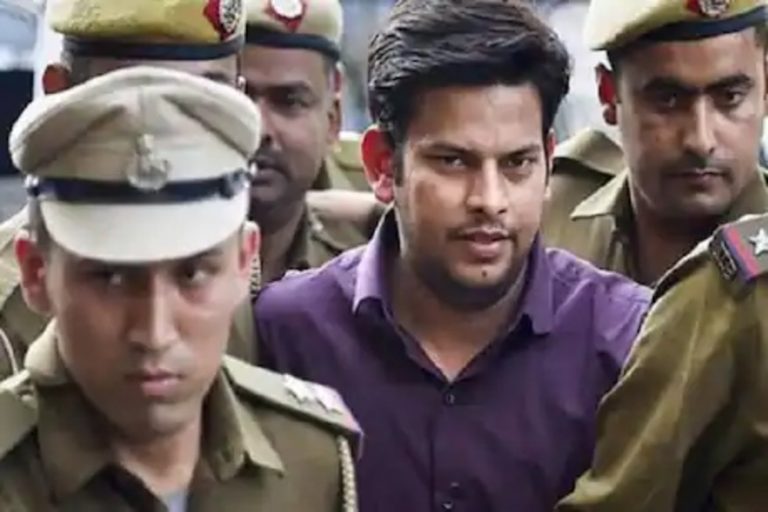
Trouble seems to be mounting for the Aam Aadmi Party MLA from Deoli, Prakash Jarwal, as investigations hint that he allegedly received bribes to the tune of Rs 60 lakh per month from the water tanker owners.
As per a report in Times of India, as many as 20 water tanker owners have come forward to claim that the AAP MLA had asked them to pay money. 4 of them testified before a magistrate saying that they had paid Rs 20,000 to get their file cleared and Rs 500 for each round of supply. The total amount sums up to Rs 60 lakhs per month.
Jarwal’s alleged involvement with the tanker mafias came to the light when one of the tanker operators, Dr Rajender Singh, committed suicide alleging harassment at the hands of the AAP MLA from Deoli and his aide Kapil Nagar. It was reported that Singh had paid Rs 10 lakh to Jarwal’s aide Kapil before having a dispute with Jarwal over the refusal to make further payments. The details of the payment made to Jarwal was submitted by the deceased doctor’s family members before the magistrate.
The tanker owners contended that if they failed in making payments, their tankers were delisted from supplying water. Furthermore, they were also barred from filling water from the DJB office.
According to Singh’s son, Hemant, the AAP MLA and his underlings were after his father from the last five years. He stated that his father had paid Rs 50 lakh to keep the tanker listed with the DJB office but more money was demanded from him. A couple of days prior to his death, Singh had allegedly made a payment of Rs 60,000 to Jarwal and had got an assurance from him that his tankers won’t be delisted. However, Jarwal purportedly got them removed.
Hemant further added that when he and his father went to the DJB office in GK-II, they were informed that Jarwal had got their payments stopped. Singh’s wife, Brahmwati, claimed that they had mortgaged her jewellery to pay Rs 1 lakh after the elections to re-enlist the tanker, which was bought for Rs 10 lakh, adding that they didn’t have money to pay the driver and cleaner.
Prakash Jarwal and the Suicide Case
The deceased doctor, identified as Dr. Rajendra Singh, was a resident of the Deoli neighbourhood in South Delhi and had committed suicide on the 18th of April. In his suicide note, he accused Prakash Jarwal and his associate Kapil Nagar of harassment and blamed them for his decision to take the drastic step. Consequently, the Police had registered an abetment of suicide case against the AAP MLA and his associate and others in the matter.
They were arrested on Saturday evening by the Delhi Police after the Saket Court issued a non-bailable warrant against him. According to police officials, a team of about 15 policemen including ACP Sudhanshu Dhama, Vijay Chandel, and Neb Sarai’s SHO Naresh Solanki raided the MLA’s residence in Tigri on Friday afternoon. Govindpuri, Rohini, and other areas of Delhi were also raided. During this time, the assistants and others found at the MLA’s house were also interrogated.
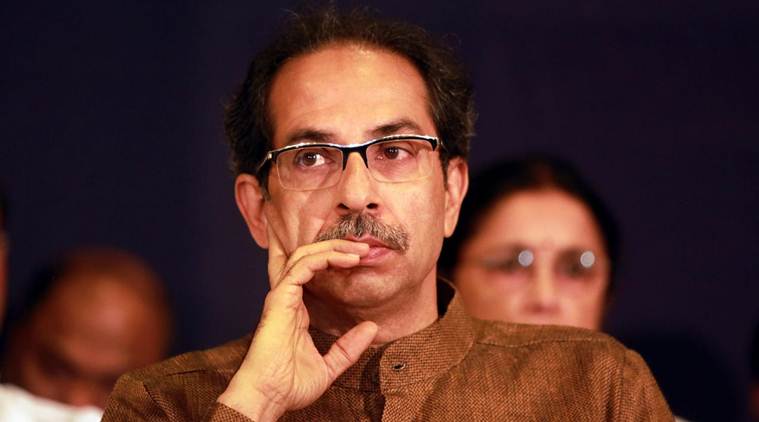
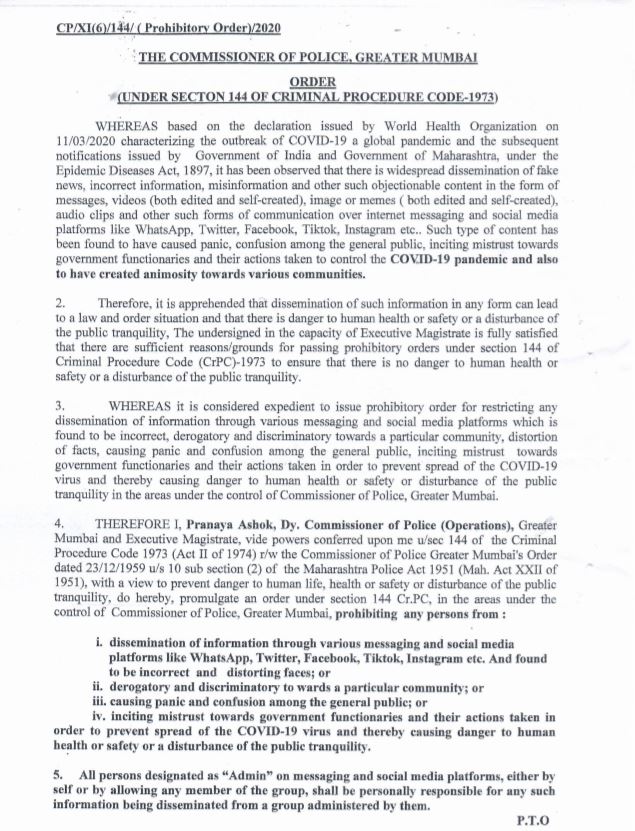
The Mumbai police commissioner has on May 23rd, 2020 issued prohibitory orders under section 144 of the CrPC, valid through 00.15 hours on 25th May 2020 and ending at 24 hours on 8th June 2020, prohibiting any kind of ‘online hate’ on various social media platforms like WhatsApp, Twitter, Facebook, TikTok, Instagram, etc. Essentially, the order also indirectly bans all criticism of the Maharashtra government led by Uddhhav Thackeray as one of the clauses in the prohibitory order says that messages that incite “mistrust towards government functionaries and their actions taken to control Covid-19” will also be acted against.
The order issued by Deputy Commissioner of Police (Operations) Pranaya Ashok reads that the Mumbai police will hold the group admin of the social media and messaging platforms personally responsible for any such information being disseminated from a group administered by them and he or she would attract action under the relevant laws.
The order bans derogatory or discriminatory messages towards any community or causing panic and confusion among the people.
Order issued by Mumbai police on May 23rd, 2020.
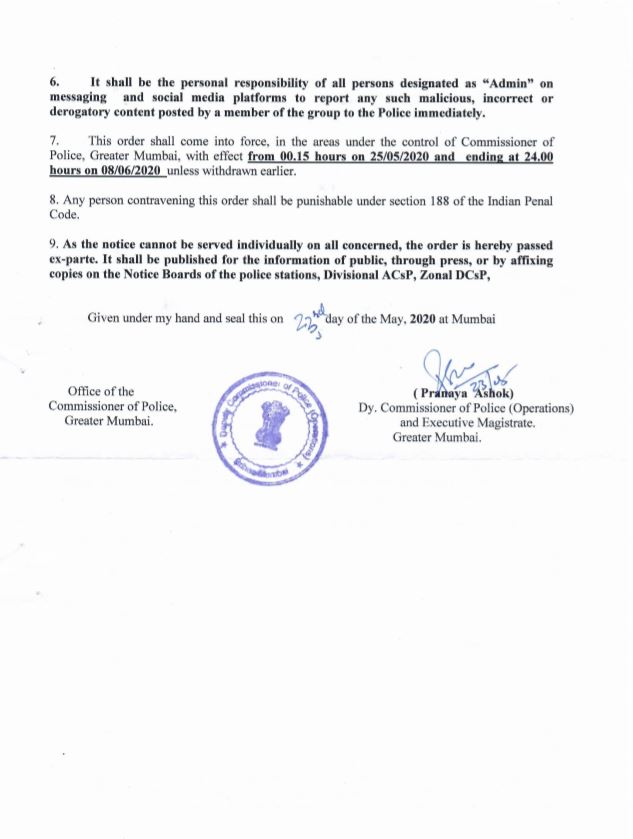
Order issued by Mumbai police on May 23rd, 2020.
The order also prohibits any attempts to incite mistrust against the government officials or their acts to prevent the spread of Coronavirus and such messages causing danger to public health or safety or public peace. Any person contravening this order shall be punishable under section 188 of the Indian Penal Code, warned the order issued by Mumbai police.
Essentially, this section makes it evident that any criticism that is shared on social media platforms including WhatsApp that criticises the Maharashtra government for their handling of the Coronavirus pandemic in the state can be held liable under relevant sections according to the order.
The order read that since this order cannot be served individually, it was issued ex-parte.
OpIndia reached out to the Deputy Commissioner of Police (Operations) to confirm if the order was authentic since at the time, the order had not been uploaded on the Mumbai Police website. Mumbai police spokesperson, DCP Pranaya Ashok confirmed that the order dated 23rd May was indeed authentic and it was a ‘regular order’ that is passed.
Mumbai police issued a similar order against ‘hate on social media’ in April
In April too, the Mumbai police had issued a similar order, prohibiting the dissemination of four types of contents on social media:
That which is found to be incorrect or distortion of facts
Which is derogatory or discriminatory towards any particular
Which causes panic and confusion among the people
Which incites mistrust against the government officials or their acts to prevent the spread of Coronavirus.
In this regard, the Mumbai police had registered 73 offences had arrested a total of 39 accused since March 22.
It is appaling how in a grim situation like this one when the total number of coronavirus cases has crossed the 50,000 mark in the state of Maharashtra, contributing to almost half of the total cases of coronavirus in the country, the state administration, instead of thinking on how to tackle the scourge has been putting all its efforts to penalise the social media detractors.
Aaditya Thackeray’s biggest concern is ‘hate on social media’
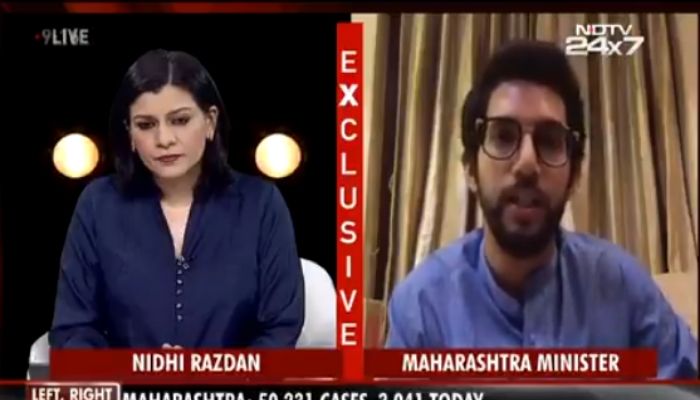
For MLA Aaditya Thackeray too, the most worrying aspect of the pandemic in Maharashtra is the ‘hate’ allegedly perpetrated on social media. In an interview with NDTV, the Shiv Sena scion had today expressed more concern about the supposed ‘online hate.’
Clueless Maharashtra Government
Earlier, in a classic ‘Heads I win, Tails you lose’ situation where Maharashtra Chief Minister Uddhav Thackeray said that the lockdown was needed in Maharashtra because it had spiralled out of control. At the same time, he mouthed mandatory criticism to play petty politics in complete contradiction to his previous statement.
While the Central and the state governments of India are doing all it needs to take to control the scourge of the deadly coronavirus pathogen which has consumed as many as 3,47,000 lives worldwide so far, there are many Corona Yoddhas who have also been at the forefront, extending crucial help to the ones in need.
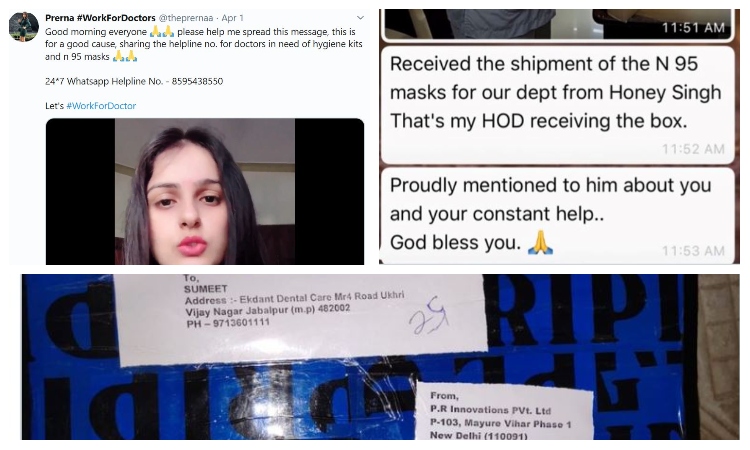
We have earlier reported about many corona-warriors who have come forward to help the vulnerable sections of the society by either distributing food packets, manufacturing masks, reaching out and distributing them in places facing a scarcity to distributing bed sheets and blankets and providing basic medicines etc. Now, there is a lady who, through an initiative called #WorkForDoctors, has been working for the real-life heroes in the frontline against COVID-19. She has been reaching out to doctors and healthcare workers throughout the country and helping them with masks, PPEs and other facilities they require.
Prerna Dawar, a marketing professional, has been working relentlessly to make N-95 masks and PPE suits available to doctors all over India.
Prerna has been a part of this initiative where she spreads the word around through her social contacts and as and when doctors, hospitals or any other medical staff get in touch with her, she forwards their numbers to this organisation which in turn arranges for masks and PPEs for those in need.
Taking to Twitter on April 1, Prerna Dawar shared a 24*7 Whatsapp helpline number where doctors and other medical staffs in need of hygiene kits and N-95 masks could contact.
Good morning everyone ?? please help me spread this message, this is for a good cause, sharing the helpline no. for doctors in need of hygiene kits and n 95 masks ??
— Prerna #WorkForDoctors (@theprernaa) April 1, 2020
Speaking about his initiative, the Prerna said: “We have received a lot of request from doctors from all over India, during the lockdown, it was difficult to send the masks and PPE kits to doctors, which I executed with the help of Tajinder Pal Bagga ji who connected us with Ravi Shankar Prasad Ji, and we were able to donate more than over 15000 KIMBERLY-CLARK* PFR95* N95 Particulate Filter Respirators imported from Scotland and PPE kits and protective suits in Feb first week.
Prerna Dawar gives a special mention to BJP leader Tajinder Bagga who she said had been helping her reach out to the needy at the time of this pandemic.
“Till now, we have served, AIIMS Delhi, AIIMS BBSR, 45 Assam rifles, MGM Medical college etc to name a few”, said Prerna Dawar.
Prerna said that she was also approached by the WHO team, which had asked her to make people aware about “how to wash hands” and get rid of the deadly pathogen, which too was successfully done by her.
Some other brands that Prerna has worked so far for are: WHO, Ted Baker, LYN, Kiko Milano, lotus, Centre Fruit, Bata, Dabur Amla, Daniel Wellington, The Body Shop, Himalaya etc.
Doctors take to Twitter to thank Dawar and the initiative #WorkforDoctors
In these passing days, many have taken to Twitter to thank Prerna and the #WorkForDoctors initiative for its stupendous work at the time of this pandemic.
Received N95 masks from @miss_cherished#WorkforDoctors . Will be used for Covid19 sampling and care of quarantined persons. Thanks and regards – CHC Noorabad Distt Morena (MP)
— Dr Gregory House #WearMask (@desidackter) May 11, 2020
“Sorry for my late tweet. I really want to thank you & your team #WorkForDoctors for providing me 50-N95 masks in a very short notice”, read one tweet by one Sumeet Verma, who is a dentist in Jabalpur.
OpIndia had earlier written about Corona Yoddhas like Manish Mundra, BJP leader Tajindra Bagga, BJP supporter and social media influencer, Ankit Jain, Kapil Agarwal, the state executive member social media and IT at BJP Haryana, and many others have given us hope that we will emerge not only stronger but kinder when the pandemic is a thing of past.
BJP Delhi spokesperson Tajinder Bagga has kicked up a storm once again by reiterating that it was former Prime Minister Rajiv Gandhi who is responsible for the murder of thousands of Sikhs during the 1984 anti-Sikh riots. On Monday, Bagga took to Twitter to share an old video clip where former Prime Minister Rajiv Gandhi appears to be justifying the murder of thousands of Sikhs by stating that when a big tree falls, the earth shakes.
— Tajinder Pal Singh Bagga (@TajinderBagga) May 25, 2020
The big tree here being his mother, former Prime Minister Indira Gandhi who was assassinated by her two Sikh bodyguards. After the assassination of former Prime Minister Indira Gandhi by her Sikh bodyguards, widespread anti-Sikh riots engulfed the country, especially the northern states of India.
“Congress is sending a message that anyone who speaks against ‘The Family’, we will silence. It is well coordinated. Arnab Goswami, Sudhir Chaudhary, Sambit Patra and now I. FIRs against four people in one month’s time and all are in states which are ruled by Congress or Congress ally like Maharashtra. Congress wants to give out a message that if you speak up against one Family, we will threaten you, file a case against you and harass you,” Bagga said while speaking to OpIndia.
Speaking on relevance of bringing up Rajiv Gandhi’s statement, after over 35 years, Bagga said that it is important because the ones who killed the Sikhs are still alive. “If Congress leaders can call the current Prime Minister ‘Maut ka saudagar’ and use lowly language like referring to him as cockroach, people today need to know that the one who who portrayed as a hero is not one. They have even gone to the extent of seeking Pakistan’s help to remove PM Modi from the chair. Ask any Sikh family and they will tell you who is responsible for 1984,” he said.
Pointing out the hypocrisy of champions of freedom of speech, Bagga said that the ‘Award Wapsi gang’ will always be silent when Congress tries to silence those who talk about Rajiv Gandhi and The Family. “Whenever action was taken against Kanhaiya Kumar who raised anti-India and pro-Afzal slogans and those who wanted to dig grave of Hindutva, these people suddenly come out of nowhere to talk about freedom of speech and expression. But the moment such someone is being silenced to speak up on Rajiv Gandhi, they all become silent. They are the biggest hypocrites,” he said.
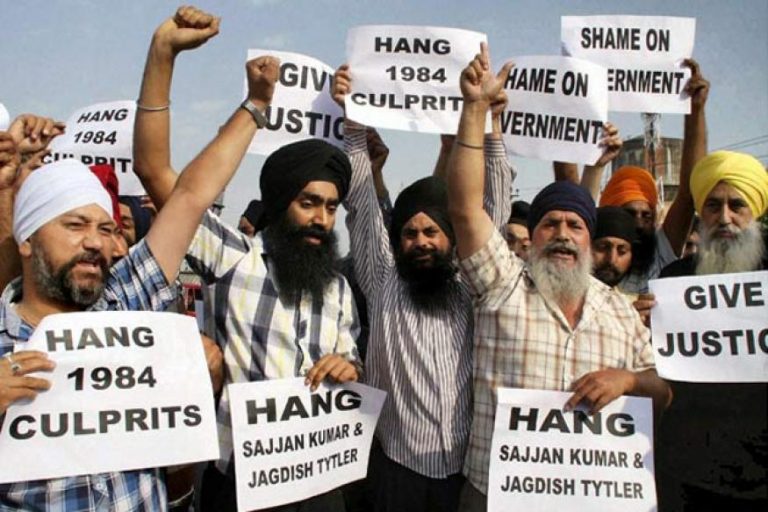
Speaking on the legal course of action he has taken regarding the current FIR, Bagga said, “Legally the advocate will see but I stand by my statement. Rajiv Gandhi was involved in the murder of the Sikhs. If he were not involved, how did Jagdish Tytler and Sajjan Kumar get so much power? And why were they given ministerial positions after the riots as rewards?”
Congress leader Sajjan Kumar is currently serving life term for his role in 1984 riots. Jagdish Tytler, too, was accused but wasn’t convicted. Similarly, Kamal Nath was also accused of leading a mob near Rakabganj Gurudwara where 2 Sikhs were burnt alive.
Bagga has been actively involved in relief work related to coronavirus outbreak. He has been making use of social media to help out those in need, irrespective of their background or political leanings. When asked whether such controversy might mar the good work he has been doing, Bagga said, “I am a political activist. My responsibility to raise the voice of my people who have not got justice till now. It has been over 35 years. If I am helping the ones who need ration today, what about those thousands of people who were left to fend for themselves so many years back? What about their justice? I live 300 metres away from this place called ‘Widow Colony’ which was settled by Congress after 1984. If no one killed those Sikhs, how did this colony of widows came into existence? Coronavirus relief work is independent of my fight for justice for Sikhs.”
Congress silencing critics
Chhattisgarh Congress leader Pankaj Wadhwani has filed an FIR against Bagga for ‘insulting remarks’ against Rajiv Gandhi. Similarly, earlier this month, BJP spokesperson Sambit Patra was booked on charge of ‘hurting religious sentiments’ in Congress-ruled Chhattisgarh on basis of a complaint lodged by Chhattisgarh Congress leader Poornachand Padhi. Recently, an FIR was filed against Zee News’ Sudhir Chaudhary after he had reported on various kinds of ‘Jihad’ and exposed its modus-operandi on a TV show. Republic TV’s Arnab Goswami was also hounded by Mumbai Police for questioning Congress interim President Sonia Gandhi’s silence over Palghar sadhu lynching.
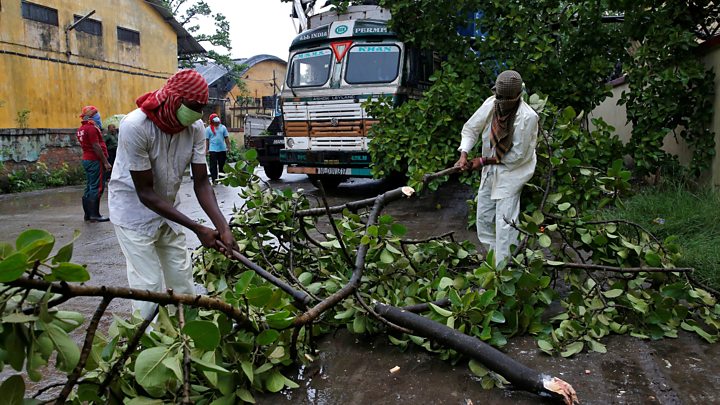
Days after cyclone Amphan wreaked havoc in the state of West Bengal, the simmering tensions among the disenchanted population against the Mamata Banerjee-led government’s inept handling of the relief activities crystallised on the streets as protest mounted against the state administration for its bungled response to the catastrophe.
The West Bengal state government’s inefficiency in handling the crisis has raised the hackles of the residents who took to the streets to express their discontent with the Trinamool Congress’s lousy response to the extensive devastation in the wake of cyclone Amphan. Several areas in the city saw angry protesters swarming the roads since Saturday against the establishment. Protests were held in prominent areas, including Behala, New Alipore, Regent Park and Jadavpur. People put up road blockades demanding restoration of power.
Mamata Banerjee requests Centre to deploy Indian Army
An irate mob of people took to the streets of Kolkata demanding restoration of electricity, water and mobile phone coverage disrupted by Amphan. The Indian Army was called in to help the Mamata Banerjee-led TMC government to deal with the aftermath of cyclone Amphan that ripped through the state, causing grievous damages to life and property, displacing thousands of people and leaving lakhs without water, electricity and sanitation. The Defence Ministry decided to send 5 columns of Indian Army to restore infrastructure in Kolkata on Saturday.
Following several protests, the West Bengal Chief Minister Mamata Banerjee admitted her mistake and issued an apology to the people. She said, “I can apologise to you, or you can cut my head off.”
Governor Jagdeep Dhankhar on Sunday pinned the blame of the messed up relief work entirely on Mamata Banerjee. He alleged that the Army could have been called three days before if the Governor’s office was kept in the loop. He said that he was distressed and pained to see people suffering from the lack of basic facilities for several days and appealed the people to stay calm.
WB Home Department asserts power will be restored soon
The state Home Department on Sunday tried to placate the angry protesters by stating that power has been restored in several areas of Kolkata, one of the worst-hit by the menace of cyclone Amphan. However, the Kolkata Municipal Corporation held Calcutta Electric Supply Corporation responsible for not being able to restore the power even after 4 days since the cyclone hit the city. The Kolkata Municipal Corporation said that even 4 days after cyclone Amphan tore through the city, half of the city was still in dark.
The Home Department added that power has been restored in major parts of the following areas, including Garia, Bansdroni, Kestopur, Baguihati, Teghoria, Salt Lake, New Town, Barasat, Tamluk, Egra, Contai, Krishnagar, Santipur, Ranghat, Gayespur and Kalyani. It also added that the efforts are underway on a warfooting to restore basic services in other areas as soon as possible and asserted that West Bengal State Electricity Distribution Company Limited and The Calcutta Electric Supply Corporation (CESC) are working round the clock to alleviate the sufferings endured by the people.
Alka Lamba is born for drama. If there is one great example of how some individuals just land in the wrong profession and keep getting confused all their life it is her. Here is a woman, so good at saas-bahu level drama that she keeps calling a camera crew to catch her dramatic performances and keeps releasing the photographs and videos on social media. But such is the tragedy of a dramatic life that she neither gets an invitation from Big Boss nor gets taken seriously by her political bosses.
People just ignore her like bored sports fans watch expressionless towards the TV when their moms take control of the remote and put Pyar Ke Do Panchhi, Sasural Simran Ka or any one of those soap operas that sound like lines from old movies.
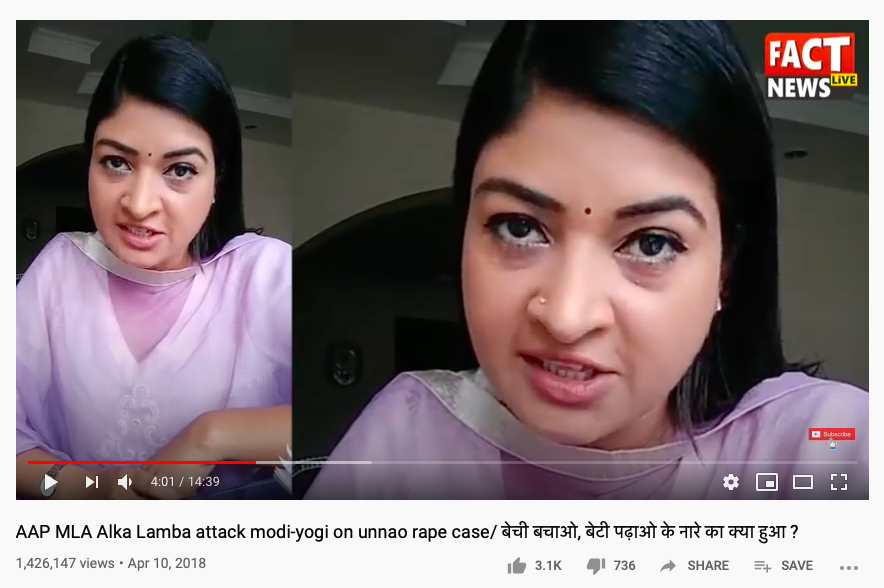
In the latest stunt, Lamba has shared a two-year-old video where she is calling PM Modi and UP CM Yogi Adityanath as “Napunsak” (impotent). She was probably expecting shocked reactions from across the political spectrum, probably a good pat in the back from the Gandhi family, or a regretful pang in the heart from her previous bosses in AAP, on having lost such a superstar, but no such serial-level drama is on sight.
Watch “Alka Lamba ने कहा, Modi-Yogi तुम्हारे मुंह पर थूकती हूं, तुम दोनों नपुंसक हो” on YouTube https://t.co/Oahedp7Q7l
In the video, Lamba is giving one of her peak performances that can put Dolly Bindra and Rakhi Sawant to shame. She is wearing a delicate shade of pink, the video is professionally shot and edited, with key scenes repeated thrice as they do in serials when the gareeb Bahu shatters the fancy tea set and the rich Sasural reacts like they have lost all their wealth.
Lamba has shared the vide with a sensational headline. “Modi and Yogi you are Napunsaks and I spit on them.” When you open the video out of curiosity, u find a visibly outraged Alka using all her energy to spew venom. The quivering of the lips, the pauses at strategic intervals and pink dupatta and the batting of the carefully made eyelashes, all the basic ingredients of a peak saas-bahu drama are right there.
When you pay attention to her words, then you realise that something is amiss. She is actually talking about the Unnao rape case of 2018. If you are wondering what about the Sengar case riled up Lamba now, it is nothing. Since the political activities around Lamba’s life have been rather dull, she had probably asked her video guys to re-dramatise her two-year-old video and re-released it on Twitter, for what reasons, you can take a guess.
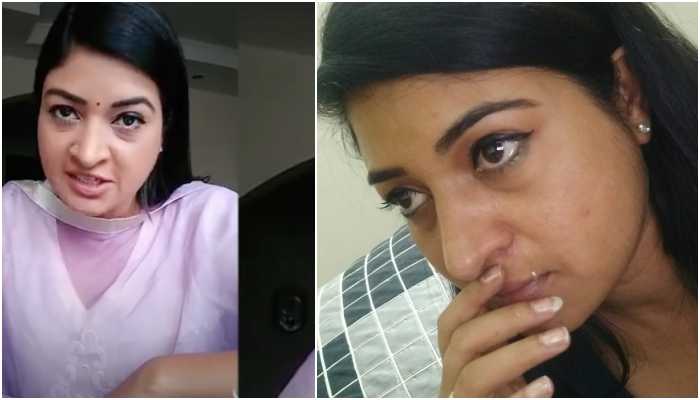
Here is a screengrab of the two-year-old video, where the special effects and styles have been a bit different. Instead of dramatic lines repeating twice of thrice, we have an angry Lamba staring at us with her eyeliner-loaded eyes.
Screenshot from the 2-year-old Alka Lamba video.
The content of the video is just cheap political foul-mouthing. Lamba says “had CM Yogi been married he would have probably learned how to respect a woman, if he had been blessed with a daughter, he would have known the pain a father feels when that daughter is raped”. She used similar lines for PM Modi too.
It is not clear why exactly Lamba thinks that unmarried men cannot respect women or why she has the idea that married men who have a daughter can never hurt anyone. But then, Lamba is Lamba.
Unnao rape convict Kuldeep Sengar was arrested, expelled from BJP and was eventually convicted of the rape and was sentenced to life imprisonment by the court.
Drama over ‘quitting AAP’
Last year, Lamba had finally quit AAP, months after repeatedly threatening to quit AAP, after other AAP leaders made it clear a number of times that she should quit, and they are ready to accept her resignation even on Twitter.
Before finally quitting, Lamba had tweeted, stated and given statements that she intends to quit over a dozen times, probably hoping that some AAP leader will give some attention and request her not to quit. On the contrary, all she managed to get was a response from AAP’s Saurabh Bharadwaj that the party will accept her resignation even on Twitter.
She has announced this a dozen of times in the past. It takes 1 min to send a written resignation letter to party leadership. We will accept it on Twitter too. https://t.co/dDEiZmbtf6
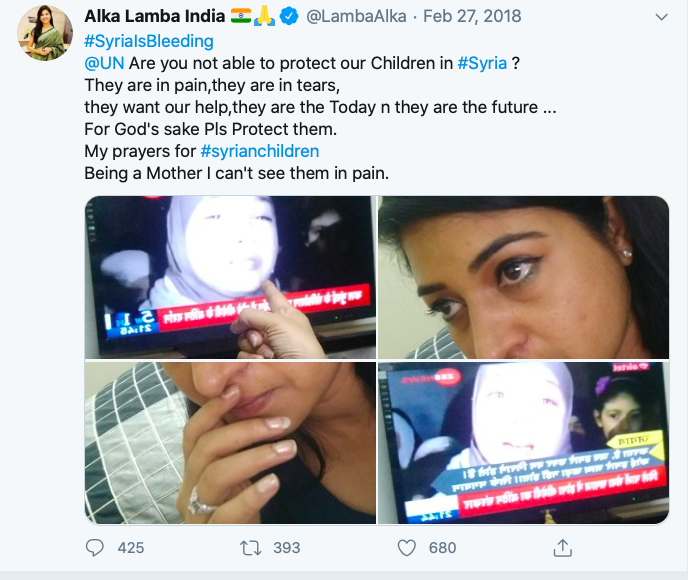
In 2017, Lamba had suddenly realised that there are suffering children in Syria. She had called her photographers, had got ready, and taken some photos that were intended to capture not the plight of Syrian children, but how Alka Lamba looks while feeling sadness over Syrian children.
Alka Lamba’s legendary ‘crying selfie’ sequence
The series of photos that Lamba had shared while tagging the UN were like this:
Lamba’s finger pointing at a TV screen that was showing some programme about Syria.
A close-up shot of Lamba highlighting her eyeliner-loaded eyes that were trying a lot to look watery over the supposed sadness she felt about Syria.
Another close-up shot showing Lamba sniffling, touching a carefully manicured hand with a massive Shiney ring, evidently trying to console herself because of the apparent sadness she felt.
Finally another photo of the TV screen.
She had even taken the precautions to have a picture clicked at the precise moment when a teardrop was precariously hanging from her upper lip.
Foul language and insensitivity
Lamba probably knows that apart from drama, an entry into the Big Boss house would require considerable usage of foul language, insensitivity, and a penchant to jump seek catfights over blown up issues.
She has been practising all those moves in her ‘political’ career. She had once climbed on top of a fire rescue ladder to pose for photographs during a fire in Chandni Chowk, her former constituency.
Lamba had even used former defence minister Manohar Parrikar’s battle with cancer to share crass, insensitive remarks. She had dragged the Rafale deal, the failed trope by Congress to target the 2014-19 Modi government that eventually blasted on Congress’ own face, to insinuate that Parrikar’s illness may be an outcome of his ‘dishonesty’.
Alka Lamba’s foul tweet
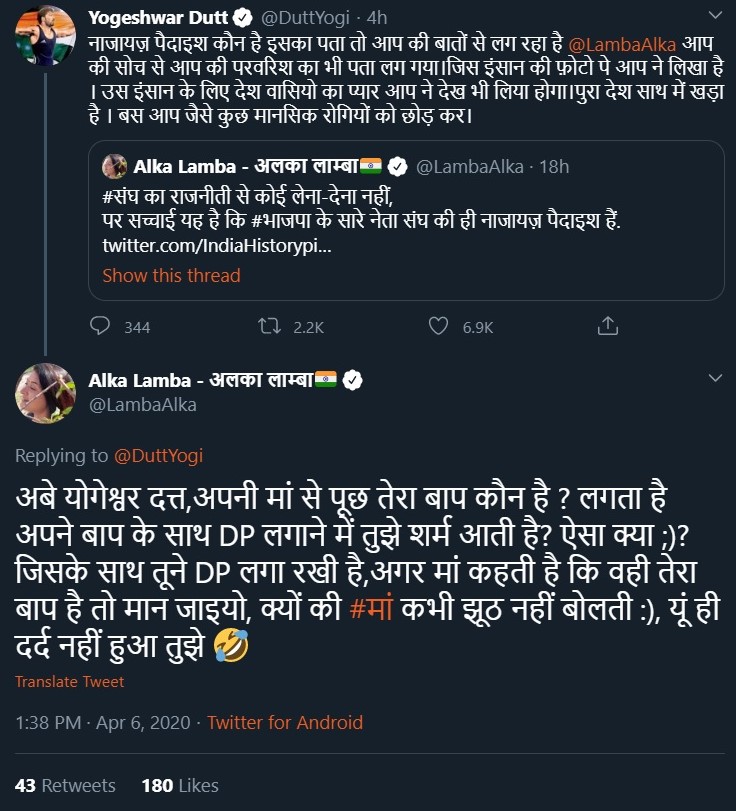
Recently, she went on a deranged rant against Olympic medallist Yogeshwar Dutt, when her foul words against the RSS were called out by the wrestler-turned BJP leader, Lamba has resorted to using foul, crass words about Dutt’s parents. Dutt had stated that he foul words only show Lamba’s own standard.
It is indeed ironic that Lamba, who has today shared an old video claiming to be outraged over the harassment of women, had jumped to target Dutt’s mother, using foul words question her character, just to placate her political ego.
But then, Lamba probably lives inside a world of her own, where she is constantly auditioning for an entry into the Big Boss house.
In an interview with NDTV, the Shiv Sena scion Aaditya Thackeray has made his priorities clear. Amidst the grim situation of the pandemic in the State of Maharashtra, Aditya Thackeray is more concerned about the supposed ‘online hate.’
On being asked by journalist Nidhi Razdan about the most worrying aspect of the Coronavirus outbreak in Maharashtra, Aaditya Thackeray replied, “It’s a feeling of little sadness that there are people who are also trying to spread hate, fear, and division on social media.”
“Our frontline workers are actually working on ground 24/7 to ensure that each and every person is treated well. There is a lot of pressure on the police and the medical staff. We have one section which is constantly spreading panic, lies, fear, hate on social media.” he added.
According to the Union Health Ministry, Maharashtra has reported 50,231 active cases of Coronavirus and 1,635 deaths so far. On Saturday, there was a surge of 3,041 cases confirmed on Sunday, the highest ever in a single day. Reportedly, the State has witnessed over 2000 new cases for 8 consecutive days. Maharashtra is the top contributor to National Coronavirus cases. As a state, it is contributing almost 50% of the nation’s total Coronavirus cases.
However, for MLA Aaditya Thackeray, the most worrying aspect of the pandemic in Maharashtra is the ‘hate’ allegedly perpetrated on social media.
Clueless Maharashtra Government
Earlier, in a classic ‘Heads I win, Tails you lose’ situation where Maharashtra Chief Minister Uddhav Thackeray said that the lockdown was needed in Maharashtra because it had spiralled out of control. At the same time, he mouthed mandatory criticism to play petty politics in complete contradiction to his previous statement.
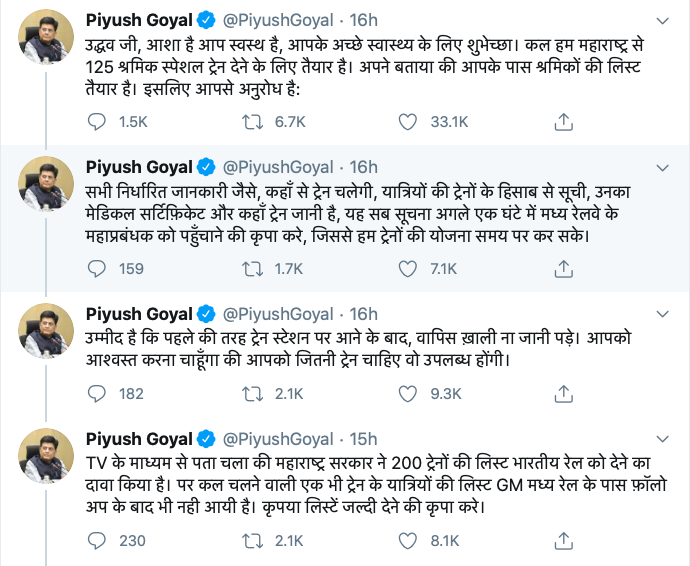
Yesterday, the Maharashtra government had given statements that the centre is not providing enough trains to Maharashtra to ferry migrants. The Uddhav Thackeray government had claimed that they had given a list of 200 trains to the railways but the trains have not been made available yet.
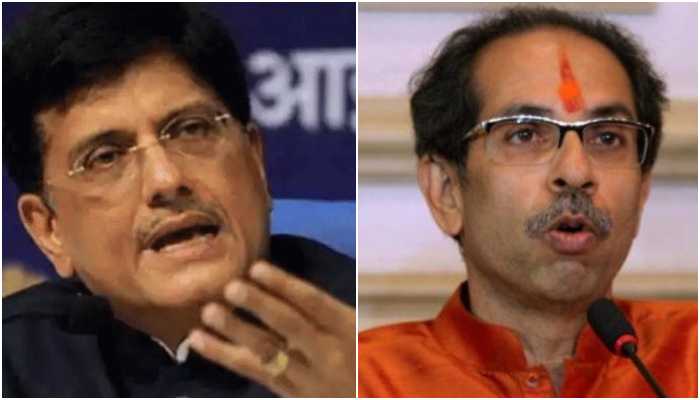
Railway Minister Piyush Goyal took to Twitter to call out the Maharashtra government’s claim of trains not being available. Goyal tweeted, “The railways have been ready to give 125 trains, but the Maharashtra government has to provide the details of start and destination stations, list of migrant labourers as per their destination cities, medical certificates and other details. He also added that due to the failure of the Maharashtra government in providing the details of passengers and destinations, the railways have had to arrange and then cancel trains.
He had asked CM Uddhav Thackeray to make all the details available to the GM, Central Railways within an hour so trains can be finalised.
Later, the Railways minister again tweeted that despite waiting for 1.5 hours, the MH government has not sent any details to the GM. He added that train journeys have to be planned and the ministry does not want that after all the preparations and planning, the trains only idle on respective stations and are eventually cancelled as it had happened before.
More than 2.5 hours have passed but still passenger details for 125 planned trains in Maharashtra not received by GM Central Railway from Government of Maharashtra. pic.twitter.com/A4CXFpxKCZ
In a statement from the Railways shared by Goyal, it was stated that 65 trains had to be cancelled because the MH government had not made adequate preparations. It added that while certain states like Kerala, WB, Odisha have made specific requests to the railways over requirement of details or cancellations due to the Cyclone Amphan, there have been no such requests from the MH government over running special trains for districts like Amaravati, Dhule, Nashik, Chadrapaur and Akola.
The statement also added that the nodal officers fro the Railways have been constantly in touch with the nodal officers of the MH government and so far all their demands have been complied on a day to day basis. However, despite waiting for over 2.5 hours about the details needed from the state government about the trains, the MH government has not received any list of passengers and their destinations, it added.
The Railways stated that so far it has run 520 Shramik Special trains from Maharashtra, ferrying over 7.3 lakh migrant workers between May 1 and May 23.