Home Blog Page 542

After making pro-Khalistani Harmeet Dhillon ‘Assistant Attorney General’, Donald Trump invites radical Islamic cleric to inauguration ceremony

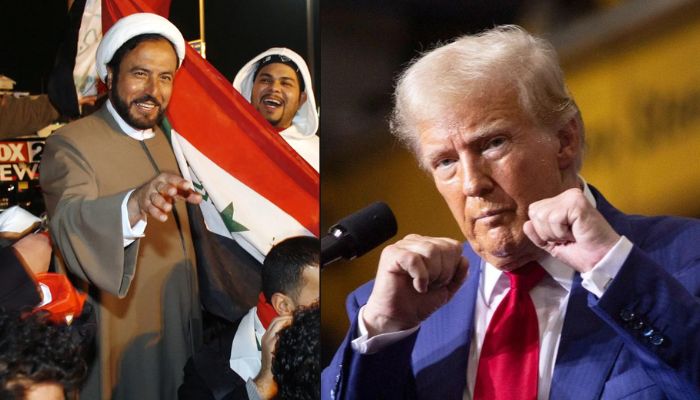
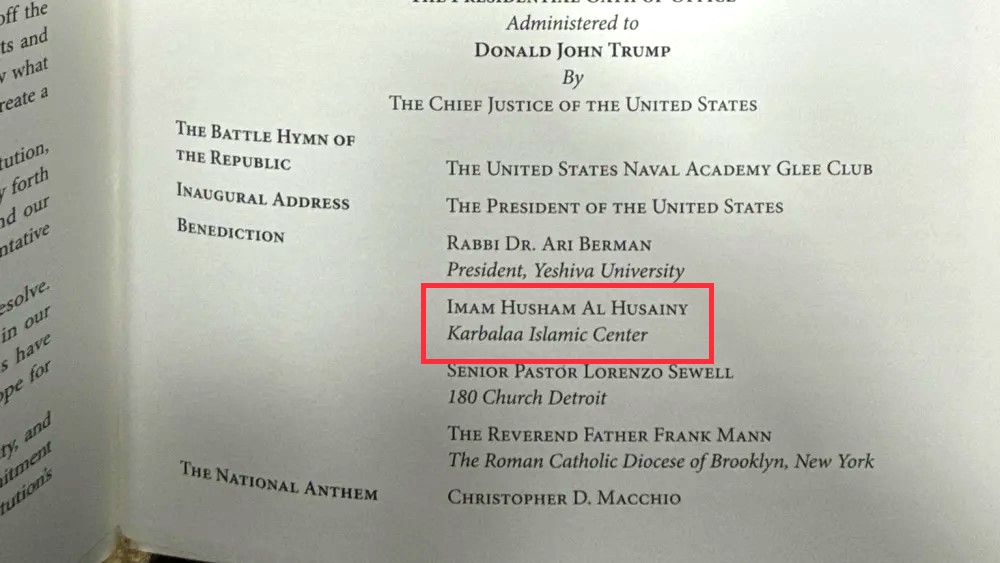
Husham Al-Husainy, a radical Islamic cleric who refused to call Hezbollah a terrorist organisation, has been invited to deliver a Benediction at the inauguration ceremony of Donald Trump. The event is scheduled to take place on 20th January this year.

Husainy, who has a history of extremism, will speak immediately at the inauguration ceremony after the address by Donald Trump. He is also the imam of the Karbalaa Islamic Educational Center in Michigan.

According to a report by the Middle East Forum, Husainy is an anti-Semitic, pro-Hezbollah Shia imam. In 2015, he had called death upon Suni-majority Saudi Arabia for attacking Yemen.

Screengrab of the invite extended to Husham Al-Husainy

He had also eulogised terrorist Hassan Nasrallah during a pro-Hezbollah rally in 2006. Husham Al-Husainy had also demonised US security forces as ‘oppressors and occupiers’ for its war against Iraq.

Despite such an extremist track record, the Islamic cleric has been invited to the inauguration ceremony of Donald Trump.

Interestingly, Husham Al-Husainy extended his support to Trump in October 2024 for opposing gay marriage and upholding ‘conservative values’.

Appointment of Harmeet Dhillon in Trump 2.0 cabinet

The development comes a month after Donald Trump appointed Harmeet K. Dhillon as the Assistant Attorney General for civil rights.

Dhillon had long been accused of being a terror sympathiser and harbouring Khalistani sentiments—an extremist ideology that uses violence as a tool to push its objectives and calls for the secession of the Punjab state from India and the establishment of an independent Sikh-majority Khalistan.

Nothing corroborates her pro-Khalistan bent more starkly than her stance on the Khalistani Hardeep Singh Nijjar’s killing.

In March 2024, she quoted The Economist report on how Indian migrants were helping PM Narendra Modi in campaigning at home and lobbying for India abroad.

Quoting the report, Dhillon repeated the baseless accusations that the Indian government is assassinating critics in the diaspora.

No, 20 families were not ostracised for accepting prasad from a Dalit: How ‘Ambedkarites’ on social media spread fake news to target Hindus

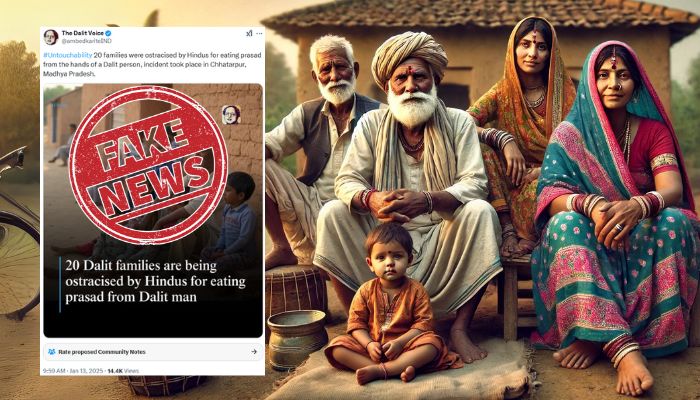
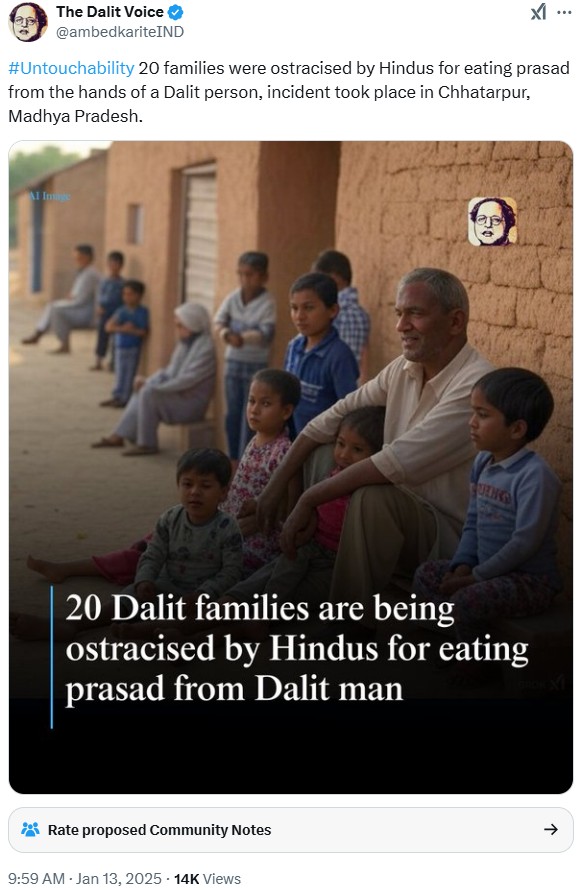
On 13 January, X user The Dalit Voice published a post alleging that Hindus ostracised 20 Dalit families in Madhya Pradesh for eating prasad distributed by a Dalit person.

The post stated, “20 families were ostracised by Hindus for eating prasad from the hands of a Dalit person, incident took place in Chhatarpur, Madhya Pradesh.” However, the post lacked substantial news reports or evidence to support the claim. Similar posts were made by other social media users, amplifying the allegation without verified details or credible sources.

Source: X

Another user Nadya wrote, “India 21st century looks like this. In Madhya Pradesh’s Chhatarpur district, around 20 families are facing a social boycott for accepting prasad from a Dalit man in Atrar village.” The X user cited the propaganda website Maktoob Media which also mentioned that “upper caste” families were boycotted. It read, “When news spread that upper-caste families had accepted prasad from a Dalit, the sarpanch allegedly declared a social boycott against all those who participated.”

The Dalit Voice’s Instagram account’s screenshot was shared by one Dr Sylvia Karpagam who wrote, “India’s love affair with discrimination.” There was no news report mentioned or details provided.

X users, including Arya_Anviksha_ and Dr Neha Das, refuted the claims and provided evidence to debunk fake news disseminated by social media users who refer to them as Ambedkarites.

Details of the incident

The fake news stems from reports of allegations made by a Dalit man from Atrar village in Chhatarpur district, where he claimed that he and five other families had been excluded from social events after they ate prasad (religious offering) distributed by him. However, the police have refuted the claims, stating there is a longstanding political dispute between two groups in the village.

A man named Jagat Ahirwar, who belongs to a Dalit community, filed a complaint with the Chhatarpur police on 7 January, alleging that in August 2024, he had distributed laddoos as prasad at a local temple. Following that, according to him, the village sarpanch, Santosh Tiwari, ostracised his family and five others who consumed the prasad. Ahirwar has claimed that these families were no longer invited to social gatherings, including weddings and other community events.

Furthermore, Ahirwar accused Tiwari of using caste divisions to enforce the boycott and said, “We are being denied basic community interaction because of an age-old caste bias.”

Police refute allegations, cite political rivalry

Sub-Divisional Officer of Police (SDOP) Shashank Jain spoke to the media about the incident and refuted the claims, saying, “We investigated the matter by speaking to the villagers but found no evidence of such ostracisation.”

The police said that the incident appeared to be a fallout of political animosity between two groups that stemmed from fiercely contested local elections. SDOP Jain added that the allegations might have been influenced by tensions between rival factions supporting Ahirwar, the former sarpanch, and Tiwari, the incumbent sarpanch.

Sarpanch Tiwari also denied any involvement and said, “These allegations are baseless and politically motivated. Ahirwar lost the sarpanch elections, and this is a tactic to defame me.”

Interestingly, media reports on this case categorically mention that the families that have allegedly been boycotted belong to both Dalit and upper-caste communities. A report in The Times of India, one of the first to cover the case, stated: “This prasad was shared with over 20 villagers from various castes, including Brahmins and other upper castes. Once word spread that upper-caste individuals had accepted prasad from a Dalit, the sarpanch allegedly ordered a social boycott of all these families.”

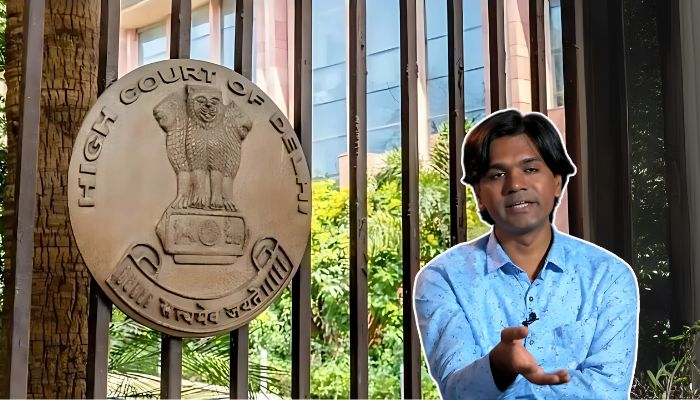
2018 tweet case: Delhi High Court refuses to grant relief to Alt News co-founder in plea to reclaim devices seized by police

On 13th January, the Delhi High Court dismissed a petition filed by the co-founder of Alt News and propagandist Mohammed Zubair, seeking the return of devices and documents seized by Delhi Police in connection with the 2018 controversial tweet case. Zubair specifically wanted his mobile phone back from Delhi Police’s custody but failed to mention it in the plea. A single-judge bench presided over by Justice Swarana Kanta Sharma advised Zubair to approach the concerned magistrate to seek relief in the matter.

Zubair’s request for adjournment denied

Zubair was represented by Advocate Soutik Banerjee. During the hearing, Zubair’s advocate sought an adjournment, which was opposed by the counsel for Delhi Police, saying that the matter no longer held relevance. The court noted in its order that one of the petition’s prayers, which challenged Zubair’s four-day police custody in 2022, had already become ineffective.

Banerjee claimed that the police had seized devices beyond the scope of the FIR. However, Justice Sharma observed that the petitioner did not identify a specific device or document in the plea. Replying to the judge, Banerjee clarified that the plea was about his mobile phone. The court then directed Zubair to file an appropriate application before the area magistrate for relief.

Arrest over controversial tweet

In June 2022, Mohammed Zubair was arrested by Delhi Police for hurting religious sentiments and promoting enmity via a tweet dating back to 2018. In his controversial post, he had renamed a “Honeymoon Hotel” to Bhagwan Hanuman’s name. In the FIR filed against him, the complainant said that the tweet insulted the Hindu religion and was provocative enough to incite hatred.

He was booked under Sections 153A and 295 of the Indian Penal Code. Furthermore, additional charges under Sections 295A, 201, and 120B of the IPC and Section 35 of the Foreign Contribution (Regulation) Act, 2010, were later invoked. On 15th July 2022, he was granted bail by a Sessions Court.

Mohammed Zubair’s career has been marred by several controversies, with the latest being booked by UP Police, accusing him of creating social disharmony. The Allahabad High Court stayed his arrest in the case in December 2024 as a relief but restricted him from leaving the country.

As Samajwadi Party fields Awadhesh Prasad’s son for Milkipur by-elections, here’s how the BJP is planning to avenge the defeat in Ayodhya

The 2024 Lok Sabha election results came as a shocker for the country. BJP, which was seen crossing 300 in most exit polls, could win only 240 seats. After this, it formed the government with the support of other NDA parties including TDP and JDU. But the most shocking result in this Lok Sabha election was that of the Faizabad Lok Sabha seat.

It came as a surprise leaving the people with the question of why did BJP got this setback even after the centuries-old dream of Hindus for the Ram Mandir was fulfilled. Many types of analysis were presented about this defeat. This seat, now commonly known as Ayodhya, was lost by BJP to Samajwadi Party candidate Awadhesh Prasad. No one knew Awadhesh Prasad in Delhi politics before this. However, his victory increased Awadhesh Prasad’s stature by manifolds, although Prasad is not a new leader.

Before becoming an MP, he was an MLA from Milkipur reserved assembly seat of Ayodhya district. When Avdhesh Prasad reached the Parliament, Samajwadi Party chief Akhilesh Yadav presented him like a trophy. BJP has now got a chance to settle the score of this defeat.

Milkipur by-election delayed due to legal troubles

A by-election will be held in February 2025 on the Milkipur assembly seat vacated by Awadhesh Prasad’s victory. Till now this by-election was pending due to a legal tangle as the BJP candidate had filed a petition against Awadhesh Prasad’s victory in the assembly on this seat. However, he has withdrawn his plea. After this, the by-election has now been announced.

In the by-elections held in Uttar Pradesh along with the Haryana and Jharkhand assembly elections, the BJP alliance had recently won 7 out of 9 seats. After this, the BJP is in high spirits and is claiming to win Milkipur as well.

The voting for the high-profile Milkipur by-election will be held on 5th February 2025, and the results will be declared on 8th February. Samajwadi Party had announced to give ticket to Awadhesh Prasad’s son Ajit Prasad on this seat much before the election dates. BJP has not yet given its candidate on this seat, however, an announcement is expected after Makar Sankranti.

BJP to announce its candidate for Milkipur soon

Many people including Baba Gorakhnath, Ramu Priyadarshi, and Chandrabhan Paswan are in the line from the BJP side. Baba Gorakhnath was an MLA from here in 2017 and in 2022 he lost to Awadhesh Prasad. His claim for the ticket is also strong. Other than Baba Gorakhnath, another former BJP MLA and a big face of the organisation, Ramu Priyadarshi, is also in the race.

Apart from these two, Chandrabhan Paswan, Chandrakesh Paswan and many others are also in the queue. Once the BJP announces its candidate, it will become clear as to which way the by-election is heading. Milkipur is a Dalit-dominated area and is also a reserved seat. In such a situation, the BJP also wants to decide on the candidate only after taking stock of the dynamics on the ground.

In this regard, local journalist Nitesh Singh says, “Baba Gorakhnath’s base is already built but there is some opposition to him from within. However, his claim cannot be denied. Apart from this, Ramu Priyadarshi is meeting all the benchmarks. It is very difficult to say right now who the party will choose.”

Dalits dominant but upper castes have deciding votes

There are about 1.2 lakh Dalit voters in the Milkipur assembly constituency. Out of these, the maximum number of votes are of people from the Pasi community to which Awadhesh Prasad belongs. Apart from Dalit voters, Brahmin, Thakur and other upper-caste voters are also present here in large numbers. Their total votes are also about 1 lakh. Muslim votes here are 30,000.

Considering the caste and religion dynamics, the Samajwadi Party is trying to win here by combining Muslim and Dalit votes. Earlier, Awadhesh Prasad has also won under this formula. Some upper castes have also been supporting him. But this time the matter is different as the local people say that unlike Awadhesh Prasad his son Ajit Prasad lacks the hold on the ground.

Ajit Prasad has even lost the district panchayat elections. Journalist Nitesh Singh says, “Ajit Prasad does not have the humility that Awadhesh Prasad had. He is busy campaigning but the internal fight in SP can harm him. However, he has the direct blessings of Akhilesh Yadav.”

Since all the candidates are from the Dalit community, who the upper castes support can become the X factor in the elections. Election analysts say that in 2017 Baba Gorakhnath had the support of the upper castes but in 2022 this support went to Awadhesh Prasad. In such a situation, their vote can be decisive.

Meanwhile, analysts are of the view that the upper caste voters will make up their minds about supporting the BJP only after the party announces its candidate. It is said that the “Savarna” Hindus want the BJP to put forth a different face after which they may extend full support to the party in the coming by-election.

BJP won Milkipur twice

Milkipur is such an assembly seat on which BJP, BSP, SP and Communist Party have all won in the last three decades. However, in the last 10 assembly elections and by-elections, Samajwadi Party has won this seat 6 times. BJP won the election here in 2017, 1991 while BSP won in 2007. However, now the direct fight here is between BJP and SP. In the 2017 assembly elections, Baba Gorakhnath defeated Awadhesh Prasad by a margin of 28000 votes. In the 2022 assembly elections, he lost by about 13000 votes. This time he is again in the fray to get a ticket.

From ministers to party organisation, BJP exerting all its strength to avenge “Ayodhya haar gaye”

BJP wants to take revenge for its defeat in the Faizabad Lok Sabha seat by winning this seat. This revenge becomes important because it is up against the son of the same Avdhesh Prasad who defeated the BJP candidate. BJP does not want to leave any stone unturned for this election and has deployed 6 ministers here.

In addition, people from the state president to the regional president and other organisation members are also involved. They are setting the atmosphere by meeting the Pradhan of every village, VDC, Nagar Panchayat representative and influential people. Even the problems of the people are being resolved there and then.

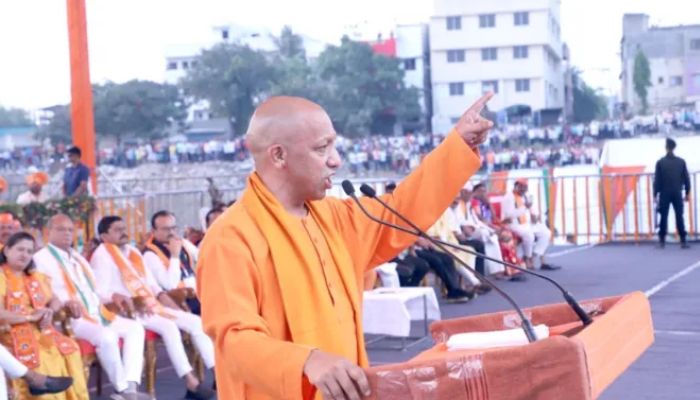
Chief Minister Yogi Adityanath is also directly involved in the BJP’s preparations for the high-profile election. He has also held a meeting with the BJP officials here. CM Ypgi has also visited here in the last few months. After the announcement of the candidate, there are speculations that a rally of Chief Minister Yogi will also be held here.

BJP continuously strengthening its organisation to garner votes from every village in the elections. Its workers are going to the villages to win over voters’ hearts. As soon as the candidate is declared, a public relations campaign will also be started rapidly. With its meticulous efforts and strategies, the BJP wants to avenge its defeat in Ayodhya by winning Milkipur.


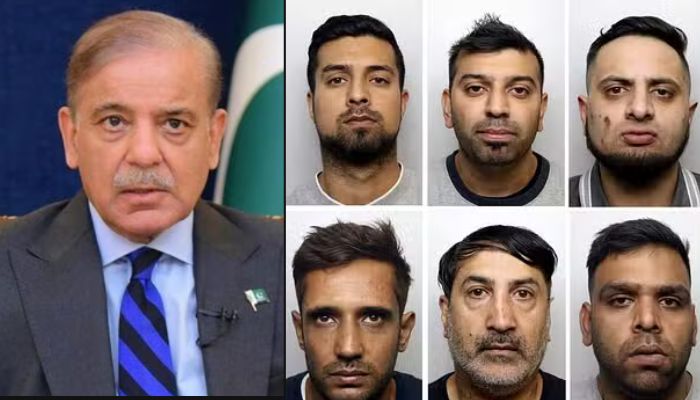
Pakistan goes on a rant about ‘Islamophobia’ after world starts talking about how Pakistani Muslim grooming gangs raped thousands of vulnerable children in UK

Amid social media outrage over the prevalence of Muslim grooming gangs in the United Kingdom, the State of Pakistan attempted to deviate the public discourse to ‘Islamophobia’ instead of sympathising with the victims.

In a statement released by the Ministry of Foreign Affairs on Monday (13th January), it claimed, “We note with deep concern the increasingly racist and Islamophobic political and media commentary in the UK that is aimed at conflating the reprehensible actions of a few individuals with the entire 1.7 million British Pakistani diaspora.”

Pakistan alleged that its diaspora was somehow contributing to the UK’s growth, development and freedom.

To defend increasing criticism of Muslim grooming gangs, it claimed, “An exceptionally large number of predominantly Muslim soldiers from what is now Pakistan served in the British Indian army and laid down their lives for the cause of democracy in both World Wars.”

The Ministry of Foreign Affairs dubbed the public debate surrounding Pakistani grooming gangs as ‘xenophobic’, adding that British Pakistanis are the backbone of the UK’s service, retail and health sectors.

While continuing to not condemn the grooming gangs, it further stated, “Many British Pakistanis hold high public office, and thousands serve their communities as Members of Parliament, mayors, councillors, and as members of local police and municipal services.”

“British Pakistanis have excelled in sports and arts. Their cuisine and music enriches British culture. To demonize such a large and diverse community on the basis of the actions of a few individuals needs to be condemned,” the Ministry of Foreign Affairs stated.

In conclusion, Pakistan did not condemn its diaspora grooming gangs and tried to downplay the heinous crimes as ‘reprehensible actions of a few individuals.’ It then went on to narrate how Pakistanis are ‘enriching’ the culture of the United Kingdom.

The grooming gangs of the United Kingdom

Investigations into cases of child sexual abuse in the UK revealed that grooming gangs comprising mostly British-Pakistani men have been sexually exploiting children across cities in the country.

In 2023, former Prime Minister Rishi Sunak established a task force led by the National Crime Agency to address the grave threat posed by these gangs.

Rochdale, Rotherham, Oxford, Telford, Leeds, Birmingham, Norwich, Burnley, High Wycombe, Leicester, Dewsbury, Middlesbrough, Peterborough, Bristol, Halifax, Newcastle, Huddersfield, and Hull are some of the regions in the United Kingdom where the Islamist grooming gangs sexually exploited children.

Last year in November, twenty men were found guilty of raping young girls in the UK and were sentenced to over 219 years in prison.

In 2022, the Independent Inquiry into Child Sex Abuse published its final report, in which it described the sexual abuse of children as an “epidemic that leaves tens of thousands of victims in its poisonous wake”.

The inquiry looked into child abuse by organised groups following multiple convictions of sexual offences against children across the UK between 2010-2014.

Professor Alexis Jay, who led the inquiry and uncovered the massive scale of grooming gangs in the UK, has said that she felt “frustrated” that none of the 20 recommendations put forward by the inquiry had been implemented more than two years after its conclusion.

India observed “all protocols” while border fencing, expects Dhaka to help combat crimes: MEA conveys to Bangladesh envoy

0

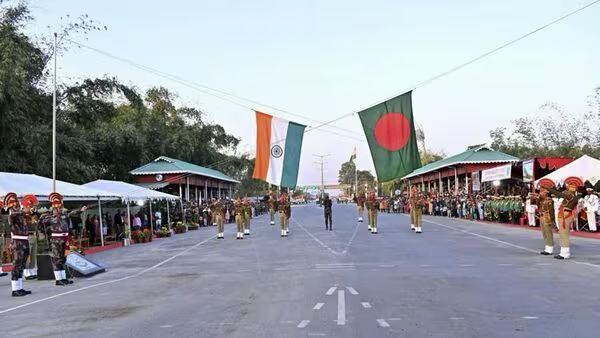
India conveyed to Bangladesh Acting High Commissioner to India, Md Nural Islam, that New Delhi observed “all protocols and agreements” about security measures at the border, including while fencing, the Ministry of External Affairs said on Monday.

The Bangladesh Acting High Commissioner to India, Md. Nural Islam was summoned by the MEA on Monday to the South Block on Monday, at 2:00 pm.

India also reiterated its commitment to ensuring a “crime-free border” by effectively addressing the challenges of “cross-border criminal activities, smuggling, movement of criminals and trafficking.”

It added that barbed wire fencing, border lighting, installation of technical devices and cattle fences “are measures for securing the border.”

“It was conveyed that concerning security measures at the border, including on fencing, India observed all protocols and agreements between the two governments and between the Border Security Force and Border Guard Bangladesh,” the statement read.

“India reiterated its commitment to ensuring a crime-free border by effectively addressing the challenges of cross-border criminal activities, smuggling, movement of criminals and trafficking. Barbed wire fencing, border lighting, installation of technical devices and cattle fences are measures for securing the border,” the statement added.

India also said that it expects Bangladesh to act as per the earlier understandings and help combat cross-border crimes, the MEA said.

“India conveyed its expectation that all earlier understandings will be implemented by Bangladesh and that there will a cooperative approach to combating cross-border crimes,” the statement read.

The summon to the Bangladesh Deputy High Commissioner came a day after the Indian High Commissioner to Dhaka, Pranay Verma was summoned by the Bangladesh Foreign Ministry on Sunday.

The Bangladesh Foreign Ministry had raised “deep concern” over the recent fencing along the Indo-Bangladesh border and summoned the Indian High Commissioner to express its objections.

“Bangladesh Foreign Secretary Ambassador Md Jashim Uddin on Sunday expressed the deep concern of the Government of Bangladesh to the High Commissioner of India Pranay Verma at his office at the Ministry of Foreign Affairs over the recent activities of the Border Security Force (BSF) of India along the Bangladesh-India Border,” Bangladesh Foreign Ministry said in a statement.

(This news report is published from a syndicated feed. Except for the headline, the content has not been written or edited by OpIndia staff)

“Pakistan epicentre of terrorism, 80% of terrorists active in J-K are Pakistanis”: Army Chief General Upendra Dwivedi

0

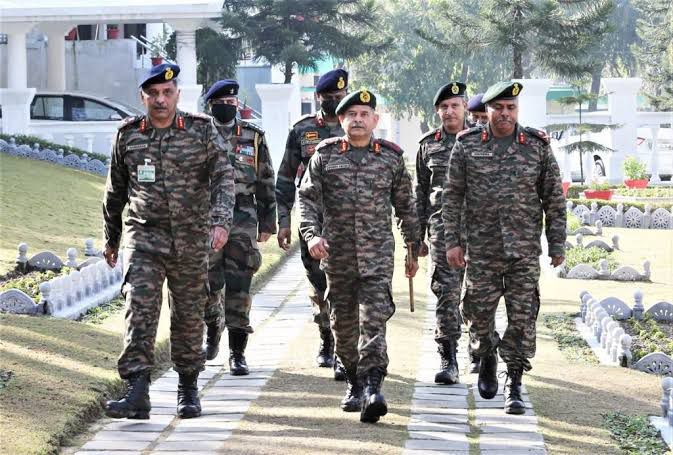
 Indian Army chief Gen Upendra Dwivedi on Monday termed Pakistan as the epicentre of terrorism and said that 80 per cent of terrorists active in Jammu and Kashmir are Pakistanis.

In his annual Army Day press conference, Gen Dwivedi blamed Pakistan for the violence levels in the Union Territory saying it was being orchestrated by the epicentre of terrorism that is Pakistan.

“If the support is not forthcoming the way India is looking at it, this kind of terrorist infiltration will continue to be there,” he said.

The Army Chief said that the parliamentary elections and assembly elections in the Union Territory both had nearly 60% voting.

“It means that the local population is going with the peace. People of Jammu and Kashmir are shunning violence and violence is being orchestrated by our Western adversary Pakistan,” the chief said.

Gen Dwivedi, who has handled counter-terrorist operations very closely as Northern Army Commander, said that as of now, “We have inducted 15,000 additional troops in the year 2024 and that is why you will find that the violence level has gone down where we have been able to neutralize 73 terrorists out of which 60% were Pakistan terrorists.”

(This news report is published from a syndicated feed. Except for the headline, the content has not been written or edited by OpIndia staff)

Is Congress again pandering only to the Muslim vote bank? Rahul Gandhi to start Delhi election campaign from Muslim-dominated Seelampur

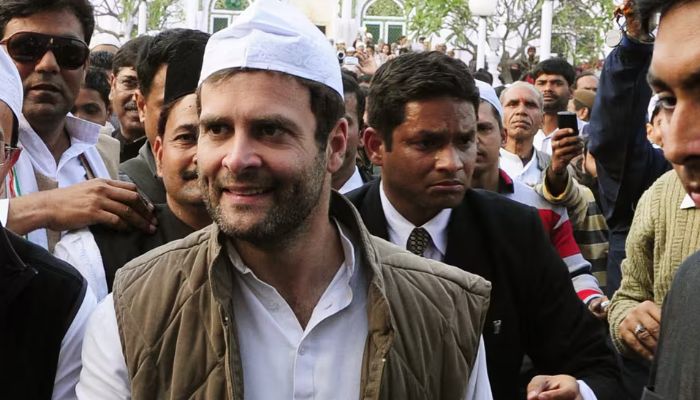
Ahead of the Delhi assembly elections, the Congress party has decided to go with its tried and tested Muslim appeasement strategy as Congress prince Rahul Gandhi is set to launch its election campaign from a Muslim-dominated Seelampur. While Seelampur was once a Congress bastion, the Aam Aadmi Party has over the years managed to make the constituency its turf by winning the last two assembly elections from this seat.

Congress has named its upcoming rally in Seelampur as “Jai Bhim, Jai Samvidhan” rally hinting at its attempt to woo not only its Muslim votebank but to also lure Dalit voters to its fold by positioning the party as a defender of the constitution and social justice. With this, the party seems to give a message to not only Seelampur but also the neighbouring constituencies like Gokulpuri, Seemapuri, Timarpur, and Burari with significant Dalit voter presence.

It must be noted that 55-60% voter base in northeast Delhi’s Seelampur constituency is Muslim and thus Congress would want to regain the lost ground, especially after Chaudhary Mateen Ahmed, a once Congress leader switched allegiance to the Aam Aadmi Party. Ahmed’s son Jubair Ahmed is contesting the election under AAP’s ticket while AAP MLA Abdul Rehman has joined Congress after being denied a ticket by AAP.

By picking a Muslim-dominated Seelampur constituency to launch its electoral campaign, Congress leader Rahul Gandhi apparently wants to pander to the Muslim votebank which has gradually drifted towards the other anti-BJP alternative—AAP by catering to the “minority khatre mein hai” narrative and positioning itself as the protector of the community.

Alongside the Muslim voters, the Congress party also aims to win back Dalit voters taking mileage from the recent controversy over Dr Ambedkar regarding Union Home Minister Amit Shah’s comments wherein he said that taking Ambedkar’s name has become a “fashion”. Rahul Gandhi and other Congress leaders are often seen flashing a pocket-size copy of the constitution and continuously attacking the BJP in the name of attack on the constitution, democracy and whatnot.

Seelampur’s strategic location also makes it of immense political importance since it bridges the gap between Northeast Delhi, East Delhi, and Chandni Chowk. If the Congress party’s traditional “Bheem-Meem” strategy plays out well, they may give tough competition to the other Muslim appeasing opponents Aam Aadmi Party and the BJP.

It is widely known that the Muslim community and Dalits are capable of consolidating their votes and playing a decisive role in the elections. Since this vote bank comprises nearly 30% of Delhi’s population, the Congress party intends to harness the demographic leverage.

Another interesting factor about Seelampur is that it is a communally charged constituency, not to forget several anti-CAA protests were held here in 2020. Congress party’s decision to field former AAP MLA Abdul Rehman from Seelampur itself indicates its desperation to rally support from the Muslim community. Not to forget Abdul Rehman was named in the FIR by Delhi Police for ‘provoking the crowd’ to join the anti-CAA protests. Rehman was accused of leading a mob on December 17, 2019, which eventually led to violence and arson.

In the run-up to the Delhi Assembly polls, Muslim-dominated areas of Seelampur had seen unprecedented violence led by Muslim mobs to protest against the Citizenship Amendment Act. On the eve of the Delhi assembly elections 2020, the mosques in the riot-hit Seelampur and Okhla had urged Muslims to vote in large numbers. These were the very areas where Muslim mobs had gone on a rampage and caused riots as a result of their opposition to the CAA. Alongside, Abdul Rehman who is now contesting on the Seelampur seat on a Congress ticket, the former five-time Congress MLA Mateen Ahmed, who has now joined AAP was also named in the FIR.

Whether Congress’s endeavour to woo the Muslim vote bank pays off or not will only be known after the election results, however, the party giving ticket to a person accused of leading a mob that unleashed violence during anti-CAA protests in 2020 and then picking a Muslim-dominated Seelampur to open election campaign, Congress party is demonstrating that it will go any length to appease Muslim voters.

From ‘Rajasi’ and ‘Amrit Snan’ to ‘Shahi Snan’: Yogi government restores the sanctity of ancient traditions

On 13th January, the Mahakumbh 2025 commenced in the holy city of Prayagraj, marking a spiritual celebration for millions of Hindus worldwide. This festival stands as a testament to faith and the vitality of ancient traditions, with roots as old as time itself. However, over the years, attempts to distort and dilute such sacred Hindu customs have been evident. One such attempt is the transformation of the once-proudly called “Rajasi” and “Amrit Snan” into the now-familiar but historically misplaced term “Shahi Snan.”

The ancient roots of Kumbh Snan

Since time immemorial, the act of a holy dip at the Kumbh has held immense spiritual significance. The tradition predates Islamic rule in India and has been a cornerstone of Sanatan Dharma for centuries. However, the term “Shahi Snan” has now replaced the original terminology, and questions have been raised from time to time about its origins. Why is this sacred ritual associated with an Urdu word? What was it called before the advent of Persian and Urdu influences? These questions have led to in-depth discussions among scholars and spiritual leaders alike.

How ‘Rajasi or Amrit Snan’ became ‘Shahi Snan’

To find answers to all these questions, OpIndia consulted Vishalbhai Rajyaguru, a Sanskrit scholar and a senior government officer. Rajyaguru revealed that before the Mughal era, the Kumbh Snan was known as ‘Amrit Snan’ or ‘Rajasi Snan.’ He explained that the term ‘Shahi,’ meaning royal or majestic in Urdu, is a Mughal addition to the tradition. During the Mughal period, Persian and Urdu were promoted, often at the cost of native practices and traditions. The grandeur of the processions of Naga Sadhus, Aghoris, and other ascetics, often arriving on elephants, horses, and chariots, was likened to royal processions. This visual spectacle, he noted, was described in Urdu as ‘Shahi.’

What the Hindu texts say

Source: OpIndia Gujarati

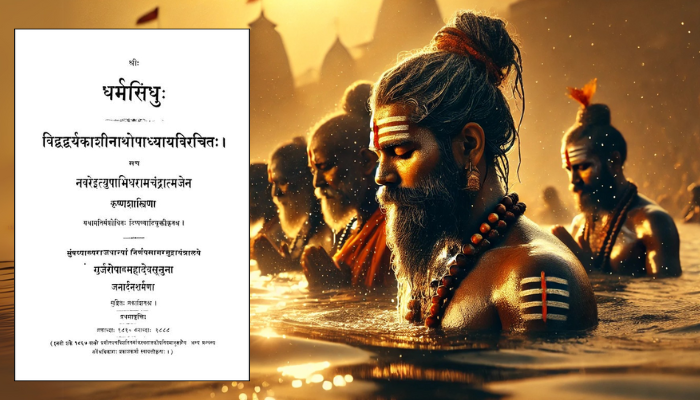
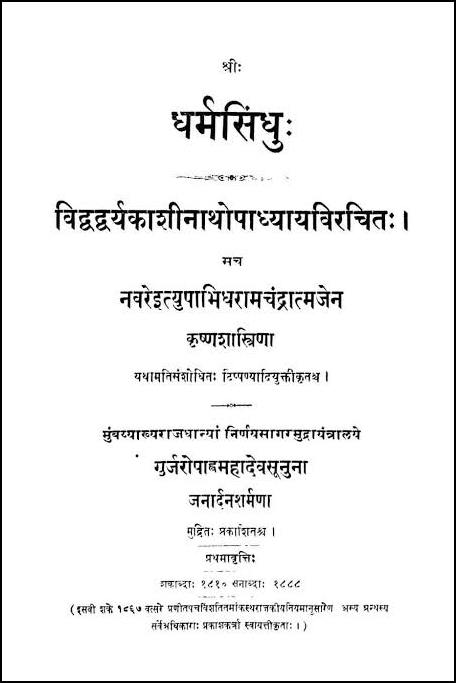
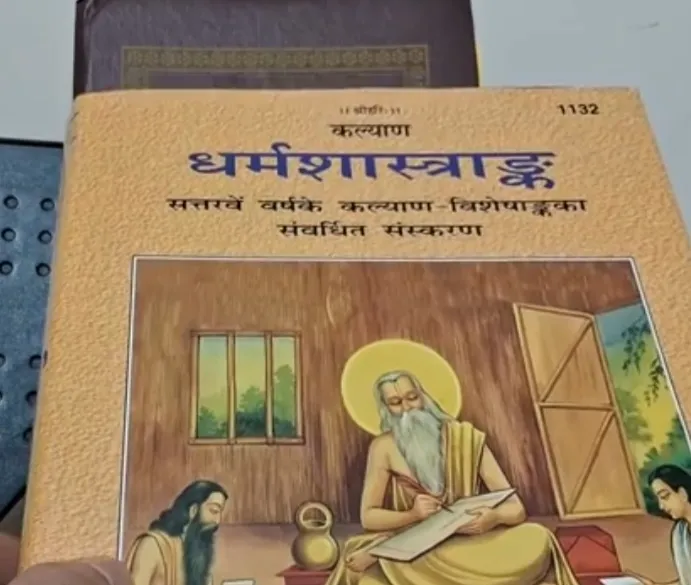
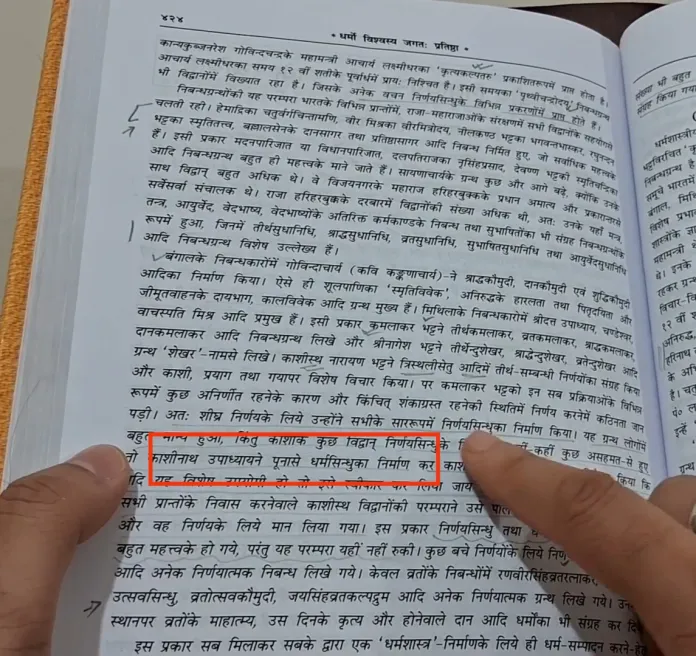
To understand the traditional nomenclature further, OpIndia delved into Sanskrit texts, specifically the Dharmasindhu. It is a reliable and authoritative text from the 17th-18th century. It was composed by Kashinath Upadhyay. The text draws upon the Vedas, Puranas, and other Hindu scriptures. According to the Dharmasindhu, the sacred Kumbh bathing ritual was called ‘Amrit Snan’ or ‘Rajasi Snan.’ This indicates that even centuries after the Mughal rule began, the original terms persisted before eventually being overshadowed.

Source: OpIndia Gujarati

Yogi government restores ancient Sanatan heritage

For years, sadhus and saints associated with various Hindu Akharas have opposed the use of ‘Shahi Snan,’ urging the government to revert to the traditional terminology. The Uttar Pradesh government, under the leadership of Chief Minister Yogi Adityanath, undertook a thorough investigation into the historical context and, acknowledging the sanctity of the tradition, renamed it ‘Amrit Snan.’ This change symbolises a return to the roots of Sanatan culture, undoing the distortions of the Mughal era.

Source: OpIndia Gujarati

The return to the original term highlights a larger effort to protect and respect India’s ancient traditions. As the Mahakumbh unfolds, it not only shows the strength of these practices but also reminds us of the cultural endurance that has survived centuries of outside influence. OpIndia will continue to explore this topic and share updates as we find more.

The article was first published in OpIndia Gujarati, which can be checked here.

Karnataka: Sheikh Nasru arrested for mutilating the udder of cows, sent to judicial custody for 14 days

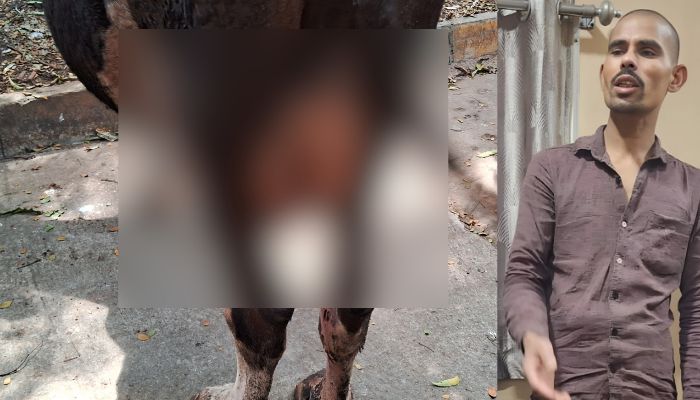
On the night of 12th January, Bengaluru Police arrested 30-year-old Sheikh Nasru for allegedly chopping off the udders of two cows and injuring another in the Vinayakanagar area of Chamarajpet. Nasru originally hails from the Champaran district of Bihar. According to the police, Nasru was in an inebriated state at the time of the crime.

Speaking to the media, Deputy Commissioner of Police, S Girish, said that Nasru acted alone and no evidence suggests that others were involved in the crime.

The incident occurred in the early hours of 12th January. Nasru was apprehended by the police on the same day at night. He has been sent to judicial custody until 25th January. According to media reports, he works as a helper in a plastic and cloth bag stitching shop located just 50 metres from the site of the incident.

Further investigation in the matter is underway.

Horrifying video of the injured cows accessed by OpIndia

OpIndia has accessed videos of the injured cows and the site of the incident.

Incident sparked outrage in the area

The incident came to light on 12th January when Karna, owner of the cows filed a complaint at Cottonpet Police Station. Bharatiya Janata Party (BJP) leaders condemned the incident and called it result of ‘Jihadi mindset’.

In a statement, Karna said, “I am deeply upset. The cows were tied near our house at night, and we found out about this cruel act in the morning. We don’t know who did this…I want justice.”

Content of the FIR

OpIndia accessed the FIR filed in the matter. In his complaint, Karna said that he earns a living by maintaining eight cows and selling their milk.

Every day, he tethers four cows near his house, and the remaining four are tethered behind the Dandumariamma Temple due to a lack of space. On 11th January, he tethered the cows, fed them fodder, and went to his house to sleep at around 11 PM.

At around 4:30 AM on 12th January, his neighbour, Sudhakar, informed him that some unknown individuals had cut the ropes securing the cows. Alarmed, he rushed to the spot where the cows were tied.

The Chief Minister of Karnataka, Siddaramaiah, had directed Police Commissioner B. Dayananda to launch an investigation into the matter and take strict action against the miscreants.