Home Blog Page 571

2,000 illuminated drones will bring to life the legendary tales of Prayag Mahatmyam and Mahakumbh: UP Govt

0

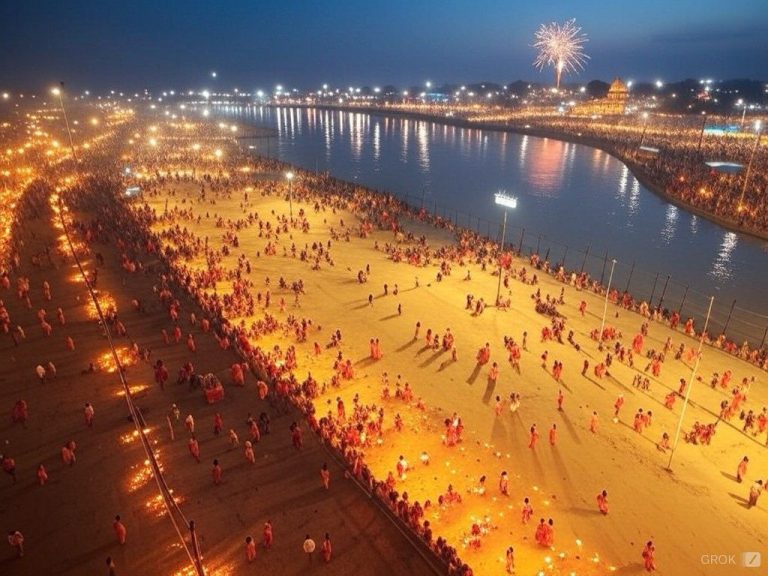
Uttar Pradesh Tourism is set to mesmerize attendees at Mahakumbh 2025 with a spectacular drone show, showcasing mythological tales linked to the Mahakumbh and Prayagraj, according to a press release.

The show will feature 2,000 drones and light up the skies over Sangam Nose, marking the grand opening and conclusion of the world-famous religious gathering.

District Tourism Officer Aparajita Singh stated that the drone show will be held at the Sangam Nose during the opening and closing of the event.

“A fleet of around 2,000 illuminated drones will bring to life the legendary tales of “Prayag Mahatmyam” and the Mahakumbh. The spectacular show will depict iconic events like the mythical Samudra Manthan (ocean churning) and the emergence of the Amrit Kalash (Nectar Pot), creating a magical visual narrative in the evening skies”, she added.

As per the release, the show will also highlight the religious and spiritual significance of Prayagraj, offering a unique experience for pilgrims and locals.

Aligned with Chief Minister Yogi Adityanath’s vision of a grand and spiritually enriching Mahakumbh 2025 the City is gearing up to witness global cultural spectacle. Preparations are in full swing.

Development and beautification work is underway across temples, Ganga ghats, parks, roads, and flyovers in Prayagraj. Additionally, visitors and pilgrims will experience several new and unique attractions during this iconic festival.

The Mahakumbh, held every twelve years, will take place from January 13 to February 26, 2025. Preparations are in their final stages, with the Uttar Pradesh Tourism Department working to provide new and exciting experiences for visitors under the guidance of CM Yogi Adityanath.

The event will feature floating restaurants, water activities, hot air balloons, and laser light shows. The Uttar Pradesh Tourism Department is introducing innovative attractions to enhance the experience for visitors.

Starting in early January, a musical fountain laser show on the Yamuna River at Kali Ghat will provide a mesmerizing experience for tourists visiting Prayagraj.

Moreover, the spectacular lighting drone show will be a highlight during the Mahakumbh, offering a memorable experience for both visitors and residents of Prayagraj.

(This news report is published from a syndicated feed. Except for the headline, the content has not been written or edited by OpIndia staff)

Anna University Sexual Assault: Madras HC slams police for blaming victim in FIR and leaking unmasked FIR, orders probe by all women SIT and compensation to the girl

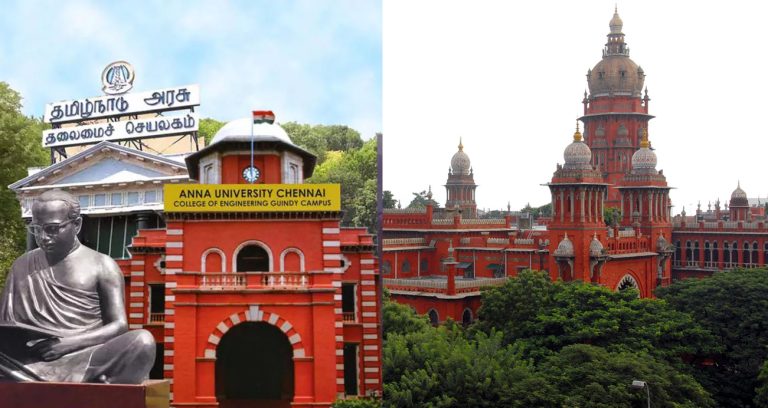
The Madras High Court on Saturday said that the FIR registered into the Anna University sexual assault case blames the victim, and slammed the police for ‘wrong wordings’ in the FIR. A vacation bench of Justice SM Subramaniam and Justice V Lakshminarayan made the comments during a special hearing into a petition seeking CBI probe into the case. The court ordered an all-women SIT probe into the case, slammed police for irregularities in the probe, ordered the state govt to pay compensation to the victim, and also asked the state to consider a probe against Police Commissioner for a press conference on the case. Further the court asked the university to allow the girl to complete the study without any fees.

After reading the FIR, Justice Lakshminarayan said that “This is pure victim blaming”, asking Attorney General PS Ramam whether he had read it. Justice Subramaniam said that the bench is sure that the FIR will not stand trial because it is wrongly worded, and blames the victim girl for the sexual assault on her.

The judge said, “We’re sure that this will not stand before any trial court. It’s blaming her for the incident. As if her dressing etc invited the incident.”

Justice Subramaniam said that the police personnel should have assisted the victim in drafting the FIR properly so that it could stand the test of trial. He asked how an FIR can be drafted like this.

The court also slammed the police after it was told that the FIR without masking the details of the victim was uploaded on website and it was downloaded by some people before it was taken down. AG PS Raman said that the FIR with unmasked details was downloaded by 14 people before it could be blocked. He said that the error took place due to transition from IPC to BNS.

However, the court didn’t accept this explanation, saying that BNS came into effect in 1st July and this is December end. The bench also wanted to know how many FIRs with sensitive information were leaked due to this error in the last five months.

The AG added that media and people who accessed the FIR should show responsibility and not disclose sensitive information in public. The bench responded by saying that the state as the power to prosecute such people.

AG Ramana also pointed out a discrepancy in involvement of another person. He said, “He’s portrayed as if he was talking to someone else during that time to give an impression that there were others involved. But we’ve received the call records and the entire time his phone was in airplane mode.”

Notably, the police commissioner had told the media that there is only one accused in the case. The court discussed whether the commissioner can make such comments during the probe, and was told by the AG that he can make comments when if there’s a law & order situation resulting from a crime. He said that the commissioner held the press conference to assure the students that police is not shielding anybody.

Additional Advocate General J Ravindran representing Anna University said that a committee has been formed to find out safety measures to be taken in future. The court said that the victim student should be allowed to continue her studies in the university, which was agreed to by the AAG.

In the final order, the court said that the FIR was not properly worded and it failed to protect the dignity of the victim girl. The court said, “Women have always been punished for the crimes against them… Society should be ashamed of blaming women. Why can’t a woman wish to walk around freely at night, dress up the way she wants, talk to her male friends?”

The order added that such victim blaming helps the perpetrators of such crimes.

The High Court also took the matter of FIR leak seriously, saying it not only breached the girl’s right to privacy but also her right to dignity. “Even if technical error, such errors should not happen in such sensational cases involving crimes against women,” said the court and ordered an investigation into the leak.

The court appreciated the courage shown by the victim for coming forward to report the case.

Moreover, the court ordered Anna University to compensate the victim by saying that she was wronged by the institution by failing to ensure her safety. Court said that the victim’s tuition fee, hostel fee etc should be let go for the future period of her study.

The court further said that the the press conference by the police commissioner without prior permission does not fall under exception, and asked the govt to initiate action against the commissioner, if needed, under relevant law.

The bench also said that there were lapses on part of the police and the university. The court finally decided to form an SIT with women police officials to look into the case.

“We hope all women SIT will take up the investigation in right earnest and file chargesheet in both the cases (sexual assault and FIR leak). No offender should be allowed to scot free irrespective of their status, position or otherwise,” the court ordered.

The High Court bench further ordered the police to provide interim protection to victim and her family, and ordered the state to pay interim compensation of ₹25 lakh to the victim for serious lapses on the part of police leaking FIR and for trauma undergone by victim and her family. Anna University was ordered to allow the victim to continue and complete her course without collecting any fees including tuition fee, hostel fee, exam fee, miscellaneous charges etc.

Pilibhit encounter: UK-based handler of Khalistani terrorists Kulbir Singh alias Sidhu revealed as mastermind

0

The investigative agencies have uncovered a direct link between the Khalistani terrorists killed in the Pilibhit encounter and Babbar Khalsa International (BKI). The agencies have revealed that United Kingdom-based handler Kulbir Singh, alias Sidhu, was the mastermind behind the grenade attack initiated by the neutralised Khalistanis in Punjab. Sidhu has a bounty of Rs 10 lakh placed on him by the National Investigation Agency (NIA).

According to media reports, Sidhu was giving instructions to the Khalistani terrorists from England. Notably, Sidhu, who is a native of Yamunanagar, is a close associate of Pakistan-based BKI leader Wadhwa Singh Babbar.

Sidhu’s role in orchestrating terror plots

Earlier, the NIA linked Sidhu to the assassination conspiracy of Vishva Hindu Parishad (VHP) leader Vikas Bagga, who was killed in Rupnagar district of Punjab in April 2023. Investigations revealed that Sidhu arranged accommodation for the terrorists in the Pooranpur region of Pilibhit. A local contact of Sidhu, Jaspal, alias Sunny, received instructions from him for arranging the accommodation.

Jaspal was arrested by the investigating agencies after being identified through CCTV footage. During interrogation, he admitted to providing support to the terrorists in arranging accommodation for them. His associate, Deepak, also helped in securing the accommodation under Sidhu’s direction. Police have intensified efforts to map Sidhu’s local connections and his role in facilitating the movement of the terrorists.

Arms and operational details

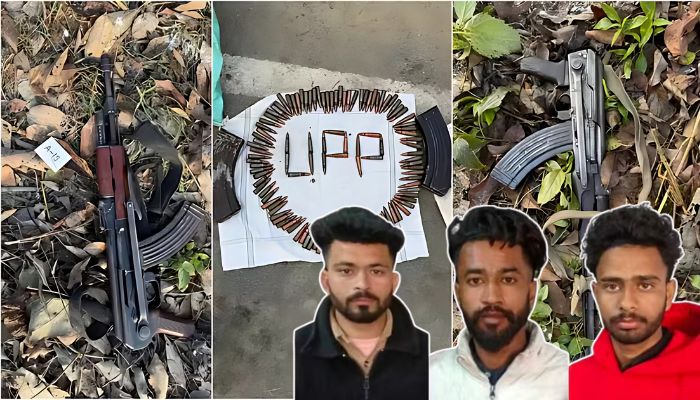
Following the encounter on 23 December, authorities recovered modified AK-47 rifles, Glock pistols, and other incriminating items from the scene. During forensic analysis of the mobile phones retrieved from the terrorists, the investigative agencies found that they were using the Armenia-based encrypted communication app, Zangi.

Zangi app’s role in encrypted communications

For those unaware, Zangi is a notorious communication application known for its auto-delete feature, which erases all data from servers within seconds. It is popular among terrorist organisations for secure communication. Although banned in India in 2023, it was not removed from the Play Store. Furthermore, it is also acessible via APK downloads. As the data gets deleted automatically, it becomes difficult for the investigative agencies to carry out surveillance. Investigators suspect the app was employed to relay coded messages between Jammu and Pakistan. The app is believed to be used by Lawrence Bishnoi gang as well.

The terrorists’ route and plans

According to media reports, after the grenade attack in Gurdaspur, Punjab, the three terrorists embarked on a 760-kilometre journey to Pilibhit via Bareilly. They had a stopover at Harji Hotel in Pooranpur, where they stayed for 25 hours before being tracked down. The owner of Harji Hotel, Harwinder Singh, also hails from Punjab. Superintendent of Police (SP) Avinash Pandey stated that the terrorists used fake Aadhaar cards for hotel check-in. The agencies believe that Sidhu might have helped them in securing forged documents.

Reports suggest that the terrorists had planned to escape to Bihar after their stay in Pilibhit, possibly using the Nepal border for international transit. Police are also tracing the financial transactions linked to the conspiracy, including payments made from a Pooranpur resident’s account to hire assassins.

The UK connection and global ramifications

Sidhu reportedly has a large network that extends beyond India, with links to Britain and Pakistan. Punjab Police have revealed that Sidhu worked closely with Ranjeet Singh Neeta, the Pakistan-based chief of Khalistan Zindabad Force (KZF). Neeta, a wanted criminal since the 1980s, is accused of orchestrating bombings and smuggling weapons into India using drones.

Another name that has emerged during the investigation is Jagjeet Singh, alias Fateh Singh Baghi, who reportedly worked in the British Army. The NIA recently raided his family home in Punjab as part of the ongoing investigation.

Implications for border security

The encounter has heightened concerns over infiltration and recruitment by Khalistani groups along the India-Pakistan border, especially in Punjab and Jammu and Kashmir. The KZF, known for exploiting vulnerable youths with financial incentives, is under scrutiny for its reliance on small-time operatives for major crimes. The elimination of the three terrorists is expected to deter future recruits and disrupt KZF’s local network.

Pilibhit encounter

On Monday (23rd December), three Khalistani terrorists were killed in a police encounter in the Pilibhit district of Uttar Pradesh. They were initially treated at the Community Health Centre in Puranpur, before being shifted to the district hospital where they were declared dead on arrival. The Khalistani terrorists neutralised in the police encounter included Gurwinder Singh, Virendra Singh, and Jasanpreet Singh. They were wanted for attacking a police post with a grenade in the Gurdaspur district of Punjab.

Did you know: PMO under Manmohan Singh blocked 10000 Twitter users for ‘making fun’ of him

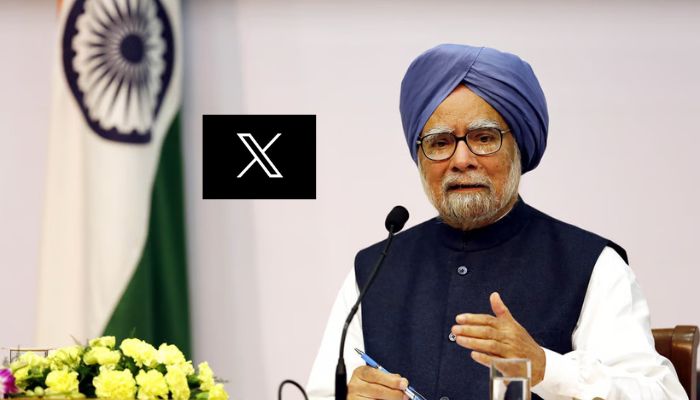
The Prime Minister’s Office (abbreviated as PMO) under the Congress-led-United Progressive Alliance (UPA) had blocked nearly 10,000 accounts on X (formerly Twitter) for ‘making fun’ of late Prime Minister Manmohan Singh.

The matter came to light in May 2014 after Narendra Modi was elected to the Office of the Prime Minister. By then, PMO had received 4000 requests to unblock these accounts.

The X (formerly Twitter) handles were reportedly blocked by a team led by Pankaj Pachauri, the media advisor of Manmohan Singh.

A total of 10,000 odd X handles, previously censored by Manmohan Singh’s regime, were finally unblocked by the PMO under the Narendra Modi government.

Nearly 2,000 followers have already been unblocked. By the end of this week, we would be able to unblock all the blocked followers. This number is expected to be around 8,000-10,000,” a BJP member informed DNA in 2014.

In 2012, PMO under Manmohan Singh coerced X (formerly Twitter) to block a dozen parody handles of Manmohan Singh. Following the media uproar, these accounts were unblocked.

The 2013 transparency report by Facebook also revealed that India under Manmohan Singh had made the most censorship requests i.e. about 4765 times.

Manmohan Singh passed away on Thursday (26th November) at the age of 92.

‘Congress did not even bother to call condolence meeting’ – Former President Pranab Mukherjee’s daughter Sharmistha slams party leadership

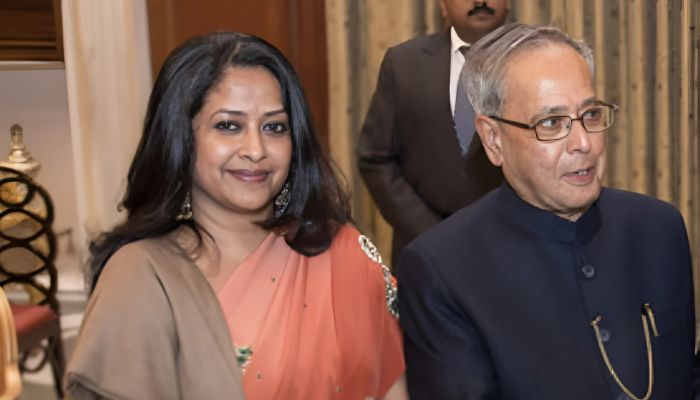
On 27th December, Sharmistha Mukherjee, daughter of former President Pranab Mukherjee, criticised Congress President Mallikarjun Kharge for proposing to create a separate memorial in Delhi for former Prime Minister Dr Manmohan Singh. Notably, Kharge had written to Prime Minister Narendra Modi, requesting him to allocate land in Delhi for the last rites of Dr Singh so that a memorial could be built later. Dr Singh passed away on the night of 26th December at AIIMS in Delhi due to age-related illness at the age of 92.

In a post on X, Sharmistha pointed out that when her father, former President Mukherjee, passed away in August 2020, Congress did not even bother to call the Congress Working Committee for a condolence meeting. She further accused the Congress party of misleading her on the matter. In her post, she wrote, “When Baba passed away, Congress didn’t even bother to call CWC for a condolence meeting. A senior leader told me it’s not done for Presidents. That’s utter rubbish as I learned later from Baba’s diaries that on KR Narayanan’s death, CWC was called and a condolence message was drafted by Baba only.”

According to her, a senior Congress leader had informed her at the time of her father’s death that it was not a tradition for the party’s working committee to convene condolence meetings for deceased Presidents of India. However, later she found out through her father’s diaries that a CWC meeting was in fact convened following the demise of former President KR Narayanan, and it was Pranab Mukherjee himself who had drafted the condolence message.

Sharmistha Mukherjee wrote the post while quoting former Congress leader CR Kesavan’s post on the social media platform X. Kesavan, in his post, highlighted how the Congress sidelines party leaders who were not part of the Gandhi family. Kesavan referenced the book written by Dr Sanjaya Baru, The Accidental Prime Minister, which noted that the Congress-led UPA government did not establish a memorial in Delhi for former Prime Minister PV Narasimha Rao, who passed away in 2004. Kesavan had joined BJP in March 2024 and currently serving as National Spokesperson of the party.

Baru was Dr Singh’s media advisor from 2004 to 2009 and a former editor of The Financial Express. In his book, Baru alleged that despite being in power from 2004 to 2014, Congress never took the initiative to build a memorial for Rao in Delhi. Furthermore, it was also alleged that Congress was not in favour of Rao’s last rites taking place in Delhi and preferred that they occur in his hometown, Hyderabad.

Kesavan wrote, “The cremation did take place in Hyderabad, with Rao’s body not even laid in state at the All India Congress Committee’s headquarters. The historical sins of the unprincipled Congress will never be forgotten nor forgiven by our nation.”

Sharmistha had previously faced online attacks by Congress workers and supporters after the publication of her book ‘Pranab My Father: A Daughter Remembers’ after which she wrote an open letter to Congress leader Rahul Gandhi in February 2024 stating, “As you seem to be a torchbearer of Freedom of Expression, you should know that FoE involves not just praising someone, but also the ability to tolerate criticism gracefully. But you seem to have failed miserably to convince even your own followers of one of the most crucial Rights granted by our Constitution, which is also one of the core values of Congress. Your favourite slogan of ‘Nafrat ke Bazaar me Mohabbat ki Dukan’ also seems to fall on deaf ears of your own followers as they unleash all their ‘Nafrat’ on anyone daring to criticize you.”

Land to be allocated for Dr Singh’s memorial

On 27th December, the Ministry of Home Affairs issued a fact sheet on the matter regarding the land for the memorial. In a press release, the MHA noted, “This morning, the Government received a request to allocate space for a memorial for former Prime Minister Late Dr Manmohan Singh from the Congress Party President. Immediately after the Cabinet meeting, HM Shri Amit Shah communicated to Congress President Shri Kharge and the family of Late Dr Manmohan Singh that the Government will allocate space for the memorial. In the meantime, cremation and other formalities can happen because a trust has to be formed and space has to be allocated to it.”

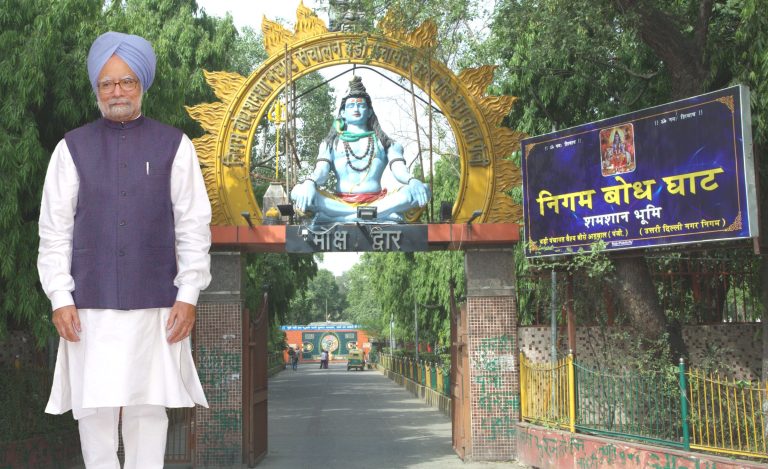
The government added that the cremation may take place at Nigambodh Ghat, a public crematorium.

Dr. Manmohan Singh was an erudite humble man, but let that not whitewash crimes of UPA – A reminder of unfortunate legacy

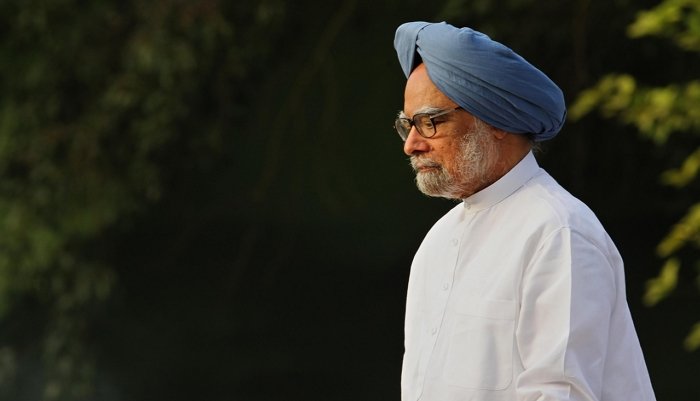
Dr Manmohan Singh, the former Prime Minister of India breathed his last on the 26th of December 2024 at the age of 92. Born on 26th September 1932 in Gah village in Pakistan in the then British India, Dr Singh served as the Prime Minister for two consecutive terms from 22nd May 2004 to 26th May 2014. The quiet and humble statesman played a key role as the Finance Minister in the Narasimha Rao government in navigating India out of the economic crisis in the 1990s. With policies centred around liberalisation, Dr Singh efficiently played his part in bringing India from the brink of economic collapse to unprecedented reforms and transformation.

In 1991, India faced a severe balance of payments crisis, with a high fiscal deficit, increasing external debt, and dwindling foreign exchange reserves. To tackle this crisis, the Chandra Shekhar-led minority government decided to pledge a portion of India’s gold reserves, around 47 tonnes, as collateral for foreign exchange borrowing. This arrangement provided immediate relief to India’s foreign exchange problem, allowing the country to continue importing necessary items and performing fundamental economic tasks. However, pledging gold was a moment of international humiliation and emotional trauma for the country.

Riding on the sympathy wave following former Prime Minister Rajiv Gandhi’s assassination, the Congress party came to power under the leadership of PV Narasimha Rao and  Dr Manmohan Singh became the Finance Minister of India.

In his first budget speech in 1991, Dr Singh had said that “no power on Earth can stop an idea whose time has come”, and with trade liberalisation, devaluing the currency, reducing import tariffs and privatising state-owned companies to several other economic reforms, Dr Singh pulled India back from the brink of economic collapse to the path of economic growth though not without the aid of the International Monetary Fund (IMF). In fact, it was the IMF which recommended deregulation, increased foreign direct investment, trade liberalisation, tax reform, financial sector reforms, public enterprise reform etc. These economic reforms implemented under the leadership of the then Prime Minister Narsimha Rao and FM Dr Manmohan Singh had a massive impact on the Indian economy coming on track, increased literacy and life expectancy rates, decreased infant mortality rate and much more.

When Finance Minister Dr Manmohan Singh wanted to allocate Rs 100 crore to the Rajiv Gandhi Foundation

While Dr Manmohan Singh was a man of impeccable character and was a polite, scholarly gentleman, his time as the Prime Minister of India will be remembered for massive governance failures, corruption scandals and an opprobrious erosion of democratic ideals. Besides the quiet and gentlemanly demeanour, Dr Singh was also known for his loyalty and closeness with the Gandhi family, so much so that during his tenure as the Finance Minister, Manmohan Singh had tried to allocate a sum of Rs 100 crores from the Union Budget to the Sonia Gandhi-headed Rajiv Gandhi Foundation, to be donated over a period of five years, and it was stalled only after a huge uproar. In addition, the Union Budget was to also keep aside another Rs 250 crores if the 100 crores were not enough. Back then the Janata Dal MP Chandra Jeet Yadav had questioned Dr Singh if he was on behalf of the cabinet as the finance minister of the country or if he is representing the Congress royal family.

Dr Manmohan Singh’s tenure as Prime Minister of India and the media

When the incumbent Atal Bihari Vajpayee-led BJP government faced surprising defeat in 2004, it was expected that Sonia Gandhi would lead the UPA-led government, however, Gandhi chose Dr Singh to lead the country.

In the current political landscape, a section of the mainstream media is labelled as “Godi media” and accused of being supportive of the Modi government. It is claimed by the anti-BJP political parties, including Congress, that media enjoyed journalistic freedom when Manmohan Singh was PM, the media during the UPA era was the actual definition of what “Godi media” is.

During Manmohan Singh”s tenure as the Prime Minister, NDTV had to pull a story which could have shown the UPA government in a bad light. A former journalist with NDTV, Samarendra Singh had revealed how back in 2005, a year after Dr Manmohan Singh became the Prime Minister, he was forced to pull down an NDTV story which was based on ‘report card’ of the ministers of the UPA. The incident has also been discussed in Sanjaya Baru’s book ‘The Accidental Prime Minister’, where it has been clearly stated that how Prannoy Roy, the promoter of the NDTV was schooled by the then Prime Minister Manmohan Singh for doing a story on evaluating the performance of few cabinet ministers who had received a negative review.

In May 2005, NDTV ran a story that Minister of External Affairs, Natwar Singh, a Gandhi Parivar loyalist had secured a ‘low score’ on the PM’s report card and was likely to be dropped from the cabinet. This, however, reportedly enraged Manmohan Singh who then rebuked Prannoy Roy and made sure that the story was dropped.

In another incident revealing the truth of  PM Singh’s supposed ‘media-friendly’ approach, journalist Arnab Goswami was stopped by the PMO officials from questioning. It must also not be forgotten how the Manmohan Singh-led government had allowed lobbyists to play a larger role during the selection of cabinet ministers during the UPA government, as opposed to the present government who has ignored and shown the door to several journalists-lobbyists of the Congress era.

Not to forget the infamous Radia Tapes case, one of the many blots on the UPA government, this case acquainted the people of India with how the narrative is set, Cabinet berths negotiated, the disgraceful nexus between journalists and politicians, and the political impunity to brush aside the scandal. It also emerged that several ‘Congress-friendly’ journalists were writing paid articles and lobbying for the UPA government. Interestingly, it was reported in 2014 that the government spent Rs 2048 crores in just three years for publicity.

Back in 2012, Congress MP Meenakshi Natarajan brought a private members bill that sought to ‘regulate’ the media. This bill aimed at empowering the government to ban coverage of events that it deemed a ‘threat’ to national security. In addition, the bill sought to lay down certain ‘standards’ for media to follow. A year before, the then communications and IT minister Kapil Sibal sought to ‘regulate’ the social media. The UPA II was particularly hostile to the section of media that diligently reported on the slew of scams unearthed one after the other exposing the rampant corruption. On one hand, the voice of the section of the media not genuflecting before the Congress government was being muzzled, on the other,  the politician-corporate nexus grew and affected the media as well.

Prime Minister Manmohan Singh, in his numerous foreign visits as prime minister, took several journalists along repeatedly. Some of the journalists accompanied PM Singh over 20 times. However, this ‘junket tradition’ was discontinued by Narendra Modi when he assumed office in 2014.

The UPA era of policy paralysis

The PM Manmohan Singh government, particularly the second tenure was marred by policy paralysis with much-need reforms stalling and economic growth decelerating. This policy paralysis brought India’s GDP down to its slowest 4.6% rate for that decade. Take Goods and Services (GST) as an example. Although GST was originally conceptualised by former Prime Minister Atal Bihari Vajpayee, the Congress government despite wanting to bring a GST bill, delayed its implementation due to indecisiveness over how it should be structured leading to India missing out the early benefits from what could have been a landmark tax reform. This inordinate delay caused a Rs 12 lakh crore loss to the country, as  Congress leader Veerappa Moily once said.

It was only after, Narendra Modi-led NDA came to power that GST was rolled out in July 2017.

Despite the need for vital banking reforms, particularly following the 2008 global financial crisis, there has been an apparent lack of progress. The Manmohan Singh-led government was chastised for failing to effectively address the mounting Non-Performing Assets (NPAs), which eventually became an enormous financial burden. Moreover, the Environment, Finance, and Petroleum ministries were often found grappling with internal policy disagreements contributing to stagnation in decision-making.

Recently, former RBI governor Raghuram Rajan shed light on the alarming situation that prevailed back then and said that land approvals, environmental clearance processes etc became major bottlenecks for key projects. “Projects weren’t getting land, environmental permissions, etc. So, they were building NPAs in the financial system, which is typical after a period of exuberance, euphoria…Once the crisis hit, project timelines stretched significantly. During my predecessor’s tenure, the RBI implemented a policy allowing a moratorium on declaring loans as non-performing. However, this resulted in banks holding onto large chunks of bad loans without recognising them,” Rajan said.

As per a 2014 IndiaToday report, “the Ministry of Statistics and Programme Implementation (MOSPI) reveal that as many as 301 central sector projects, each involving an investment of more than Rs 150 crore, have been delayed resulting in cost overruns to the tune of a whopping Rs 1.74 lakh crore.”

The PM Manmohan Singh-led government also crumbled under the pressure of “Coalition Dharma.  As the UPA government was a coalition, the burden to keep allies satisfied often culminated in policy compromises or delays. This decision-making paralysis was seen in the Congress-led government’s handling of the telecom industry, which resulted in the 2G spectrum scam causing a presumed loss of Rs 1.76 lakh crore, wherein Telecom Minister A Raja was one of the accused . It was seen how political survival took precedence over strategic governance. 

Evidently, the UPA government was out of touch with the rapid reforms needed for India’s economic and social growth, leaving a legacy where political expediency and bureaucratic inertia overshadowed potential landmark reforms.

The legacy of unchecked corruption

One of the biggest reasons behind mounting public anger against the UPA II government was rampant corruption and unearthing of bigger scams one after the other alongside inflation. PM Singh’s tenure was marred by several high-profile corruption scandals, including the 2G spectrum case wherein under-pricing of 2G spectrum licenses led to a presumed loss of Rs 1.76 lakh crore to the exchequer, the Commonwealth Games (CWG) scam worth Rs 70,000 crore wherein mismanagement and corruption in the organisation of the sporting tournament through inflated costs, shoddy construction, kickbacks and funds misuse, AgustaWestland chopper scam involving Rs 3600 crore, Tata trucks scam resulting in the siphoning of Rs 750 crores of government funds, cash-for-votes scam, Adarsh scam, Satyam scam and the coal allocation scam among others.

While Congress today presents cataclysmic measures like caste-based wealth redistribution and accuses the Modi government of being hand in gloves with those it calls ‘crony capitalists’, the UPA era probably witnessed more scams than major policies it rolled out. Congress talks about defending democracy and constitution, however, the alleged cash-for-votes scam, wherein BJP MPs were allegedly offered bribes to support Congress in a key no-confidence vote in July 2008, stands out as a stark example of how the influence of money power undermined the very essence of parliamentary democracy. Later that year, a parliamentary committee handed clean chit to the accused leaders citing ‘lack of evidence’.

Misuse of federal probe agencies to keep political adversaries in check

When out of power at the Centre since 2014, Congress claims that the democratic institutions and probe agencies are being misused by the Modi government against opposition parties, however, it was the UPA government that reduced the Central Bureau of Investigation (CBI) to a “caged parrot”, as the Supreme Court said back in September 2013 during one of the hearings pertaining to the Coal Scam. Years later, a special CBI court sentenced a three-year jail term to HC Gupta, who served as the Union Coal secretary in Manmohan Singh-led government.

Not to forget, how the then Gujarat Chief Minister Narendra Modi and cabinet minister Amit Shah were hounded for years by the ruling Congress governments through the CBI in the Sohrabuddin Sheikh encounter case. It was eventually observed by the CBI court that a larger conspiracy was hatched by the CBI under the then Congress government to implicate political opponents.

Incidentally, back in 2010, Gujarat-cadre IPS officer Gita Johri filed a plea in the Supreme Court alleging that she was being pressured by the CBI to implicate BJP’s Amit Shah and some other political leaders in the Sohrabuddin Sheikh encounter case.

The CBI allegedly pressured former TRAI chairman Pradip Baijal to incriminate industrialist Ratan Tata and former Cabinet minister Arun Shourie in the 2G scam case.

Similarly, retired IB officer Rajinder Kumar to accuse then-Gujarat Chief Minister Narendra Modi in the Ishrat Jahan encounter.

In another such incident, Satish Verma, the SIT chief, allegedly tortured former Under Secretary R.V.S. Mani in order to accuse a senior IB official in the Ishrat Jahan case. The Congress government is also accused of trying to erase Jahan’s links to Lashkar-e-Taiba.

Then IPS Sanjiv Bhatt tried to falsely implicate Narendra Modi in the 2002 Gujarat Riots case around the same time. The email exchanges showed that Bhatt was in touch with the then Gujarat leader of opposition Shaktisinh Gohil, FCRA violation accused Teesta Setalvad among others.

Attacks on political opponents, soft on terrorism

While the Congress party used all the “Saam, daam, dand, bhed” against its political adversaries, it was quite soft on Pakistani state-sponsored Islamic terrorism, so much so that Prime Minister Manmohan Singh ended up legitimising Pakistan’s India interference in Balochistan allegation in a joint statement with his Pakistani counterpart in Sharm el-Sheikh. Back in 2009, then PM Singh and his Pakistan counterpart Yousaf Raza Gilani, met during a meeting in Egypt’s Sharm el-Sheikh. Here, PM Singh agreed to make a mention of Balochistan. “Prime Minister Singh reiterated the need to bring the perpetrators of the Mumbai attacks to justice. Prime Minister Gilani assured that Pakistan will do everything in its power in this regard….Prime Minister Gilani mentioned that Pakistan has some information on threats in Balochistan and other areas,” the 2009 joint statement reads.

This was in sharp contrast to India’s usual stand on Balochistan-related issues. Earlier, India refrained from making any reference in joint statements since India has strongly denied any involvement in Balochistan liberation resistance. Instead of snubbing Pakistan for providing a safe haven to Mumbai 26/11 attack mastermind Hafiz Saeed and his Islamist terrorist organisation, PM Singh ended up allowing Pakistan to accuse India of fomenting insurgency in Balochistan. Pakistan managed to make India acknowledge its ‘involvement’ in Balochistan. PM Singh’s faux pas altered the Balochistan issue from a bleeding wound into one caused by alleged Indian meddling.

To this day, it remains unclear as to what made PM Singh take a sudden shift from India’s stand, and inadvertently give clean chit to India’s perennially hostile neighbour.

On 26th November 2008, Ajmal Kasab and 9 other Pakistani Jihadis entered Mumbai via sea route, and attacked various locations in the southern part of the city, including Nariman House, Chhatrapati Shivaji Terminus, Leopold Cafe, and grand hotels like Taj Palace and Trident leaving 166 innocent people dead and over 300 injured. And the Manmohan Singh government did what it deemed best to do. Nothing!

Despite a disastrous handling of the 26/11 attacks, PM Singh somehow found it appropriate to congratulate himself for doing nothing and even sought votes on the basis of it in the 2009 elections.

While the Modi government discontinued any bilateral talks with Pakistan, and approved surgical strikes and airstrikes in response to Pakistani aggression, PM Singh continued to do nothing even when his party leaders were politicising the Mumbai attacks and toeing the narrative of Pakistan that it wasn’t involved in the attack. Not to forget, then Home Minister Sushil Kumar Shinde had even declared RSS-BJP terror groups and Congress leader Digvijay Singh attended the launch of a propaganda book by Aziz Burney accusing RSS of carrying out Mumbai attacks. While the author of the contentious book later apologised to RSS, Digvijay Singh never cared to issue an apology and neither did PM Singh find it necessary to throw Digvijay Singh out of Congress or even rebuke him.

Congress government’s bonhomie with Kashmiri terrorists like Yasin Malik who killed IAF officers and was actively involved in propagation of separatist ideology, is also quite widely known. Malik was invited to a meeting in 2006 by then-prime minister Manmohan Singh at his official home in New Delhi. As part of his outreach campaign with the political leaders, separatists and other parties in Jammu and Kashmir, the prime minister also had important conversations with Yasin Malik. His viral photographs with the terrorist as the two smile joyfully emerged as one of the most harrowing images of the recent past, especially for the people whose lives were ruined by the latter.

Was Manmohan Singh just a rubber stamp

Like it or not, Sonia Gandhi was the de-facto leader of the UPA coalition. One does not need to rely on BJP’s allegations to authenticate this. In the book “Accidental Prime Minister — The Making and Unmaking of Manmohan Singh’ by Sanjay Baru, who was the media advisor of then PM, some shocking revelations were made in this regard.

Baru wrote in the book that through bureaucrat Pulok Chatterjee, the principal secretary to the Prime Minister, then-Congress President Sonia Gandhi was “privy to the files to be cleared by the PM.” He noted, “[Chaterjee] had regular, almost daily meetings with Sonia at which he was said to brief her on the key policy issues of the day and seek her instructions on the important files to be cleared by the PM.”

Baru further said in his book that in Singh’s first cabinet, no one felt they owed their position or portfolio to the then-PM. At the same time, the Congress spokespersons did their best to project Sonia Gandhi as the “boss.” Baru added, “He would always be tormented by the question of whether he was his own man or Sonia’s puppet.”

He also said that Sonia Gandhi deliberately gave the finance portfolio to Pranab Mukherjee after UPA won a second term, even though Singh wanted to give finance ministry to his principal economic advisor C Rangrajan. PM Singh was also against induction of 2G scam accused A Raja in the central cabinet, however, Congress and DMK’s pressure overpowered his will.

It would not be wrong to say that Prime Minister Manmohan Singh’s tenure was actually a decade of Sonia Gandhi’s time of enjoying power without accountability. There was a National Advisory Council headed by none other than Sonia Gandhi. This NAC acted much like a de facto PMO during the UPA era. Notably, Sonia Gandhi had established the NAC on 4th June 2004, days after her ‘inner voice’ asked her to step aside and not become India’s Prime Minister. The NAC files made public in 2017 revealed that this Council headed by Sonia Gandhi used to take the final call on policy decisions instead of its role of advising and former PM Manmohan Singh carried out the instructions sent by the NAC. OpIndia’s detailed report on how Sonia Gandhi communicated her ‘recommendations’ to the UPA government and how ‘recommendations’ were not only accepted but effectively implemented can be read here.

While Dr Manmohan Singh will be remembered for his exceptional role in the economic reforms in the early 1990s as the Finance Minister and his graceful demeanour, his tenure as Prime Minister will be remembered for massive misgovernance, wherein corruption was rampant and the machinery of democracy was manipulated as per convenience. The UPA era will serve as a cautionary tale for Yes, History will be kinder to MMS, but only as a person not actively in control under whose watch such crimes happened. History will be kinder to the person, not to the times, the legacy.


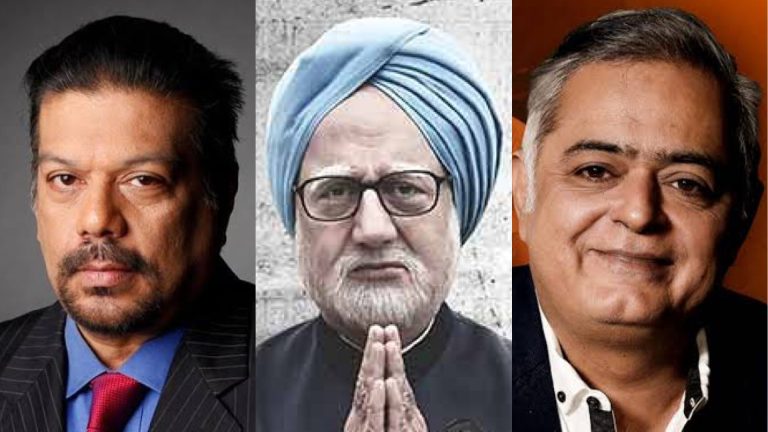
Filmmaker Hansal Mehta endorses Radia boy Vir Sanghvi’s post criticising ‘The Accidental Prime Minister’, Anupam Kher reveals Mehta was its creative director

Hours after the death of former Prime Minister Manmohan Singh, propagandists exploited his death to score political brownie points and advance their agenda.

One such individual was Vir Sanghvi, popularly known as Radia Boy for allegedly being linked to corporate lobbyist Niira Radia who was known for securing favourable deals for her clients from the UPA government.

“If you want to remember the lies that were told about Manmohan Singh you should rewatch The Accidental Prime Minister, It is not only one of the worst Hindi movies ever made but is an example of how media was used to tarnish the name of a good man,” tweeted Sanghvi.

Sanghvi’s tweet criticising ‘The Accidental Prime Minister’ movie was endorsed by filmmaker Hansal Mehta, who tweeted “+100” to express his support for Sanghvi’s comments.

This did not go over well with Anupam Kher, the lead actor in The Accidental Prime Minister, who pointed out that Mehta was, in fact, the film’s creative director.

“The HYPOCRITE in this thread is NOT @virsanghvi. He has the freedom to not like a film. But @mehtahansal was the #CreativeDirector of #TheAccidentalPrimeMinister. Who was present at the entire shoot of the film in England! Giving his creative input and must have taken the fee also for it,” Kher tweeted.

“So for him to say 100% to #VirSanghvi’s comment is so messed up and full of double standards! Not that I agree with Mr. Sanghvi but we are all capable of doing bad or indifferent work. But we should OWN it. Not like #HansalMehta trying to earn some brownies from a certain section of people. Common Hansal!! Grow up! I still have all our videos and pics of the shoot together!” Kher further added.

Kher also shared old tweets from Hansal Mehta where he is seen expressing his admiration for actors who were part of ‘The Accidental Prime Minister’.

“Dear @AnupamPKher. Sir, it was a privilege being with you as you walked the tightrope between caricature and character while playing Dr Manmohan Singh in #TheAccidentalPrimeMinister. Thank you, sir. The audience will watch and judge our efforts today. Best wishes and love,” Mehta had tweeted.

Similarly, Mehta had also posted glowing tweets for other actors, namely Vijay Gutte and Akshaye Khanna, who were also a part of the film.

Sanghvi posted the tweet following the demise of former PM Manmohan Singh. Singh passed away on Thursday, December 26, at 92 after a prolonged illness. He was the Prime Minister of the country from 2004 to 2014.

State funeral of former PM Dr Manmohan Singh to be held at Nigambodh Ghat in Delhi on Saturday afternoon

0

Last rites of former Prime Minister Manmohan Singh are to be performed at the Nigambodh Ghat in the national capital on Saturday afternoon.

“Dr Manmohan Singh, former Prime Minister passed away at 9.51 PM on December 26, 2024 at AllMS Hospital, New Delhi. It has been decided by the Government that State funeral will be accorded to Dr Manmohan Singh. The funeral will take place at 11:45 AM on December 28, 2024 at Nigambodh Ghat, New Delhi. The Ministry of Defence is requested to make arrangements for State funeral will full military honours,” the Ministry of Home Affairs stated.

Manmohan Singh passed away at AIIMS, Delhi, on Thursday evening at the age of 92 due to age-related medical conditions. He had a sudden loss of consciousness at home after which he was rushed to the AIIMS Delhi.

Manmohan Singh was born on September 26, 1932. Apart from being an economist, Manmohan Singh served as Reserve Bank of India governor from 1982-1985. He was the 13th PM of India with his tenure from 2004-2014.

He spent five years between 1991 and 1996 as India’s Finance Minister and his role in ushering in a comprehensive policy of economic reforms is recognized worldwide. In the popular view of those years in India, that period is inextricably associated with the persona of Singh.

Manmohan Singh’s government also introduced the National Rural Employment Guarantee Act (NREGA), which later came to be known as MGNREGA.

The Right to Information Act (RTI) was passed in 2005 under the Manmohan Singh government, which made the transparency of information between the government and the public better.

He retired from the Rajya Sabha earlier this year after serving for 33 years.


(This news report is published from a syndicated feed. Except for the headline, the content has not been written or edited by OpIndia staff)

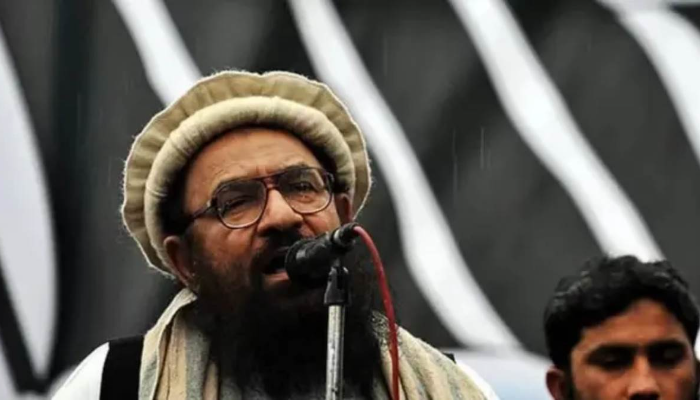
Abdul Rehman Makki, the Mumbai 26/11 attack plotter, dies: Read how the LeT terrorist who wanted “rivers of blood” to flow in India died

Hafiz Abdul Rahman Makki (70), the deputy chief of the outlawed Jamaat-ud-Dawa (JuD) and the brother-in-law of the mastermind of the 2008 Mumbai attacks, Hafiz Muhammad Saeed passed away from a heart attack in Lahore on 27th December. According to the JuD, he had been at a private hospital in Lahore for a few days, receiving treatment for high diabetes. The Pakistan Mutahida Muslim League (PMML) declared that Makki supported Pakistani ideology, in a statement.

He participated in fundraising efforts for the operations of Lashkar-e-Taiba/Tayyiba (LeT), a US-designated Foreign Terrorist Organization (FTO), and held several leadership roles within the terror outfit. Makki was a major conspirator in the 2008 Mumbai terror attacks of 26/11, which left 175 people dead including the nine terrorists and over 300 injured. He was subjected to an arms embargo, a travel ban and an asset freeze and the United Nations named him a global terrorist in 2023. He was also wanted by the Indian government. 

Makki was Hafiz Saeed’s virtual shadow before his 36-year prison sentence in 2019. He then continued to front for Saeed, as he had done for over ten years with the LeT/Jamat-ud-Dawa commander who was in and out of house arrest and classified by the United Nations Security Council as a terrorist following the 2008 Mumbai attacks. Makki would attend the court proceedings of Saeed’s petitions challenging his arrest under the Maintenance of Public Order at the time.

Makki wanted “rivers of blood” in India

Makki frequently attended the February Kashmir Solidarity Day demonstrations in Islamabad. He vowed “rivers of blood” in India for not ceding Kashmir to Pakistan and threatened to annex it by force during one such rally in February 2010, two years after the Mumbai attacks and made a similar speech later that year.

After Saeed and the LeT front group JuD were listed in 2008 under UNSC Resolution 1267, Makki managed to avoid being designated. Sanctions against people and organizations that enable or fund the actions of ISIL (Islamic State of Iraq and the Levant), Al-Qaida, associated individuals, groups, undertakings and entities are laid out in Resolution 1267. He was included in the United States Treasury Department’s list of designated and sanctioned terrorists in November 2010 after making threats of violence in India for several months.

“Treasury also acted against Hafiz Abdul Rahman Makki, head of LeT’s political affairs department, for acting for or on behalf of LeT,” the department declared at the time. It added that Makki played a key role in raising money for LeT, including “approximately $165,000 to a LeT-affiliated madrassa and approximately $248,000 to a LeT training camp.”

A $2 million reward was also offered for information about him. On hearing days, he marched into courtrooms in Lahore and Islamabad alongside Saeed’s attorney, JuD cadres, and other supporters to observe the proceedings. A $10 million US bounty for information regarding Saeed was also challenged by him and Saeed in a joint appeal to the Lahore High Court in 2014. The two terrorists claimed that the US bounties were a pressure technique “at the behest of India,” as Saeed was getting ready to become a full-time politician at the time.

Makki was one of six people acquitted by the Lahore High Court in November 2021 of charges of sponsoring terrorism through the charity Al Anfal, which is a front for the LeT. A lower court in Pakistan condemned Makki to six months in prison after the Punjab Police’s Counter Terrorism Department filed more than 40 complaints against Makki and Saeed, among other JuD members. Saeed was found guilty on many counts and sentenced to 36 years in prison, as an eyewash due to the mounting global pressure. He is held at the Kot Lakhpat jail in Lahore.

Designated as a global terrorist in 2023

The Financial Action Task Force (FATF), a watchdog group established to prevent money laundering and terrorist financing, put pressure on Pakistan to start cracking down on the LeT/JuD in 2017. Saeed was put under house arrest, as he had been on several occasions previously and was later freed later that year. Pakistan prohibited JuD the next year by its own 1997 Anti-Terror Act, which was later modified as the Anti-Terrorism Ordinance, 2018. FATF, however, asked Pakistan to do more after grey-listing it that year.

Pakistan detained Saeed again in July 2019, fearing that the country would be blacklisted, or added to a list of nations the FATF deems to be uncooperative in the battle against money laundering and terrorism financing. Police stations in Lahore, Gujranwala, Multan, Faisalabad, and Sargodha had reportedly filed 23 FIRs (First Information Reports) against him and other JuD terrorists, including Abdul Rehman Makki, before Saeed’s arrest.

On 15th May 2019, Makki was apprehended for hate speech, however, escaped conviction. Notably, India prioritized naming terrorists based in Pakistan during its 2021–2022 term at the United Nations. Sajid Mir (LeT), Shahid Mahmood (LeT), Talha Saeed (LeT), Abdul Rehman Makki (LeT), and Abdul Rauf Asghar (Jaish-e-Mohammed, JeM) were the five names that India submitted for designation under 1267 in 2018. One member state initially put each of these five names on technical hold, but the other 14 council members approved their listing.

On 1st June 2022, India filed Makki’s case, with the US joining as a co-designating state. A joint US-Indian proposal to add him to the UN Security Council’s 1267 Al-Qaida Sanctions Committee was abruptly shelved by China on 16th June 2022 and then extended again in mid-December after the six-month timeframe. The India-US attempts to designate him transpired when FATF was deliberating about taking Pakistan off of its grey list which eventually took place in October 2022. However, Makki was officially named a global terrorist, due to relentless efforts by India, but, he was not arrested in Pakistan.

He was listed on 16th January 2023, under paragraphs 2 and 4 of United Nations resolution 2368 (2017) for association with ISIL or Al-Qaida. His actions included “participating in the financing, planning, facilitating, preparing, or perpetrating of acts or activities by, in conjunction with, under the name of, on behalf of, or in support of,” “recruiting for,” or “otherwise supporting acts or activities of” and “either owned or controlled, directly or indirectly, by, or otherwise supporting” Lashkar-e-Tayyiba (LeT).

He was a member of LeT’s Shura (ruling body) and chief of the organization’s foreign relations division, according to the UN. Additionally, he was a member of the Central (Markazi) and Daawati (proselytization) teams of Jamat-ud-Dawa (JuD).

Terrorist attacks in India under Makki’s LeT leadership

Makki was the brains behind several terror attacks in India in addition to the carnage that occurred during 26/11. He was involved in the 2000 Red Fort attack where six LeT terrorists broke into Red Fort and began firing at the security personnel stationed there on 22nd December 2000. They came under the premise of attending a light-and-sound show narrating the history of the ancient monument. Two troops and a civilian guard were killed as the terrorists opened fire on the seventh battalion of the Rajputana Rifles while concealed in the darkness and fog.

On 1st January 2008, five LeT terrorists attacked a Central Reserve Police Force (CRPF) camp in Rampur, killing seven officers and a rickshaw puller. Three CRPF constables were among the eight individuals hurt in the assault that happened in the sentry station beside a railroad track in the early hours of the fateful day. The four LeT terrorists who were in CRPF uniform and armed with AK-47 rifles and grenades were able to get away.

The horrific 26/11 Mumbai attack claimed 166 lives as ten Pakistani terrorists from LeT targeted several areas including Chhatrapati Shivaji Maharaj Terminus, the Oberoi Trident, the Taj Mahal Palace and Tower Hotel, among others in the financial capital of India. Amir Ajmal Kasab was captured alive, which unveiled the entire conspiracy, while the rest were neutralized. Terrorists from the LeT entered Mumbai through the Arabian Sea with predetermined targets and wreaked havoc in the city. They executed 12 shooting and bombing strikes throughout Mumbai over four days. Last month marked 16 years since the dreaded instance.

On 12th February 2018, LeT Fidayeen (suicide squad) stormed into the CRPF (23 Battalion) camp at the Karan Nagar area of Srinagar, Jammu and Kashmir in which one CRPF trooper was killed, while one policeman was injured. Fortunately, the attack was foiled by the paramilitary personnel. The camp was attacked in the early hours by two terrorists with AK-47s. Sentry Raghunath Ghait opened fire after spotting them. “The militants fled the spot after the sentry’s fire prevented them from entering the camp,” informed CRPF.

On 30th April 2018, three civilians were killed by terrorists in Khanpora, Baramulla of Jammu and Kashmir. According to a police official, the strike was carried out by terrorists from Lashkar-e-Taiba. According to sources, the attack was carried out by one foreigner and two local terrorists.

On 14th June 2018, journalist Shujaat Bukhari and his two Personal Security Officers (PSOs) were killed in Srinagar, in the valley. He was the founding editor of Rising Kashmir, a Srinagar-based newspaper. He was shot dead by LeT terrorists outside his office in the Press Enclave area. He had survived three assassination attempts on previous occasions. LeT commander Naveed Jatt who was behind the occurrence was eliminated in an encounter later in the same year.

On 7th August 2018 four Army soldiers including a major were killed when the army thwarted a significant attempt by heavily armed LeT terrorists to infiltrate along the Line of Control (LoC) in the Gurez Sector of the Bandipora District in Jammu and Kashmir. The Pakistan Army did ceasefire violations to divert the attention of the troops from the LoC and provide cover fire to the assailants.

“The Security Council Committee under resolutions 1267 (1999), 1989 (2011) and 2253 (2015) concerning ISIL (Da’esh), Al-Qaida, and associated individuals, groups, undertakings and entities approved the addition of the entry specified below to its ISIL (Da’esh) and Al-Qaida Sanctions List of individuals and entities subject to the assets freeze, travel ban and arms embargo set out in paragraph 1 of Security Council resolution 2610 (2021) and adopted under Chapter VII of the Charter of the United Nations,” the United Nations Security Council (UNSC) pronounced while declaring him a global terrorist.

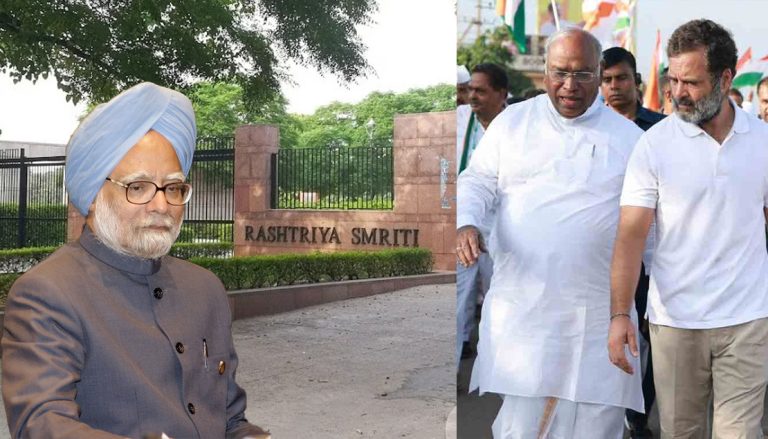
Congress demands separate memorial site in Delhi for Dr Manmohan Singh, whose govt had created common memorial site Rashtriya Smriti Sthal

The funeral of former PM Manmohan Singh, who passed away on Thursday evening in Delhi, will take place on Saturday. The last rites will be performed with full state honours. However, the place for the cremation has not been disclosed yet.

Amid this, the Congress party has demanded a separate place for the funeral ceremony, which could be converted into a memorial later. The party is seeking a site on the banks of the Yamuna River for the memorial, in the line of existing memorials for former Congress prime ministers and MK Gandhi.

Congress president Mallikarjun Kharge on 27 December wrote to Prime Minister Narendra Modi requesting the memorial site. He wrote, “I am writing this in the context of the sad demise of Dr. Manmohan Singh, former Prime Minister of India. Apropos our telephonic conversation today morning, wherein I made a request to hold Dr. Manmohan Singh’s last rites, which will take place tomorrow i.e. 28th December 2024, at his final resting place that would be a sacrosanct venue for memorial of the great son of India. This is in keeping with such tradition of having memorials of statesmen and former Prime Ministers at the very place of their funerals.”

Kharge added in the letter, “In view of the foregoing, I hope and trust that befitting the stature of Dr. Manmohan Singh, the above request to have the funeral of Dr. Manmohan Singh at a place where his memorial can be built, will be acceded.”

Additionally, party leaders Priyanka Gandhi Vadra and K C Venugopal also made the request to Union Defence Minister Rajnath Singh on Friday.

The union government is yet to take a decision and revert to the Congress party in the matter.

Notably, the Congress party’s demand for a separate memorial for Dr Manmohan Singh marks a departure from the party-led UPA government’s decision to reject demands for separate memorials for former PMs in Delhi.

In 2000, the Atal Bihari Vajpayee government decided not to create separate memorials for different leaders, as the existing memorials in the Raj Ghat area were occupying more than 245 acres of prime land in Delhi. Then in 2013, the Manmohan Singh-led UPA-II govt decided to set up a common memorial ground at Raj Ghat, titled the Rashtriya Smriti Sthal, for the last rites of such VVIPs. The last rites of former PM Atal Bihari Vajpayee were also conducted at the Rashtriya Smriti Sthal on the banks of the Yamuna River in 2018.

Rashtriya Smriti Sthal is located between Jawaharlal Nehru’s memorial ‘Shanti Van’ and Lal Bahadur Shastri’s memorial ‘Vijay Ghat’. ‘Shakti Sthal’ and ‘Veer Bhumi’, memorials of Indira Gandhi and Rajiv Gandhi, are located next to ‘Shanti Van’, after which ‘Raj Ghat’ is located.

It is expected that the funeral of Dr Manmohan Singh will also take place in the same area. However, it is to be seen whether it takes place in Rashtriya Smriti Sthal or if a separate plot is allocated. Earlier some reports claimed that it will take place near Shakti Sthal.

Notably, while the Congress party is demanding a separate memorial for Dr Singh, the party never showed such respect for former PM PV Narasimha Rao. The Congress party and its govt in 2004 even denied him a funeral in Delhi, and Rao was cremated in Hyderabad, where a memorial was built. In 2015, the Narendra Modi govt accorded the former PM a memorial at Ekta Sthal, former president Giani Zail Singh’s memorial which has been integrated into Rashtriya Smriti Sthal.