On Friday, the premier government policy think-tank Niti Aayog will hold a consultative meeting to discuss a roadmap for population stabilisation and is expected come out with recommendations to address key gaps in India’s family planning programmes.
According to the reports, the Niti Aayog will hold a national consultation on population stabilisation titled “Realising the vision of population stabilisation: leaving no one behind” on Friday to explore ways to strengthen the country’s population policy and family planning programmes.
Reportedly, the event will be held in partnership with the Population Foundation of India, and will also include government officials from the Centre, seven states and experts on the subject.
“The recommendations from the consultation will contribute to a NITI Aayog working paper to help achieve India’s vision of attaining population stabilisation, as voiced by Prime Minister Narendra Modi on 15 August 2019,” according to a press statement from NITI Aayog.
The officials and experts will brainstorm over recommendations such as treating population stabilisation and family planning as a national priority and ensuring inter-governmental convergence and multisectoral participation.
Some of the key recommendations expected to emerge after the meeting are increasing budgetary allocations for family planning, enhancing the basket of contraceptive choices, addressing existing socio-cultural barriers towards contraception as well as social determinants of health such as age at marriage and sex-selective practices, the statement added.
The working paper is expected to address key gaps in India’s family planning programmes. The meeting will also offer constructive recommendations to address regional disparities in outcomes by focusing on adolescents and youths, inter-departmental convergence, demand generation, access to contraceptive services and quality of care.
Speaking from the ramparts of Red Fort about population explosion in the country, Prime Minister Narendra Modi had stressed on the issue of “population explosion” and had urged the country to work towards family planning, smaller families to ensure that dreams of children get fulfilled.
PM Modi had insisted on necessary of population stabilisation in the country. PM Modi had said keeping families small is “an act of patriotism”. “I want you to do proper family planning and you will naturally see that a smaller family can be happier and more content. Your family will be away from diseases, will have more resources,” the Prime Minister had said.
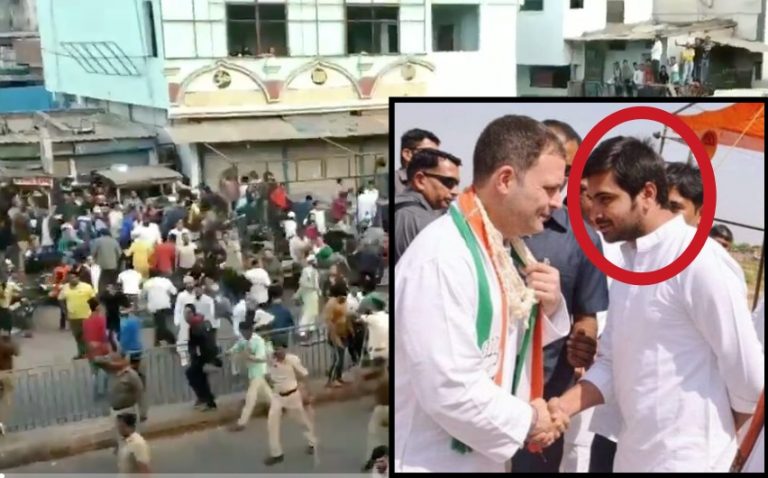
After vicious violence was unleashed by a Muslim mob in the Shah-e-Alam area of Ahmedabad, several people have been detained by the Ahmedabad police including Congress Corporator Shehzad Khan Pathan.
According to Desh Gujarat, 24 people have been detained for the Ahmedabad violence by a Muslim mob including the Congress Corporator and have been taken to the Isanpur police station.
However, according to the Ahmedabad Mirror, 32 people have been detained in connection with the violence unleashed by a Muslim mob in Shah-e-Alam area of Ahmedabad. Amongst the 32 arrested, is the Congress corporator Shehzad Khan Pathan.
In total, the police have said that 213 miscreants have been detained from all the protest sites of Ahmedabad. Among those detained was also the Congress leader Jignesh Mevani.
Jignesh Mevani had led a violent Muslim mob in Gujarat that had attacked a police van in shocking visuals that had emerged.
In Shah-e-Alam, the Muslim mob had gone on a rampage and indulged in indiscriminate stone-pelting against the police personnel. In shocking visuals that had emerged, while the mob indulged in stone-pelting on the police, a part of the Muslim mob had also tried to lynch a policeman who had stumbled while running from the frenzied mob throwing stones.
It is pertinent to note here that several areas in the country had seen widespread protests against the Citizenship Amendment Act. These elements had congregated for their anti-CAA protests despite there being section 144 imposed.
Earlier, in ex expose done by OpIndia, it was revealed that NSUI was an active participant in coordinating and organising anti-CAA protests all over the country, especially in universities. The NSUI had planned a host of “protests” including in Ahmedabad. With the Congress corporator being arrested, the illusion that political parties had tried to create to convince people that the anti-CAA protests were organic and spontaneous is shattered.
In the wake of the nationwide protest spearheaded by a certain section of the society against the Citizenship Amendment Act, AAIMS has issued a memorandum on Thursday, warning its students, resident doctors, faculty and staff against holding any protest or strike in or around the premises of the institute.
A candlelight march and poetry recitation against the new citizenship law and NRC is scheduled to be held in front of the JLN Auditorium in AIIMS. The Resident Doctors’ Association has, however, denied having called for any such demonstration.
The administration, in its memorandum, warned that any violation will lead to disciplinary and other actions. Citing a May 20, 2002, Delhi High Court order, the memorandum issued by the Registrar of AIIMS, Dr Sanjeev Lalwaniwhich listed out a series of code of conduct applicable to all students, staff, nurses and faculty members of the institute. The memorandum says that no employee or faculty member will cease work for any reason whatsoever or disrupt the work or aid or abet such disruptions or cessation.
It also said that no use of loudspeakers or shouting of slogans, demonstrations, dharna are allowed within the campus, adding no gate meetings or protest meetings of any kind whatsoever are to be held within 500 metres from the boundary of the institute.
The memorandum also stated that there should be no interference in any official work and all trade union activities are to be carried outside the campus. Further, there should be no activity in the nature of the strike, dharna or demonstration or gherao in or around the AIIMS at all, it said.
“Violation of the orders of the High court of Delhi by any individual employee group of employees/students/resident doctors/associations/Unions etc will be in contravention of the directions of High court and make them liable for disciplinary action and also for contempt of court.
“Hence it is advised that everyone should refrain from holding any dharna/protest/ strike within the premises of AIIMS. All chief of centres/ head of departments are requested to make bring it to the notice of students, residents, staff and faculty of the department’s centres and offices,” the memorandum stated.
Defying unprecedented prohibitory orders across regions, fresh protests broke out on Thursday in multiple cities against the CAA, prompting authorities to detain a large number of rioters and students and clamp down mobile and internet services in parts of the national capital and other states.
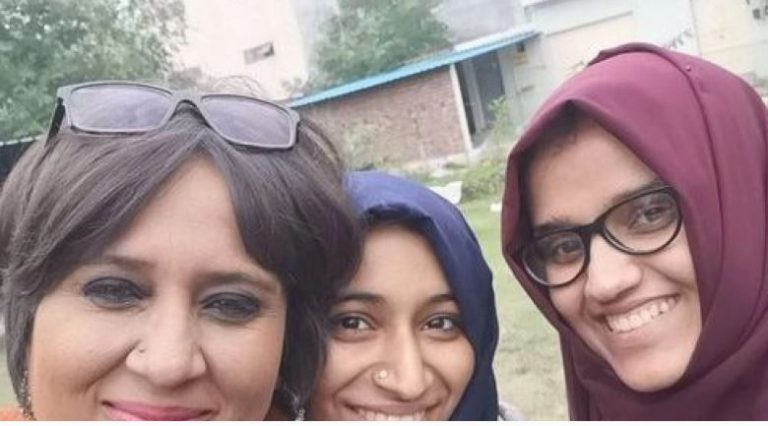
A video of ‘sheroes’ of Jamia shared by the controversial journalist Barkha Dutt in an obvious attempt to whitewash the violence that was unleashed by Muslim mobs in Jamia Millia Islamia had brought out two protesting students as the faces of the protest. The pictures from the video were widely used to target the Delhi Police for its action during the anti-CAA protests in the Jamia area on Sunday (15 December).
Now, one of the two Barkha’s ‘sheroes’, Aysha Renna, who had called India ‘fascist’ because the terrorist Yakub Memon was hanged till death after he was convicted for his involvement in the Mumbai Blasts that killed hundreds of people, has reportedly deactivated her Facebook page.
Her post dated July 31, 2015, where Ayesha had written: “Yakub Memon, I am sorry #am helpless in this fascist country, #I can regret lk a doll”, was widely circulated on social media after she became the face of the Jamia protests.
However, today when the post could not be located on scrolling through her Facebook page, Indo-Asian News Service (IANS) tried contacting her through the same ID. Aysha initially did not reply. Later the Facebook page was deactivated.
The private Indian news agency then contacted her husband, Afzal Rehman, who blamed the media and the authorities of running a hate campaign against his family.
On being asked specifically about the authenticity of the post in which Aysha purportedly contacts Yakub Memon, he declined to comment on the post: “I will not comment on anything, this is part of a hate campaign run by the media and these authorities against my wife and the other girl in photograph,” Afzal Rehman said.
Interestingly, Aysha’s husband Afzal Rahman, who is a journalist at India Tomorrow English and a contributor at Outlook India, Asianet News, Madhyamam, Maktoob Media, Manorama Online and MediaOne TV, and who in his social media profile describes himself as “an unfinished sulaimani”, has himself in one of his Facebooks posts shared his sympathy with terrorists Yakub Memon and Afzal Guru.
Ladeeda Sakhaloon and Aysha Renna were the face of the Jamia Milia Islamia University protests and were the individuals in the photo from the protests that had been labelled ‘iconic’ by many ‘intellectuals’ on social media. Ladeeda had in one of her posts, openly given a call to Jihad. She had said that people should “learn about our ‘Jihad’.”
In another post of hers from April 2018, she gives ‘middle fingers’ to India. This was soon after the unfortunate rape and murder of the six-year-old girl in Kathua, Kashmir.
Aysha Renna’s had also shared posts of Ladeeda Sakhaloon in her own timeline and was ‘tagged’ in the post where the call for Jihad was made.
Facebook has removed a fake ‘Fact-Check’ by The Quint where the propaganda outlet claimed that the slogan “Hinduon Se Azadi” was never chanted by the Jamia students. We had reported it when it happened following which propagandists had claimed that it was “fake news” even though the news accurate. Earlier, Facebook marked it as ‘false information’ based on a ‘fact-check’ by The Quint. We can now confirm that this marker has been removed by Facebook.
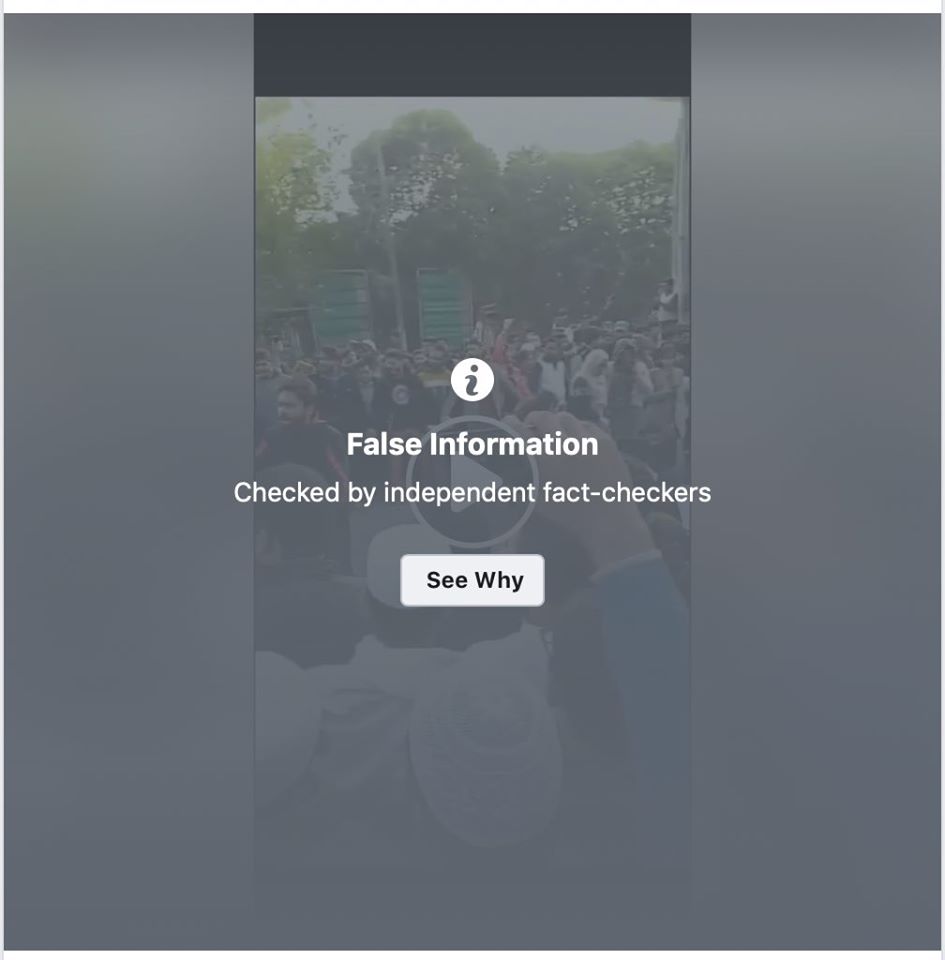
The ‘False Information’ “Fact-Check” from The Quint that was visible while playing the video earlier
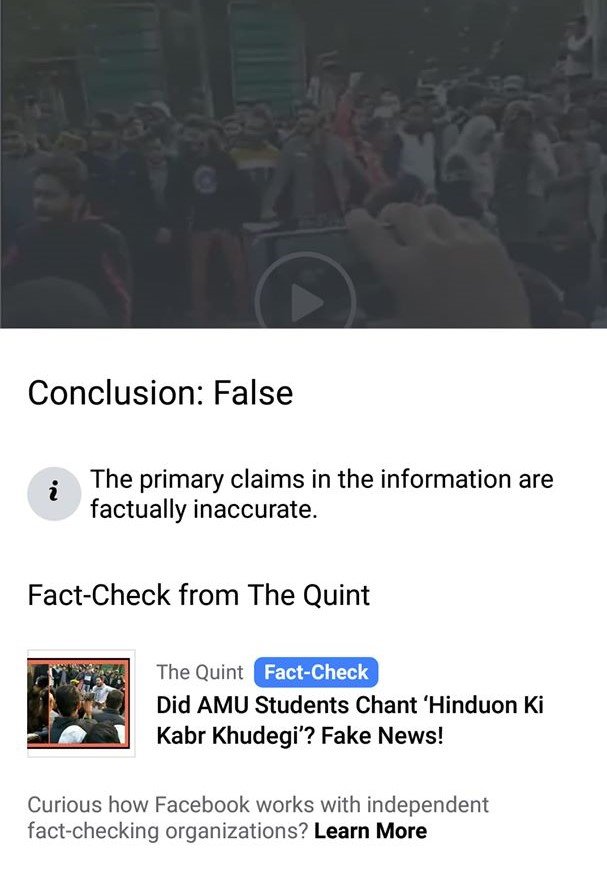
When a person clicked on the ‘See Why’ button, Facebook showed that the authentic video was marked as ‘false information’ based on a lie by The Quint. This has now been rectified by Facebook after it was forced to admit that ‘Hinduon se Azadi’ slogans were indeed raised during the Jamia protests.
The ‘False’ “Fact-Check” from The Quint that was visible while playing the video earlier
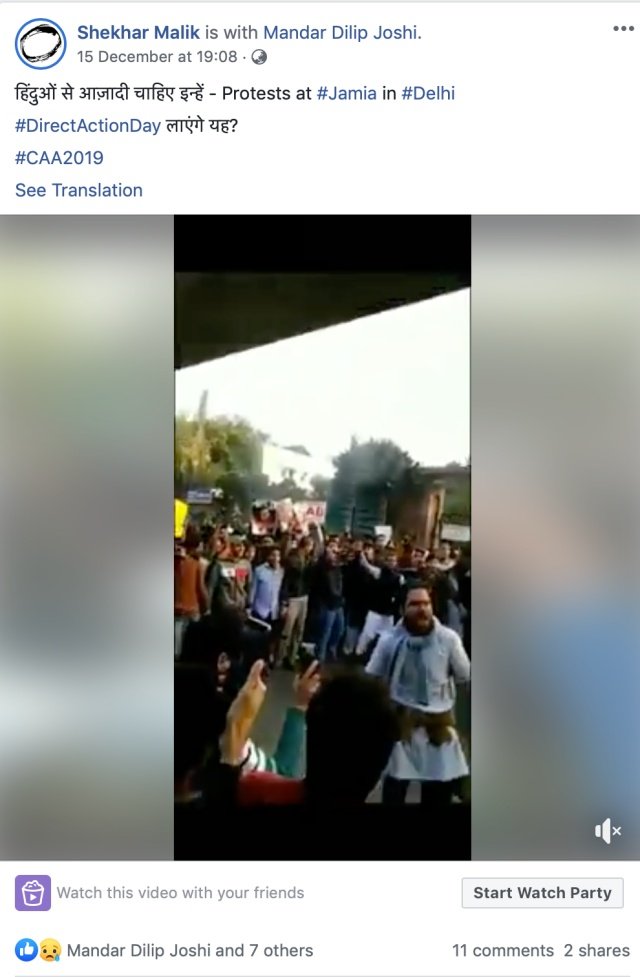
While earlier, when one tried to play the video, it said that it was ‘false information’, now the video embedded in the same Facebook post plays without any such notification thereby confirming that Facebook removed the so-called ‘fact-check’ by The Quint.
Facebook post now visible without the “fact-check” by The Quint
Numerous other ‘fact-checkers’ had peddled the fake news propaganda that “Hinduon Se Azadi” slogans were never raised in the said video. BoomLive had even accused OpIndia of spreading false information when, in fact, they were the ones spreading Fake News.
The slogan is not surprising considering the fact that the face of the Jamia protests, Ladeeda Sakhaloon, gave a call for Jihad against the Citizenship Amendment Act following which violence erupted across the national capital. We have also reported at length on the dubious network of individuals involved in the campaign and why the Jamia protests cannot be disassociated from the violence that has gripped Delhi.
The Quint has in the past as well indulged in such chicanery by their fallacious “fact-checks”. Earlier, The Quint had also tried to whitewash the Islamist attack on Durga Puja visarjan in Balrampur.
The ‘protests’ that have been planned across the country against the Citizenship Amendment Act has seen Muslim mobs go on a rampage and indulge in stone-pelting, arson, vandalism and violence. Similar scenes were reported from one such anti-CAA riot in Ahmedabad on 19th December 2019, where a Muslim mob went on a rampage, pelted stones and almost lynched a police officer.
As can be seen from the video posted by journalist Janak Dave, the Muslim mob first started pelting stones at the police officials who were trying to control the rampaging rioters.
While the mob was pelting stones, police officers and civilians can be seen running helter skelter to take cover.
One such police officer who was running during the stone-pelting stumbled and fell to the ground. As soon as he fell to the ground, a Muslim mob gathered around him and started almost lynching him.
From the video of the anti-CAA riots in Ahmedabad, it can be seen that a large mob consisting of Muslims started beating the police officer up.
Towards the end of the video, it can be seen that then, the Muslim mob started chasing the police officials away while pelting stones at them mercilessly.
Earlier in the day, the anti-CAA riots had gotten out of hands in the state of Uttar Pradesh. In Lucknow, mobs ran riots while setting fire to busses, media vans and even civilian cars.
UP Chief Minister Yogi Adityanath made a statement saying that this sort of vandalism and hooliganism in the name of ‘protests’ will not be tolerated. CM Adityanath also said that the rioters will be identified. He further said that once the guilty are identified, their property will be used to ensure that the state is compensated for the damange and loss of property.
Earlier this week, following the riots in New Delhi’s Jamia Nagar where Jamia Millia Islamiauniversity is located, a Muslim mob went on a rampage in New Delhi’s Seelampur and even attacked a school bus. Communal slogans like ‘Hinduon se azaadi (freedom from Hindus)’ were raised in Jamia Nagar.
Then a nation-wide protests were announced on 19th December. OpIndia investigationrevealed how Congress had co-ordinated these protests and how there is a much more sinister plot to it.
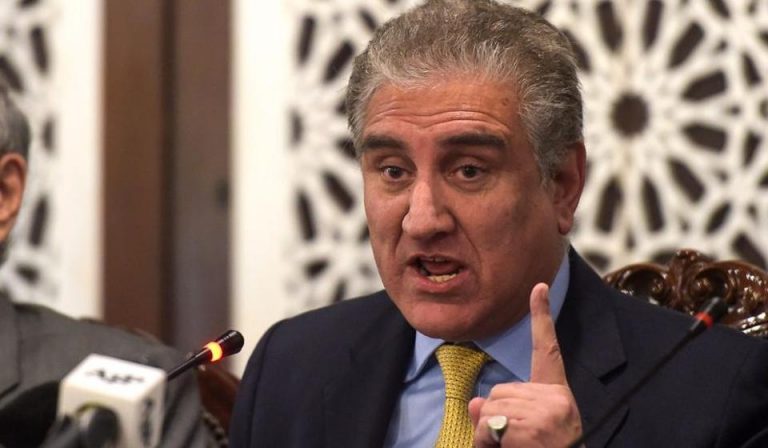
The Foreign Minister of Pakistan, Shah Mahmood Qureshi, has again written to the UN on the Kashmir issue, this time complaining that India is deploying missiles in Jammu & Kashmir. Qureshi claimed that India is continuing to escalate tensions in South Asia. He further claimed that India could launch a false-flag attack to divert the world’s attention from Kashmir.
Earlier today, Asif Ghafoor, the spokesperson of the Pakistani Army, had issued a statement where he said, “Pakistan Armed Forces shall befittingly respond to any Indian misadventure or aggression.” He had claimed that India is preparing the escalate along the LOC and would get a “befitting reply” from Pakistan.
Provocative statements and preparations for escalation along LOC by Indian COAS appear to be an effort as usual to divert world attention from wide spread protests in India against CAB. Pakistan Armed Forces shall befittingly respond to any Indian misadventure or aggression.
The letter, written on the 12th of December, “apprised the UN Security Council and the UN Secretary-General on Indian actions that continue to escalate tensions in an already tense environment in South Asia”, the Foreign Office said on Wednesday. The actions, Qureshi claimed, included “deployment and testing of missiles of various ranges and capabilities” by India.
Qureshi also demanded that the UN Military Observer’s Group strengthen its presence in the region and asked it to play its ‘rightful role’. India, on the other hand, claims that the UNMOGIP has outlived its utility following the signing of the Simla Agreement and the consequent establishment of the Line of Control (LoC).
These statements come two after Indian army chief General Bipin Rawat had issued a stern warning to Pakistan’s armed forces by stating that the situation along the LoC could escalate any time and that the Indian army was prepared for the spiralling of the escalation matrix.
General Rawat had issued those statements in the backdrop of a rise in ceasefire violation by Pakistan along the LoC in Jammu and Kashmir since the abrogation of Article 370 in August.
“The situation along the Line of Control can escalate any time. We have to be prepared for an escalation matrix,” Rawat had said.
Pakistan has been on a campaign to demonize India at the international arena ever since the abrogation of Article 370. Its Prime Minister Imran Khan can be regularly found on social media engaging in delusional rants against the current ruling dispensation. However, despite their best efforts, the world has largely continued to ignore them.
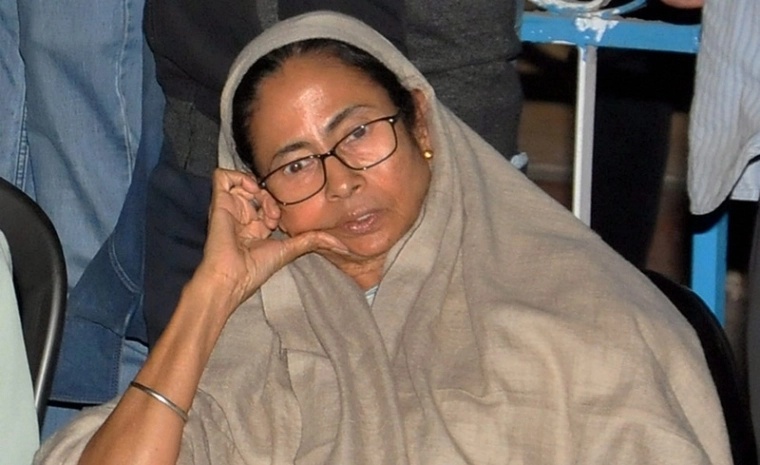
After facing severe criticism over law and order failure during the riots by Muslim mobs in the state over Citizenship Amendment Act (CAA), West Bengal Chief Minister Mamata Banerjee has blamed BJP workers for plotting to disturb peace during Friday prayers.
According to reports, Mamata Banerjee accused BJP of buying skull caps for its cadres who are in turn wearing them to vandalise properties to malign the Muslim community.
“Tomorrow’s is Jumma day, prayer day, BJP is buying skull caps for its cadres who are wearing them while vandalising properties to malign a particular community and disturb the peace. Be careful,” Mamata Banerjee told a rally in Kolkata.
Claiming that the BJP seeks to make CAA a fight between Hindus and Muslims, Mamata Banerjee went on to raise the demand for a United Nations monitored referendum on the issue. “If BJP has guts, it should go for a UN-monitored referendum on amended Citizenship Act and NRC,” Mamata Banerjee said.
“Let’s see who wins. And if you lose you will have to resign. BJP was founded in 1980 and is asking for our citizenship documents of 1970,” Mamata Banerjee said.
The Muslim mob carried out riots in West Bengal under the watch of Chief Minister Mamata Banerjee. The Muslim mob went on a rampage to vandalise more railway stations and set fire to a toll plaza in Murshidabad district last week during their protest against the Citizenship Amendment Act (CAA).
Many members belonging to various Muslim organisations had resorted to violent protests following the passing of the historic Citizenship Amendment Act (CAA). Protests against the CAB were planned soon after Friday prayers across mosques in the State and other various parts of the country which has resulted in extreme violence in parts of West Bengal.
They resorted to extreme violence by blocking tracks at the Uluberia railway station. The Muslim mobs had vandalised the complex and some trains by resorting to stone pelting, injuring a driver, officials said.
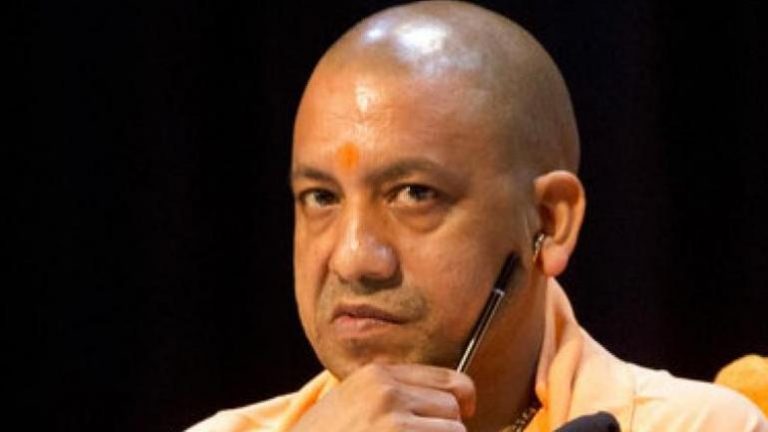
A fresh round of protests against the amended Citizenship Act gripped various parts of India on Thursday. Uttar Pradesh Chief Minister Yogi Adityanath, in a strong warning to the anti-CAA rioters, has said that the authorities would seize the properties of those who indulge in violence in the state.
Condemning the violence and protests against the Citizenship Amendment Act in parts of Uttar Pradesh and parts of the country, Yogi Adityanath said people cannot indulge in violence in the “name of protests”. Restating that violence and intimidation have no place in a democracy and that everything can be sorted out through healthy conversation, the CM said that strict actions will be taken against hoodlums who have been trying to create unrest in his state and various parts of the country.
“I have called a meeting over this. You cannot indulge in violence in the name of protest. We will take strict action against such elements. Will seize the property of those found guilty and compensate damage to public property,” Yogi Adityanath was quoted as saying by ANI.
Uttar Pradesh CM Yogi Adityanath: I have called a meeting over this. You cant indulge in violence in name of protest. We will take strict action against such elements. Will seize property of those found guilty and compensate damage to public property. #CitizenshipAmendmentActpic.twitter.com/6jxuXDLWDt
He said that faces of such miscreants have been captured on CCTV camera’s and he will personally look into it that they are punished adequately.
The CM asserts that section 144 (prohibiting unlawful assembly) of CrPC is in force in various places in Uttar Pradesh since November 8 and no permission for any gathering has been given. The CM said that such antisocial and riotous activities in the state will not be tolerated. He said that he has personally ordered the police in the state to take stern action against such rabble-rousers. Yogi Adityanath has, however, assured that under no circumstance will the common citizens be harmed in any way.
Yogi appeals to people to stop spreading falsehood in the name of the Citizenship Amendment Act. He accuses Congress, the Samajwadi Party, and the Left for playing petty politics over the issue and warns them to stop misleading people.
The Uttar Pradesh chief minister’s warning has come in the backdrop of violent protests that broke out in Lucknow on Thursday. Protesters demonstrating against the Citizenship Amendment Act pelted stones, torched vehicles and faced tear-gas shells in Lucknow and some other parts of Uttar Pradesh as police struggled to contain the fallout of the amended citizenship law.
In the face of the politicians and the media spreading canards and misinformation regarding the Citizenship Amendment Act, the Modi government has released an FAQ (Frequently Asked Questions) that dispel the myths surrounding CAA.
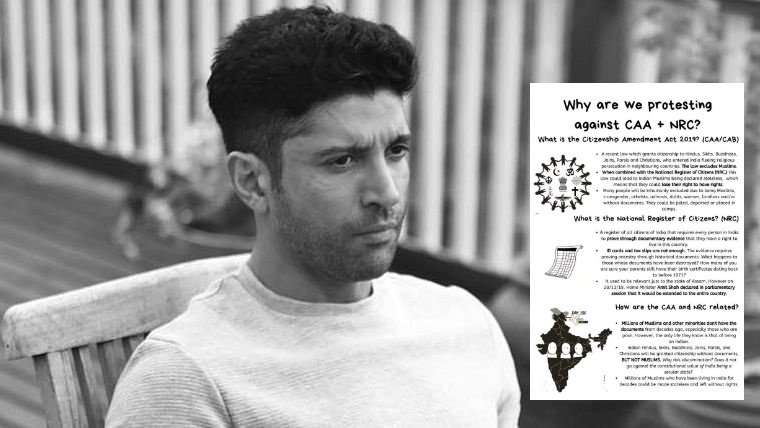
Bollywood actor Farhan Akhtar on Wednesday shared an anti-CAA message on Twitter telling people why “these protests are important”. In the said message, the son of noted lyricist Javed Akhtar spread numerous canards about the Citizenship Amendment Act and the National Registrar of Citizens. It was retweeted over 16,000 times when this report was written. We have published a comprehensive piece debunking the claims here.
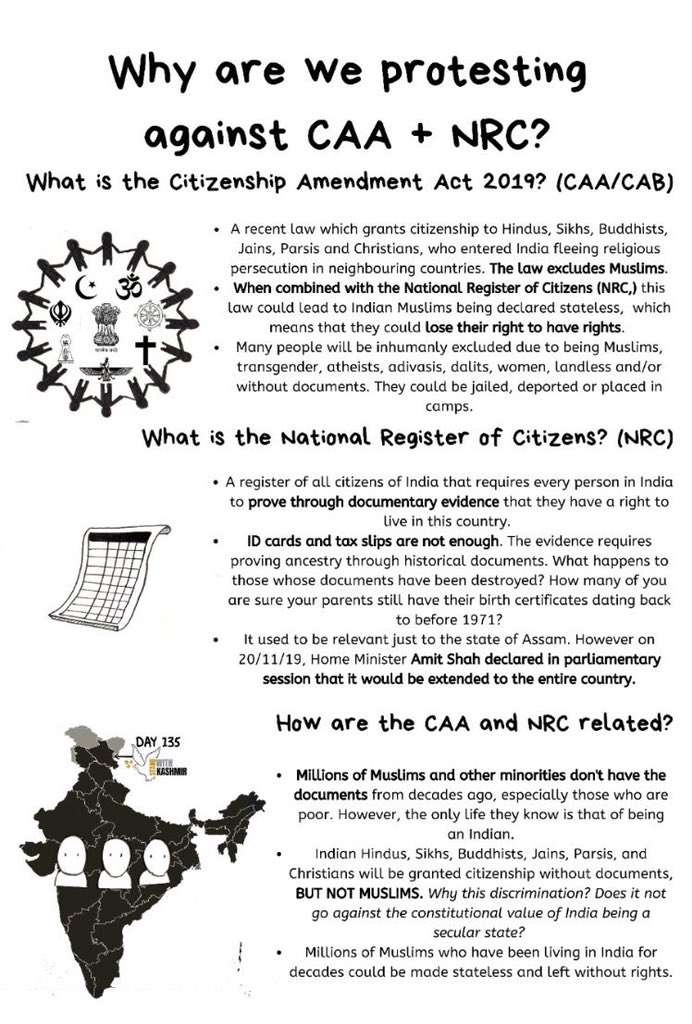
A much more problematic aspect has come to the fore regarding the message that was shared by Farhan Akhtar and indeed, it is a matter of great concern. Farhan Akhtar, unwittingly or otherwise, has helped peddle the insidious agenda of Kashmiri separatists. Here is a picture of the misinformation that was shared by the Bollywood actor.
Anti-CAA image shared by Farhan Akhtar
When one looks at it closely, there’s a logo visible right below ‘Day 135’ written beside the Indian map which is itself distorted. The logo is that of a bird with only ‘Kashmir’ written beside it that can be observed clearly. After investigation, we discovered that the logo is that of an organization called ‘Stand With Kashmir’. Here is the logo that appears on the propaganda shared by Farhan Akhtar.
Stand With Kashmir Logo
Now, the question arises, what is Stand With Kashmir? As per its website, it is a “Kashmiri diaspora-driven independent global citizen grassroots group committed to standing in solidarity with the people of Kashmir in ending the occupation and supporting their right to self-determination.” Calling India’s military presence in Kashmir an ‘occupation’ reveals amply the ideological orientation of the network. The organization further says, “We believe any proposed resolutions must foreground Kashmiri aspirations. We condemn the use of Islamophobia to undermine Kashmiri aspirations for freedom.”
There are even more problematic aspects of SWK’s ideology. In the ‘Origins of Conflict‘ segment of its website, it traces the roots of the Jihad in Kashmir to 1931, a decade after the Khilafat Movement that led to the creation of Pakistan, but never calls it as such. Instead, SWK paints it as ‘secular’. Furthermore, not once does it mention the genocide of Kashmiri Pandits.
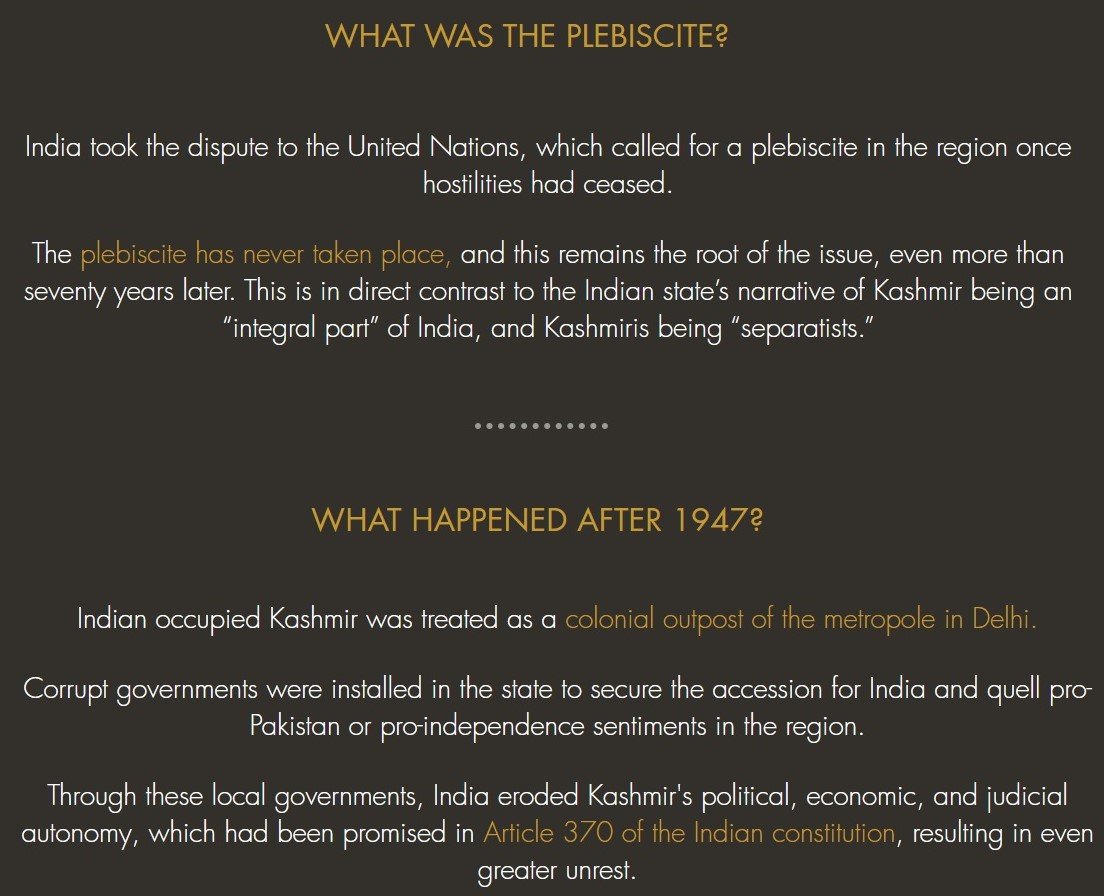
Not once during the segment does SWK blame Pakistan for the roots of the mess. In the subsection on the plebiscite, the organization puts the entire blame on India for the fact that it has never occurred and conveniently ignored that plebiscite never occurred because Pakistan invaded Kashmir right after independence and since then, has refused to vacate the territories it occupied, in contravention of the UN norms.
It says, “India took the dispute to the United Nations, which called for a plebiscite in the region once hostilities had ceased. The plebiscite has never taken place, and this remains the root of the issue, even more than seventy years later. This is in direct contrast to the Indian state’s narrative of Kashmir being an “integral part” of India, and Kashmiris being “separatists.” SWK pays no heed to the fact that a plebiscite is impossible now because Pakistan has sold parts of the territory it occupied illegally to China and Kashmiri Jihadists have committed a genocide that has altered the demography of Kashmir irrevocably. But SWK does not mention any of it.
If all that wasn’t enough, SWK has labelled the Islamic terrorist organization Jammu and Kashmir Liberation Front (JKLF) as ‘secular’ and ‘pro-independence’. It says, “From the late 1980s to the early 2000s, Kashmir was embroiled in a violent uprising, aided by foreign fighters, against the Indian state. The insurgency was supported by Pakistan. It was initially led by the secular, pro-independence Jammu and Kashmir Liberation Front, but was, with the intervention of Pakistan, overtaken by the pro-Pakistan, Hizbul Mujahideen.”
In reality, Maqbool Bhat, the cofounder of JKLF was a terrorist who was sentenced to death for the murder of a constable. He also masterminded the hijacking of an Indian plane in 1971. It was the murder of the judge who first convicted Maqbool Bhat and awarded him the death sentence that marked the beginning of the cycle of violence that led to the genocide of the Kashmiri Hindus. It is this organization that is being called ‘secular’. Yasin Malik, another prominent face of the JKLF, is accused to have murdered 5 IAF personnel in early 1990. Such people are being called ‘secular’.
During the entire discourse, not once has SWK attempted to highlight the terrorism problem in Kashmir. It hasn’t even used the word ‘terrorist’ in its discourse. From their words, it is clear that SWK wants terrorists to cooperate with ‘pro-freedom voices’ for the objective of ‘liberating’ Kashmir. It says, “The Indian state managed to quash the movement through direct force, the introduction of counter-insurgency militant groups such as the Ikhwan, and a policy of divide and rule that contributed to infighting within the militant and pro-freedom ranks.”
Kashmiri Hindus find a mention in the section that talks about the continuation of the ‘Occupation‘. Even then, SWK labels it ‘forced migration’ and not the genocide that it was. The genocidal rage of the Jihadists is never mentioned and neither do the rapes and slaughter of the Kashmiri Hindus. Instead, the Indian State is accused of ‘communalizing relationships’ between the Kashmiri Muslim community and Kashmiri Hindus. One would imagine that genocide denial would harm communal harmony irreparably but according to SWK, the Indian State is to blame.
It states, “The late eighties uprising also led to the forced migration of a vast majority of Kashmir’s Hindu minority, the Pandits, many of who lived in camps in Jammu or other cities in India. Relations between Kashmiri Muslims and Kashmiri Pandits have been increasingly communalized in recent decades, as Indian statecraft has relied upon policies of divide and rule between various communities in Kashmir.” It’s pertinent to note that all the criticism has been reserved for the Indian State alone and Pakistan has been given a free pass in comparison. Furthermore, despite the presence of honest intentions, Pakistan-occupied-Kashmir does not find a mention at all in all of this. It’s almost as if SWK does really believe PoK is ‘Azad Kashmir’, as Pakistan likes calling it despite the brutal suppression of its people.
The message could not be clearer that SWK’s intentions are not pure. It should have been obvious from the distorted map of India itself. However, Farhan Akhtar shared the separatist propaganda without caring about the consequences. Furthermore, it’s safe to assume, given the conduct of the SWK, that their intentions are not pure and they are committed to fomenting chaos within India. Farhan Akhtar may have known all of this or he may have not but the fact remains that he spread Kashmiri Separatist propaganda, which may well be backed by Pakistan, on a highly sensitive issue at a time when sinister designs are afoot across the country.