Home Blog Page 6571

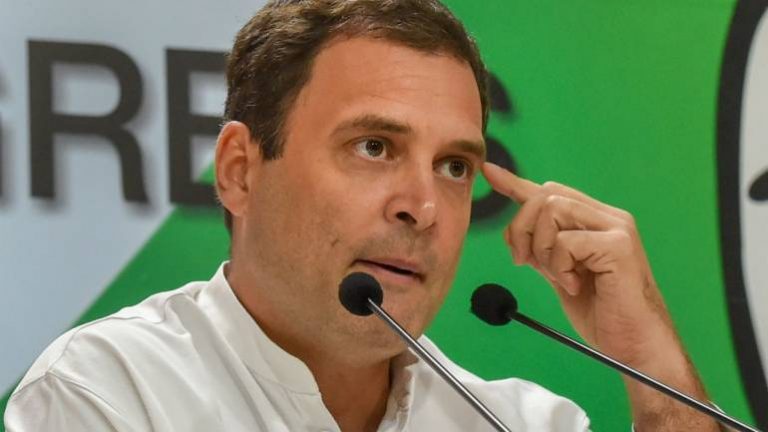
Fiscal deficit will shoot up, Rahul Gandhi hasn’t thought about impact on economy: Niti Aayog VC on Congress’ Minimum Basic Income

Rahul Gandhi announced yesterday his plan to award Rs. 72,000 annually to every family below the poverty line. While the promise of a dole has been deemed a fantasy that the Indian Economy cannot afford right now, the Congress party continues to promote its harebrained idea as profound wisdom.


NITI Aayog Vice Chairman Rajiv Kumar, however, has sounded the alarm bells after the Congress made the announcement yesterday. He said that the fiscal deficit may actually increase from 3.5% to 6%. “All the credit rating agencies may bring down our ratings. We may not get loans from outside and eventually, our investments might be blocked,” he said


He added how in 2008 when P. Chidambaram was the union minister of finance, the fiscal deficit had gone up from 2.5% to 6%. He added that the sops handed out by Congress President Rahul Gandhi was not a well thought out plan. An inevitable consequence of the dole would be that the middle class is likely to be forced to pay higher taxes to fund the minimum basic income only months after the Modi government reduced their tax burden. Inflation, which the current government has been successful in controlling, is also likely to shoot up.

Moreover, the minimum basic income could very well mean the end of all other subsidies. Common people will likely have to forfeit their subsidies on gas, fertilizers, electricity, crop prices and MNREGA. The Ayushman Bharat scheme which currently provides for free treatment of poor people in dire need of money may also have to be scrapped. In spite of all that, the promised dole provides for ample opportunity to scam the public and costs could very well escalate beyond what’s feasible.

Significantly, however, there doesn’t appear to be any agreement on the matter within the Congress party itself. While Rahul Gandhi says one thing, the chairperson of Data Analytics Department of the Congress party, Praveen Chakravarty, says something entirely the opposite. It appears there’s significant confusion within the Congress party itself on how it will be implemented.

One thing is for certain. Should the Congress come to power and the scheme, in whatever form, does get implemented, the greatest sufferers will be the middle class. The poor, too, will suffer as infrastructure will crumble and the cost of living will shoot up.

AAP candidate for Gautam Buddh Nagar disqualified for failing to arrange 10 persons to back her nomination

The AAP candidate for UP’s Gautam Buddh Nagar, Shweta Sharma, has been disqualified for failing to produce enough people to back her nomination. As per a report in Times Now, she failed to arrange the 10 required number of proposers to back her nomination as per EC norms.


AAP had declared Shweta Sharma, a professor, as its candidate for UP’s Gautam Buddh Nagar. As per reports, as the AAP is not recognised as a national party by the EC, their candidate has to arrange a minimum of 10 people as proposers at the Returning Officer’s office to back her nomination. However, on Monday, which was the last day of filing nominations, the candidate failed to arrange 10 persons as proposers.

BN Singh, the DM of Gautam Buddh Nagar, has informed Times Now that Sharma’s nomination papers had only 1 proposer. The report quotes the officials saying that the AAP candidate was given enough time to arrange proposers but she could not come up with enough proposers.

Her nomination has been dismissed today after scrutiny. As per a report in Times Now, of the 21 candidates who had filed nomination for the Gautam Buddh Nagar seat, 8 have been disqualified.

AAP had declared Shweta Sharma as a candidate on Sunday. Upon the disqualification of her nomination, the AAP candidate has reportedly stated that it is a conspiracy by the BJP.

Fantasy better than Game of Thrones: 10 lies by Rahul Gandhi in one speech at Rajasthan

Rahul Gandhi addressed a rally at Suratgarh in Rajasthan today as part of his campaign for the 2019 General Elections. His speech, as has become the norm, was replete with half truths and complete fiction as he made a last-ditch effort to avert a defeat in the upcoming polls. At this point, we are convinced that if Rahul Gandhi chose to pursue a career in writing fantasy, he would sell more copies than the Harry Potter series and Lord of the Rings combined.

Here, we examine 10 lies peddled by Rahul Gandhi in his speech at Rajasthan.

1. The ‘Vichardhara’

The Congress President began his speech by terming the Lok Sabha elections as a battle of ideologies, as he has done so often in the past. He claimed that the BJP endorsed the idea of two nations and spread hatred while his party advocates for brotherhood, love and unity. As the saying goes, the elephant has two sets of teeth, one for chewing and the other for display.

The Congress party is the same party that created the myth of Saffron Terror and jailed innocent Hindus to achieve their political objective. It’s the same party whose member goes to Pakistan and says that the enemy country should get rid of Prime Minister Modi if it wishes for dialogues to happen between the two countries. It’s the same party that tried hard to drive the Lingayats out of the Hindu fold. It’s the same party which has tried time and again to divide Hindus on the basis of language and region. The Congress’ stance on ‘brotherhood’ appears to be pretty clear: Divide Hindus on the basis of caste, creed, language and region while indulging in blatant minority appeasement for the sake of vote-bank politics.

2. The MNREGA Lie

The scion of the Nehru-Gandhi dynasty also claimed that the Narendra Modi government had destroyed the MNREGA and other welfare schemes launched by the UPA government. In reality, the NDA government has strengthened the MNREGA and has augmented its budget to Rs. 60,000 crores, its highest ever allocation, in the interim budget presented earlier this year. The scheme has also been strengthened by implementing structural reforms to ensure that the benefits are given directly to the poor.

3. No, Rahul Gandhi, MiG-21 jets did not ‘attack Pakistan’

He again displayed his lack of knowledge when he claimed that Mig-21 Jets manufactured by HAL had ‘attacked Pakistan’. In reality, the cross-border counter-terrorism operation was conducted by the Mirage 2000 jets which are manufactured by Dassault. Furthermore, while it is true that the Mig-21 is manufactured by HAL, parts of it are sourced from Russia. Furthermore, the HAL whose capabilities Rahul Gandhi appears to trust so blindingly was admonished by a Parliamentary Committee that’s headed by a senior leader of Congress, Mallikarjuna Kharge, himself. The Panel had expressed “serious concerns” over HAL’s inefficiency.

4. The Rafale Saga

Another issue which Rahul Gandhi has relied on time and again despite the Supreme Court giving the Government a clean chit on the issue is the Rafale Deal. He claimed in the rally that the UPA government had two conditions for the construction of the jet. Firstly, they had to be manufactured in India and secondly, they will be bought at a price of just over Rs. 500 crores. However, the Congress President fails to mention that his government was unable to reach a deal on the matter despite negotiations and the IAF’s dire need for cutting edge aircraft. Speculations have also been made that one of the reasons Rahul Gandhi is so against the Rafale Deal is because of his intimate links to Eurofighter lobbyists, the competitor to the Rafale.

The Rafale is one issue on which Rahul Gandhi has lied over and over and over again. In the past, various ministers of the Government of India and both Dassault Aviation and Reliance had clarified on the matter and punctured his various lies. Things had reached such a stage that even the French government had to come out and dismiss his frivolous allegations. Even the Supreme court has debunked all the allegations made by Rahul Gandhi about the Rafale deal, reiterating the same points the Indian Government and others have been repeating continuously. But it appears that the Congress President is in no mood to relent.

Rahul Gandhi also claimed that Narendra Modi had insisted that Dassault partner with Reliance as Anil Ambani was ‘his man’. He based his assertion on the claims allegedly made by former French President Hollande whom he wrongly addressed as the current President of France. Hollande’s claims were rubbished by Dassault and despite repeated denials by Dassault of any pressure on it to choose Reliance as one of the numerous offset partners, Rahul Gandhi continues to lie on the matter.

Even the late Manohar Parrikar was not spared by the Congress President. He used the Fake News story of N Ram at the Hindu to claim that the Ministry of Defense officials had registered their complaint with the manner in which the deal was negotiated. The Hindu had published a cropped image of the document and Rahul Gandhi had chosen to run ahead with the fake narrative. However, when the whole document surfaced, it came clear that the then Defense Minister Manohar Parrikar was aware of the negotiations and remarked that both PMO and French President offices were monitoring the government to government deal, and the comments of the secretary is an overreaction.

5. The 30,000 crores lie

Since Rafale had been brought up, the Rs. 30,000 crore lie could hardly be far behind. As the price of the aircraft, Rahul Gandhi keeps changing the amount he claims that ‘Modi has gifted to Ambani’. Sometimes he says it is ₹1 lakh crore, while sometimes it goes up to ₹1.30 lakh crore, both the figures substantially more than the total value of the contract for 36 aircraft. Even the ₹30,000 crore is more than the total offset of around ₹29,000 crore in the deal, while the share of Dassault in offset obligations is much lower, as other vendors in the deal – MBDA, Thales and Safran – also have offset obligations against their respective shares in the deal.

Dassault will be investing around €100 million in the joint venture with Reliance as part of offset obligations related to the Rafale deal, which is less than 3% of the total offset obligation. Reliance is not getting US$20 billion or even US$4 billion as Rahul Gandhi seems to believe, the current investment is less than USD$ 120 million.

6. The Industrialists Loan Waiver Lie

Repeating another of his lies from his ‘Hall of Fame’ record, Rahul Gandhi said, “Narendra Modi and Arun Jaitley has waived off loans worth Rs. 3.5 lakh crore of the top 15 industrialists in the country.” However, that figure has been changing constantly and moreover, he hasn’t bothered to offer any evidence for his claims whatsoever. In November 2016, addressing a large group of Congress activists in Bhiwandi, Rahul Gandhi claimed that the Modi government had then waived off loans worth Rs 1.1 lakh crores of big industrialists. During campaigning for Gujarat assembly polls in 2017, Rahul Gandhi inexplicably increased this figure by astounding 20,000 Crores to Rs 1.3 lakh crores and repeated the same trite. In Karnataka, he went a step ahead and conjured up another grand figure- Rs 2.5 Lakh crores of industrialists’ ‘loans’ being waived off by the Modi Government, again with no proof whatsoever.

The truth, of course, is polar opposite to the lies that Rahul Gandhi peddles. As in November, 2018, the Insolvency and Bankruptcy Code implemented by the Modi government had led to the recovery of Rs. 3 lakh crore in 2 years. Therefore, the NDA government has not waived off the loans of capitalists, he had recovered from them a great deal of money that was owed.

7. The Farmer Loan Waiver Lie

Rahul Gandhi also claimed that the Congress governments in Madhya Pradesh, Chhattisgarh and Rajasthan had waived off the loans of farmers in “2 days”. What he did not mention was the complete sham the loan waiver was. A farmer who was under a debt of Rs. 24,000 got a waiver of only Rs 13. Days after the waiver in MP, a farmer had committed suicide as he wasn’t eligible. Farmers went so far as to threaten mass suicides over the loan waiver.

Dubious cases of non-existent farm loans being waived off have been reported in Congress led Rajasthan as well. Scores of names have appeared in the list of beneficiaries for the farm loan waiver scheme who had no loans against their names.

In Karnataka as well, which is another Congress-ruled state, farmers have been complaining against the government after several instances of farmers receiving repayment notices came to light despite Congress’ claims to have waived-off farm loans.

After the Congress-JDS government came in power, for the longest time, the loans of farmers were not waived off. When they were, it then emerged that it was mere lip-service by the coalition government. It emerged that the farmers were still getting recovery notices from banks for the loans they had availed. The government had also admitted that out of the Rs. 44,000 crore farmer loan waiver, only a paltry 800 farmers had benefited.

8. The Arun Jaitley-Vijay Mallya ‘meet’ Lie

The Congress President also claimed that Arun Jaitley met with the disgraced business tycoon Vijay Mallya before the latter fled to the United Kingdoms. The matter initially surfaced when Mallya made the comment at a London Court. Jaitley had already clarified the matter and asserted that the businessman had misused his privilege as a parliamentarian to approach him and that he had never given him any appointment.

Then, a Congress leader claimed that he had personally witnessed the two of them having an intimate discussion for at least 20 minutes. However, it was conclusively proven that Jaitley’s schedule on that day made it impossible for him to have that particular discussion for so long.

Moreover, the UK government has approved the extradition of Mallya. His properties are being attached by Law Enforcement Agencies as well and preparations are being made to sell them off as well. On certain days, Mallya can be spotted on Twitter weeping profusely saying that the NDA government is being too harsh on him.

9. The CBI War

Rahul Gandhi claimed that the Supreme Court had directed the government to reinstall Alok Verma as the chief of CBI. He also said that Narendra Modi had removed the CBI chief soon after he was reinstated. In reality, the SC had reinstated Verma only on a technicality and asserted that the government should have referred the matter to the high-level Select Committee consisting of the Chief Justice of India, Prime Minister and Leader of Opposition to initiate Alok Verma’s removal. And it was this select committee which had removed Verma from his position.

10. The Jay Shah lie

The Congress President insinuated that Jay Shah, son of BJP President Amit Shah, had benefited greatly from the policies of the NDA government and that his business worth Rs. 50,000 crores transformed into a business that generated Rs. 80 crores on a monthly basis. It was based on a dubious claim published by alleged journalist Rohini Singh for which she is now facing a defamation suit. We had completely busted the Fake News report here.

Conclusion

Rahul Gandhi’s strategy for General Elections appears clear. Inundate the news cycle with repeated lies to mislead the voters with assistance from ‘Pliant Media‘ that never raises a question and sprinkle just enough doles such as the unrealistic minimum income dole to keep people interested. Whether he will be successful in his endeavour, only time will tell.

China destroys 30,000 world maps showing Arunachal Pradesh as part of India

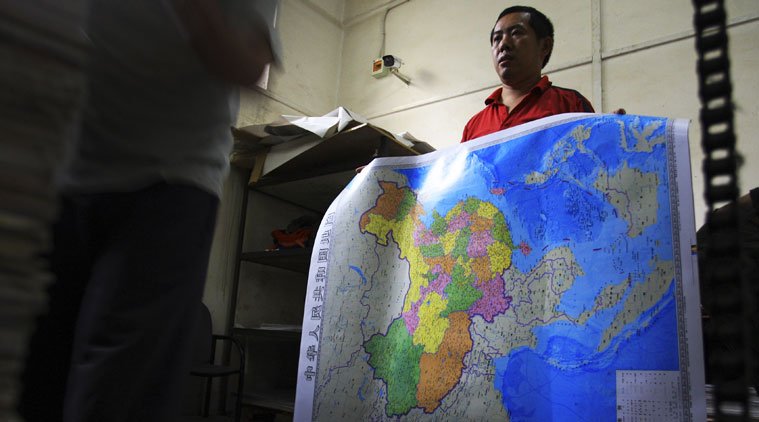
Customs authorities in Quindao, China, destroyed almost 30000 world maps last week for showing Arunachal Pradesh as part of India and Taiwan as an independent country,  reports said.

According to reports, “A total of 803 boxes of 28,908 maps were seized and destroyed, the largest amount to be disposed of in recent years.”

The crackdown came after the customs officials of Qingdao in China’s Shandong province seized 28,908 world maps kept in 800 boxes. The maps were taken to a secret location in Qingdao and shredded on the orders of the natural resources and planning bureau, the report said.

This is being considered the largest such exercise in recent years and was carried out to protect China’s “territorial integrity”, said the reports.

According to the Global Times report, the maps were produced by a company in East China’s Anhui Province and were on the way to being exported to an unspecified foreign country.

Ma Wei, from the Department of Geographical Information Management at the Ministry of Natural Resources, was quoted as saying, “If there are ‘problematic maps’ which harm national sovereignty and territorial integrity, especially foreign printed products or products destined for import or export, they will be intentionally used or speculated on by the international community.”

Global Times quoted Liu Wenzong, a professor from the Department of International Law of China Foreign Affairs University as saying, “If the wrong maps were circulated inside the country and abroad, it would have caused great harm to China’s territorial integrity in the long run.”

Beijing has claimed the Indian state of Arunachal Pradesh to be a part of China and has depicted it on its official maps as a part of south Tibet Autonomous Region (TAR). It also considers Taiwan, a self-governing democracy, as a breakaway province to be eventually unified.

The Indian government under PM Modi, however, has been pushing infrastructure development and outreach programmes in Arunachal Pradesh actively, ignoring China’s regular ‘warnings’.

In April 2017, Tibetian spiritual guru Dalai Lama had visited the state to attend an event in Arunachal Pradesh, to which China had taken a strong objection. India, however, has been conveying to China firmly that Arunachal Pradesh is and will remain an integral part of India.

During the Doklam standoff, where Indian and Chinese troops were engaged in a tense staring down contest, India, with is a non-compromising stand, had made it clear that India under PM Modi will not be bullied by China.

The two countries have so far held 21 rounds of talks to resolve the border dispute covering 3,488-km-long Line of Actual Control (LAC).

Digital India: How the Modi govt took massive strides in turning India into a digitally empowered economy

A push towards a Digitally empowered economy by PM Narendra Modi is giving rise to many products based on the 3 building blocks of Digital India. Initiatives such as National Optics Fibre Network project and Computer Emergency Response Team in Kerala and, e-Pragati in Andhra Pradesh have given a boost to the initiative. But to truly become a Digital leader in the World, the Digital India initiative requires the active support of the entire nation.

Introduction

The world has transformed from knowledge-centric to technology-centric. All information which any person can think of is available in a single click. It has become necessary for a good governing body to have a good communication platform to communicate with the stakeholders directly and efficiently. The most efficient way to communicate with the citizens of the World’s largest democracy with a population of 1.2 billion is only possible by communicating with everyone on a digital platform.

The Digital India drive is a dream project of the Indian Government to remodel India into a knowledgeable economy and digitally empowered society, with good governance for citizens by bringing synchronization and coordination in public accountability.

‘Digital India’ is a step by the Modi government to inspire and connect Indian Economy to such a knowledge savvy world to techno knowledge savvy world. The program was launched on 1st July 2015 by Prime Minister Narendra Modi to make Government services available to people digitally and enjoy the benefit of the newest information and technological innovations.

The vision of Digital India

Digital India has 3 major aims:

  1. To create a digital infrastructure as a utility to every Indian citizen

This includes providing high-speed internet, mobile phone and bank account enabling participation in digital & financial space, shareable private space on a public cloud, and creating safe and secure cyberspace. The government is planning to provide high-speed internet connectivity to 2,50,000 gram panchayats, which will be a core utility for digital inclusion.

  1. Digital empowerment of citizens

This program aims to empower citizens through digital literacy and universal access to digital resources e.g. Mygov website for crowdsourcing ideas and will focus on finding ways to encourage people to opt for cashless financial transactions.

  1. Governance and services on demand

The initiative also aims at seamless integration across government departments/jurisdictions and ensuring availability of services in real time from online and mobile platforms. It will also result in real-time service delivery from an online platform.

Building blocks of Digital India

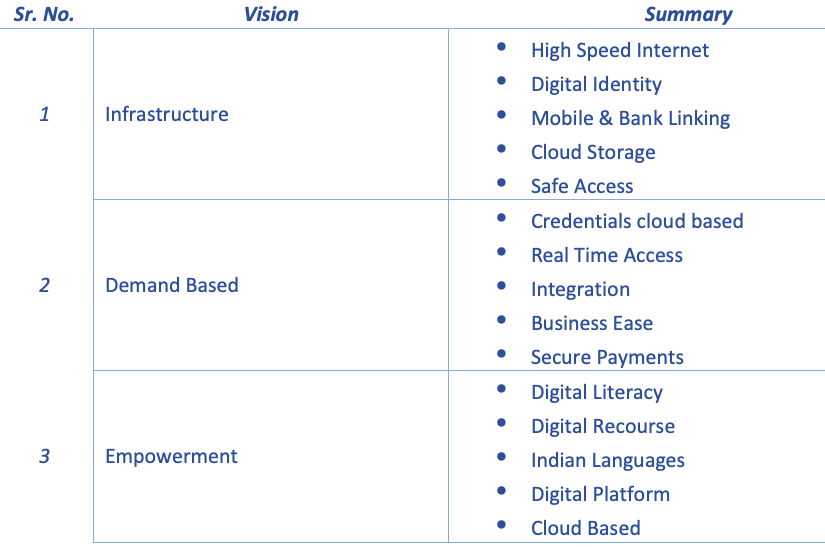
The following table emphasizes the importance of Infrastructure, Demand-based products and empowerment of citizens as the building blocks of Digital India. In order to move towards the goal of Digital India; high-speed internet, mobile banking, cloud storage infrastructure is required that will facilitate secure payments, ease of doing business, and real-time access to data. These steps are essential in enhancing digital literacy and motivating the public to adopt Digital and cloud-based platforms.
 

Nine Pillars of Digital India

The 3 building blocks of infrastructure, demand-based products and empowerment of public, form the foundation on which the 9 pillars of Digital India can be built upon. The 9 pillars are listed as below:

1. Broadband highways

The government with the vision of digital India has allocated 5 billion to build high-speed broadband highways connecting all the villages, government department, university etc. For faster implementation and growth of this project, the participation of private players is very important to cover all the geographical area of this country.

2. E-governance

The national e-governance plan has been formulated by the department of electronic and information technology, and department of administrative reforms and public grievances. This project works in both centralized and decentralized way. There are many different initiatives from central Government as well as state government under this project to ensure government services are available to citizen’s electronics.

3. E-Kranti

The government has allocated 5 billion for the e-Kranti project with an objective of providing electronic delivery of services to the citizens which include: e-health, e-education and technology for farmers, technology for planning, technology for security, technology for financial inclusion and technology for justice.

4. Universal Mobile Access

Government is specially preparing to connect unconnected areas and speedy use of technologies like network technologies like 3G, 4G and 5G etc. The general public will access the online government services with the help of handheld devices so that the nation will be well connected, efficient and more productive.

5. Public Internet access

Superior technologies that support cost containment, collaboration, and security, social connect and in-built intelligence that deliver remote access to any information or service available across the domain.

6. Information for all

Everything is connected through virtual networks for which fast workflow and no delays will be there due to waiting in queues. Websites and mobile apps will convey data and practical participation and even through social media at large.

7. Electronics manufacturing

The empowerment of manufacturing through the internet of things will enable intelligent workshops that demonstrate data-driven operational excellence and decentralised production control systems within and beyond the physical factory walls.

8. IT for jobs

The government is preparing to provide training and teaching skills to the youth for employment opportunities in the IT sector. BPO industries will be established for the fastest growing segment of the IT-enabled services industry which offers e-services 24/7 in every field and gives more jobs potentials.

9. Early Harvest programmes

This program will generate short timeline projects where every manual service is altered by e-service. E-services like educational books to e-books, public Wi-Fi, sports to access online game.

Projects and Products of Digital India

The three building block and nine pillars have contributed to many pilot projects and products for Digital India, such as:

  • A Digital locker system to minimize usage of physical documents and enable their e-sharing via registered repositories.
  • in as an online platform to engage citizens in governance through a “Discuss, Do and Disseminate” approach.
  • Swachh Bharat Mission Mobile app to achieve the goals set by this mission.
  • E-Sign framework to allow citizens to digitally sign documents online using Aadhaar.
  • E-Hospital system for important healthcare services such as online registration, fee payment, fixing doctors’ appointments, online diagnostics and checking blood availability online.
  • National Scholarship Portal for beneficiaries from submission of an application to verification, sanction and disbursal.
  • Digitize India Platform for large-scale digitization of records in the country to facilitate efficient delivery of services to the citizens.
  • Bharat Net programme as a high-speed digital highway to connect all 250,000-gram panchayats of the country — the world’s largest rural broadband project using optical fibre.
  • BSNL’s Next Generation Network to replace 30-year old telephone exchanges to manage all types of services like voice, data, multimedia and other types of communication services.
  • BSNL’s large scale deployment of wi-fi hotspots throughout the country.
  • ‘Broadband Highways’ as one of the pillars of Digital India to address the connectivity issue while enabling and providing technologies to facilitate delivery of services to citizens.
  • Outsourcing Policy to create such centres in different north-eastern states and in smaller towns across the country.
  • National Centre for Flexible Electronics to promote research and innovation in the emerging area of flexible electronics.
  • Centre of Excellence on Internet on Things (IoT) as a joint initiative of the government agencies and private institutions such as Nasscom.
    • To make Post Offices multi-service centres.
    • To connect all schools with broadband and free wi-fi.

Impact of Digital India

A nationwide scheme such as Digital India has the potential to impact various sectors of society. Following are some key impacts where Digital India can provide a sustained benefit.

Impact on Technology

The Digital India project provides a huge opportunity to use the latest technology to redefine India the paradigms of the service industry. A digitally connected India can help in improving the social and economic condition of people living in a different geographical area.

Impact on the Economy

It can play a key role in macro-economic factors such as GDP growth, employment generation, labour productivity, growth in a number of businesses and revenue leakages for the government.

Impact on Social sector

Social sectors such as education, healthcare, and banking are unable to reach out to the citizens due to obstructions and limitations such as middleman, illiteracy, poverty, lack of funds, living locality and investments. Modern ICT makes it easier for people to obtain access to services and resources. The penetration of mobile devices may be highly useful as a complementary channel to public service delivery apart from the creation of entirely new services.

Impact on the Environment

The major changes in the technology space have not only brought changes to the economic system but are contributing to the environment changes. The next generation technologies are helping in lowering the carbon footprint by reducing fuel consumption, waste management, greener management, greener workplaces and thus leading to a greener ecosystem.

Impact on Agricultural Sector

The governance will shift from e-governance to m governance i.e. is mobile governance. Farmers can access all kind of information through their mobile phones as when required which will boost this sector also.

Impending Challenges

The Digital India initiative is the most ambitious project of the NDA Government. There are many challenges that could come in the way of successful completion of the project. These are as follows:-

·     High cost of implementation

The dream project Digital India requires new infrastructure for successful implementation which involves high cost as some are ongoing projects and some are yet to start.

·     Time overrun

Some projects will take more time to harvest and the delayed project may lead to delay in other dependent projects and meeting the budget limit will be difficult.

·     Poor private participation

Private participation in government projects in India is poor because of long and complex regulatory processes.

·     Lack of coordination among departments

In order to implement any new project, support and coordination from top to bottom is highly essential. It involves the participation of several departments and demanding commitment and efforts. Hence, strong leadership and timely support of all the involved entities will play a critical role.

·     Uniform and fast adoption of internet

Despite the lowest data tariffs in the world, adoption of the internet in India will be difficult due to illiteracy, affordability and availability of mobile devices.

Success stories of Digital India

Kerala – India’s first digital state

In February 2016, former President Pranab Mukherjee declared Kerala as the first digital state of India owing to its achievement of high e-literacy and mobile penetration. It was also the first state to complete the National Optical Fibre Network (NOFN)project, granting high-speed Internet access to all its gram panchayats. This achievement is significant especially in the area of rural development. Kerala has been setting benchmarks in terms of achievement of digitization targets.

Some of the marquee initiatives of Kerala are:

Aadhaar Enabled Citizen Services (AECS)by Kerala State IT Mission and the e-district project deliver all district-level services for citizens in a state-owned portal or through Common Service Centres (CSCs).

The Accelerating Change and Transformation in Organisation and Networking (ACTION)initiative has been developed to track high-priority projects, their status and areas needing the attention of senior authorities.

Computer Emergency Response Team-Kerala (CERT-K)is another important initiative which deals with cybersecurity threats and issues warnings to concerned departments as and when necessary. It works in coordination with the CERT-In application. The Kerala Spatial Data Infrastructure project has created a centralised infrastructure and a repository of geospatial data across the state.

Andhra Pradesh: Setting up centres of excellence

To meet all objectives of Digital India, the Andhra Pradesh government is working on the fibre grid initiative. Also, with the e-Pragatiinitiative, Andhra Pradesh has embarked on a journey to become the first to have a statewide enterprise architecture.

Gujarat: The working model of India’s first digital village

India’s first digital village, Akodara, is located in Gujarat. The Government of Gujarat partnered with ICICI Bank, which adopted the village and converted it into a working model for Digital India. From setting up bank accounts and going cashless to installing CCTV cameras, the village is a perfect example of what a digital village would look like.

Conclusion

The Digital India campaign has laid the foundation for substantial and powerful digital infrastructure. This campaign will not only provide internet connectivity to people but also create jobs, eServices, eGovernance, Digital identity, e-education and e-health while strengthening India’s position as a pioneer in IT solutions. More employment prospects for the youth will, in turn, boost the nation’s economy.

The success of a digital transformation of the nation rests on some of the aforementioned projects which are under various stages of implementation. These projects may require some transformational process reengineering, refinements and adjustment for successful implementation to achieve the desired objectives.

The Modi Government has taken into account the recommendation of the Council on Digital Government strategies as entrusted in the OECD 2013 at this stage of implementation of Digital India program. This program has fostered inter-ministerial co-operation and collaboration towards the outlined priorities to make this initiative, state of the art. A digitally empowered India has the potential to mend social and economic condition through the development of non-agricultural economic activities while also providing access to education, health and financial services. How far the strategy would yield results would largely depend on factors which are outside the realm of technologies and tools for digitization. These might be rooted in the organization maturity and commitment of the systems within the government but are heavily dependent on public support.

The success of this dream project lies not only in the hands of government but in the hands of citizens and other stakeholders of the nation. A big scale project such as Digital India which has a great potential to enhance the lives of every citizen is not without its share of challenges. Any great initiative needs full public support to succeed, and this initiative is no different. We as Indian citizens must work together to carve a niche for India in the knowledge economy. Let us join hands for the successful implementation of this project for the brighter and prosperous India.


Congress-friendly journalist tries to shield Dynasty, but Rahul Gandhi spoils the party by pulling a Rahul

Congress-friendly journalist Pallavi Ghosh got owned by Congress President Rahul Gandhi when despite her attempts at salvage the Sam Pitroda’s pro-Pakistan fiasco, Rahul Gandhi went ahead and made him the head of Congress’ campaign monitoring committee.

As per reports, Pitroda will be leading a team of committee members including Congress leaders like Pawan Khera, Rohan Gupta, Priyanka Chaturvedi, Praveen Chakravarthi, Divya Spandana and Manish Chatrath. Pitroda is a close confidant of Rahul Gandhi and heads the Overseas Indian National Congress and will manage the campaign for Congress.

Recently, Pitroda was found questioning Balakot airstrikes carried out by Indian Air Force on the terror camps across the border in Pakistan. After he asked for proofs based on anti-India international media coverage of the airstrikes, even Prime Minister Narendra Modi appealed to the people of India to question Congress on their pro-Pakistan stand.

Soon, Congress-friendly journalists had even revealed that Pitroda’s statements, which had done considerable damage to Congress already, had even made Congress President Rahul Gandhi ‘upset’.


Ghosh has earlier acted as Rahul Gandhi’s faithful emissary taking it upon herself to convey the messages from the party president to those who need to be told that the party president is upset. Lest anything the leaders say damage the party’s public image.


When CP Joshi did not pay heed to her sources, she went ahead and conveyed the message herself.


Pallavi Ghosh has time and again cited her ‘sources’ inside the Congress who convey it to her how Rahul Gandhi or now Priyanka Gandhi Vadra are feeling and thinking. Almost like she could read their minds. Except, sometimes, her sources feed her wrong information. Like the time her sources told her that Congress will focus on ‘jobs’ and ‘farmers’.


Except, Rahul Gandhi ended up giving out sops of free money, about 13% of the union budget.

It is not just Rahul Gandhi Pallavi likes to campaign for. Priyanka Gandhi Vadra is the new favourite. She likes to give live updates on what Priyanka is up to.


Soon…


Fandom is so much, that even when as a general secretary of the grand old party, when Priyanka addresses a rally, it is a surprise for her.


Perhaps the answer could be found in this tweet.


While journalists wear the cloak of neutrality, they have often gone out of their way to prop up the clown prince. The fourth estate has crumbled and how when the very media that is supposed to educate its readers starts covering up for a politician who lies blatantly, obfuscates, and can barely pronounce words that need the slightest roll of the tongue, like Visveswaraya. Rahul Gandhi is a reluctant politician and the media tries its best to convince people that he is not insufferable as he is. If only Rahul had let them do their job, the country would have perhaps never realised that Rahul can hardly be trusted with writing a condolence message without copying it from his mobile phone, let alone run the country all by his little self.

KXIP skipper R Ashwin’s wife and children targeted on social media after controversial run-out in IPL match

Debates have erupted across social media and in the cricketing world following Kings XI Punjab skipper Ravichandran Ashwin’s decision to ‘Mankad’ Jos Butler during the Kings XI Punjab vs Rajasthan Royals match on Monday.

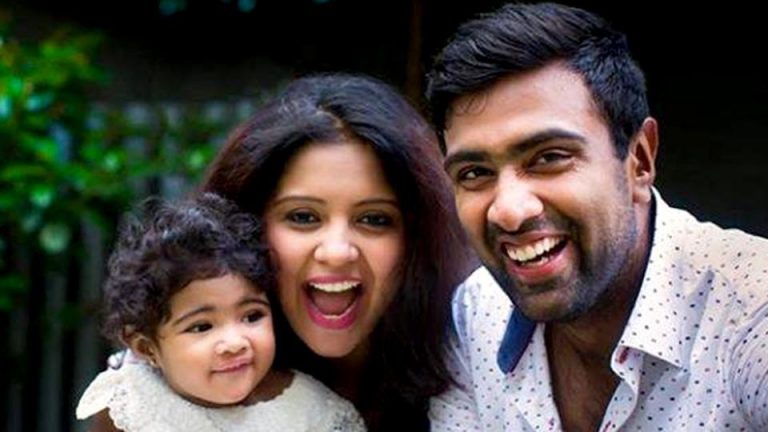
Sadly it did not just end with an on-field banter but turned into an abusive affair as sexist abusive trolls resorted to targeting Ashwin’s wife Prithi and their daughters after the controversial ‘Mankading’ incident on the cricket field.

The incident began when Prithi Ashwin expressed her opinion on Twitter regarding the incident stating that they were rules and camera to judge the incident and asked trolls to stop spamming her on the timeline and said they should instead mention it on her husband Ashwin’s timeline.


Soon followed trolling and spamming against Prithi Ashwin after she mentioned what her husband did was within the limits of the rules of the game. Prithi, however soon realised that she is being constantly trolled, she mentioned how Instagram was much nicer than Twitter, but only to realise that Instagram was much far worse for her and her daughters as filthy abuses were instantly thrown at Ashwin’s family, especially at their young daughter.


Many abusive trolls began to attack and comment hatefully against Ashwin family on Instagram despite they had nothing to do with Ashwin’s ‘Mankading’ incident.


The cricketing incident that occurred during an IPL match has divided the social media, while some questioned Ashwin’s respect to the spirit of cricket while others defended him by saying he was well within the stated rules of the ICC and MCC to ‘Mankad’ out Jos Butler, who was disturbing the bowler’s rhythm throughout that over.

Meanwhile, Ashwin has defended himself and responded to the accusations by saying that the dismissal was “instinctive” and not a planned one.

“On my part, it was very instinctive and it was not planned or anything like that,” Ashwin said. It is there in the rules of the game. I don’t know where the understanding of the spirit of the game comes from because quite naturally if it’s there in the rules, it’s there. So probably the rules need to go back and be sorted,” said Ashwin.

Congress-AIUDF understanding in Assam out in open, AIUDF to contest only 3 seats to help Congress in other seats

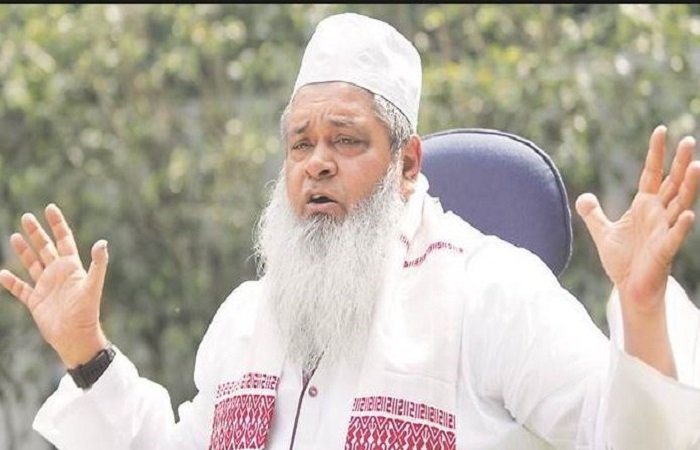
All India United Democratic Front chief Badruddin Ajmal has decided to field candidates from only three seats out of total 14 seats in Assam, to help the Congress party in the other 11 seats in the Lok Sabha elections.

As per reports, Ajmal has said that the party has said that it is ready to sacrifice its own prospects in upcoming Lok Sabha elections, to keep Bhartiya Janta Party out of power by preventing ‘division of secular votes’.

The AIUDF was trying to forge an understanding with Congress party in the state so as to keep defeat BJP in elections. But the state Congress leadership was unwilling for a formal alliance with AIUDF, as it may dissuade Hindus in the state from voting for the party.

“We are eager to help if Congress really wants our help. We can sacrifice anything, even our electoral prospect, to stop the BJP”, Ajmal was quoted by reports. He had added that he is ready to forget comments made by former CM Tarun Gogoi against him in the past.

AIUDF will contest from only three seats: Dhubri, from where Badruddin Ajmal will seek re-election, Karimganj and Barpeta. In the 2014 Lok Sabha election the party had contested in 9 seats, which means this time they will help the Congress party in the other seats by not dividing anti-BJP votes.

BJP and its ally Assam Gana Parishad, which returned to NDA fold recently, slammed the “unholy nexus” between Congress and AIUDF.

“Earlier, AIUDF said it would field candidates in all constituencies where there is a substantial minority voter base. This sudden change of plans makes it clear AIUDF and Congress have entered an understanding,” Ranjeet Kumar Dass, Assam BJP President, was quoted by Times of India.

However, both AIUDF and Congress have denied claims of an understanding between two parties. Congress has labelled the AIUDF as weak, in the wake of its attempts to inch closer to Congress.

In 2014 Lok Sabha elections, AIUDF had won 3 seats out of 14 total and in 2016 Assembly elections it had managed to win 13 seats out of 126 seats.

AIUDF chief Badruddin Ajmal has been marred with various controversies in the past.

In December, last year, Ajmal had assaulted a journalist during an interaction with the press. He was talking to media in Assam, after felicitating the winning candidates of the party in the recently concluded Panchayat elections. During the interaction, Ajmal had suddenly got angry with a question asked by the journalist from ETV and had verbally abused him. He also had threatened to physically attack him, in front of other journalists and party workers.

Last year, Chief of Army Staff Bipin Rawat had cited the example of AIUDF, to explain the rapid influx of illegal Bangladeshi Muslims in North-east.

“I don’t think that you can change the population dynamics of this area. If it was five districts, 8 to 9 the inversion has taken place whichever be the government, there is a party called AIDUF. If you look at it, they have grown at a faster time frame than with the BJP grew over the years.” General Rawat had said. He had also compared the rise of AIUDF in Assam with that of Jan Sangh and had commented that former had risen at a very rapid speed in Assam.

“Finally, what will be the state of Assam, we have to take a call.” He had added.

Similarly, Assam’s state finance minister Himata Biswa Sarma had said that:

“By 2021 if the eight lakh population of Hindu Bengali from Bangladesh is taken out from Assam, the community’s population of Assam will reduce to a mere 51 or 52 per cent, which will pave the way for Badruddin Ajmal or Sirajudin Ajmal to become the CM of the state”.

Went to Pakistan 17 times in 18 years: Arrested ISI spy Mohammad Parvez reveals to police

The Rajasthan police have arrested Mohammad Parvez, a 42-year-old man from Delhi on Monday for allegedly spying for Pakistan’s spy agency Inter-Services Intelligence or ISI, officials said.

“He was already in judicial custody since 2017 after being arrested by the National Investigation Agency (NIA) for anti-national activities, and was now taken into custody by the state police after he was brought in for interrogation on Monday,” said Additional Director General (Intelligence) Umesh Mishra.

The officer revealed that Mohammed Parvez allegedly honey-trapped Indian Army soldiers through fake identity to collect confidential and strategic information and passed those to the ISI, in exchange for financial support.

During interrogation, Pervez revealed that he was in contact with ISI handlers and had traveled to Pakistan “17 times in the last 18 years”.

Parvez allegedly managed to get mobile sim cards on photo and copy of identity documents of people by promising them quick visa formalities at the Pakistan High Commission in Delhi. Plotting with SIM card retailers, he got the numbers activated to share information with his handlers, the officer confirmed.

Mishra confirmed that Parvez was presented before a Jaipur court, which sent him to four-day police custody.

Last year, the Rajasthan Police had arrested one Army jawan on charges of espionage in Jaisalmer. After interrogations, it was revealed that he was honey-trapped and in touch with the Pakistani ISI operatives through social media.

A few months back, an Engineer at Brahmos facility in Nagpur, Nishant Agarwal, was arrested for alleged spying and passing on sensitive information to his ISI handlers. Even then Pakistani handlers had used social media accounts to honeytrap Agarwal.

In September last year, Uttar Pradesh ATS team had arrested a BSF Jawan, Achutanand Misra, a resident of Madhya Pradesh’s Rewa district, who was ‘honey-trapped‘ by a woman claiming to be a journalist, into sharing information about India’s defence preparedness with ISI lackeys.

India and Pakistan have been on the brink of war after the Pulwama attack by Pakistan-based Jaish-e-Mohammad claimed the lives of 40 Indian soldiers.

BJP to launch Digital Raths with Wifi connection, WiFi password will be ‘Kejriwal failed to give free WiFi’

Realising the importance of digital outreach ahead of the Lok Sabha elections, the Bharatiya Janata Party has decided to roll out ‘Digital Rath Yatras’ in Delhi to not only highlight the achievements of Prime Minister Narendra Modi but also all the failures of Arvind Kejriwal government.

According to the reports, the Digital Rath, scheduled to be launched soon will travel across all the seventy assembly seats and seven Lok Sabha seats in the state, which will telecast videos related to the developmental works of the BJP. Interestingly, the chariots will also have an in-built WiFi hot spot and the password to access it is ‘Kejriwal failed to give free WiFi’.

“People can use this free-of-cost internet service to circulate information about PM Modi through Facebook, Twitter and Instagram,” Neelkanth Bakshi, officer-in-charge, Delhi BJP — IT and Social Media Cell, told speaking to the media.

The party will also organise a ‘Twitter Chaupal’ for people who use the micro-blogging site to connect with Delhi BJP chief Manoj Tiwari, ask him questions and give feedback to Delhi BJP President Manoj Tiwari. Reportedly, Tiwari will also travel with the chariot and visit each Lok Sabha constituency to interact with the voters.

“At once, approximately 200 people will be able to use the WiFi. The Digital Rath will be on roads with effect from April 1,” added Baxi.