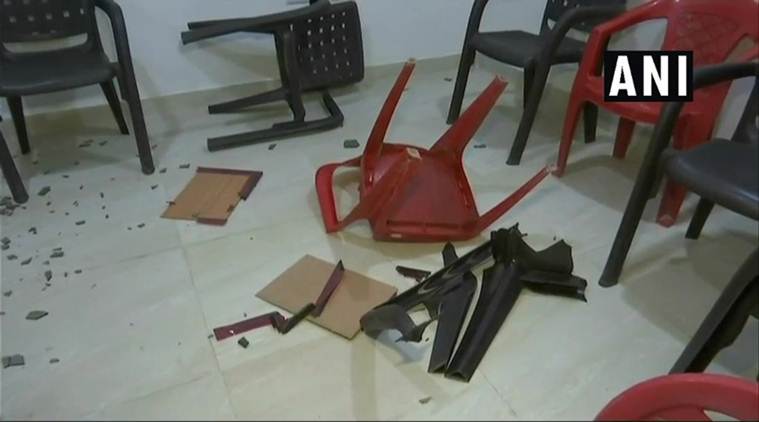
Protests erupted at the Chhattisgarh Congress office yesterday after the party released the last list of candidates for the upcoming legislative assembly elections. The announcement of candidates has upset many within the party which has led to tension in the office.
As per sources, angry supporters of Ejaz Dhabar, who has been denied a ticket from Raipur South constituency, started creating a ruckus and vandalised Congress office. Dhabar was considered a strong candidate, but the ticket was given to Kanhaiya Agarwal, which angered his supporters. Few days back, a video had gone viral in which Dhabar was reportedly seen threatening Chhattisgarh Congress in-charge P L Punia that if he is denied a ticket, he will create a disturbance.
As per reports, party workers also created a ruckus in Bilaspur office over ticket distribution. Among those who are denied tickets is Dr Renu Jogi, wife of former chief minister Ajit Jogi, following which she has joined her husband’s Janata Congress Chhattisgarh.
With elections around the corner, the infighting within Congress has peaked. Yesterday we had reported how swords were drawn between senior Congress leader Digvijaya Singh and Jyotiraditya Scindia over candidate selection in poll-bound Madhya Pradesh.
Madhya Pradesh, Chhattisgarh, Telangana, Rajasthan and Mizoram are scheduled to go for elections in the coming weeks. First phase of voting in Chhattisgarh will take place on 12th November and second phase elections will be held on 20th November. Mizoram is scheduled to go to polls on 28th November along with Madhya Pradesh. Rajasthan and Telangana will vote on 7th December. The results for all five states will be declared on 11th December.
Out of the five states where Assembly elections are to be held, currently Rajasthan, Madhya Pradesh and Chhattisgarh have BJP governments, Telangana has TDP government and Mizoram has Congress government.
Swati S Bhadoria, the District Magistrate of Chamoli is setting an example for others after she decided to enroll her toddler son in an Anganwadi center. As per reports, Bhadoria, an IAS officer, has enrolled her son in an Anganwadi in the Gopeshwar village of the state instead of an expensive city school.
Uttarakhand: Chamoli’s DM Swati Bhadauriya enrols her son to Anganwadi Center in Gopeshwar village. DM says,“It’s for his social,mental&physical growth. All children are well-fed&provided with toys&basic amenities,including medical care.Children can have holistic growth here.” pic.twitter.com/3naLHgeuiV
The decision to join her son to one of the Anganwadis is commendable as it comes at a time when most of the bureaucrats and politicians seem to have living an extravagant life. According to Swati Bhadoria, the factor that prompted her to make this decision was to make sure that her son is grown up in an atmosphere which encourages sharing.
“Anganwadi centers have all the facilities and a holistic environment which is good for the growth of a child,” the Chamoli District Magistrate said expressing happiness at her decision.
She further added that her son is feeling very good at the Anganwadi center along with the rest of the students. “Education, fun and food go hand in hand at these centers,” she said. Swati said that one of the reasons why she joined her son to Anganwadi is to change the general attitude towards Anganwadi centers.
The DM speaking to the media said that children attending the Anganwadi Centre in Gopeshwar village are taken care of and well-fed. With the provision of basic amenities including medical care, the youngsters can have ‘holistic growth’ at the center, says Bhadoriya. She said that she chose to enroll her own son at the state-run facility as it is good for his social, mental and physical growth.
Swati’s husband Nitin Bhadoria, also an IAS currently posted in Almora as District Magistrate expressed his happiness over his son attending the Anganwadi center. “My son had food with his classmates and was visibly happy when he returned home,” said Nitin Bhadoria.
“Tuesday was Abhyuday’s first day here and he had khichdi with the rest of the children,” said Manju Bhatt, a volunteer at the Anganwadi center.
In 2017, another IAS officer in Chhattisgarh Avnish Kumar Sharan had started the trend in the state by sending his daughter to the local government school. Inspired by his example, legislator and parliamentary secretary Shivshankar Paikra also had admitted his five-year-old son in the local government school in Pathalgaon block in the state.
Threatening the push Assam back to dark days of terror and violence during 1980s and 1990s, 5 persons were shot dead by suspected ULFA militants in Assam. The incident happened at Kherbari village near Dhola in eastern Assam. The location is near the India’s longest Dhola Sadiya bridge over Lohit river.
According to reports, 6 suspected ULFA militants came to the village in the evening in Army fatigues, face covered with cloths. They went to a grocery shop in the village and asked six persons present there to come with them in the pretext of asking for some information. They took them away from the village to an isolated place, and asked them to sit in a row. After that, they started blindly firing at them. The firing killed five of them, but missed one person who was sitting at one end, who had lied down immediately after firing started. As it was dark, and the firing had caused smoke in the area, the attackers could not see the victims properly, and left assuming that all six are dead.
The deceased have been identified as Subol Das, Dhananjay Namashudra, Shyamal Biswas, Ananta Biswas and Avinash Biswas, three of them from the same family. Sahadev Namasudra was able to miraculously escape the massacre.
Security forces have already a launched a massive search operation in the area, including CRPF and Assam police commando teams. The area is not very far from past ULFA camps on Assam-Arunachal border. Assam government has asked DGP and ADGP of the police, and minister Keshab Mahanta, to go to the location immediately. Chief minister Sarbananda Sonowal has said that strongest action will be taken against the perpetrators of this heinous crime.
We will take strongest action against the perpetrators of this heinous crime. I have directed all law enforcing agencies to maintain peace and take stern action against anybody trying to destabilise our peaceful society and state.
Section of politicians and activists in the state are already trying to create a divide between Assamese speaking and Bengali speaking people in the state. This incident has the potential to ignite that tension into a massive conflict. Given that context, Sonowal also directed all law enforcing agencies to maintain peace and take stern action against anybody trying to destabilise the environment in the state.
Trying to gain political mileage from the incidence, WB chief minister Mamata Banerjee used it to repeat her opposition to NRC, asking if the attacks are a result of recent development on NRC.
Terrible news coming out of Assam. We strongly condemn the brutal attack in Tinsukia and the killing of Shyamlal Biswas, Ananta Biswas, Abhinash Biswas, Subodh Das. Is this the outcome of recent NRC development ? 1/2
But probably the attack has nothing to do with NRC, the most probable reason behind that is proposed amendments to the Citizenship Act, which seeks to give citizenship to religious minorities from neighbouring countries. While several Bengali organisations in Assam are supporting the amendment, many non-Bengali organisations are opposing it. They fear that if large numbers of Hindu Bangladeshis are settled in Assam, the demography of the state will change forever, and Bengali will become the dominant language, like Tripura.
The state is facing continuous protests against the amendment, and even ULFA has spoken against it. ULFA also has a history of attacking people from other states, that’s why they are the main suspects of the attacks.
The Congress-JDS government in Karnataka has replaced the Special Public Prosecutor in the 2008 Bengaluru blast case when the trial was just about to complete. On September 20, the Karnataka High Court had ordered that the trial into the case have to be completed within two months, and the trial was in its final stage.
On Thursday, former public prosecutor K Rudraswamy appeared in the special terrorism court with a notification from the state government appointing him as the Special Public Prosecutor for the case, effectively replacing current prosecutor Sadashiva Murthy. This means that the trial that was to be concluded by November 20, will now have to be extended by several months, as the new prosecutor will require that much time to study the enormous volume of documents and witness statements recorded in the case.
This case pertains to the serial blasts in Bengaluru on 25th July 2008, where two persons were killed and dozens were injured. A total of nine low-intensity crude bombs were used in the blasts.
Kerala’s PDP (Peoples Democratic Party) leader Abdul Nasser Madani is one of the prime accused in the case. In 2009, two Lashkar-e-Taiba terrorists were arrested from the Bangladesh border, and their interrogation revealed significance information about serial blasts in several cities in India, including the Bengaluru blasts. From this investigation, several Muslim youths were arrested, and Abdul Nasser Madani’s link with the blasts was revealed. He was arrested in August 2010 for his involvement in the blasts by Karnataka police.
Sadashiva Murthy said that he was removed from the case without any prior intimation to him. Talking to Times Now, he said that he had almost completed the case, and he was conducting the case effectively without yielding to any pressure. He said that many people were not satisfied with the way case was going on. When asked who are these people, he said that Madani was very influential in the previous government, and his influence continues now also.
Sensational revelation tonight. Public prosecutor shunted out. Goes public against team Rahul. LISTEN IN as TIMES NOW speaks to Sadashivamurthy, Former Special Prosecutor | #MasjidBackerBenefitspic.twitter.com/tMxhb4UZ71
Other than PDP, Madani had also established Islamic Seva Sangh in 1989, which was banned in 1992 for terrorist activities. He was also accused of fanning hatred following the Babri demolition, and alleged to have links with Pakistani terror outfit Lashkar-e-Taiba.
In 2011 while hearing a bail plea of Madani, Justice Markandeya Katju had wondered how can a person on wheelchair pose a threat if granted bail, referring to the amputated leg of Madani. But Justice Gyan Sudha Misra had declined bail, saying the charges against the person are serious.
Madani had requested permission for visiting Kerala from October 29 to November 4 to meet his ailing mother, and Sadashiva Murthy had sought stringent conditions for allowing this visit. In its order granting him permission, the court had said that Madani cannot meet any party member, can’t carry or share any documents with anyone. Now sources in the legal department in the state say that he was removed from the case due to this reason. If the allegation is true, this suggests that Madani wields significant influence on the Kerala government, who has effectively delayed the case by several months which was to be over by next month as per High Court order.
Congress IT cell head Divya Spandana had a major meltdown on Twitter after people, including Congress-friendly journalists, pointed out that her tweet comparing PM Modi to ‘bird pooping’ was not in good taste. She took to Twitter to let the world know that she, as a former member of parliament and Congress party’s social media and digital communication in-charge, does not ‘give two hoots’ about the views of the voters.
When you’re done huffing & puffing take a breath & hold a mirror to yourselves. My views are mine. I don’t give two hoots about yours. I’m not going to clarify what I meant and what I didn’t cos you don’t deserve one.
Next to come in the line of fire was Shekhar Coup.. err. Shekhar Gupta of ThePrint. Gupta had wondered aloud that first Divya had ‘ruined further the taste of our already rotten political discourse’ after which Divya went on to insult our collective intelligence.
First you ruin further the taste of our already rotten political discourse, then you insult our collective intelligence by claiming you’re referring to something else. This isn’t politics. How does this square with Rahul’s embrace of Modi with a pretense/promise of decency? https://t.co/ZpYF6YXzfk
He then wondered if this is the decency Rahul meant when he had hugged PM Modi?
Triggered, Divya Spandana pointed out that Gupta talking of standards is more like the kettle calling the pot black.
And the right political discourse is having a gossip column masquerading as ‘juicy information’ in your publication- clearly setting high standards! https://t.co/tfpOH5eILg
Right after the ‘clarification’ from Ghosh, Nidhi tweeted how Congress sources say that the party does not approve of the language used by Divya.
Congress sources say the party does not approve of this language used by Divya Spandana against the PM. Party should come on record. Once again, language used marks a low level in our politics https://t.co/ZrlRerjETx
Shocked at Divya’s brazenness, Nidhi again tweeted how Divya, who holds an official position in the Congress, cannot absolve herself of the responsibility of telling the nation what exactly she meant by her tweet.
Actually you can’t afford to take that position. You are a public figure, you represent a political party with an official designation. So the people of India DO deserve to know what you meant https://t.co/gELDg8Bgyn
Not taking the slow comprehension skills of Nidhi lying down, Divya suggested Nidhi visits Srinagar to feel better. One wonders why Divya suggested that Nidhi visits Srinagar specifically.
To that, Nidhi retorted at how she wishes she could do that, but she has an actual job to do, because of which she couldn’t.
? how I wish I could. But I have a real job. I think you should go, the cool, fresh air of Kashmir will do you a world of good. Signing off https://t.co/yFrLf1dbrM
A friendly reminder: A few weeks back Twitter was abuzz with speculation of promotion/punishment of Divya Spandana after she changed her bio on the Twitter profile, removing her designation as Congress IT cell head. This infighting between ‘journalists’ who are overtly sympathetic towards Rahul Gandhi, and Divya Spandana who is considered to be a close aide of Rahul Gandhi, is only furthering speculation that all might not be well within Congress and this might be an indirect message to Divya that her time in the party is up.
Not taking the job-jibe lying down, Divya responded in kind.
Finally realisation dawns! People don’t have jobs in this country and you’re one of the lucky few who do, you must focus on that. So long ?? https://t.co/juHar0nanj
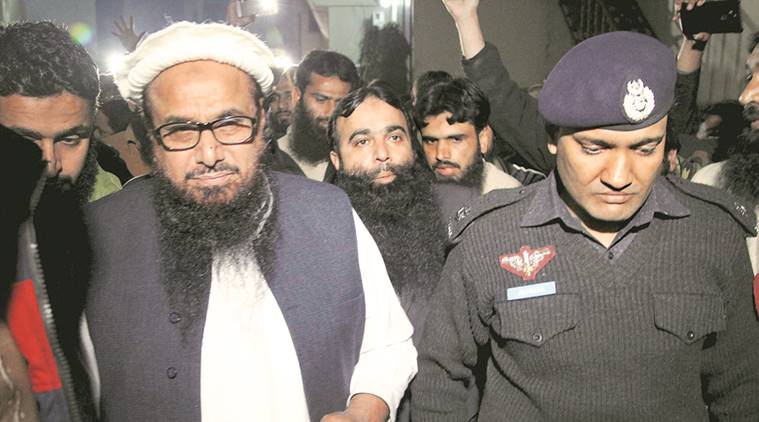
The United States Tuesday slammed Pakistan for effectively lifting the ban on Hafiz Saeed led Jamat-ul-Dawa and Falah-i-Insaniyat Foundation (FIF), which is against Pakistan’s commitment to the Financial Action Task Force (FATF) and also against its commitments to fight terrorism under the UN Security Council resolution, it said.
Mumbai terror attack mastermind Hafiz Saeed’s outfits JuD and FIF are no longer on the list of banned outfits in Pakistan.
Former President of Pakistan, Mamnoon Hussain had passed a presidential ordinance in February that amended the Anti-Terrorism Act 1997 and banned the individuals and terrorist organisations listed by the UN Security Council. JuD and FIF were proscribed under this ordinance. The present Pakistan Tehereek-i-Insaf (PTI) government led by Imran Khan, who is known to have a soft corner for terrorists, neither tabled the bill before the Parliament to convert it into an Act nor extended it. As a result, the ordinance has lapsed.
A US State Department spokesperson while addressing to a question on the recent lapse of the ordinance that led to the lifting of the ban on the two outfits said, “The expiration of the ban on JuD and FIF runs counter to Pakistan’s commitment to work with the Financial Action Task Force (FATF) to address weaknesses in its counter-terrorism financing regime.”
“As we have said before, the United States is deeply concerned that this development will jeopardise Pakistan’s ability to meet its commitments under UN Security Council Resolution 1267 to freeze and prevent the raising and moving of funds belonging to or associated with UN-designated terrorist groups,” the spokesperson said.
Hafiz Saeed had filed a petition before the Islamabad High Court challenging the former president’s ordinance under which his terror outfits had been banned for being on the watch list of the United Nations Security Council. His counsel had informed the judge about the lapse of the ordinance due to the failure of the government to extend it or table it before the Parliament for converting it into an Act. Subsequently, the judge said that Saeed’s plea was no longer effective as the ordinance was not extended by the government.
He further contended in the petition that he established Jamaat-ul-Dawa in 2002 and cut off ties with his other banned terror group Lashkar-e-Taiba. The terrorist went on to blame India for continuing to malign the Jamaat-ul-Dawa for its association with Lashkar-e-Taiba.
India has been persistently pushing Pakistan to castigate the mastermind behind the 2008 Mumbai blast, Hafiz Saeed, a Pakistani Islamist militant, who is also a co-founder of Lashkar-e-Taiba which was responsible for the attacks in which 166 people were killed. In accordance with Modi government’s ‘no tolerance’ policy, the NIA in January 2018 had filed a charge sheet against Hafiz Saeed, along with others, for instigating separatist activities in Kashmir.
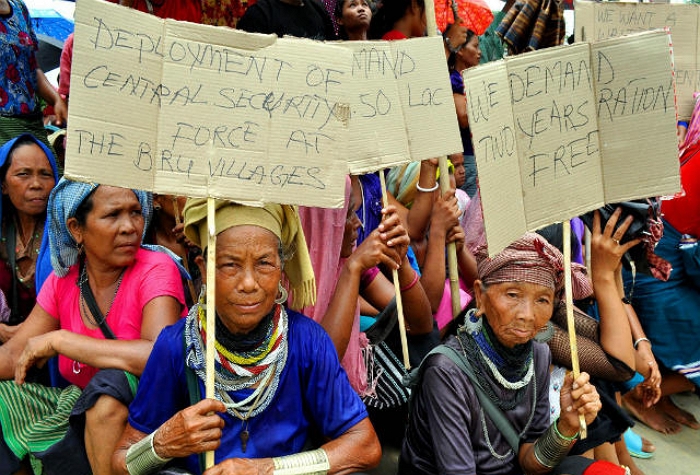
An Apex body representing the Bru refugees from Mizoram living in Tripura has appealed to the political parties in Mizoram not to come for election campaigning. The election for the Mizoram Assembly election is scheduled for 28th November.
Vice president of Mizoram Bru Displaced People’s Forum (MBDPF) R Laldawngliana said that the community members were not keen on attending election campaign meetings by parties from Mizoram. “We do not welcome poll canvassing inside the camps. The members here are not looking forward to attending public meetings by the parties, just before the polls,” he said.
More than 30,000 people belonging to the Bru community from Mizoram are living in six refugee camps in neighbouring Tripura, for the last 21 years.
In October 1997, Bru National Liberation Front (BNLF) militants had killed a forest official in Mizoram, which resulted in a revenge ethnic violence. Before this, some Mizo organisations were already claiming that Bru people are not indigenous to Mizoram and their names should be deleted from electoral rolls in the state. Following the murder of the forest officer, large-scale violence took place on Bru villages, where dozens of villages were burned down and many people were killed. Following this violence, a large number of Bru families fled to Tripura, who were given shelter in Kanchanpur and Panisagar areas in North Tripura.
Repatriation of Bru people to Mizoram was started in 2010, and around 1600 families were resettled in the state, but the process was stopped after Mizo organisations started protesting. The people in camps also expressed fear in going back. Since then, they are living in Tripura, with financial and other assistance from the central government. In 2013 assembly elections and 2014 Lok Sabha elections, refugees having their name in the electoral roll in Mizoram were able to vote from their camps in Tripura itself. The election commission had set up facilitation centers in Tripura, where the people could vote using postal ballots. Mizo organisations and the Congress government in the state had opposed this move by EC.
This year too, the Mizoram government has said that they will not allow the Bru people living in Tripura to vote. The govt has also opposed the revision of electoral roll for the Bru tribals. Mizoram home minister R. Lalzirliana has said that only those Bru people who have returned to Mizoram would be allowed to vote, and people living in Tripura would not be allowed to vote in Tripura. ON the other hand, the Election Commission has affirmed that the people will be allowed to vote. The EC is considering opening poll both at a border town in Mizoram for refugees.
This has made the situation very volatile. MBDPF thinks that if election campaign is done at refugee camps in Tripura, it may lead to law and order problems. They also don’t want the residents of the camps to get divided into party lines. That’s why they have asked the parties to stay away from the camps.
As per a report on News18, the family of the Kathua rape victim is forced to sell off their livestock to pay expenses of travelling from Kargil to Pathankot, where a trial court is hearing the matter.
“I had to attend court three to four times. Each time I had to travel, I sold some of my sheep and goat to pay for the expenses,” the father of the victim said but insisted that he will even sell his property without any hesitation if needs be. “I will fight this case till the end,” he said.
As per a report on The Tribune, the family of the victim has also demanded details of the funds collected for them during a campaign run by social activists in January this year. “We have information that lakhs of rupees were collected from different parts of the world by exploiting the incident by some people,” the report quotes the grandfather of the victim as saying before adding, “Those who were in the forefront to ensure justice are now even hesitating to attend our phone calls.”
“After reaching Samba, we tried our best to get details about the funds collected during the campaign but to no avail due to the evasive attitude of the so-called crusaders,” the report quoted the biological father of the victim, “Those who had promised to provide every possible help to us six months back are pretending to be busy with other ‘important’ work.”
We had earlier reported that a leaked audio tape had emerged which suggested that the huge sum of funds collected in the name of the victims’ family never actually reached them. In the tape, two people are supposedly heard discussing how “huge funds” were collected in the rape victim’s name, which never made its way to the family.
Leftist JNU activist Shehla Rashid had claimed that funds of over 40 lakhs had been collected from donors. She had later also stated that the lawyers are not charging money and hence a sum of rupees 10 lakhs will be handed over to the rape victim’s family.
Media reports had claimed that though lakhs of rupees were collected in the name of helping the family, the funds never reached them. Reports stated that the JNU student union and many online ‘activists’ who had campaigned for the Kathua victim had never bothered to hand over the funds to the victim’s family. Rashid had denied the allegations and later stated that the money was delayed because the family did not have a joint bank account and PAN.
It is notable here that one of the main activists of the campaign, Talib Hussain, was later arrested on rape charges and was sent to jail.
Update: Shehla Rashid, the leftist student leader who was actively involved with the fundraising has denied the Tribune report. In a Twitter thread, she has asserted that the report is false and that she had met the family personally and none of them had any complaints.
1) @thetribunechd has published a story falsely alleging that Kathua victim’s family didn’t get the funds meant for them! I personally met the biological parents after the funds were transferred. They had no complaints. @OmarAbdullah@thevirdas contributed; no one has complaints! https://t.co/7BcbUvMlOB
The journalist who reported the story has, however, stood by his report. He has asserted that he has a recording of the conversation with the family of the victim.
I have the recording of whatever the parents of the victim told me and what I reported here: https://t.co/q4BJaOKE81
she must approach the court. Isn’t it?
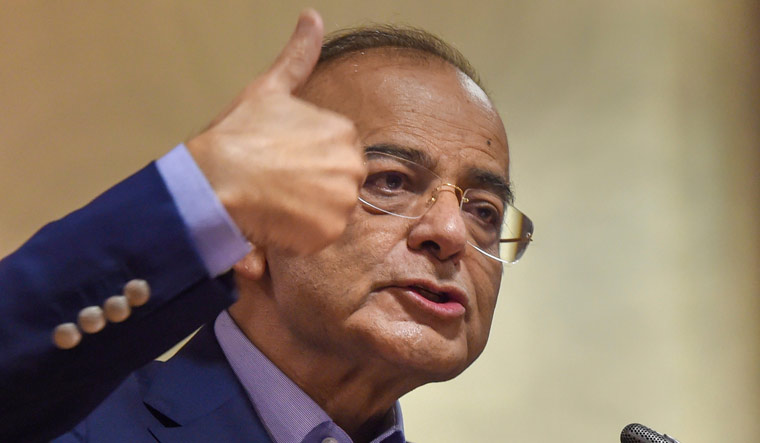
Finance Minister Arun Jaitley confirmed on Thursday that the goods and services tax (GST) collection, which was Rs 94,442 crore in September has crossed the massive Rs 1 lakh crore mark for the month of October 2018.
GST collection had crossed the Rs 1 lakh crore mark for the first time in April, which had then stood at Rs 1,03,458 crore, but since then it has remained above the Rs 90,000 crore level until October 2018.
The finance minister has shared this information on Twitter.
GST collections for October 2018 have crossed Rs. 1 lakh crore. The success of GST is lower rates, lesser evasion, higher compliance, only one tax and negligible interference by taxation authorities.
He furthered that, 67.45 lakh businesses filed goods and services tax (GST) returns in October and deposited Rs 1,00,710 crore as taxes.
The Finance Ministry had targeted monthly GST collections to be Rs 1 lakh crore for this fiscal. The collections, however, stood at Rs 94,016 crore in May, Rs 95610 crore in June, Rs 96,483 crore in July, Rs 93,960 in August and Rs 94,442 crore in September.
The states which contributed the most to the buildup in total taxes collected include Kerala (44 percent), Jharkhand (20 percent), Rajasthan (14 percent), Uttarakhand (13 percent) and Maharashtra (11 percent), an official statement said.
Of the Rs 1 lakh crore total gross GST revenue collected in October, central GST is Rs 16,464 crore, state GST is Rs 22,826 crore, IGST is Rs 53,419 crore (including Rs 26,908 crore collected on imports) and cess is Rs. 8,000 crore.
The BJP government’s effort to subsume indirect taxes under a single comprehensive tax was implemented last year on July 1.
Union Minister Ramdas Athawale had also confirmed earlier this week that the Modi government was contemplating bringing petrol and diesel under the ambit of GST.
“If petrol and diesel are brought under GST, it will help bring down their prices by Rs 20-30, which will provide relief to people of this country including the middle class and common masses,” Athawale had said.
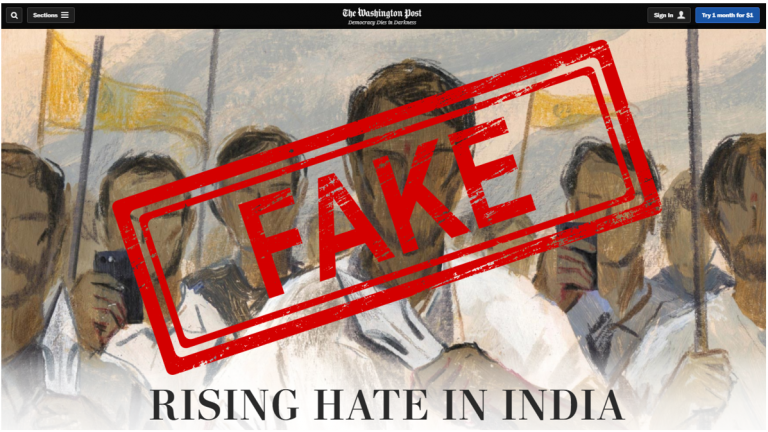
On October 31, The Washington Post published a story on hate crimes in India, titled Rising Hate in India. It makes some very sweeping statements about hate crimes in India like hate crime is rising in India since Narendra Modi came to power, and victims of such hate crimes are overwhelmingly Muslims, while the perpetrators are mostly Hindus.
If a major publication like Washington Post has made such statement about India, they must have solid data to back it up, one would assume. But the story is not based on any official data about hate crimes, neither it is based on any primary survey on the topic. The entire article has been written based on so-called hate crime data compiled by a website called Indiaspend.com.
If we see the data provided by the website, it is evident even their data is not based on any primary source. They have not done any field study to label crimes as hate crimes in their database. Their entire database is based on online news reports published by English language media in India. Such reports by mainstream media already suffer from their bias, media chooses what to report and how to report, they publish the identity of victims and preparators in select cases while hiding in others to suit the narrative they are trying to peddle. If that was not enough, now Indiaspend has added their interpretation on those reports to create their so-called database, which is the sole basis of the article by the Post.
The Washington Post article starts with how one Alimuddin Ansari, who was smuggling cattle, was attacked by a mob. Now, of course, no one should take law in their own hand, but how can the fact be ignored that the person was smuggling cattle, an illegal activity? A lot of such smuggled cattle are actually stolen animals, and people tend to get agitated when they see such stolen cattle are transported. The Post wants to portray that people are indulging in cow-related violence only because Hindus consider cow as a sacred animal, the writers fail to recognise that cattle is also a property, a source of income and livelihood. Cattle are not cheap, and stealing cow is an as big crime as stealing other properties.
Now coming to Indiaspend data. A cursory glance will tell how the data was picked up selectively to build up the narrative of Hindus attacking Muslims. They have ignored cow related violence where victims are Hindus, and even painted other routine crimes as cow related hate crimes.
In August this year, two Sadhus were gruesomely murdered by a mob because they were protesting against cow slaughter. Among the 11 persons who committed the crime, at least 8 of them were Muslims. But Indiaspend fails to include this incident in their ‘database’, while random scuffles and street fights, or even road accidents, are labelled as religious hate crimes.
For example, they have listed an incident that had happened in June 2016 in Uttar Pradesh’s Firozabad in their data. The detail of the incident shows that when 22 cattle were being smuggled in a van, the driver decided to take a detour to avoid a police checkpoint. While doing so the vehicle had overturned and fallen into a drain, killing 11 animals and injuring the rest.
Cattle smugglers who caused an accident killing 11 cattle, becomes the victim
According to the report based on which it was included in the database, four smugglers were travelling in the vehicle, and when police arrived at the accident spot they arrested one person, but other three smugglers had already fled the scene. The report says that villagers in the area tried to prevent police from taking the arrested, but it does not say anything about the smuggles being attacked by a mob.
IndiaSpend has given a complete makeover to this incident, saying that the smugglers were attacked “Mob of self-appointed cow protectors”. For them, the arrested person is a victim. Police had filed FIR against 4 smugglers, but for the so-called hate crime recorders they are the victims and the villagers are the criminals who actually were not even involved in the incident. And this is the kind of database that becomes base for spreading anti-India propaganda by a reputed publication like Washington Post.
In another story, a Muslim woman who runs a cow-shelter was attacked and she was also being sent threatening messages on phone. In the database, the identity of the attacker is reported as ‘not known’.
News says the family of Muslim woman thrashed her, the database says the identity of attackers unknown
If we follow the news link, it becomes clear that family members of the woman were behind the attack, as alleged by the woman herself. She says “I was thrashed and abused by my in-laws for being associated with cow protection and for speaking against triple talaq”. Her family members, who are obviously Muslim, attacked her, but the identity is ‘not known’ because they are not Hindus so it does not fit the narrative.
One wonders, in the 94 incidents included in the database, how many hides the identity of the perpetrators despite being known.
In Delhi this year, a Hindu boy was killed for being in a relationship with a Muslim girl. The boy was killed by family members of the girl, who stabbed the boy and slit his throat. While this incident is mentioned in the IndiaSpend data, a similar incident from Faridabad where a Hindu man, Sanjay Kumar was killed by his Muslim ex-wife’s family is not mentioned.
Similarly, the incident of a woman killed by her own father and brother for being in a relationship with a Hindu man is also not a hate crime according to the website.
The Indiaspend database is filled with incidents of cow smugglers being attacked by people. Although such attacks are not justified, it is also wrong to label all of them as a hate crime. They are mostly the cases of instant mob justice, where people thrash thieves, pickpockets etc are on the spot. Many times, the people don’t even know the identity of the smugglers.
Routine crime becomes a hate crime because the victim was with a cattle
The database also includes cases of routine crimes involving cattle traders. If a cattle trader is assaulted for some other reason, it has been labelled hate crime and the crime is linked to the trade of the victim, even when the police has said that there is no such link.
On the other hand, serious hate crimes like murder involving Hindu victims have been omitted from the database. And such a biased database becomes the sole base for a publication like Washington post to paint the Hindus of India as a bloodthirsty hate-mongering tribe. The question arises, what is their agenda?