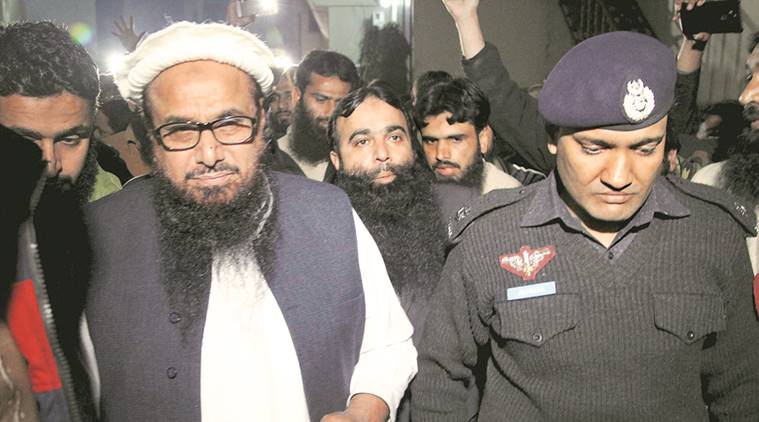
The United States Tuesday slammed Pakistan for effectively lifting the ban on Hafiz Saeed led Jamat-ul-Dawa and Falah-i-Insaniyat Foundation (FIF), which is against Pakistan’s commitment to the Financial Action Task Force (FATF) and also against its commitments to fight terrorism under the UN Security Council resolution, it said.
Mumbai terror attack mastermind Hafiz Saeed’s outfits JuD and FIF are no longer on the list of banned outfits in Pakistan.
Former President of Pakistan, Mamnoon Hussain had passed a presidential ordinance in February that amended the Anti-Terrorism Act 1997 and banned the individuals and terrorist organisations listed by the UN Security Council. JuD and FIF were proscribed under this ordinance. The present Pakistan Tehereek-i-Insaf (PTI) government led by Imran Khan, who is known to have a soft corner for terrorists, neither tabled the bill before the Parliament to convert it into an Act nor extended it. As a result, the ordinance has lapsed.
A US State Department spokesperson while addressing to a question on the recent lapse of the ordinance that led to the lifting of the ban on the two outfits said, “The expiration of the ban on JuD and FIF runs counter to Pakistan’s commitment to work with the Financial Action Task Force (FATF) to address weaknesses in its counter-terrorism financing regime.”
“As we have said before, the United States is deeply concerned that this development will jeopardise Pakistan’s ability to meet its commitments under UN Security Council Resolution 1267 to freeze and prevent the raising and moving of funds belonging to or associated with UN-designated terrorist groups,” the spokesperson said.
Hafiz Saeed had filed a petition before the Islamabad High Court challenging the former president’s ordinance under which his terror outfits had been banned for being on the watch list of the United Nations Security Council. His counsel had informed the judge about the lapse of the ordinance due to the failure of the government to extend it or table it before the Parliament for converting it into an Act. Subsequently, the judge said that Saeed’s plea was no longer effective as the ordinance was not extended by the government.
He further contended in the petition that he established Jamaat-ul-Dawa in 2002 and cut off ties with his other banned terror group Lashkar-e-Taiba. The terrorist went on to blame India for continuing to malign the Jamaat-ul-Dawa for its association with Lashkar-e-Taiba.
India has been persistently pushing Pakistan to castigate the mastermind behind the 2008 Mumbai blast, Hafiz Saeed, a Pakistani Islamist militant, who is also a co-founder of Lashkar-e-Taiba which was responsible for the attacks in which 166 people were killed. In accordance with Modi government’s ‘no tolerance’ policy, the NIA in January 2018 had filed a charge sheet against Hafiz Saeed, along with others, for instigating separatist activities in Kashmir.
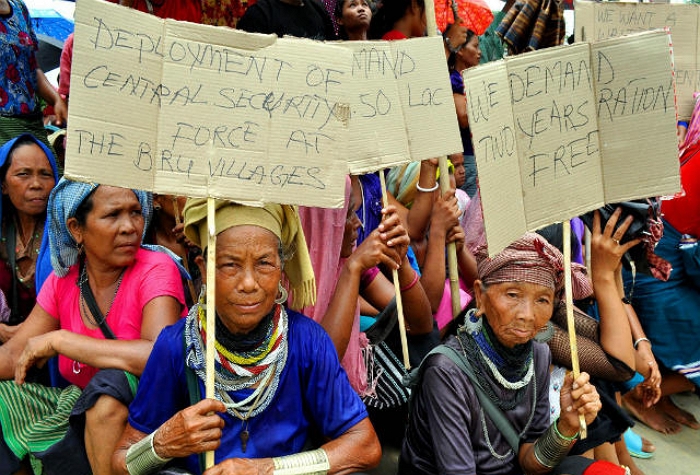
An Apex body representing the Bru refugees from Mizoram living in Tripura has appealed to the political parties in Mizoram not to come for election campaigning. The election for the Mizoram Assembly election is scheduled for 28th November.
Vice president of Mizoram Bru Displaced People’s Forum (MBDPF) R Laldawngliana said that the community members were not keen on attending election campaign meetings by parties from Mizoram. “We do not welcome poll canvassing inside the camps. The members here are not looking forward to attending public meetings by the parties, just before the polls,” he said.
More than 30,000 people belonging to the Bru community from Mizoram are living in six refugee camps in neighbouring Tripura, for the last 21 years.
In October 1997, Bru National Liberation Front (BNLF) militants had killed a forest official in Mizoram, which resulted in a revenge ethnic violence. Before this, some Mizo organisations were already claiming that Bru people are not indigenous to Mizoram and their names should be deleted from electoral rolls in the state. Following the murder of the forest officer, large-scale violence took place on Bru villages, where dozens of villages were burned down and many people were killed. Following this violence, a large number of Bru families fled to Tripura, who were given shelter in Kanchanpur and Panisagar areas in North Tripura.
Repatriation of Bru people to Mizoram was started in 2010, and around 1600 families were resettled in the state, but the process was stopped after Mizo organisations started protesting. The people in camps also expressed fear in going back. Since then, they are living in Tripura, with financial and other assistance from the central government. In 2013 assembly elections and 2014 Lok Sabha elections, refugees having their name in the electoral roll in Mizoram were able to vote from their camps in Tripura itself. The election commission had set up facilitation centers in Tripura, where the people could vote using postal ballots. Mizo organisations and the Congress government in the state had opposed this move by EC.
This year too, the Mizoram government has said that they will not allow the Bru people living in Tripura to vote. The govt has also opposed the revision of electoral roll for the Bru tribals. Mizoram home minister R. Lalzirliana has said that only those Bru people who have returned to Mizoram would be allowed to vote, and people living in Tripura would not be allowed to vote in Tripura. ON the other hand, the Election Commission has affirmed that the people will be allowed to vote. The EC is considering opening poll both at a border town in Mizoram for refugees.
This has made the situation very volatile. MBDPF thinks that if election campaign is done at refugee camps in Tripura, it may lead to law and order problems. They also don’t want the residents of the camps to get divided into party lines. That’s why they have asked the parties to stay away from the camps.
As per a report on News18, the family of the Kathua rape victim is forced to sell off their livestock to pay expenses of travelling from Kargil to Pathankot, where a trial court is hearing the matter.
“I had to attend court three to four times. Each time I had to travel, I sold some of my sheep and goat to pay for the expenses,” the father of the victim said but insisted that he will even sell his property without any hesitation if needs be. “I will fight this case till the end,” he said.
As per a report on The Tribune, the family of the victim has also demanded details of the funds collected for them during a campaign run by social activists in January this year. “We have information that lakhs of rupees were collected from different parts of the world by exploiting the incident by some people,” the report quotes the grandfather of the victim as saying before adding, “Those who were in the forefront to ensure justice are now even hesitating to attend our phone calls.”
“After reaching Samba, we tried our best to get details about the funds collected during the campaign but to no avail due to the evasive attitude of the so-called crusaders,” the report quoted the biological father of the victim, “Those who had promised to provide every possible help to us six months back are pretending to be busy with other ‘important’ work.”
We had earlier reported that a leaked audio tape had emerged which suggested that the huge sum of funds collected in the name of the victims’ family never actually reached them. In the tape, two people are supposedly heard discussing how “huge funds” were collected in the rape victim’s name, which never made its way to the family.
Leftist JNU activist Shehla Rashid had claimed that funds of over 40 lakhs had been collected from donors. She had later also stated that the lawyers are not charging money and hence a sum of rupees 10 lakhs will be handed over to the rape victim’s family.
Media reports had claimed that though lakhs of rupees were collected in the name of helping the family, the funds never reached them. Reports stated that the JNU student union and many online ‘activists’ who had campaigned for the Kathua victim had never bothered to hand over the funds to the victim’s family. Rashid had denied the allegations and later stated that the money was delayed because the family did not have a joint bank account and PAN.
It is notable here that one of the main activists of the campaign, Talib Hussain, was later arrested on rape charges and was sent to jail.
Update: Shehla Rashid, the leftist student leader who was actively involved with the fundraising has denied the Tribune report. In a Twitter thread, she has asserted that the report is false and that she had met the family personally and none of them had any complaints.
1) @thetribunechd has published a story falsely alleging that Kathua victim’s family didn’t get the funds meant for them! I personally met the biological parents after the funds were transferred. They had no complaints. @OmarAbdullah@thevirdas contributed; no one has complaints! https://t.co/7BcbUvMlOB
The journalist who reported the story has, however, stood by his report. He has asserted that he has a recording of the conversation with the family of the victim.
I have the recording of whatever the parents of the victim told me and what I reported here: https://t.co/q4BJaOKE81
she must approach the court. Isn’t it?
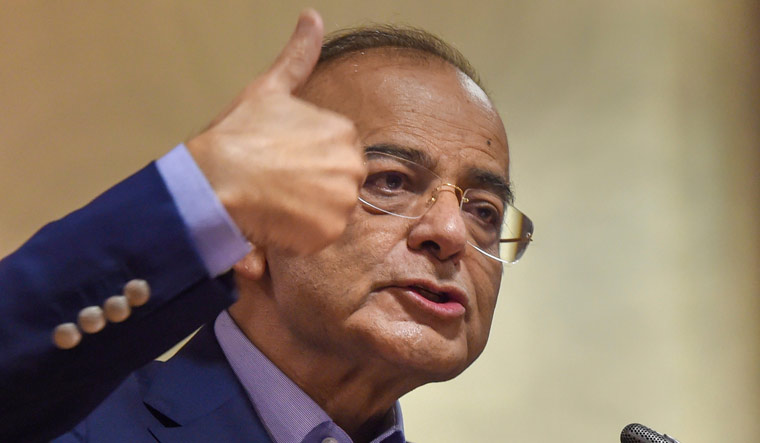
Finance Minister Arun Jaitley confirmed on Thursday that the goods and services tax (GST) collection, which was Rs 94,442 crore in September has crossed the massive Rs 1 lakh crore mark for the month of October 2018.
GST collection had crossed the Rs 1 lakh crore mark for the first time in April, which had then stood at Rs 1,03,458 crore, but since then it has remained above the Rs 90,000 crore level until October 2018.
The finance minister has shared this information on Twitter.
GST collections for October 2018 have crossed Rs. 1 lakh crore. The success of GST is lower rates, lesser evasion, higher compliance, only one tax and negligible interference by taxation authorities.
He furthered that, 67.45 lakh businesses filed goods and services tax (GST) returns in October and deposited Rs 1,00,710 crore as taxes.
The Finance Ministry had targeted monthly GST collections to be Rs 1 lakh crore for this fiscal. The collections, however, stood at Rs 94,016 crore in May, Rs 95610 crore in June, Rs 96,483 crore in July, Rs 93,960 in August and Rs 94,442 crore in September.
The states which contributed the most to the buildup in total taxes collected include Kerala (44 percent), Jharkhand (20 percent), Rajasthan (14 percent), Uttarakhand (13 percent) and Maharashtra (11 percent), an official statement said.
Of the Rs 1 lakh crore total gross GST revenue collected in October, central GST is Rs 16,464 crore, state GST is Rs 22,826 crore, IGST is Rs 53,419 crore (including Rs 26,908 crore collected on imports) and cess is Rs. 8,000 crore.
The BJP government’s effort to subsume indirect taxes under a single comprehensive tax was implemented last year on July 1.
Union Minister Ramdas Athawale had also confirmed earlier this week that the Modi government was contemplating bringing petrol and diesel under the ambit of GST.
“If petrol and diesel are brought under GST, it will help bring down their prices by Rs 20-30, which will provide relief to people of this country including the middle class and common masses,” Athawale had said.
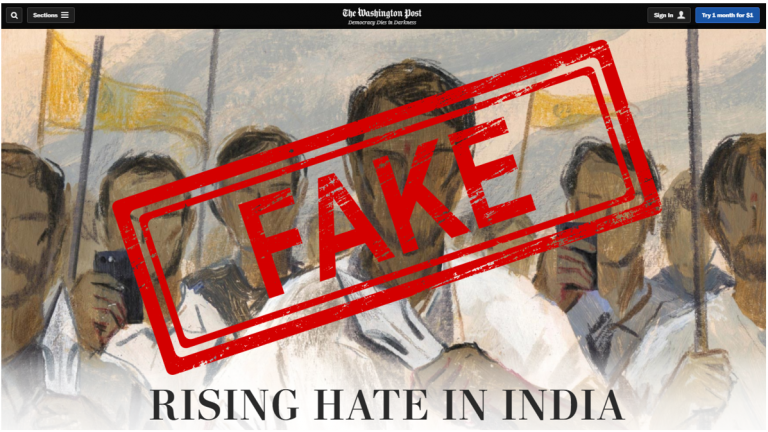
On October 31, The Washington Post published a story on hate crimes in India, titled Rising Hate in India. It makes some very sweeping statements about hate crimes in India like hate crime is rising in India since Narendra Modi came to power, and victims of such hate crimes are overwhelmingly Muslims, while the perpetrators are mostly Hindus.
If a major publication like Washington Post has made such statement about India, they must have solid data to back it up, one would assume. But the story is not based on any official data about hate crimes, neither it is based on any primary survey on the topic. The entire article has been written based on so-called hate crime data compiled by a website called Indiaspend.com.
If we see the data provided by the website, it is evident even their data is not based on any primary source. They have not done any field study to label crimes as hate crimes in their database. Their entire database is based on online news reports published by English language media in India. Such reports by mainstream media already suffer from their bias, media chooses what to report and how to report, they publish the identity of victims and preparators in select cases while hiding in others to suit the narrative they are trying to peddle. If that was not enough, now Indiaspend has added their interpretation on those reports to create their so-called database, which is the sole basis of the article by the Post.
The Washington Post article starts with how one Alimuddin Ansari, who was smuggling cattle, was attacked by a mob. Now, of course, no one should take law in their own hand, but how can the fact be ignored that the person was smuggling cattle, an illegal activity? A lot of such smuggled cattle are actually stolen animals, and people tend to get agitated when they see such stolen cattle are transported. The Post wants to portray that people are indulging in cow-related violence only because Hindus consider cow as a sacred animal, the writers fail to recognise that cattle is also a property, a source of income and livelihood. Cattle are not cheap, and stealing cow is an as big crime as stealing other properties.
Now coming to Indiaspend data. A cursory glance will tell how the data was picked up selectively to build up the narrative of Hindus attacking Muslims. They have ignored cow related violence where victims are Hindus, and even painted other routine crimes as cow related hate crimes.
In August this year, two Sadhus were gruesomely murdered by a mob because they were protesting against cow slaughter. Among the 11 persons who committed the crime, at least 8 of them were Muslims. But Indiaspend fails to include this incident in their ‘database’, while random scuffles and street fights, or even road accidents, are labelled as religious hate crimes.
For example, they have listed an incident that had happened in June 2016 in Uttar Pradesh’s Firozabad in their data. The detail of the incident shows that when 22 cattle were being smuggled in a van, the driver decided to take a detour to avoid a police checkpoint. While doing so the vehicle had overturned and fallen into a drain, killing 11 animals and injuring the rest.
Cattle smugglers who caused an accident killing 11 cattle, becomes the victim
According to the report based on which it was included in the database, four smugglers were travelling in the vehicle, and when police arrived at the accident spot they arrested one person, but other three smugglers had already fled the scene. The report says that villagers in the area tried to prevent police from taking the arrested, but it does not say anything about the smuggles being attacked by a mob.
IndiaSpend has given a complete makeover to this incident, saying that the smugglers were attacked “Mob of self-appointed cow protectors”. For them, the arrested person is a victim. Police had filed FIR against 4 smugglers, but for the so-called hate crime recorders they are the victims and the villagers are the criminals who actually were not even involved in the incident. And this is the kind of database that becomes base for spreading anti-India propaganda by a reputed publication like Washington Post.
In another story, a Muslim woman who runs a cow-shelter was attacked and she was also being sent threatening messages on phone. In the database, the identity of the attacker is reported as ‘not known’.
News says the family of Muslim woman thrashed her, the database says the identity of attackers unknown
If we follow the news link, it becomes clear that family members of the woman were behind the attack, as alleged by the woman herself. She says “I was thrashed and abused by my in-laws for being associated with cow protection and for speaking against triple talaq”. Her family members, who are obviously Muslim, attacked her, but the identity is ‘not known’ because they are not Hindus so it does not fit the narrative.
One wonders, in the 94 incidents included in the database, how many hides the identity of the perpetrators despite being known.
In Delhi this year, a Hindu boy was killed for being in a relationship with a Muslim girl. The boy was killed by family members of the girl, who stabbed the boy and slit his throat. While this incident is mentioned in the IndiaSpend data, a similar incident from Faridabad where a Hindu man, Sanjay Kumar was killed by his Muslim ex-wife’s family is not mentioned.
Similarly, the incident of a woman killed by her own father and brother for being in a relationship with a Hindu man is also not a hate crime according to the website.
The Indiaspend database is filled with incidents of cow smugglers being attacked by people. Although such attacks are not justified, it is also wrong to label all of them as a hate crime. They are mostly the cases of instant mob justice, where people thrash thieves, pickpockets etc are on the spot. Many times, the people don’t even know the identity of the smugglers.
Routine crime becomes a hate crime because the victim was with a cattle
The database also includes cases of routine crimes involving cattle traders. If a cattle trader is assaulted for some other reason, it has been labelled hate crime and the crime is linked to the trade of the victim, even when the police has said that there is no such link.
On the other hand, serious hate crimes like murder involving Hindu victims have been omitted from the database. And such a biased database becomes the sole base for a publication like Washington post to paint the Hindus of India as a bloodthirsty hate-mongering tribe. The question arises, what is their agenda?
On Thursday, the Bombay High Court granted an interim protection to the alleged ‘Urban Maoist’ Gautam Navlakha, activist Anand Teltumbde and activist Stan Swamy from arrest till November 21, for their alleged links with the left-wing terrorists and involvement in Elgaar Parishad violence in Bhima-Koregaon.
According to the reports, the Bombay High Court was hearing a petition filed by Navlakha, Teltumbde and Swamy seeking that FIRs lodged by the Pune Police against them in connection with the plot to assassinate Prime Minister Modi, to be quashed lodged. They are also accused of playing a part in Bhima Koregaon violence.
A division bench of justices Ranjit More and Bharati Dangre heard the petitions filed by the three accused seeking to quash the FIR against them. The bench postponed the case for hearing on November 21 as petitions pertaining to their arrests were pending before the Supreme Court.
The Delhi High Court had released the alleged Urban Maoist Gautam Navlakha from house arrest after five weeks of the arrest on October 1. However, the Supreme Court of India issued a notice to Gautam Navlakha in connection with the Maharastra government’s plea against the Delhi government order allowing Navlakha to be released from house arrest.
The Pune Police had arrested Gautam Navlakha and four other activists on August 28 in relation with their alleged involvement in the Elgaar Parishad and the Bhima Koregaon violence. Historian Romila Thapar had filed a plea in the Supreme Court against the arrest of five ‘Urban Maoists’ but the top court headed by the then Chief Justice of India Dipak Misra on September 28 had refused to interfere with their arrests.
The Pune Sessions Court on October 26th rejected bail plea of Vernon Gonsalves, Arun Ferreira and Sudha Bhardwaj, who were arrested in August for their alleged involvement in Elgaar Parishad and also in the Bhima Koregaon violence. The Pune Court had ordered all the three accused to be taken into the police custody. Last Thursday, the Hyderabad High Court had extended house arrest of fifth accused Varavara Rao by another three weeks.
Interestingly, one of the accused Sudha Bharadwaj had demanded that she should be given the same facilities in the court which the government had promised to provide to fugitive Vijay Mallya. Earlier in June, the Pune police had arrested Rona Wilson, Surendra Gadling, Shoma Sen, Mahesh Raut and Sudhir Dhavle in the case.
If I was an Indian Muslim, I would have a whole lot of questions today and certainly no answers.
So far, I believed in the pictures of Rahul Gandhi, skull cap and all, in Iftar party breaking his fast, so to speak, at sunset during a day in the Ramadan month. Now, I read he said on Tuesday in Indore that his party is one of Hinduism.
It raised a whole lot of issues to my mind. Does Congress stand for Muslims, Dalits, Hindus or everyone? So far I have been told the only protectors Muslims have are Congress. They engineered a special protection for my Jammu and Kashmir brethren and sisters in Indian Constitution. They stood up for Sharia during the Shah Bano case; are most determined for Rohingya refugees; paralyzed the country on Kathua tragedy; stalled the Triple Talaq bill, spotlight every single–half or full–lynching incident in the remotest hamlets of the country. Rahul Gandhi even called Congress a ‘Muslim party’ a while ago. Now they say they are one of Hinduism.
All this while, they dubbed Bharatiya Janata Party (BJP) as sectarian and communal even though Narendra Modi never once said he stood only for Hindus. Isn’t Rahul Gandhi now being communal by opening claiming his party is one of Hinduism a few weeks after he said that Congress is a Muslim party and a few years after he said that mythical ‘Hindu terrorists’ are more dangerous than LeT? Isn’t it polarizing the communities? Widening the gulf of fear and insecurity between practitioners of two religions? Is this the vision of One India or daring of a burglar who wishes to rob the home of 1.3 billions of all its valuables?
Then I look at my newspapers. My day begins with Indian Express, the “journalism of courage.” For the last four years and a half, they have reported every single incident against the Muslim community, and Dalits, with sincerity and not a little bit of imagination and creativity. They have marked anniversaries of Dadri, Pehlu or a Junaid by sacrificing the space for news of their front pages. They made sure the Muslim community didn’t forget for a single day the crimes which have been committed against them during the Modi regime (Nor did they Una or Bhima-Koregaon on behalf of Dalits). Indian Express seemed seriously concerned about the future of Indian Muslims. Who can forget their “And they killed Yakub” headline?
And now look at them – now that Rahul Gandhi has jumped the ship, to my eyes at least, Indian Express choose to completely blank out his Indore comment in the 31st October’s edition. Why didn’t they report Rahul Gandhi for his communal and polarizing comment? Why did they desert millions of Indian Muslims who dread a majoritarian narrative in this country? Could Indian Express be said to be standing up to the idea of secular, free and equal India? Just imagine if Modi had said BJP stands only for Hinduism? (They haven’t allowed him to live down the Kabristan-Shamsaan speech to this day).
If I could ask Indian Express why for a similar offence, BJP is communal and Congress is not. Why give ammunition to right-wingers who claim there is never a pro-Hindu story on your front pages? Why make even your die-hard fans like me and other Indian Muslims doubt your sincerity when you sweep Rahul Gandhi’s all-for-Hinduism comment under the carpet?
I’ve tried to give my faith in Indian Express a second chance. What if their reporter truly missed the Indore event? Extremely unlikely for Rahul didn’t offer his comment in private. It was a press conference. Even if their reporter missed the event, news agencies such as PTI must have brought the news on their teleprinters. On close inspection, I even find this Indore press conference of offensive-comment buried inside their newspaper on Page 8.
Then why did you throw a cloak on this Rahul remark? Why have double standards on BJP and Congress? If you care about Indian Muslims or the idea of India that you numb our minds daily with, why avoid the searchlight on Mr Rahul Gandhi? Is that an editorial policy or a direction you receive from “Above”? And who’s this “Above”? Does this “Above” have the welfare of Indian Muslims or India as a whole in mind?
These are all very disturbing questions that Indian Muslims should ask. I hope Indian Express takes these fears in the form of questions to Rahul Gandhi. Ask its editorial writers from JNU and Ashoka University; Kancha Ilaiahs or Apoorvanands, to prove they truly speak for minorities. Scratch the surface of Kapil Sibal and Shashi Tharoor who are never out of your reach, or representation, in their newspaper on a daily basis. They could even evoke write-ups from retired professionals such as Justice Fali S. Nariman or Chelameswar, ex-cop Julio Ribeiro, ex-election commissioner S.Y. Quraishi etc who don’t even need an invitation to fill their editorial pages.
After all, Indian Express is “journalism of courage.” They profess to stand up for minorities. They claim to care for a “free and secular India”.
According to reports, senior leaders of the Congress party, Digvijaya Singh and Jyotiraditya Scindia have been involved in a verbal spat over the selection of candidates for the upcoming Madhya Pradesh assembly elections. Congress spokesperson Shobha Oza, however, has denied claims of infighting and blamed BJP’s dirty tricks and propaganda instead for such claims.
As per reports, a committee comprising of Ashok Gehlot, Veerappa Moily and Ahmed Patel has been constituted to resolve the matter. Scindia is the chief of the campaign committee of the Madhya Pradesh Congress while Digvijaya Singh is the coordination committee chief for the Madhya Pradesh assembly election.
Congress leaders Digvijaya Singh & Jyotiraditya Scindia had a verbal argument over candidate selection@iSamiakapoor with the details pic.twitter.com/0myQVKUOFg
Congress has been deeply troubled by the infighting with its party ranks. Earlier, a poster war had emerged between Scindia and Kamal Nath, another prospective Congress Chief Ministerial candidate in the state. Congress had blamed the BJP for their internal squabble then as well. Scindia had again triggered a factional war within the party in September after declaring the Scindia family to be the only alternative to Shivraj Singh Chouhan in Madhya Pradesh.
Amidst talks of the United States reimposing sanctions on countries that import oil from Iran, reports have claimed that it might grant India a waiver. According to reports, the USA has broadly agreed to slack its norms for India which would allow Indian companies to import as much as 2.5 million tonnes of oil per month from the middle eastern nation.
The US plans to enforce the oil-related sanctions on Iran from November 4 to block Tehran’s biggest source of income and bring it to the table to renegotiate a new nuclear deal. According to the US, any country or a company that engages with Iran after the sanctions kick-in will be liable to get cut off from the American financial system. The USA wants to force Iran into stopping its involvement in the Syrian conflict and shut its ballistic missile programme.
The US had stated that it expects every country to reduce its oil import from Iran to zero but was open to country-specific waivers that would allow limited imports to those assuring significant cut. India and other key countries have been engaged with the US for obtaining a waiver from the sanctions.
According to the sources, India and the US have broadly agreed on waiver and India will reduce its import by 35% from last year which is deemed significant. The USA has reportedly indicated that it is in the middle of an ‘internal process’ of considering SRE (Significant Reduction Exemptions) waivers for countries that promise to reduce their oil import from Iran.
As India defies the sanctions and goes for shopping oil, the grant of waiver could be considered as an attempt by the US to lure India and dissuade it from continuing to import Iranian oil. It is expected that the two countries India and Iran will stick to the existing mechanism of trade in which 55% of the payment is done in euros and the remaining 45% is in rupee through UCO bank. Under this trade, the rupee will be used by Iran for importing rice, drugs and other products from India, while the euros ensconce in the Indian bank waiting for the sanctions to go. Earlier, India and Irans were in talks of shifting entirely into rupee trade.
22 million tonnes of crude oil was imported by India in 2017-18 and had planned to raise it to 30 million tonnes before the looming threat of sanctions kicked in. India will reduce its import to 14-15 million tonnes to conform with the US stipulations of getting a sanction waiver. The oil companies, however, are yet to decide on how the quantity of oil imported will be distributed among them.
India and the US were engaged for months in discussing the modalities for the waiver. India prefers Iranian oil as it is less expensive and meets the technical requirements of Indian oil refineries. Recently, India had defied the threat of US sanctions and declared that it would go ahead with the purchase of S-400 air defense systems from Russia.
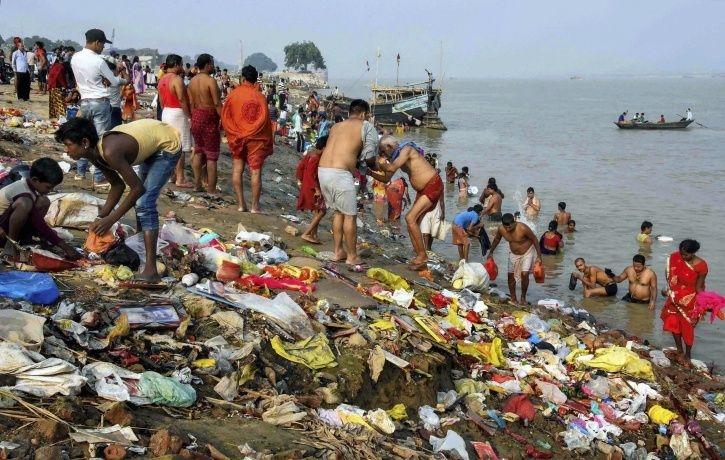
In an expedition which lasted over a month, a 40 member team led by Everester Bachendri Pal, the country’s first woman who reached the summit of Mount Everest in 1984, removed over 55 tons of garbage and waste from the Ganga, reports DNA.
According to Pal, the entire expedition route of 1500 km from Haridwar to Patna, which the team covered under their ‘Mission Gange’ was extremely polluted. The team removed over 55 tons of garbage from the river in the expedition which began on 1st October. The team also included Everesters Premlata Agarwal, first Indian woman to climb all the seven summit of the world as well as Hemant Gupta and Binita Soren.
The team sailed through the river along Bijnor, Farukhabad, Kanpur, Allahabad, Varanasi, Buxar and Patna pulling waste and all along which was disposed of by the respective municipalities of the seven towns the team reached.
Pal confirmed that throughout the expeditions several awareness campaigns were also conducted by her team which educated people of the need for ‘clean Ganga’, a responsibility towards which the central government has also been working relentlessly. “We had a good experience in making aware hundreds of people, including school children, who joined us at every destination about the need for clean Ganga,” she said.
‘Namami Gange Programme’, an integrated conservation mission, was approved as the flagship programme by the BJP government in May 2015 to accomplish the objectives of effective abatement of pollution, conservation, and rejuvenation of the Ganga. The project is being carried out aggressively under the supervision of the present Minister for Ministry for Water Resources, River Development and Ganga Rejuvenation, Government of India, Nitin Gadkari, who claimed that the result of Ganga cleaning works would be visible on the ground by March next year as the river (water quality) would be 70 to 80% cleaner (from 2014-15 level) by that time.
In August we reported how, in a bid to help strengthen the Government’s efforts to the ongoing cleaning Ganga project, the German government has decided to provide a soft loan of Euro 120 million or Rs 990 crore to India for cleaning Ganga project in Uttarakhand.
To expedite the entire process, the deadline for which has been set as 2020, the Territorial Army (TA), a part of Indian Army, comprising of ex-servicemen, have now expanded its footprint to clean Ganga with a Composite Ecological Task Force (CETF), for which the government has also allocated about Rs 167 crore to the battalion.
Understanding the importance of safe and clean water, the government, irrespective of all the criticisms faced, is all set to take up and effectuate this dauntless challenge of cleaning the ‘Ganga’, which now enjoys the same legal rights that are available to all the human beings after the Uttarakhand High Court declared it as the first living entity of India, within the stipulated time frame.