Home Blog Page 6999

PM, Home Minister should take a call on declassification of former PM Shastri’s death documents: CIC

0

The death of former Prime Minister Lal Bahadur Shastri, one of the greatest mysteries of modern Indian political history, has yet again gained some traction, as the Central Information Commission (CIC) on Monday stated that all ‘classified papers’ relating to the former Prime Minister Lal Bahadur Shastri’s death should be placed before the Prime Minister and the Home Minister to take call on their declassification.

According to the reports, the CIC issued these directives to the central public Information officers of the Prime Minister’s Office, External Affairs Ministry and Home Ministry after a plea by an RTI activist Navdeep Gupta sought information whether an autopsy was conducted on Shastri who had died on January 11, 1966.

“The Commission directs to place all those so-called ‘classified papers’ before the prime minister and the home minister, who are recommended to consider the fundamental right to know and demand of the people… To declassify (the records) either through an expert committee or by any other process to get the mystery probed and resolved,” Information Commissioner Sridhar Acharyulu said.

Expressing surprise regarding the absence of records with the Rajya Sabha regarding the Raj Narain Committee, which was formed to look into Shastri’s death initiated during the Janata Party government, Acharyulu recommended that the ‘constitutional authorities’ in Parliament probe or make efforts to secure the committee records.

Lal Bahadur Shastri had died in Tashkent after he suffered from a massive heart attack, hours after signing a declaration with Pakistan President Muhammad Ayub Khan after the 1965 Indo-Pak war. His death has raised various questions, as it had occurred on foreign soil and remains a mystery till today.

Reportedly, the Union government had denied any information regarding the release of the classified documents citing them as prejudicial to the interests of the country. However, the Information Commissioner reportedly stated further that in view of the startling incidents that followed the mysterious death, such as the killing of his personal staff in two separate ‘accidents’, the vanishing of records of Rajya Sabha Committee’s probe, and several other points raised over the years journalists and Shastri’s family members, the Commission is of opinion that the Union government has a duty to explain to the nation why and how Lal Bahadur Shastri died in Tashkent. He further said that apart from a medical record, nothing has been disclosed and the mystery is being allowed to persist.

Acharyulu asked the government to reveal which ministry has classified documents related to Shastri’s death and also the nature of classifications of these documents, whether they are ‘top secret’, ‘secret’ or ‘confidential’ and the basis of it.  He asked the government to answer which part of the RTI Act is invoked to deny the information and the necessary justification put forward for such invocation at that time. He added that the people have a right to know what had actually happened.

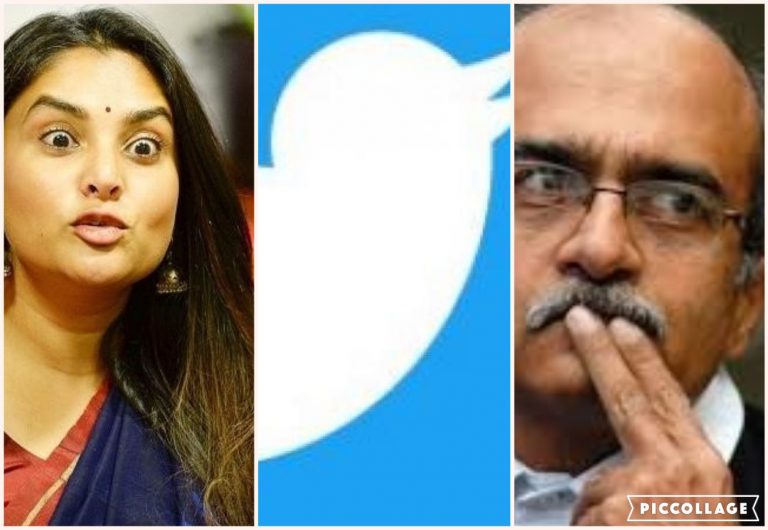
Divya Spandana, Prashant Bhushan share ‘news’ from dubious website ‘IndiaScoops’ to prove Rafale is a ‘scam’

After selectively ignoring facts in the Rafale deal, the politicians and journalists in India have now resorted to sharing links of a dubious website just to prove their point.

The Congress IT cell head, Divya Spandan and the lawyer and activist Prashant Bhushan, the usual suspects, kept the ball rolling by furthering the lies on Twitter.


It was eventually picked up by former diplomat KC Singh, who once wanted journalists jailed for not being anti-Modi enough.


Swati Chaturvedi, the abusive troll masquerading as a journalist, also tried to add credibility to IndiaScoops ‘news’.


Aam Aadmi Party supporter Krishan Pratap Singh also questioned why is the mainstream media not picking up the ‘scoop’ by ‘IndiaScoops’.


Well, maybe mainstream media or any media for that matter is not ‘picking up the news’ is because the website is dubious and regularly shares unverifiable news. Earlier too, the website had shared news about PM Modi’s yoga video costing Rs. 35 lakh, which was widely shared by the same set of people.

The latest ‘scoop‘ by IndiaScoops is titled “Rafale Deal: Technical HODs at Dassault Aviation claim Reliance Defence was never the first choice, the decision to drop HAL was taken by CEO Eric Trappier at the last minute”. Let us try and find out details of the story.

The article claims that ‘two top technical heads at Dassault Aviation’ gave an exclusive interview to IndiaScoops.

IndiaScoops was created on 27 April 2018

IndiaScoops as a website was created on 27 April 2018, and two top technical heads at Dassault Aviation skip everyone else and give an exclusive interview to a six-month-old website which otherwise talks about ‘leaked nude and bikini pictures’ of actors.

Popular posts on IndiaScoops

The person who created the website went for a premium account so as to mask their real identity. Very curious for a blog with about 10,000 likes on Facebook to spend so much and go to such length to hide their identity. What have they got to hide?

The earliest mention of this website that we could find is by a Twitter handle ‘India Scribes Tv’.

The first mention of IndiaScoops on Twitter

India Scribes TV is run by one Flynn Remedios, one ‘Bollywood publicist’.

IndiaScribes by Flynn Remedios

The same Flynn Remedios who appears in the ‘Popular Posts’ on IndiaScoops where one model had allegedly ‘claimed she was having an affair with Remedios but she later apologised after he sued her’.

A bit about Flynn Remedios, who seems to be running the show here. In November 2010, a model and Kannada starlet had filed a case of molestation against one Flynn Remedios. She had also accused him of cheating her of Rs. 4 lakh. In 2008, model Sherlyn Chopra had filed a case against ‘freelance journalist’ Flynn Remedios who offered to become her public relations officer, for allegedly sending her outrageous SMSes. And recently, Remedios has described as Arshi Khan’s publicist. The same Arshi Khan whose Facebook page now became IndiaScoops.com page which has ‘exclusive sources’ in the PMO. Oh, and Arshi Khan and her publicist Flynn Remedios have been accused by one Pandit Ramesh Joshi of not returning the money she borrowed as well as of sexual harassment.

Speaking of Arshi Khan, IndiaScoops’ Facebook page was Arshi Khan fan page before it started speaking to technical heads at Dassault Aviation.

IndiaScoops Facebook page

It is indeed kind of intriguing that an erstwhile Arshi Khan fan page and a Bollywood publicist had earlier got sources in the PMO and now Dassault Aviation top technical heads, speak directly to them.

But then how can a Bollywood publicist not have credible connections? We now look at the article they have published. The article claims that two ‘internal experts’ (earlier they were technical heads), spoke to IndiaScoops over the phone and ‘pointed out that there was a discussion between officials at Dassault Aviation and several emails were exchanged over a period of 7-8 days. The entire technical team wanted to work with HAL, but the decision was overruled by the top Dassault management headed by CEO Eric Trappier at the last minute.’

“We were sure we would be working with HAL and not any other Indian company. At least a 100 emails went to and fro from different departments at DA on the issue. At the last minute, we were informed that HAL was dropped and a new Indian company with whom we had never worked before and which had no expertise in manufacturing fighter aircraft was selected for the job. The entire technical team and our team heads and HODs were shocked. It was a bolt from the blue. But we had to follow instructions. At the end of the day, it’s profitability for the company that matters and if the top management decided to work with Reliance Defence, we had to toe the line. We all knew that the new company had no expertise, no experience. Internally, this issue was discussed among the technical HODs on email and several emails went to and fro. But it was CEO Eric Trappier and a couple of other officials’ at DA who took the decision to go with Reliance Defence,” the officials told IndiaScoops.com.

The two ‘internal experts’ doubling up as ‘technical heads’ at DA were ‘shocked’ when HAL was dropped and ‘a new Indian company with whom we had never worked before and which had no expertise in manufacturing fighter aircraft was selected for the job’. Umm. No one other than DA is making the jets. Reliance Defence (and HAL) are both offset partners, in different capacities, along with about 70 others, and both will manufacture some components. Perhaps the ‘experts’ need to brush up on their ‘expertise’.

The decision to drop HAL and go with Reliance Defence Ltd was that of CEO Eric Trappier and two others who mysteriously refused to listen to any advice of the departmental HODs and selected Reliance on the grounds that the deal would be scrapped, they told IndiaScoops.com in an exclusive interview.

HAL is NOT dropped. HAL is still very much part of the deal. One of the names on the offset partners is that of Snecma HAL Aerospace Ltd which is a joint venture between Hindustan Aeronautics Ltd (HAL) and Snecma (Safran) of France. This joint venture will make parts for Rafale jet’s Snecma M88 engine. Therefore, the allegation that HAL has been completely left out is false. As the jets will be made in France, only some parts of that will be made in India as per offset obligation, and HAL is already a part of that.

“We were told the Indian government would have scrapped the deal if Reliance was not taken on board. Scrapping the deal would mean losses for the company and hence the top management headed by CEO Eric Trappier took the decision to work with Reliance, even though the in-house technical HODs had vetoed working with a new company having no experience and expertise – this was the official explanation given to the team. The technical HODs told the Dassault Aviation top management that handing over the contract to a new company would compromise and jeopardize the technology and equipment as well as be hazardous for the over-all image of DA as a world-class manufacturer of fighter aircraft. This has been put in writing on several emails, but the final decision by CEO Eric Trappier and two others was in favor of Reliance Defence,” they told IndiaScoops.com.

Indian and French Governments have repeatedly asserted that neither of the governments had any say in which commercial partner Dassault chooses. Despite that, IndiaScoops repeats the lie which the politicians in India have been repeating, without giving any legitimate source for the information. The two ‘technical heads’ they have ‘interviewed’ are kept anonymous to ‘protect their identity’ as they head ‘vital technical teams at DA’.

So what makes people associated with Congress and Aam Aadmi Party sharing links from a dubious website which have no credible source to back the claims?

The Congress party and its allies have been going hammer and tongs against the Modi led government alleging a scam in the purchase of Dassault Rafale jets despite several experts explaining threadbare why no scam exists. The Rafale chief, Eric Trappier himself had debunked Congress’ conspiracy theories and the Ministry of Defence too had issued statements.

Rahul Gandhi had even alleged on the floor of the house during the no-confidence motion against the Modi government that in his private meeting with the French President, Macron had disagreed with the Modi government’s claims. However, even before the parliament session got over, the French government released a statement refuting Rahul Gandhi’s claims. Later, proof surfaced showing that the Congress government had itself signed the confidentiality agreement.

Even Anil Ambani had written a letter explaining the deal to Rahul Gandhi so he would stop with the insipidity. But to no avail.

Congress President Rahul Gandhi, taking his desperation to belittle the Modi government to a whole new level, tried and encashed on the French President Francois Hollande’s statement which was later rubbished by both the French government and Dassault.

Earlier we had shown how a website by the name ‘viralinIndia’, run by Congress supporter Abhishek Mishra, was spreading pro-Islamist propaganda along with sleazy and rubbish posts like a hen giving birth to puppies. Similar seems to be the modus operandi of IndiaScoops, where anti-government propaganda and fake news could be peddled along with the sleazy content of nude pictures to get the traffic.

This again begs a bigger question: Deep inside, are these politicians and “journalists” just rumour mongering trolls?

Dev Fadnavis govt initiates criminal action against Wakf board members for misappropriation of properties

0

As reported by the DNA, the alleged involvement of illegal sale of land and transfer of prime Wakf properties had forced the Maharashtra State government to order criminal action to be taken against the former and serving members of Mahawakf (Maharastra State Board of Wakf).

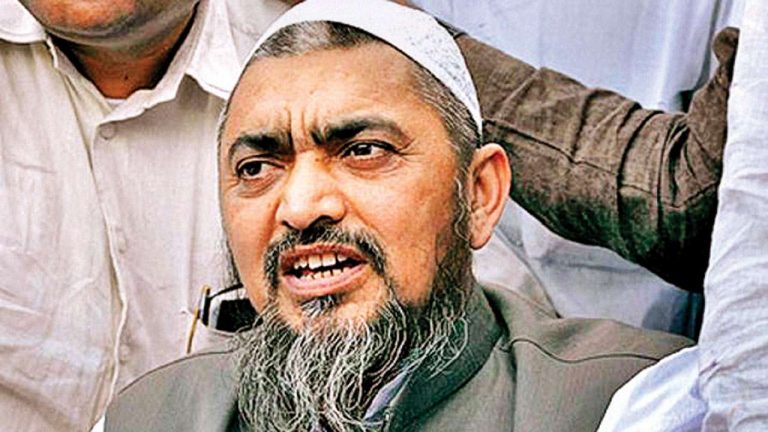
The CEO of the board has been directed by the state minority development department to file FIR’s against seven people, including former Darul Uloom Deoband vice-chancellor Maulana Ghulam Muhammad  Vastanvi, former Congress legislator Jainuddin Zaveri, NCP MLC Abdullah Khan (Babajani) Durrani, former NCP leader Habib Fakih, former Bar Council of Maharashtra and Goa chairman Asif Qureshi, ex-board member Sayyad Jamil Ahmed Janimiyan and former department official Ainul Attar, who was a government representative on the board.

Maharashtra has 93,418 acres Wakf land spread over 23,566 registered properties. 70 per cent of this, most of which are prime land, are under illegal occupation, encroached upon or transferred.

Shabbir Ansari, the president of Tehreeq-e-Awqaf, the one who complained about this to the state government in November 2017 said the Wakf land could be monetised to develop educational institutions and employment avenues.

Former Darul Uloom Deoband vice-chancellor Maulana Ghulam Muhammad  Vastanvi against whom the FIR mentions that he had possessed 32 acres and 23 gunthas of Wakf land at Bhingar in Ahmednagar on a 99-year lease since 2003 through an “illegal agreement”, called this decision ‘politically motivated’.

The state department while saying that “The above-mentioned serving/former members of the Wakf board have acted in a manner prejudicial to the interest of these Wakfs,” added that their acts violated the provisions of the Wakf Act, 1995.

NSUI National Secretary faked documents to get admission in Delhi University : DU officials

0

In a fresh controversy, Delhi University has said that the Akshay Kumar, the national secretary of Congress party’s students’ wing-NSUI has allegedly submitted fake documents to secure admission in the Department of Buddhist Studies in Delhi University.

According to the reports, KT Sarao, head of the university’s Buddhist Studies department on Monday said the matter came to light in January after the department verified the degrees of all the students who had enrolled for PhD courses. It was found that Kumar, former joint secretary of Delhi University Students’ Union in 2010, had allegedly submitted fake MA (English) mark sheets. The official of the Delhi University also said that an FIR has been registered at the Maurice Nagar police station in the north district by the Department on March 16 this year.

Reportedly, Kumar had enrolled for the PhD programme in March 2017 and had submitted MA (English) mark sheets from Manav Bharti University in Solan district of Himachal Pradesh. However, the Himachal Pradesh university denied issuing any such mark sheets, which triggered the lodging of FIR by the DU.

KT Sarao said the department will now further look into the issue and the matter has been forwarded to the Departmental Research Committee with a copy of the FIR and alleged forged documents and a recommendation will be made for the cancellation of admission. “The Departmental Research Committee will forward the recommendation to the Board of Research Studies of the varsity which will further look into the case. A due process is followed in such cases. The decisions are not taken in a haste”, he further added.

NSUI rejected the charges and said that this was an attempt to divert attention from Ankit Baisoya’s case, referring to their allegation that the recently elected DUSU President had submitted fake mark-sheet during his admission.

It is notable here that the ABVP had won 3 out of 4 seats in the recently concluded DUSU elections.


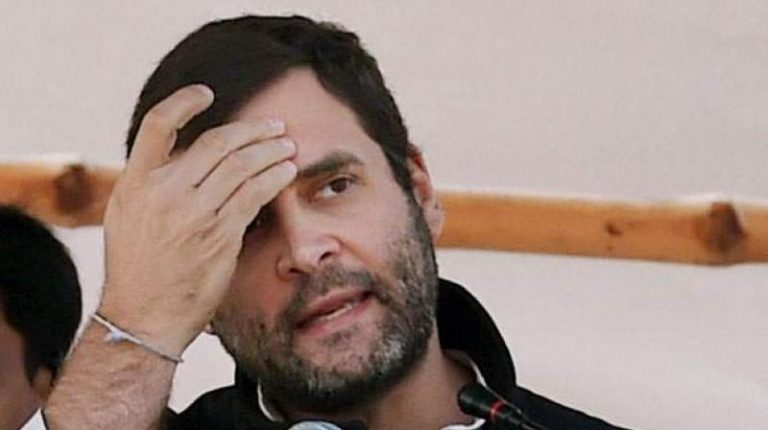
Rahul Gandhi seems to be more popular in Pakistan than India, and it is doing Congress no favours

0

Congress President Rahul Gandhi has been receiving support from unexpected quarters recently. Pakistani politicians and journalists are going overboard in their effusive praise for the scion of the Nehru-Gandhi dynasty. Some of them have already heralded him as India’s next Prime Minister.


Whenever one sees Pakistanis praise Rahul Gandhi and take sides with the Congress against Narendra Modi, one is reminded of senior Congress leader, Mani Shankar Aiyer and the manner in which he had remarked during an interview that Narendra Modi needs to be removed from his post if talks between the two countries were to proceed. The exact words he had used were, “First, you need to remove Modi…otherwise the talks will not move forward.” Aiyer, of course, has also hailed Jinnah for his role in the freedom movement and blamed Indian freedom fighters like Veer Savarkar for the partition. Aiyer has in the past blamed India for a lack of dialogue between the two countries and complimented Pakistan for its commitment towards dialogue. Former External Affairs Minister and senior Congress leader had also praised then Pakistani PM Nawaz Sharif and slammed Narendra Modi during his visit to the country.

Under such circumstances, it appears that the Pakistanis are merely returning a favour that is owed to the Congress party courtesy of the enormous generosity the grand old party of India has bestowed on them in the past. There is also a certain resemblance in the manner in which Narendra Modi is addressed by Pakistanis and members of the Congress party. Recently, Rahul Gandhi had unabashedly branded Prime Minister Modi a thief. As if on cue, only a couple of days later, the Pakistani Prime Minister Imran Khan had dubbed Modi a ‘small man’. Also, there was Aiyer who had called Modi ‘neech’ ahead of the Gujarat elections, a remark that may have cost his party a victory.

The Congress party has been working hard in recent times to shed its anti-Hindu image. Rahul Gandhi himself has been making pilgrimages to various Hindu shrines to impress voters with his religiosity. However, given the history of his party, it will perhaps require a couple of decades at the very least for that to happen.

The close proximity that the Congress party appears to have with the Pakistanis certainly does them no favours. Rahul Gandhi also did himself no favours when he met the Chinese ambassador to India during the Doklam dispute and the Congress then attempted to hide the fact that the meeting took place.

Rahul Gandhi’s popularity among India’s traditional enemies is likely to have an impact on the results when the country moves to vote in the Lok Sabha elections next year. Rahul Gandhi might just succeed in reinventing the Congress as a party of Soft-Hindutva but he will find it much harder to gain the trust of the Indian masses if the narrative of collusion between the Congress party and Pakistani authorities gathers momentum. And right now, Rahul Gandhi appears to be more popular with Pakistanis than Indians.

Chhattisgarh Congress chief arrested for circulating fake ‘sex CD’ of BJP minister

0

Chhattisgarh Congress chief Bhupesh Baghel has been sent to judicial custody for 14 days by a special CBI court for circulating a fake ‘sex CD’ allegedly involving a senior Chattisgarh minister.

According to the reports, a “sex CD” had become viral allegedly featuring Public Works Department Minister Rajesh Munat had rocked Chhattisgarh last year and Baghel was named one of the five accused in this matter. The CBI had filed a charge sheet against Bhaghel, journalist Vinod Verma, Kailash Murarka, Vijay Pandya, and trader Vijay Bhatia in this case.’


Even though the charges against him were bailable, Baghel pleaded to the court that he is innocent, and said this is a political attack. Further, he said, he will neither apply for a bail nor employ a lawyer and will begin a satyagraha in jail. The court then sent him to judicial custody and granted bail to journalist Vinod Verma, while removing charges of extortion against him.

The Central Bureau of Investigation took over the investigation of two cases related to the circulation of a ‘sex CD’, allegedly involving a Chhattisgarh minister, in December last year.

The CBI had arrested former journalist Vinod Verma last year and he was charged with non-bailable sections of extortion on a complaint by BJP leader Prakash Bajaj. Bajaj had alleged that he was threatened with the release of an explicit CD of his ‘aaka’ (master) unless he paid money.

Reportedly, all the accused have been booked under IPC sections 469 (forgery for purpose of harming reputation), 471 (using as genuine a forged document), 120B (criminal conspiracy) and 67A of the IT Act (whoever publishes or transmits or causes to be published or transmitted in the electronic form any material which contains sexually explicit act).

With the state assembly elections only weeks away, the arrest of Congress chief has started a political slugfest in the state. While Congress alleges that the BJP government is hounding their leader with elections in mind, Chhattisgarh CM Raman Singh has stated that it is a judicial process and the investigating agency decides when to file a charge sheet. “It is up to the CBI to decide when to summon anyone or file a charge sheet”. Singh added.

Rather than posting memes, Congress could invest in updating their MLAs about technology

0

According to a report, the Congress unit in Karnataka has alleged that BJP is using Whatsapp to do horse trading of Congress MLAs in the state. AICC general secretary and Karnataka in-charge KC Venugopal said that BJP’s Karnataka president BS Yeddyurappa is talking to Congress MLAs over Whatsapp. He said, “Yeddyurappa himself is engineering defections. He is using WhatsApp to talk to our MLAs, but he won’t be able to split us and become the chief minister again”.

According to the Congress, BJP is using Whatsapp to contact its MLAs because due to the end-to-end encryption of Whatsapp, conversations done in the app can’t be recorded. Therefore, if some Congress MLA wants to present evidence of being contacted by BJP, they would not be able to provide any proof of it.

Congress alleges that after coming to know that BJP is approaching Congress MLAs for poaching, Congress leadership advised the MLAs to record such conversations so that it can be used as evidence to ‘expose’ BJP. But apparently BJP leadership learnt about this and they started using Whatsapp in poaching operations.

This is one of the most hilarious allegations made by the Congress party in the long list of such allegations. It also shows their ignorance with regards to technology. The end-to-end encryption technology that Whatsapp uses means a third party can’t access communications made using Whatsapp, not even Whatsapp itself. This means the communication made using the app is secure from unauthorised intrusion. But it no way it prevents recording and sharing of those messages by recipients.

Let’s talk about WhatsApp phone calls. If you search the Play Store for apps that can record Whatsapp calls, you will get dozens of results. There are apps that can record video calls also. This means it is very easy to record calls made on Whatsapp. No encryption technology can prevent the recording of audio that is being played on the speaker of the phone.

End-to-end encryption means a third party can’t access the messages. But the receiver and sender of the messages can easily share the messages if they want. If it is text, image, or video message, they can just show those messages to the media. And if it is audio or video call, they can record it easily if they want to expose the horse-trading attempts made by BJP.

If some Congress MLA is saying that BJP is contacting them, but they don’t have proof as it is done using Whatsapp, probably Congress party should organise a training session to train them on how to record Whatsapp communication. They may also teach them how to take a screenshot of text messages.

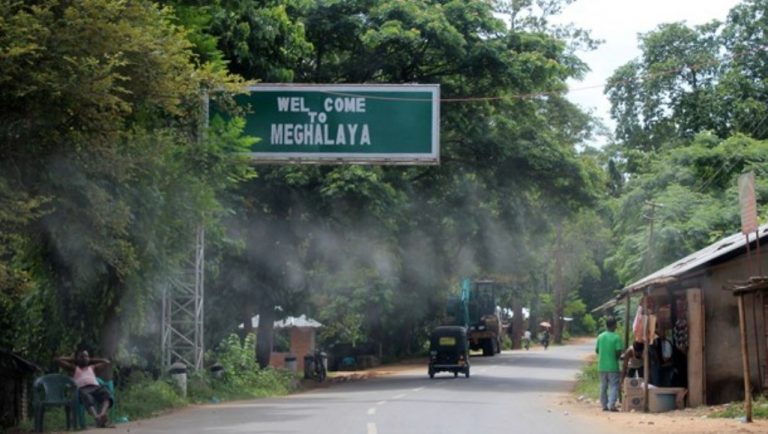
Meghalaya: Court rebukes NGO, says PIL was aimed at endangering the progress of villagers

In a harsh indictment of ‘civil society’, the Meghalaya High Court dismissed a petition filed by an NGO, Shella Action Committee (SAC), against cement major LafargeHolcim deeming it was “totally without merit” and “tainted with ill design”. The bench observed that the SAC could not produce even a single landowner who was affected after the land was transferred, sold or leased out in favour of the company.

The Court also ordered the petitioners to pay a fine of Rs. 20,000 which will be donated to those affected by the Kerala flood. The PIL had claimed that mining of limestone caused a huge loss of revenue and irreparable loss to the indigenous people residing in the area. However, the Court observed that it was filed without any substantial basis. The Court also observed that the PIL was aimed at jeopardizing the progress of the village.

The Court observed that in addition to the Rs. 171 crore the company had contributed to the State’s exchequer, the company had contributed immensely towards the welfare of the people by generating direct and indirect employment, provision of education, skill development and in numerous other ways. The bench also said that the project is a major source of revenue for the people of Nongtrai village, adjacent to Shella village.

Incidentally, it was the initiative of the very people of Nongtrai that saw the mining of limestone in the area. In 2010, the Nongtrai Village Dorbar, a traditional tribal village council, had moved the Supreme Court in support of Lafarge. “The project has not resulted in a diversion of agricultural land. No cultivation is possible in the mining area due to the rocky nature of the soil. The Shella Action Committee does not represent the native people of the area. They are not even residents of the area,” the Dorbar had said in its counter affidavit. It was also claimed that since the land belonged to the Dorbar, it was up to the Dorbar to decide whether to allow limestone mining in the area.

The Nongtrai Dorbar also claimed that the SAC, which claims to represent the villagers of Shella, has no rights over mine as it falls under their jurisdiction. Mining was allowed by the Supreme Court to resume in July 2011 after it had temporarily stayed mining in the area in an earlier ruling. The Court had observed that the company had taken the consent of the custodians of the land, the Khasi Hills Autonomous District Council and the Nongtrai Village Dorbar, before embarking on the project. The Court also observed that the mining project had brought schools, jobs, healthcare and other associated benefits to the people of the land.

Devjyot Ghoshal, writing for the Business Standard, portrays a moving account of the hopes and aspirations of the people of Nongtrai which are intricately associated with the mining project. In his article, he quotes people who have directly benefited from the project and were concerned that should mining in the area be abandoned, they will suffer as a consequence. Ghoshal ends his eloquent article with the following words, “In many ways, the invitation to Lafarge was an attempt by the village of Nongtrai to take destiny into its own hands. Incidentally, in Khasi, the local tongue, Nongtrai means ‘our own land’.”

It may be noted that Lafarge Umiam Mining Pvt. Ltd., the company that operates the mine, has won the Guru Dronacharya award for safe mining for three consecutive years.

The PIL filed by Shella Action Committee, which was pending since 2007, is a classic example of how NGOs work against the greater good of the people, which is in direct contradiction with the manner in which civil rights groups portray themselves to be the conscience keepers of society.

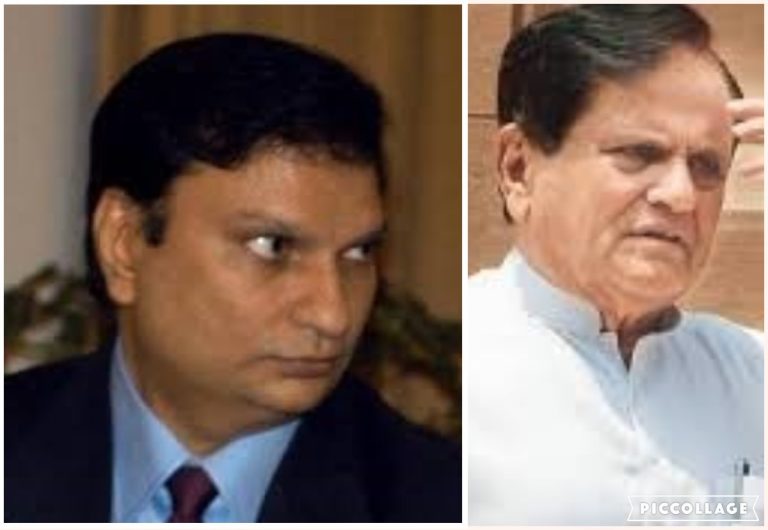
No Congress, don’t advertise a scam where your man Ahmed Patel is allegedly involved

Assam Congress’ Twitter account today morning plugged a Times of India article which talked about the Rs. 5,000 crore fraud accused Nitin Sandesara may have fled to Nigeria, which does not have an extradition treaty with India.


The tweet talked about how ‘another Gujarati, one more bank fraud, same modus operandi of fleeing from country’, insinuating that businessmen from Gujarat, prime minister Modi and BJP president Amit Shah’s home state, have an easy way out after they get accused of financial frauds. Earlier, Nirav Modi and Mehul Choksi, the duo accused of multi-crore PNB scam, also Gujaratis, have fled the country.

While it is indeed true that Sandesara is a Gujarati businessman who is accused of Rs. 5,000 crore bank fraud and having allegedly set up more than 300 shell companies in India and abroad, is now believed to have fled Dubai and reached Nigeria. However, Assam Congress forgot to add one small detail that Sandesara is a close aide of Congress leader Ahmed Patel.

Sandesara brothers first came under the radar of investigating agencies in 2011 after the income tax department searched their house in Vadodara and recovered a diary with details of payoffs to high profile politician (Congress Leader Ahmed Patel) and their relatives. Later, based on the diary entries, cases against three I-T officers at the level of commissioners and principal commissioners were registered.

As the Enforcement Directorate tightened its investigation, senior Congress leader Ahmed Patel’s association in this case resurfaced. Earlier this month, ED produced a man named Ranjit Malik, alias Jonny, before the duty magistrate of a Delhi court, who granted his custody to the agency for a day, for allegedly sending Rs 25 lakh cash to the official residence of a senior Congress leader, Ahmed Patel.

Earlier too, Sunil Yadav, employed by the Sandesara group, had alleged the involvement of senior Congress leader Ahmed Patel, his son, Faisal Patel, and his son-in-law, Irfan Siddiqui in the same, through his written statement to the directorate.

This tweet of Assam Congress not only managed to publicise a case where their own leader is accused of being involved in, but it also hurt the pride of Gujaratis as the entire community was maligned and generalised for the deeds of a few.

Indian Democracy – Dynasty to Dynamism

0

“Well doctor, what have we got – a republic or a monarchy,” asked an eager lady to Dr Benjamin Franklin as he was leaving the Philadelphia Convention which was wrought in secrecy. “A Republic – if you can keep it” replied the founding father of the oldest modern democracy in the World.

One needs hardly say that the founding fathers of Modern democracy were as concerned with the principles of preservation as with the founding itself. Even before the days of the American Constitution James Madison in the Federalist papers notes the existence of different interest groups accentuated by various sentiments and views which had come up out of necessity. Many times these special interest groups gain ascendancy without the citizens’ awareness or concurrence. The deep-rooted partisan one-upmanship which characterizes American politics today proves the apprehensions of founding fathers true.

Reference to rudimentary forms of Democracy is evident right from the most ancient text namely the Rigveda. We also find reference to the will of people upholding the Kings in their position in the Atharva Veda. Democracy as we know today has an ancient and dodgy past with everyone staking claim to its recent success while failures as usual stands orphaned. After the collapse of the Soviet Union, when Russia toyed with the idea of democracy, the philosophical victory of democracy over all other forms of government seemed final. Modern Democracy in the 21st century is, however, facing fresh challenges in the form of a non-democratic superpower who has come up to challenge this shortlived victory.

The oldest modern democracy in the world is no longer as solemn in appearance losing its sheen after the recession years and the upcoming challenge from China. Democracy in India, on the other hand, stands as the biggest role model for the times to come.

Democracy here in India had its fair share of challenges but the great survival instincts in the oldest civilization always saw it through. While our neighbours have gone through an extended period of Army Dictatorship or a tightly controlled media of the Chinese, India had proved to be an outlier in its success with democracy. Even the worst critics acknowledge that the better part of post-independent India has been peaceful at all points of time even while revolts (sometimes even violent) against the ruling establishment has not been uncommon in any region. As the world celebrates International Democracy Day, India stands as an outlier in South Asia for the rest of the world to emulate.

Indian democracy never was supposed to be a success from the western point of view. While the western point of view doesn’t take into account the deep cultural roots binding this country together, their apprehensions did prima facie seem meritorious.

According to pre-independence British thinker Strachey ‘India’ was merely a label of convenience, ‘a name which we give to a great region including a multitude of different countries’. In Strachey’s view, the differences between the countries of Europe were much smaller than those between the ‘countries’ of India. ‘Scotland is more like Spain than Bengal is like Punjab.’ In India, the diversities of race, language and religion were far greater. Unlike in Europe, these ‘countries’ were not nations; they did not have a distinct political or social identity. This, Strachey told his Cambridge audience, ‘is the first and most essential thing to learn about India – that there is not, and never was an India, or even any country of India possessing, according to any European ideas, any sort of unity, physical, political, social or religious’.

It must come as a shock to these naysayers that the piece of land which doesn’t seem to have any political or social identity is a thriving democracy today. What these naysayers forgot to include was the cultural aspect which kept this nation together even while facing contradictions inherent in a diverse country. In comparison, the European countries knit together on language basis are facing a crisis in terms of confidence in democratic processes. EU did not exactly prove to be a paragon of democracy when the decision to introduce the Euro in 1999 was taken without any popular mandate. Only Denmark and Sweden held referendums on the matter (both said no). During the darkest days of the euro crisis, the euro-elite forced Italy and Greece to replace democratically elected leaders with technocrats. The European Parliament, an unsuccessful attempt to fix Europe’s democratic deficit, is both ignored and despised. In contrast, Indian Parliamentary proceedings and important debates are telecasted and discussed widely across the nation.

In my opinion, Indian democracy too had its fair share of banes prime among it being the dynastic politics which started as back as during Independence. The one Nehru family which always thought this nation to be a family fiefdom more or less got away with its misadventures in governing this country for far too long. India has been struggling to break free from the clutches of dynastic politics which marred many democracies across the world.

The first major challenge came from the south in the late 60s on the back of language agitation which saw the dynasty losing grip over vast parts of South permanently as the party continues to languish to this day. A few years prior to this, India curiously had the distinction of having the first democratically elected Communist party. It raised several eyebrows across the world but did fend off all communist tendencies till date as communists got ingrained in the democratic process.

The Communist continued to have vast parts of India under its stranglehold via the democratic process. The democratic process continued to be undermined by the Emergency declared which saw the arrogance of the family coming out in the open in its most brute form. Indian democracy reacted and the people voted aggressively dealing a body blow to the party in the long term by creating strong regional rivals which could join along with the newly formed BJP in 1980. Indian democracy was slowly coming of age when began the phase of blatant appeasement which continues to this day.

After the Shah Bano case where minorities were sought to be appeased, the nation erupted to right the historic wrong of not having the Ram Temple at the birthplace of Lord Ram. Political alignments changed and all who indulged in this sort of appeasement bit dust as many non-Congress governments came up across the country eventually leading to the first full term government without the ruling dynasty in it. There has been no looking back since then when India finally voted a humble man with poor origins to the highest corridors of power. It is of utmost importance to politicians like us that every man is an equal citizen with equal stakes at the highest corridors of power regardless of where he is born in.

With nothing to show but a proven track record, sheer oratory brilliance and an intent to serve Mother India, Narendra Modi a man from a humble background came to power defying the powers that be. Indian democracy had won again – a big victory this time bringing the best out of democratic tradition.

It has crossed a major hurdle where dynasty has become a bad word and all parties actively seek to disassociate itself from the tag. Unfortunately, another ailment grips this democratic system as we celebrate Democracy day – The single one family dynastic rule at the national level is replaced by a host of dynastic families cropping up in all regions of the country. I think a trend of a dynasty for each region has off late gained ground right from PDP in Kashmir to DMK in South. Most of the younger members of both the houses are by-products of one or the other families. As things stand today, India despite the dynastic tradition which it finds hard to shake off is still a beacon of hope in the world.

Independent India has conducted elections which were largely free and fair and at regular intervals in line with the founding fathers. While elections alone don’t make a democracy, it helps that each citizen has a political stake in this nation and exercises his franchise at regular intervals. This, in my opinion, has been the biggest success of India even while suffering from dynastic politics.

Mature democracies like India just like nascent ones require appropriate checks and balances on the power of elected government. Indian judiciary has time and again proved to be the appropriate check right from the days of Emergency. The same however can’t be said of media which has more often played to the tunes of the ruling family. When asked to bend, they drolled dealing a body blow to their credibility which got worsened with the advent of social media where everyone can raise a voice. As democratic institutions get strengthened and accountable under the present Modi Government, the trend of dynasty staying in the limelight looks bleak as an increasingly educated population asks questions of them.

Globally, the Chinese with their supposed success story has burst the American myth of democracy as being the answer to all the ills of mankind. The founders of modern democracy such as James Madison and John Stuart Mill regarded democracy as a powerful but imperfect mechanism: something that needed to be designed carefully, in order to harness human creativity but also to check human perversity, and then kept in good working order, constantly oiled, adjusted and worked upon.

While China with its stunning growth figures in recent decades can continue mocking the Democratic traditions, it conceals a far deeper problem. The 50 richest members of China’s National People’s Congress are collectively worth 60 times as much as the 50 richest members of America’s Congress. The inequity is far too glaring for a country which prides itself on communist traditions where the bourgeois needs to be dealt with. The bourgeois clearly seems to have taken over and the working class is ruled upon. It also needs to be seen whether the Chinese model of muzzling free voices and repeated brutal violation of human rights can be sustained over the long run in the modern world. Till then, the verdict on the non-democratic one-party rule will remain open. Democracy will continue to stutter, stumble and start but will not be easily out for technology will enable democratization of power and the requirement to be on the right side of public opinion.

To conclude on a positive note, Alexis De Tocqueville once remarked that “Democracies always look weaker than they really are: they are all confusion on the surface but have lots of hidden strengths. Being able to install alternative leaders offering alternative policies makes democracies better than autocracies at finding creative solutions to problems and rising to existential challenges, though they often take a while to zigzag to the right policies.”

I am surely not letting disillusionment with the political system grip me while incessantly working towards a better and stronger India. Let’s hope that the Great Indian democracy and the deep-rooted democratic traditions ultimately lead each one of its citizens out of poverty by the next decade even while it may take a while to zigzag to the right policies.

(The author is a BJP Spokesperson, Advisor to CM of Maharashtra and Executive Director of Maharashtra Village Social Transformation Foundation (VSTF), an initiative of Govt of Maharashtra)