Home Blog Page 6998

Under the Modi government, Northeast India has witnessed many ‘firsts’

“We are committed to making the Northeast an engine of India’s growth story”: PM Modi.

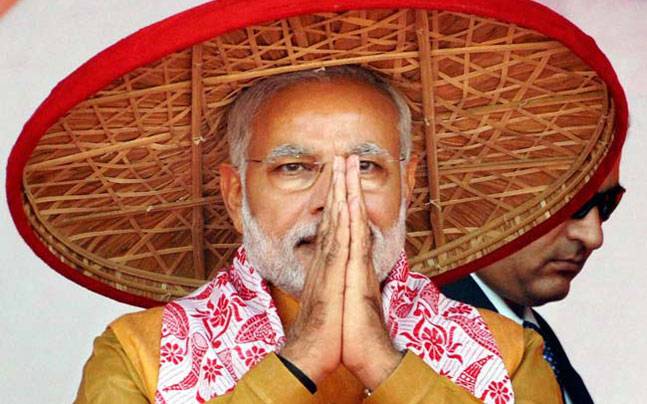
Prime Minister Narendra Modi while inaugurating the first-ever airport of Sikkim in Pakyong on 24th September reiterated his commitment towards the development of Northeast India. Modi has maintained that ‘India’s growth story will get speed only when there is an all-round development of the Northeast and its people’.

Screenshot from Twitter

While addressing the people of Sikkim, PM Modi stated that with Sikkim getting its first ever airport, India has managed to get 1000 airports operational out of which 35 airports can be attributed to the BJP government since they have been developed in the last 4 years.

BJP until the recent victory in state elections in Tripura, Nagaland and Meghalaya which was a landmark for the party, had very little traction in the region except in Assam and Arunachal Pradesh. The party was even seen as an outsider until PM Modi’s ‘Act East’ policy changed the situation.

As part of this policy, the NDA government has been focusing on reducing the isolation of the region by improving all-around connectivity through road, rail, telecom, power and waterways sectors.

This year, as a part of the government’s vision, to see Northeast India on top of the development chart, solar toilets were installed at Ibudhou Marjing hill Heingang of Manipur, making Manipur the first state in North-East and third in India to have solar toilets.

Last year while addressing a meeting after inaugurating a 60-MW Tuirial hydropower project, Modi had announced that Mizoram had become the third power-surplus state in the North-East after Sikkim and Tripura. Modi had then proudly said “The completion of this project is a reflection of our commitment to completing ongoing projects and ushering in a new era of development in the North-East.

The Tuirial project, which was announced and cleared in 1998 by the then Atal Bihari Vajpayee government, was the first major central project to be successfully commissioned in Mizoram.

Prime Minister Narendra Modi last year also inaugurated India’s longest bridge, the Dhola-Sadia bridge, spanning 9.3 km across the Brahmaputra, taking infrastructure development in the region forward by several steps.

The road bridge, connecting Dhola in Arunachal Pradesh to Sadiya in Assam, has been built at a cost of Rs2,056 crore by the ministry of road transport and highways.

PM Narendra Modi had in 2016 inaugurated a petrochemical project in Dibrugarh in Assam, a first-ever such project in the northeast. The project is India’s highest wax producing unit using indigenous technology.

In its quest to intensify the development of Northeastern regions, the government currently is also making a heavy investment in power transmission projects covering all the eight North Eastern states at a cost of around Rs 10,000 crore.

Under the supervision of Modi government, railways have undertaken a major expansion in the region at a cost of around Rs 10,000 crore. In November 2014, Arunachal Pradesh and Meghalaya were put up on the railway map for the first time. Agartala in Tripura has also been connected with broad gauge line.

In the North East, the Indian Railways has commissioned about 900 kilometres of Broad Gauge in the last two years and in addition to this 132 kilometre part of third alternative connectivity route to North East (that is New Maynaguri – Jogighopa) has also been commissioned. The Indian Railways had announced in May that it plans to invest a further Rs 40,000 crores in the Northeastern states for infrastructure development and connectivity.

Modi government concerned about the staggering unemployment rate encompassing Northeast regions have established two important projects in Assam – Brahmaputra Cracker and Polymer Limited and Numaligarh Refinery Limited’s wax unit, which would create huge job opportunities for people in the northeast.

In its first, the Modi government implemented an improved internet connectivity project for the North East region in collaboration with Bangladesh, which will make 10 GB of seamless alternate bandwidth available for the region.

Connectivity, economic growth, tourism and enabling the locals to find better opportunities in employment has been the focus of the government. In August this year, the NDA government passed the bill for India’s first ever sports university to be built in Manipur.

Apart from these developments, the government believing and working towards achieving PMs vision making ‘Northeast an engine of India’s growth story’, has been relentlessly working in other spheres as well which includes Tourism, Development of rural areas, setting up of BPO industry, organic farming etc.

Recently in the fourth summit of BIMSTEC (Bay of Bengal Initiative for Multi-Sectoral Technical and Economic Cooperation) which was held at Nepal capital Kathmandu on 30th and 31th August 2018, Prime Minister, re-emphasised the importance to Northeastern India and stressed on his priority to develop the region.
Afghanistan: ‘Mullah’ faces death by stoning over sex tapes scandal

0

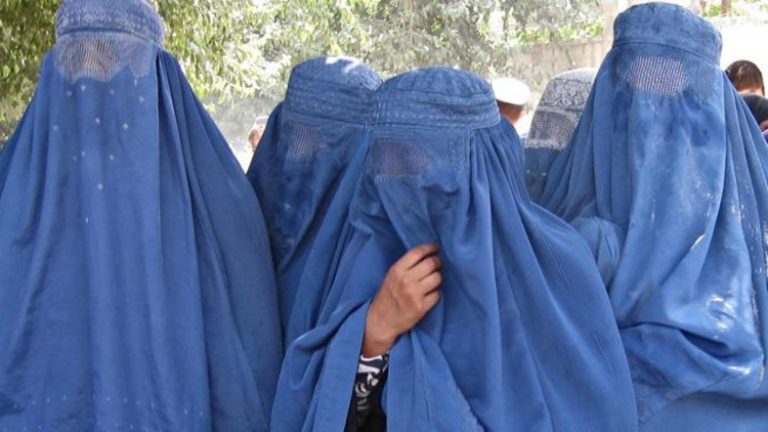
A group of religious heads in Mazar-i-Sharif, Afghanistan, have ordered death by stoning of a self-proclaimed traditional healer, Rasool, who is accused of filming himself having sex while exploiting and raping several women who had gone for him for help. Mullah Rasool alias Landay, which means ‘shorty’ in Pashto, allegedly used the videos to blackmail women. The videos recently went viral on social media and while the identity of the women is not known as their faces are not visible, the videos have raised serious fears about their safety in the religious country.

Faryab governor spokesman Jawed Bidar told AFP that they fear there might be honour killings. Sharifa Azimi, Provincial women’s affairs department head, fearing for the safety of the women, said that the religious leaders have been urged to tell their worshippers that the women were ‘tricked’ and that they were ‘innocent victims, not bad women’. Azimi believes the women may be murdered because of the videos.

Faryab’s religious leaders have ordered death by stoning for Rasool, who is currently absconding and the police is currently trying to track him down. “If the government arrests and punishes him, okay, otherwise the people are also after this guy and will stone him to death,” said Ghulam Nabi Ghafori, deputy head of the provincial Ulema Council.

Owing to widespread illiteracy, such traditional ‘healers’ are highly revered in the countryside and the lack of proper healthcare forces many people to rely on such ‘healers’ for a variety of problems from returning of stolen items to infertility to reuniting lovers.

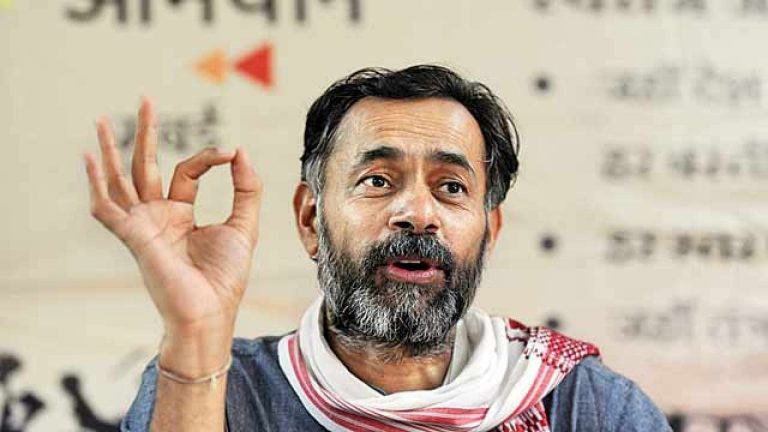
Yogendra Yadav lies about RSS, freedom movement of India, Syama Prasad Mookerjee and more

Yogendra Yadav has the cultivated voice of an actor who is dressed up in a kurta-pyjama, made distinctive by his non-use of politicians’ whites. He was part of the troika with Prashant Bhushan and Arvind Kejriwal before the once-mufflerman got rid of them. He has since formed Swaraj India, so anonymous it could challenge an IAS-aspirant in its quiz test. News networks such as NDTV and India Today are the ones who keep him going. But for some elections, somewhere in India, at any time of the year, Yadav would go unnoticed on a busy street.

I do find him sometimes on The Wire and the Firstpost, slightly amused when he sings paeans in praise of Jignesh Mewani, and definitely irked when he distorts history to run down Rashtriya Swayamsevak Sangh (RSS) as he did in his edit-piece in the Hindu on Wednesday.

Yadav must be reading from the dubious books of Romila Thapar and Irfan Habib to suggest that since its inception in 1925, RSS has never been part of a national movement. Which national movement sir, the one where we didn’t seek complete independence from British but only sought dominion status? (truth to tell, India was still a dominion to British empire on August 15, 1947).

If Yadav remembers the year of RSS formation, he also ought to have told his readers that it came in the backdrop of Khilafat movement (1921-24) where Muslim leadership was appeased to the extent that Moplah rebellion occurred which butchered thousands of Hindus.

The slaughters were so macabre that this is what Madras High Court noted after the event: “…(these) murderous attack indicate something more than mere fanaticism…the only survivors were those who either got away or were left as dead.”

Yadav then does the cheap act of lampooning Veer Savarkar for seeking mercy from the British in the Cellular Jail of Andaman and Nicobar Islands and thereafter meekly follow the conditions imposed on him. Doesn’t Yadav know that only the most dangerous prisoners were kept in that “kaala paani” jail? That Savarkar, unlike Nehru who was given a bungalow with his choicest curtains and a garden in his jail-term, was a prisoner marked D (dangerous) and went through most unspeakable cruelties: flogged, manacled, made to eat gruel which was riddled with worms?

As for his mercy petitions, it is known to everyone but the fake history peddlers that Savarkar’s clemency pleas were a tactical ploy like Shivaji’s letter to Aurangzeb during his arrest in Agra as he didn’t want his life’s mission to end behind bars.

Yadav would like us to believe that Savarkar went quiet and obeyed British after he was released. In fact, Savarkar spent 27 years in jail and under prison-restricts terms between 1910-1937. He helped found the Ratnagiri Hindu Sabha and worked ceaselessly against caste discrimination and untouchability in the years which Yadav terms as “quiet.”

Yadav has a problem with Savarkar and his Hindutva philosophy but wouldn’t tell readers that one of India’s tallest freedom fighter was a self-avowed atheist! He would not mention how Savarkar was wrongly implicated in Mahatma Gandhi’s murder.

Yadav then tars Syama Prasad Mookerjee for “collaborating” with Britsh during 1942 Quit India stir which he terms as the “biggest anti-colonial uprising.” A view has lately gained ground that “Quit India” was as phoney as “non-cooperation” and “civil disobedience” movement, meant only to vent out the frustration of Indians.

Quit India stir was a desperate attempt of Congress which had committed the grave error of resigning from its’ provincial governments in 1939.  Without a say in national politics, and with Muhammad Ali Jinnah and British in an alliance, Congress whipped up Quit India just to stay relevant. As soon as it was launched, all of its leaders were put behind bars. Jinnah got a free field to pursue—and finally accomplish—his dream of a Pakistan.

As for RSS playing no role in 1942 Quit India movement, let Aruna Asaf Ali’s words debunk Yadav’s claim. Aruna Asaf Ali had revealed that RSS Delhi sangachalak Lala Hansraj Gupta had given her shelter in his own house during the 1942 Quit India. Prominent Congressmen like Achutrao Patwardhan, despite being a strong critic of RSS, and others were kept safe in swayamsewaks’ homes.  Be it food, safety or in illness, RSS stood like a wall in safeguarding Congress leaders.

Yadav has no qualms in besmirching the reputation of Mookerjee who saved Hindus by championing the cause of Bengal partition after the Muslim League government of Bengal butchered and raped thousands of Hindus in the Great Calcutta Killings of 1946. Mookerjee was the man who set up 5000 relief kitchens during the 1943 Great Bengal Famine of 1943.

Yadav then trains his guns on Nathuram Godse-RSS connection. He would never tell the readers that Godse left RSS because it considered the latter to be a “coward.” As per the Justice Jeevanlal Kapur-headed 1969 Government-appointed Commission report, not only RSS was not involved in Gandhi’s murder but “in Delhi also there is no evidence that RSS as such was indulging in violent activities as against Mahatma Gandhi or top Congress leaders.”

And this man has the gall to call RSS an anti-national. What do you think we should call you Mr Yadav?

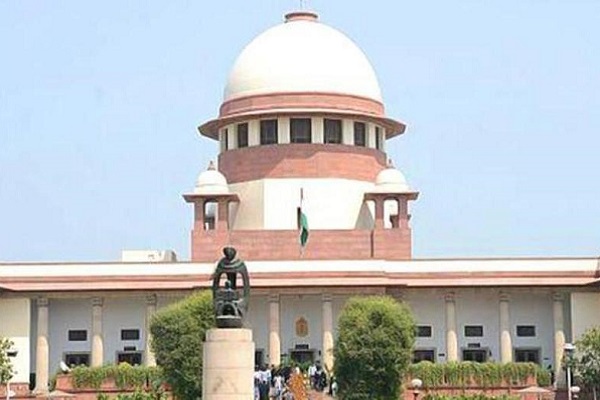
Supreme Court dismisses plea challenging the appointment of Justice Ranjan Gogoi as the next CJI

0

The Supreme Court has dismissed a plea challenging the appointment of Justice Ranjan Gogoi as the next Chief Justice of India today. According to the reports, a petition had been filed in the Supreme Court by an advocated named RP Luthra seeking to quash the appointment of Justice Gogoi with effect from October 3.

A bench comprising of Chief Justice Dipak Misra, Justice AM Khanwaliker and Justice DY Chandrachud dismissed the petition by saying that there is no merit in the case and said that this is not the stage to interfere with the appointment. “We are of the view that it is not the stage to interfere (with the appointment),” a bench headed by Chief Justice Dipak Misra said.

In their plea, Luthra along with petitioner advocate Satyaveer Sharma had said they were seeking adjudication of the question of law for which they are relying on the contents of the press conference of January 12, called by the four senior judges Justices Chelameswar (since retd), Ranjan Gogoi, Madan B Lokur and Kurian Joseph of the apex court.

According to Times of India, the plea said the petitioners were also relying on an undated letter addressed to Chief Justice of India and circulated by the four apex court judges. The plea said that the recent actions by the four senior-most judges of the Supreme Court were no less than a sabotage of the judicial system of the country. “They tried to arouse public furore in the country in the names of certain internal differences in this court,” the plea said.

The petition said that the act of Union of India and the Supreme Court ‘is illegal and unconstitutional’ and also against the canons of law because of the appointment the highest post of the judiciary is being awarded to a person who is guilty of committing judicial impropriety and judicial misconduct. This statements in the plea were a reference to the recent press conference held by the four senior-most judges of the Supreme Court, which had created a furore in the country.

The President appointed Justice Gogoi as the 46th Chief Justice of India on September 3. He will take oath on October 3 after incumbent Chief Justice Dipak Misra retires. Justice Gogoi would have a tenure as Chief Justice of India of about 13 months till his retirement on November 17, 2019.

‘Sunlight is the best disinfectant,’ says SC while allowing live streaming of court proceedings

0

In a landmark verdict, the Supreme Court has allowed live streaming of its court proceedings on matters of national importance. The Court said that it will issue necessary rules for balancing rights of public and protecting dignity of litigants soon.

“We don’t perceive any difficulty in live streaming. Let us first start with it and see how it goes. We are just on a pilot project. We are not ruling out anything and will improve with time. We cannot have everything together,” the bench, comprising Chief Justice Dipak Misra, A M Khanwilkar and D Y Chandrachud, has observed.

The apex court said it was of the opinion that live streaming of proceedings will bring in transparency and serve the public interest. “Sunlight is the best disinfectant, let people get first-hand information about what is going on in courtroom proceedings,” the Court said.

The Center, while supporting the idea, said that certain cases must not be streamed live. Matrimonial cases, matters involving interests of juveniles or protection and safety of the private life of young offenders and cases involving national security were some that were mentioned in this regard. Attorney General K.K. Venugopal said that live streaming must be disallowed in matters that may provoke communal clashes and in some cases to ensure privacy and security of victims, witnesses or defendants such as in rape cases.

Earlier this year, the Center had suggested that live streaming of court proceedings could be undertaken and would benefit all. The Supreme Court agreed with the suggestion and had called it the “need of the hour”. The Attorney General had also proposed a dedicated TV channel for the Supreme Court along with the lines of Lok Sabha TV and Rajya Sabha TV and was of the opinion that live streaming of events would also keep a check on the conduct of the lawyers.

Christian group asks Ilayaraja to ‘kneel down and apologise’ for saying there is no evidence of Christ’s resurrection

0

A Bangalore based Christian organisation has filed a case against arguably one of the greatest music composers, Ilayaraja, for his alleged comparison between Jesus Christ and Ramana Maharishi over resurrection. The Church has threatened Ilayaraja saying that they will not leave him alone until he ‘kneels down and seeks apology”.

The Christian organisation named Indian Church Renewal has filed a case at a magistrate court in Bengaluru, as the organisation claims that Ilayraja had commented something objectionable against Jesus Christ. As reported by Swarajya, The chief of Indian Church Renewal Gregory Ashok Arokiasamy, in his petition, argued that Ilayaraja’s interview at Google’s headquarters in March this year had hurt the feelings of crores of Christians.

Gregory Arokiaswamy in his Facebook post has threatened of consequences and asked him to kneel down and apologise for his comments made in March. Reportedly, the court has admitted Indian Church Renewal’s petition and decided to hear the matter on 9 October.

Arokiasamy further accused the Ilayaraja of defaming and attempting to create an outrage over the religious feelings of the Christians. He also threatened Ilayaraja with a defamation case under Article 295A.

In his interview at Google headquarters in Silicon Valley in the USA, Ilayaraja had said that there was no evidence to prove Jesus Christ had resurrected. “I regularly watch documentaries on Youtube. It is said that Jesus was not resurrected, the True resurrection has happened to only one person, Bhagavan Ramana Maharishi at the age of 16,” Ilayaraja had said at that event.

A few people belonging to Christian community had protested in March against his comments claiming that the music maestro’s statement had hurt their religious sentiments. Ilayaraja, a born Christian as Daniel Rasappa, has embraced Hinduism in the later part of his life.

SC upholds most provisions of Aadhaar act, rules that the act is compliant with privacy guidelines

0

Today Supreme Court has upheld the constitutional validity of Aadhaar act. The act was upheld by 5 judge bench with a 4:1, Justice Chandrachud being the dissenter, who said that the entire Aadhaar Act is unconstitutional.

This is seen as an important victory for Government of India in the highest court of law. Although the act as a whole and most of its provisions are upheld by the top court, it has struck down several provisions of the act.

Section 57 of the Aadhaar act struct down by Supreme Court. Now private entities can’t insist on Aadhaar based validation. Court says section 57 violates article 14 and 21 of the constitution.

Section 47 of the Aadhaar act declared invalid. Under this section, no case could be filed under this act in any court of law. Only UIDAI was authorised to so. Court says this section violates citizens’ rights. Now ordinary citizens would be able to file cases under this act in case of any grievances.

Linking Aadhaar number with Bank account cannot be made mandatory. Aadhaar also can’t be mandatory for mobile phone connections and for opening bank accounts, the bench ruled.

National security exception under Section 33 of the Aadhaar Act struck down by the court. This section had allowed disclosure of Aadhaar data by the orders of an officer of Joint Secretary for the purposes of national authority. Now a judicial warrant and approval by a secretary-level officer will be required, and individuals will have the right to a hearing.

The bench ruled that educational bodies like CBSE, NEET, UGC etc can’t make Aadhaar mandatory for enrollment into various examinations conducted by them and for enrolment of children into Aadhaar, consent of parents will be required. The bench also ruled that after attaining majority they should be given an option to exit from Aadhaar and school admissions can’t be made dependent on Aadhaar.

No Children can be denied any government scheme for lack of Aadhaar. Means schemes like mid-day meal can’t make Aadhaar mandatory. The current act’s section 2(v) does not define legal resident explicitly.

In one of its landmark observations, the court asked the government to amend the act suitable so that it can be made clear that illegal immigrants can’t be issued Aadhaar.

The bench also upheld the mandatory linking of application for PAN with Aadhaar and observed that Aadhaar number or enrolment ID will be needed to be mentioned in the PAN application.

In an observation that could possibly put the privacy debate to rest, the bench agreed with the government that the Aadhaar act is compliant with privacy guidelines.

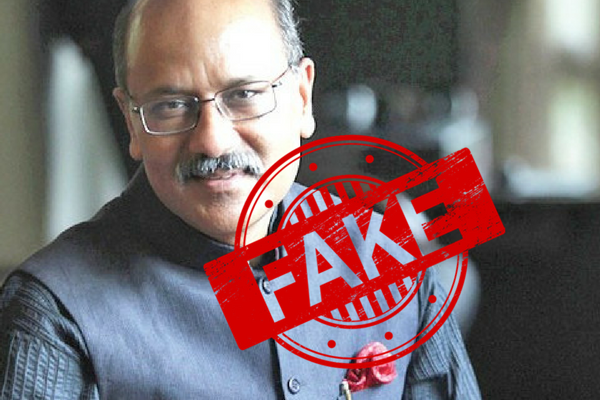
Shekhar Gupta is the most pusillanimous and unimaginative master of propaganda India has ever seen

We had earlier discussed how Shekhar Gupta’s multiple rants have displayed his repelling hatred towards Prime Minister Modi. So I wasn’t very surprised when the headline for his latest rant read as follows – “The Modi government is the most faceless, nameless & talent-averse India has seen.”

While trying to decipher what is it that was bothering him so much, I stumbled upon another of his vacuous pieces– “Rafale deal is no scam. It’s just a glaring example of the BJP government’s pusillanimous, unimaginative, over-cautious and unsuccessful handling of defence purchases”

Pusillanimous. Unimaginative. Over-Cautious. Unsuccessful. Faceless. Nameless. Talent averse. Impatient.

That’s quite an exhaustive list of adjectives he has pulled out from his dictionary. Tucked away in his tirade, was a crucial line that perhaps explains Shekhar Gupta’s incoherent rants – “I do not believe I have seen a cabinet minister admonish and tick off journalists as this defence minister routinely does”.

One is forced to wonder whether this is the root cause of his anger. Now, if the Defence Minister of India is “routinely” admonishing journalists, shouldn’t Shekhar Gupta (who doubles up as Chairman of Editors Guilt, oops Editors Guild) intercede “routinely” on behalf of journalists and seek clarifications from the Defense Minister? Or is he merely content with making sweeping generalizations and passing the buck to nameless and faceless journalists?

One might be tempted to ask if that is the only basis for his splendid assertion of the nature of this cabinet. No, he has more serious reasons. Apparently when he goes to “public speaking interactions”, he asks his audience to name India’s ministers for Agriculture, Health, Chemicals and Fertilizers, Heavy Industries, Science and Technology, and MSME. And nobody from the audience can name any of them, and voila!

By this same yardstick, every previous government was as “faceless, nameless and talent-averse” as this one. But then Shekhar Gupta has a solution for that logic too – bring in the appointment of Dr C. Subramaniam as Agriculture minister by Prime Minister Lal Bahadur Shastri. Well, as is his wont, he goes on to credit Indira Gandhi also for appointments Lal Bahadur Shastri had made, but let’s give that a pass.

After being able to recollect the only “talent” from nearly 50 years ago, he is now left wondering who will lead India’s march towards Green Revolution 2.0? No one in government has spoken about Green Revolution 2.0. Shekhar Gupta is coining that term equating it to the PM’s goal of doubling farm income by 2022. Does Shekhar Gupta suggest an alternative name to Radha Mohan Singh? No, he doesn’t. Instead tell us this – “Indira Gandhi too ran her government from her office, but think of the talent she collected around her.”

Going by Shekhar Gupta’s yardstick, you would assume that his “diverse audience” would be able to name all “the talent she collected around her”. Unfortunately, he provides no such insights on this list and it is left to the reader’s imagination.

His article on the “pusillanimous, unimaginative, over-cautious and unsuccessful handling of defence purchases” is another treat to read and gives great insights into the hatred that seems to be building up within him.

Irked with the government not disclosing the exact price of Rafale jets, he tells us that “Today’s arms bazaar carries almost no secrets about platforms, weapons and accessories.” Then, isn’t Shekhar Gupta’s job very easy? He just has to go to the arms bazaar and get us an exclusive? Ok, let’s assume he is too busy to go the bazaar and needs to get the information from someone else. He tells us who that someone is –

“If you are buying the Meteor missile to go with the Rafale, not just the Pakistani and Chinese air forces, but any teenaged defence nerd with a smartphone can give you a tutorial on it.”

All you need is a “teenaged defence nerd” or a trip to “arms bazaar”. Shekhar Gupta does neither, because he doesn’t tell us what the actual price is. But he also tells that “What you can, and must, keep secret in this is sensitive electronics and tactics.”. Come on, Shekhar Gupta! That’s what the Government of India has been saying too – an itemized billing cannot be provided. It only sounds like he is very upset that Rahul Gandhi’s demands are not being met by this “pusillanimous” government.

Shekhar Gupta recently tweeted that the “deification of HAL” is the “worst damage” caused by this Rafale storm. In his article though, he tells us “Any reasonable person would know that HAL would still be better equipped for licenced production than any other company…” Now is Shekhar Gupta calling himself unreasonable? He goes on to say that HAL had a monopoly and has not done things “particularly efficiently”.

If your argument is that HAL is “not efficient”, then why would you call a government “pusillanimous” for not awarding a hypothetical contract? If in your belief, “HAL is an opaque, profiteering, license-production PSU monopoly”, then why would you call a government as “unimaginative” for not awarding a hypothetical contract? Because in Shekhar Gupta’s own words – “But nobody would diss a defence PSU”. So HAL is very bad but Modi is “stupid” to have ignored HAL, according to Gupta.

All of Shekhar Gupta’s rants are riddled with such contradictions. All of his rants cite an example here, an example there to make rank generalizations. And all of his rants contain so many lies that it is just difficult to keep track of them. Sample this for example – “Surely the prime minister is brilliant, has travelled through every district of the country as he says,”. The Prime Minister has never claimed this. In an interview with Zee News, he has claimed that he has spent at least one night in 80% of districts in the country before he even became the Prime Minister. Shekhar Gupta conveniently twists this fact to make sarcastic comments against Modi. Elsewhere, he blames the Modi government for the “cease and desist” notice that Anil Ambani has sent. Surely, we all must ponder who is being “unimaginative” here!

Northern states agree on uniform tax rates on fuel

Punjab, Haryana, Delhi, Uttar Pradesh, Himachal Pradesh and the Union Territory of Chandigarh on Tuesday agreed to fix uniform tax rates on petroleum products, amid rising fuel prices.

The finance ministers of the five states and senior officials of Chandigarh held a meeting, an initiative of Haryana Finance and excise and Taxation Ministry, to consider the fixing of uniform tax rates on petrol and diesel and to implement ‘One Nation One Tax System’. In the meeting, it was further decided that a sub-committee would be constituted which would give their recommendation with regard to uniformity in tax rates in the next fifteen days.

Haryana Finance Minister Captain Abhimanyu, who was addressing the meeting, said it was decided in the meeting that the states would consider uniforming the VAT rates on fuel which would eventually provide relief to the consumers.

It was also discussed in the meeting that the diversion of trade will be curbed. Notably, Punjab has one of the highest rates of VAT on petrol in the country and it is second to Maharashtra.

Deputy Chief Minister and Finance Minister Delhi, Manish Sisodia represented Delhi in the meeting while on behalf of Punjab, the Finance Minister Punjab, Manpreet Singh Badal attended the meeting. The other states were, however, represented by their senior officials.

Participating in the discussion, Manish Sisodia on one hand said that the northern-states have shown consensus on having same tax rates on liquor also, while Punjab Finance Minister Manpreet Singh Badal during the meeting suggested that there should be a uniform policy for the state transport so that there should be no loss of revenue from registration and permit fees because of different tax rates.

A committee of officials has also been set up for excise and transport which would send the reports to the respective state government on the uniformity of rates.

Manmohan Singh’s pontification on ‘secularism’ in the Army is as hollow as his prime ministership

0

Former PM Manmohan Singh is unusually vocal after Congress lost power in 2014 and PM Narendra Modi assumed office. The former PM, who was rather well known for his ‘lack of statements’ is often found making highly intellectual, grandiose, philosophical statements that involve a lot of fear-mongering, doom predictions and pontifications. Most of his speeches are centred around ideas like ‘secularism is in danger’, ‘democracy is in danger’ and ‘the economy is in danger’. The same Manmohan Singh whose secularism is defined by his famous remark of minorities having the first claim on a country’s resources.

Recently, speaking at a lecture event, the former PM stated that the Indian Army must remain ‘uncontaminated’ from a sectarian appeal. He also stated that even the judiciary of the country should not lose sight of its primary duty of protecting the secular spirit of the constitution.

NDTV article on Manmohan Singh

As usual, Manmohan Singh, considered a Sonia Gandhi loyalist through and through, serves the dual purpose in the statement. He casts an allusion that the Army and the judiciary are under threat of becoming sectarian, communal. Further, he asserts the claim that he, as a former PM and senior Congress leader, is warning against the possible threats ‘if’ the institutions like the army and the judiciary become sectarian.

But what the former prime minister says now, and what he did when he was in power are diametrically opposite. While in power at the centre, the UPA government where Manmohan Singh was the PM, had brought in the Sachar committee to make an assessment of socio-economic conditions of Muslims in the government, bureaucracy and well, in the army.

Crucial assembly elections were close and the party that draws its legacy from people who ensured India’s partition on religious grounds had played its ‘secularism’ card once again. Sadly, the Congress version of secularism means projecting the ‘Muslim’ community as a victim of socio-economic injustice. The Manmohan Singh led government was already trying its level best to exploit the ‘Muslim’ peg to reap political benefits. The HRD ministry had tried its best to make the Aligarh Muslim University as a strictly Muslim university by bringing in 50% reservation for Muslims. The court struck it down. The Sachar committee was just another attempt to create the ‘secular’ smokescreen that Muslim in India are marginalised, under-represented, backward while the majority Hindus are grabbing their share of everything. The army, which had remained well beyond the confines of religious politics, was to be the next target.

After strong opposition from the RSS, BJP and media outrage over the overtly malicious attempt to create a sectarian divide in the armed forces, the UPA government saw that its trick is not working and resorted to damage control mode. Soon, separate clarifications were issued from the Sachar committee itself, the PMO and Congress party. Congress spokesperson Abhishek Singhvi ‘clarified’ to the media that the letter sent by the committee to the army is not an attempt to divide but a mere fact-finding exercise. What is worse is that the idea behind the Muslim headcount and seeking ‘representation’ was reportedly drawn from a book named ‘Khaki and Ethnic Violence in India’ by an MIT professor named Omar Khalidi. In the book, Khalidi had reportedly advocated the creation of ‘Muslim compact zones’ in states like Andhra Pradesh, Assam, West Bengal and Bihar by ‘reorganisation’ of districts. Some secularism indeed.

Recently, AIMIM chief Asaduddin Owaisi had created a controversy by demanding to know how many Muslims have been recruited by the Indian security forces. The fact that a Congress leader openly supported the demand should be no surprise at all. Because what Owaisi declares openly, Congress has been doing it subtly over the years, under a fancy garb of secularism. In the lust for power, Congress had exploited all possible faultlines in the Indian society, be it caste, region and religion.

The central idea behind these statements and Congress’ policies over the years is the same . A fake narrative building to exploit faultlines, create fear and then appear like the white knight who will save India from the imaginary demons. Congress had applied the same narrative building game to create the smokescreen called the ‘Hindu Terror’. When in power they attempted to create another narrative of Muslims being the victims, which they are only further extending now with the allusions of ‘secularism’ being under threat.

Manmohan Singh can use his intellectual prowess to weave a narrative of brilliant words with smart undertones. But he cannot stop the average Indian from noticing that his proclamations of danger to India’s social, democratic and economical fabric have been as flimsy as his own tenure as the PM of India where the real power laid elsewhere, that Congress’ slogans of secularism are as hollow as the promises of its leadership over the years.