Home Blog Page 7031

Security forces follow Israeli tactics to nab stone pelters in Srinagar

0

Personnel of the Jammu and Kashmir police were seen on Friday adapting an Israeli method of nabbing stone pelters. According to reports, some policemen in Srinagar were disguised as stone pelters and had merged with the crowd as it gathered to pelt stones after the Friday prayers in Jama Masjid in Srinagar.

According to reports, soon after the Friday prayers ended, stone pelters had begun pelting stones at CRPF and J&K police personnel. But there was no retaliation from the security forces. Instead, the security forces allowed the stone pelting crowd to gather and intensify their attack. Eventually, two persons were revealed to be leading the mob from the front and urging the mob to pelt stones. At that time, the security forces reportedly hurled the first tear gas shell and dispersed the gathered crowd away.

At that moment, two police personnel who were disguised as stone pelters nabbed the two leading jihadis from behind. The security personnel were reportedly holding toy guns to scare the others while they led the two jihadis to police vehicles. Surprised and confused by the new strategy, the mob reportedly dispersed and the stone pelting ended abruptly yesterday. According to reports, such strategy was also adopted in 2010 where many policemen were deployed in plain clothes among the stone pelting mob to identify and arrest culprits.

This strategy is usually adopted by Israeli security forces while dealing with Hamas supported stone pelters in Jerusalem and Gaza. Israeli IDF personnel who are fluent in the Arabic language disguise themselves among the stone pelters and nab the leading terrorists. IDF personnel even use Hamas flags and masks to merge with the mob. The Hamas supported terrorists even reportedly have a specific term for Arabic speaking Israeli soldiers hiding among them, ‘Mustarabiin’. Some media reports even state that the Mustarabiins belong to a special undercover unit of Isreali army that is rigorously trained to speak and behave like Hamas terrorists to infiltrate into their networks.

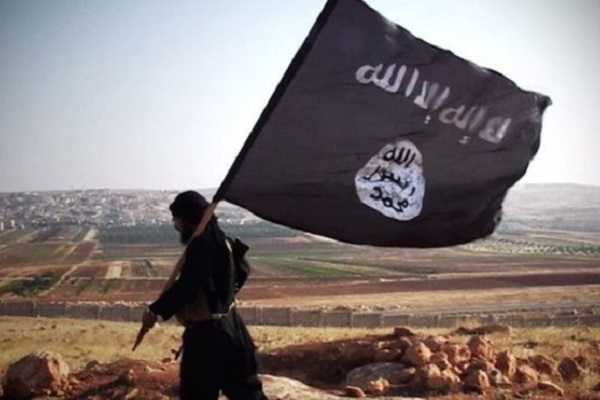
The security forces in Jammu and Kashmir are often attacked with heavy stone pelting from jihadi crowds in Srinagar and other areas of Kashmir. Often, these stone pelting attacks are orchestrated after the Friday prayers in mosques. Pakistani and ISIS flags are also waved by the jihadis during such violent mob attacks. Recently in June, a stone pelting Jihadi was run over by a CRPF vehicle while the CRPF convoy came under heavy attack by a violent stone pelting mob. Hundreds of CRPF and J&K police personnel are injured every year in the stone pelting attacks. The CRPF has reportedly also acquired Israeli style mobile bunkers to protect its personnel under stone pelting attacks.


Media and the art of manufacturing narrative

0

At an event of Upword, a new initiative that I am a part of, I was moderating the panel and therefore, kept my impulse to participate in the lively discussion largely in check. Later, however, I was asked by more than one member of the audience to write in greater detail about the theme of the discussion, “Media and the art of manufacturing narrative: Storytelling in the service of political correctness”. There is much to be said about the media and how and why they get things wrong all the time but I will try and address the fundamentals in this article.

Nassem Nicholas Taleb coined a term for the compulsive habit of intellectuals to offer half-baked theories regarding events around them and successfully providing the public with a much-needed explanation for ‘news’, which is essentially organized hearsay. He calls it the ‘narrative fallacy’ and demolishes the practitioners of the art with his incisive commentary in “The Black Swan”.

Taleb draws liberally from the works of one of the most illuminated minds of the 20th century, Daniel Kahneman. The exchange, though, is not one-sided and Kahneman acknowledges Taleb’s contribution to the ‘understanding’ of the hollowness of our explanatory models of the world in his “Thinking, Fast and Slow”. Both of them explain in their own ways, the illusion of explanation and how we hugely overrate this thing called understanding.

To get a sense of how narratives operate, the stock market is a fitting analogy. When you sell your stock, you sell it because you believe it is the best time to sell it. However, on the other side, there is someone buying it believing exactly the opposite. Both the buyer and the seller have their skins in the game and thus no one can accuse either of being careless. Both are acting in their best self-interest. Both are fooled by the coherence of their respective narrative. The truth is that only time can tell what decision is the best and more often than not, it proves seasoned traders wrong. Stock-trading is glorified gambling and people who claim to be good at it are lying, to themselves and to others. This is pretty much established beyond the shadow of a doubt, even though an entire global industry thrives on the illusion of expertise.

The power of a narrative is in its coherence and its coherence is a function of the power it wields, which is dependent on how many people believe in it. Take the case of a morally ambiguous issue like Abortion. Is it appropriate to kill an unwanted foetus just because it is inconvenient for the woman bearing it? Or is it more appropriate to force the woman to have the baby and live with the burden for the rest of her life? The questions yield no easy answers for an individual but for a society, the choice is governed by the assumptions that the majority of people subscribe to. The rest just have to fall in line.

Monopolistic religions promote one narrative, one explanation of the origins of the universe and its working principle. Anything contrary to their narrative is considered worthy of punishment. Conversion becomes an unavoidable part of their strategy as it helps them acquire more followers to strengthen the power of their narrative. In the same spirit, Marxism offers one explanation for the whole of human history. DD Kosambi, the polymath Marxist, interpreted the Bhagwadgita as a conflict between classes, so complete was his surrender to his chosen narrative. Similarly, people who are paranoid are so convinced of the reality of their phobias that you cannot talk them out of it without risking your own sanity. India, on the other hand, never had problems with multiple narratives, which reflects in the age-old pluralism of this land. I suppose all ‘pagan’ cultures knew a thing or two about myths and their superiority to ‘facts’.

The Indian sense of history is quite distinct from this chronological reconstruction of the past that we know as historiography. What we call fact-based history, created by tying together the flimsy evidence available to us from the past and then attributing motives based on the lens employed in studying the evidence is an enterprise no less speculative than inserting interesting, and sometimes fantastic, stories to convey a deeper point about the human nature. By allowing for multiple accounts to thrive and not obsessing over THE ONE TRUE account, the Indian tradition has wisely avoided the trap of history being used as a tool for manipulation of identities. Many people have been taught to think of myth as a dirty word but I believe that it is really beautiful. For example, the history presented in Mahabharata is interspersed with myths like Krishna lifting the Govardhan hill on his little finger, unless someone insists that he really lifted a hill. The point of the myth is to impart a spiritual lesson that fact-based history is incapable of.

But what really makes some belief systems insist on one version of events? These are systems where power flows top-down. Any flow of information in the other direction is a threat to the order imposed by the Caliph, Pope, Church, President or the Supreme Leader. There is one explanation for everything and that explanation comes from the top. Where this command and control mechanism is absent, there is seeming chaos, for there are as many explanations of events as there are perspectives. Moreover, in societies that avoid the trap of endorsing the one true version of history, the menace of political correctness is automatically kept in check.

Media organizations take pride in their hierarchical structures, which are very much like the church and boast of the expertise of the people they employ. Because of this inflated belief in their expertise, they get things wrong all the time, as Thomas Sowell has documented in his “Intellectuals and Society”. Kahneman calls this the illusion of validity, the near-infallible pattern of humans to commit cognitive errors due to an exaggerated belief in their own understanding. As Kahneman notes in an academic tone, most people are wrong most of the time but the experts are wrong more often than those who don’t carry the baggage of expertise.

In the spirit of the multiplicity of perspectives, we don’t claim to have the password to the objective truth. At Upword, we present the perspectives of the common people of India, whose feeble voices need an amplifier, to counter the one-dimensional narrative of the State, the Church, the Wall-Street or the Politburo.

Here is our first video.

[youtube https://www.youtube.com/watch?v=js936p_cvTE]

We are not building any grand narrative. We are not countering any lies. We are not speaking for the left or the right. We are not building any bridges nor are we burning them. We are just amplifying the voice of those who lack access to the PR machinery of totalitarian ideologies. We speak for the plants, animals, forests, rivers, temples, deities and devotees of Bharat. We speak for you. We speak for ourselves.


20 children rescued from illegal Christian orphanage in Kathua after sexual abuse, pastor arrested

0

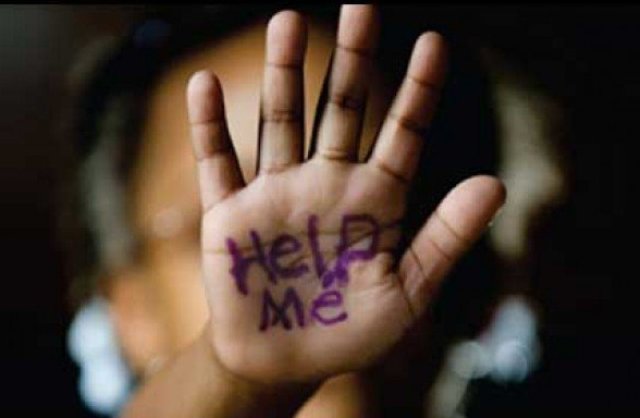
About 20 children, all aged between 5 and 15 years were reportedly rescued last night from an illegal ‘orphanage’ being run in Kathua town of Jammu. According to reports, many of the rescued children have levelled grave accusations of sexual abuse and exploitation on the missionary who ran the orphanage, a person named Father Thomas Anthony.

According to reports, eight of the rescued children are girls. The police were informed about the illegal orphanage and the abuse of children after the teachers at the government school filed a written complaint against the missionary and the orphanage to the district administration. The children had reportedly shared with the teachers that they were being sexually abused for a long time in the orphanage.

The arrested person, Thomas Anthony allegedly had no registration or permit for the orphanage. The so-called orphanage was being run from a rented accommodation in Kathua town and had no official documents, boards or papers. Thomas Anthony reportedly told the police that his ‘orphanage’ was a sister concern of the Pentecostal Mission in Pathankot. However, the Assistant revenue commissioner (ACR) of Kathua, Jitendra Mishra has reportedly informed media that upon inquiry, the Pentecostal Mission has denied granting any permission to run an orphanage in Kathua.

ACR Mishra has also reportedly informed that the Children housed in the orphanage mostly hail from Gurdaspur in Punjab and nearby areas such as Samba, Bari Brahamana and Jammu. Upon inquiry, many of the children were revealed to have single parents. The district administration has shifted the children to the local Bal Ashram and Nari Niketan in Kathua town. The families of the children had been informed too.

Upon police inquiry, it was also revealed that the orphanage had no female warden and Anthony reportedly informed that his wife has gone to her hometown in Kerala.

District administration officials have also informed that a detailed inquiry of the case will be conducted and the children will be medically examined too.

It is notable here that the Kathua town had grabbed national and international headlines after the gruesome rape and murder of an eight-year-old girl came to light in April. Many Christian organisations have been found connected with cases of child sexual abuse in India. Recently in Bihar, some NGOs running care homes for girl children are facing legal consequences after a study by TISS, Mumbai revealed that girl children are being sexually abused by the officials at the care homes.

‘I was made to sit right next to one of my harassers’: Republic TV journalist speaks out against media body

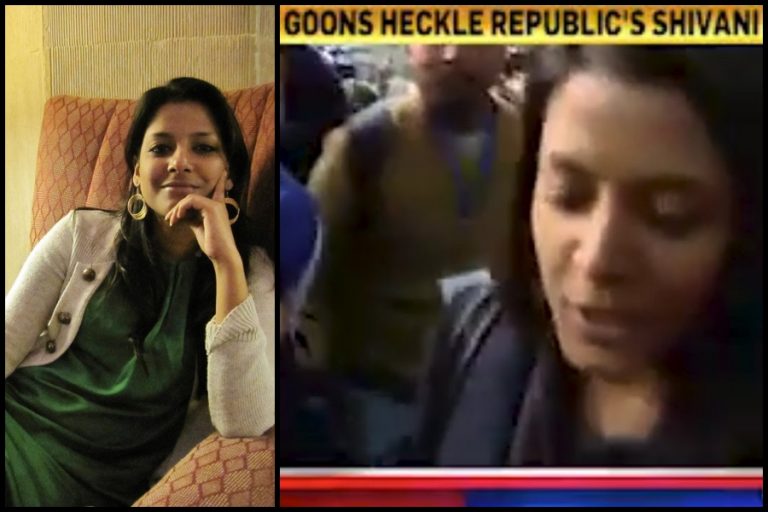
The media world has witnessed a tectonic shift in the recent years and Republic TV seems to have become the arch nemesis of the Lutyens club. The animosity has been reflected in various statements. From “student leader” Shehla Rashid singling out Republic TV reporter to Jignesh Mevani the following suit. Ironically, the Left ecosystem continues to hound Republic and treat Arnab Goswami as the pariah that must be quashed while trying their best to live upto North Korean principles of quashing opposing ideology. If one observes carefully, perhaps their only problem with him and his “North Korean” channel is that they refuse to toe the line that the media world has toed for far too long.

Their hate, their blatant hate reached its zenith recently, when they chose to slight a journalist, who was a victim of harassment just because she belonged to a channel they despise. She was made to come face to face with her harasser by the NBSA and then, the NBSA decided that even though video evidence existed, Republic TV must run a full-screen apology to the alleged aggressor, against whom a non-cognisable information report has been lodged with the police, for calling those involved thugs, vulgar etc.

The News and Broadcasting Standards Authority (NBSA), which had an NDTV reporter on the panel as well, seem to have used Shivani to settle scores with Arnab Goswami. They seem to have used Shivani to ensure that Arnab is brought down to his knees. But in this battle, Shivani’s voice, unfortunately, was drowned out.

OpIndia reached out to Shivani Gupta and asked her what she had to say about the NBSA’s order and the hearing, in which we are told, an NDTV reporter allegedly told her that “these things happen in the field”.

Her statement is produced below in full:

“I am highly alarmed and disturbed with both the way the hearing was conducted and the decision thereafter. Firstly, I was made to sit right next to one of my harassers in the hearing, the complainant who was clearly part of the mob attacking and intimidating me. This despite the fact that the panel is aware Republic TV has lodged a police complaint in this regard.

Secondly, his wife was allowed to attend the hearing and speak on his behalf even though she was not present on the spot and had nothing to do with the case. This is the same woman who wrote a blog on a news website the very next day and described so frivolously the actions of the mob. I quote, ‘Roars of Mevani, Kanhaiya Kumar and other young leaders suppressed any cheap thrill the female journalist might have tried to gain from the scene.’ Note the words ‘suppress’ and ‘cheap thrills’.

Would NBSA have allowed my parents too? I am sure my father and mother have a lot to say about the man’s behaviour and the ordeal I had to suffer?

All through the process, the panel seemed less concerned with the act of the complainant and the mob he was clearly a part of and more with the words used by Arnab Goswami to describe them. It is clear he was no innocent bystander. The smirk on his face says it all. He was enjoying it. As I have mentioned earlier and said many times during the hearing, the man heckled me all day and then added to the intimidation when I was surrounded.

What words should rather be used to describe a vulgar, sexist, cheap and perverse bunch of goons? Is the panel now of the view that a reporter can be intimidated just because a leader’s thugs don’t like what she is saying or the channel she comes from? Is this the precedent the news body wants to set?

I think the NBSA has not fully understood the gravity of what they are dealing with. They have effectively turned a harasser into a victim. The man was less uncomfortable with his actions which he even sought to defend in the hearing. He is just uncomfortable because he was caught on tape.

He brought up the heckling of a Republic TV reporter at press club and was clearly emboldened by that kind of behaviour. Now the NBSA has emboldened him and people like him even more.

Republic TV has written to the body and asked for a review. I hope they will see and correct the error in their judgement. Both Arnab and I feel very strongly against condoning and legitimising such spineless mob behaviour and the channel will continue to fight this with its full might”.

The blog written by the wife of A Singh which Shivani Gupta has quoted in her statement is conspicuously missing from the pro-AAP blog Janta Ka Reporter’s website. A downloaded version of the article, however, is in the possession of OpIndia. It is indeed intriguing that many publications like The Print have also relied on the words of a lady who wasn’t present at the scene of the harassment, but other than My Nation, none of the publications have bothered to carry Shivani Gupta’s statement.

What the NBSA has normalised is that the travesty of a woman being harassed can be washed away by the wife of the aggressor, who wasn’t a witness to the scene testifying for him and writing op-eds about how the woman was seeking ‘cheap thrills’. What the NBSA has normalised is that the aggressor can actually take the victim of harassment to task in some quasi-association while police complaints are pending. What the NBSA has normalised is that the rule of law must bend to propaganda. Vendetta, hate, the Lutyens’ control, must reign supreme.

The NBSA had no regard for conflict of interest that posed a grave danger to justice with an NDTV reporter being on the committee. The very NDTV, whose reporters routinely display their absolute disgust for Republic TV and Arnab Goswami.

In this case, propaganda ruled. In this case, a woman, a journalist, was made a pawn to take Arnab Goswami down. What is shocking is the silence of the flag-bearers of women’s rights and freedom of expression.

Post 377 era: LGBT community needs to realise what is their biggest challenge and hurdle

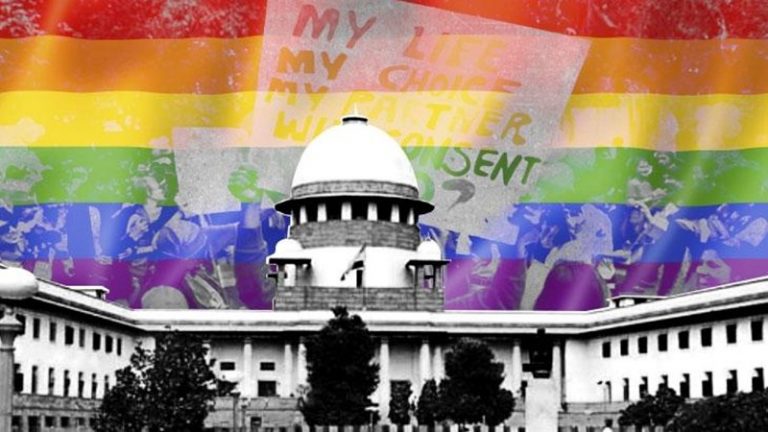
In a historic judgment on Thursday, the Supreme Court of India has decriminalised homosexuality. It has been a long bone of contention for a lot many people for a long while. With the decriminalisation of it, one hopes that activism of the kind we have seen will cool off for a while and there can be a moment for honest reflections and a reevaluation of the direction the movement was heading in.

A significant section of the LGBT community, and those who support them appear to believe that the conservative sections of the Hindu community is their greatest enemy. It should be fairly obvious to anyone but the ideologically possessed, that it is patently false.

Most Hindus do not care about this issue at all, they have their priorities, their own battles to fight. It is also untrue that homosexuality was criminalised because of the sentiments of a majority of Hindus. The law that criminalised homosexuality is a colonial-era law that was implemented by the British. Indian politicians, especially the Congress, could be faulted for not decriminalising homosexuality earlier but politicians do not always reflect the opinions of the majority of the community and for a country that was newly independent, decriminalising homosexuality was pretty much at the bottom of a long list of priorities.

It can be argued that a substantial, and vocal, a chunk of people do not like homosexuals and the law criminalising homosexuality was merely a reflection of it. I agree that it is certainly so, but a mere dislike doesn’t necessarily transform into a desire to hurt and punish. Despite the law that existed until yesterday, gay pride events used to take place in public and there was no resistance from the common man, mostly Hindus. They could peacefully demonstrate without any hassle and everyone let them be.

However, it would be disingenuous of me to say that homosexuals haven’t been harassed for their sexual orientation. In February 2010, a Professor of the Aligarh Muslim University (AMU) was filmed having sex with another man. The university administration suspended him after the video went viral and he was subjected to extreme humiliation and isolation at a place supposedly championing ‘liberal’ values. Two months later, he was found dead in his own apartment.

Such unfortunate incidents have happened. The LGBT community also says that they are regularly harassed by the police for public displays of affection (PDAs). But to be honest, police in our country will harass straight couples too for PDAs or for hanging out together without being married. The LGBT community in India has a lot more in common with their fellow countrymen on matters of love and relationships than they realise.

However, a toxic narrative that has garnered momentum, owing to the cesspit of postmodernism certainly, that the majority community, especially ‘Hindutva’, is the enemy of the LGBT community. Well, one wonders how they would respond to the fact that not even the secular parties have done anything worthwhile for the community. An even more toxic narrative that has emerged is that the Bharatiya Janata Party is their enemy and the minority community, which they believe is a victim of the saffron party as well, are their allies in this fight. Such a proposition is contrary to all facts and defies ever manner of logic.

The Hindutva party did not oppose the decriminalisation of homosexuality while it was opposed by certain members of a minority community (AMU incident for instance), and soon after it was decriminalised, it was a prominent media outlet that caters to the minority community that came out in condemnation for it. According to the theories of postmodernism, such facts do not make any sense. But then, postmodernism has very little to do with reality anyway.

The LGBT community is not doing itself any favours by getting involved in a web of politics by raising banners such as “rainbows over saffron” and “Rainbow against saffron”. If you are going to make your fight against a particular political entity, then you risk alienating a lot of people who otherwise would have been sympathetic to your cause and more importantly, they are going to respond politically.

And I sincerely believe the fight for homosexual rights wasn’t a political battle. And there are more important issues that demand the urgent attention of the LGBT community, the insanely high rates of HIV/AIDS among its members for instance, that need to be addressed which are being thrown under the bus because the community is focusing more on politics.

As a conservative Hindu myself, I do not particularly care about how one chooses to use his or her genitalia. I have an issue, however, like many others, with certain kind of mannerisms and posters that appear to be very common at LGBT Pride Parades. If the goal is to normalise homosexuality and drive home the point that homosexuals are just like everyone else – which they are – then perhaps the community should tone down some of the indecent attire and displays that have become all too common in pride parades. You are not depicting the best version of yourself and certainly not doing yourself any favours if you are resorting to indecency and vulgarity on an occasion that appears to hold significant importance for you.

Historically speaking, India has been tolerant of homosexuality and transgenders, like all pagan cultures. Homosexuals and transgenders were accorded their own space in the community and they served a useful function like every other unit of the society. As others much wiser than me have pointed out, decriminalisation of homosexuality is not India adopting western ideals, it’s India decolonising. And the LGBT community needs to be aware of this fact and be respectful of it.

Currently, the LGBT movement has been consumed by western ideals. If the community is to move forward and occupy its own unique position in society, then it has to abandon its westernised ideals and work within the context of Indic values. What has succeeded in the West will not necessarily succeed here. Postmodernism has brought nothing to the West apart from more conflict, more misery and more social disharmony. The LGBT community in India needs to disentangle itself from the western ideology and orient themselves more along pagan Indic principles.

No, homosexual acts have NOT been decriminalized in India

0

I know what you are thinking. You must be thinking that I am crazy. Have I not seen the screaming headlines, the saturation coverage, the hashtags of #IndiaRejects377 and so on? How could I have missed the historic Supreme Court verdict?

I haven’t missed anything.

The headlines in the newspapers today that say India has decriminalized homosexuality? All FAKE.

Homosexual acts were criminal in India yesterday and they still are criminal today.

As long as you consider the state of Jammu and Kashmir to be an integral part of India, that is.

Guess what? The Supreme Court verdict from yesterday has no impact on Indian citizens living in the Indian state of Jammu and Kashmir. You see, the state of J&K is governed by its own penal code that is separate from the Indian Penal Code (IPC).

Yesterday’s judgement has thrown two things into sharp focus. First, there is the absurdity of Jammu and Kashmir being governed by an altogether different set of laws (“ek desh mein do vidhaan”). Then, there is the largely left-wing media that has stayed away from talking about this matter, thus becoming conspicuous by their silence.

Why has the press stayed away from reporting the fact that homosexuals in the Muslim majority state of J&K will continue to face dehumanizing treatment under our laws? The reasons are not difficult to imagine.

Is it possible that the media is shying away from reporting on the contradiction between the values of liberty and the views of Muslim majority societies? This is really the second time in a year or so that this contradiction at the heart of the modern Liberal-Islamist mahagathbandhan has been obvious. The last time it was triple talaq. Back then we saw alleged liberals and feminists taking positions on women that could only be described as shocking and regressive of the worst kind. I remember that one “legendary” women’s rights lawyer even said that triple talaq should stay because Muslim men might otherwise be led to murder their wives.

I refuse to think so little either of our law enforcement or Indian Muslim men.

A historic verdict such as yesterday is an opportunity for society to rethink, to clear our collective heads and decide where we stand on issues. I heard some sage advice yesterday against the possible imposition of “majority morality” on fundamental rights of citizens. Which left me puzzled, because the most grumbling against the legalization of homosexual acts appears to have come from “minority” organizations.

In particular, the three organizations that were in favour of 377 in the Supreme Court yesterday were the “Trust of God ministries”, the “Apostolic Alliance of Churches” and “Utkal Christian Association.” I am not quite certain how the names of these organizations came to be associated with the imposition of “majority morality”.

Meanwhile, the All India Mulsim Personal Law Board (AIMPLB) is hinting at moving court once again to re-criminalize homosexuality. Earlier the AIMPLB had requested the Govt of India to take a stance in favour of criminalizing gay people, which was rejected by the Central Govt.

It’s time for India to think clearly. Will our liberals take an open and intellectually honest position against the bigotry of the so-called minority groups with whom they have made common cause on virtually every issue? Are our liberals willing to join the charge for gay rights in Muslim majority Jammu and Kashmir? Of course, they can choose to stay silent. They have a right to do so. But if they choose silence, it is our moral duty to expose their hypocrisy. If liberals are all hiding under a desk somewhere hoping that we won’t notice their absence when it comes to gay rights in Jammu and Kashmir, we have to prove them wrong.

Telangana assembly dissolution: EC to take stock of situation before announcing fresh elections

A day after Telangana chief minister K Chandrashekhar Rao dissolved the state assembly, Chief Election Commissioner OP Rawat, said that the Election Commission of India (ECI) will assess the possibility of holding the polls along with Rajasthan, Madhya Pradesh, Chhattisgarh, and Mizoram.

Speculations were rife that the Telangana assembly elections may be held along with the four poll-bound state elections which are scheduled to be held before the general elections next year. Speaking to the media, CEC Rawat said the Election Commission of India will discuss regarding all the legal and logistical aspects to conduct elections in Telangana.


Rawat said that the elections will be held after proper assessment, irrespective of whatever astrological predictions are made over dates by anyone.


He also cited the 2002 Supreme Court order that said Election Commission should not allow any caretaker government to be in charge for more than six months. The court had also said that the elections to the state assembly in case of dissolution should be conducted on the first occasion. “Keeping in mind these rulings, legal framework and ground realities in Telangana, the commission will decide on the elections there,” Rawat said.

The Election Commission will first take stock of the situation from the state’s chief electoral officer and then decide to hold the elections. “An official audit will then take place following which the commission will pay a visit to the state,” he said.

Telangana, after being separated from Andhra Pradesh, held its first state assembly elections in May 2014 where TRS came to power winning 63 out of 119 seats.

Two suspected ISIS terrorists arrested near Red Fort in Delhi

0

The Delhi police special cell have arrested two terrorists near the Jama masjid bus stop near red Fort. Acording to reports, the arrested terrorists were going to Kashmir. Weapons including 2 postols and 10 cartriges have been recovered from them.


According to reports, the terrorists allegedly belong to the Islamic State of Jammu and Kashmir. They are reportedly named as Parvez Rashid and Jamshed Jahoor. The duo reportedly hail from Shopian in Jammu and Kashmir.They were arrested late last night. Some media reports have stated that one of their associates was killed earlier.

As per latest reports, the two terrorists have been taken under a 5-day remand by the Delhi police.


The Jammu and Kashmir branch of Islamic State is said to have been activated in recent times and their network and recruitments in India are stated to be on the rise. In 2016, IED blast on Bhopal-Ujjain Express that claimed 10 lives was attributed to ISIS. Since then many  suspects have been arrested. It was also revealed that the ISIS was planning to target Indian Jews living in Mumbai and Ahmedabad.

Demonetisation brought down smuggling of Fake Indian Currency Note, says BSF Chief

Speaking at the ongoing DG level talks between the Border Security Force (BSF) and Border Guards Bangladesh (BGB) in Delhi, BSF Chief K.K. Sharma has said that demonetisation has helped curb the smuggling of fake currency. He said, “Smuggling of Fake Indian Currency Note (FICN) has come down considerably after demonetisation. Quality also isn’t good so they can be easily detected. Mostly, we find that Bangladeshi territory is being used as a transit. This year, the seizure was 11 lakhs only.”

The Director General of BSF also stated that there hasn’t been any large-scale influx of Rohingya refugees in India although there have been attempts to move to India illegally from Bangladesh.


He further stated, “Rohingyas who’re already in the country, are also under pressure at some places. So they’re going to West Bengal that is slightly friendly with them & has created camps for Rohingyas coming from within the country, not from Bangladesh.”

Demonetisation has come under severe criticism by the opposition parties. However, despite their allegations that it has spelt doom for the economy, the country has registered an 8.2% GDP growth rate in the first quarter of the current fiscal year. There is also evidence to suggest that demonetisation has also led to a sharp increase in the collection of Direct Tax by the government.

On the Rohingya issue, the government has always maintained that the Rohingyas have entered the country illegally and must be deported. In 2017, MoS Kiren Rijiju stated that Rohingyas are illegal immigrants and must be deported as per law. In June this year, Home Minister Rajnath Singh reiterated the government’s stand on the issue and said that the Rohingyas have come from Myanmar and will have to return.

US-India 2+2 dialogue: Washington agrees help India track down Dawood Ibrahim, Hafiz Saeed

In a major diplomatic breakthrough, the United States has agreed to help India in tracking down Dawood Ibrahim, the underworld don who is prime accused in the 1993 Mumbai serial blasts and 26/11 Mumbai attack mastermind JuD chief Hafiz Saeed. The two countries on Thursday also signed the crucial ‘Communications, Compatibility, Security Agreement (COMCASA)’ agreement and discussed key issues, including cross-border terrorism, India’s NSG bid and the contentious H1B visa issue.

The crucial meeting was held on Thursday between External Affairs Sushma Swaraj, Defence Minister Nirmala Sitharaman, US Secretary of State Michael R. Pompeo and Secretary of Defense James N. Mattis and the two sides urged Pakistan to ensure that its territory is not used to launch terrorist attacks on other countries. They also urged Pakistan to bring to justice the perpetrators of the Mumbai, Pathankot, Uri and other cross-border terrorist attacks. The US also agreed to exert pressure on Pakistan to rein in various terror outfits on its soil and dismantle their networks. Earlier this week, the Pentagon had sought the US Congress to reprogram $300 million of its Coalition Support Fund (CSF) for Pakistan because of Pakistan’s failure to act decisively in support of the US South Asia Strategy.

The US also shared concerns that despite evidence of his role in terror activities, Pakistan continues to provide shelter to JuD chief Hafiz Saeed. Saeed was declared as a foreign terrorist organisation by the US in June 2014 and carries a reward of USD 10 million on his head.

A joint statement issued after the meeting said, “The ministers announced their intent to increase information-sharing efforts on known or suspected terrorists and to implement UN Security Council Resolution 2396 on returning foreign terrorist fighters.”