Home Blog Page 7089

Uttar Pradesh: ‘Islamia’ prefix on government schools to be removed, not to remain closed on Fridays

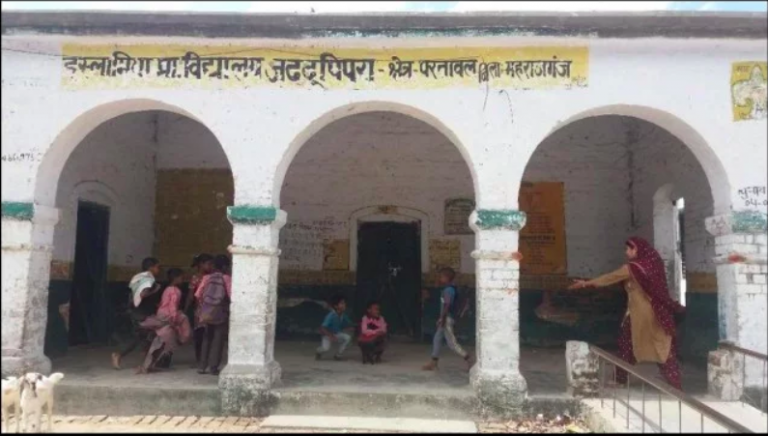
A week after it was reported that a headmaster Khurshid Ahmed had converted government school to Islamia School because most students were Muslims, the Basic Education Department has identified and started removing the word ‘Islamia’ prefixed to some government schools.


Earlier this month, a team lead by the Block Education Officer reportedly visited the school on Friday and found it closed. They also reportedly found the school’s attendance register, admission registers and teacher’s attendance registers to be maintained in the Urdu language.

‘Islamic’ word prefixed before government school

The schools have also been instructed to remain open on Fridays and observe weekly off on Sunday instead. The excercise has been launched in Ballia, days after it was launched in Deoria. As of now as many as thirty such schools have been identified which used ‘Islamia’ as the prefix. A probe has been launched by the authority.

Congress politician, Mohammad Jamadar, arrested for gold smuggling after a 45 minute chase

As reported by Times of India, in a 45 minutes gripping chase, from CST to Bandra-Worli Sealink, Mumbai, the Directorate of revenue intelligence officials with the help of Mumbai police nabbed Mohammad Jamadar, vice-president, South Mumbai District Congress Committee, on Thursday morning in an alleged 15kg gold smuggling racket.

The remand application declared the Congress neta to be the mastermind of the racket since 2015. Jamadar hired carriers to smuggle the gold from Dubai on a commission basis, allegedly paying ten thousand to each.

His arrest was foreshadowed by a thrilling drama, near the CST station as he tried to escape in a Mercedes car, and was chased by the police for 45 minutes until the car reached the Sealink toll Naka, where he was forced to halt because of a ‘barricade’ created by eight police vans.

The Directorate of Revenue Intelligence officials said that they had sought help from police after they saw Jamadar with his aides. “We informed deputy police commissioner Manoj Sharma, who immediately sent a team of police to the CST station. Anticipating trouble, Jamadar’s aides left in a separate vehicle while Jamadar fled in a Mercedes, which were later nabbed after the police and DRI officials gave the two a dramatic chase.

This is not the first time that Congress functionary has been arrested trying to smuggle. Earlier, Ashton Sequeira, an NSUI leader (District Secretary) had been arrested among 5 others for stealing and attempting to sell antiquated idols of Jain Tirthankaras worth crores of rupees.

TMC MP defames lawyer in parliament, lawyer says he will take action

Law Minister Ravi Shankar Prasad today in Rajya Sabha raised the issue of fake news and listed out various disadvantages of digital media.


Speaking on the challenges of the digital media, he said, ‘While acknowledging the benefits of the digital empowerment, it has also brought in challenges as its reckless abuse has posed a serious dilemma of striking the balance between freedom of speech and expression, awareness, empowerment and the obligation to be responsible, accountable so that mobile platforms do not become vehicles to commit crime, incite hatred, provoke terrorism, extremism, promote money laundering, etc.’ Prasad acknowledged that freedom of speech and expression should come with reasonable restrictions, especially when it endangers security of India. Speaking on fake news, Prasad said, India is committed to taking action against curbing the spread of fake news.

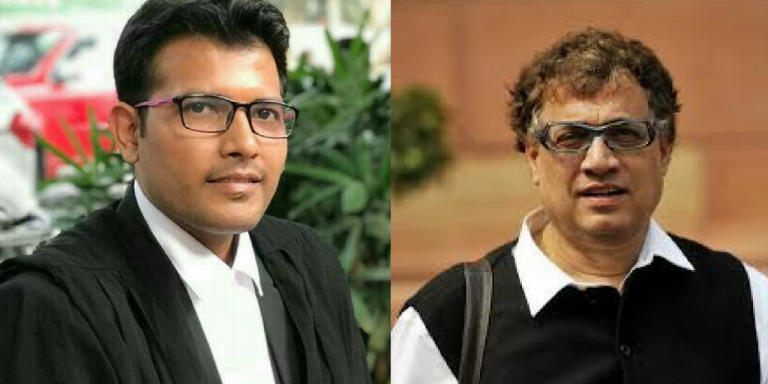
TMC MP Derek O’Brien, who had earlier too misused his parliamentary privilege to target and bully private individuals including the co-founder of OpIndia, Rahul Raj, used his parliamentary privilege and again used his parliamentary privilege to accuse an individual, lawyer Prashant Patel.


As seen above, Derek refers to Prashant Patel, the lawyer who has led the fight to get 21 AAP MLAs disqualified, as ‘India’s vilest, hatred spreading Twitter handle.’ He questioned why was he invited to the social media meet by the BJP President the week prior.

This is not the first time Derek O’Brien has abused his parliamentary privilege, as common citizens cannot take parliamentarians to court for their actions on the floor of the House, to attack private citizens who could not be present there to defend themselves. While the earlier outburst seemed like an attempt to discredit the Twitter users who were exposing how Bengal government had failed to protects its citizens from violent riots, Prashant Patel believes he was targeted because he has been taking on Aam Aadmi Party and exposing their irregularities.

Speaking to OpIndia, Patel said he was targeted because he is ‘continuously exposing communist-Naxal gang and their lies’. He said that TMC was attacking him on behalf of AAP against whom he has been fighting. He also named co-founders of Alt-News, one of whom has been caught spreading lies more than once, behind giving his name to Derek because he has been ‘hitting them hard’. He said earlier also he has got death threats and by pointing him out on the floor in Rajya Sabha, they have ‘pointed him out’  to attack him on social media as well as outside. He said since they could not counter him logically and legally, they want to silence him on social media and elsewhere.

When asked how does he plan to take legal action against Derek O’Brien, since he is protected by parliamentary privilege, Patel said, he will write to Rajya Sabha chairman and remove the part from the proceedings and also send a notice to Derek O’Brien challenging him for an open debate.

Karnataka HC rejects medical college’s plea to admit only Sunni Muslims for its MBBS course

The Karnataka High Court on Wednesday dismissed a petition filed by Kanachur Islamic Education Trust, which sought admission of only Sunni Muslims under the management quota of its MBBS course, Times of India has reported.

As per this report, the Mangalore based trust operates the Kanachur College of Medical Sciences, which had petitioned the High Court on 4 July, following the department of medical education’s refusal to allow it to admit only Sunni Muslim students.

As per a New Indian Express report, the trust had written to the medical department in May, asking for allotment of 82 out of 150 seats for Sunnis under its institute’s quota.

According to a report by The Hindu, the bench of Justice A.S. Bopanna and Justice Mohammad Nawaz observed that, allowing a Muslim minority institution to admit students from only one sect would amount to more meritorious Muslim students losing out, owing to them not being Sunnis.

Thus the bench stated that if a non-Sunni Muslim candidate ranks better than a Sunni candidate, then he or she cannot be denied a seat at the Kanachur college. The bench added to the judgement by saying that if such segmentation is allowed in other religions, then a problem would arise in the admission process.

The bench also pointed out that the trust has signed an agreement with the state government where, at least 66 per cent of the seats have to be occupied by students belonging to a minority community. It also cited that in the trust’s supplement deed dated 1 August 2015 it is written that, the trust is setup to benefit not just Sunnis but the Muslim community as a whole.

The trust has said that it is ready to admit students of any community in 25 per cent of its seats.

Subramanian Swamy writes letter to the PM asking for excavation and rebuilding of submerged city Dwarka

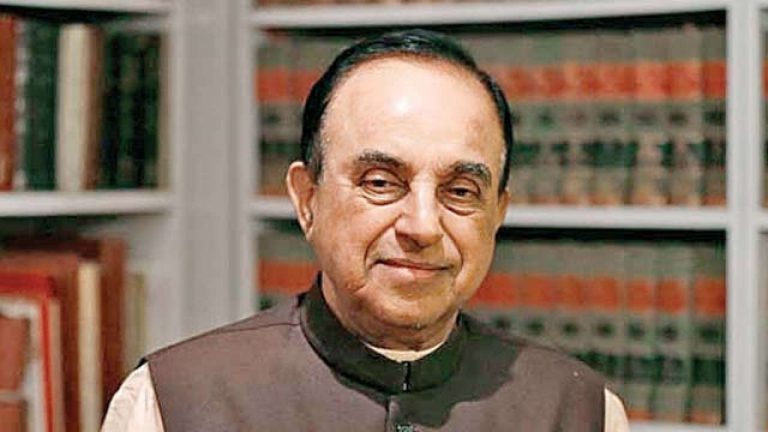
In a letter to Prime Minister Narendra Modi, senior BJP leader and Rajya Sabha member Dr Subramanian Swamy has asked to re-look into the issue of submerged ancient city Dwarka of Gujarat.


In his letter, Swamy has brought up the issue of Dwarka to the notice of the Prime Minister and has urged to set up a new research team to rebuild the Dwarka city based on the ruins found underwater. According to Subramanian Swamy, the excavation and re-building of this city will prove that the Bharat was indeed the oldest civilization.

Image courtesy: MessagetoEagle.com

Swamy has mentioned that a research team was constituted in 2001 during the time of Atal Bihari Vajpayee’s government and pollution research had been carried out by a team led by Dr S R Rao. The research team had found that there was organized rock formation structure of 9 sq.km in the area and 20 km away from the seashore off the Gujarat coast. The researchers also had the scanned images of the construction which was found underneath the sea water.

Subramanian Swamy in the letter has accused the UPA government led by Manmohan Singh of not showing any interest in reviving the ancient city of Dwarka. In his letter, he said that the researchers had requested Rs 14 crore for continuing further research on the historical site, but, the then UPA government did not sanction any amount for further research.

Dwarka, also identified with Dvaraka or Dvaravati, is an extremely important cultural and historical identity of the Indian civilization. The researchers had found that the city was submerged in the year 1443 BC, after 1700 years after the Mahabharata war. Dwarka kingdom is believed to be the capital of the kingdom of Lord Sri Krishna. It is also considered to be the first capital of Gujarat.

Tej Pratap Yadav tumbles to the ground while his ‘cycle rally’ and Netizens can’t stop laughing

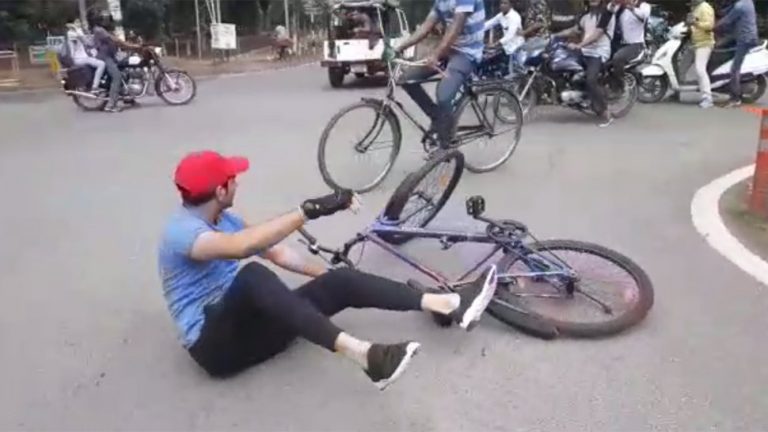
Ex-Bihar minister and RJD supremo Lalu Yadav’s son Tej Pratap Yadav today too out a ‘cycle rally’ in protest of ‘rising crime’. The newly married Tej Pratap was all geared up with sportive outfits and a shiny bicycle for the rally. Needless to say, he was also being followed by a large caravan of security personnel, party men and media persons. Things, however, took another turn when the RJD scion, in an attempt to ride stylishly took a tumble and fell right down on the ground.


As expected, Twitter was flooded with reactions. The upcoming film star and politician’s dramatic fall soon became the highlight of his ‘protest’.


One Twitter user insisted that the cycle was borrowed from Akhilesh Yadav and the idea was from Rahul Gandhi.


Memes were inevitable.


As expected, the entire media coverage about Tej Pratap’s protest rally has been now shifted to his falling. Tej Pratap, who has, in the past claimed that Nitish Kumar and Sushil Modi have unleashed ghosts in his official residence to haunt him, may find himself at the receiving end of jokes and memes for the next few days.

Though no injuries are being reported thus far, looking at his family’s  ‘track’ record of claiming victimhood, the possibilities of a blame on Modi government for his fall cannot be dismissed. Looks like Tej Pratap might need one of those hugs Rahul Gandhi is bestowing on everyone recently.

Rahul Gandhi interacts with a racist Hinduphobe along with other women journalists

0

Rahul Gandhi is one politician who has gone through multiple rounds of “transformation” mostly egged on the by Media which is sympathetic to the Gandhi family. The latest is how open Rahul Gandhi is to communication and how he can hold “unscripted sessions” with journalists. On Tuesday, the official Twitter handle of the Indian National Congress put out photos that showed Rahul Gandhi interacting with about 100 women journalists.


On the very next day, The Print chose to put out a video that claimed to reveal ‘what Rahul Gandhi told 100 women journalists’, but turned out to be 3 minutes of uncanny appreciation directed towards the Congress President, much like what “objective journalists” had peddled on the day of the no-confidence motion debate, and what they continue to propound everyday.

However, there was a specific individual who was hailed by the ‘liberals’ for her brazen Hinduphobia, especially hurt by The Print’s “coverage” (read generic praise) of the meeting with Rahul Gandhi, citing the fact that this was meant to be “off the record” (confidential), in a series of tweets- that carried over from last night to this morning.


It is well worth asking, what perturbed Annie Gowen so much when The Print had merely put out their cliché sympathy for the hug in Rahul Gandhi’s words, and their so-called ‘message of love’ in the video. Does Annie preempt that something more confidential or “off the record” may be put out, or is it merely the fact that she missed out on the opportunity to put her own reports out?

However, there is a much more important question that needs to be asked here: what business does the man attempting to adopt a ‘soft-Hindutva’ policy have with a woman who had viciously stereotyped Hindus, and addressed Hindu deities with the least respect?

It was not long ago when Annie Gowen had asked the Twitter staff to “delete” all her “Angry Hanuman followers”, depicting shameful hostility towards an entire community, and the basic Indic belief system. And the same woman who found “those who embrace the “Angry Hanuman” meme to be virulent and threatening”.

Not only is she the person who labelled the picture of a sacred Hindu deity as a “meme”, but she also became the person who resorted to abhorrent means of stereotyping every worshipper and adorer of a specific form their God, to be “virulent and threatening”, and those that can “cut her up to pieces”.

While this was only one incident, there have been other occasions involving seriously controversial remarks that featured Annie Gowen.

Rahul Gandhi, who chose to reveal his ‘janeu-dhari’ and ‘Shiv bhakt’ side before the Gujarat elections and whose aide Shashi Tharoor calls himself a “proud Hindu” (and yet peddled the “Hindu Taliban” theory) chose to make a person like Annie Gowen (amongst others), a messenger of his election campaign.

Illegal Rohingyas will not be allowed to stay in India: Home Ministry

Home Minister Rajnath Singh today in Rajya Sabha said that the ministry is in talks with Bangladesh on deportation of Rohingyas who are staying illegally in India.

The minister was speaking during the Question Hour in the Rajya Sabha where he also informed to the House that, if needed the Ministry of External Affairs will talk to the Bangladesh and Myanmar in relation to the deportation of illegal Rohingyas staying in India. Minister of State for Home Affairs, Kiren Rijiju said that as many as 52 illegal Bangladeshis will be deported by this month’s end.

The Home Minister informed that the Centre has issued an advisory notification to all state governments to immediately prepare a database of illegal immigrants and take their identifications using biometrics. He said that the states have been informed to make sure that the illegal immigrants do not possess any document which can be used to claim citizenship of the country in the future. Rijiju said once the database is available, the same would be sent across to Ministry of External Affairs.

Kiren Rijiju said that India has approached Myanmar and Bangladesh regarding this issue and the government is trying to convince both the countries to take these people back, He answered to a question in the House, “The process will be as per the discussion we have with a sovereign country. I cannot give assurance here.”

He further said that the Centre had the power under the Foreigners Act of 1946, to identify, detect and deport anyone who is illegally staying in the country. It is reported that the Rohingyas are staying in the states of Jammu and Kashmir, Andhra Pradesh, Telangana, western Uttar Pradesh, Delhi and Jaipur.

Kiren Rijiju said that the Bangladesh government has agreed and identified all the 52 people as Bangladeshis and all those Bangladeshis will be deported on July 30 at Mankachar IPC in Assam.

According to the Central government, the Rohingyas could pose a security threat. It has said that the Rohingyas are easily vulnerable to radicalization and may also involve in the illegal activities in the country. There are more than 40,000 illegal Rohingyas settled across India from Jammu to Bengal.

Read the stunning arguments made by People for Dharma’s lawyer to protect traditions of Sabarimala

0

A Supreme Court bench is hearing the Sabarimala temple case regarding women’s entry to the shrine. A five-member bench presided by CJI Deepak Mishra and comprising of Justices Rohinton Nariman, Indu Malhotra, AM Khanwaliker and DY Chandrachud is hearing the matter. Senior advocate Abhishek Manu Singhvi is representing the Travancore Devaswom Board on the case.

In the hearing, Dr Singhvi presented to the court the history of the temple and the rituals associated with it, highlighting the 41-day vow to be observed before visiting the temple. He stated that every devotee observing the vow is called ‘swami’ and is considered a representation of the deity himself, in the line with the concept of ‘Tat Tvam Asi’ in Hindu philosophy.

Replying to Justice Nariman’s query over reasons of excluding women, Singhvi submitted that the object is not to exclude women but they get excluded due to physiological reasons and anybody with the same physiological reasons will get excluded.

It is notable here that devotees of Ayyappa swami go through a strict 41-day period of abstinence and rituals before visiting the shrine every year. Women of reproductive age are barred from it because menstruation within the 41 day period does not allow them to complete the vow.

Upon Justice Chandrachud’s observation that how can the court start with the unconstitutional observation that women of reproductive age can not complete the 41-day penance, Dr Singhvi replied that the test under the law is not whether one can exclude women. The test is what is prescribed by the practice. He also pointed it out that no woman is allowed inside any mosque in India, regardless of whether she is menstruating or not.

Dr Singhvi further submitted that the Ayyappa devotees constitute a religious denomination and the test is whether the practice is essential to their belief. He added that the test is whether the practice is long established and is bonafide.

Upon Justice Chandrachud’s remark that after 1950, everything is subject to constitutional ethos, Dr Singhvi replied that constitutional ethos requires the court to apply the essentiality test. Justice Nariman reportedly agreed that the bar of entry of woman into mosques will too fall within this inquiry.

Upon the CJI’s observation that whether the restriction of women of reproductive age constitutes an essential part of the religious practice of the Sabarimala temple. Dr Singhvi reportedly presented the documents to the court detailing the various aspects of the vow undertaken by the devotees through the 41-day penance. Justice Nariman reportedly agreed that neither the state of Kerala nor the temple board has stated in their affidavits that the restrictions are based on any notion of impurities associated with menstruation. He also noted that the Kerala High Court had held the Ayyappa devotees as a religious denomination. Dr Singhiv submitted before the court that a time-bound six-month trial should be conducted so that all parties in the case can present evidence on it being a religious practice on the basis of belief.

Referring to the Srirur Mutt judgement, Dr Singhvi argued to the court on what constitutes an essential religious practice and what constitutes a religious denomination.

Dr Singhvi also argued that if the law protects dietary prescriptions based on religion, it certainly protects religious practices related to entry to the temple and worshipping the deity. He submitted that it is not for the court to comment on the rationality of the religious beliefs. The fact that the beliefs exist since centuries and have been practised is sufficient to merit for protection under article 25. He also submitted that there are temples in India which restrict the entry of men. He submitted that these practices are based on age-old traditions and not on misogyny.

Mr Parasaran, who represents the Nair Service Society pointed out the petitioners in the case are not claiming the right to worship, they have raised it as a social issue and they cannot even assert article 25. Dr Singhvi cited examples from many diverse traditions of Hindu culture and asserted that if any reform is suggested it has to come from within the community. He also added that the women understand the traditions and it is not a practice imposed on women by patriarchal men.

On 24th and 25th July, 90-year-old Mr Parasaran argued in representation to the Nair Service Society. He submitted to the court that Kerala is a very educated society and 96% of women are educated. He added that in Kerala, many families are matrilineal and the allegation that the practices of the Sabarimala temple are patriarchal is baseless. He added even it cannot be compared to other negative customs like Sati because Sati per se, was never connected to Hindu faith and widows in Mahabharata and Ramayana did not commit Sati after the deaths of their husbands. He asserted that the practices at Sabarimala should not be attributed to patriarchy.

Parasaran also referred to the Srirur Mutt judgement like his peer Mr Singhvi the day before and stated that democracies must protect religions. He added that Hinduism respects merit and wisdom and while the court should listen to the voices of activists it must also listen to the voices of people seeking to protect their traditions. Asserting that Lord Ayyappa’s ‘Naisthika Bramhachari’ status is protected by the constitution, Parasaran argued that the temple traditions are not patriarchal but designed to protect the character of the deity as a ‘Brahmachari’.

He refuted the claims of the death of a woman before she reaches the age of 50 as an excuse to enter the temple by stating that death is a fate and people in the shrine also register for Padi pujas to continue long after their death. Asserting that the basis of the tradition is not misogyny, he stated that the need is celibacy and the ritual of 41-day penance, he stated that it cannot be achieved when the women are menstruating and when the men are travelling with them. Referring to article 25, he stated that while the article applies to social reforms, it still does not apply to the matters of religion covered by the article 26 (b). He submitted that while the article 25 (2) deals with secular aspects and rights of entry for social classes, it does not cover rights of entry based on gender. Justice Nariman agreed with Parasaran that article 25(2) cannot be applicable in this case. Parasaran submitted that by using article 25(2), the court would risk reforming a religion out of its identity and it will also affect the rights of devotees under article 25(1).

Citing the Travancore Cochin Hindu Religious Institutions Act 1951, Parasaran submitted that the Travancore Devaswom Board is mandated to follow and preserve the traditional practices of the temples under its administration. Asserting that the laws on caste and religion based untouchability do not apply in the matter he submitted that the age restriction is a matter of temple traditions and not of discrimination against women.

In today’s hearing, advocate Mr K Radhakrishnan, appearing for the Padalam Royal family, the designated family of Lord Ayyappa is arguing in front of the 5-member bench headed by CJI Deepak Mishra. He has explained the rituals and traditions of the Sabarimala temple and discussed the religious significance of the 41-day penance and other rituals associated with the journey to the temple. He drew the court’s attention to the fact that the petitioner in the case neither represents the devotees of the temple nor does share the faith. He added that the petitioner is operating with the motive of destroying a facet of the Hindu faith.

Representing the Tanthri of the temple, advocate V Giri submitted that the deity at the Sabarimala temple should be worshipped in accordance with the shashtras and citing the affidavit submitted by the Tanthri, he asserted that strict adherence to rituals is required to preserve the temple’s integrity and spirituality among its devotees.

It is notable here that the women’s group People for Dharma is participating in the case in support of the practice of age restriction on the entry of women. It is also promoting a campaign called ‘Ready to wait’ where hundreds of female devotees have come forward to claim they are ready to wait until menopause for making the holy journey to the temple in adherence to the centuries-old tradition.

J Sai Deepak, representing the group People for Dharma argued before the bench that if the deity of the Sabarimala shrine can be taxed as a juristic person, he also has rights under articles 21, 25 and 26. He added that the deity’s right to remain a ‘Naisthika Bramhachari’ comes under article 25. Deepak further added that the case is not men vs women, but it is men vs men and women vs women. Sai Deepak asserted that if they allow dismissal of age-restrictions for women, tomorrow even men can seek exemptions from the 41-day ritual.

He further added that the denominational character of the temple as per article 26 is independent of the right of the temple to allow entry. He further added that the Ayyappa devotes constitute the denomination. He asserted that denomination is not decided based on the background of the devotees’ faith but on whether the devotee believes in what is an essential characteristic of the temple deity and the status of the denomination is not bestowed by the court. Sai Deepak also stated that the public character of an institution does not take away the very identity of an institution. He also added that ‘Naisthika Brahmacharya is, not a men-only practice and hence the rituals associated cannot be regarded as patriarchal.

CJI Deepak Mishra has remarked that Deepak’s argument was very impressive. In defence of the practice, he stated that “Not every exclusion is discrimination.”


Azam Khan’s anti-Army remark: Sedition charges filed against the SP leader

A year after the Samajwadi party leader Azam Khan made defamatory remarks about the Indian Army, the Uttar Pradesh government has approved the filing of chargesheet against him.

“Administration grants approval to police for action against former Uttar Pradesh minister Azam Khan in a police complaint filed against him for a press statement he made against Indian Army on June 27, 2017,” said Rampur Additional Superintendent of Police Sudha Singh.

A complaint had been filed in June last year by Akash Saxena, son of a Bharatiya Janata Party leader under Sections 153A and 505 (statements conducing to public mischief) of the Indian Penal Code.

Apart from Saxena’s complaint, three other complaints were registered against Khan over his controversial remark against the Indian Army.

One complaint was registered in Hazratganj and the other one in Rampur’s Civil Lines Police Station.

Earlier, Khan waded into another controversy with his statement that appeared to suggest that Indian soldiers have been indulging in rape. The comments triggered an angry reaction from the entire political fraternity.

Khan had said, “Armed women attacked soldiers and cut off their private parts. They cut the part they had problems with. India should be ashamed. How will the country face the world now?”

However, Khan downplayed that his comments affected the Indian Army’s morale and said, “My statement was misconstrued by media. How can army’s morale fall because of me? I am nobody. Army’s morale fell when Prime Minister Modi went to Pakistan.”

Azam Khan has been always been surrounded with controversies. A total of 10 cases were lodged in Revenue Board against senior Samajwadi Party leader Azam Khan by the office of district magistrate of Rampur in March this year. Khan has been accused of procuring 104-acre land belonging to the people from Scheduled Caste “against rules.” The cases were registered by the DM following a complaint by Akash Saxena.

A few days later the SP leader, along with his son, Abdulla Azam was again in deep waters after the Uttar Pradesh police filed a case of forgery against them. As per reports, the police filed a case against the father-son duo following the directive by a Rampur court.

The case pertained to Abdulla Azam allegedly submitting a fake affidavit during the 2017 UP Assembly Elections, in order to conceal his true age. As a result of this matter, Abdulla risks losing his status as an MLA and they both may face action under section 420 and 120-B of the IPC which pertain to cheating and criminal conspiracy respectively.