Home Blog Page 7108

Is the Supreme Court’s order on Jagannath Temple tenable?

0

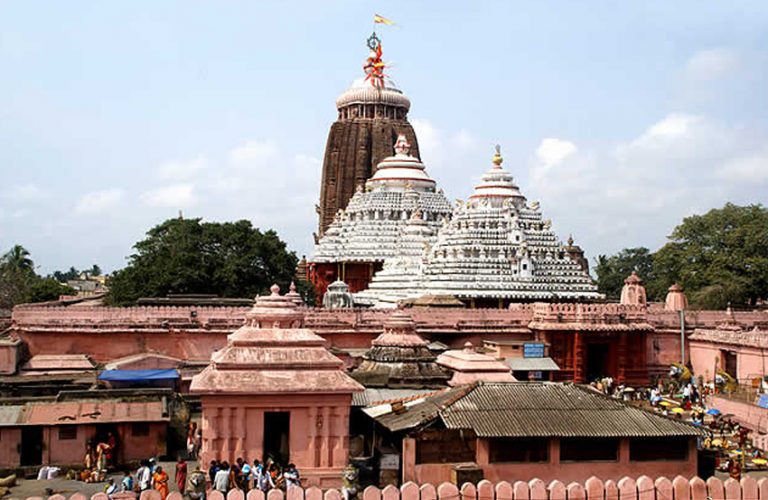
The controversy over Shri Jagannath Temple, Puri refuses to die down. Barely a week after the manufactured propaganda on ill-treatment to President in Puri for his caste, the temple is back to discussion courtesy, some adverse court observation on general administration and affairs of the temple.

Series of events

  • On 6th of July, one Mrs Mrinalini Padhi filed a writ petition alleging gross mismanagement in the affairs of temple management in Shri Jagannath Temple, Puri in the wake of recent incidents. The PIL states that incidents like Bramha Bibhrata during Nabakalebara, missing key of Ratna Bhandara raises serious questions about temple management. At the same time, being a centre of pilgrimage which attracts a large number of crowd, the facilities for a streamlined darshan as well as the sanitary arrangement in and around the temple are inadequate. The PIL expressed concern about the harassment meted out to devotees by the servitors for extracting money. The honourable court, while admitting the PIL, directed Puri district court, to submit a report on 4 things by 30th June 2018. SC also appointed senior counsel Mr Gopal Subramanium, as Amicus Curiae to assist the Court.
    • Difficulties faced by the visitors
    • Exploitative practices, if any
    • Deficiencies in the management
    • Suggestions, if any
  • The Puri district court submitted its report on 26th June 2018
  • On 5th July 2018, SC issued order in this regard while accepting the Puri district court report in principle. It has also asked the state and central government to submit their interim report on the direction issued by SC, latest by 31st August 2018.

Supreme Court’s Direction on the PIL

Here is the summary of the directions issued by the honourable Supreme Court.


While some of the direction seems to be in the right spirit to improve the temple administration as well as guard devotee’s interest, some part of it do seem like judicial activism and overreach. It may, if I am allowed to say so, be breaching the secular confines as established by the constitution and bordering on state interference into religious matters. Particularly, point i, ii and iii seems contentious. One other issue that has caught public attention and is being hotly discussed in media is SC’s suggestion on allowing members of other faiths i.e. non-Hindus, inside the temple premises. Now, it must be clarified that this is merely a suggestion which the temple authority, centre etc are free to reject.

Allow me to explain, why these issues may not be as simple as they sound.

The district judge’s observation on indiscipline among servitors seems to be based on the idea that servitors have absolute right on worship inside the temple. Hereditary appointment of servitors is a matter of Record-of-Right (R-o-R) recorded and accepted by the government as per SJTA, 1955. This is also guaranteed to the servitor’s families as per the Tamra Patra presented to them by King of Puri. Selling Mahaprasad from Annadan Attika is also a right of the servitors.

However, it’s worthwhile to note here that, the rights are not absolute. The successors, upon attaining the age of 18, have to exhibit the duties they have to perform, to the satisfaction of a group of experts consisting of high priests and members of Mukti Mandapa. Upon their assuagement, they are formally inducted into Temple. Once inducted, their position is still not absolute.

Upon dereliction of duty, the state reserves the right to remove them from seva, again as per SJTA, 1955. Point being, the remedy is already available in law to deal with errant servitors. The right question that needs to be asked is, why that remedy is not being used? Why is government shying away from taking action against erring servitors if any?

Just abolishing hereditary appointments won’t help. The state government is already equipped with enough arsenal in the current scheme of things. Just that they are not using it for some strange reasons. Also, temple Sevak is not a professional job where govt can appoint people from outside who show the required expertise. A temple is established and worshipped with pran, pratistha and bhakti. How does one ensure these qualities in the new ‘recruits’? These are complex questions and need to be discussed with subject matter experts and stakeholders viz. Sevayat community, Puri King (Gajapati) and Shankaracharya before the directions from SC can be considered.

As far as Rosaghar is concerned, this is the world’s largest kitchen. The “Bhoga niti” of Lord is quite complex and process driven. The knowledge is passed from one generation to another. SJTA in the past had appointed a food inspector for quality checks on the raw materials used and Maha Prasada served to Lord and sold to devotees. The administration needs to answer if the quality is being maintained and if not, why. How is the court direction going to help if SJTA is not doing its job?

Finally, on the most contentious issue of allowing non-Hindus into the temple, a rather interesting point to be noted is, neither the original petitioner nor the Puri district court magistrate in his report ever raised this point. This suggestion was solely taken up by the Supreme court on its own. We would like to bring it to reader’s notice that, on a similar occasion, while arguing against the abolition of Triple Talaq, we had reported how defence counsel Salman Khurshid had pleaded the court to look at the issue at hand i.e. Triple Talaq and not at the broader matter of UCC and Nikah Halala. SC had accepted his argument.

Whether to allow people from another religious faith or not is a bigger debate to be discussed among those who have adequate knowledge of Shastras and rulebooks which guide the temple rituals. My humble point is, the role of courts, be it a magisterial court or CJI’s court, should be limited to adjudicate matters. The point to adjudicate here is, does it violate the law of the land by not allowing non-Hindus? A reading of article 25 of the constitution would be in order here. The debate can go on between temple stakeholders and devotees. Court’s role should be limited to the adjudication. It must against be reiterated here that the Supreme Court merely made a suggestion which was not binding. However, since the suggestion came up, it becomes important to discuss its merits.

Therefore the two basic questions that are in front of us are as below

  • Have Hindus violated any constitutionality by maintaining a religious place where they don’t allow non-Hindus?
  • Is it a violation of a non-Hindu’s constitutional rights if he/she is not allowed into a Hindu shrine?

A reading of article 25 along with article 26 which gives everyone the right to practice, manage religious affairs and maintain institutions for religious purposes, should establish that answer to both the above question is a resounding “No”. The matter should settle there as far as adjudication is concerned. As it doesn’t violate anyone’s right and also inline with constitutional provisions, the court should state the same and keep out of it to maintain the secular sanctity of state.

Final submission

The SJTA act, 1955 as we had described earlier, already vests power with the state government for the management of the temple matters. The original petition pleaded against the mismanagement of temple affairs. In the whole episode, not even once, the state government was pulled up. When you give powers to the state to administer the temple, and it’s not happening as per rulebooks, whom should you question? And if SJTA is not doing its job, how does making the above changes are going to help anyway? The dysfunctional SJTA is still going to be a mute spectator. Unless you fix responsibilities, don’t expect different outcomes from the same set of people.

Aadhaar based Direct Benefit Transfer saved the exchequer Rs. 90,000 crores, says UIDAI chairman

It seems that the Modi government’s efforts to enhance the digital financial transactions and bring accountability in delivering public services to the citizens have proved extremely effective. Reportedly, the Aadhaar-based Direct Benefit Transfer (DBT) has saved more than Rs. 90,000 crores of public money.


The UIDAI Chief J. Satyanarayana speaking at a conference said that more than Rs 90,000 crore is estimated to be saved by the Departments of Petroleum & Natural Gas, Food & Public Distribution, Rural Development and others. He said that there are more than three crore people who use Aadhaar platform every day. It is used for availing ration, rural employment, scholarships and various kinds of subsidies.

“We have not spent even Rs 10,000 crore on Aadhaar cards and related systems so far. But the savings are enormous. We were able to save Rs 90,012 crore as on March 31 this year by using Aadhaar in some of the schemes such as PDS”, he said. He said that the government was successful in weeding out the bogus and duplicate beneficiaries by using the Aadhaar.

The Aadhar platform now has more than 121 crore residents of the country, and more than 3 crores e-transactions are done by using the identification system.

The UIDAI chief was also of the view that there is always a scope for improvement, especially in the areas of Artificial Intelligence, Machine Learning for fraud detection and improving the process of enrolment and security ecosystem.

It seems that Aadhaar has been a boon for enabling the easier and faster of public service delivery. The Jan Dhan- Aadhar- Mobile (JAM) Trinity has played an important role in bringing crores of people into the formal banking by reaching to the erstwhile untouched sections of the society. The present government has invested a lot of resources like time and money to implement this flagship programme.

The Aadhaar platform has brought fundamental changes to the way the financial transactions are done in the country now. It has cut down severe leakages, duplicity, inclusion and exclusion errors, to enable direct benefit transfer to intended beneficiaries.

The present government has also planned for the effective usage of the platform. PM Narendra Modi, last year had said the Unique Identification Number will work as a “big weapon” in the fight against benami property. The government had then specified, that once the Aadhaar linkage happens, tax authorities can approach the ‘legal owners’ and it can be treated as benami property if the ‘legal owners are unaware or deny knowledge of the ownership’.

The Aadhar had enabled to that total digitisation and Aadhaar linkage of ration cards, which helped identify a whopping 2.75 crore bogus ration cards. Earlier, the HRD ministry had decided to make Aadhar mandatory to avail mid-day meals. It had reportedly exposed a whopping 4.4 lakh fake students who only existed on paper in the three states of Andhra Pradesh, Manipur and Jharkhand.

Recently, Bill Gates, founder of Microsoft, talked highly about how Aadhaar is a commendable effort made by the Indian government. Gates added that Bill and Melinda Gates Foundation has funded a project for the World Bank which follows the lines of “Aadhaar” and asked the World Bank to find countries where it can be emulated.

All India Cine Worker’s Association is angry about Rajiv Gandhi being ‘defamed’: Here’s the real reason

A couple of days ago it was reported that a Congress leader from West Bengal had filed a complaint against India’s Netflix series Sacred Games, alleging that it was insulting Rajiv Gandhi. In the complaint, the Congress leader was miffed about Rajiv Gandhi being called a ‘Fattu’ (which was translated by Netflix as Pussy).

Now incidentally Sacred Games has also angered an organisation named All India Cine Workers Association (AICWA), which has lodged a similar complaint demanding an FIR against the actor and producer of Sacred Games:


Now clearly for most people, a question might arise as to why is AICWA (which prima facie looks like a union of people employed in the film industry), angry at the portrayal of Rajiv Gandhi in the TV Series.

Even though the name of the organisation does not give it away, a glance at AICWA’s website leads one to realise that the innocuous-sounding organisation is actually built on strong political foundations. This is the poster featured on the homepage of the website:

All India Cine Worker’s Association is angry about Rajiv Gandhi being 'defamed': Here’s the real reason
Poster on AICWA’s website

As seen in the poster above AICWA which is headed by founder and president Suresh Gupta, claims to be affiliated to INTUC and even features Rahul and Sonia Gandhi on its banner.

So is the INTUC in question, “Indian National Trade Union Congress”?

An IANS report says yes, by also calling Suresh Gupta the President of Youth Indian National Trade Union Congress’ city wing.

This report which covered the case filed against Sacred Games claimed that Gupta filed the complaint at the Chembur Police Station on Wednesday. In the complaint, he too was aggrieved about actor Nawazuddin Siddiqui calling Rajiv Gandhi a Fattu in the TV Series.

Even Mumbai Congress’ official Twitter account had affirmed Gupta’s INTUC credentials by calling him a Youth INTUC Mumbai President, in a tweet, posted back in January.

So what is Youth INTUC, and is it connected to the Congress party, which might explain why Gupta and subsequently AICWA are so miffed at the TV Series.

INTUC’s website states that Youth INTUC is its youth program which was launched in 1961 and claims to strive to mobilise youth activists, to make them aware of their rights, responsibilities and provide them adequate training.

As stated by various news reports, INTUC is known as the trade union arm of the Congress party and even the latter mentions INTUC on its website:

INTUC – Congress’ trade arm mentioned on its website

So clearly AICWA is linked to the Congress party via affiliations, thereby providing the reason for it angst against Sacred Games.

Now that the Congress leaders and the affiliate members of the party have launched legal action against Sacred Games, it raises the question whether the mainstream Congress machinery too would jump in the fray and start displaying the kind of intolerance it displayed during the release of the movie – Indu Sarkar.

Co-founder of AltNews spreads lies about OpIndia, gets exposed by netizens

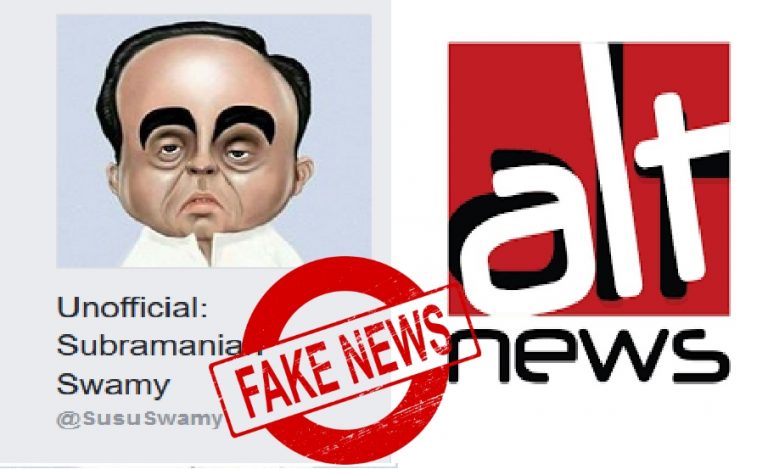
The self-proclaimed fact checkers, AltNews, funded by author Arundhati Roy who has ironically herself been caught spreading lies, got caught on the wrong foot again. The co-founder of AltNews who runs a crass parody page called ‘Unofficial: Subramanian Swamy” resorted to spreading lies about OpIndia through his Facebook page.

Recently, the AIMPLB had demanded that Sharia (Islamic Law) courts be opened in every district of India. This decision was met with stiff opposition from not only the ruling party, BJP but people at large. The Deputy Grand Mufti of Jammu and Kashmir had made an extremely controversial remark in this regard. He reiterated to various channels that if Sharia Courts were not allowed, then the Muslims of the Country should demand a separate nation for themselves.

This was reported by us at OpIndia and the Deputy Grand Mufti of J&K making this statement on video to Times Now was embedded in this article.

The co-founder of the alleged fact-checking website AltNews took to Facebook to call OpIndia’s report fake.

As “evidence” to prove OpIndia’s report fake, the co-founder of AltNews attached a screenshot of an IndiaToday report that exposed the mischief wreaked by some Facebook post that had attributed the demand for separate nation to All India Muslim Personal Law Board (AIMPLB) and alleged, that the post face-checked by IndiaToday is the post OpIndia had reported.

This, of course, couldn’t be further from the truth as the statement of the Deputy Grand Mufti of J&K reported by OpIndia was in fact also reported by IndiaToday.

Following screenshot is from the OpIndia report:

OpIndia’s report on Deputy Grand Mufti of J&K’s statement

The same statement was also reported by IndiaToday.

IndiaToday’s report on the statements of Deputy Grand Mufti of J&K

This blatant lie by the co-founder of the alleged fact-checking website, AltNews, was quickly called out by Netizens. This user branded AltNews ‘serial liars’.


Some politely gave facts and asked the self-proclaimed fact-checkers to stop peddling fake news.


Others questioned their “fact-checking” capabilities that they choose to propagate.


And some mocked “susu swamy”. Incidentally, something he calls himself. Well, how can we argue with the name he gives himself.


The reference to ‘Zubair’ in some of these tweets is regarding reports that the said Facebook page is run by a person called Zubair, who has Islamist tendencies and uses social media to attack Hinduism and Hindutva. OpIndia can’t verify these claims made by social media users, and we will like to endorse only the part where lies of this man – whether Zubair or someone else – are being called out.

This is not the first time that AltNews and Mr SuSu have been caught in their lies. Earlier, AltNews had resorted to slandering a veteran army officer and were promptly called out. They had also tried their hand at some fancy “voice analysis” to prove that no anti-national slogans were raised in Bihar. Their claims were busted by Bihar DGP himself. Mr ‘SuSu’ had also shared a fake image of BJP leader BSY Yeddyurappa before the Karnataka Elections. Mr SuSu had also peddled a protest march picture from Maharashtra as one in Delhi and was later forced to retract and apologise. SuSu had also confused FDI in single brand retails and multi-brand retails.

One wonders if the biased and clearly incompetent fact-checkers would fact-check themselves, now.

Here is how some ‘journalists’ twisted the Government’s stand on Section 377

0

The Supreme Court of India is hearing the case on the petition to decriminalise section 377. The government of India has made its stand clear that it will not contest the challenge to section 377 and will leave the decision to the Supreme Court’s wisdom on the issue.

Additional Solicitor General Tushar Mehta, representing the Union of India has stated submitted in the affidavit, “I state and submit that so far as the constitutional validity Section 377 to the extent it applies to ‘‘constitutional acts of adults in private’’ is concerned, the Union of India would leave the said question to the wisdom of the this Hon’ble Court.”

The central government has made its stand clear on the issue that as long as the SC is limiting the constitutional validity of section 377 to ‘consensual acts of adults in private’ the union of India will defer to the decision of the Supreme Court.

In yesterday’s hearing, ASG Tushar Mehta has submitted to the 5 judge bench comprising CJI Deepak Mishra, Justice RF Nariman, Justice DY Chandrachud, Justice AM Khanwaliker and Justice Indu Malhotra that if the SC delves into any other issues other than ‘consensual acts of adults in private’ the government of India would file a detailed affidavit in the matter.

courtesy: Bar & Bench

There are some individuals who have twisted the government’s view on the matter and tried to portray the central government as regressive and draconian in its views.


As pointed out by Abhijit Iyer-Mitra, journalist Dhamini has completely twisted ASG Mehta’s statement into a blatant lie. As mentioned above, ASG Mehta made the governments’ stand clear on the issue that it considers the challenge to section 377 limited to ‘consensual acts between adults’. Hence ASG Mehta had reportedly stated that any other definition of the act will have to be clarified and the government will then submit a detailed affidavit on the issue, including bestiality.

There is a reason for that because the section 377 of the CRPC based on the old 1862 law criminalised all ‘unnatural sexual acts’. It states. “Whoever voluntarily has carnal intercourse against the order of nature with any man, woman or animal, shall be punished.” Hence the government had to make its stand clear that decriminalising section 377 in its entirety might lead to other legal issues regarding civil rights and liabilities. So the ASG was merely clarifying his stand. But his statement has been twisted by Damini stating the ASG said allowing choice of partner would lead to bestiality and incest, which was completely false.

It was not long before the blatant lie was picked up by others too.


The Modi government has been taking several historic steps with regard to civil rights, women’s rights and social injustice. It has moved to make Triple talaq a criminal offence and now, the central government is also taking steps to ban polygamy and nikah halala that violate basic rights of millions of women in the country.

By making its stand on the section 377 issue, the government has also asserted that it does not believe in infringement of individual rights and lifestyle choices.

IT raid at Yogendra Yadav’s relative’s premises, cash payment allegedly made to fugitive Nirav Modi

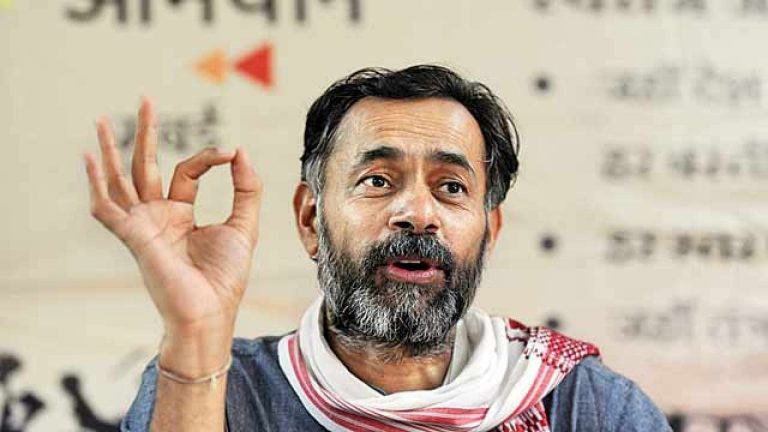
The Income Tax department has raided various places related to the family members of the Swaraj India chief, Yogendra Yadav. The raids have resulted in information, that they had allegedly made cash payments worth Rs 3.25 lakhs to the fugitive Nirav Modi, who now has an Interpol red corner notice issued against him. The IT  department has also found cash more than Rs 22 lakhs in the premises.

The raids by the Income-tax department were carried out at the Kalawati Hospital and Kamla hospital, which are run by Yogendra Yadav’s sister. Reportedly, the tax authorities have also searched the residences of the main partner of the hospital group, Dr Gautam Yadav. Dr Yadav is the son of Dr Neelam Yadav, sister of Yogendra Yadav.

The tax officials said that they had received prior information by Nirav Modi group, that Gautam Yadav had paid Rs 3.25 lakhs cash out of the total Rs 6.5 lakhs to purchase a jewellery from the fugitive.

“A total of three premises are being searched by the ITD sleuths from the investigation wing of Haryana. A team of about 40 tax officials and a contingent of police personnel executed the action,” a senior official said.

“We have searched the two premises, and we have found some links with the Nirav Modi case because some family members [of Yogendra Yadav] have made certain purchases for which payments in cash have been made,” the I-T department spokesperson told The Hindu. “We found evidence of that. We have also found evidence of unaccounted income”.

The authorities then raided the premises of Dr Narendra Singh Yadav and found Rs 22 lakh in cash. The officials said that “The current cash limit in the hand of a person is Rs 2 lakhs and the source of this cash amount of Rs 2.2 million is being probed”.

Yogendra Yadav took to Twitter to, as usual, play the ‘vendetta’ card instead of answering the questions raised and whether his family had relations with Nirav Modi.


Yogendra Yadav said that the raise was carried out to intimidate and silence him for holding agitation against the government on farm issues. Recently, Yadav had held an agitation for fair crop price and against liquor shops in Haryana.

The department rejected the charges of intimidation against Yadav’s family and also trashed the charges made by Yadav, that the IT authorities had sealed the hospital and ICU during caesarian deliveries.

Yogendra Yadav, who is also a former leader of Aam Aadmi Party and is known to be against any policies of the present government, has been caught several times for conducting less than accurate election surveys the results of which are often in favour of the opposition parties and, as a result, are often off the mark.

Retired Captain awarded 7 year jail term for leaking classified documents in exchange of money

Retired captain Salam Singh Rathore was awarded a seven-year rigorous imprisonment by a Delhi court on Wednesday, on charges of him committing an offence against national security, in an offshoot of the 2005 Navy War Room leak case, Indian Express has reported.

Special CBI Judge S K Aggarwal awarded the jail term to Rathore under the Official Secrets Act, on charges of spying. The judge thus convicted Rathore under Section 3(1) C of the 1923 Official Secrets Act, but acquitted Commander (retired) Jarnail Singh Kalra – another accused in the matter.

The chargesheets against both the accused were filed by the CBI in 2007.

As confirmed by a CBI officer, “Charges have been framed against the duo for offences under Sections 120-B and 409 of the Indian Penal Code and Section 3 and 5 of the Official Secrets Act, 1923 for obtaining, retaining, collecting and passing on of sensitive classified defence documents having a bearing on national security”.

The case was unravelled in 2005, and involved leaking of over 7,000 pages of sensitive defence information from the naval war room and air defence headquarters. The case came to light after an Air Force Directorate Officer was put under surveillance by the Air Force, after he allegedly had an extra-marital affair. During its investigation the IAF had recovered a pen drive containing India’s naval and maritime plans for the next 20 years.

The initial names that surfaced in the war room leak case, were of former Navy officer Kulbhushan Parashar, former naval commander Vijender Rana, Captain Kashyap Kumar, sacked naval commander V K Jha, former IAF Wing Commander Sambha Jee L Surve and arms dealer and Delhi-based businessman Abhishek Verma.

The CBI stepped in and took over the case in 2006 and filed its first chargesheet against individuals like retired naval officers Ravi Shankaran, Kulbhushan Parashar, and arms dealer Abhishek Verma.

After further investigation, a second chargesheet was filed by the agency in February 2007 and contained the names of other two former naval officers Salam Singh Rathore and Kalra.

It was alleged that Rathore, while being posted in the acquisition wing of the Ministry of Defence, had obtained gifts in cash and kind from a defence middleman. Subsequently a large number of classified defence documents were Rathore’s residential premises.

As per the report, three sensitive documents recovered from Rathore were allegedly given to him by Jarnail Singh Kalra. Karla who had received the documents from the Defence Ministry, was supposed to pass them on to HAL Corporate Office, Bangalore.

After celebrating Janmashtami, CPM to now celebrate Ramayana month in Kerala

Acknowledging changing social and political tides, the CPM has decided to participate in a month-long recital and lecture events across the state based on Hindu epic Ramayana.

According to a Times of India report, starting from this year, the CPM has decided to be associated with the Samskritha Sangham, when it organises Ramayana lectures and recitals all across the state. The report claims that Samskritha Sangham is an organisation created an year ago by Sanskrit loving academicians and historians.

Incidentally dabbling in Hinduism is nothing new for the CPM, and it had in 2015 celebrated its own form of Janmashtami, which apart from having kids dressed up as Krishnas, contained placards carrying images of various leftist leaders.

This celebrating of the Ramayana month would take place from 17 July to 15 August this year, mainly during the month of Karkkadakam. During this month, Hindu households in the state recite Ramayana daily, with a belief that it will purify their surroundings and ward off deprivation and ailments.

The report has quoted CPM State Committee member V Sivadasan saying that though there is no change in the party’s stance, many of its members will cooperate in the activities of the Samskritha Sangham. He, however, clarified that the Samskritha Sangham is in no way related to the CPM.

As per a Mathrubhumi report, critics claim that the decision is an attempt by the CPM to integrate into the changing social situation. It further claimed that the CPM would be conducting programs across the state to mark the occasion, which includes organising seminars and lectures to explain the “social background of Ramayana”.

The report also claimed that the CPM does not want the BJP to take control of temple undertakings, and thus has decided to hold a meeting with temple committee members.

In recent times political parties like the Congress have started asserting their ‘Hindu’ face.

Congress President Rahul Gandhi was seen temple hopping before Gujarat and Karnataka elections. Congress had even gone ahead and claimed Rahul Gandhi is a ‘Janeudhari Hindu’.

Modi govt doesn’t object to decriminalisation of homosexuality; Asks SC to take a call

In a historic show of commitment towards progressive ideals, the Narendra Modi led central government has virtually stated that it has no objection regarding the decriminalisation of homosexuality.

In its response to a writ petition filed in the country’s apex court challenging the provision, Modi government has categorically stated that it would leave the matter to the wisdom of the Court, Times of India has reported.

The five-member bench consists of CJI Deepak Misra, Justice RF Nariman, Justice AM Khanwilkar, Justice DY Chandrachud, and Justice Indu Malhotra.

The central government is being represented by Additional Solicitor General Tushar Mehta whereas the Senior Advocates Mukul Rohtagi and Arvind Datar are representing the petitioners in this case.

The point number six in the petition filed on behalf of the Union of India by additional solicitor general Tushar Mehta states that:

Point six of the petition filed on behalf of Union of India

“I state and submit that so far as the constitutional validity Section 377 to the extent it applies to ‘‘ constitutional acts of adults in private’’ is concerned, the Union of India would leave the said question to the wisdom of the this Hon’ble Court.”

However in the point seven of of the petition, the centre has not taken any other issue or rights into consideration. It thus asserted that if the supreme court would decide on any other issue besides section 377’s validity, it would have to file a counter petition owing to the far reaching ramifications.

As per the TOI report, the five-judge bench led by CJI Deepak Misra, in response to the petition stated that stated that it intends to rule- subject to arguments- that two consenting adults engage in ‘unnatural sex’ will not be liable for persecution for any offence. The bench hinted at the possibility of members of LGBT community being able to contest elections without any inhibition.

Indian intelligence agencies avert major terror attack by infiltrating Islamic State operation

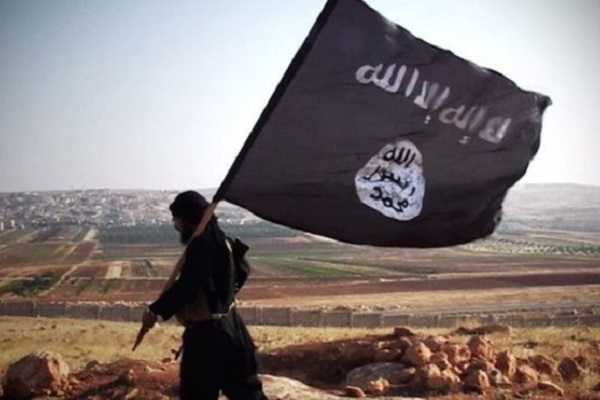
The common man seldom hears about India’s unsung heroes. But an unprecedented act by the counter-intelligence operation has saved the lives of many, by preventing an Afghan operative of the Islamic State (IS) from executing suicide-bombing in New Delhi, Indian Express has reported.

Even though he was arrested in September 2017, the details of the operations were only recently confirmed to Indian Express by diplomatic and intelligence sources.

Described as a son of a ‘wealthy businessman’, the Afghan operative was directed to spend his time in the national capital, and even took an admission in a private engineering college, on the outskirts of New Delhi.

To ensure that they keep a grasp over the targeted Afghan bomber, security agencies had deployed 80 security personnel for “physical surveillance” during one crucial month of the operation.

The operation began when the Research & Analysis Wing (RAW) had suspected the plot when they found out that $50,000 was being transferred from Dubai to a place in Afghanistan.

The investigation continued for about 18 months in places like Dubai, Afghanistan and New Delhi. This resulted in a breakthrough information that that 12 Islamic State operatives were being sent to execute bomb attacks after being trained in Pakistan.

The news report also suggests that as indicated from his questioning, the Manchester attacks in the UK, which killed 23 people, could have been triggered by a member of the same IS group of 12.

Out of this, the Afghan youth was sent to India’s capital, where he was reportedly seen roaming around malls, supermarkets, the airport and other such places, in preparation to attack.

The agencies saw and understood enough about the operations and thus, decided to intervene. They intercepted a few phone calls and even used a “planted man” to provide the Afghan bomber with explosives sans the trigger. The Indian “plant” even took care of the Afghan bomber’s accommodation in New Delhi.

Finally, the IS operative was arrested by the Indian agencies in New Delhi around September 2017. Citing sources, it was reported that the catch was of such “high value”, that the IS bomber’s revelations during questioning probably helped US forces hit a number of Taliban targets in Afghanistan recently.

It has also been reported that those who witnessed the interrogation of the Afghan IS bomber in New Delhi, said that US agents have also joined the interrogation along with the Indian security agencies. As a direct result, his confessions have even helped US forces strike at many Taliban targets in Afghanistan and Pakistan.

It goes without saying, that the daring counter-intelligence operation is a phenomenal achievement in a globally groundbreaking interception.