Home Blog Page 7152

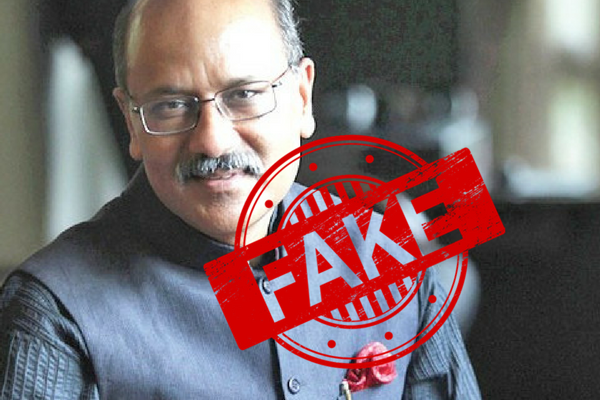
Yes Shekhar Gupta, Maoists aren’t the brightest bulbs in the room, but neither are you or ‘The Print’

A haze of fear surrounded the Nation as a letter dredged up by Pune Police suggests plans to assassinate Prime Minister Modi in a “Rajiv Gandhi type incident” by “targeting road shows”.

The letter, dated April 18, 2017, and addressed to one “Comrade Prakash”, was found from the home of Delhi-based activist Rona Wilson, the police claimed. Rona Wilson and four others were arrested on Wednesday for links with the banned CPI-Maoist. The letter is signed “R” which, the police suspect, is for “Rona Wilson”.


Many “prominent commentators”, especially the Editor-in-Chief of ‘The Print’, Shekhar Gupta, seemed to not only caustically rejoice the assassination threat but also question the authenticity of the letter by wondering why the Maoist would be ‘stupid enough’ to plan it over email.


Busy peddling controversial statements, it seems Shekhar Gupta habitually forgets to get his facts right and tweets, just like he publishes articles on ‘The Print’ without any due diligence or research.

A few years back while investigating agencies were probing Delhi University professor G N Saibaba, who was arrested for his Naxal links, had reportedly extracted some e-mails and information from his computer that suggests he recruited at least one more student from JNU as a “professional revolutionary” to work in Chattisgarh. This definitely makes it quite clear that planning such attacks through e-mails is not new and Maoist do use this medium to organize such attacks. There have been cases where they have regularly used unsigned letters to communicate as well.

As countries worldwide are struggling to fight the menace of fake news, there seems to be no dearth of a fresh onslaught of baseless, factless news and the people propagating it. Shekhar Gupta, a big-league in the world of journalism has a penchant for peddling fake news and getting regularly slammed for propagating false narratives, in his endeavour to sensationalize every issue. Netizens were beyond words, as to how Shekhar, who himself is a habitual liar is questioning the authenticity of the threat. Soon after he tweeted, social media lashed out at him saying,


Like Shekhar Gupta, there are other journalists too, who also chimed in the same ridiculous rationale to whitewash the Maoists planning the assassination. Saba Naqvi was one of them, taking the similar ludicrous direction.


Shekhar Gupta’s cloaked ecstasy over PM Modi’s assassination plot comes as no surprise, as he regularly encourages people working for him to foster such animosities. A troll, who has been touted as a columnist and “feminist poet” by Shekhar Gupta,  Harnidh Kaur, had also hoped that someone would assassinate Modi like Gose had assassinated Gandhi.

While Maoists are being arrested for plotting assassinations, many liberal darlings like Kaur, have also openly wished for such attempts on the Prime Minister. In January last year, a Times Now journalist, Prashant Kumar, had also wished for the assassination of Modi. Earlier, Suprateek Chatterjee, a columnist with The Quint had also tweeted death wish on Modi. That is not the only time The Quint has given a platform to people who go upon wishing death and political assassination. Vikas Malhotra, an author at The Quint, too preferred political assassination (of PM Modi) to create history.

While the ‘liberals’ do what they also do, on an interesting note, it does seem like someone at Shekhar Gupta’s media outlet hates him. While he was busy mocking the fact that Maoist used emails to plot the assassination rather than showing concern about the fact that the Nation’s PM is facing life threats, there are people in his own media house retweeting netizens shaming Shekhar for his views.


Now Fadnavis gets death threats from Maoists. Here’s why the Left Wing terrorists are getting so desperate

Just days after a letter calling for PM Modi’s assassination was recovered from a suspected urban Maoist, reports have emerged which claim that Maharashtra’s Chief Minister Devendra Fadnavis has been sent threatening letters at his office.

As per a DNA report, the Maharashtra CM has been sent two threatening letters by Maoists which were then forwarded to the police for investigation. India Today which also reported about this matter claimed that at least one such letter warned a threat to the life of Fadnavis and his family members.

The second letter as per the report seemed to have been from a whistleblower from Uttarakhand who claimed that senior Maoist leaders and sympathisers had met in the state’s Haldwani where they seem to have devised a plan to try and eliminate Fadnavis and his family. The letter also claimed that a task force had been formed by the Maoists to achieve this goal.

So why is it that the Maoists are becoming so desperately brazen in proclaiming their intention of trying to get rid of democratically elected leaders?

To give a short answer, their operations have been compromised to no end by the governments led by Modi and Fadnavis”.

A clue to this regard is provided in the India Today report which claims that one of the letters mentioned the operations in Maharashtra’s Gadchiroli which saw at least 37 Maoists being killed this April.

Just a quick glance at the Maoist fatality numbers compiled by South Asia Terrorism Portal (SATP) further explains why the left wing terrorists are so angry at Devendra Fadvanis.

From the start of 2018 till 27 May, a total of 116 comrades of theirs have been eliminated out of which 48 fatalities have come in Maharashtra – nine more than second-placed Chhattisgarh which saw 39 deaths. 43 of the deaths clocked in Maharashtra were in April, with encounters in Gadchiroli being a major contributor.

Now when it comes to PM Modi and his government, the fatalities of left-wing extremists again provide an answer. As listed out in an earlier report about 20 Naxals being gunned down in Chhattisgarh’s Sukma, the numbers of deaths and surrenders by such extremists have been on the rise since 2015 – Modi government’s first full year in charge.

For example, 2016 had seen the elimination of 244 leftist terrorists – the highest figure since 2009 and a surrender by 2281 comrades – the highest figure between 2006 to 2017.

The results of such counter-insurgency operation were tangible and resulted in the red terror affected districts shrinking to just 58 from the earlier figure of 75 in 2015.

What might have further complicated matters for the extremist outfits is the fact that the Modi government has implemented quite a few developmental measures in the Maoist affected regions which have been woefully lacking in basic infrastructure.

Some of these steps include spending a whopping Rs 11,000 crore to build roads in the red corridor, building a bridge delayed by nine years in just 30 days, erecting mobile towers and starting a first express train service the Maoist bastion of Dantewada.

This would have dealt a blow to the “state apathy” narrative, used ever so frequently by the left wing terrorists to seek sympathy for their actions.

Things might be about to get a lot worse for the left wing terrorists, as the administration has even started to go after the “urban Naxals”, as noted in the form of the arrest of five such suspects who occupied prestigious posts in academics, law and the social sector.

Undoubtedly when a red terror operative glances at the aforementioned developments, he or she might employ the natural instincts of fear and desperation to somehow try and cope with the situation.

Hence the letters seeking the elimination of India’s top politicians might be their final roll of dice to try and arrest the descent into oblivion.

Modi govt cracks down on shell companies: 16,500 entities confirmed, another 80,000 under investigation

In a boost to the fight against black money and illicit fund flows, the government has identified more than 16,500 companies as ‘confirmed shell companies’, while it has also put another 80,000 under the suspect category.

The Ministry of Corporate Affairs (MCA) had constituted a task force on shell companies in February 2017, three months after demonetization. The task force has identified 16,537 confirmed shell companies on the basis of the information received from the various law enforcement agencies of the companies found to be involved in illegal activities.

The task force has also identified 80,670 suspected shell companies drawn up by SFIO using certain red flag indicators. “The Task Force has identified certain red flag indicators, which will be used to identify more shell companies,” informed the MCA statement.

It includes officials from the Department of Financial Services, direct and indirect tax departments, Central Bureau of Investigation, Enforcement Directorate, SFIO, FIU-IND, RBI, SEBI, DG-GSTI and DG-CEIB.

The Modi government has decided to fight against black money generated from the corporate sector, especially cracking down non-serious companies and shell companies registered under the Registrar of Companies (RoC). The companies, which are suspected to have little business, but large amounts of fund flow, are typically classified as shell companies usually route illicit funds in a complex way back into the domestic economy.

The government seems to be seriously fighting against the black money. Last year the Enforcement Directorate had crackdown large number of shell companies involved in Money Laundering in more than 16 cities. These shell companies were linked to various political leaders like YSR Congress chief Jagan Mohan Reddy, NCP leader Chhagan Bhujbal and a controversial Noida bureaucrat Yadav Singh.

In another crackdown carried out by MCA in 2017-18, it had blacklisted more than 3,00,000 directors of various companies for defaulting on statutory compliance. These include the directors of shell companies which haven’t filed returns for the past 3 years. MCA has identified another 2,25,910 companies for being struck-off in 2018-19.

Last month, the MCA had released data in which almost 73,000 companies have been deregistered and have made to deposit more than Rs. 24,000 crore in bank accounts post demonetization. The Ministry document said that there are 68 companies are under investigation. The Serious Fraud Investigation Office (SFIO) is also probing 19 companies while the Registrars of Companies (RoC) are investigating 49 firms, it added. In another report, the data show that the direct tax collection post demonetization has increased by 15.3%, which amounts to the collection of Rs. 9.80 crores of direct tax alone.

It seems that the government has taken the issue of black money and illicit fund flows very seriously. Earlier, the Modi government intensified the crackdown on benami Transactions by announcing a reward scheme to clamp down on benami properties. Under this scheme, the person who passes on any specific information about Benami transactions will be rewarded up to Rs 1 crore.

Prime Minister Modi has taken a pledge to weed out all the black money in the country The present government has taken several steps like withdrawing of high currency values, from usage, enforcing strict measures to track illicit funds and other steps to eliminate the menace of black money from the system.

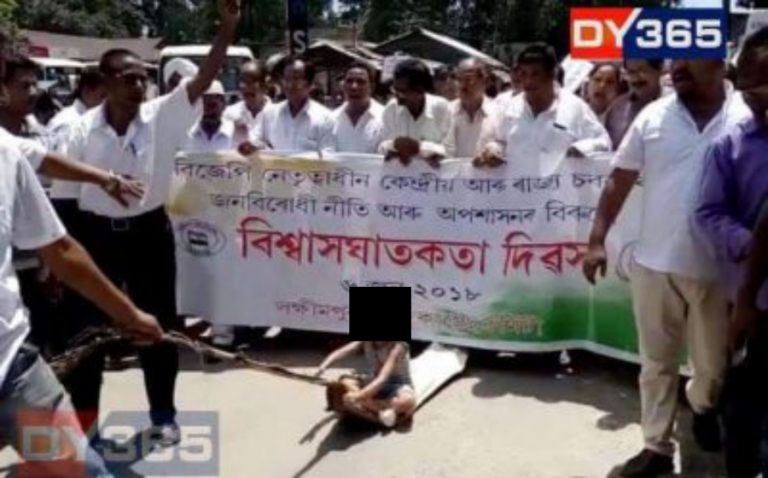
Assam: Minor girl made to sit on a leaf and dragged in Congress rally, Congress leader among 3 arrested

Three persons were reportedly arrested in Assam for using a minor girl in a Congress rally against the government. According to reports, the Lakhimpur police has filed a case on the issue as the little girl was dragged around the town while being made to sit on a Dhokua (dried betel-nut tree leaf).

The police have reportedly arrested the child’s mother, local Congress leader Jitumoni Barua and a local journalist named Kumud Barua. Throughout the protest march around the town, the child was reportedly dragged around in that Dhokua in the harsh sun.


The Assam State Commission for Protection of Child Rights (ASCPCR) reportedly notified the police about the incident after learning of the matter. Dr Sunita Changkakati, the chairperson of ASCPCR has told the Indian Express that the action is punishable under the section 75 of the Juvenile Justice ( care and protection of children) Act, 2015.

The journalist booked in the case reportedly disclosed the identity of the child in the media. As per reports, before the video clip went viral, Lakhimpur Congress Committee President Joy Prakash Das reportedly told the media that since parents are unable to send their kids to school in vehicles due to rising fuel prices, such Dhokuas will be the only ray of hope. After facing backlash over the incident he had reportedly apologised and told that it was an ’emotional decision’.

Many child rights groups and social workers have reportedly condemned the incident. Some legal experts have reportedly opined that when parents knowingly let their children be used for such activities, they can be charged under the abovementioned section of Juvenile Justice Act. While the mother of the child and the Congress leaders are claiming that it was only a symbolic act and the child was dragged for only a few metres, many local persons have reportedly claimed that she was dragged almost all over the town. Pramod Swami, the state BJP spokesperson has reportedly stated that the Congress has used a child to gain cheap publicity in the name of protest.

In Bengal, Media are Nero’s guests

0

A number of us have heard P. Sainath’s analogy relating to the Roman emperor Nero’s guests who continued enjoying the festivities, even as Nero used human prisoners as fuel for the flames that illuminated the party. The analogy applies equally well to Mamata Banerjee (as Nero) and some of her admirers in the mainstream media (her ‘guests’) who otherwise claim to ‘speak truth to power‘, but find it inconvenient to do so to the powers that be in West Bengal.

There is value in outrage – it highlights the red line beyond which the masses will move to action. Our media has remained deafeningly silent as Mamata Banerjee’s Trinamool Congress Party tested the limits of electoral violence, upping the ante in a phased manner. Panchayat polls in West Bengal had three distinct phases. In each phase, as the Media stayed silent, as no red lines were drawn, the violence escalated.

Phase one

Nominations. Nominations for the Panchayat were initially slated to end on 9th April. The opposition parties had to move the Supreme Court to make the nomination process safer. The Supreme court directed the parties to move Calcutta HC, which first stayed the entire election process and later extended the nominations to 23rd April. Effectively, the highest court of the land had to step in to make the simple process of nominations safer for 48650 Gram Panchayat seats, 9217 Panchayat Samiti seats and 825 Zilla Parishad seats.

The Media barely created a ripple apart from factually reporting the extensions ordered by the court. No prime-time debates. No outrage. No red lines are drawn. Contrast this with the minute by minute coverage of the midnight supreme court hearings on the matter of Yeddyurappa’s swearing-in on May 17th (Rajdeep was up past midnight giving sound bites on AajTak on the Mukul Rohatgi vs. Abhishek Manu Singhvi battle in court). Democracy was not dying in Karnataka but was indeed being murdered in West Bengal.

The result – On 30th April, West Bengal achieved the dubious record of the highest ever uncontested Panchayat seats – 34%. On 30th April, media mogul Rajdeep Sardesai was busy questioning the Central government’s 100% electrification claim, instead of putting the West Bengal government on the mat.

Phase two

Elections. With a lack of any red lines drawn up during the nominations phase, Mamata Banerjee’s electoral machine seemed to be encouraged to take it a notch higher on polling day on 14th May 2018. In what can be described as a complete breakdown of the law and order machinery, 13 people died on election day in West Bengal, amid rampant election violence. Nothing, it seemed was off-limits – Bombs, ballot box burning and the murder of voters out to exercise their franchise. While West Bengal burned, Ravish Kumar, who has in the past blacked out his screen to educate viewers about the deficiencies of journalism of other TV channels, on 14th May, chose ‘Delayed Trains‘ as the subject for his prime-time debate. Because train delays killed 13 people during election day in West Bengal?

Phase three

Results. Predictably, Mamata Banerjee’s Trinamool Congress swept the Panchayat Polls, with BJP coming in a distant second place. However, winning wasn’t enough. Retribution was on its way. Abhishek Banerjee, the Chief Minister’s nephew thundered that Purulia would be made ‘opposition free’, and that he would personally make a visit to Purulia on the 1st of June, 2018. Purulia Gram Panchayat was one of the few where the BJP had trumped the Trinamool. In any respectable state with a semblance of law and order, the state security forces would have detained Abhishek Banerjee and put him under preventive arrest. The Media completely ignored the threat. Rajdeep Sardesai, Barkha Dutt, Rana Ayyub, Sagarika Ghose, Nidhi Razdan & Sonia Singh cumulatively tweeted ZERO outrage about Abhishek Banerjee’s public threat.

On 30th May 2018, one day before the declared visit of Abhishek Banerjee, Trilochan Mahato a 20-year-old Dalit BJP worker was murdered, his lifeless body left hanging on a tree.

On 30th May, Nidhi Razdan of NDTV was busy debating the Karnataka Cabinet formation, Ravish Kumar was waxing eloquent on Banking strike and Rajdeep Sardesai was outraging over the tax on fuel. Dalit BJP worker Mahato’s death wasn’t prime time news.

On 30th May, Rana Ayyub was at the GENSummit in Lisbon where she received a standing ovation for ‘detailing the awful, persistent online harassment and abuse she’s received for her reporting in Modi’s India’. Trilochan Mahato was murdered and his body hanged by a tree for exercising his democratic right of participating in an election in Mamata’s Bengal. Rana Ayyub has not tweeted a word about Mahato. Mahato’s body was hung by a tree with a note scribbled on his T-shirt that said ‘For Doing BJP Politics’. The threat to Mahato wasn’t issued online. It was scribbled on his dead body. Mahato didn’t get a standing ovation.

The story of the decade has unfolded before the Media’s very eyes between April 9th and May 30th, and the Media chose to look away, giving the story, at best a cursory coverage. Nero’s guests.

Rajdeep Sardesai, who has in the past exhorted all of us to speak truth to power, has not yet anchored a prime-time debate inviting Mamata’s minters and questioning them on the killing of Trilochan Mahato. He has, however, questioned the opposition BJP for citing the caste of Trilochan Mahato and questioned the outrage on Twitter after Mamata’s dispensation whitewashed Trilochan’s murder as suicide. Nero’s guests.

There is a tangible price to inaction and a lack of outrage. Zero – That’s the number of arrests that have been made nearly a week after the brutal murder & public hanging of Trilochan Mahato. On 2nd June, Dulal Kumar, another BJP worker was found hanging by a pole in Purulia. On June 5th, Suvendu Adhikari, a minister in Mamata Banerjee’s government has vowed to make Malda opposition free.

In West Bengal, Bodies pile as Nero’s guests feast.

EC verifies and rejects Congress’ bogus claims of ‘thousands of fake voters listed in Madhya Pradesh’

0

The Election Commission after a preliminary inquiry into the Congress’s allegation of large-scale errors in Madhya Pradesh voter’s list, has clarified that there are no discrepancies in the voters’ list. The EC said that the field verification showed that the charges made by the Congress were not true.

The Congress party had appealed to the Election Commission on June 3 seeking its intervention. The party also had alleged that BJP had deliberately registered 60 lakh fake names. It also submitted evidence to back its allegation.

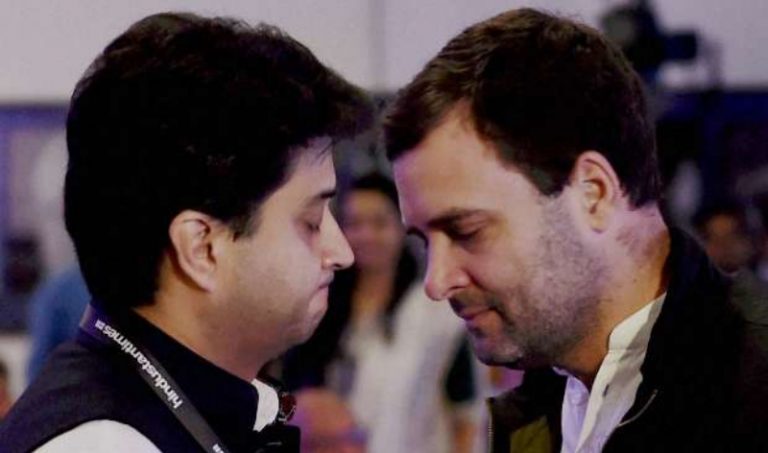
The allegations levelled by Congress and its leader Jyotiraditya Scindia were widely discussed and aspersions were cast on the Election Commission and also the BJP.


In a letter to AICC, the poll body said, “The allegations of large-scale entries of multiple voters in these assembly constituencies are not borne out”. It said image repetition found was “not related to multiple entries”.

“We have provided evidence to the Election Commission that there are approximately 60 lakh fake voters registered in the voting list. These are not merely mistakes. The lists have been deliberately altered at the behest of the BJP government in the state,” Congress leader Kamal Nath said.

The EC immediately set up four teams to visit the Assembly seats of Narela, Bhojpur, Hoshangabad and Seoni-Malwa to conduct a preliminary inquiry into the allegation. The four teams submitted their report to the Commission on Thursday.

In Seoni Malwa, of the 2,442 entries that Congress alleged were similar across polling stations in the same seat, 2,397 were found to be genuine voters. The remaining 45 are being deleted for reasons such as the voter having shifted or died.

In Narela, out of 22,252 entries cited in Congress complaint, 17,684 were found to be unique.

In Hoshangabad, 552 entries mentioned in the complaint were checked and no discrepancies were found.

In Bhojpur, EC verified 36 cases and found 29 to be genuine. In seven cases the process of deletion has been already on as part of the commission’s continuous updating exercise.

The EC concluded that “the allegation of large-scale entries of multiple voters in these four Assembly constituencies is not borne out”. The EC also clarified that, “In addition to the complaint of duplication in the voters’ list, it was pointed out that there has been unexplained growth in the electors in the state of Madhya Pradesh as the EP (elector-population) ratio which used to be 52.76% in 2008 increased to 61.45% in 2018. This has been seen from the perspective of the census data, nothing unusual could be noticed,” EC’s letter to Congress states.

The elections to the Madhya Pradesh legislative assembly will be held in November this year. The Congress party leader Jyotiraditya Scindia had alleged that BJP is behind the increase in the number of fake voters in the state. The social media had reacted in rather an unusual way and schooled him about the logic of his allegations.

Pranab Mukherjee and ‘constitutional patriots’ should understand that tolerance is not a one way road

0

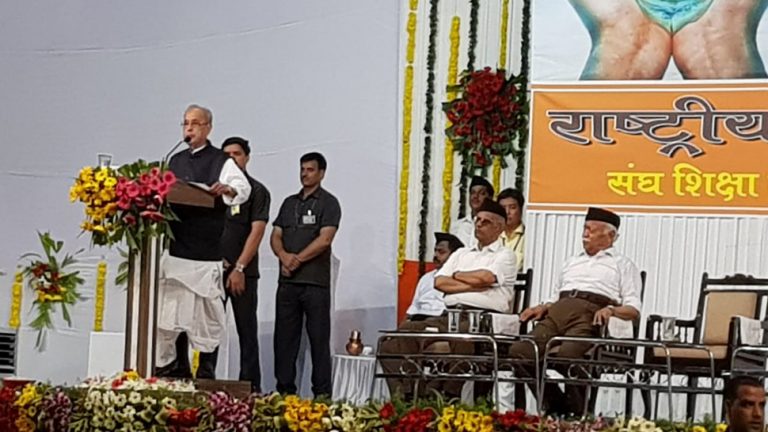
Yesterday, the former President of India, Pranab Mukherjee delivered a speech to the RSS cadre at the closing ceremony of the ‘Tritiya Varsha Sangh Shiksha Varg‘ (three-year training program for swayamsewaks). There was a great deal of hullabaloo over his participation at a Sangh event. Media, his former party men and secular intellectuals who preach tolerance demanded Pranab Mukherjee to reconsider his decision to address the cadre of RSS.

Some reports in the media claimed that the former Congress president Sonia Gandhi ordered Congress leader Ahmed Patel to tweet on the subject. In spite of all this noise, the former president delivered his address to the RSS gathering. That is commendable.

Pranab da’s speech was indeed a scholarly one. It includes highlights of the rich history of India; delves into the nature of nationalism and the need for tolerance in society. He highlighted the meaning of nation, nationalism and patriotism, in an attempt to clarify where he stood on these terms. According to me, the most important part of his address is this (emphasis added) :

 The Indian Constitution, consisting of 395 articles and 12 schedules, is not merely a legal document but a Magna Carta of socio-economic transformation of the country. It represents the hopes and aspirations of the billion plus Indians. From our constitution flows our nationalism. The construct of Indian nationalism is ‘Constitutional Patriotism’, which consists of an appreciation of our inherited and shared diversity; a readiness to enact one’s citizenship at different levels; the ability to self-correct and learn from others.

Though I agree with this formulation in a broad sense, I would like to add three points to Pranab Mukherjee’s idea of nationalism that ‘flows from the constitution’.

  • Nationalism based on the constitution and shared diversity will be sustainable only if we understand and condemn those parts of our history which divided India. We need to condemn these events unequivocally if the idea of ‘Constitutional Patriotism’ is to survive.
  • Tolerance is not a one-way road. Different communities must make sacrifices in the spirit of preserving India’s shared heritage and pluralism.
  • Every anomaly/contradiction in the constitution which is antithetical to the principles of fairness must be removed if it has to sustain in the long run.

Condemn strands of history that defeated the spirit of India

There is no doubt about the fact that the former president is a constitutional patriot. Probably, he hopes that rest of India will also become like him. Perhaps he is one of those idealists who wants to look at the positives and ignore the negatives. In his worldview, India has a ‘common history, a common literature and a common civilization’. He says ( emphasis added) :

Any differences that may appear are only on the surface but we remain a distinct cultural unit with a common history, a common literature and a common civilization. In the words of the eminent historian Vincent Smith, “India beyond all doubt possesses a deep underlying fundamental unity, far more profound than that produced either by geographical isolation or by political superiority. That unity transcends the innumerable diversities of blood, colour, language, dress, manners, and sect.

But Pranab Da did not speak about events in the country where a divisive figure like Mohammed Ali Jinnah was being eulogised as a freedom fighter. He was absolutely silent when people were fighting to keep a portrait of Jinnah in a central university. Jinnah broke India into two (and later three) pieces based on religion. Just like we condemn Hitler for murdering Jews, we need to condemn Jinnah for breaking the spirit of India that many of us cherish. This studied silence on ugly strands of Indian history will undermine the ability of the nation to combat such a situation if it appears in the country once again.

Tolerance is not a one-way road

Pranab Mukherjee had the following words to say regarding the plurality of India and tolerance :

The soul of India resides in pluralism and tolerance. This plurality of our society has come through assimilation of ideas over centuries. Secularism and inclusion are a matter of faith for us. It is our composite culture which makes us into one nation. India’s Nationhood is not one language, one religion, one enemy. It is the ‘Perennial Universalism’ of 1.3 billion people who use more than 122 languages and 1600 dialects in their everyday lives, practice 7 major religions, belong to 3 major ethnic groups- Aryans, Mongoloids, and Dravidians live under one system, one flag and one identity of being ‘Bhartiya’ and have ‘No Enemies’. That is what makes Bharat a diverse and united nation.

The former President might have tasted the brand of ‘tolerance’ we have in India when accepted the invitation of RSS. But he might be missing some other examples of this one-sided ‘tolerance’ where only the majority Hindu population has to compromise.

There is no tolerance on part secularists on the matter of ban on cow slaughter. If a Hindu feels hurt when the cow is slaughtered, why does the ‘secular’ citizen of India insist on eating its meat? If a Hindu wants to have a Ram temple, why does the Muslim refuse to make way for a temple in a sacred site? We must announce this sentence on a loudspeaker five times a day: ‘tolerance is not a one-way road’.

Eliminate the contradictions in our constitution

No matter how much we eulogise our constitution, we must realise that there are some contradictions in it. If these contradictions remain, sections of society will suffer from disharmony and a sense of partisan treatment by the state. Three important anomalies are as below :

  • Concessions to minorities under Article 29 and Article 30 which are against the principle of equality of all citizens before the law. Minoritarianism which stems from these articles has a huge potential to divide citizens. Therefore they must be eliminated.
  • Failure to implement the directive principle which prescribes uniform civil code for all citizens of India (Article 44) is another roadblock in creating a united India. If we postpone this forever, we give rise to a distinct group of people who will dissociate from the mainstream society.
  • Article 370 which distances the state of Jammu and Kashmir should be scrapped. This provision creates a distinct class of citizens in India and therefore violates the principle of equality.

Pranab Mukherjee’s idea of Constitutional Patriotism is a good one. It can definitely take us a long way in the future. But, we need to fix some contradictions in the polity and public discourse of India if that idea has to sustain in the long run. Otherwise, the ‘Constitutional Patriotism‘ that Pranab Mukherjee subscribes to will find few takers outside the Lutyens zone in New Delhi.

Rona Wilson: the JNU alumnus who is accused of plotting PM Modi’s assassination

Earlier today we had reported how a sensational letter was recovered by the Pune police from suspected Maoist sympathiser and Jawaharlal Nehru University (JNU) alumnus Rona Wilson’s house in Delhi, wherein it was suggested that Maoists were planning a Rajiv Gandhi type assassination plot to target Prime Minister Narendra Modi during his road shows. Wilson and four others were recently arrested by the Pune police over charges of inciting the Bhima Koregaon violence in January.

A copy of this letter which was put up by ANI in a tweet, implied that if the BJP’s electoral victories continue they would pose a serious threat to the Maoists. Thus it claimed that Kisan and a few other “senior comrades” had proposed concrete steps to end the Modi Raj. The letter then claims that these steps include engineering a Rajiv Gandhi type assassination.

The letter acknowledged that the plan sounded suicidal and that they would most likely fail, but urged the need for the party to deliberate on it. The letter incidentally also sought Rs 8 crore in cash to procure an annual supply of M4 gun along with 4 lakh rounds of ammunition.

As per a biodata given by the Indian Express, Wilson who hails from Kerala is a Delhi based public relations secretary of the Committee for Release of Political Prisoners (CRPP). The report claims that he is an active campaigner against laws like Unlawful Activities (Prevention) Act and Armed Forces (Special Powers) Acts.

The report also claimed that Wilson is a supposed “close aide” of Delhi University professor GN Saibaba who was convicted in March 2017 for waging a war against India via his Maoist links and anti-national activities. Saibaba was awarded the life imprisonment by the Gadchiroli sessions court. The report also stated that the police are of the belief that following Saibaba’s conviction, it was Rona started coordinating between the urban and jungle-based left-wing extremists.

Back in 2011, had denied links with Maoists, claiming that CRPP takes up issues related to all political prisoners, including Muslims and Maoists. In 2005, when he was pursuing Ph D in JNU, he was summoned by Delhi police and questioned for his association with SAR Geelani, former Delhi University professor who was arrested for sedition and was also allegedly involved in the Parliament attack in 2001.

2016 Nagrota army camp attackers admit obtaining help from Kashmiri separatists

The National Investigation Agency (NIA), in a report has stated that the prime accused arrested in connection with a 2016 attack on the Nagrota army camp in Jammu had gone to Pakistan four times between 2015 and 2017 on a visa acquired with the help of reference letters from top separatist leaders Syed Ali Shah Geelani, Abdul Ghani Bhat and Mirwaiz Umar Farooq. “During his visits, the accused met JeM commanders and took directions from them after getting clearance from a local ISI agent,” the NIA said.

The accused, identified as Mohammad Ashiq Baba, Tariq Ahmed Dar, and Muneer-ul-Hassan Qadri, were in constant touch with senior JeM leader Mufti Asghar based at Muzaffarabad in Pakistan Occupied Kashmir through voice calls and WhatsApp. “Besides Asghar, the accused were in touch with Qari Zarar based in Rawalpindi and Waseem and Abu Talha (all of them in charge of launching terrorists in the Jammu region).

A day before the Nagrota attack, accused Ashiq Baba was given instructions to receive a freshly infiltrated group of three Pakistani terrorists from the Samba sector.

The Indian Army base in Nagrota, Jammu and Kashmir was attacked on 29 November 2016 by a group of militants. In the morning around 5:30 three militants dressed in Indian police uniforms had attacked the Indian Army’s 166 Field Regiment unit in the town of Nagrota, near the Jammu city. During the ensuing gun battle, seven Indian soldiers, including two officers and all three militants were killed.

On further interrogation, it was revealed that Baba during his visit to Pakistan in 2017, met Waseem, Abu Talha, and Mufti Asghar. He also met Maulana Rauf (brother of JeM chief Masood Azhar and an accused in the Pathankot attack) at their headquarters at Bahawalpur. He was appreciated for his work by the JeM leaders and promised a lot of financial rewards and was told to receive more attackers in future.” He was also asked to open an account with HDFC or ICICI bank to receive funds as a reward. “Baba had an HDFC account and he gave the details to the JeM commanders through Whatsapp. They then transferred large amounts into his account. Baba disclosed that the money came from Gulf countries.”

Ashiq Baba was arrested on Tuesday, two days before home minister Rajnath Singh’s trip to Jammu and Kashmir at a time when fresh moves are being made to talk to separatist Hurriyat leaders in the middle of a cessation of military operations during the month of Ramazan.

Girl accuses Srinagar boy of forcibly converting her to Islam after posing as a Hindu

A Chandigarh girl has accused a Srinagar based boy of forcing her to convert to Islam, and has accused his family members of gang raping her – Times of India has reported. The 18 year old girl has as a result petitioned the High Court to order a National Investigation Agency (NIA) investigation in the matter.

As per the girl, she met the accused on Facebook back in Jaunary 2016, where he was allegedly posing as a Hindu. They later became friends and decided to meet at a Chandigarh hotel in November of that year where the accused allegedly tried to get her into a relationship.

She then alleges that, during their meeting she discovered that he was a Muslim. This impersonation as per the report, caused her a lot of distress but the boy threatened to kill himself which led her to relent.

They thus continued to keep in touch, and in April 2017 the girl alleged that the boy forced her into a physical relationship during which he took objectionable photographs of hers. Following this she alleges that he started to blackmail her by asking her to convert to Islam if she wanted those photos back.

Thereby she alleges that the accused took her to a Mosque in a village adjoining Chandigarh, and married her after her conversion to Islam. Later around May 2017 the girl alleges she visited the boy’s Srinagar home a few times to get her photos back, but was ill treated by his mother and was even allegedly gang raped by his relative.

As per a Jansatta report, the girl has been quoted as accusing that the accused and four others were involved in the gang rape. The report even states that her pregnancy was allegedly terminated by the accused’s mother who also stole her jewellery.

Following her complaint, the Chandigarh police is supposed to have filed a case in July 2017 under the Protection of Children from Sexual Offences (POCSO) act. She as per the report claims to have furnished the details of their wedding, Facebook profile of the accused and identities of the rapists.

The TOI report claims that the girl has accused the Chandigarh police of not carrying out a proper investigation and concluding that the couple were in a consensual relationship. The High Court whom she has petitioned has posted the next date of hearing as 18 July where it has sought her age proof. The accused is currently said to be out on bail.