Home Blog Page 7159

Sunanda Pushkar case: Shashi Tharoor summoned by Patiala House Court

In the ongoing Sunanda Pushkar case, where Congress MP Shashi Tharoor is charged with ‘abetment to suicide’ in his wife’s death, has been summoned by Delhi’s Patiala House Court. He has been asked to appear before the court on 7th July.


Earlier in May, Delhi Police had filed their charge sheet in the Sunanda Pushkar murder case and charged her husband, Congress leader and MP Shashi Tharoor under sections 498A and Section 306 in the case. The Charge sheet was reportedly filed before Metropolitan Magistrate Dharmender Singh. Section 498A involves charges for the husband or his family members subjecting a wife to cruelty and Section 306 of the IPC covers abetment to suicide.

The fact that Shashi Tharoor might be charged with section 306 was reported earlier. However, the addition of section 498A is the charge sheet might mean more troubles for Shashi Tharoor. Shashi Tharoor’s wife, Sunanda Pushkar was found dead in her hotel room on January 17, 2014 under mysterious circumstances. Rajya Sabha MP and legal activist Subramanian Swamy had asked for a court-monitored probe in the case by a multidisciplinary special investigations team. The Delhi Police was criticised by the Delhi High Court for delays in the investigations. AIIMS had earlier confirmed that Sunanda’s death has been due to poisoning. The PIL submitted by Swamy with regard to the case was dismissed by the Delhi HC initially but Swamy had moved to Supreme Court against the decision.

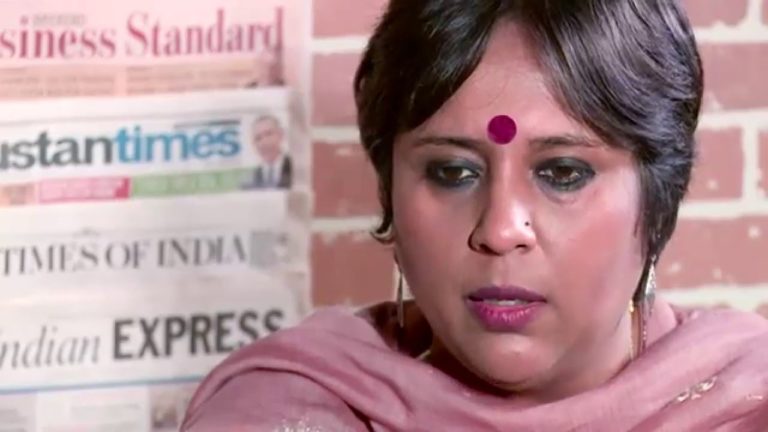
A look back at Barkha Dutt’s illustrious career as she reportedly gets ready to launch her own news channel

Reports have emerged that controversial journalist Barkha Dutt is set to launch her own English news channel. Not too long ago, the journalist had quit NDTV and become a columnist for the Washington Post. Barkha Dutt has a history of shoddy journalism and has drawn flak from various quarters for her reportage during the Kargil War and the Mumbai Terror Attacks.

Barkha Dutt had earlier floated an independent venture after quitting NDTV. Her business partner then turned out to be someone who wanted Prime Minister Narendra Modi hanged. He was also someone who was batting for terrorist Afzal Guru.

In another intriguing series of events, Barkha Dutt’s name was removed as the co-founder of The Print after she and Shekhar Gupta excitedly announced their new collaboration.

The harbinger of women’s right had also supported a fellow journalist when she had wondered whether women supporters of Prime Minister Modi “open their legs for Modi”. When confronted, she had feigned ignorance.


She is also known for covertly further the Pakistani narrative. Often, knowingly or unknowingly, Barkha seems to toe the enemy’s narrative more often than not. An earlier article by Nupur J Sharma, Editor of OpIndia had elucidated Pakistan’s break India agenda as discussed in Pakistan’s Senate.

Barkha Dutt has more often than not followed the line that Pakistan wants to peddle. In accordance with the points mentioned, where Pakistan wants the unrest in Kashmir to be blamed on the Armed Forces, Hindutva, BJP and anything other than Islamic Radicalisation, Barkha has written and tweeted to convince her readers.

Veteran journalist Dutt has also built her career reporting Kashmir. One would imagine that she would have a unique perspective on the unrest and also have the courage to call spade a spade. But that clearly isn’t the case. Barkha has proved time and again that she has an agenda and she will stick to it no matter what.

In an interview of Sajjad Lone, she had displayed her agenda subtlely, but rather clearly. In the interview, ex-separatist Lone spoke about how the unrest in Kashmir is fuelled by a handful of people and how the majority of the population wants peace. Barkha prodded Sajjad to concede that it was a ‘mass unrest’, a narrative that Pakistan wants the world to believe.


When Sajjad Lone had proceeded to put the blame of Kashmir’s current unrest specifically on the Congress government and P Chidambaram, Barkha proceeds to defend Chidambaram. In the entire interview, her aim was not to find the truth about Kashmir, but blame to Modi government and exonerate not only Congress but also Pakistan.


As mentioned earlier, Pakistan wants the Kashmir unrest blamed on everything but Islamic radicalisation fuelled by Pakistan. Barkha Dutt was seen toeing that line yet again in her interview of Sajjad Lone.


Barkha Dutt had also painted Burhan Wani, the neutralised Kashmiri terrorist as a “poor headmaster’s son”. In this interview, where Lone blamed the UPA government’s policies for the making of Wani, Barkha Dutt tried to pin the blame on the Indian Army. She also attempted to glorify Wani yet again.


When Lone had blamed Congress for Wani’s making, Barkha had tried to blame the Indian Army. When Sajjad Lone blamed Omar Abdullah, Barkha turned to blame the centre she had just defended a few minutes back in the interview.


Pakistan and vested interests in India have been speaking against Pellet guns for the longest time. When Sajjad Lone mentions that Pellets were introduced in 2010, during the Congress regime, Barkha summarily ignores the comment to put the blame squarely on the Modi government as, of course, anything wrong in the country is to be blamed on “communal sanghis“. Her intentions evident.


Barkha had also tried to paint the Kashmir unrest as a spontaneous uprising. Sajjad Lone, the ex-separatist, had schooled the journalist on how nothing in spontaneous in Kashmir thereby putting the blame on Pakistan and Hurriyat. It is no wonder she was also praised by Hafeez Saeed for her journalism.


The flagbearer of free speech, Barkha Dutt is also in the habit of threatening people with defamation suits when they dare to counter her agenda. There are at least 12 such incidents where Dutt had tried to muzzle voices by threatening people with lawsuits, including Chaitanya Kunte, who was bullied into deleting his blog post about the journalist years ago.


In the past, a journalism student’s career was almost destroyed for shouting anti-Barkha slogans. Barkha Dutt has also been accused of sympathizing with Islamic terrorists in the past and humanizing them to attract sympathy. In 2016, a hacker group called ‘Legion’ had claimed to have hacked her Twitter account along with that of others.

Barkha Dutt is also known to frequently indulge in whataboutery to further her agenda. She had resorted to whataboutery, along with others, when riots had ensued following Ram Rahim’s conviction in a rape case. She had also participated in an attempt to secularize the Shiv Sena chief Uddhav Thackeray. Miss Dutt has also been slammed by Union Sports Minister Vijay Goel for attacking the minister without having all the facts at hand. Amusingly enough, she has also been accused by Priyanka Chaturvedi, Congress spokesperson, of trying to shield Prime Minister Modi.

The veteran journalist had quit NDTV with much fanfare and her relationship with NDTV has certainly deteriorated after the journalist quit the self-proclaimed news channel. As NDTV’s tax trouble mounted, their former employee was conspicuously absent from the charade of the ‘attack on press freedom’ that was organized by the channel and their sympathizers. Her silence was made conspicuous by her complete silence on the subject on social media as well. Barkha also had a public feud with her former colleague over NDTV using the name ‘Mojo’ for one of its ventures which she claimed was a brand name she had come up with. If that wasn’t enough, Barkha Dutt in a Facebook post claimed that the channel had dropped the story on National Herald and made her delete some parts of her interview with Taslima Nasreen, a vocal critic of Islam. In the same post, she went on to point out that NDTV had gotten loans after Nira Radia had talked about helping NDTV founder Prannoy Roy.

One wonders if Barkha Dutt will attempt to compete directly with Arnab Goswami’s Republic through her reported upcoming news channel. Those who follow the news regularly are well aware that Arnab Goswami and Barkha Dutt do not exactly share an amicable relationship. She had once claimed on Twitter that she was ashamed to be part of the same industry as him. It was in response to Arnab Goswami demanding that those in the media with links to those in Pakistan who plot the destruction of India should be exposed and investigated although he did not name anyone.

Barkha certainly has an illustrious career to show for, however, given the nature of that illustrious career, we aren’t sure if the new channel she is set to start would stray too far from the kind of agenda she has been peddling for the longest time.

World Bank to Pakistan on Kishanganga hydro-project : Stand down and accept India’s offer

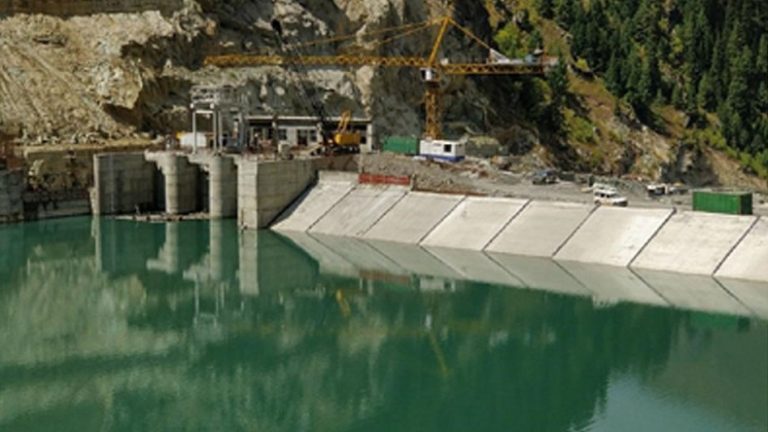
The World Bank has asked Pakistan to stand down on its attempts to take the Kishanganga Hydro-Project issue to the International Court of Arbitrations and accept India’s proposal of appointing neutral experts. According to reports, World Bank’s President Jim Yong Kim has asked Pakistan government to ‘stand down’ in a written communication.


Pakistan’s media has reported that the office of the Attorney General in Pakistan has received a letter from the World Bank President stating that the World Bank is ready to even appoint neutral experts if Pakistan withdraws its demands for the International Court of Arbitrations in Hague to hear the issue.

Pakistan had approached the World Bank in April over India’s construction of the Kishanganga Hydro project in Kashmir alleging that it is in violation of the Indus Water Treaty and the project will deplete water resources in Pakistan. India has been maintaining that Its share of water has also been going to Pakistan over the years since the Indus Water Treaty and Prime Minister Modi had announced soon after the Uri attacks that India will now stake claim over its own share of water. “Water and blood cannot flow together” was PM Modi’s famous statement on this matter. Over Pakistan’s complaints on the matter, India has been firm on its stand that Pakistan’s objections are only on design issues and that can be addressed by neutral experts.

Dedicating the 330 MW Kishanganga Hydro Project to the country in May, PM Modi had announced that project is an engineering marvel and it will fulfil electricity needs of Jammu and Kashmir, which till now, had to be dependent upon supply from other states.


Pakistan has been running scared after PM Modi’s government refused to stall work on the project and its commitment to utilising the river waters to their full potential. Pakistan had also objected to other hydropower projects in the region namely the Ratle (850 MW) project on the Chenab river, Pakal Dul (1000 MW), Miyar (120 MW) and Lower Kalnai(48 MW) projects. The World Bank is the moderator between India and Pakistan on the Indus Water Treaty and Pakistan has been complaining to the international finance organisation repeatedly stating that India’s projects will deplete water levels in Pakistan’s rivers. The Modi government, however, had ignored attempted interferences and had gone ahead with the project.

After PM Modi’s inauguration of the Kishanganga project, Pakistan had reportedly submitted a forceful plea on May 22 to the World Bank, asking it to announce concerns over the inauguration of the project, but the World Bank had reportedly declined the plea and stated to Pakistan that it has ‘noted’ the development.

Pakistan had reportedly already taken the Kishanganga issue to the International Court of Arbitrations in 2010, which had stayed the project for 3 years. The court in Hague later ruled in India’s favour in 2013, stating that it is a run-of-river plant and is well within the clauses laid down in the Indus Water Treaty. Pakistan had in the past, attempted shelling in the area near the dam. In the recent case where former Indian Diplomat Madhuri Gupta was convicted on spying charges, it was also mentioned that her ISI handlers wanted inside information on details of the hydro-power plants being built in Kashmir and she had even travelled to Jammu for the purpose.

The successful completion, inauguration of the Kishanganga hydropower project and the World Bank’s refusal to entertain Pakistan’s complaints about the issue is another strategic and diplomatic achievement of Narendra Modi government.

Amit Shah to meet Uddhav Thackerey for ‘Sampark for Samarthan’, Maharashtra CM seeks to mend alliance

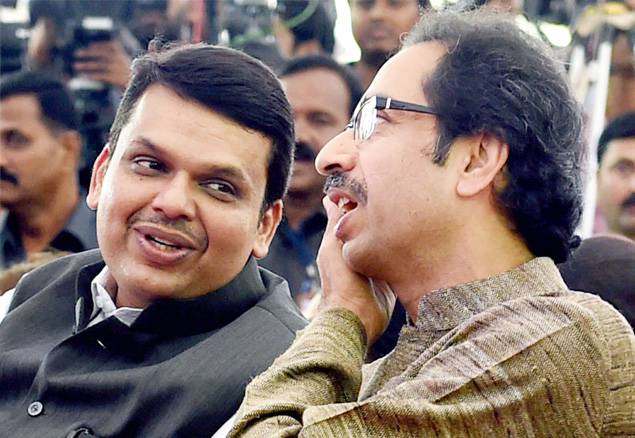
As part of the ‘Sampark for Samarthan’ launched by the BJP, party president Amit Shah is set to meet Shiv Sen chief Uddhav Thackeray in Mumbai on Wednesday. The traditional allies have drifted apart in recent times with the Shiv Sena asserting that it will contest the 2019 General Elections alone and may even consider joining the United Opposition.

Recently, Shiv Sena MP Sanjay Raut asserted that the party is problematic for the BJP. He said, “The Shiv Sena is the biggest political enemy of the BJP. The Sena’s radical Hinduism would prove problematic for the BJP.” Following BJP’s victory in the Palghar by-polls, Uddhav Thackeray reiterated his party’s intentions of competing for 2019 elections alone.

Meanwhile, a BJP leader has stated that Chief Minister of Maharashtra, Devendra Fadnavis, wants the office-bearers of the party to formalize a pre-poll alliance with Shiv Sena. Raosaheb Danve, chief of BJP’s state unit, told reporters, “Fadnavis asked the party’s state office-bearers to try for a pre-poll alliance with Shiv Sena. But, he said that if the alliance does not materialise, we should prepare to contest alone.”

Shiv Sena had announced the decision to contest the Lok Sabha polls alone on the day of Bal Thackeray’s birth anniversary this year. However, the writing was on the wall for a while. Uddhav Thackeray also met with controversial Patidar leader, Hardik Patel, whose associates have often used extremely derogatory words for Prime Minister Modi. The Shiv Sena chief also met with West Bengal Chief Minister Mamata Banerjee and deemed her to be a ‘tigress’ making many people wonder how could the saffron party’s Hindutva make peace with Didi’s minority appeasement. Uddhav Thackeray has also called the Modi government the ‘worst’ ever and criticized demonetization as well.

With the BJP unlikely to retain its tally of 70+ in Uttar Pradesh from 2014 against a united opposition of Congress, Bahujan Samaj Party and Samajwadi Party, Maharashtra assumes even greater significance in the larger scheme of things. Chandrakant Patil, state BJP Minister for PWD and Revenue, admitted that without an alliance between the two parties, elections could be a cakewalk for the Congress-NCP combine. However, BJP leaders remain optimistic about the possibility of an alliance with Shiv Sena with Union Minister Nitin Gadkari asserting that he wants the alliance to continue.

Biryani shop owner shot dead in Bengal after seeking payment for a meal, Mohammad Firoz arrested

A Biryani shop owner in West Bengal’s North 24 Parganas region was shot dead after he sought payment for the meals served to his diners, IANS has reported. As per the report, the owner – a 40-year-old Sanjay Mondal was killed on Sunday evening, after he charged Rs 190 for the Biryani which the accused had ordered. The incident happened at about 9 PM on Sunday.

As per a Hindustan Times report, an altercation began after the accused received the bill for their takeaway order, and grumbled that they were being overcharged. The report then claimed that the restaurant owner asked them to clear previous standing dues of Rs 190 for a Biryani they had incurred a few days ago. This didn’t please the accused and one of them named Mohammad Firoz used his pistol to shoot Mondal.

A Zee News report states that Mondal was then rushed to a nearby hospital but was pronounced dead. An FIR was then lodged regarding the matter, following which, Firoz was arrested. The police are claiming that prima facie the dispute seemed to pertain to Biryani but they are investigating other possible motives.

The brother of the deceased has been quoted as calling the accused as hooligans. He claimed that it was Firoz who pulled the trigger and identified others accompanying him as Salman, Mogri and Raja. He also expressed that he was very scared and was at a loss for ways to run his business peacefully.

This isn’t the only time humble individuals have been targeted for frivolous reasons.

We had reported in the past how an IRCTC employee was battling for his life following a brutal assault by two Rajdhani express passengers. It was reported that the victim named Sushanta Behera earned the ire of the passengers after an ice-cream carton accidentally brushed against an accused.

The accused were later identified as Mohammed Zaid and M Quraishi who hailed from Kolkata.

Few days after BJP’s loss in by-polls, a Hindu family flees Kairana, say reports

Following BJP’s loss in the Kairana by-polls where RLD’s Tabassum Hassan won, a Hindu family has reportedly migrated out of fear, which has scared other residents. A woman in Kertu village has fled her home and went to her mother’s place after writing ‘this house is for rent’.

The woman has alleged that people from ‘other community’ have repeatedly beaten members of her family. On Sunday, the woman with her husband and son fled the village alleging repeated scuffles with the neighbour, Nadim. She has accused that despite police complaints, no action was taken against Nadim.

She has alleged that he even threatened to get her son arrested in a fake case. This was the last straw. Following this Rekha, her husband Satpal and their son Mayank fled to Karnal.

Earlier in 2016, a report by NHRC (National Human Rights Commission) reported exodus of over 250 Hindu families from Kairana. The inquiry was undertaken after a complaint was received of a woman belonging to Kashyap caste was abducted, gang-raped and killed.

There have also been complaints of youths belonging to majority community (Muslims in Kairana) had would pass lewd/taunting comments against women of the specific community. This made the females of that community (Hindus) feel unsafe. Currently the Kairana town is pegged to have about 85% Muslims, and the rest being mostly Hindus. In 2001 the figure was 52% Hindus and the rest were Muslims.

Dear Anurag Kashyap, I am your fan, but the glaring bias in your movies makes me question your motives

0

Dear Anurag Kashyap,

On Saturday, I had the chance of watching Bhavesh Joshi Superhero, a movie co-produced and co-written by you. The movie has been very well directed by Vikramaditya Motwane, and the performances of most actors are praiseworthy. I have believed that you are one of the finest filmmakers the Hindi film industry has ever seen. Your Gangs of Wasseypuris my all-time favourite Hindi movie and I have loved most of your other movies also, including Black Friday, Dev D, Gulaal, Ugly and Raman Raghav 2.0. Besides your writing and filmmaking talent, what also impressed me was the fact that being an outsider in the industry, you were able to take on the strong lobbies in the industry that have historically been guilty of promoting nepotism and cartelization. You were the poster boy of the low-budget new-wave cinema that got respect from all quarters within and outside the industry. As someone coming from a small town in Uttar Pradesh, I felt proud of you.

However, when I look at some of the movies that have lately come out of your production house, I can see a disturbing pattern. These movies have been overtly critical of the government, and more specifically, what a lot of people understand to be the ideology of the BJP. While art has always been an effective medium of criticising what’s wrong with governance and with socio-politico-economic systems, it is your selective and strategically-timed depiction of a political party’s flaws, which raise doubts. I clearly remember the days when all you could see on television news channels was an angry looking you, pointing fingers at the censor board and expressing concerns over the drug menace in the state of Punjab. Drugs is a serious issue that our country has been facing for the past decade or so, and the problem becomes way more worrisome in Punjab, being a border state.

Udta Punjab resulted in the issue being discussed and debated all over the country. It is also said that the movie magnified the problem manifolds. The movie released a few months before the state elections, in which the ruling BJP – Akali Dal coalition lost. The most shocking bit was the fact that you did not talk about the issue even once after the election results. If the issue was so deep-rooted, how come it got resolved just by one election result? Surely any government in the world cannot claim to eliminate such a menace in a day, in a week, or even a year.

Earlier this year, you came up with Mukkabaaz, set up in western Uttar Pradesh. Like most of your films, it was nuanced, layered and packed with powerful performances. However, the film also turned out to be another glaring example of your personal prejudices. The main antagonist in the movie was shown as a politician from a BJP-style party, and his henchmen included cow-vigilantes. Time and again you have spoken against cow-vigilantism. In the last 2-3 years, we have seen news channels reporting multiple incidents of alleged cow-vigilantism. Investigations have suggested that a large percentage of such cases were not actually those of cow-vigilantism, but were fights breaking out over other issues. We have seen several times that even if two individuals fighting in the streets, unaware of each other’s religion, turn out to be a Hindu and a Muslim, our media will report it as a Hindu-Muslim clash. A lot of the so-called cow-vigilante cases are also those of people, not backed by any political establishment, stopping and reporting cattle smuggling.

Whilst many like you have expressed displeasure when the BJP government in Uttar Pradesh strictly implemented the laws relating to slaughterhouses, you all turn a blind eye to the fact that these slaughterhouses are in complete violation of regulations that have been there for a long time. The slaughterhouse in Allahabad, where you shot a few scenes of Gangs of Wasseypur, was no different. Also, many of the alleged cow-vigilantism cases actually involved goondas hired by unauthorized slaughterhouses to steal cattle belonging to poor farmers, and then villagers stopping these goondas from doing so. But again, the likes of you only believe what you want to believe.

Mukkabaaz also threw light at the age-old evil of caste-system in our society. For this evil, no criticism of the misdeeds of the so-called upper castes can be enough. There have been Dalit politicians who have had multiple opportunities of making a real difference to the plight of Dalits in our country, but who have instead chosen to accumulate personal wealth and power. Despite this, these politicians continue to be worshipped by their core voters. I find it astonishing that the ill-intended actions of such politicians and the bhakti of their supporters have never been questioned.

In Bhavesh Joshi Superhero, the writers have tried to show politicians, again from a BJP-style party, trying to cover their corrupt activities under the garb of nationalism. The fact that the most corrupt politicians in the country, most of who are from the large states of Uttar Pradesh, Bihar, Maharashtra and Tamil Nadu, belong to non-BJP parties, makes no difference to you. Also, that some of these politicians have been convicted in corruption cases is not important to the likes of you. You need to be educated that it is not easy to find a politician, in the country’s current scenario, who has been a Chief Minister for over 12 years and a prime minister for four years, without a corruption charge.

Being seen as a party with a nationalist complexion is one of BJP’s strategic strengths. If the country currently has a large part of its electorate that sees nationalism as the most important factor while casting its vote, there has to be some reason behind it. Leaders and parties, over the last many decades, have patronized divisive and disloyal groups in different parts of the country, both overtly and covertly. By doing this, they have succeeded in creating voter bases belonging to specific socio-economic classes and communities. This also involved compromising on national security and the law and order situation. What has resulted in a considerable rise in divisive extremism in the forms of Naxalism and terrorism, and has also provided justification for activities that are not in the country’s best interest.

Your voice is being missed when the states of Kerala, Karnataka, and Bengal are witnessing large scale political murders. You did not speak of censorship before the release of Indu Sarkar. I even badly missed this voice of yours when arguably the most corrupt government in our history was ruling us. You never spoke about the existence of rubber stamp Prime Ministers, about multiple power centres, about false narratives and about the undermining of democratic institutions then. You can say that if you didn’t speak then doesn’t mean that you can’t speak now. Well, you definitely can, and you are doing that with great aplomb. Maybe, you have a greater freedom to express now.

Perhaps you have lived in big cities for too long to understand the problems faced by common people in small cities. Perhaps in your younger days, you were too engrossed in your creative zone to see the scary neighbourhoods in the older parts of our cities. Perhaps the rustic yet glamorous lifestyle of Hans Raj College and its theatre groups took you away from the realities of Obra, of Banaras, of Gorakhpur. Perhaps your recent elite surroundings have given you the eyes that see what they want you to see and took away your objective sight.

I vividly remember when you said that in the film industry, everyone has to co-exist. You also said that it makes better economic sense to even be associated with big production houses. I kind of saw you making peace with the fact that small banners cannot sustain themselves for too long. The country will be seeing another general election in less than a year, and hence the timing of your latest movie can be looked at with suspicion. I don’t know what is making better economic sense now.

I am living in big cities for a decade now, but I keep visiting my hometown every other month. This has ensured that I don’t get disconnected from the diverse realities of India. This has also kept me tolerant of all ideologies and opinions. You may also want to look at that. Despite saying all that I have, I will continue to be an ardent fan of your craft.

Yours truly,

Ajitesh

In meeting attended by Manmohan Singh, Congress leader blames his party for NPA mess: reports

Recently a meeting was organized between the bankers and the Parliamentary Standing Committee on Finance, headed by Lok Sabha MP Verappa Moily to discuss the issue of mounting bad loans and various aspects of NPA’S and banking frauds. This was also attended by the former Prime Minister Manmohan Singh.

Some Congress members present in the meeting forthrightly admitted to the fact that “aggressive lending” during the successive UPA governments was the reason for the mounting NPAs in the banking system, especially in State-owned lenders. Many committee members present there gave their consent saying that this is one of the prime reasons for the escalating NPA’s.

Non-performing assets (NPAs) touched ₹8.31 lakh crore at end of December 2017, out of which gross NPAs of state-owned banks had crossed ₹7.77 lakh crore at the end of December 2017, according to official data. Members wondered why public money was being used to recapitalize the state-owned banks which are losing money due to frauds and defaults by corporates. They further speculated whether ‘nepotism’ by private banks was also the reason for this growing problem of NPAs.

A parliamentary panel on Monday asked the Indian Banks’ Association (IBA) to prepare a roadmap for addressing this issue. During this meeting between the bankers and the Parliamentary Standing Committee on Finance, it was emphasized that corporates should not be painted with the same brush as all are not wilful defaulters.

Banks usually categorize loans as Non-performing assets (NPA) after 90 days of nonpayment of interest or principal, which can occur during the term of the loan or at maturity.

Banks are required to classify non-performing assets in one of three categories according to how long the asset has been non-performing:

  1. sub-standard assets: an asset classified as an NPA for less than 12 months.
  2. doubtful assets: an asset that has been non-performing for more than 12 months.
  3. loss of assets: assets with losses identified by the bank, auditor, or inspector and have not been fully written off.

Last year the RBI Governor Urjit Patel had blamed the UPA regime, describing high performing assets as a ‘legacy issue’, as long gestation projects funded before 2011-2012 were responsible for it.

The Parliamentary standing committee had sought a forensic audit of restructured loans and suggested constituting empowered bodies like the RBI to keep an eye on loans of larger volumes.

2000 BC copper-bronze age chariots, weapons found by ASI suggest a highly sophisticated ‘warrior clan’ civilisation

In a recent excavation near the Sanauli village in UP’s Baghpat, the Archeological Survey of India has discovered the ‘First Ever’ physical evidence of chariots being used in a near 2000 BC period. As per reports, the excavation that has turned up royal burial sites with sophisticated weaponry, ornaments, pottery and other materials suggest that a highly sophisticated ‘warrior class’ civilisation in that region.

The 3-month long excavation was reportedly started in March this year is 120 metres away from a 2005 excavation site that had turned up 116 burial sites which were similar to that of Harappan civilisation. However, as per ASI experts, though further investigations need to be carried out to determine the race of the remains, the current findings do not belong to the Harappan civilisation. A total of 3 chariots have been reportedly found with decorated copper motifs. As mentioned by The Daily Pioneer, these findings are expected to add further insights into researches on the history and dates of Mahabharata period.

SK Manjul, the director of Institute of Archeology has reportedly stated that the wheels of the chariots rotated on a fixed axle linked by a draft pole to the yoke of a pair of animals. The superstructure attached to the axle contains a platform, protective side screens and a dashboard. The wheels and the pole are decorated with copper motifs symbolising the rays of the sun. Although the experts are yet to be certain on whether the chariots were pulled by bulls or horse, they are of the opinion that it was probably horses.

The coffins found have copper designs too, consisting of peepal leaf-shaped crowns, flower motifs and anthropomorphic figures, suggesting a royal burial. Manjul has added such burial sites have been found in the subcontinent for the first time. He reportedly added that though burial coffins have been found in Harappa, Mohenjo-Daro and Dholavira, they never had any copper decorations. The designs of the chariots and other items found are reminiscent of TV portrayal of mythological figures.

Amongst other findings are helmets, swords, daggers and shields. The swords have copper covered hilts and a medial ridge making it strong enough for warfare. The archaeologists have reportedly stated that the population that inhabited the region then was warrior class. ASI has also found steatite beads, combs, mirrors and pottery suggesting a highly sophisticated and culturally evolved civilisation. The findings have been dated to around 2200 to 1800 BC, showing that the civilisation was at par with Mesopotamia, Georgia and Greek civilisations.

Some of the burial graves reportedly contained full skeletal remains while some had partial remains and pots, suggesting secondary burials and even symbolic burials. Many semi-precious and gold beads have also been found. The experts state that these findings suggest that the civilisation was also theologically advanced and culturally, aesthetically sophisticated.

The archaeologist SK Manjul reportedly stated that the existence of a pre-iron age warrior clan civilisation that was so culturally-advanced gives a new dimension to our understanding of our own past history.

Political violence continues in Bengal; BJP supporter shot in Cooch Behar by alleged TMC workers

The political violence doesn’t seem to be abating in West Bengal, with an ANI report calming that a BJP worker was shot dead in Cooch Behar on Sunday evening by alleged TMC workers:


Unlike some of his peers, he though managed to escape alive and is currently admitted to a nursing home. As per a NewsX report, the youth identified as Narayan Sarkar is recovering in Siliguri.

A Telegraph report claims that a bullet hit his jaw while he was returning home after visiting a local BJP leader Nagar Sarkar. The district BJP president – Nikhil Ranjan Dey has been quoted as alleging that Sarkar is a relative of BJP leader who won in the recently concluded local body elections. Thus he claimed that he was shot by TMC workers.

The report though quotes the police has calming that Sarkar was accidentally shot when an individual named – Prahlad Sarkar, was holding a gun which supposedly belonged to the BJP leader Nagar Sarkar, who as per the report is also his relative.

This incident incidentally comes in the light of two reported deaths of BJP workers in Purulia. In the first case, an 18-year-old BJP worker named Trilochan Mahato was murdered in Purulia’s Balrampur. A further macabre angle was given to the crime when the shirt adorning Mahato’s body stated that he deserved to die for working for the BJP at such a young age.

Just a few days later another body of a BJP worker was found hanging from a high tension pole in the same region. Following this incident, the Bengal BJP pinned the blame on TMC goons, whom it accused of executing the order of Mamata’s nephew Abhishek Banerjee, who had promised to make Purulia “opposition free”.